
Congestion, infrastructure delays, and increasing demand continue to put pressure on Dublin’s transport system. To understand how effective these changes really are, TheCity spoke with Professor Brian Caulfield, a transportation expert at Trinity College Dublin.
On January 26, 2025, the latest phase of BusConnects (Phase 6a) was introduced, including two new 24-hour routes (E1 and E2) and Radial Route 19, which connects Dublin Airport to the city centre via DCU. Other local and express routes were also adjusted.
The goal is to increase capacity, improve frequency, and enhance connectivity. However, Professor Caulfield, who was part of the Greater Dublin Area Transport Strategy Steering Group, believes that while these expansions are necessary, they are only a small part of what is needed.
“They’re progressing towards the goals that we need,” he said. “But in transport, you can’t just click your fingers and make it all happen. It would be great if we could.”
One of the most anticipated changes of BusConnects Phase 6a is the expansion of 24-hour bus services, with the E1 and E2 operating around the clock.
Dublin’s hospitality workers, shift employees, and night-time economy have long required late-night public transport. Professor Caulfield welcomes the expansion but says it should have happened sooner.
“We know our city doesn’t go to sleep at 11 PM. We know we have a very vibrant night economy, with people that work in shift work,” he said.
While he supports adding more all-night services, he believes Dublin should also rethink its approach to evening transport in general.
“I think we should have more 24-hour bus services,” he stated. “I think we could maybe wait a little bit longer to put the lowest bed”
Cork was the first Irish city to introduce 24-hour bus routes, and they have been “massively successful,” he noted.
“We don’t have much data yet [on Dublin’s 24-hour services] ….I suspect that the passenger numbers are going to be, high,” he added.
Despite this, Dublin’s late-night public transport options still lag behind other European cities.
“I don’t see why we couldn’t do that on weekends, definitely, when there’s an awful lot more people in the city,” he said, referring to later Luas services on Fridays and Saturdays.
Sustainability and the push for hybrid buses
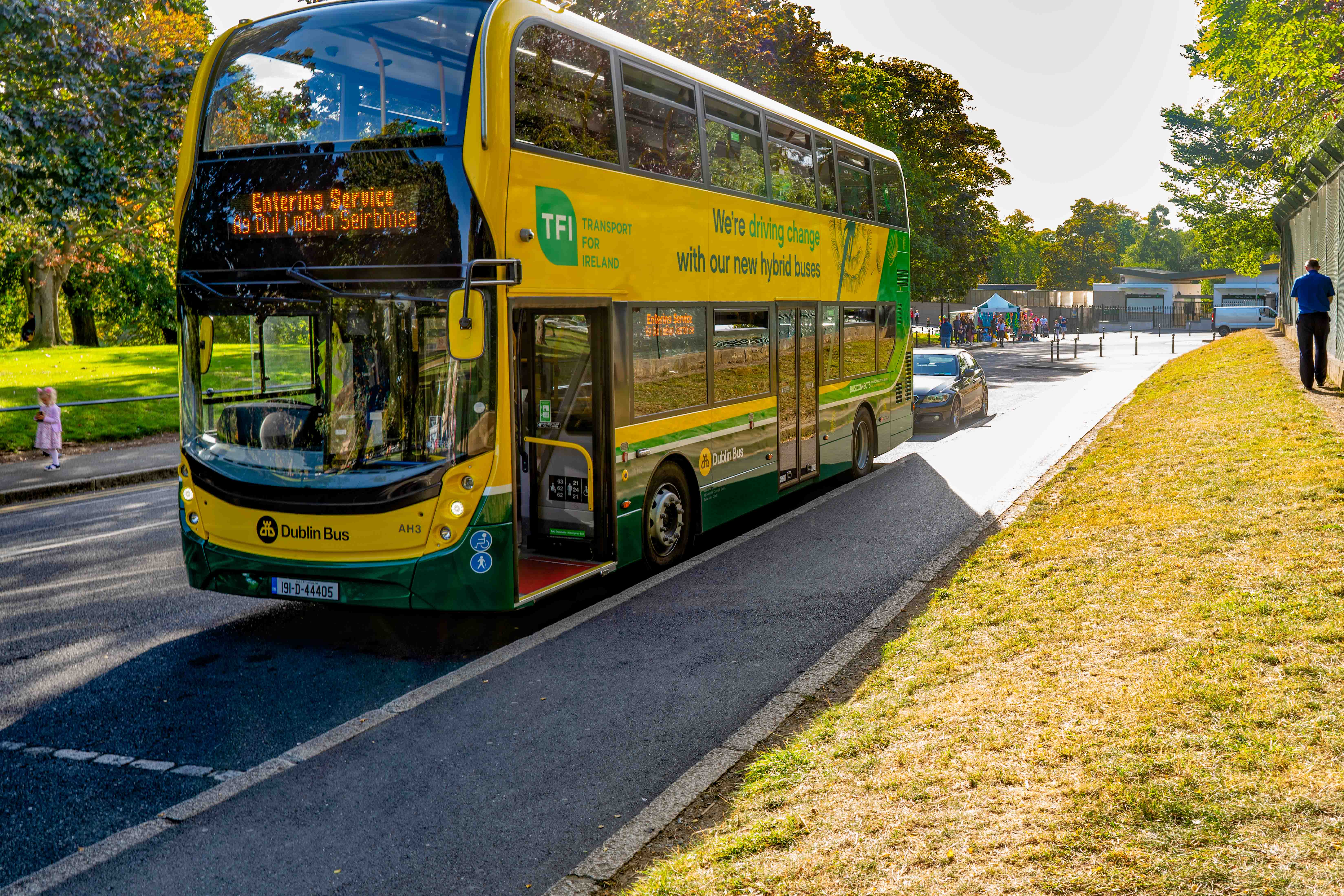
Sustainability has become a key focus of Ireland’s transport policy. On February 7, 2025, the National Transport Authority (NTA) introduced five hybrid buses on Route 139 (Blanchardstown – Naas), operated by JJ Kavanagh & Sons. These low-floor buses aim to cut emissions and improve accessibility.
Professor Caulfield acknowledges these efforts but warns that Ireland is still struggling to reduce transport emissions fast enough.
“All of the buses, the new policies that are coming into the fleet that are being paid for by the National Transport Authority, are low-carbon buses,” he explained. “They’re either hybrid or electric. And they’re also trialling hydrogen buses.”
But reducing emissions is a race against population growth.
Slow infrastructure development: why is Dublin lagging behind?
Despite ongoing improvements, Dublin’s biggest transport challenge remains project delays. The Luas Finglas extension (4 km) will take 10 years, and MetroLink—first proposed in the 1990s within the Transport 21 transport plan—may not be operational until at least 2035.
According to Professor Caulfield, bureaucracy is the biggest factor behind these delays.
“For the four-kilometer extension of the Luas, they had to produce 3,000 pages of analysis,” he pointed out. “And then the planning authority takes up to two years to review it. The construction itself doesn’t take that long—it’s the planning process that delays everything.”
What Needs to Happen Next?
While Professor Caulfield welcomes BusConnects, hybrid buses, and express services, he insists that these improvements alone will not fix Dublin’s transport challenges.
“BusConnects is bridging the gap,” he said. “But we’re not going to get the transformative change of loads of people leaving their cars behind until we invest in heavy rail.”
Professor Cualfield says Dublin needs to take major steps to To modernize transport, including:
- Later-running Luas and DART services on weekends to meet night-time demand.
- Faster project approvals for major infrastructure like MetroLink.
- The introduction of Low Emission Zones (LEZs) to reduce city traffic and improve air quality.
“Certain transport projects must be prioritized as national strategic infrastructure. If we wait another 10 years for MetroLink, we’re going to be permanently behind.”
Dublin’s transport is evolving, but without faster infrastructure development and policy changes, demand will outpace improvements. In the meantime, another change is planned for March 3, 2025, with the revision of express bus routes, which will now serve UCD Belfield.
You must be logged in to post a comment.