Author: Millie Reid

  • Remembering Hugh Wallace and his lasting effect on Irish creativity  

    Remembering Hugh Wallace and his lasting effect on Irish creativity  

    By Millie Reid 

    When news broke of the death of architect, presenter, and TU Dublin alumnus Hugh Wallace, tributes poured in from across Ireland’s architectural and creative communities. Known to many as a judge on RTE’s Home of the Year and host of The Great House Revival, Wallace’s impact stretched far beyond television. For current architecture students at TU Dublin, where Wallace once studied many are inspired by his work everyday.  

    Photo by Millie Reid. Bolton Street College, where Hugh Wallace was educated.

    Born in Dublin and educated at what is now TU Dublin’s School of Architecture, Wallace often spoke fondly of his formative years at Bolton Street. Those who followed his work know the hallmarks: warmth, curiosity, compassion, and a belief that design could transform not just buildings, but lives. His death at 68 leaves a void in Irish architecture, but the values he championed continue to resonate strongly with emerging designers. 

    “What struck me about Hugh was how human his architecture felt,” said one TU Dublin architecture student. “He showed Ireland that design wasn’t just for the elite, it was for everyone.” 

    For many students, Wallace’s visibility on television was their first window into what an architect could be. His feedback was always fair, and his enthusiasm was infectious. On Home of the Year, Wallace’s eye for detail and his famous love of bold colour became a national talking point, but what is remembered most was his kindness. 

    “He showed us that you can be both professional and warm,” said another student. “The way he listened to people’s stories influenced how I approach my own projects.” 

    Wallace’s career began long before his television fame. As a founding partner of Douglas Wallace Architects, his style became a niche in design, shaping spaces across Ireland and abroad. Yet he remained grounded. Even as he became one of the country’s most recognisable architectural voices, he championed accessibility in design and encouraged young architects to think beyond traditional boundaries. 

    In a way Wallace mentored young designers informally through his television work, where he broke down design decisions in a way that made architecture accessible and exciting. Although he graduated decades before the Technological University formally came into being, he often referred to Bolton Street as the place that taught him. 

    His influence has also reached students who are currently shaping their final-year portfolios, many of whom grew up watching him on RTÉ. 

    “I didn’t know any architects personally when I was a teenager,” said a third-year student. “Hugh Wallace was the first architect I ever saw talk about design with joy. That mattered.” 

    In a 2025 interview with IMAGE.ie, Wallace reflected on the role of architects in shaping the built environment, noting that the spaces we design today become legacies for the future. Through his own work, from thoughtfully restored homes to innovative public spaces, Wallace left a lasting mark on Ireland’s towns and cities, creations that will be experienced and remembered for generations. 

    At his funeral, colleagues and friends spoke of him being “honest, passionate and deeply human”. Online, viewers shared memories of how his programmes inspired them to restore old cottages, take risks with colour, or simply care more about the spaces around them. But in TU Dublin’s studios, where the next generation of architects are sketching, drafting, and arguing over floor plans, his impact is lasting. 

    Wallace never taught at the university, but to many, he was a teacher. 

    Hugh Wallace may be gone, but the spirit with which he approached design Joyful, and human continues to inspire the students walking the same corridors he once did.  
  • Where silence stops, the truth begins: The Roisin Boyd story   

    Where silence stops, the truth begins: The Roisin Boyd story   

    A deep look at a woman whose journalism, feminism, and anti-colonial solidarity shaped both her career and the students she inspired along the way. 

    “It’s my DNA… I have to do it.” 

    These words are spoken with absolute certainty by a journalist who has spent decades challenging power structures. Roisin Boyd’s journalistic journey and ethical and moral compass is shown through her courageous storytelling.  

    Boyd’s path to journalism began in the politically charged atmosphere of 1980s Ireland, a place held in a political chokehold by profound social constraints. “I was interested in becoming a journalist from the age of 14,” she recalls. “My family was quite political, and my mom was a feminist. There were meetings in our house, feminist women’s liberation meetings.” 

    These weren’t just your average family gatherings; they were revolutionary assemblies. In an Ireland where contraception was restricted, divorce was forbidden, and women’s voices were systematically marginalized, these meetings were acts of radical resistance. 

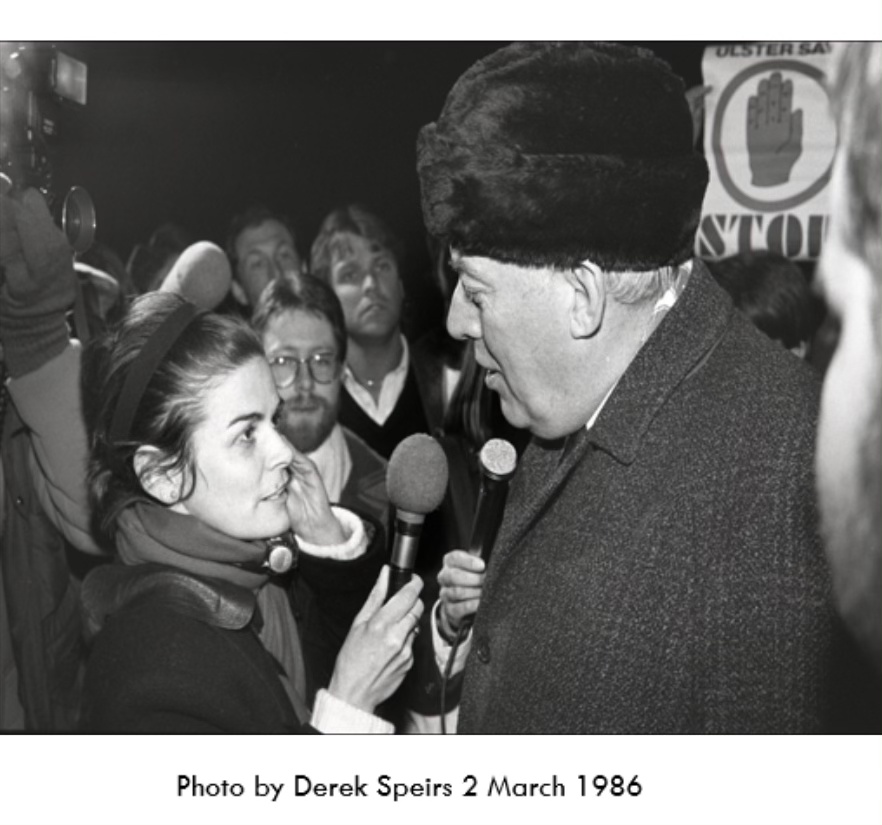
    Photo by Derek Speirs. Cleaners protest at UCD in 1985

    A common misconception when talking about the issues above, and many others, is that nothing was being done about the unjustness of it all, but many voices like Boyd’s spoke out against them even when that was maybe not the norm.  

    “We were not all lying down, taking it,” Boyd said. “There was resistance, and people were protesting.” 

    From the get-go Boyd stood up and wrote about what she believed in. Her early journalistic experiences were rooted in feminist publications. At a time when many young women were confined to traditional roles, Boyd was writing for Wicca, a feminist magazine that challenged societal norms. Later, at Trinity College, she worked on Bell Jar, named after Sylvia Plath – another important symbol of women breaking through systemic silences.  

    A defining moment of her early career came with Spare Rib, a radical London-based feminist magazine. Boyd became the first ever Irish woman on its collective, a position that would reshape her understanding of journalism and activism. 

    “When I was in London, it was really tense,” she explains. The time that Boyd made this move was during the height of the Troubles in Northern Ireland, a period of intense political conflict. Being Irish in England meant navigating difficult political landscapes. For Boyd, this meant that every story was potentially considered controversial. 

    One of Boyd’s most difficult and controversial articles, “Why You Can’t Be a Zionist and a Feminist,” shows her fearless approach to journalism. She interviewed an Israeli Jewish woman, a Lebanese woman, and a Palestinian woman in the aftermath of the Sabra and Shatila massacres. This was one of the most harrowing massacres committed in the Lebanese civil war, a conflict known for its violence. 

    “All hell broke loose,” she remembers. Shops in New York refused to sell Spare Rib, and she faced accusations of anti-Semitism. “It was so painful and so difficult to be accused of being anti-Semitic when I was trying to amplify voices of resistance and solidarity. And to highlight the horror of what had happened in the camps.” 
     
    Looking back, what Boyd did is somehow even more impressive today. Decades before it became more “acceptable” to speak openly about these topics, she was amplifying the voices that were ignored, showing how journalism really can challenge silence. Now, with more people speaking out, even the younger generation, it’s clear how necessary that courage was. 

    Boyd says that “the slur of anti-semitism is frequently weaponised to silence critics of Zionism and the Israeli state’s aggression against Palestinians.” 

    Returning to Ireland, Boyd joined RTÉ, where she encountered another form of censorship through Section 31, a law restricting media coverage of the Northern Ireland conflict. “This had a disastrous effect on RTÉ’s coverage of the north and human rights issues,” she explains. 

    Yet Boyd was not easily silenced. She found innovative ways to tell important stories, working alongside colleagues who shared her commitment to truth. Her reporting spanned international landscapes from conflicts in Somalia to highlighting the struggles of cleaners at University College Dublin, all with the same goal: to have voices heard and make a difference.  

    “Even with censorship, there were always ways, if you’re a good journalist and you’ve got supportive colleagues, to do the story,” she said. “But you have to work a lot harder to make sure your story gets out.”  

    Boyd has always balanced journalism and activism and never backed down from what she believes in. She was Head of Communications for the Irish Refugee Council from 2007 to 2010 and, when working with refugees in Ireland, she used and shared her skills by training refugee women so that their voices could be heard. 

    Her involvement with the Ireland Palestine Solidarity Campaign also demonstrates her belief in using your voice for the right reasons, whether that is in your career or day to day life. 

    Boyd’s dedication to speaking out is not just in a journalistic sense but in everything she does.  

    “Journalism always will matter,” she said, “the truth obviously really matters, and finding the truth often takes a lot of time and energy.”  

    Her approach to journalism is very layered. “I would have aligned a lot with women from the Global South,” Boyd said. “I interviewed Nawal el Saadawi, a very well-known Egyptian feminist who had been campaigning against FGM in the 80s.”  

    Her work never just skimmed the surface or the news agenda: Boyd dug deep, connecting human’s personal experiences to broader social and political struggles and issues.  

    In recent years, Boyd has been increasingly vocal about emerging challenges in Irish media and society. The rise of far-right narratives, the treatment of immigrants, and the systematic marginalization of people of colour are not just news stories for her, they are urgent calls to action. 

    “I think there’s an amazing opportunity for good journalism today in Ireland,” she said. “How do we communicate with each other on these topics? Because a lot of it’s just shouting. There’s no real communication.” 

    Her advice to young journalists is both valuable and inspirational. “If you’re going to be a journalist, you need to be engaged. You can’t just switch off from the realities happening around you.”  

    Boyd retired from her role as a lecturer in TU Dublin last year, but in her time there she inspired and taught a generation of journalists by showing them that their work is not just a profession, but a responsibility.  

    Boyd’s students had firsthand accounts in something invaluable, especially because it was reporting at times that some were not around for.  

    “I always like to say to people who weren’t around then, to remember that there was huge resistance in Ireland at that time.” 

    Boyd highlights this important fact because the students were the next generation at the sidelines of history unfolding.  

    Her motivation remains unchanged, even after retirement, as Boyd still speaks out in what she believes in, “It’s my DNA… I have to do it.”  

    In a world where the tensions rise higher every day Róisín Boyd continues to use her voice. 

    Her legacy is not just in the stories she’s told, but in the countless journalists she has inspired to see their work as a form of resistance. 

    In the words of Boyd, “Journalism is about finding the truth, no matter how difficult the journey.” 

  • Not Tapping Out: Family-run Rascals Brewery fights rising costs and global giants to keep Irish craft beer independent

    Not Tapping Out: Family-run Rascals Brewery fights rising costs and global giants to keep Irish craft beer independent

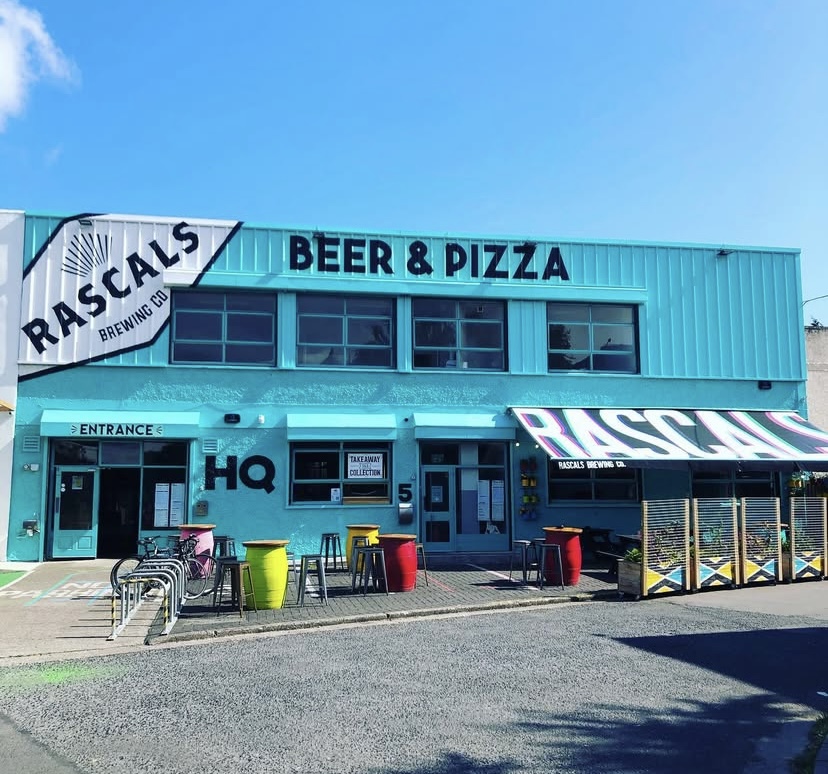
    “We’re not in the business to buy a yacht. We do this because we love what we do,” says Joe Donnelly of Rascals Brewing Company — a family-run Dublin brewery that now finds itself at the sharp end of rising costs, regulatory burdens, and a drinks industry dominated by global giants. 

    With a 30-hectare brewing facility and a popular pizza restaurant on-site in Inchicore, Rascals have built a loyal local customer base over the past 11 years, despite this many of Ireland’s independent craft breweries, it is now grappling with a mounting wave of operating costs — with a recent hike in commercial water charges threatening to push many over the edge. 

    “It’s not one thing in isolation,” Donnelly says. “It comes on foot of years of obstacles put in the way of doing business. Energy costs, inflation, rates — now water charges. At what point do we go — can the government not find the money somewhere else?” 

    The Commission for Regulation of Utilities recently announced a 9.5% rise in water charges for non-domestic users. For breweries, whose product is more than 90% water, it’s not just inconvenient — it’s existential. 

    Ireland’s ageing water infrastructure has long required investment, and few dispute that upgrades are urgently needed but for small businesses like Rascals, the government’s approach to funding those improvements is raising questions.

    “We didn’t cause the problems with the water infrastructure, but we’re being held to account for it,” Donnelly continues. “Of course, it needs to be fixed. But do businesses have to suffer punitive increases as a result?”

    While rising utility costs affect all sectors, small and medium enterprises like Rascals feel the pinch hardest. Donnelly notes that major industries such as Heineken and Diageo can absorb costs far easier — while local independents are left with little room to manoeuvre. 

    People think when you raise prices, you’re just chasing profits,” he says. “But we’re trying to stay open, employ staff, and keep our product at a standard customers expect.” 

    That standard is non-negotiable, he adds. Despite cost pressures, Rascals refuses to cut corners. 

    “We won’t start using inferior raw materials just to protect margins. We have loyal customers who expect quality. That’s what we stand for.” 

    It’s also about more than just beer. Rascals employs 26 people, many from the local area, and supports Irish suppliers across its supply chain. In Donnelly’s view, the company plays a much bigger role than just brewing. 

    Pizza served at Rascals Brewery Inchicore

    “We serve a purpose that’s much bigger than just making beer and pizza,” he says. “There’s a circular economy here that’s being overlooked.” 

    But competing on taps with multinational brands remains a challenge. Donnelly points to the increasing saturation of 0% beers by large brands, which he claims is more about market dominance than consumer demand. 

    They’ve flooded the market with 0% beers,” he says. “It’s not because everyone’s drinking them — it’s about taking up taps. That’s a spot a small Irish brewery can’t get now. It’s an unfair playing field.” 

    He also criticises how alcohol-free beers are being used as a loophole to advertise at sporting events, a tactic that further develops the dominance of global brands. 

    Off-trade access is another uphill battle. While SuperValu is praised for its support of Irish producers, Donnelly says other retailers are more difficult to break into. 

    “Every chain is different, but it’s hard,” he says. “And most people don’t drink craft beer, so you’re introducing them to it for the first time. You have to work hard to stay visible.” 

    Despite it all, Rascals remain positive— cautiously. 

    “We’re going to be here. We’ll still be brewing beer,” Donnelly says. “There might be a bit of economic Darwinism — only the strongest will survive.”

    But Rascals Brewery is not tapping out.