Reporters Orla Stafford, Jennifer McDonald, and Leah King took to the streets of Dublin to discover what people’s Christmas clothing must-haves were and who their style icons are.

Reporters Orla Stafford, Jennifer McDonald, and Leah King took to the streets of Dublin to discover what people’s Christmas clothing must-haves were and who their style icons are.

A proposed public service broadcasting charge, which was due to come into Effect on Janurary 1st 2015 has been postponed until further notice.
The charge, which former Minister for Communications, Pat Rabbitte proposed in 2013 to replace the current television licence, has been postponed due to the ongoing difficulties the current Government has faced in implementing water charges.
The new public service broadcasting charge was due to be issued to every householder regardless of whether they owns a television, and was expected to be approximately the same price as the current television license which currently costs €160.00 per year, with costs for businesses expected to be slightly higher.
Those who are currently exempt from the television license charge are thought to not be liable for the impending broadcasting charge due to being in receipt of a household benefits package.
The new charge was a plan devised by the former communications minister due to the trend of individuals watching news and RTÉ content on iPods, tablets, and smartphones.
This allowed for individuals to steer clear of paying a television license because of not owning a television, which meant that RTÉ were losing out on revenue.
According to a press release issued by the Department of Communications in July 2014: “License fee evasion is an ongoing scourge. This means that around twenty five million euro worth of potential revenue is lost annually to RTÉ
“The objective of our TV license system is to fund public service broadcasting. The revenue lost through fee evasion has an immediate impact on the quality of service that can be provided by the national broadcaster.”
Government permission had been approved to allow for An Post to access cable and satellite television subscription data for purposes of identifying potential fee evaders.
Former RTÉ producer Alex White has now replaced Pat Rabitte and is currently serving as the Minister for Communications, Energy and Natural Resources.

 A major social networking site is setting up its headquarters in Ireland much to the disapproval of the Irish public.
Controversial site Ask.fm announced in early November that it is moving its head office from its current base in Latvia to Dublin.
The move has sparked outrage among many, including Foreign Affairs Minister Charlie Flanagan who took to Twitter to voice that the move was a “matter of concern” and would be raised with his Government colleagues.
Ask.fm is a social networking site that allows users to send questions and comments anonymously to other users, and to be questioned in return.
According to the sites official page, Ask.fm has “more than 120 million members in over 150 countries” with approximately “25 billion answers.”
The site has come under huge criticism in recent years as it has been linked to cyber-bullying resulting in a number of suicides among young people including Irish teens Ciara Pugsley and Erin Gallagher. Both girls died tragically in 2012, reportedly because they were both victims of bullying on the site.
Ciara Pugsley’s father Jonathan is now urging the Government to take action against the move and is shocked that the relocation was allowed to take place in the first place.
Speaking on the Ray D’Arcy show, the Leitrim father said the site tends to “breed vile comments.” He also added that he would “challenge anyone to go onto the site and not be on it a short period of time without seeing some horrible, disgusting comments.”
According to the sites official page , Ask.fm “have created a place for our members to have fun, share information, make friends, and express themselves freely. We want them to do this in a safe environment.” However, what has been under fire in recent times is the approach of the company to the safety and well-being of its users.
In August 2014 Ask.fm was bought by an American company, the owners of dating site Ask.com. According to head of operations and lead advisor on user safety Annie Mullins, “one of the conditions of buying that company was that the former owners left almost immediately from the day that [we] bought it.”
With the site under new management, Annie Mullins spoke on RTE’s Prime Time show about her company’s action to fight cyber-bullying and to introduce a completely different approach to user safety.
According to Ms Mullins, the new company has invested in moderation by hiring experts in internet safety both in the USA and across Europe and are looking to work in partnership with several organisations that are experienced in educating and advising parents on bullying.
Though the site has received a lot of bad publicity and has gained a difficult reputation, Ms Mullins commented that “the site is growing.” According to Annie Mullins, “anonymity is part of the functionality” of the site and again this feature is outlined on the site’s website as “something to be cherished because it gives young people the encouragement and confidence to ask the questions, have the conversations and find the answers to the challenges of growing up.”
The site states that it is in partnership with several of the world’s leading internet safety companies including Internet Watch Foundation (IWF), Insafe, and ICT coalition. On the sites safety centre page “ask anonymous questions”, “do share your thoughts with everyone” and “spread Ask.fm across the web” is encouraged, while “don’t say mean things” and “don’t be a bully” is discouraged.
Dublin South West TD Seán Crowe has said that the decision by Ask.fm to locate in Ireland has posed new difficulties and challenges for Ireland in terms of cyber-bullying and that the Minister for Children James Reilly should now do more to protect Ireland’s young from online threats.
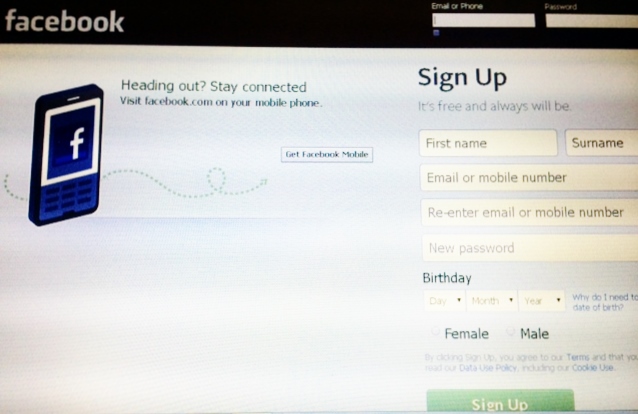

Numerous cases of ‘catfishing’ have come to light in recent times, illustrating just how dangerous the web can be and highlighting a grave concern over just how safe an individual’s images and personal details are on the world wide web.
A ‘catfish’ is an individual who pretends to be someone they’re not using a social media account for the purpose of creating a false identity.
‘Catfishing’ is a startling reality in today’s era of digital communication and can have serious repercussions for those affected.
Many of the ‘do-no-gooders’ hide behind a computer/iPod/tablet screen as they scam their way into building a romantic relationship with unsuspecting victims.
Not only do those responsible for catfishing steal the identity of other individuals, but they post false information alongside the image they have stolen of an individual they may or may not know.
Aida Skirmantaite, a fourth year journalism student in DIT, spoke about her experience of being catfished and the terror associated with realising that someone somewhere is pretending to be you.
Aida couldn’t understand why she had fallen victim to catfishing and what had attracted the perpetrator to her page. “I asked myself why would they choose me,” she said.
For Aida the whole experience of being catfished started when the fake page was suggested to a fellow Facebook friend.
That friend happened to run the page by Aida, as he knew the profile picture was of Aida but the name underneath was far from hers and instead supposedly was that of an Irish woman.
Aida’s boyfriend added the fake page in order to discover who the personal identity thief was but to no avail. Aida then immediately reported the site to Facebook who took action by removing the page.
Since the experience Aida has tightened the security surrounding her online social media profiles and is more aware of what can happen in a realm of virtual communication. She now searches for any associations with images on her social media account through an application called ‘Tineye.com’, a “reverse image search engine” that has the ability to find out where an image online came from, how it is being used online, and if any modified images exists.
Another social media account holder Jennifer McDonald commented, “I’ve never been catfished but I get loads of friend requests and messages from profiles that are clearly fake and are people catfishing. I usually go onto the page and block them and I usually don’t write back to them but I did once and it was a weird experience so I just block them all now.”
Essentially catfishing is pretending be someone you’re not on popular social media accounts as seen in the case of 21-year-old journalist Emma Nolan whose images were uploaded to a Tinder account and used for online dating purposes.
A 2010 movie entitled Catfish brought to light this shocking scenario by telling the tale of a 28-year-old man named Nev Schulman who fell head over heels in love with a stranger’s Facebook profile picture only for her picture to be remarkably different to what she looked like in reality. The movie was a success and furthermore went on to inspire a series of documentaries on the issue.

State-owned Dublin Bus are examining and considering the possibility of introducing a 24 hour service, just weeks after increasing fare prices.
Public transport users will benefit from services that will run throughout the night if the proposal to the Labour Relations Commission is approved.
Dublin Bus is in talks to oversee that a service to the people of the capital is provided throughout the day and night.
At present Dublin Bus runs until approximately 11.45 p.m. midweek, with the highly relied on NiteLink service catering for the needs of those residing in Dublin city and the suburbs by providing a transport service on Friday and Saturday that doesn’t finish until approximately 4 a.m.
Nitelink prices recently soared to €6.50 from €5.00 under revised plans by Dublin Bus.
The visual difference between the Nitelink service and the ordinary Dublin Bus service is that the Nitelink bus is marked with an ‘n’, for example 25n. The ‘n’ represents the during-the-night, two day service.

NIGHTCRAWLER is a well directed, heart-pounding, pulse-throbbing crime thriller that’s storyline is the first of its kind to be transformed into a blockbuster movie.
The suspenseful story acts as a mirror to what’s happening in reality in the realm of broadcast media and freelance journalism, with individuals stepping up to the mark and providing self-generated content.
Set in downtown Los Angeles, the film centres on a ruthless thief named Louis ‘Lou’ Bloom who is desperate for a job and who is tremendously tired of showcasing his worth only to be rejected by potential employees.
Deciding that a path of self-employment is the better option, Bloom sets out to stand on his own two feet and so he turns his hand to freelance journalism.
Capturing the horrifying scenes of barbaric crimes committed in the heart of LA is no reason for Bloom to bat an eye-lid and soon the social outsider looks at his new interest as a calling and works towards being the epitome of success.
With an impressive bank account and a bulging contacts book in sight, Bloom befriends as many people as possible to help reach the top of his game and he has no remorse in trampling on those who have aided his progress.
Lou shows no empathy towards victims of terrible acts of violence or road traffic collisions and hijackings. For Lou, these people are merely objects he can cash in on.
Rated 16 and lasting a total of 117 minutes, Jake Gyllenhaal plays the character of Louis Bloom and delivers a killer performance. Gyllenhaal effortlessly illustrates how adaptable he is as an actor as he performs his role as a sociopath to perfection.
Directed by American screenwriter Dan Gilroy, best known for The Bourne Legacy (2012), this drama contains scenes of violence but nothing that is worthy of cringing at with your parents.
Though the movie succeeded in entertaining the viewer and showcases one of Hollywood’s ‘beauts’, it is slightly dragged out with unnecessary scenes that could have been left for the blubbers or deleted scenes of the DVD set.
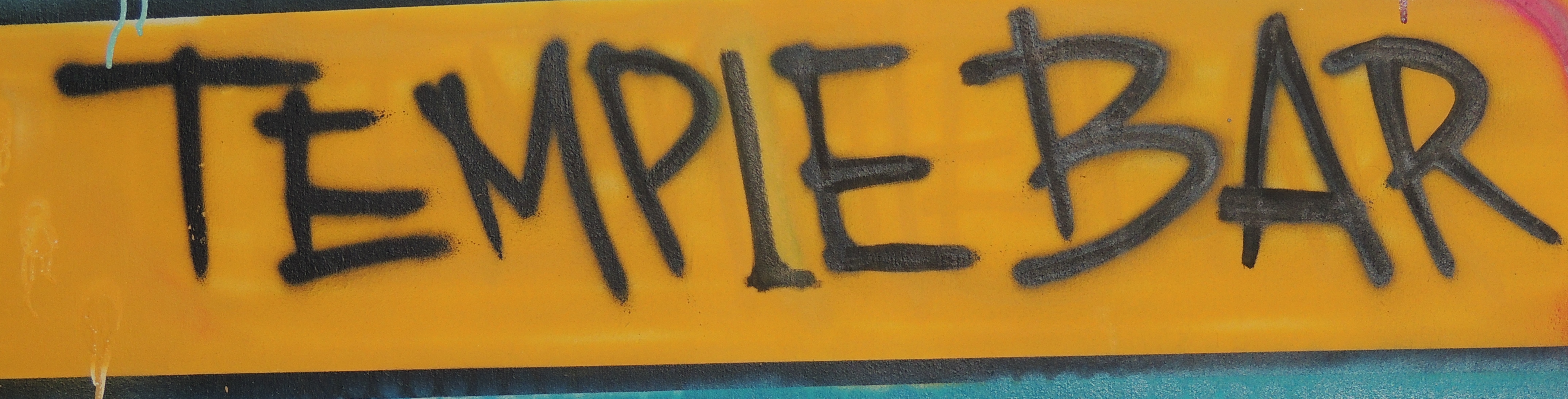


The proposed by-laws that would see buskers banned from the heart of the city centre and tourist hotspot Temple Bar, and only permit them to perform on Grafton Street under strict guidelines, have been overruled by Dublin City Council.
According to Dublin City Council (DCC), busking provides a “public amenity that enhances the character of the city and adds to its attractiveness.”
The DCC were forced to re-consider the rules and regulations governing street performers and their activities after numerous complaints were made in recent times to DCC, An Garda Síochána and other representative bodies.
Concerned individuals have brought forward complaints relating to loud noise, the obstruction of premises, late night busking disrupting residents and the pressure placed on some individuals to make some sort of donation.
Bearing this in mind, a revised version of the Draft Street Performance By-Laws was put together and presented by the Arts Strategic Policy Committee on October 13 for consideration by DCC.
The by-laws set out strict protocol including the banning of knives, flames, swords and axes in any performance.
They also stated that a permit must be obtained by the DCC for an individual to perform in a public place, with prohibited sites including anywhere outside the GPO on O’Connell Street and the entire radius of Temple Bar.
If the by-laws came into effect, an individual had to apply for a permit, and if granted, pay the fee and provide identification and photographic evidence of oneself.
The permit would be granted for one year and included a fee of €30.00 per annum and €60.00 per annum for those with amplification.
Under the proposed by-laws the performer had to display the permit throughout his/her entire performance and could only perform for a maximum of two hours.
A busker could not perform twice within the space of 24 hours in the same area and had to relocate to a location not within 250 metres of his/her previous performance.
With busking in Temple Bar prohibited, Grafton Street would prove to be the spot, however, time restrictions would be implemented with a curfew for performers.
Buskers would not be allowed to perform before 9am or after 11pm with the exceptions of Saturday and Sunday mornings.
The City spoke to Irish musician and Carlow man Shane Hennessy, who commented:
“As soon as you kill off the music on the street, you kill off what is really unique about Dublin.
“Every single day tourists and visitors say to me “Wow, there is a huge amount of music in Ireland, it’s great to see so much music on the streets”, and it is true. Many of Ireland’s best started out singing on side streets and alleys. Imagine the case for musicians down on their luck or looking to make some money, who have to pay to play on the street?
“These proposed regulations might eliminate the problem of chancer buskers, but it absolutely destroys the situation for every good busker out there. How many times have you seen huge crowds on Grafton Street or in Temple Bar genuinely loving what they’re watching?
“I really hope these measures don’t go through. I wouldn’t have thought so before but knowing what the City Council has been like the last few months, it wouldn’t surprise me,” he said.
In early November DCC voted in favour of removing the proposal after large protests by musicians and individuals which has allowed for no changes to be made.

Over a decade ago they were unheard of, unimaginable, and non-existing. Who would possibly consider an alternative method to smoking a traditional tobacco cigarette? Yet this unrealistic idea was the brainwave of Korean-war veteran Herbert A Gilbert in 1963, and in 2004 the electronic cigarette was introduced in China. Today, the electronic cigarette industry is becoming one of the fastest growing industries worldwide, reportedly worth in excess of €1.1bn.
The electronic cigarette, or e-cigarette for short, is a battery operated device that replicates the experience of smoking a genuine cigarette. The e-cigarette contains liquid nicotine which is stored in the atomizer chamber. Once the user inhales, the electronics aka the micro heating element, heat up the liquid and the nicotine is drawn in and then furthermore released out as vapour. The vapour gives the impression of smoke which misleads many to presuming an individual is smoking an authentic cigarette when in reality the individual is using the e-cigarette. The practice of smoking an e-cigarette is known as ‘vaping.’
A feature of the e-cigarette that makes it remarkably different to that of a real cigarette is the ability of the user to smoke an array of flavours. The liquid nicotine, also known as e-liquid, can be purchased in participating stores or online in bottles of 10 ml, 12ml, and 30ml.
The variance in flavours available caters for the taste buds of each individual e-cigarette user. They range from original apple, cherry, vanilla and strawberry to more exotic tastes including John Player Blue (JPB), Sex on the Beach, mango and bubblegum.
There are two types of e-cigarette, which vary in price. Firstly there is the standard e-cigarette kit that contains an e-cigarette with LED light, filters/refills, a rechargeable battery and a USB charger. However, with this particular e-cigarette flavours cannot be inserted.
The more popular of the two is a kit that contains an e-cigarette, a mouthpiece, USB charger and a chamber for inserting the various e-liquids.
Speaking about the quantity of nicotine present in the substance, twenty-three year old electronic cigarette user Gary Corrigan commented: “I wanted to quit smoking so I decided to turn to e-cigarettes in order to gradually reduce my intake of nicotine, and eventually be nicotine free.
“In my opinion it is a healthier alternative to smoking and it’s working perfectly for me. I’m reducing my nicotine intake, I’m spending less money, and my clothes are rid of the smell of stale tobacco,” he said.
With more and more people turning to e-cigarettes and health specialists constantly reviewing the associated risks, several businesses and companies throughout the country are looking to put a stop to the products being smoked on their premises. These include Dublin’s DART Service and Irish Rail.
The Irish Government is also keen to regulate the seemingly popular commodities even though the products are free of hazardous tobacco, tar, and cancer-causing chemicals.
In February 2014 new tobacco rules were passed by the European Parliament. The draft legislation introduced would make it compulsory for all cigarette packages to bear picture warnings which would cover sixty-five per cent of the product packaging.
In the near future member states will also be able to decide on whether e-cigarettes are classified as medicines or tobacco products.
Minister for Health James Reilly has publicly spoken about his desire to ban e-cigarettes in Ireland to anyone under the age of eighteen.
According to Alan Baker, Executive Officer at the Department of Health, “as electronic cigarettes do not contain tobacco they are currently not regulated under tobacco legislation. Products which do not fall under any regulatory framework come under the European Communities (General Product Safety) Regulations 2004 which specify the duties of producers and distributors placing products on the market.”
Mr Baker also added that “Minister Reilly is currently reviewing the evidence on the potential harm and the potential benefits of e-cigarettes before deciding the best approach to their wider regulation.”
In February 2014 Irish Rail banned e-cigarettes from all DART and train services because of feedback and complaints by customers. Irish Rail state that they treat “replacement devices such as e-cigarettes in an identical manner to traditional cigarettes and they cannot be used onboard trains, within offices or in enclosed station areas.”
Also jumping on the band wagon are Dublin Bus and Bus Éireann, who have both prohibited e-cigarettes under their policy on tobacco smoking.
According to Dublin Bus spokesperson Maria Brennan, “Dublin Bus has a designated anti-smoking team which comprises of uniformed and plain clothes inspectors. The buses are also fitted with an automatic ‘no smoking’ announcement.”
In June 2011, The Pharmaceutical Society of Ireland disallowed for electronic cigarettes to be sold in general sales outlets and over the internet due to the lack of appropriate regulation.
In Ireland there are several manufacturers and suppliers of electronic cigarettes including VIP, FoxyCig, Nicofresh and Healthier Smoker.
Stalls selling electronic cigarettes and e-liquids have been placed in several nationwide shopping centres including Dublin’s Jervis Shopping Centre and Ilac Centre.
Sales assistant Niamh*, who works in a shop that sells the electronic devices, commented:
“They’re really popular. There’s a mix of age groups buying them, but younger smokers, under fifty say, are much more open-minded to them. Older people seem to be happier to stick with cigarettes because they say they don’t know what’s in the e-cigarettes and that they are not regulated. There are 4000 chemicals in a cigarette and 4 in an e-cigarette,” she said.
Several shopping centres may look to banning the devices, with Dublin’s Liffey Valley shopping centre one step ahead. According to customer assistant Owen McGovern, the devices are banned: “E-cigarettes are banned on the premises but there are no signs stating this, and so I have seen some people use them anyway,” he said.
Tobacco Free Ireland, Ireland’s tobacco control policy, have stated that the general consensus at European level is that there is a lack of research in relation to the long term health effects of e-cigarettes, and a lack of sufficient evidence that they aid with smoking cessation.
Tobacco Free Ireland is currently working towards a regulatory framework for nicotine products including e-cigarettes.
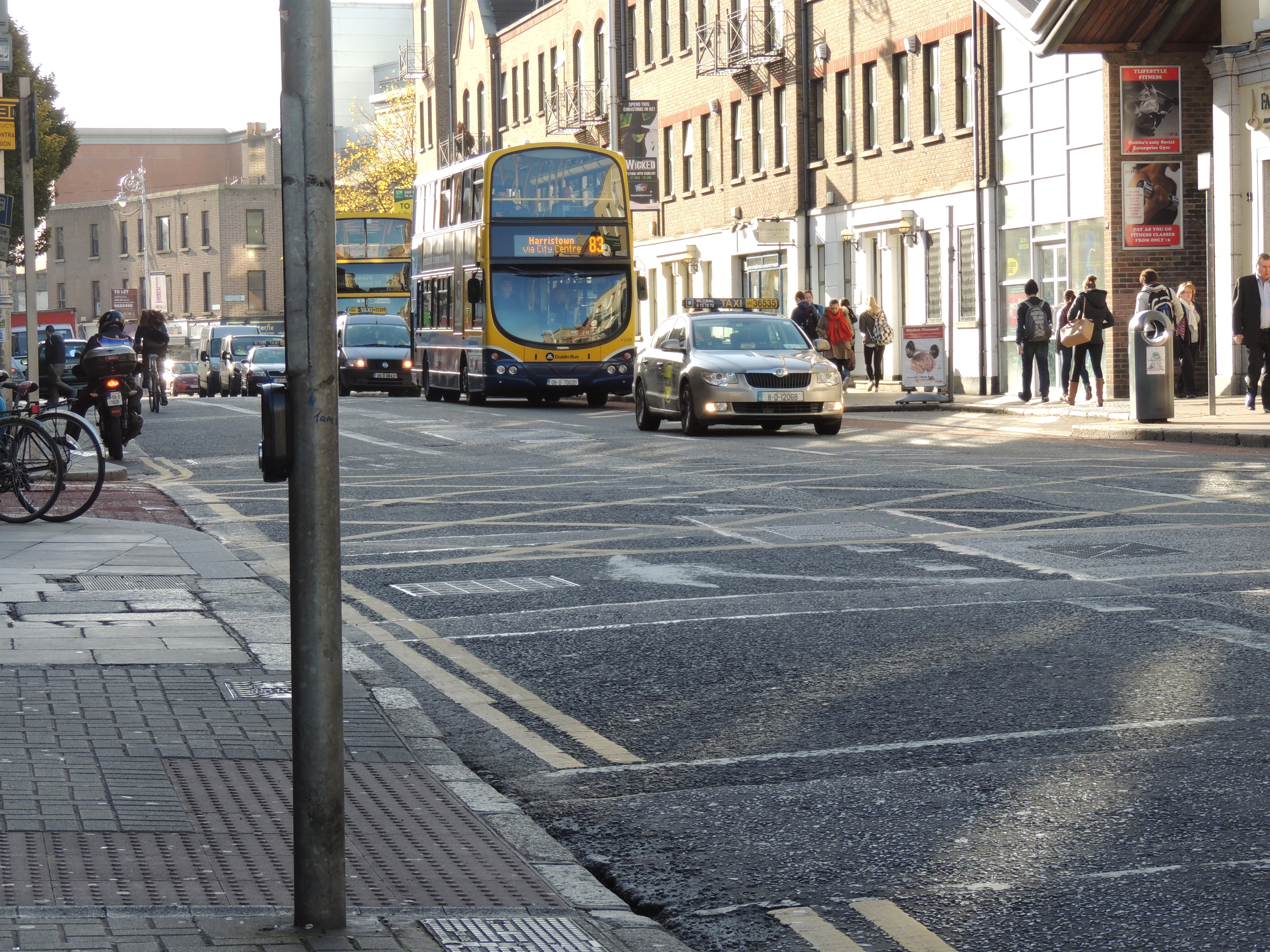
Irish commuters will be digging deeper into their pockets with price hikes announced for public transport fares.
The National Transport Authority (NTA) announced at the end of October that prices will soar on Dublin Bus, Bus Éireann, Iarnród Éireann, and Dublin’s Luas service, with changes expected to be implemented as soon as December 2014.
According to the NTA, “Leap card fares continue to offer customers best value compared to cash”, with the company aiming to “increase Leap card use to simplify fare payments.”
According to Gerry Murphy, CEO of the NTA, the Leap card has proved popular with “over 750,000 Leap cards now in circulation and almost €2 million per week used in travel credit.”
From December 1, 2015 changes to cash fares, Leap card fares, monthly and prepaid tickets will come into force with the most radical changes affecting the adult 30 day rambler ticket.
Commuters and public transport users will be expected to fork out an extra €10 as the fare will alter from €137.50 to €147.50 in the lead up to the Christmas season.
Student tickets will also be hit with a damaging leap to €107.50 from €100 for the 30 day student rambler ticket, with less of an increase on the student 5 day rambler ticket, which is more expensive by €1.50, bringing the total cost to €21.50.
This has not been the first time public transport users have been dealt a blow leading up to the Christmas period, with the NTA previously increasing fares during the months of November and December in 2013, with the same reasoning of ‘protecting service delivery.’
The much relied on Nitelink service by Dublin Bus will now be €6.50 as opposed to €5, with the city centre fare also increasing to €7.50
Dublin Bus will also enhance the €1.80 trip to €1.95, €2.35 to €2.55, €2.60 to €2.80 and €3.05 to €3.30.
Bus Éireann is raising selected fares by as much as nine per cent.
According to the NTA, “fare increases are necessary in order that a sufficient level of service can continue to be provided.”
The NTA also added that “public transport fare increases have been deemed to be necessary in recent years as the operators have sought to compensate for reduced PSO payments.”
The NTA have approved the increases after they received numerous submissions by each of the publicly owned companies, with the NTA commenting that “Dublin Bus has written to the Authority requesting fares increases that will yield extra revenue of €4.9m in 2015.”
The NTA entered into Public Service Contracts with Dublin Bus, Bus Éireann and Iarnród Éireann in December 2009.
Weekly commuter and apprentice Michael Doyle is unimpressed with the recent changes:, “There’s no incentive to use public transport as at times it’s pretty much cheaper to drive.”
He also added that “it’s a pretty bad service to be paying through the teeth for. It’s late, and nine out of ten times it flies by packed. We should take a leaf out of Barcelona’s book and protest.”


A sickening trend that is becoming more prominent in today’s society is the idea of ‘revenge pornography’, the sending or distributing of sexually explicit images of former partners without consent.
Bringing technology into the bedroom may spice up a couples love life at the time. However, it can have serious and catastrophic implications as many individuals are starting to learn. What happens to the images after a relationship has fizzled out should be considered before things get hot and heavy and someone presses ‘record’.
In recent times there have been several incidents where an image of an individual in an intimate position has been shared on social networking sites and/or via email and text. The sharing of such images has, in many cases, forced a victim to change their name legally, quit a job, change professions, delete social media accounts, and alter email addresses, phone numbers and so on.
Irish woman Stephanie Lord, a writer and activist for women’s rights and blogger at feministire.com, spoke to thecity.ie about revenge porn:
“Revenge porn is becoming more and more common these days. Certainly I’m now hearing regularly about incidents where photographs of women have been shared against a woman’s wishes after a relationship breakdown or after her phone was stolen, and it’s usually via the medium of social media. Many women are reluctant to speak about it for fear of drawing attention to it though,” she said.
Stephanie also added that these photographs are being used as a weapon against women in order to shame them.
“They are certainly on a broad spectrum of violence against women. The rapid development of technology has meant that the way in which we live in general has changed, but it has also meant that the way in which women are abused has changed too, and the law has been very slow to catch up with that.
“It shouldn’t be the case that women are left to take civil actions dependent on particular jurisdictions when they are victims of revenge porn and such massive invasions of privacy. It’s a form of abuse, that’s about controlling, frightening and humiliating women which probably requires a change in the law.
“Too often people are concerned with asking why women allow certain types of photos to be taken in the first place, rather than asking why a person would actually upload something like that,” she said.
American Holly Jacobs was subjected to revenge pornography at the hands of her ex-boyfriend of three and a half years.
Due to her former partner’s behaviour, Holly’s reputation was utterly tarnished and there was no going back. The resulting consequences were horrifying as her personal life became public knowledge.
As a result, in August 2012 Holly set up a website entitled endrevengeporn.org to campaign for the criminalisation of revenge pornography. Organized by the Cyber Civil Rights Initiative, the website aims to provide support and advice for victims of revenge pornography and for those whose confidential photographs and videos have been disseminated on the internet without consent.
In the USA, revenge pornography is also referred to as ‘non-consensual pornography’ or ‘cyber rape.’
A fixation with sex and technology is appearing to be a significant factor in today’s culture with Hollywood movie producers taking advantage of this remarkable trend by releasing block-buster movies including Sex Tape (2014) starring Cameron Diaz and Jason Segel and Road Trip (2000) featuring Seann William Scott.
In recent weeks revenge porn has erupted on a mass scale, with various A-List stars including Kim Kardashian, Rihanna, and Tulisa Contostavlos all falling victim to this dishonourable craze.
In addition, cash is to be earned through websites such as ‘isanyoneup.com’, a revenge pornography website that showcased explicit images. Though the website was shut down in 2012, up until then it had proved extremely popular, collecting thousands of dollars in revenue each month.
To tackle the upsurge in revenge pornography, the British Parliament is considering marking revenge pornography as a specific offence under the Criminal Justice and Courts Bill.
According to a press release issued by Gov.UK, revenge pornography refers to the malicious sharing of “a private sexual image of someone without their consent and with the intention of causing them distress.”
Sending explicit material of people engaging in sexual activity or being depicted in a sexual manner may soon be an offence in the UK under the Communications Act 2003 or the Malicious Communications Act 1988. The offence may be punishable by a sentence of up to two years imprisonment.
At present there is a lack of laws regarding this activity, and so it continues to emotionally damage and physically intimidate its victims while the perpetrator hides behind a computer screen, freely allowed to embark on his/her journey of destruction.
You must be logged in to post a comment.