A schoolboy, who ought to have been in school begged his Dad to buy him a watermelon,one so big that he struggled to lift it. “Please Da can I have it, they’re lovely so they are.” My heart went out to the young lad when his Dad said “not today son.” Even though I suspected he only wanted it because it matched the colour of his uniform.
“Cigarettes for sale” was the brazen bellow to be heard from the street corners. Loud and clear so all could hear.
“Come here to me love and I’ll do your hair for you” pleaded a woman with a handful of hair extensions.
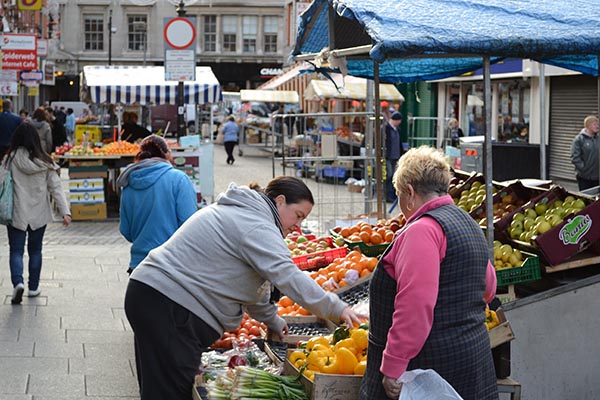
A mother and daughter sat side-by-side at their fruit stall and exchanged tips of the trade. Breakfast for the street merchants consisted of their own produce. One man munched on a banana and a woman crunched on an apple.
The pigeons wanted in on the action too, a flock gathered around chunks of naan bread retrieved from the nearby refuse bin.
A waft of freshly baked bread lingered in the air. The source was a Parisian baker and an actual real bakery.
Across the street stood a lady haggling with the fishmongers; she wanted eight fish but onlyif the price was right. She tried her luck but the experienced trader wasn’t having any of it.
Five minutes later, the customer returned and did a deal. The merchant emerged the happier from that trade-off. Her face lit up, in marked contrast to her earlier scowl.
Neon lights signalled phone repair shops in competition for custom. One such shop had an on-site hairdresser to offer haircuts to ‘shorten’ the wait. Beat that.
A toddler stood enrapt looking skywards; a toy sized toy shop and its turban- wearing ower had captured her attention. She was lost in her own world until her father hurried her along.
A Polish store big enough to take on the Tesco giant complemented the kitsch polish cafe a few doors away. On a fruit stall, Chinese pears took pride of place alongside Irish pears.
On line betting is leading to a massive increase in gambling addiction amongst young people in Ireland according to a spokesperson for Gamblers Anonymous. This new form of betting is now a huge business, estimated to be worth €44bn globally this year. While figures for Ireland are not available, economic consultants have estimated that the Irish market is worth about 5% of that, or €2bn.
‘Sean’ a 21year old student from Dublin got hooked on gambling at a young age and is now attending Gamblers Anonymous. The city.ie spoke to ‘Sean’ about this addiction. He recalls how at the age of sixteen he began to put on a few “harmless bets”. At that time he was working as a lounge boy “Punters would always have tips so I decided to try my luck, some won, but most lost” he said. It was not long before ‘Sean’ was stealing from his boss and was eventually caught and fired. He explains that he gave up gambling for a while but that all changed when Sean went to pay for medicine for his sick mother with the use of her credit card. He recalls that he copied down her card details and decided to give online gambling a go.
‘Sean’ got addicted to online gambling quickly and described it “as an escape from any everyday problems like college, exams”. He added that he bet on events in the end that he knew nothing about. He describes that he hit his lowest time gambling when instead of going to see his very sick mother in hospital he spent the money gambling. In the end his family began disowning him. Sean was encouraged by his mother to attend a meeting of Dublin’s Gamblers Anonymous and decided to try and turn his life around. Since then ‘Sean’ has seen dramatic changes in his life, his mother has passed away and ‘Sean’ lives on his own. He is completing college but still admits to often thinking of gambling but knows what it would do to him if he ever went back.
The city.ie spoke to other individuals who attend the weekly meetings at Gamblers Anonymous and most had gotten addicted to online gambling. ‘Paula’ a professional woman in her thirties outlined the ease of gambling online , “it is not the same as walking into a bookies and handing cash over the counter. In some ways it was as if you were not dealing in real money at all. I was upping my bets tenfold online. I became a recluse of sorts and cut off relationships, no one was allowed intrude in my gambling” .
‘John’ who is in his mid-twenties and who works in the IT sector described having three different credit cards for gambling ,which he ‘blew’ along with a credit union loan, in the space of four months while online gambling. He described himself as “a street angel and house devil”. He claims that he was mentally abusive to his wife who at the time knew nothing about his gambling addiction. He managed to hide the bills making sure to meet the postman first thing every morning.
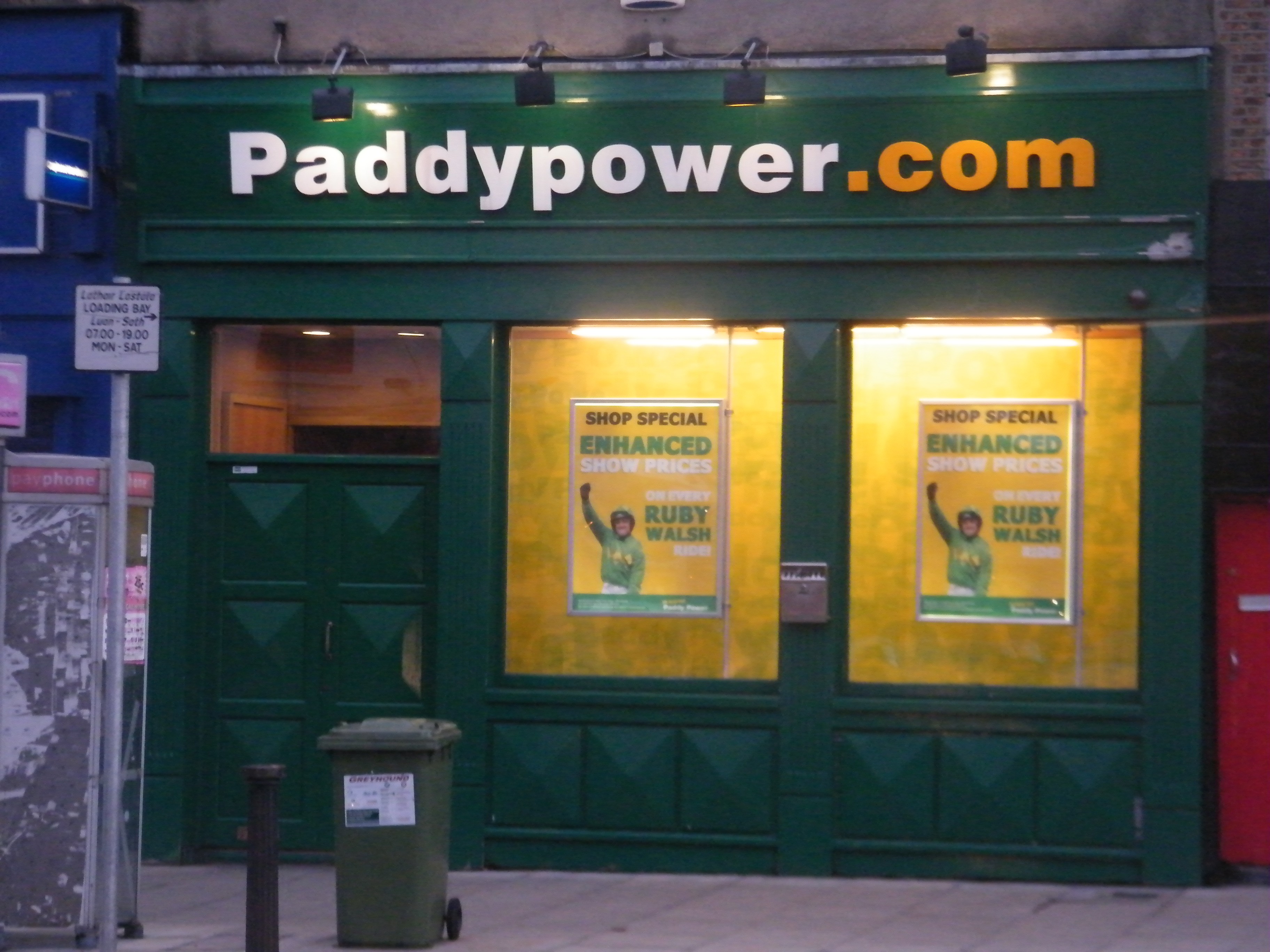
With most people using smart phones, gambling is now available at the click of a button. ‘Take Paddy With You’ for example is the slogan with which the highly successful bookmaker Paddy Power markets its mobile betting operation encouraging people to “ Just tuck him inside your mobile phone, or onto your iPad. But most of all, take him in your head, where he can pop out every now and again, tap you on the shoulder, and whisper that it’s time for a flutter”. Paddy Power is just one of a large number of betting operations which market online betting. Like many of the bigger betting companies it now carries ‘responsible gambling’ advice on its website.
When it comes to Ireland the city.ie found that the current gambling legislation is based on the Betting Act 1931, which caters for taxation on gambling, and the Gaming and Lotteries Act of 1956 .The only adjustment of note came in 2001 when the Horse and Greyhound Racing Act abolished the prohibition on the placing of bets by people within the jurisdiction with bookmakers outside. This facilitates the operation of online gambling through companies locating the online server offshore, although it has never been tested.
Minister of Justice Alan Shatter is expected to publish a bill later this year, and it will be co-ordinated with an amended betting bill from the Department of Finance. Together, these bills are expected to point the way towards a proper regulatory framework in the state for online gambling.
There is no tax take from online gambling at the moment.
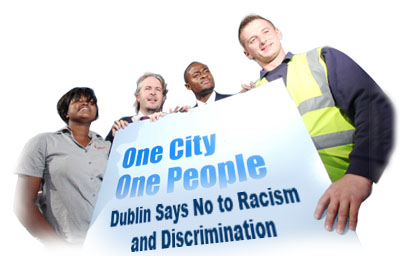
With over 15 per cent of Dublin’s population of immigrant origin and over 120 different nationalities now calling the city home, Dublin clearly embraces its multi-ethnicity. However statistics from Dublin City Council reveal that the problem of racism is very much an issue in the capital, with over 35 per cent of migrants reporting harassment on the street or on public transport and over 32 per cent of migrants questioned reporting discrimination at work. The City reporter Patrick Gormley, spoke with David O’Donovan from the ‘One City One People’ campaign and Helena Clarke from The Integration Centre to see if enough is being done to combat this growing issue.
Running throughout October the ‘One City One People’, held a number of different events across the city to promote inclusion, integration and to combat racism and discrimination, David explained his role in the project. “My role is the support of the overall project from minor projects, to major conferences held as standalone Dublin City Council ventures or indeed working with national governing bodies with similar interests regarding a multi ethnic city.” He added “Every day was different, one day I could be answering emails in my office, the next day I had my shoes off and having a meeting in a mosque, some meetings had translators and also the chance to travel to different cities to compare how they do things compared to “our way” can lead to very interesting discussions.”
When asked if he thought the issue of racism was on the rise in Dublin, David surprisingly answered “In my own personal opinion the issue of racism is not getting worse, this maybe contrary to a lot of consensus out there. But if you think about it, the level of crime is pretty much the same as it ever was, but it’s the type of crime now that would be concerning. We live (and have been living) in a multi- cultural city for the best part of 30 years, it’s the current 20 something’s from all backgrounds who are streets ahead already of the “experts” yet we fail to properly acknowledge this. I believe in 15 years time, the younger kids of today won’t discriminate between the colour of one’s skin, the accent, the traditions, it will be the norm for many at that stage, but the one commonality they will have is that they are all Irish.”
However, Helena Clarke at The Integration Centre, an NGO (Non- Governmental Organisation) committed to the integration and inclusion of people from immigrant backgrounds, argues the contrary saying “racism is the type of issue that, when it is not dealt with properly, it progressively worsens. Racism in Dublin is getting worse and will continue to do so until policy makers take it seriously and legislate for racist crime.” When asked if she felt there was enough being done to highlight the issue she stated “In a word no. The Integration Centre would like to see racism legislated for. This means that racism would be made an aggravating factor in sentencing. We believe that if it was legislated for properly it would be taken more seriously as a crime.”
Both organisations believe that the continuing promotion of an anti-racism message in the city is an important statement of commitment and acknowledge some work still needs to be done. David explained “Dublin’s cultural outlook towards migrants we have found has in general been very positive, with an open acceptance and welcome for the new diversity of population as an asset for the city. A recent Euro barometer survey of attitudes to immigrants in over 70 cities ranked Dublin 18th as a city which is welcome to foreigners but needs to achieve more on integration.”
WHERE ELSE in the capital city can you be in the same room as objects such as Nelson’s Pillar, War of Independence Documents and a ‘I’ve Been To Switzer’s Santa’ badge? The Little Museum of Dublin, of course.
Just over a year old, this new museum – housed inside a beautiful Georgian building on St Stephens Green – brings the rare ‘aul times to life.
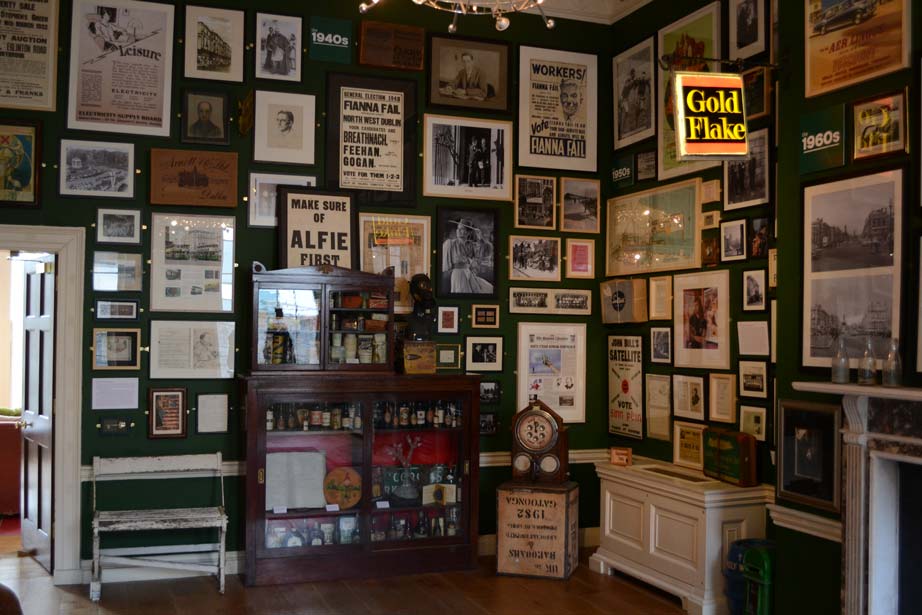
Spread over just two rooms, the Little Museum’s tall walls are packed floor to ceiling with artefacts telling stories of Dublin in the last century.
Displayed chronologically, the artefacts are an eclectic mix of specialist and general interest objects: from original documents, photos and publications to furniture, food stuff and quirky domestic items.
Some objects give you a glimpse of domestic Dublin – harking back to a time of Gold Flake cigarettes, elephant rides at Dublin Zoo and when Aerlingus offered a return “Rolls Royce powered” service across the pond for just £12.
While other memorabilia – recalling famous visitors to the capital, such as Pope John Paul II to John F Kennedy – appears alongside belongings of legandary Dubliner James Joyce and politician and former President Eamon De Valera.
There is also political artefacts – like Bertie Ahern’s first election poster, and a dated Green Party poster from the 80s which claims “Others promise the moon, we only guarantee the earth”.
The Little Museum of Dublin even has a couple of items from our not so distant past – a membership card from Renards Nightclub or a Ryanair ‘business class’ sticker will raise a few smirks.
Meanwhile, downstairs there is a rotating exhibition space – which currently houses an excellent display on the life of Dubliner Bram Stoker.
One gripe visitors may have when visiting the museum is there is scarce contextual information provided on the collection. Additionally, space constraints mean that some artefacts are placed very high up on the building’s tall walls, making them difficult to see up close without a ladder or a stiff neck.
Fortunately, tours are run regularly by the staff and are included in the admission price. Experiencing the museum through a tour is definitely preferable; as discovering the story behind the objects on display can really bring the collection to life.
Visiting this place won’t break the bank either – tickets are surprisingly affordable. On the door tickets are priced at €5, where concessions are available for students and senior citizens. Additionally, children under 10 and jobseekers can visit free.
As an added bonus – if you visit the museum on a Wednesday between 1pm and 6pm – admission to the museum is free to all, courtesy of Johnston Mooney and O’Brien.
At just two rooms – the Little Museum of Dublin certainly deserves its title, but regardless of its small size, this eccentric and unique mix of Irish memories is well worth a visit.
After all, great nostalgia comes in small doses.
All Pictures courtesy of the Little Museum of Dublin
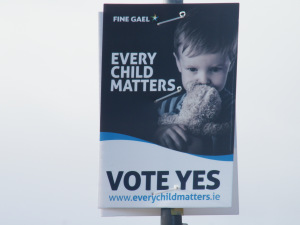
Dublin people have expressed mixed views about whether or not Children’s Rights Referendum campaign posters have influenced their voting decisions. Some voters described the poster-campaigns as “disinterested attempts at persuasion” and confirmed that the posters have not influenced their decision in any way. Others described the posters as ‘cheap’, ‘exploitative’ marketing techniques being employed by parties and advocacy groups to sell yes-votes. Either way, it seems the posters have not achieved what they set out to achieve.
John Meaghan (65) plans on voting yes on Saturday. When asked what he thinks of the referendum posters, he says, “I think the commercial use of children in the case of these posters is manipulative but I am going to vote yes, so they haven’t really had any impact on me.”
John Meaghan (60) from Dublin
Mr. Meaghan was not the only person to hold a sceptical view in relation to the posters. Many voters interviewed for this article stated that the political employment of the children featured in the campaign-posters is questionable, due to the very nature of the referendum.
“I don’t agree with children’s faces being put up on referendum posters. These kids are being completely disrespected and are being used for marketing purposes. The use of these pictures is ironic due to the nature of the referendum, and I for one am voting no”, says Kay Ward (50).
Kay Ward (50) from Dublin
Anne Murray (77) said she hasn’t been influenced at all by the posters. “They’re fine and the children are little dotes but I will be voting no. The state will not protect children.”
Another voter unmoved by the posters is Deborah Waters (44). “I haven’t been influenced by the posters but for those unfamiliar with the referendum, I suppose images of children do clarify that the referendum is about kids. I am fostering a child so I am voting yes.”
Bobby Borwick (50) said, “I haven’t taken any heed to the images on posters and I can see both sides of the debate. I was planning to vote no, but with organisations like Barnardos on the yes-side, I have changed my mind and I am now voting yes.”
Bobby Borwick (50) from Dublin
Brigid Byrne (58) is planning to vote no and said she has carried out a lot of research over the last number of weeks. She said the no-side do not need any fancy posters to back up their campaign because their arguments are obvious and rational. “The images of children used in those yes-posters illustrate how the government are already taking advantage of the very beings they are promising to protect. The use of these images is total exploitation of children”, she said.
Another voter on no-side is Keith Nolan (33). “I have seen the yes-posters but they haven’t influenced me in any way and I will be voting no. The use of the children’s images in posters is cunning and it’s very obvious that the yes-campaigners are trying to buy votes by melting people’s hearts. This cunning move is in itself taking advantage of the children photographed, by undermining what’s in their best interest.”
Keith Nolan (33) from Dublin
Meanwhile, Sinn Féin North West Councillor Anthony Connaghan said that while he is supporting his party in their yes-campaign, many of the yes-campaign posters are ‘exploitative’.
Sinn Féin Councillor Anthony Connaghan
“Sinn Féin are calling for a yes-vote. Caoimhghín Ó Caoláin and a few other Sinn Féin representatives in Leinster House have done work on this over the last while. They are happy that this is a step forward for the rights of children in the country. Sinn Féin lead from the proclamation, which does say that we should cherish all the children of the nation equally. This hasn’t happened over the last number of years. State care has been appalling and Sinn Féin believe that this referendum is a step forward in tackling that care. I do have faith and trust in all members of the party, that they are working for the benefit of the country. Hopefully backing this referendum is the right decision.”
On the topic of campaign-posters, Mr. Connaghan said, “I think most of the yes-posters are guilting people into voting yes by using images of sad faces. It’s as if they are telling you that a vote against this referendum is a vote against children, which is very unfair. I also think these posters are exploiting kids.”
Advocacy group campaign-poster
Sinn Féin produced a campaign-poster which features the face of a two year old smiling child. Mr. Connaghan defended the poster saying, “Our campaign-poster is not as bad as the real guilt-inducing ones”.
COUNCILLOR CONNAGHAN ON NO-CAMPAIGNERS
In relation to the no-campaigners, Mr. Connaghan said:
“I’m not 100 percent convinced that the power is not already there for state intervention where appropriate. Party campaigners for the yes-side have said that the passing of this referendum would stop cases such as the Roscommon case ever happening again. The truth is that the social services had the power to intervene in that case but they did not act on it.”
He continued, “It has been said by no-debaters that this referendum is purely down to adoption, but again I do have to say that Sinn Féin are trustworthy and we would not be encouraging a yes-vote if we didn’t feel that it was the right thing to do.”
UNDERLYING GOVERNMENT MOTIVES
Mr. Connaghan critiqued underlying government motives in encouraging the passing of the referendum.
“It’s like they are trying to say ‘look at us, look what we have done. We have taken action on something that has taken other governments 20 years to discuss.’ This is ironic considering they have been in government themselves within those 20 years. This behavior by the government is also taking citizen’s eyes off upcoming budget austerity.”
RECENT DEBATES
In relation recent televised referendum debates, Mr. Connaghan said, “I feel that no- siders, John Waters and Kathy Sinnott are winning debates. It’s as if the yes-side are reading from notes and I don’t think Francis Fitzgerald is very effective at all.”
The councillor also commented on Minister Leo Varadkar’s public criticism of the no-side. “The likes of Leo Varadkar really makes me laugh. He has addressed the no-side as scare-mongrels, yet Fine Gael’s use of scare-tactics before a budget is undeniable. They throw out a load of kites, in which they release budgetary details to suit their own agenda. It’s like the child-benefit. They’ll probably say they are cutting that from €140 to €100. In the end it will probably be cut to €120 and people will feel grateful that they weren’t cut down to €100. People need to understand those tactics. “
The 2012 Dublin Flamenco Festival took place at the end of October in The Smock Alley Theatre in Temple Bar. Patrick Gormley from theCity.ie went along to to find out more.
The 2012 Mature Students Conference was held in NUI Maynooth on October 13th by the Union of Students in Ireland (USI).
Organized by Laura Harmon, the USI equality and citizenship officer, it was the second such convention held in recent years.
Representatives from Maynooth, DIT, NUI Galway, Athlone IT and others attended, however attendance was not as strong as the previous year’s.
TheCity spoke to one of the keynote speakers and a selection of mature students to get their perspective on mature student life, just click on the link to listen: Lifelong learning
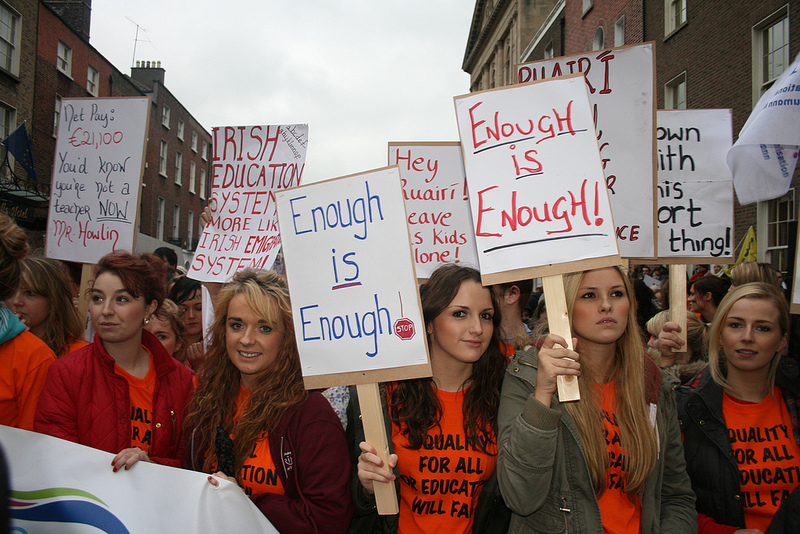
“Student Teachers want their say- equal work for equal pay” was the battle cry of an estimated 2,000 trainee teachers and Newly Qualified Teachers (NQT’s)
Student teacher’s NQT’s and their colleagues marched in solidarity from O Connell Street to the gates of Leinster House in protest against education cuts and Separate Salary Scales for NQT’s.
Ann Fay president of the Irish National Teachers Organisation (INTO) was MC for the event. She began the rally by urging the crowd to do what they do best and “Educate the Government-Education Cuts do not heal.”
Several high profile speakers were in attendance including Gerry Breslin president of the Association of Secondary Teachers in Ireland (ASTI) and Gerry Craughwell president of the Teacher’s Union of Ireland (TUI). They led the crowd in heartfelt, poignant and passionate speeches praising the ongoing work of Student Teachers and NQT’s and lambasting the Irish Government for its decision to cut education budgets.
Breslin labelled Education Minister Ruairí Quinn the “Minister for Shrinking Resources” and warned that it will be the vulnerable children who suffer as a result of education cutbacks.
“Schools lose teachers, classes are amalgamated and classes become bigger. Schools have dropped subjects like Physics, Chemistry, Economics and Languages- Students need these subjects, they need them to compete in the foreign markets and to get a good job.”
He also made the point that permanent teaching jobs are relatively nonexistent and hundreds of young NQT’s are forced to emigrate overseas to secure a stable job position.
TUI President Gerry Craughwell
TUI president Gerry Craughwell began his speech by acknowledging the various placards held by the protesting students. Craughwell then wished to remind Minister Quinn that his party (Labour) was founded on the backs of Workers and Trade Unionists in this country.
“The Minister well knows that the basic principle of Trade Unionism is Equal Pay for Equal Work. This principle has been abandoned in our republic, we now have colleagues working side by side on different pay scales- the minister must stand up for the basic principles his party was founded on – Equal Pay for Equal Work.”
Each impassioned speech was met with cheers of approval from the crowd. Ann Fay of the INTO closed the rally with the words
“And finally please please do not litter the place with your posters- you’re going to need them again, bring them home. Go raibh maith agat agus Slán Abhaile.”
A section of the estimated 2,000 strong crowd
Click on the following link to listen to snippets of audio and speeches from the protest: protest-against-education-cuts
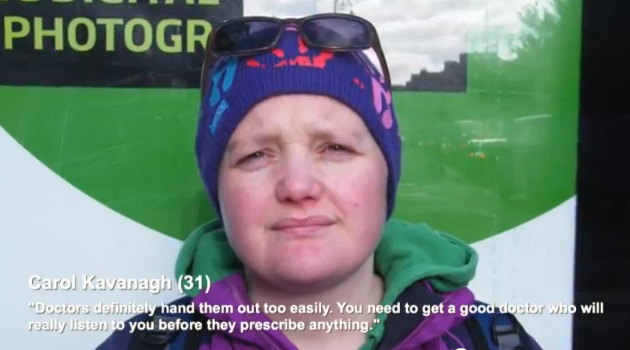
There have been many scary headlines in national news outlets over the last few weeks regarding the substantial rise in the use of anti-depressants among Irish people.
Headline examples include: “Sedation Nation” –Irish Times (27th October 2012) “Sedative and tranquilliser use increases 40% in five years”–Irish Times (24th October 2012) “Increase in use of sedatives and anti-depressants”–RTÉ News (23rd October 2012)
These headlines all followed the result of a National Drug Prevalence survey.
Survey findings suggest that there has been a 40 per cent increase in the use of sedatives and tranquillisers among adults over the last five years.
The City’s Sarah Reilly took to the streets of Dublin to find out people’s opinions on the subject.
If you or anyone close to you is affected by depression, please do not hesitate to contact the following services:
AWARE
Helpline: 1890 303 302 Seven days a week, 10am–10pm
Email: info@aware.ie
Website: www.aware.ie
U.S. voters go to the polls on November 6th to elect their next president and vice-president.
The two front runners for office are the incumbent Democratic candidate, President Barack Obama with his vice-president running mate Joe Biden, and challenger Republican Mitt Romney with his running mate Paul Ryan.
TheCity.ie went on to the streets of Dublin to see just how much we know about the election and who we’d like see win it.
By Andy Nally and Patrick Gormley
American flag clipart courtesy of http://www.ace-clipart.com







You must be logged in to post a comment.