A taxi protest is set to take place from Mountjoy Square to Dáil Eireann today in a dispute over car insurance.
(Source: Wikipedia)
The strike will make its way from Mountjoy Square South toward the Dáil at 11am this morning. It is expected traffic in the city will be disrupted as they make their way through Memorial Bridge, City Quay and Westland Row.
A source has revealed to The City that there has been a huge increase in car insurance for taxi drivers, with premiums almost rising to two times their original average.
A premium that once cost taxi drivers €1,600 will now set back taxi drivers across the city, and indeed the country, up to €3,000. Today’s protest is intended to pressure Minister for Transport, Shane Ross T.D, into rectifying the issue.
In an interview on Kildare station, KFM, one driver said that many driving taxis now “wouldn’t want to go to bed at all for trying to make the money for it”.
The City has contacted TTnH (Tiomanai Tacsai na hEireann) and Minister for Transport Shane Ross for further comment, and will update this story as we get it.
This year’s budget announcement has seen an increase for a lot of people in how much money they take home with many welcoming some of the changes made.
(Source: Flickr / Justin Pickard)
In the social welfare pot there has been an increase of €5 per week to all state benefits including disability, job seeker and carer’s allowance. There has also been an increase to the Christmas bonus for social welfare recipients equal to 85% of their weekly payments, a 10% increase on last year.
Health has also seen a big increase, with it now at its largest recent budgetary allowance at €14 billion with an additional €497 million being given to Minister Simon Harris’ department this year – something which finance minister Michael Noonan said came “with great responsibility”.
This included €40 million to be sectioned off for disabilities and another €35m for mental health.
Within that, an additional €15 million has been awarded to the National Treatment Purchase Fund (NTPF) so as to try and tackle the bed waiting list epidemic that is currently hitting Irish hospitals, RTÉ reported last month that there were almost 300 patients waiting on trolleys. The money for the NTPF will then rise to €50 million in 2018.
The health budget has also seen a boost for nurses with funding for an extra 1,000 nurses to be hired next year. Minister Simon Harris will be speaking with recently graduated nurses later this week to set up an initiative on graduate nurses.
Minister for Finance, Michael Noonan (Source: Wikimedia)
Medical cards will now be provided to 10,000 children in receipt of the domiciliary care allowance while the prescription charge cap for those over the age of 70 is being reduced from €25 to €20 from March 1st.
Higher education also received an increase in this year’s budget with an additional €36.5 million to be added to the pot, which is the first time in years that higher education has seen an increase in the budget. However, many, including the Union of Students Ireland (USI) are saying that this is falling short of the €100 million which is needed to properly boost the sector.
This year’s budget also saw a new full maintenance grant worth up to €6,000 being created for postgraduate students who fall into the lowest income bracket.
In a bid to tackle the ever increasing student housing crisis which has hit Dublin, the government have increased funding for their ‘rent a room’ scheme by €2,000. Anyone who rents a room in their house to a student can now earn up to €14,000 tax free, up from €12,000 last year.
Cigarettes have risen by 50 cent a packet, meaning that this is the third year in a row that smokers have been hit with an additional tax. This means now that a packet of 20 cigarettes will set the consumer back €11. Alcohol prices will remain the same. There has also been no additional duty added to the cost of petrol or diesel, meaning that the cost of driving a car will stay much the same, or less, as the commercial motor tax system has been overhauled. There will now only be five bands of tax in comparison to 20 previously, meaning that some individuals will now pay as little as €92, with an upper limit of €900.
As expected, Ireland’s low corporation tax rate of 12.5 percent remains unchanged, even in the wake of the Apple Tax controversy. The continual low tax rate for companies will mean that Ireland will remain an attractive option for multinationals looking to expand into the European market in the coming years.
An Taoiseach Enda Kenny (Source: Pete Souza / Wikimedia)
From 2018, €1 billion is to be set aside in a ‘rainy day fund’ per annum. The contributions will be made over three years, and will be set aside to aid in stabilising Ireland’s economy when it is most needed. The so-called ‘rainy day fund’ was speculated on in July after Finance Minister Michael Noonan mentioned it in the Summer Economic Statement. Its main aim will be to ensure that there will be a budget surplus from 2019 on.
Similar to the budget last year, it was revealed that anybody earning less than €13,000 per annum will not be obliged to pay the Universal Social Charge (USC). The three lowest rates of USC will fall by 0.5%. These are the 1%, 3% and 5.5% rates, with Minister Noonan saying that the government, resources permitting, are committed to phasing out USC as a tax completely over time.
In line with the UK, a sugar tax will be introduced in April 2018, on soft drinks in particular. This will be introduced as part of an effort to tackle Ireland’s growing obesity problem, particularly among children. In the UK, this tax targeted fizzy drinks, and was imposed on companies according to the volume of sugar-sweetened drinks they imported or produced. It’s yet to be seen if this will be the same way of taxation in Ireland, but it’s highly likely that it will be similar.
An additional €28 million will see 800 new gardaí join the force, alongside 2,400 new teaching jobs, as well as positions for new nurses. Following the closure of many garda stations across the country, this will be a welcome measure for many communities.
The help-to-buy scheme will see first time buyers get a 5% PAYE refund for new builds up to €20,000. This has been met with criticism on social media, with many questioning why new builds are being encouraged when there are still so many ghost estates across the country.
(Source: Wikipedia)
The self-employed are set to benefit as their earned income tax credit will increase from €400 to €950. This will benefit around 147,000 self-employed individuals across Ireland. Combined with a cut in USC, this will result in the self-employed gaining an estimated 2% in take home pay.
As a whole, the 2017 budget appears to benefit many. Stay with The City to find out what the people of Dublin think of this year’s budget, and let us know how Budget ‘17 affects you in the comments.
Alongside the budget announcements today, Dublin Bus announced the unveiling of three new bus routes serving DCU on the northside of the city.
The bus routes will connect the Glasnevin college to Baldoyle (31d), Portmarnock (42d) and Dunboyne (70d) and will commence service on Monday October 17th.
The services are designed with college students in mind and will only run once a day to DCU in the morning and then back in the evening, Monday to Friday only.
Route 31d leaves Baldoyle at 7:45am, arrives in DCU at 8:35am and services Strand Road, Dublin Road, Howth Road and Collins Avenue. The evening service leaves DCU at 5:15pm.
Route 42d connects Portmarnock to the college and serves Strand Road, Wendell Avenue, Blackwood Lane, The Hill, Malahide Village, Yellow Walls Road, Swords Road, Holywell, M1 and M50, Ballymun Road and Collins Avenue.
It leaves Portmarnock at 7:30am, arriving in DCU at 8:40am and leaves DCU at 5:10pm.
Finally, 70d will run from Dunboyne to DCU going through Clonee, Blanchardstown Village, Castleknock Road, Navan Road, Nephin Road, Ratoath Road, Ballyboggan Road, Finglas Road, Old Finglas Road, Griffith Avenue Extension and Ballymun Road.
It will leave Dunboyne at 7:15am, arriving in the college at 8:30am and departs DCU in the evening at 5:05pm.
Last Wednesday students across Ireland got the chance to talk to potential employers at the Graduate Careers Fair in the RDS Dublin.
As well as interviewing students about their future career endeavours, we talked to the editor of Grad Ireland, Ruairi Kavanagh, about the success of the event as well as the growing employment opportunities in Ireland.
Ruairi Kavanagh. (Source: Alastair McGee)
Kavanagh began by explaining that this was the biggest Graduate Fair in years.
Asked for the reason for this, he said: “During the downturn in the recession the shoe was very much on the employers’ foot. They didn’t have to try as hard because opportunities were limited so they knew they wouldn’t be swamped anyway.
“Now the market has loosened up a lot, the shoe is more on the graduate’s foot, they have more options, employers have to work a lot harder to attract them. There’s been a lot more employer marketing. Although not so much journalism,” Kavanagh joked. “I did journalism as well, they don’t come looking for us.”
He added: “The weather helps with the great turnout. It’s free entry, we used to charge five euros, but we didn’t do that this time. The CV clinic booked out within an hour too and there’s 30 odd seminars.”
Kieran (left) is studying Bar Management in DIT and Sam is studying Multimedia and Web Engineering in Institute of Technology Tallaght (Source: Alastair McGee)
Sam (22)
Why are you passionate about that field of work? (Multimedia and Web Engineering)
I wouldn’t say I’m passionate now. If I get a high paying job out of it then I’d be passionate because I would be making sweet bank.
What would be your dream job?
Maybe front end design, front end development of websites or maybe content management or data based analytics.
Would you consider moving abroad after you graduate or will you stay in Ireland?
I’m looking to stay in Ireland if I can get a company over here, if not I will probably emigrate but I don’t know where.
Kieran Phelan (23)
Why are you passionate about that field of work? (Bar management)
“I was born and raised in it, my Dad owns a pub,” said Phelan.
Has the Grad Fair helped with ideas on what you would like to pursue once finished college?
I’m just after looking at some of the graduate programmes with Jameson and Diageo and that’s helped me big time.
Eimear Flynn French and Business student, DCU
Why are you passionate about that field of work? (French and Business)
We did a year in France last year and I loved living abroad and getting to use my language. For business I was always good at maths and stuff so it made sense.
What would be your dream job?
I would really like the Jameson international programme because you get to go around different countries and use marketing and brand identity and stuff.
Would you consider moving abroad after you graduate or stay in Ireland?
Abroad while I’m young and don’t have anything tying me down.
Was the Grad Fair helpful in deciding your future?
There were a lot of companies that I didn’t know had graduate programmes on so that was good. Also a lot of free stuff.
(Source: Alastair McGee)Hilary, studying Business and International Studies (Source: Alastair McGee)
Why are you passionate about that field? (Business and International studies)
It’s easy.
What would be your dream job?
Something that involves international culture, teamwork and not the same everyday.
Will you consider moving abroad after graduation or will you stay in Ireland?
I’ve finished my study in the US so am looking for jobs in Ireland.
Has today been helpful?
I don’t think so.
Mark Keenan, studying a masters in Economics and Finance in WIT (Source: Alastair McGee)
Why are you passionate about that field? (Economics and finance)
I was always interested in economics and governance and how it works to help all members of society and I think economics helps answers these questions.
Will you consider moving abroad after you graduate or stay in Ireland?
I’m going to look abroad as well but I wouldn’t mind staying in Ireland. I probably prefer Dublin or Belfast but outside of that I would be more than open to move abroad.
What would be your dream job?
Policy advisor maybe but it’s hard to know, I think I need to get into the workforce first before I can make up my mind.
Has the Grad Fair helped with ideas for the future?
It’s helped a little bit. The big companies are all offering the same, very similar, so it’s hard to know.
Sarah (middle-right) and Claudia (middle-left) both studying Media and Public Relations, Carlow Institute of Technology (Source: Alastair McGee)
Sarah Kane (20)
Why are you passionate about that field? (Media and PR)
I’ve always had an interest in radio, I love listening to the radio and stuff. But it’s a broad course and open to many possibilities.
What is your dream job?
I want to hopefully go into event planning afterwards and my dream job would to be a wedding planner.
Would you consider moving abroad after you graduate or will you stay in Ireland?
I like the idea of moving abroad, not straight away, maybe a couple of years down the line.
Has the Grad Fair been beneficial?
There was literally nothing for the course I’ve studied.
Claudia (20)
Why are you passionate about that field? (Media and PR)
I’m for the public relations side and I like fashion and want to get into the fashion and beauty industry.
What would be your dream job?
My dream job would be to be the PR of Chanel.
Would you consider moving abroad after you graduate or will you stay in Ireland?
I would be very willing to move abroad, France especially.
(Source: Alastair McGee)
Caoimhe Phillips (21) Language studies, UCD
Why are you passionate about languages?
I find it really interesting learning them and then being able to travel with it. I loved it since school.
What would be your dream job?
Maybe working as a translator.
Has the Grad Fair been beneficial?
Today was good, learning all about all the things they have and the CV clinic was great.
Kicking off my top 5 we have Eathos. A spacious interior can be seen behind all the amazing treats in the window of this café. The food is made fresh daily, and they generally have a lot of vegan and/or gluten free options to meet all your dietary needs. The modern, predominantly white interior helps with the pleasant and relaxed atmosphere you feel here, and the staff are great! Try the Nutella hot chocolate, it’s to die for.
My favourite thing about this cafe is the tranquil, calming environment.
Foam
(Source: Foam Café)
Next up is Foam, a café in the heart of Dublin city. The interior design isn’t for everyone, but we personally love the mismatched furniture and mugs. The food is healthy and the portions are pretty big, but with a take out option, you can always bring your left overs home with you. They have a tasty menu which includes homemade pizza. We recommend the grilled seasonal vegetable Primavera Pizza, it’s so good!
They are also a gallery, so there are lots of nice things to look at while you drink your coffee.
Hippety’s Café
(Source: Hippety’s)
Although it’s in the dreaded Temple Bar district, Hippety’s café does not disappoint. The hustle of the surrounding area is lost when you arrive inside and see the beautiful artwork. The coffee is great and is sold for a good price too, no more expensive than Insomnia but much tastier.
The outside seating area is a plus – enjoy sitting outside and people watching in the heart of the city.
Coffee ToGetHer at Bernard Shaw
(Source: Coffee ToGetHer)
Coffee ToGetHer is the day time operation in the Bernard Shaw and is run by an upbeat Italian family, who are sure to make you smile from beginning to end. The coffee is some of the best in town. The food is very good value and is definitely worth it – our pick is the Arrosticini. It is a traditional lamb skewer and is served with salad and garlic bread, or soup, for €8.50.
I really like the Italian inspired food menu and general Italian vibe of the place.
Cracked Nut
(Source: Cracked Nut)
The Cracked Nut is our number one pick. Situated on Camden Street, the place is always busy so it can sometimes be hard to get a seat. They make their own cold pressed juices and energy balls, which may not look that appealing but are packed with flavour and super good for you! There is also a salad bar and soup that’s changed daily. The staff there really make the place, all very open and extremely helpful, and the coffee… by far our favourite latte in town!
They make the greatest pastries. If you’re in there, make sure to try the apple and cinnamon scones, they are the best.
The autumn sunshine beams down as throngs of people, male and female, young and old, are busy rowing in racing boats on the River Liffey. While Francis Street is officially dubbed the ‘Antique Quarter’ of Dublin, it would be no surprise if the stretch of water adjacent to the Chapelizod Road became known as the ‘Rowing Quarter’ of the capital.
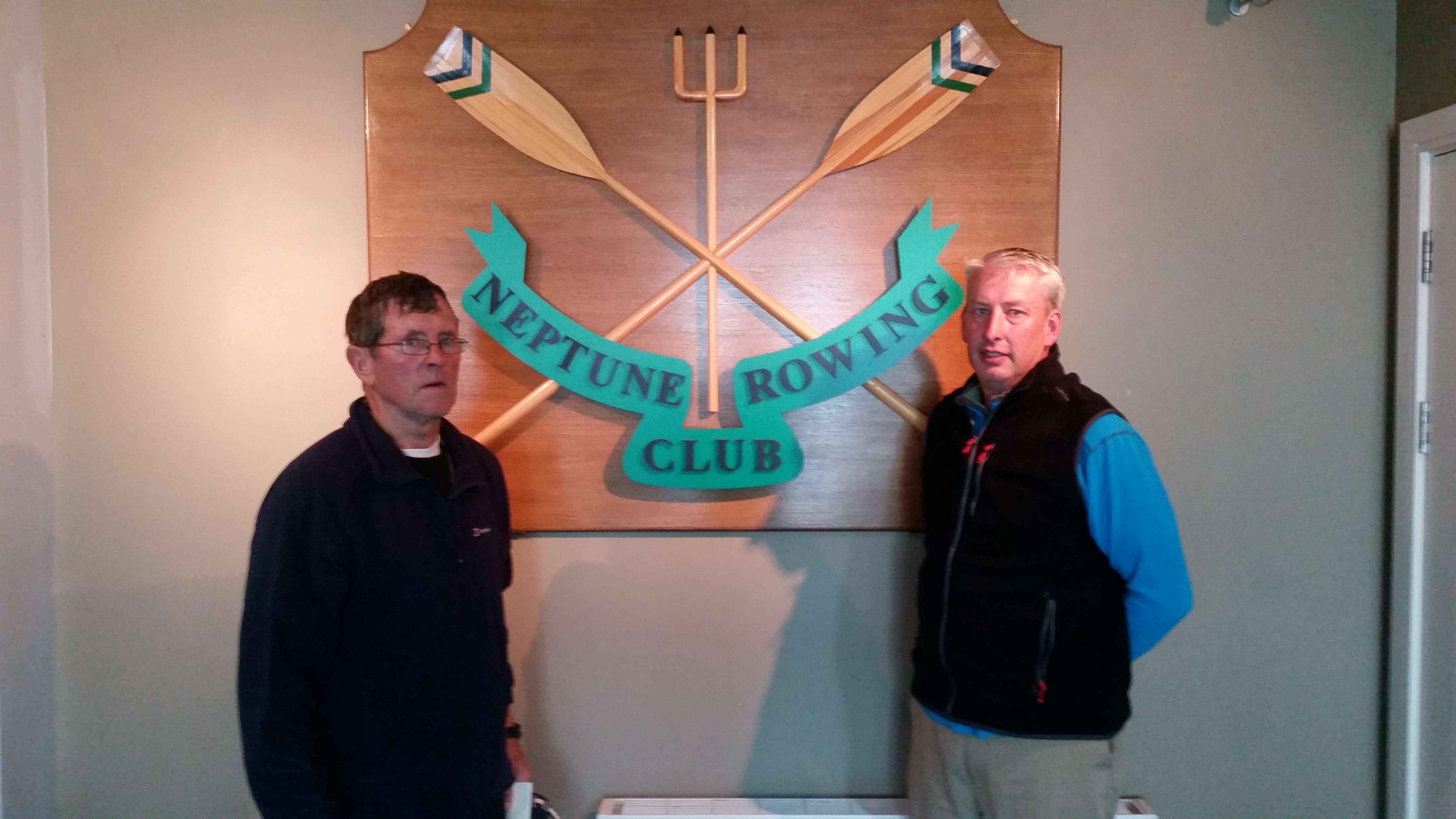
In this part of Dublin, you will come across clubs such as Garda, Commercial and also Neptune Rowing Club, which was founded way back in 1908. Neptune’s clubhouse was officially opened back in March 2010 by then president Mary McAleese and is steeped in history.
Pictures of past teams and members decorate the walls of the modern building and upstairs in the clubhouse bar, a couple of former Irish Olympians gather for a chat. They gaze out the window at the stars of the future, rowing along the Liffey.
(Source: Harry Hatton)
Frank Moore, who raced for both Garda and Neptune during his career, had the distinction of being the Irish flag bearer for the opening ceremony of the 1976 Olympics in Montreal, while being the spare man in the rowing team.
Moore had to wait another 12 years to qualify for the Olympics again and the Laois native came 11th in the coxed pair event in Seoul, Japan. He jokingly admits with pun intended “I’m still searching”, for his performance at the 1988 Games. Now a coach at Neptune, Moore says that there is a great discipline needed to succeed in rowing.
“The best thing about rowing is it’s a fantastic leveller. It’s a leveller for young people. They have to be disciplined enough to get up at 8 o’clock in the morning. They have to be disciplined enough to get in here, [do] dirty gym work during the week as well as work or after school hours.
“I think overall there’s a fantastic balance in the sport of rowing. You have to take your defeats with your wins. For later on in life, it gives you a certain determination to succeed. For children in Leaving Cert, it’s a fantastic balance. For people who are studying, for people who want to row,” says Moore, whose daughter Aine is club treasurer.
Neville Maxwell is another former Neptune representative at two Olympic Games, finishing just shy of a podium finish by coming fourth in Atlanta in 1996, while also competing at the Sydney Olympiad in 2000.
Maxwell insists that rowing is not a sport that requires years of dedication to succeed in and points to the O’Donovan brothers second place finish at Rio 2016.
“The O’Donovans were not going to the Olympics until 18 months before. They qualified the year before. Four years before that one of them was sitting in a bar and saying ‘I want to do that’.
“It can be done. I remember four years before I went to the Olympics, I had absolutely no interest in rowing. It’s not the kind of sport that you have to spend years building up for.
(Source: Harry Hatton)
“All the juniors that are rowing out here, they are doing exactly what they should be doing. They just have to do mileage. Miles and miles and building up the body. Once they do that, anything is possible. All we have to do is turn them into racers … [the] hardest thing about rowing is racing.”
Dara Breaden has been involved in Neptune Rowing Club for 25 years now. She became the club’s first female member back in 1991 and last year she was elected to the position of president. She is busy on this particular Saturday morning gathering up membership subscriptions and also organising an event in the club’s function room.
Currently the club has well over 100 members with 80 of them active rowers. The annual subscription fee at Neptune is €400 for adults, €250 for students and juniors, and €100 for non-rowing members. The club caters for people from the age of 14 years and upwards.
“The problem we have is having adult members,” Breaden reveals. “We’ve had this for quite some time. We would have been the top club in the country in the Irish championships. Skibbereen have overtaken us now. The reason for this is when our juniors turn eighteen and go to college, they go to row for Trinity or UCD or whatever and they don’t come back.
(Source: Harry Hatton)
“When I started rowing here first, we had a lot of senior oarsmen and oarswomen. Now we have a cohort of 20 men, intermediate men. They’d be guys in their 20s and 30s and [they] only started rowing last year. That’s what we want to try and do. We’re trying to generate our own oarsmen and women.”
On the bright side, the number of members at Neptune could soon rise as interest grows in the club’s ‘Adult Learn to Row’ course which is “oversubscribed,” according to the president. “We’re actually booked out until after Christmas. We just can’t keep up with the demand.”
The course consists of ten lessons for a total fee of €100 with the only mandatory condition being that the participant is able to swim.
Meanwhile, Neptune’s function room is available for venue hire but Breaden admits that it doesn’t generate the same income as the rowing competitions that the club hosts.
“We wouldn’t have a function every weekend. This month I think we have two in the whole month. We don’t get many because of the drink driving laws. A big source of income would be our Head and our Regatta. They would make money.”
The Head and the Regatta are both official Irish Rowing competitions. Neptune’s Regatta will take place next year on Saturday, 1st April at the club’s base while the club’s Head competition will be held on Saturday, 4th November in Blessington, Co Wicklow.
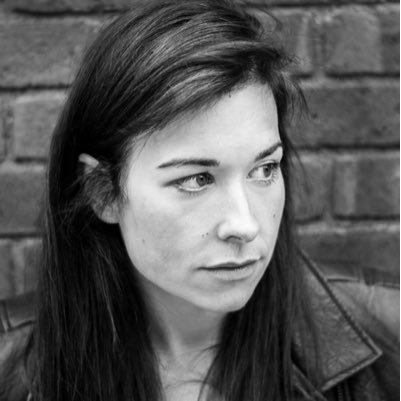
“There’s a lot of representation of young females, but I thought to myself, where’s the representation for Irish girls?” Stefanie Preissner, creator of RTÉ 2’s breakout hit show Can’t Cope, Won’t Cope asks.
(Source: Stefanie Preissner)
Born and raised in Cork before moving to the mean streets of Dublin town, playwright Stefanie has toured Ireland and beyond with her hit plays ‘Our Father’ and ‘Solpadeine is My Boyfriend’. She’s also been nominated for several awards as an actor, having studied at the Gaiety School of Acting – not bad for a 28 year old, right? ‘Can’t Cope, Won’t Cope’ is her first television series, following Aisling and Danielle as they try to, well, cope, with life in college and work.
“I write about what I see, and what I see is a lot of people experiencing that same thing. There’s a lot of young people, particularly young girls, wondering ‘who am I?’, like the girls in the show,” Preissner explains, citing her inspiration for the series, as her tone, very appropriately, gets straight to the point.
“These last few years, women are accepting their power, but that hasn’t really been shown in Ireland – that’s what Can’t Cope, Won’t Cope aims to do.”
The show follows fund manager Aisling and graphic design student Danielle, the two ends of the ‘millennial’ spectrum. One works for the weekend, the other for her passion.
“Danielle is similar to me – I studied acting, something I love. I feel like a lot of young people, especially during the recession, had to grow up very fast – get proper jobs like Aisling has in the show,” Preissner explains, saying that their nights spent at Coppers are their way of finding an escape – something many college students and young adults can relate to.
A refreshing addition to RTÉ’s slightly more liberal little sister, RTÉ 2, Preissner isn’t afraid to visit topics that even fifteen years ago would have been taboo on Irish television. Alcoholism, adultery, and a night in Coppers – things that are common in the life of
Danielle and Aisling from Can’t Cope, Won’t Cope (Source: Karl Hussey / RTÉ Press Centre)
21st Century Ireland, but are only making their way onto our TV screens now.
In one scene, weekend warrior Aisling seeks out the morning after pill after a one night stand with a lad she meets in Coppers – “It’s not like I’m sexually active, I don’t have a fella,” she says in a thick Cork accent – something particularly poignant with discussion of the Eighth Amendment rife. Danielle also deals with the prospect of moving abroad for her career, an issue many young Irish people have had to deal with.
“There’s no bullshit to this show: it’s why I think a lot of people are relating to it [on social media],” Preissner says, a lilt to her voice, displaying the pride she has in the six-part series.
“One girl asked me on Twitter if I was following her around with a camera. I didn’t set out to make [the show] relatable, but if people can identify with it, I must be doing something right.”
Can’t Cope Won’t Cope is currently airing on RTÉ 2 on Mondays at 10pm, and is available to stream on the RTÉ player.
When the first Dublin Bus strike took place last month, thousands of commuters were forced to find an alternative for their daily commute.
Many people took to their cars, as well as other modes of transport such as Irish Rail or Luas.
(Source: Flickr / William Murphy)
An estimated 400,000 people use Dublin Bus every weekday, with this number carrying through to weekends when large sporting events and concerts take place.
However, the bus strike didn’t just impact on the daily commute but also what came out of commuter pockets; particularly those who decided to drive their own vehicle as opposed to another means of public transport.
Dublin City Council currently has six zones for hourly parking rates, ranging from €0.60 in the outer suburbs to €2.90 in inner city areas. This means that any commuter working 9-5pm in the city centre would pay up to €23.20 were they to choose street parking.
In Dublin, cars can only park for a maximum of three hours in one place but all-day parkers will often simply move their car to a nearby location to get around the rule.
In Galway and Cork, cars are charged at a maximum of €2 per hour. However, both cities have a cap, and a two-hour stay is the maximum allowed.
Multi-storey parking is the cheaper option for those driving but that too is an expensive substitute.
Q-Park multi-storey parking is available in all three cities, but the costs vary widely.
(Source: Wikipedia)
Dublin works out the most expensive, at €3.50 per hour. However, you do have the option to pre-book from 9am to 6pm at a rate of €13.
Considering the maximum fare for Dublin Bus is €3.30 for anything thirteen stages or over, that equates to a minimum of a €6.40 excess for commuters who pre-book and park at Q-Park.
With six strikes taking place in total, that adds up to €38.40 to cover each day of the controversial industrial action.
Q-Park in Galway offers a rate of €2.50 per hour, with the option of booking eight hours for €8.
Q-Park in Cork also offers a cheaper hourly rate than Dublin at €3.00 per hour, although they offered the same special rate of €13 from 9am to 6pm.
In the first of a series of articles looking at the US Presidential Election, Cáitriona Murphy takes a look at the first presidential debate
The first of three televised debates between the two US presidential nominees took place at Hofstra University in New York.
The debate consisted of two 15-minute segments for each of these three topics: America’s direction, achieving prosperity and securing America.
Analysis
The unpredictability of the 2016 election means that there is still a lot at stake for both of these candidates and it is these debates that may be the deciding factors for a lot of registered voters.
Clinton and indeed the mediator on the night Lestor Holt had their work cut out for them as Trump interrupted Clinton 51 times to Clinton’s 17 interruptions but the former Secretary of State demonstrated her political experience and kept her cool.
(Source: Wikipedia)
While Trump attacked Clinton’s look and stamina repeatedly, a well-drilled Clinton managed to attack Trump’s privileged past, his elitist attitude and his economic policies all in her opening comments. “Donald was very fortunate in his life, and that’s all to his benefit. He started his business with $14 million, borrowed from his father, and he really believes that the more you help wealthy people, the better off we’ll be,” said Clinton.
Trump stuck to his usual rhetoric emphasising his protectionist policies and reiterating the fact that jobs are leaving the US via the multinational companies who are moving to countries with better tax incentives such as Mexico and China.
In fact, Trump blamed China for a lot of America’s economic problems and said that China is stealing American jobs, devaluing their currency and generally the Chinese are “using our country as a piggy bank to rebuild China”.
Trump was indeed grasping at straws for the majority of the debate and as he spent most of his time blaming other countries for America’s problems and launching attacks at Clinton’s health, appearance, and her husband’s trade deals, even his slight at Clinton’s email scandal seemed to fall short.
The reason for this is simple; it’s old news. Clinton was not charged by the FBI during the summer over the email controversy and when Trump mentioned it in the debate she brushed it off as a mistake that she regrets. The well-versed Clinton took it in her stride.
Instead of reminding the public of some of Trump’s more bizarre claims and policies, Clinton campaigns against him as a traditional business conservative. The former Secretary of State hit him for rooting for the housing crisis so that he could benefit from the aftermath, and struck at him for paying no federal tax. After both of these blows Trump responds as a businessman would, not a politician. “That makes me smart … that’s called business by the way,” said Trump.
While the candidates tried to get under each other’s skin, Lester Holt tried to move the debate forward to address racial issues in the US. It is widely accepted that the minority vote is going to go to Clinton because of Donald Trump’s racist rhetoric.
Both candidates tread very carefully around racial relations and both appeared to avoid the topic in the debate, while Clinton brings the focus more to gun control and Trump talks about the stop-and-frisk programme that has been deemed unconstitutional in New York City, and which he wants to reintroduce.
Trump continued to respond with long meandering answers and Clinton took the opportunities to strike at past racist comments surrounding Barack Obama’s citizenship. “He has a long record of engaging in racist behaviour. And the birther lie was a very hurtful one,” said Clinton.
However, Trump plays to his strengths and uses the one thing that sets him apart and the reason that he is being supported so widely; the fact that he is not a politician. “It’s all words, it’s all soundbites,” he says after Clinton criticised him for his traditional business-minded politics, and adds, “typical politician: all talk, no action.”
(Source: Flickr / Donkeyhotey)
The Polls
Commentators around the United States have handed the first debate and the most watched presidential debate in history to Hillary Clinton. The bookmaker’s odds the next day reflected similarly promising results for the Democratic Party as they show that Clinton took a 4 point bounce.
However, the various polls taken by news organisations were a little bit more ambiguous.
The poll that was published by CNN which they conducted with the research company ORC after the debate suggests that the debate was won by Clinton.
CNBC on the other hand says that Donald Trump won the first debate as the results of their poll was that 67 percent said that Trump won.
In a poll run by TIME magazine 55% said that Trump won and 45% said that Clinton did while Bloomberg reported that Clinton won the first round.
However these polls are not scientific which means that the makeup of those who responded does not necessarily reflect the population of likely voters and there are many issues with inaccuracy and bias.
For example CNN who declared Clinton the winner only polled around 600 people and 40% of them were Democrats. Other news sites just had the poll on their website that anyone could click on including people not eligible to vote and people who had already voted.
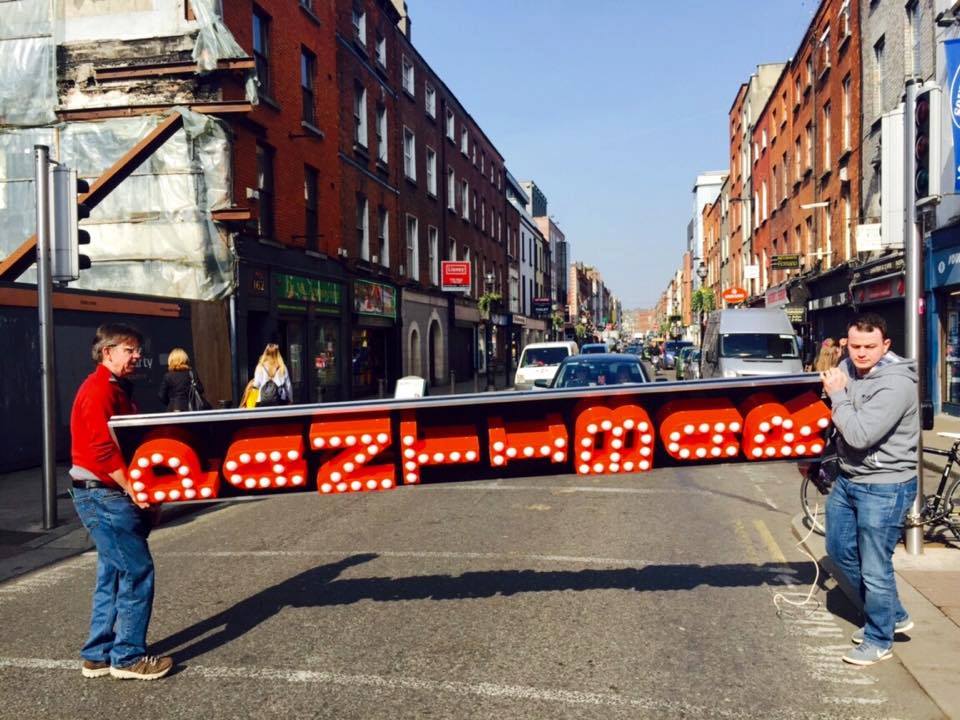
Rory O’Neill, better known as Panti Bliss, has won the appeal for the legendary Pantibar sign to keep its pride of place on Capel Street.
(Source: Rory O’Neill / Panti Bliss)
Dublin City Council rejected an application to keep the LED sign hanging above the gay bar in May. They cited a number of reasons for the rejection, the primary reason being that it would “impact adversely on the character and integrity of the area”.
O’Neill announced on Panti Bliss’ Facebook today that he won his appeal, and permission for the sign was granted. “Absolutely DELIGHTED to say we won our appeal and An Bord Pleanála have granted permission for the Pantibar sign to stay!”, he wrote on Facebook on Thursday morning.
(Source: Rory O’Neill / Panti Bliss)
The appeal was won as An Bord Pleanála “agree that “exceptional circumstances” apply and that “the sign is integral to the social, historical and cultural significance of the current use of the premises.” O’Neill’s post garnered over twenty-seven thousand likes on his Facebook page in just over half an hour.
When the removal was initially proposed, it incited anger among the LGBT community in Dublin, leading to an online petition that gathered over 18,000 signatures. O’Neill said he would appeal the decision, and would ‘fight tooth and nail’ to keep the sign hanging over one of Dublin’s first gay bars.
Pantibar originally erected the backlit sign in March of this year.

















You must be logged in to post a comment.