For some, the mind can be a form of imprisonment in itself. Living with mental health disorders can be a daily struggle for many people. What happens to those people when a global pandemic hits, and the country must go into lockdown?TheCity.ie’s Kate Brayden, Cameron Weymes and Ayumi Miyano report.
The level of anxiety which the nation is currently experiencing is just a sample of what those dealing with mental illness have to cope with on an ordinary day.
For those who experience a heightened feeling of worry, fears over the health of family members and friends are extremely common, as well as fears regarding their own health. Covid-19 and the emphasis on hygiene, protecting others, and daily death tolls is causing severe stress for many. Being unable to physically see loved ones in person can take a drastic toll, and can lead to a sense of hopelessness and loneliness.
In TheCity.ie’s video project on mental health during lockdown, Kate Brayden interviewed her twin sister Eleanor, who has Obsessive Compulsive Disorder and severe anxiety, as well as Eleanor’s boyfriend Dan, who has been diagnosed with high-functioning autism and agoraphobia.
Eleanor’s family also feature in the project, illustrating how living with those suffering from psychological distress can impact the entire home. Cameron Weymes spoke to chartered psychologist Dr Christine Tizzard about the impact of quarantine and self-isolation on wellbeing in general.
The number of students suffering from anxiety has doubled since 2012, according to a National Study of Youth Mental Health in Ireland. The findings show that in comparison to the previous study conducted in 2012, the amount of teenagers aged 12 to 19 suffering from severe anxiety has doubled from 11% to 22%. Levels of severe anxiety in young adults aged 18 to 25 have also seen an increase from 15% in 2012, to 26% in this year’s survey.
The
report also showed that females in particular have declining levels of
self-esteem compared to males of the same age. There is also an increased level
of depression among young people.
The Union of Students in Ireland (USI) launched their
national report on student mental health at the beginning of this academic year.
Taking into account the experiences of over 3,300 students in Ireland, the
report shined a light on the varying mental health attitudes of students and
their experiences in accessing help and treatment.
“32% of students have been formally diagnosed as having a mental health difficulty”
Among the findings in the report were
that 38% of students said they experienced “extremely severe” levels of
anxiety; 30% of students said they experienced severe levels of depression, and
17% felt severe levels of stress at some point.
32% of students have been formally
diagnosed as having a mental health difficulty, while one fifth of students
said they did not have someone to talk to about their personal and emotional
difficulties.
“Third
Level education is a key life transition and can be an extremely stressful time
for students. We already know that levels of mental illness, mental distress
and low wellbeing among students in higher education is increasing” according
to a statement from the USI.
Commenting
on the results of the report, the USI said: “Students in third level education
are exposed to many stresses, which trigger or exacerbate mental health
difficulties.
“These
include living away from family and friends for the first time, coming directly
from a structures learning setting, as well as many students taking on
additional work commitments to support themselves financially.”
“In terms of of waiting periods, many students agreed that waiting periods were too long”
“Over
half of respondents strongly agreed that a free face-to-face service is
important on campus. Students were least likely to attend group therapy if
offered by the outselling services.
“Many
students said they would attend counselling, but students also said that they
did not think their problems were enough to warrant counselling. In terms of of
waiting periods, many students agreed that waiting periods were too long.”
Under
the Freedom of Information Act (FOI), TheCity.ie has obtained figures relating
to the number of counsellors employed, and the finances allocated to
counselling services in the following Irish universities: Trinity College
Dublin, Technological University of Dublin, Maynooth University, University College
Dublin and Dublin City University.
According to www.tcd.ie, there are 17,000 students currently studying in Trinity College Dublin (TCD).
Academic
Year
Expenditure
on Trinity College Dublin counselling services
Number
of counsellors allocated to the counselling services
2017/2018
€1,517,050
10
(Full Time Employee 6.59)
2018/2019
€1,674,858
10
(Full Time Employee 9.20)
2019/2020
(to date)
n/a
n/a
According
to www.dit.ie, there are 20,000 students currently
studying in TU Dublin (TUD).
Academic
Year
Expenditure
on Technological University Dublin counselling services
Number
of counsellors allocated to the counselling services
2017/2018
€466,
676 (2017)
5
2018/2019
€480,
475 (2018)
7
2019/2020
€389,
673 (2019 to date)
7
According
to www.maynoothuniversity.ie, there are 14,000 students currently
studying at Maynooth University (MU).
Academic
Year
Expenditure
on Maynooth University counselling services
Number
of counsellors allocated to the counselling services
2017/2018
€300,000
(Full
Time Employee 2.6)
2018/2019
n/a
n/a
2019/2020
n/a
n/a
An
FOI request was submitted to University College Dublin and Dublin City
University in relation to expenditure on their counselling services, and the
number of counsellors allocated, but have not responded for time of
publication.
TheCity.ie
spoke to Patricia Murphy, a counsellor at Trinity College Dublin, who said: “I
think that universities and third level colleges are all really trying to meet
the needs of a specific age group in the population of 18-24. All of them are
trying to provide the services of the mental health banner to students.
“They’re providing one-to-one student counselling, groups and workshops on psycho-education which deal with issues such as anxiety and depression. They’re trying to do lots of outreach through various social media groups, they do a lot at orientation to really try and get people in earlier so that they do not crash and burn.”
She
said that TCD uses a ‘student-to-student service’ where student volunteers, who
are well trained, can support other students in the university.
Credit: pxphere.com
“All universities and third level colleges around
the world are experiencing huge rise in demand for services. It seems to me
that the mental health of that age group, well maybe all age groups are needing
more services,” she continued.
The current Minister for Education has seen that two million euro is being given to counselling services, so there is acknowledgement that there needs to be more, which is great, but of course we need more resources in order to meet the growing demand. It’s very difficult, because colleges are hard pressed for money to devote more to this.”
Patricia said that often people assume that students use counselling services to deal with stress, but that isn’t true: “People come with a variety of issues and some tend to be quite serious in nature. Depression and anxiety are the highest issues in the population anyways, there is a rising level of anxiety in our society that’s being mirrored. Other issues are to do with relationships, bereavement, or loss.”
Seasonal Affective Disorder (SAD) is a form of depression closely related with the darker months of the year. Sometimes referred to as the winter blues, SAD is a condition that affects up to one in 15 people in Ireland every year.
According
to the HSE, the symptoms of seasonal affective disorder (SAD) are
similar to those of normal depression but become particularly heightened during
the Autumn and Winter months, sometimes lasting until Spring. The nature and
severity of SAD varies greatly among sufferers with some finding the condition
a bit irritating while others experience a severe and significant impact on
their daily life.
The symptoms of SAD can include but are not limited to:
a persistent low mood
a loss of pleasure or interest in normal everyday activities
feeling irritable
feelings of despair, guilt and worthlessness
low self-esteem
tearfulness
feeling stressed or anxious
a reduced sex drive
becoming less sociable
Sandra O’Loughlin is a nurse from county Kildare. For
Sandra, her SAD was further aggravated by her shift work.
Sandra said: “I think everybody feels a bit crap when the
long nights draw in and you get to the stage where you’re getting up and going
to bed in the dark, but for me I think it’s another level. I genuinely used to experience
really high levels of depression and anxiety that I wouldn’t otherwise feel
during the brighter months.
“If I could have worked a regular 9-5 I think I wouldn’t
notice it as much, but I was starting work at half 7 in the morning and
finishing at half 8 at night so on days where I was working I literally
wouldn’t see the sun for pretty much four months of the year,” she continued. “Even
in the hospital there are very few windows as it is.
“At my lowest, I was ignoring my family and friends and
calling in sick to work. No one knew what was going on with me, I didn’t even
know what was going on with me, I just thought I was going mad,” said Sandra.
“When I finally went to my GP, she suggested pretty quickly that it was SAD. I
actually had chronically low levels of vitamin D as well so she prescribed me a
supplement amongst other treatments.”
Two years ago Sandra made a career change, and left the hospital
wards to become a public health nurse. Her new job means she can spend a lot
more time outdoors and has a constant change of scenery.
“The job change has made all the difference for me,” said
Sandra. “I also do light therapy which I find really effective. I know not
everyone does, maybe it’s a placebo thing for me but the light therapy
definitely makes me feel good.”
According to Mental Health Ireland: “SAD may begin at any
age, but it most commonly starts between 18 and 30. It occurs throughout the
northern and southern hemispheres but is extremely rare in people living within
30 degrees of the Equator, where daylight hours are long, constant and
extremely bright.
“Symptoms
generally appear between September and November and continue until March or
April, when there may be a sudden burst of energy and activity accompanying the
longer, brighter spring and summer days. A diagnosis is usually made after
you’ve experienced two or more consecutive winters of symptoms.”
Mental Health
Ireland list these six treatments for seasonal affective disorder:
If you’re experiencing symptoms of seasonal affective disorder contact
your GP or go to Mental Health Ireland for further information and
options.
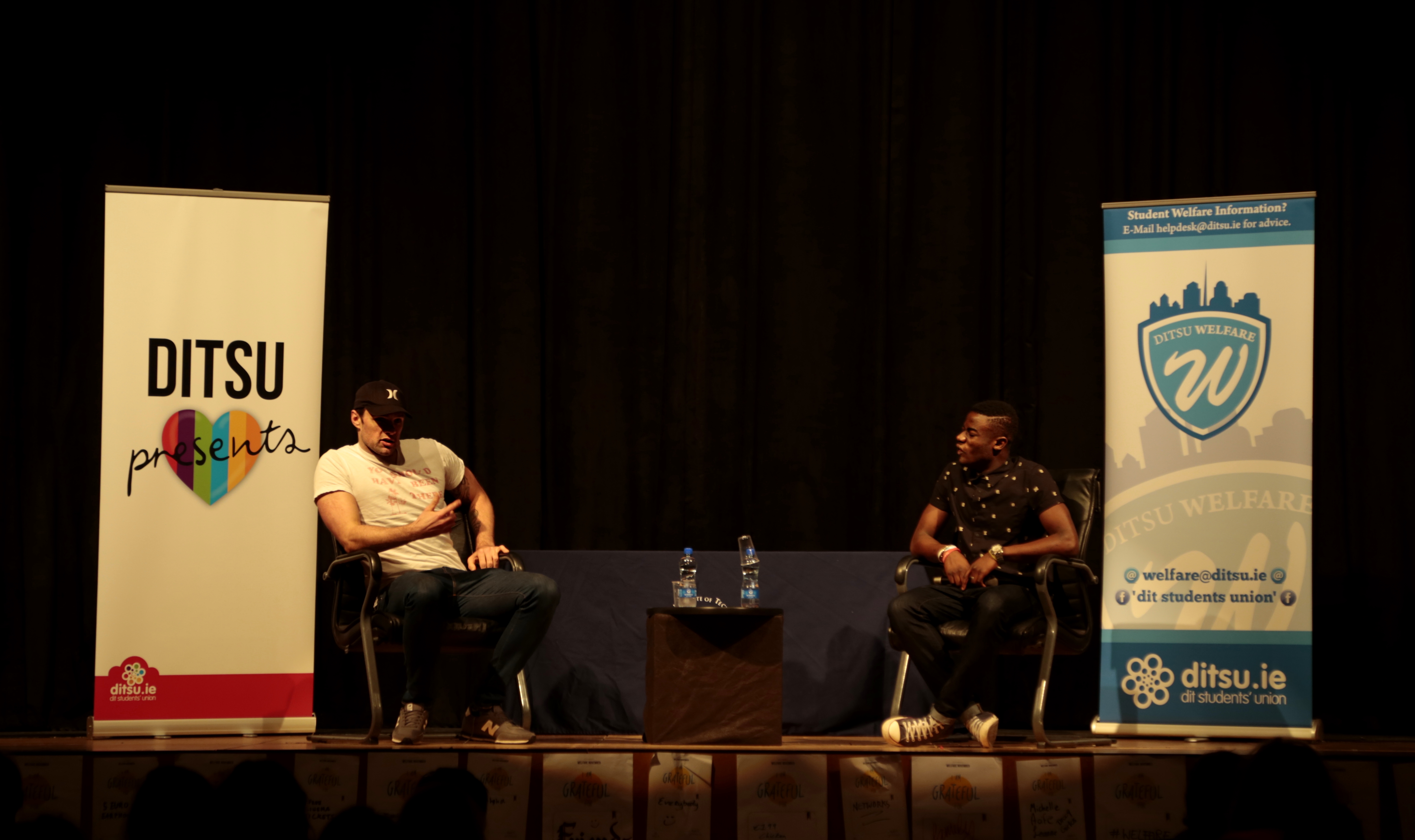
Bressie has launched a new website which focuses on mental and emotional health, while he continues his series of talks on mental health in Dublin and around the country.
The Dublin-based singer, best known for being the front-man for the Irish band The Blizzards and a judge on The Voice, has spoken at a number of Dublin-based colleges, including his old college UCD in October, DIT in November, and Trinity College this December.
Photo by Cormac Dunne
Just last month in November he launched a new website called my1000hours, which focuses on the importance of mental health as well as physical health, and will also act as an ‘online support blog’. The website explains,
“So many of us put so much emphasis on physical fitness but seem to ignore the importance of our mental or emotional fitness. The evidence surrounding the correlation between positive mental and physical health has never been more profound”
The concept of 1000 hours is to encourage people to improve their mental health by challenging themselves to achieve things such as learning a new skill or running a marathon. This will all be with assistance from the 1000 team “who will help with both the physical training programmes, diets etc…and also the mental processes required to achieve these challenges.“
The website is also due to add a section on musical therapy and how it could help to manage depression.
Bressie suffers from Generalized Anxiety Disorder, and since first speaking out about his struggles a year ago in 2013 he has become an advocate for mental health in Ireland. As well as speaking at schools and colleges around the country he has also spoken on a number of television and radio programmes on the issue.
Thanks to DITSU I got to talk to Bressie last month, after his talk on mental health in DIT as part of their Welfare November campaign:
For more information on 1000Hours follow the links below.







You must be logged in to post a comment.