
Tag: Arts and Culture

  • Fingal Graduate Award Winner 2017

    Fingal Graduate Award Winner 2017

    Visual Artist Róisín McGannon has been awarded the Fingal County Council Arts with Block T Graduate Studio Award 2017.

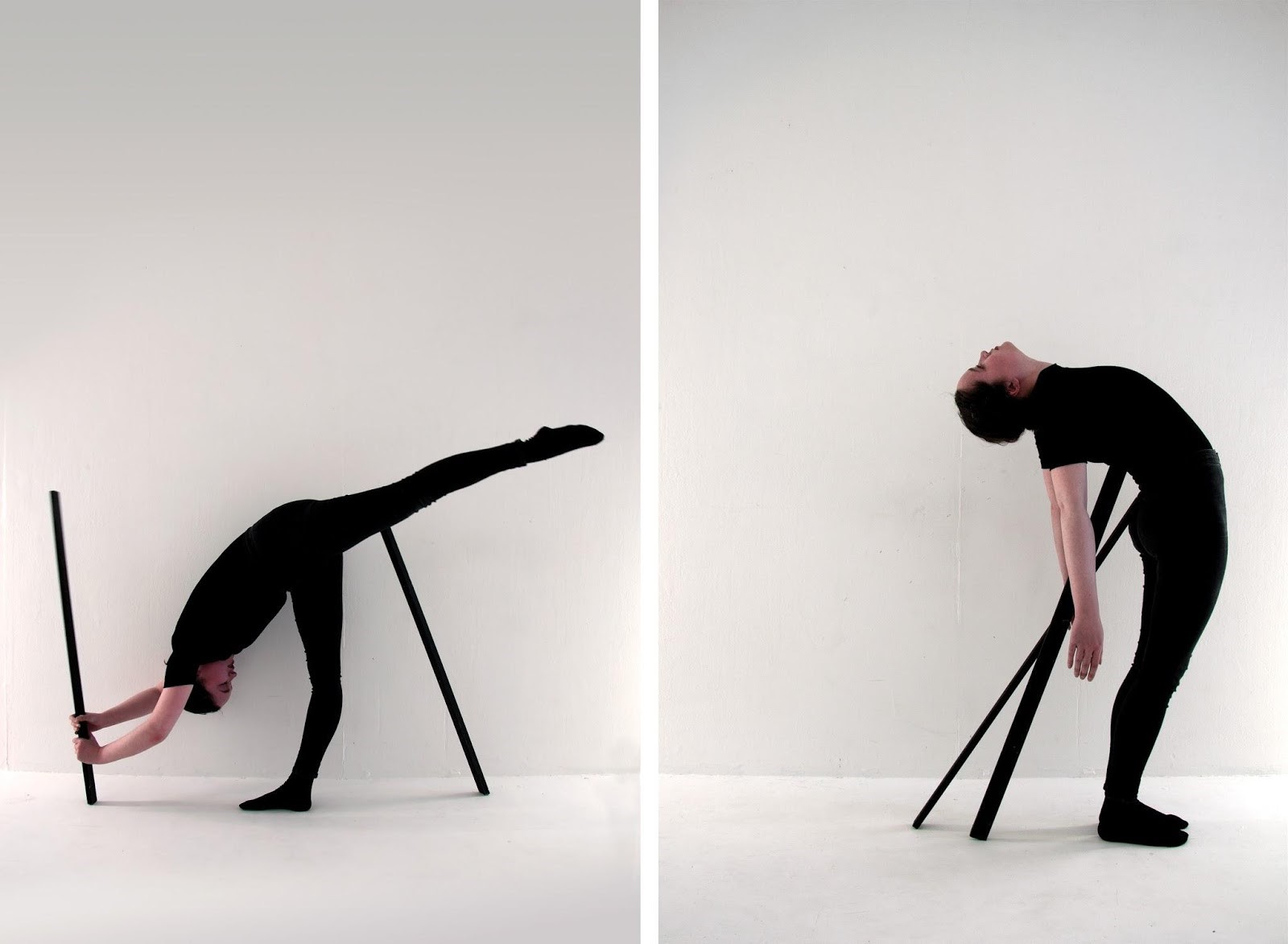
    Róisín McGannon is a visual artist based in Dublin who will be graduating with a First Class Honours Degree in Fine Art from NCAD this month. According to Róisín, her work explores “the acute knowingness we have of our bodies, a causality brought by the activation of the body in space. It attempts to uncover the power balance between the physical and psychological state of being in the body.”

    The Graduate Studio Award winner is awarded with a year’s residence at Block T Studios in Dublin 8, home to many creative events and workshops. Then, at the end of the year, they will have their own solo exhibition; a fantastic opportunity for graduating artists.

    Róisín is determined make the most out of her studio space for the year.

    “It’s one of few opportunities for graduates, so it is very much needed and valued,” she said.

    When asked what her plans will be for the studio space, Róisín said she plans to explore projects she never had the chance to throughout her time in NCAD.

    “My first step is to look back on the work I made during my final year in college, evaluate and critique it, see what worked and what didn’t. I hope to explore thoughts that had to be put on the back burner due to time constraints, to build up a solid body of work. I’ll continue to apply to open calls, hopefully invite curators to discuss my work and bring what I’ve learnt to the show at the end of my time here.”

    The project that won Róisín the award was her degree show in NCAD titled ‘The Insidious Nature of Honey’. The show consisted of an immersive installation made of UV sensitive perspex, a video piece and large scale digital prints.

    Fingal Award 2

    Róisín put an immense amount of time and energy into her show to make it what it was and her efforts were rewarded.

    “I spent the entire year working on a self directed brief. My work is heavily supported by philosophical theory so I spent the first half of the year reading and researching what area of interest I wanted to explore and how to do that in a visual way. The second half of the year was testing and testing, really narrowing things down to be quite specific and then fine tuning that,” she explained.

    When asked for advice for future graduates hoping to win this award or others, Róisín said applying for them all is key.

    “I think when you’re in college you should be aware of the opportunities and awards and definitely apply for them all whether you think you’re able or not, but don’t let them distract or dictate the work. Make the work you need to make, not the work you think you should make. That’s what stands out to people.”

    The Graduate Award is awarded by Sarah O’Neill, the Deputy Arts Officer at Fingal County Council and Chris Cullen, Director of Block T Studios. Graduating artists who live, work, or study in Fingal are invited to apply for the award.

    You can visit Róisín’s website www.roisinmcgannon.com or follow her on Instagram @RoisinMcGannon.

    By Jenna Cox

  • Dublin’s outdoor art gallery

    Dublin’s outdoor art gallery

    Is graffiti in Dublin just vulgar vandalism or can it be considered a true art? As Hannah Lemass finds, the writing is on the wall for the old stigma tagged on street art

    (more…)

  • What Big Brother is reading now

    What Big Brother is reading now

    As readers are turning to the classics of dystopian fiction to make sense of politically uncertain times,  Eimear Dodd offers some reading suggestions.


    Irish readers are involved in the trend for dystopian fiction that has seen sales of books such as George Orwell’s 1984 rise in recent months.

    The increase in the sales figures began in November. A further spike was identified following President Donald Trump’s inauguration in January 2017.

    The BBC reported on a 20% increase in sales of the book in the United Kingdom during the first three weeks of January. The American publisher has also ordered a reprint of 100,000 books to meet demand.

    As of Saturday 11 February 2017, 1984 was number six on the list of Amazon’s best-selling books.


    “1984 was getting a lot of profile in the USA where many media highlighted it was a perfect example of post-truth politics in use by Donald Trump” – Susan Walsh, Dubray Books


    This popularity is also being reflected by the choices of Irish readers. Susan Walsh, Marketing Manager at Dubray Books said by email that “a few books along this vein have started to sell very well in the past few weeks, in particular, 1984.”

    “The book was getting a lot of profile in the USA where many media highlighted it was a perfect example of post-truth politics in use by Donald Trump,” Susan Walsh continued.

    Other Irish booksellers have also seen an increased interest in 1984. Staff from Charlie Byrne’s Bookshop in Galway city said they have also noticed a demand for Orwell’s other famous work Animal Farm.

    Works by Philip K. Dick, Ray Bradbury and Aldous Huxley have also been included on lists of recommended reading since Donald Trump’s election win in November 2016.

    Orwell’s dystopian novel is set in a Britain where the government uses mass surveillance and public manipulation to maintain control.


    195965251_11210a904f_m
    Berlin Street art, image by Duncan C via Flickr Creative Commons


    This is not the first time that parallels have been drawn between the fictional 1984 and real world politics. In fact, the book has a long association with American politics.  In 2013, its imagery of state surveillance was once again conjured by details of the NSA’s programmes.

    More recently, it was evoked following comments made by President Trump’s special adviser Kellyanne Conway in an interview on 22 January 2017. Ms Conway used the phrase “alternative facts” while defending White House press secretary Sean Spicer’s statements about the size of the crowd at the Trump inauguration.


    Stories for Strange Times

    To borrow a phrase from George Orwell, we could be forgiven for imagining that the clocks have recently started to strike thirteen. Extra second aside, clocks carry on as they always have.

    But for some, the world feels different. And interesting fiction provides a space to explore the unfamiliar.  The selected stories offer contrasting visions of how people can respond to surveillance and manipulation. It is a stretch to call them all dystopian. Instead, they are connected more by their urban landscapes than their storytelling category.

    After all, this is The City.


    13239822

    ‘I will tell you a story, but it comes with a warning; when you hear it, you will become someone else.’

    Set in an unnamed Middle Eastern emirate around the time of the Arab Spring protests, this is an adventure which looks at how stories have the ability to change the status quo for both better and worse. The narrative blends computer code, state surveillance and culture into something immensely beautiful. A young hacker finds himself under attack from the authoritarian elite that rule the city.


    footc_fin

    In a future Dublin, the official story is not the whole truth. Instead, an old man uses it as a starting point for his own version of the events surrounding an assassination on Irish soil. For me, the narrative relied too heavily on the surveillance.  However, the polluted and decaying city lingers in the reader’s subconscious for months after.


    graceofkings

    An epic of bickering gods and warring humans. Here, the urban landscapes come from the cultural narratives of Imperial China. The death of the emperor who united the seven kingdoms of Dara sparks a competition for power that makes rivals out of close friends.

    The surveillance might be carried out by airship but the methods of manipulation are all too familiar. In one chilling sequence, an ‘alternative fact’ is used as both carrot and stick to secure the loyalty of the bureaucratic elites in the capital city.


    4703581

    A detective investigates a crime that threatens the stability of two intertwined but very different cities. Miéville’s novels have a way of challenging your understanding of social conditions. Here, he examines how societies can adapt to the restrictions of surveillance by learning to manipulate their perceptions of reality.


    2472317


    A word of warning. Thomas Ligotti’s work is not for everyone. His horror stories contain a profound pessimism about humanity and our willingness to manipulate one another.

    The Town Manager features in his collection, Teatro Grottesco.  A town’s inhabitants change their lives and surroundings to meet the bizarre requests of successive town managers. This is a tale of bleak humour. After all, it could always be worse.


    eimear-dodd-twitter-handle


    Featured Image by Robin Jaffray  via Flickr Creative Commons