The Central Statistics Office on November 13th released the consumer price index for this year, which shows a 2.9% increase in the inflation rate over the last 12 months, which is the fastest and highest rise of inflation since March of 2024.
The increase will affect the prices of food items such as dairy and pastries. The price of poultry and meat increased by 6.6% which will affect the price of viands such as Chicken, beef, and turkey.
Meat prices at dunnes – Photo By: Synoah Penaflorida
Aside from household staples, an increase of 7.7% in health insurance, 3.7% in electricity, and 3.6% in rent was reported in the current figures.
Going around Dublin city centre, TheCity asked a few people how much they will be spending this Christmas.
Economist, Dr. Clare O’Mahony, will also be commenting on the hiking prices this holiday season.
The Irish Government has announced that they will provide €154 million in contributions to fund a new pension scheme named My Future Fund, beginning in 2026.
This initiative will offer many young people their first opportunity to start saving for retirement, and those who aren’t focused on retirement planning can withdraw all contributions to the fund following the six-month minimum participation period.
Employees will have until the end of August 2026 to inform their employer that they wish to withdraw their funds and upon doing so, all contributions will be returned to them through their paycheck, minus tax.
“I never really thought about [saving for a pension], but it’s nice to have and even in a few months’ time if I need the money, I’ll just take out what I’ve saved,” Adam Drea, a 22-year-old student and barista, said.
Employees aged between 23-60, who earn €20,000 or more annually and are not already contributing to a separate pension scheme, will be automatically enrolled in the program, with auto-enrollment beginning Sept. 30, 2025.
Those who do not meet the criteria will still be able to partake in the program but will have to ask their employer to enroll them in the scheme.
Employees will pay 1.5% of their total income into the fund, and that money will be matched by their employer. The government will also contribute an additional 0.5% to the personal savings plan.
For example, if an employee pays €30 per week into their personal savings plan, their employer will be obligated to also contribute €30 and then the state will provide €10 to the fund, leaving the employee with a total weekly contribution of €70.
“Contributions are beginning at the low level of 1.5% for employees to ease the cost of the introduction of My Future Fund and give them opportunity to budget for contributions,” a spokesperson from the Department of Social Protection said.
While the scheme will have a minimum contribution of 1.5% of a person’s income in 2026, this figure will increase incrementally over the next decade, eventually capping at 6% in 2026.
This low minimum contribution in the early stages will also give small businesses an opportunity to prepare for an increase in their wage bill.
“Any additional cost to the business is always a challenge, especially in the current environment, and it is certainly a significant factor for 2026 costs and by extension, the available budget for salary increases,” Fergal O’Connor, CEO of Buymedia, said.
Employers will be expected to inform all of their employees on the implementation of My Future Fund and any business owner that attempts to hinder their staff from enrolling in the program may face a fine or imprisonment.
A key difference between My Future Fund and other government pension schemes is that it is not tied to a specific employer, so if you decide to change jobs, your contributions will continue to be added into the same fund when you start your new role.
The fund will be managed by the National Automatic Enrolment Retirement Savings Authority (NAERSA), a new state agency that has been established to implement the scheme.
Employees will be given the choice of whether they want their money invested in low, moderate or high-risk investment strategies.
Those who do not choose a specific investment strategy will have their savings invested in the ‘default’ strategy.
“The default risk strategy operates on a life cycle basis that de-risks as participants move towards retirement, taking advantage of higher risk growth in younger years and the stability of lower risk the closer they get to retirement,” the Department of Social Protection said.
Only a small number of Claire’s accessories stores will remain open in Ireland following a recent filing for bankruptcy.
Claire’s accessories, an international high-street chain known for its earrings, hairbands, and the ultimate accessories store for young girls, is closing its doors. The retail giant will have a reduced presence in local shopping districts, but several stores remain around the country.
The company originally filed for bankruptcy in August 2025 and is now in its final stages of closing its doors, with sales of up to 20% and more off certain items.
Investment firm ‘Modella Capital’ saved the company from bankruptcy. However, many of Claire’s stores across the country are still facing closure, leaving the high streets with vacancies to fill, which may not seem enticing to buyers in the current economic climate.
“Some of the other shops around town are closing, the ones in the Ilac shopping centre and Santry are closing, but we never had any intention to close,” said a sales assistant from the St. Stephen’s Green Shopping Centre branch, who did not wish to be identified.
Some of the other Claire’s stores outside of Dublin, which will be closing, include branches in Limerick, Drogheda, and Mullingar. Counties such as Limerick will be left with zero Claire’s stores following their closure.
According to the sales assistant at the St. Stephen’s Green branch,“We’re actually hiring for staff at the moment.”
The St. Stephen’s Green branch, which remains up and running in the City Centre is of significant size and certainly will make up for the closure of their Ilac Shopping Centre branch.
The appearance of the shop may indicate that they are closing due to huge reductions on items, but TheCity was told the sale is standard procedure at this time of year. Claire’s branches facing closure are clearly marked with ‘CLOSING DOWN SALE’ signs.
Photo: Alison Gussago
The closure of such a prominent high-street brand shows that regardless of popularity, retailers need to constantly be adapting to consumer demands to survive in this economy. With the influence of social media, young girls are no longer interested in the products that were popular among their age demographic 10 years ago.
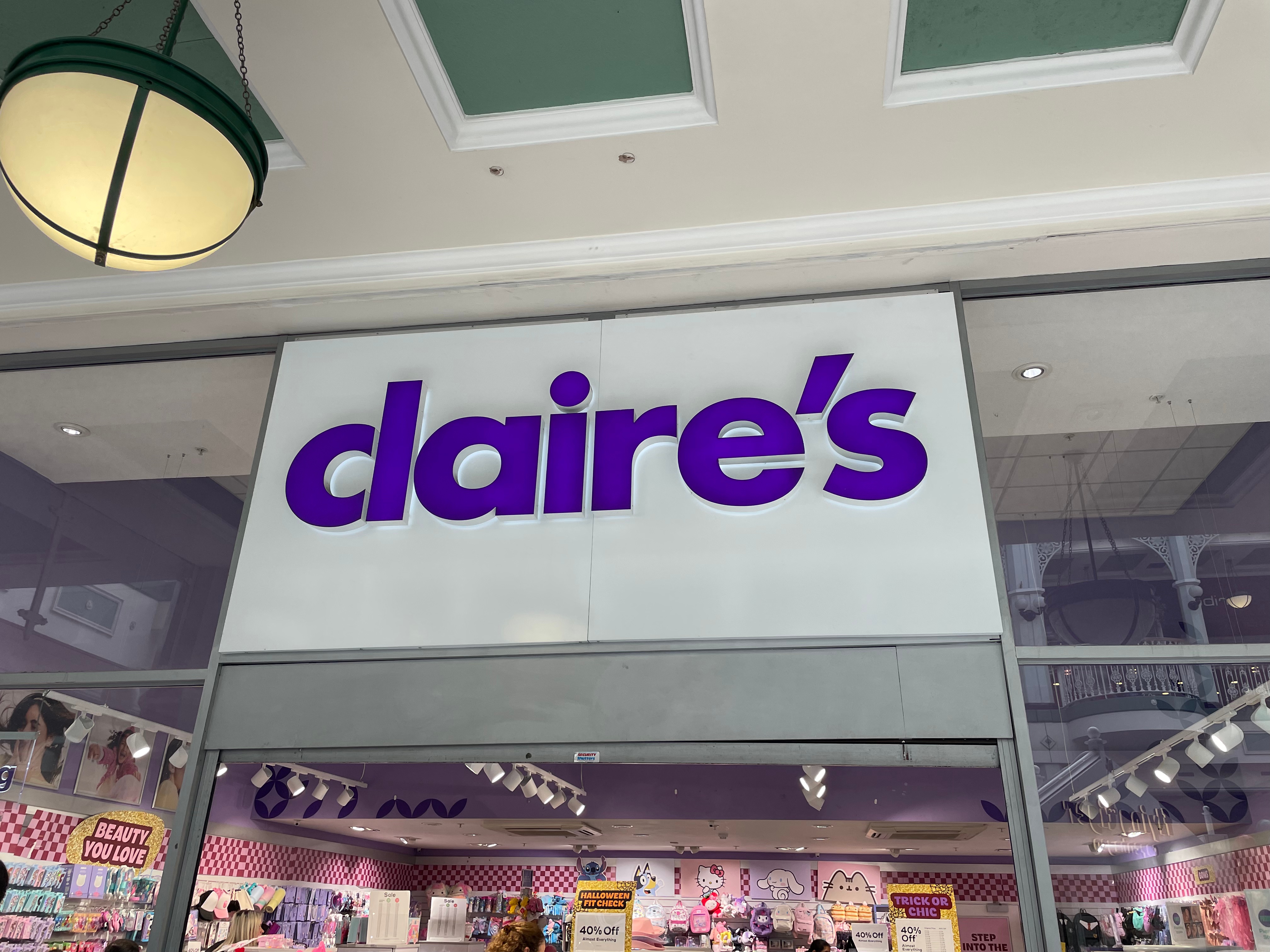
As seen from the picture above, Claire’s has had the same iconic purple branding for many years. However, is the target market looking for something more grown-up, like the products they see their favourite influencers and Tik Tokers using?
The closure of the store is another representation of how the cost of living is affecting businesses in Ireland. Despite Modella Capital buying out several of Claire’s stores across the UK and Ireland, there is still a large number of people working in branches which are due to close down who did not have their job saved by the investment firm.
With the closure of such a significant high-street chain leaving an empty space in the iconic Ilac Shopping Centre, there will be a challenge to fill the vacancy with a store that entices the public.
Deliveroo, the worldwide food delivery service has expanded its horizons by issuing a ‘on-demand’ shopping service alongside its food delivery to four Irish cities starting on the 6th of October.
Now live in Dublin, Cork, Galway and Limerick, the service will allow app users to shop beauty lines, tech and DIY, florists and gift stores alongside a fast delivery guarantee.
Having first launched its expansion in the UK in 2023, Deliveroo has noted a growing in service to a vast array of renowned brands. According to Deliveroo, this service will tap into a significant shift in Irish consumer behaviour.
Bicycle food delivery couriers wait for their mobile app orders in Dublin, Ireland – photo by tupungato via depositphotos.
Recent market analysis shows that demand for rapid delivery services has surged, with over 70% of online shoppers in Ireland now considering convenience as a key factor in their purchasing decisions and 29% Irish consumers have increased their frequency of online shopping.
Speaking about the launch, Helen Maher, Regional Director of Deliveroo Ireland, said: “Our mission is to bring the local community to your doorstep, and this is a significant step forward to achieving that.”
“It’s not just about convenience for our customers; it’s about creating a new and vital opportunity for Irish retailers. We directly support physical shops, providing a digital extension to the traditional storefront and generating a new revenue stream that goes straight back into stores,” added Maher.
The first partners to launch are The Perfume Shop and Accessorize, alongside more than 20 local small and medium-sized enterprises (SMEs), providing a new level of choice and convenience. Over the coming weeks Deliveroo is set to partner with more exciting brands, as it looks to build its selection.
Gill Smith, Managing Director at The Perfume Shop, commented: “Our existing partnership with Deliveroo in the UK has proven hugely successful, so we are excited to expand into Ireland.”
“The partnership offers our customers a new level of speed and convenience while reaching a much wider audience. We’re thrilled to be among the first retailers in Ireland to offer on-demand delivery and look forward to serving consumers in this innovative new way,” added Smith.
Also expressing her excitement, Madeleine McCleod, Head of Marketing at Accessorize said “We are extremely excited to be launching with Deliveroo in Ireland, offering customers the opportunity to shop our products with delivery to their door in under 25 minutes.”
“Between office parties, last-minute gifting, and braving the winter weather, it’s not always easy to find time to shop but our collaboration with Deliveroo makes life much easier for our customers.”
Deliveroo cargo box near a parked bicycle – photo by ifeelstock via depositphotos
Curious about the possible additional workload for Deliveroo employees, TheCity spoke to Gabriel, a Brazilian Deliveroo rider who has worked for Deliveroo for a number of months.
“I think it is a great addition. It’s something that has become so normal elsewhere, so I think it’s about time Dublin got something like this. It creates more jobs for people like me, so more money is something I won’t turn down!” Gabriel said with a smile.
This retail expansion builds on Deliveroo’s established and successful grocery delivery service in Ireland, which already includes major partners like Tesco Whoosh, M&S Ireland, and SPAR.
For customers, ordering is simple. Users can open the Deliveroo app, navigate to the ‘Shopping’ category, and browse items from retailers in their local area. Once an order is placed, they can track its progress in real-time as a Deliveroo rider delivers it directly to their door.
Deliveroo plans to rapidly expand the service in the coming months, adding more partners and rolling out to new locations across the country.
If you are a business owner and are looking for a good opportunity to expand your clientele, retailers can sign up to be a part of this movement directly from the Deliveroo website.
Have you ever been in a coffee shop and thought you could make it better? That is exactly what Steven Harris thought before he opened Stay With Us cafe in 2022. A dream project that became reality after Harris was advised to have another income on the side, as his job was only a 6-month contract work in sports. Stay With Us has grown its own community in the small space it occupies just down the road from St. Peter’s Church in Phibsborough.
Harris said working as a barista was what inspired him to open his own business. He had saved up money and started looking for a place to open. “I say to people [I did] not [have] enough to buy a house but enough to start a business,” he said. Harris said he did not intentionally choose Phibsborough; it just happened to have a unit that was the size he wanted and within the price range he was looking for.
Harris and his friend did all the labour to make sure the unit was up and ready for business in just 6 short weeks. When asked about the quick turnaround, he explained how not having to wait on any tradesmen meant they could work quickly. Though Harris did not have a background in construction, he said he was lucky to have some DIY knowledge and had the advantage of asking people he knew for some help; he also relied on some YouTube tutorials. He said because they were doing the work for free at the start it “gave the business a kickstart off the bat without having a lot of outgoings.”
Hot chocolate bought in Stay With Us, latte art creating a swan on top. Photo credit: Zita Fox
When asked about the possibility of expanding the Stay With Us brand, Harris informed TheCity that he already has another cafe in Dublin. Opened on the 31st of May and located in Temple Bar, Mantle, is more of a premium specialty coffee product, as opposed to the more community-oriented cafe in Phibsborough. Harris wanted to open something new rather than opening a replica; he wanted it to be the polar opposite to what he already owned. “I find when people expand out or change, for example, you kind of lose that personal touch of the area,” he said.
Harris is a physiotherapist for the NHS in Scotland for most of the year. That is where he got the idea to have multiple different establishments. There is a man in Edinburgh who owns around 12 coffee shops, but they all have different names and none of them are related to each other. He goes on to say that they are a similar fit if you know what to look for then of course, you would realise it is the same person who owns them all.
Harris points out how all those cafes have their own little communities, workers, and regulars and how he too wanted to have that broad appeal. He said having the different brands to market makes it far more interesting for himself: “everything’s just slightly different and a bit fresher.”
Stay With Us continues to pull people in with its charm. Full of treats and drinks, mainly coffee, the cafe has created a small, safe bubble in the centre of Dublin. Whether you go in when it is lashing rain, morning time, or the last order of the day, you will be greeted with some of the most welcoming staff around. For now, it seems that Harris is happy with just the two cafes, but who knows what the future holds.
With recent reports stating that the new National Children’s Hospital (NCH) is 80% complete, it would be an understatement to suggest that the long-awaited project has come with its criticisms of the escalating cost and timeframe of the project.
The National Children’s Hospital under construction in 2018. Photo source: bamireland.com
First recommended by the Royal College of Surgeons in 1993, it was February 2006 before the HSE commissioned a report which recommended the merging of the three existing children’s hospitals; Our Lady’s Hospital in Crumlin, Temple Street Children’s Hospital and the National Children’s Hospital in Tallaght.
In 2007 the National Paediatric Hospital Development Board (NPHDB) was established, choosing The Mater Hospital in Dublin 7 as the location for the new hospital. This plan was nullified in 2012 by An Bord Pleanála as it would overdevelop the Dublin skyline.
In June 2012, The Government announced that St. James’ Hospital in Dublin 8 would be the location for the NCH, despite criticisms of access and its central location. A projected delivery date of early 2018 was also announced.
With an original estimated cost of €500 million, and an agreed location, a series of delays arose for the Government in the following years.
Rising cost: the cost of the National Children’s Hospital has risen by over €1.2 billion since its Dublin 8 location was first agreed
Planning permission wasn’t granted until 2016, prior to the then Minister for Health Leo Varadkar announcing an additional €150 million in costs for the project in August 2015, bringing the estimated cost to €650 million.
Further delays in the process came about the following year, as it wasn’t until April 2017 that the hospital was signed off on by Varadkar’s successor in the role, Simon Harris.
Harris denied that the budget for the hospital had spiralled out of control, despite the cost rising to over €1 billion.
“We are doing an awful lot more than was estimated in that figure – we did not include the hospital school, the third level research centre, the retail and the parking. It didn’t include the equipping and it certainly didn’t include making this Ireland’s first digital hospital,” said Mr. Harris in April 2017.
“I expect, and the government expects, for this to come in on budget and on time.”
It did not, and the estimated cost rose again to €1.433 billion in December 2018 when Leo Varadkar addressed the Dail on the project.
Fast forward to April 2022, when current Minister for Health Stephen Donnelly confirmed that costs have risen to €1.7 billion, while the hospital still hasn’t been built, over four years after its first estimated delivery date of early 2018.
As things currently stand, the new opening date for the NCH is September 2024, as was announced at the hospital’s media tour last month. It was also announced that the project is now 80% complete.
Current reports have suggested that the total costs for the project could exceed €2 billion, with Minister Donnelly refusing to rule out this possibility.
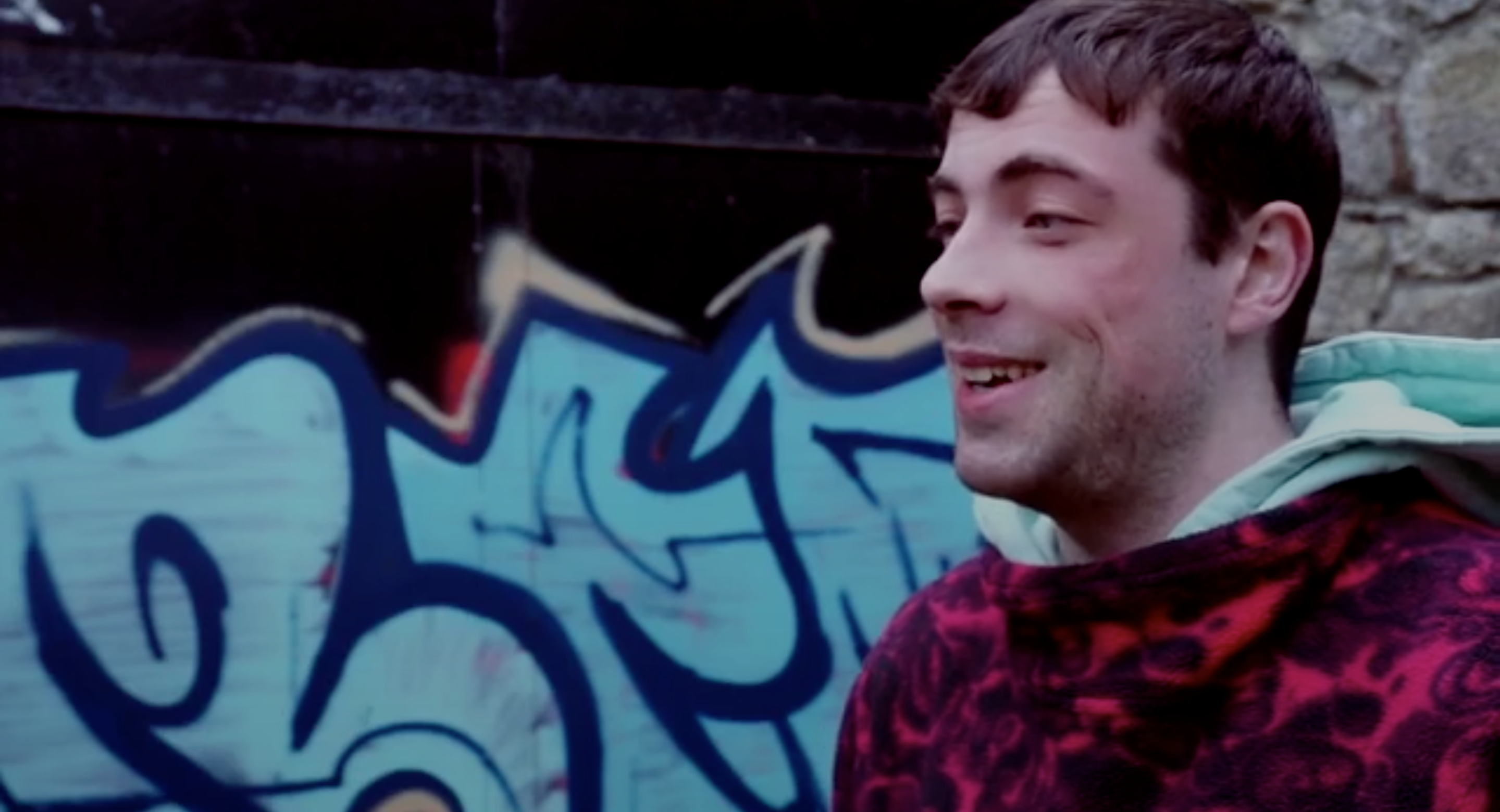
Watch Johnny Welfare speak to David Doyle about Róg Records
Music venues are closed and independent artists are struggling to make ends meet.
With no definite date for a reopening, hip-hop producer and co-founder of independent record label Róg RecordsJohnny Welfare speaks about the struggles of running a label during the pandemic.
Róg Records was founded in 2018 by Johnny Welfare alongside the hip-hop trio of Smokey, Bazigos, and Mory. Since the label’s inception, six artists have enrolled on Róg Records. With the addition of hip-hop artist Phev and psychedelic guitarist Chilli Flake, the label has grown considerably.
Róg Records logo courtesy of Róg Records
‘’In our music module in college, I and three friends had the choice of doing a presentation, an essay, or setting up a record label. It was a no-brainer for us,’’ Welfare tells The City.
The effects of Covid-19 have had a major impact on the label, as it has had to cancel numerous shows for the artists involved.
‘’We announced our biggest headline gig in the city centre on the day lockdown was announced. It was a nightmare for the label,’’ Welfare says.
The future of the music industry is in a corridor of uncertainty, but Welfare insists that Róg Records will return ‘with a bang’ when live music has its eventual return.
Lavanda (left) and V-Face (right) on Lower Grangegorman Road. Photo by Colm McGuirk
“The fact that this unit was close to TU Dublin was a huge factor in the decision to go ahead with it.” Sarah Boland, owner of V-Face, is talking about her vegan fast-food restaurant’s proximity to the impressive new home of Technological University (TU) Dublin.
The city campus of what used to be called DIT, built as the centrepiece of a major regeneration programme for Grangegorman in north Dublin city, is ready to welcome around 10,000 students plus staff – once Covid restrictions are no longer necessary.
Boland’s is among a number of independent businesses on the Lower Grangegorman Road that had factored those numbers into their plans.
“It’s going to be a huge campus, so obviously footfall will increase massively,” Boland says.
In the turbulent 10 months since it opened, V-Face has had to make some think-on-your-feet adjustments to compensate for lost bums on its 40 seats. Among them is the outdoor eating area installed on the opposite corner, in cooperation with Dublin City Council, and the window hatch through which Boland speaks to The City.
“Coffee and sandwiches were never in the business model,” Boland says, “but we said ‘let’s bring out a lunch offering.’ The burgers were doing really well, but were more for the evening offering. [The hatch and coffee counter] have been designed in a way that, once the pandemic is gone, you can also swing around and serve people that come in.”
Dining tables installed by V-Face. Photo by Colm McGuirk
While V-Face benefitted from a model partly geared towards takeaway from the off, former Mediterranean restaurant Lavanda on the opposite corner has had to reset completely in the last year.
“We tried to do takeaway Mediterranean food during the first wave,” says Croatian owner Robert Velic, “but it didn’t work very well.”
Lavanda’s enforced rebirth was planned with the new TU Dublin campus in mind – it now sells toasties, slices of pizza and sweet treats.
“We’ll see when the students come back if we made the right choice”
Robert Velic
“The second wave came and then we completely changed. We were expecting those students. We adapted the prices to four or five euro,” Velic says.
“When the lockdown ends,” he continues, “it’s going to be a proper takeaway and we can add a few more things to the menu when business picks up and the colleges are back. We’ll continue to target students and walk-ins. We’ll see when the students come back if we made the right choice.”
A few doors up, Russia native Alexander Yegorov’s print and copy shop should be bustling.
His unit is next door to one of two new student apartment complexes on this stretch of road built in the controversial ‘co-living’ mould (and, in the ultimate symbol of the area’s gentrification, on the site of the former ‘Squat City’).
“We opened our shop three months ago,” Yegorov tells us. “They move the lockdown every two months. I expected the students would be here from the new year. But now, it won’t be until summer time.
“But it’s OK,” Yegorov adds. “We can survive until summer.”
“We knew it was a long game, but it’s been a lot longer than anticipated”
Rebecca Feely
On the next corner, Rebecca Feely of Kale+Coco tells The City that when she chose the location for her plant-based healthy food cafe in 2019, “it was under the assumption that there’d be lots of students.”
“We knew it was a bit of a long game,” Feely says, “because they were moving students bit by bit. But it’s been a lot longer than anticipated.”
While noting that her prices might be a little above the average student’s range, she tells us, “it’s always been in my head to focus more on marketing to students, but I haven’t had the chance yet because we haven’t had the students there yet.”
Kale+Coco has leaned more towards retail of food products to help stay afloat in what has been a difficult year.
Rebecca Feely in her cafe Kale+Coco. Photo by Colm McGuirk
“We were never actually told to close, so you feel almost obligated to keep trading because you have bills to pay,” Feely says.
“You have rent due. If you’re not ordered by the government to close, you’re not covered by any insurance, your landlords aren’t going to give you a break,” she adds.
While the eventual arrival of students should help jump-start these Lower Grangegorman businesses, it could well signal the end for Happy Days Coffee Van on the new campus a little further up the road.
The mobile cafe was set up by local resident Olivia O’Flanagan in response to the “inertia and isolation” her neighbours were faced with during the first lockdown last spring.
O’Flanagan, a former lecturer with no background in business, was given the green light to operate on TU Dublin’s campus for as long as its own catering services were closed.
“It’s a lockdown project to keep us all busy and connected and give some kind of focus for the local community,” she tells The City.
Happy Days Coffee Van set up at the entrance of TU Dublin’s Grangegorman Campus. Photo by Colm McGuirk
Hiring only locals helped her secure the temporary contract – staff can return to their own homes for the mandatory bathroom access.
“For me, it’s not a business endeavour,” O’Flanagan says, “though it has made money and is paying eight people’s wages on 20 hours a week. They’re all delighted and their parents are saying they were all sitting in their bedrooms cracking up.”
A package delivered by Nogora. Photo by Dolapo Agunbiade
One of the most impactful ways to celebrate Black History Month is by putting your money where your mouth is. By supporting Black businesses, you are spreading wealth around the Black community and closing the racial wealth gap.
Over the past few years in Ireland, there has been a steady rise in Black businesses and although I cannot name them all, here are five affordable ones to follow this lockdown.
An array of credit cards popping out of a jean’s pocket. Photo by Dolapo Agunbiade
“It’s not for profit. It’s meant to take a stand”
Funto Joye
1 Nogora Beauty
On 28 January 2021, Nogora Beauty became Ireland’s first Black-owned e-commerce hair care and beauty supply store. The site features a wide range of products, from silk bonnets and wave sponges to lashes and lip gloss. Nogora Beauty was created as a response to the shortage in supply of Afro-hair products displayed in Irish stores.
The creator – Funto Joye – in an interview with The City said, “I want it to be for our community.” He continued, “It’s not for profit. It’s meant to take a stand.”
Nogora Beauty stocks popular Black-used brands like Aunt Jackie’s, Eco Styler gel and Cantu, while also featuring products from Black Irish businesses: byO and Melt Effect (more on that later).
2 Awe-some Creations
Felicia Awe’s company, Awe-some Creations, is not one that we’ll be saying bye to anytime soon. Her business can satisfy all your delicacy needs and more. They do it all: savoury dishes, chocolate fountains and flavourful drinks.
The business started 10 years ago at church programme Summerfest, where Awe was asked to bring drinks. From there, at the tender age of 19, her career in mixology began. Awe-some Creations can cater for any occasion: business events, birthdays and bridal showers on small and larger scales.
“I feel it’s very important to support and promote black businesses but if we don’t support ourselves how can we expect others to do so?” Awe told The City.
The brand even runs masterclasses showing you how to make some of their refreshing cocktails. Their site is currently under construction. However, you can still order through email, Instagram, Facebook or directly over the phone.
3 Bees of Honey
Mimmie Malaba’s vegan self-care brand Bees of Honey is the wellness brand you wish you’d known about at the start of lockdown number one. Since 12 February 2020, Bees of Honey has been bringing customers the daily essentials to start their self-help journey.
Their 100% organic products promote stability, peace and comfort. Their whipped body butter, healing candles and sage sticks soothe the spirit while relaxing auras around you.
“Supporting a small black owned business is like supporting any other small business. It impacts you as a buyer because we look after you as a person and not just another statistic,” said Malaba.
Bees of Honey may be fairly young but the company has already had an enormous amount of success. The one-woman brand has been featured in Image Magazine and is certainly one to watch.
4 Melt Effect
Founder Mariam Oshundairo launched Melt Effect in June 2020. She is committed to giving her clients the best foundations to put their best foot forward.
For Black women, getting your hair done can be seen as a gruelling task that goes on for hours on end. This is one of the reasons why this brand specialises in providing quality hair products that will keep your edges laid and make your wig stay put. Oshundairo has developed an adhesive formula that’ll leave people asking, “What lace?”
Melt Effect items can be found on their site, as well as on the previously mentioned Nogora Beauty.
“We invite the world to join in this celebration of African excellence by supporting, while spicing up their wardrobes”
Umoja Linn
5 Umoja Linn
Umoja Linn was created by Liswa McDonald and China Soribe in 2017 during their college days at National University of Ireland Galway. Their Afrocentric fashion brand is a collaboration of African and Irish talent as the two work closely with numerous African designers, photographers and other creatives.
The company has had many achievements thus far, and have featured in Country Magazine and Irish Tatler. Umoja Linn’s success goes even further, as their clothes starred in Pharrell Williams and Jay Z’s music video Entrepreneur.
In our discussion about Black History Month, the creators said, “we invite the world to join in this celebration of African excellence by supporting us, while spicing up their wardrobes!”
Even with their mass successes, every brand I spoke to disclosed the desire for their items to be sold in shops around Ireland. Some even expressed the possibility of opening up their own stores, depending on future restrictions.
This is the end of this Black History Month series. However, celebrating and supporting Black accomplishments shouldn’t be limited to once or twice a year. To truly make a difference, Black efforts should be recognised at the same volume as White ones. This is the only way we’ll ever have a harmonious society.
The Central Statistics Office (CSO) have recently released the number of vehicles that have been registered for the first time this year. Erin Killoran explores the actual effects of these statistics.
Copyright free photo taken by user JCT 600 on Flickr.
The Central Statistics Office (CSO) have recently released the number of vehicles that have been registered for the first time this year. These figures show 81,809 new private cars were purchased by the Irish public. This demonstrates a large decline of 26.2% in comparison to this time last year, where 110,900 new private cars were licensed for the first time. The number of imported private cars also declined by 32.2% when compared with 2019.
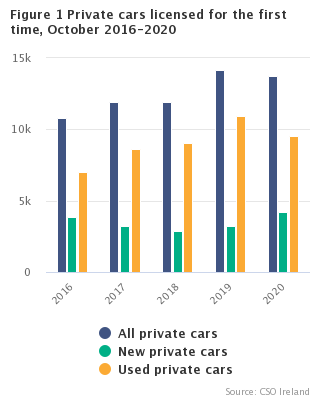
However, there was a stark increase during the month of October of this year. The graph bellow shows sales were up 30.3% in comparison to last year as 975 more cars were registered in October 2020 than October 2019.
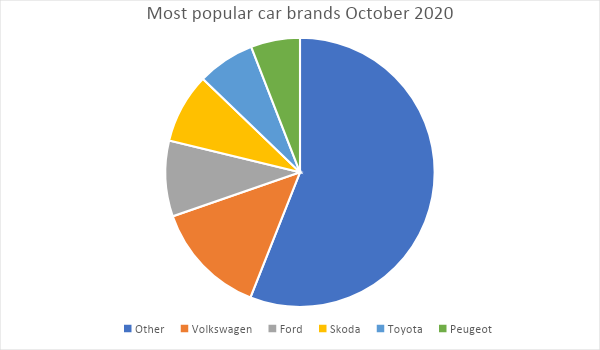
The CSO also reported the most popular car brands for newly registered cars during the month of October 2020. Volkswagen was the most popular with 574 newly registered cars sold, followed by Ford 382, Skoda 350, Toyota 291 and Peugeot 247.
Covid-19 has affected many businesses and industries, which could potentially be the main catalyst for the decline in the purchasing of new cars this year. Studies have shown that 14% of people have lost their jobs due to the pandemic and a large number of people have been temporarily laid off. So perhaps, the financial insecurity that Covid-19 has provided has caused a significant decline in the number of new private cars that have been purchased.
Speaking to Paul Egan, sales executive at Sheehy Motors, Naas county Kildare, he said: “ We have experienced a downturn in sales, but not by much. In fact, we still beat our target set out by the brand for 2020.”
With regards to any impact due to the pandemic, he said: “Covid did have an effect but the motor industry is also going through radical changes with technology. Customers are a bit confused about buying electric cars and the future of petrol and diesel cars.”
The CSO figures show that there has been a growth of electric and hybrid cars this year. 1,644 more hybrid cars and 625 more new electric cars were purchased this year compared with last year. Additionally, 35,067, new diesel cars were purchased throughout the first 10 months of 2020, which shows almost a 33% decrease from last year.
Egan spoke about his company’s plan for the final month of 2020. “Compared to last November, the pre-order intake for 2021 is approximately 15% behind. However, December orders should be stronger than last year because we are back open from December 1. Car sales are not considered essential retail so our showroom was closed during November. Any sales done until now were through email or phone.” Egan also stated that he believes that his company’s car sale figures are also representative of car dealerships nationwide.











You must be logged in to post a comment.