Tag: business

  • Good Vibrationz continue to operate outdoors as Dublin remains in Level 3

    Good Vibrationz continue to operate outdoors as Dublin remains in Level 3

    Events host and organiser Good Vibrationz are continuing to operate their events outdoors, despite last week’s news that Dublin will remain in Level 3, with the rest of the country joining them and Donegal. Erica Carter discusses with them how they’re adapting to the new restrictions.

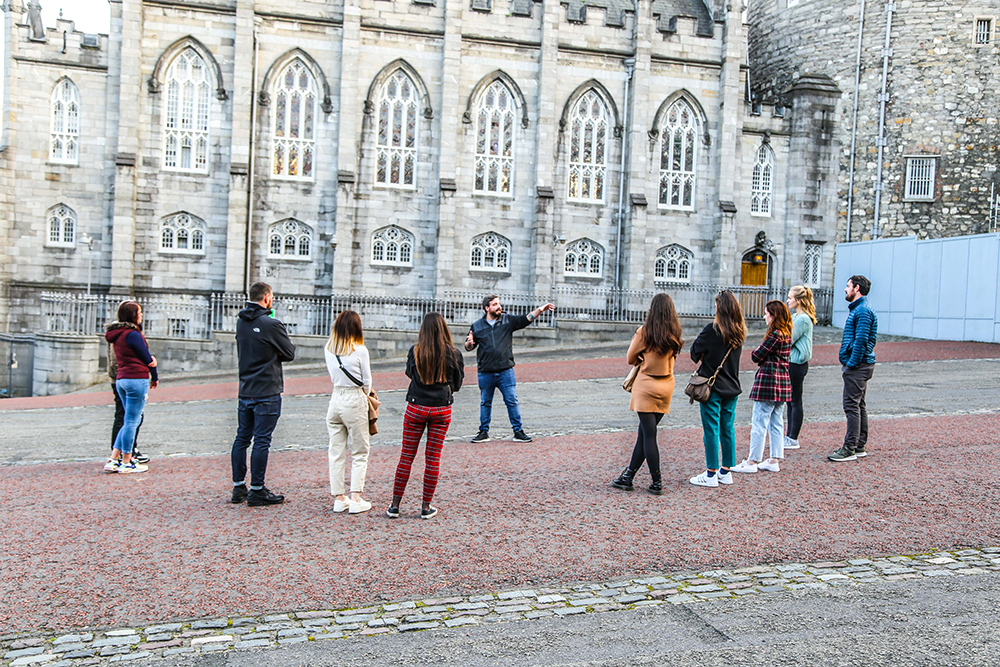
    Good Vibrationz Street Walking Tour. Photo taken by Diarmuid Montgomery Clery.

    Based in Dublin, Good Vibrationz are a collective of artists, filmmakers and self-proclaimed “messers”. They are known for their Photo Walks, Drink and Draw classes and Dublin Night Tours. They resumed their photowalk events in July, after being out of action for months.

    “The response has been so good,” said Diarmuid Montgomery Clery, one of the organisers. “Despite the lockdown, it seems people are more eager than ever to get back out there and have fun.”

    In order to comply with public health guidelines, Good Vibrationz have reduced the capacity of their events by 70%, allowing only 15 people on their outdoor photo-walks and tours. “It’s going to be tough but sure look, be grand,” Diarmuid said. Their walking tours are back on every Saturday and Sunday, with a whole host of new themes, including a music based walk, starting in the days of Dublin folk music and ending with the emergence of Irish hip hop. 

    Image courtesy of Good Vibrationz.

    Back in September Good Vibrationz started hosting their events in their new city centre space, the Arts Bar – however mere weeks later they were forced to close their doors as Dublin entered Level 3 restrictions.

    The Arts Bar is a new pop up gallery and events space on Francis Street in Dublin City Centre, above bar Drop Dead Twice. They were operating with a full bar and food menu.  “The new premises is a commission free art gallery and artists are welcome to put on shows and keep all the profits and our team will help with the production free of charge also,” explained Diarmuid. “We’ll be hosting our own events, classes and shows to keep it financially viable.”

    Despite all of these plans, the Arts Bar has had to postpone all of its indoor events. “It’s really hard because we put so much into the project then had to close so soon after,” expressed Diarmuid. “For us it’s about constantly trying to innovate to survive.”

    “For us it’s about constantly trying to innovate to survive.”

    “We know that when this is over the demand for our events will go through the roof. We just need to be able to keep paying all the bills and staying focused – I’ve noticed lots of friends who have been forced to leave the event industry and we don’t want that to happen.”

    Good Vibrationz’s walking tours have proved very popular as an activity people can still partake in safely amid restrictions, but Diarmuid is concerned about the future of the tours as the weather grows colder: “It’s going to become more difficult but it just means we need to be the best we can be,” he asserted.

    If Dublin moves to Level 5, they’re prepared for that scenario too. “We have started virtual walking tours and events through our new brand Alternative Experiences.ie,” Diarmuid explained. “Thankfully we’ve gotten a few bookings from various organisations and previous clients even before we launched so that was a great motivator.

    “We are also launching several more events at home including a Christmas crafts set that people can create at home with our instructor!”

    Businesses have been forced to adapt and get creative during the Covid-19 pandemic, and Good Vibrationz are certainly doing the most to keep going during such a dark time.

  • How local cafes are coping with Level 3 restrictions

    How local cafes are coping with Level 3 restrictions

    Dhai Almutairi checked on the local cafe to see how they are managing with Level 3 restrictions in place.

    Photo by Monika Pienkos.

    The government announced last week that all counties will join Dublin and Donegal in Level 3 of the Living with Covid-19 plan for the next three weeks.

    Indoor dining in pubs, cafes, and restaurants is banned across Ireland under Level 3 restrictions. Serving food can remain open for takeaway, delivery, and outdoor dining only. Outdoor dining is allowed outside bars, restaurants, cafes with a maximum of 15 customers. This limitation is an effective closure order for many struggling businesses.

    Many businesses wouldn’t be able to survive with public health limits of 15 customers given that winter is approaching, and the Irish climate doesn’t help to provide outdoor dining for customers. 

    The Restaurants Association of Ireland (RAI) stated  Level 3 restrictions with outdoor dining would mean that staying open was unfeasible for many restaurants. 

    The Social Fabric Café is a local café located in the heart of Stoneybatter, Dublin 7. The cafe took over an old post office and transformed it into a local spot for healthy, delicious food and coffee.

    Before the initial lockdown in March, the café closed its doors as there was a decline in the number of customers coming in. The café remained closed for six weeks then reopened following government advice for takeaway only.

    Social Fabric Cafe in Dublin city centre. Photo by Miguel Ruiz.

    “We noticed coffee sales increase, and that made 75% of our revenue,” said Monika Pienkos, the café’s owner. “Some of our regular customers started asking for food, so we prepared a small menu for takeaway. 

    “We started to look into click and collect stores, and we advertised takeaway services.”

    Despite their effort in running the cafe smoothly, the café was forced to lay off all its employees. “The owners worked the hours to minimize the costs,” they explained. “We managed to cover our costs and maintained a regular customer base”, said Pienkos.

    With the introduction of Level 3 restriction, the café reported a continued decline in its customers and revenue. “We don’t have an outside sitting area, and the weather is changing now, so we are considering to be open for five days a week.”

    Running a café during a global pandemic means adapting to survive amid the COVID-19 restrictions.  

    The Social Fabric Café made more call and collect order ads and created an online click and collect shop in order to maximise their reach. “We introduced wearing masks at all times, supplied three sanitizing stations, and made strict cleaning and sanitizing procedures,” Pienkos explained.

    Business owners and customers alike have been debating whether the closure of indoor dining is going to lower the number of COVID cases in Ireland. 

    “We are not sure if closing indoor dining is making a significant difference,” Pienkos said. “Our indoor dining was reorganized to adhere to all social destining regulations, and we operated on a half capacity basis.”

    The Social Fabric Café recently obtained a Covid-19 safety certificate from Failte Ireland and is doing all they can and need to keep their place and customers safe.

  • Newbridge in pictures: Rural Kildare town adjusting to restrictions during Covid-19

    Newbridge in pictures: Rural Kildare town adjusting to restrictions during Covid-19

    TheCity.ie’s Kim O’Leary presents a collection of her own photos from her hometown of Newbridge, Co Kildare, where big and small businesses are fighting to adjust to restrictions – cautiously optimistic that their beloved town will one day flourish again.

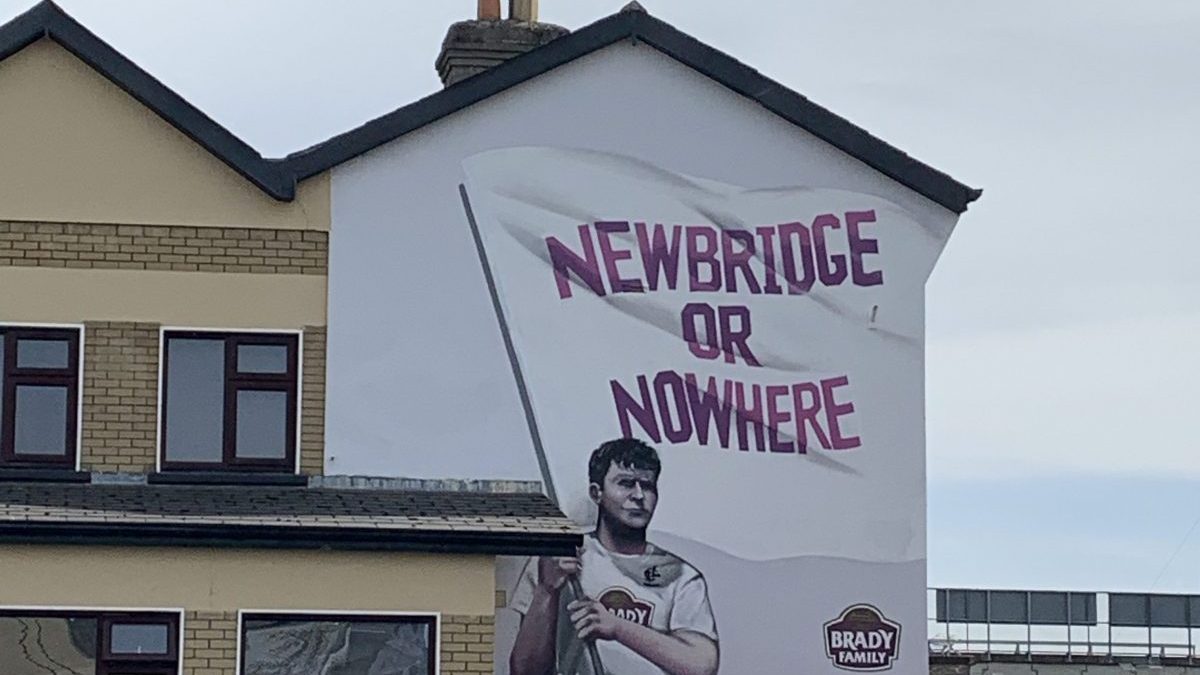
    ‘Newbridge or Nowhere’ became the town’s unofficial mantra following the summer of 2018 debacle, when Kildare rejected the choice of Croke Park as the venue for their All-Ireland qualifier round 3 match with Mayo. In the end the match was played in Newbridge’s St. Conleth’s Park and saw the Lilywhites emerge victorious over Mayo. This mural was painted to cement the landmark victory. (March, 2020)

    The Covid-19 pandemic has changed normal life as we know it, with many local businesses bearing the brunt of changes to the economic climate. And for my small rural town of Newbridge in Co Kildare, the difference between Newbridge before and during Covid-19 is startling; shops are closed, people now wear masks and gloves to the supermarkets and the atmosphere of dread and fear is palpable in the air.

    Newbridge Town Hall is located at the very heart of the town and the building has been used as a dance hall, a FÁS training centre, a bingo hall, a storage unit and it was also headquarters to the town commission and the community council. The first stone of the town hall (which is formerly a barracks chapel) was laid in 1859 by Lieutenant General Sir James Chatterton. (March, 2020)

    Newbridge, officially known by its Irish name Droichead Nua, is a town in County Kildare, Ireland. While the nearby Great Connell Priory was founded in the 13th century, the town itself formed from the 18th century onwards. The town grew to include a military barracks which opened in the early 19th century, which continues to function.

    The back-end streets behind Main Street in Newbridge are lonely during the Covid-19 pandemic, with many of the small shops and businesses closed. (April, 2020)

    In the 20th century the town saw great expansion of local business, and Newbridge began acting as a commuter town for Dublin. Over the last twenty years, the town has seen its population soar to 22,742 in the 2016 Census – making it the most populous town in Kildare.

    The newly refurbished post office in Newbridge opened earlier in the year, and it remains open during the Covid-19 pandemic to provide essential services to the town’s inhabitants. (April, 2020).

    In many ways — with GAA being so popular — you’re either a Moorefield or Sarsfields fan, with downtown considered Sarsfields’s turf.

    Like most places still open for business in Newbridge, strict ‘social-distancing’ practices are in operation inside the post office. Make sure to stay two metres apart. (April, 2020)

    St. Conleth’s GAA Park is located downtown, so when these two rival sides come together to play GAA, it’s sure to an entertaining display of Gaelic football prowess. In October 2019, Sarsfields were declared Kildare Senior Football Champions for the 25th time in their history after they claimed a six point victory over Moorefield in St. Conleth’s Park.

    People wear masks as they queue up outside the post office in Newbridge, adhering to the 2 metres social distancing rule. (April, 2020)
    It’s not all doom and gloom for local businesses, with SPAR and Life Pharmacy among the essential stores remaining open during the pandemic. (April, 2020)
    Judge Roy Beans restaurant on Edward Street is a must-see for burger lovers, with the American style restaurant crowned ‘Best Pub Burger’ two years in a row. Currently the restaurant is operating a takeaway service due to Covid-19 and its next door neighbour the EBS building society is open for business as usual. (April, 2020)
    Whitewater Shopping Centre — located on Main Street in Newbridge — is one of the country’s largest shopping centres, with thousands of visitors flocking to it every year. At the moment, many of its non-essential shops have closed but its outdoor water features are still proving popular with families. (April, 2020)
    Escalators have been powered down in the Whitewater Shopping Centre, with only a handful of stores open including the Marks & Spencer food hall. (April, 2020)
    A blind man walking down Main Street in Newbridge during the Covid-19 pandemic over Easter weekend. (April, 2020)

    The very top of the town is home to the larger supermarkets of Dunnes Stores and Tesco, as well as the newly opened skate park, and fast-food giants McDonalds and KFC.

    For the first time in their history since opening in Newbridge, McDonalds and KFC on Moorefield Road are shut for business with empty carparks over the Easter weekend. McDonalds shut its doors on Monday, April 23 and KFC shut on Wednesday, March 25.
    (April, 2020)
    A solitary man eats outside KFC in Newbridge during Covid-19. (April, 2020)
    The Dunnes Stores carpark in Newbridge is almost full as shoppers flock to gather their much-need food supplies. (April, 2020)
    A female shopper dressed in mask and gloves for this shopping excursion. (April, 2020)
    A woman visits the fish monger to collect her order. (April, 2020)
    The popular skate park in Newbridge opened last April after 20 years of campaigning by skate boarding enthusiasts, but during Covid-19 the park is going mostly unused. (April, 2020)
    One of the most iconic businesses located in Newbridge is of course Newbridge Silverware, which has spent over 80 years in the town. Its Museum of Style Icons features pop culture memorabilia from Princess Diana’s dresses to suits worn by The Beatles, and much more. (March, 2020)

  • The new world of Hipster Banking

    The new world of Hipster Banking


    The term ‘hipster banking’ has been around quite a while, and both the banks and the term are here to stay.

    N26 and Revolut are the two biggest ‘Finetech’ start-up banks available to people in Ireland. Their purpose is to serve up an undeniably slick and “easy” way to bank.

    N26 was launched in Germany in 2015 and has since found its way into the wallets of 1.5 million customers across Europe. Revolut is based in England and has over a million users with 75,000 based in Ireland.

    So what’s the difference between the two? N26 has a European Banking License while Revolut is backed by the UK Financial Conduct Authority. They have, however, applied for an EU banking license, but this is still in the works.

    While it is easy to get into the nuances of these finetech companies, it is much more interesting to see the waves they are making in the financial world.

    “The bricks and mortar banks are currently scrambling to start offering the features these Finetech companies have already rolled out,” John Armstrong, editor of Irish Tech News said.

    “The disruption has caused a beneficial knock-on for everyone, even those who have no idea why their antiquated banks now want to offer them features they have wished for, for years,” Armstrong continued.

    These services are for people who own and use smartphones as the banks have no physical shop fronts. To set up a N26 account you need to have a high-speed internet connection and a willingness to take a Facetime call.

    Revolut involves downloading an app and signing up from there. The apps these banks operate on are slick, sophisticated and most importantly, convenient.

    “Fintech banks know that you may not be able to do financial transactions during normal working hours, so they are designed for this and they will have support staff that you can talk to after normal business working hours,” Ronan Leonard, a freelance tech journalist explains.

    The main demographic target for N26 and Revolut are young adults with N26 pushing advertisements on YouTube that read: “#nobullshit – Banking. But without the bullshit.”

    “Banking should be easier than it is. The main reason there is still a clear divide between the likes of AIB and Revolut is that of loans. People need to establish a relationship with banks to allow them to buy cars or houses so for now, these two products will remain separated,” Armstrong said.

    This has all played into Finetech banking’s rise. Also, more competition in markets is usually a good thing as it means more variety and lower prices.

    According to Visa’s 2017 annual report, people in Ireland are now making 3 million contactless payments a week. With that being said, Bank of Ireland is still to set a date for when it will support contactless Apple and Android payments.

    “If legacy banks and financial institutions don’t adapt to what the modern customer wants they will start losing customers left, right and centre. They will have to adapt or die and so far I don’t see them adapting enough but they still have time to do this,” Leonard said.

    N26 has said in 2017 it was gaining 1,000 customers a day with its ‘Black Account’ option supposedly very popular with frequent flyers as it doesn’t have additional charges for using ATMs while abroad.

    According to N26: “The only fees on this are a €2 ATM withdrawal fee if you make more than 5 ATM Euro withdrawals in a month. The €2 fee does not apply to non-Euro ATM withdrawals – but there is a 1.7% fee for all non-Euro withdrawals.”

    This fee compares quite well with the “main” Irish banks, who all charge around 3.5% for non-Euro cash withdrawals.

    N26 has a European Banking Licence which means that funds up to €100,000 are guaranteed by the German Bank Guarantee. Revolut is still waiting to get its European license but it is backed by Lloyds Bank.

    “As far as I am aware some of these Fintech banks are as secure as legacy banks. One example of this is Revolut who use Lloyds Bank to provide banking services, and is now worth over $1.7 billion,” says Leonard.

    The interesting thing about this new era of banking is that there are no physical branches, no ATM deposits and no human faces, bar, maybe, those viewed through a screen.

    These Finetech companies are really trying to represent their #nobullshit notions by throwing their hipster weight around.

    An example of this is how you can use and store some of the major online currencies like Cryptocurrency, Ether and Litecoin on Revolut through their ‘Vaults’.

    “All banks want physical money to die and contactless payments have facilitated its near demise. The Fintech pseudo banks are already operating without it so it’s only a matter of time before it becomes the default method of payment,” Armstrong says.

    A completely seamless banking operation is closer than could have been anticipated.

    The main thing separating these new banks and the legacy banks, is their ability to loan out mortgages. But, what is to stop this being done over a phone call. A lot of loans can be secured this way already.

    “Can the old banks change quick enough before the ‘new’ banks find a reliable way to provide mortgages? Time will tell but I doubt it. Peer to peer lending has already proved itself in businesses so consumer loans will be imminent,” John concluded.

  • The Irish Coffee Market is roasting its way to change

    The Irish Coffee Market is roasting its way to change

    Ireland’s relationship with coffee roasting has shifted in the last five years, with an increase from 8 to 50 Irish roasters since 2013.

    Coffee roasting is the process of applying heat to green coffee beans to create roasted coffee products. The process requires dedication and patience; and is the key that unlocks aroma and gives that characteristic flavour that many enjoy in their cups every morning.

    As a result, the coffee industry has been shifting its focus from the product itself, to the person and stories behind the cup.

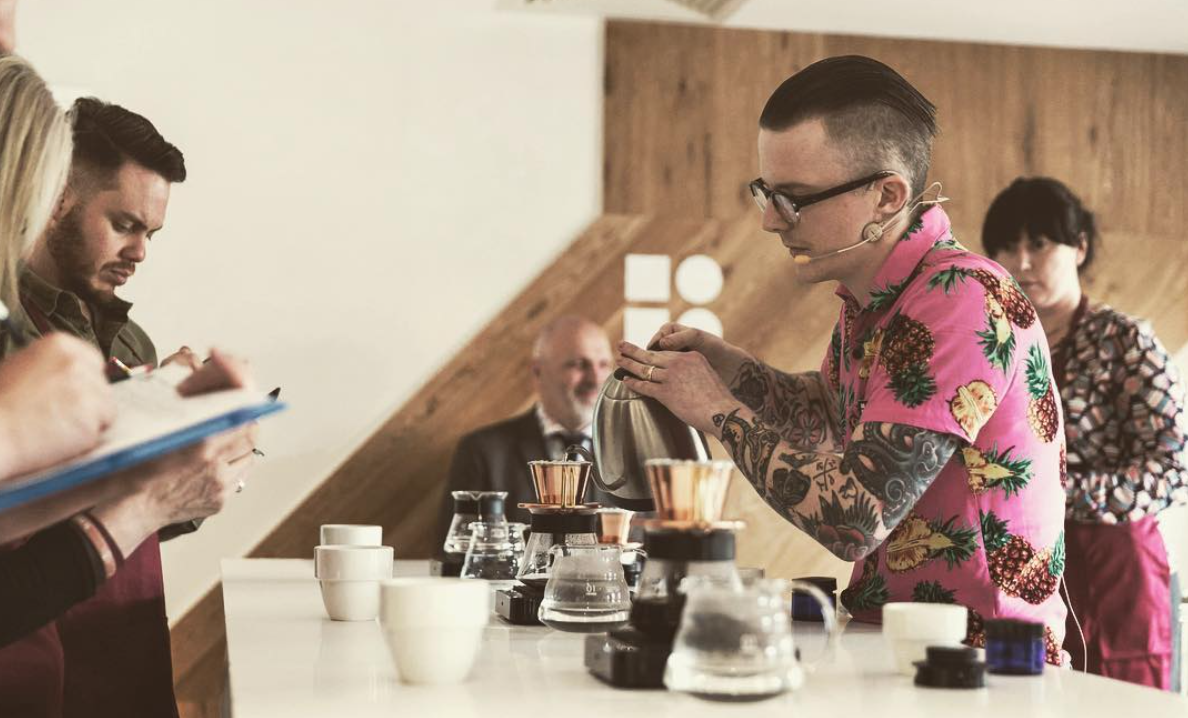
    Stephen Houston is Head Roaster for Bailies Coffee Belfast: “I’ve been working as a roaster solely for four years, I’ve never worked as a barista, never worked in a coffee shop.

    “The artisan style of roasting is what I really fell in love with,” he continues.

    “There are interesting learning curves coming from that point of view… In my short time, I’ve roasted four and a half thousand production roasts, and about a thousand sample roasts.”

    Stephen won the Irish Brewers Cup in 2017 and came third this year: “It was a dream come true,” he says. “I’m a very competitive person.”

    Recently, Stephen has become part of the membership committee for the Coffee Roaster’s Guild (CRG). The CRG is the global trade guild of the Specialty Coffee Association (SCA) “dedicated to inspire a diverse coffee roasting community through the development and promotion of the roasting profession”.

    The relationship with farmers who grow the beans is an essential part of the business: “[We] connect with farmers and being able to buy off them year after year; they get confidence [because] we’re always going to pay a certain price… [and] meet certain criteria.

    “We negotiate the price directly with the producer, not the importers or traders…It’s confidence for us that we’re going to maintain really nice relationships with these amazing farmers.”

    Mr. Houston believes that transparency in the coffee industry creates the ideal product for the customer. “Transparency is something that we’re really keen to see,” he says.

    “I take most of the quality control side from when coffee arrives into our warehouse until it goes out to our customers … passion for the work is what makes the perfect cup of coffee: “It makes me a better person, better roaster, better brewer.”

    The Irish coffee industry as we know it today has been influenced by European and Scandinavian values.

    Per Nordby is a Swedish coffee roaster based in Göteborg, Sweden. He travels to Central America and East Africa annually to meet with the farmers, millers and exporters he trades with. His speciality coffee roastery Kafferostare Per Nordby was founded in 2013.

    What roasters look for in the end product is what makes this style of coffee making so unique. “I like to find an end product that can tell a story, because coffee…comes from someone,” said Per.

    The stereotype of a businessman rushing through South William Street with an espresso in his hand is not what coffee roasting represents.

    Fika is a key part of coffee culture in Sweden explains Per: “We sit down…with friends or co-workers and we’ll drink [coffee].”

    Fika is a term used in Sweden for the coffee break that allows people in the industry to slow down, appreciate their brew, and relax for a few minutes. This idea has found its way into Irish coffee shops in recent years … while challenging the stereotype of a bustling city filled with people too busy to take a break.

    Per Nordby
    Per Norby, coffee enthusiast and a Swedish coffee roaster // Instagram @pernorby

    “Every coffee that we sell is a coffee that I would enjoy myself.”

    Per started as a barista in 1999. “Coffee was fairly new in Scandinavia. Barista was a new word that people learned.”

    In 2007, roasting was in its early stages around Europe. There was only one trader in Europe that could provide the quality Per was looking for and he spent a lot of time travelling trying to find alternatives “trying to get transparent” with the industry: “Over the years when I worked behind the bar, things changed dramatically.

    “Today that’s a totally different story, now there are plenty of traders.”

    From late 2010 after Instagram was launched, coffee culture was diverted. “It’s still a lot about how [coffee] looks,” said Per. The perfect latte or cappuccino art-work filled the social platform to the point of suffocation, with thousands of new coffee posts every day. The hashtag #COFFEE has seen over 97 million posts as of October 2018.*

    Three years later in 2013 he started roasting, and his experience allowed him to begin doing business with contacts and traders he had previously built relationships with while travelling.

    The concept of roasting is a people-based way of business; putting the experience of the consumer at its core: “We want to maintain the diversity that exists in coffee, while not sacrificing taste,” said Per.

    “I believe there’s plenty of room for [more] roasters than we have today.” There are many small towns without local roasteries, and although some may fail at the beginning it may be another factor and “not because the market’s not big enough”.

  • Chanel Says Yes to Digitalisation

    Chanel Says Yes to Digitalisation

    Léa Pelard reports on the French luxury brand Chanel’s collaboration with e-commerce giant Farfetch to revitalise their customers’ in-store experience.

    (more…)

  • Sex Education Based on Abstinence? There’s a Real Absence of Evidence

    Lorem ipsum dolor sit amet, consectetur adipiscing elit. Sed ultrices ipsum non mattis pharetra. Integer laoreet non felis sit amet pharetra. Integer mollis eget felis non finibus. Nullam nibh mauris, fermentum vitae felis vehicula, aliquam bibendum sapien. In euismod velit vitae neque rhoncus congue. Aliquam luctus, sapien in consectetur cursus, quam urna euismod magna, sed pellentesque massa libero eu lorem. Aenean rhoncus gravida nisl vel pretium. Nam ac nisl non ipsum vestibulum vehicula vulputate sagittis magna. Aenean est nisl, convallis volutpat tempor ac, tempus ac ante. Class aptent taciti sociosqu ad litora torquent per conubia nostra, per inceptos himenaeos. Fusce rhoncus sodales tempor. Nunc pretium tortor felis, eget cursus magna accumsan a.

    Etiam eu molestie eros, commodo hendrerit sapien. Maecenas tempus leo ac nisi iaculis porta. Sed sapien tortor, aliquet a velit ut, lacinia molestie velit. Maecenas ornare consequat massa ullamcorper dapibus. Aliquam auctor, sapien sit amet accumsan facilisis, enim enim aliquet arcu, tincidunt pellentesque justo turpis id neque. Duis eleifend nunc sit amet mi dapibus ornare. Suspendisse vel libero sem.

  • Waiting for Wetherspoons

    Waiting for Wetherspoons

    With An Bord Pleanála’s decision on the Camden Street location to be released tomorrow, Hannah Lemass looks for the real scoop behind Wetherspoons’ expansion in the capital 

    (more…)

  • Learning on the job?

    Learning on the job?

    The low number of apprentices remains a legacy of Ireland’s economic crash, as Eimear Dodd learns

    (more…)

  • Networking their way to success

    Networking their way to success

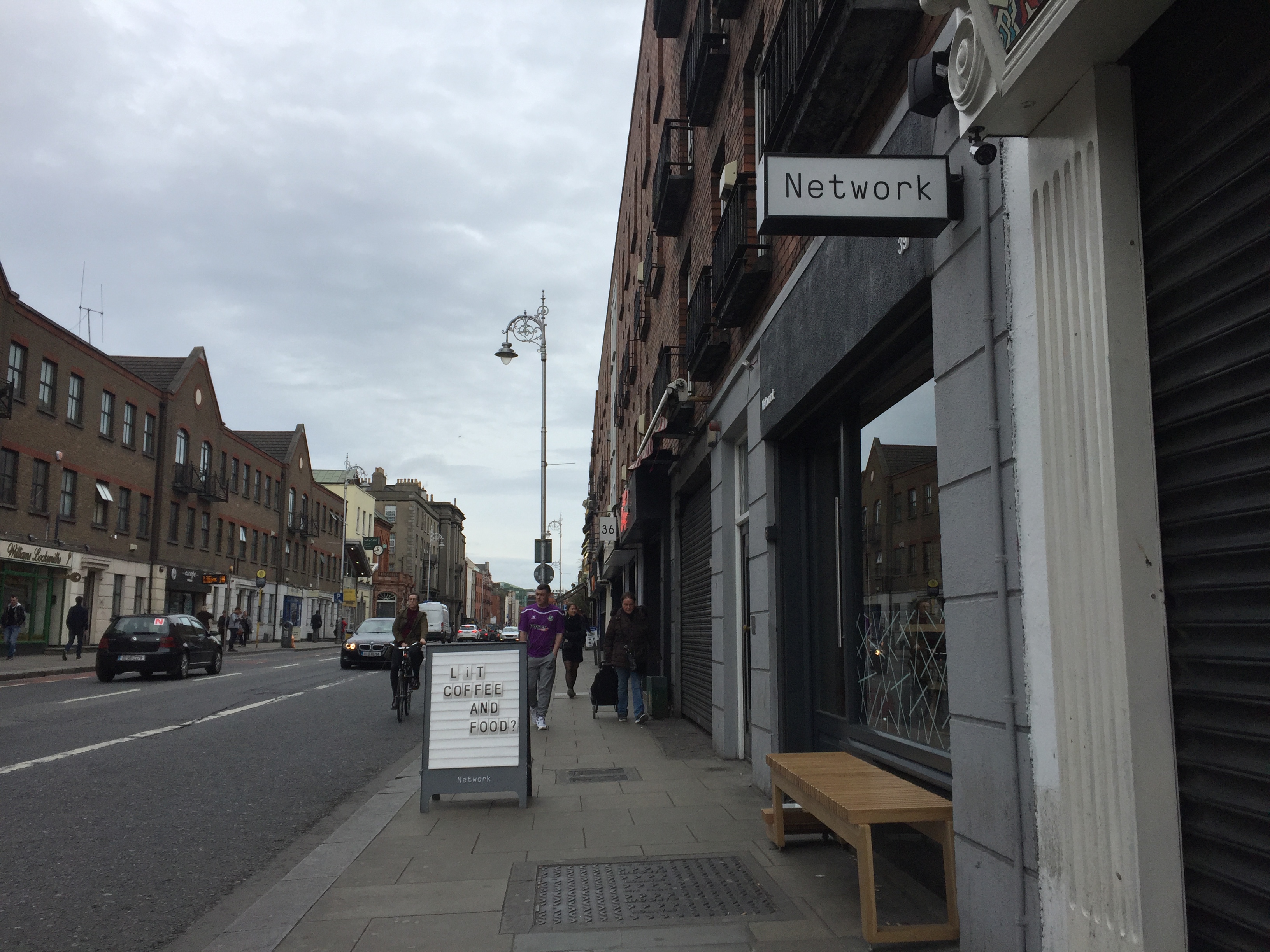
    James Carroll sat down with Network Cafe owner, Oliver Cruise, to discuss the successes and challenges of his first eight months of trading.

    (more…)