Tag: college

  • While the SUSI grant helps many, some students still fall through the cracks

    While the SUSI grant helps many, some students still fall through the cracks

    Just over 85,000 college students received a grant under the 2018 Student Grant Scheme according to figures released by Student Universal Support Ireland (SUSI) under Freedom of Information legislation.

    During the 2018 academic year, 98,508 applications for a grant were submitted to SUSI’s Awarding Authority. This means a total of 13,483 students were refused a grant, a figure that has risen from 10,623 in 2017.

    SUSI is Ireland’s single national awarding authority for all higher and further education grants. Beginning in 2012, SUSI offered funding to eligible students in approved full-time third-level education in Ireland and also, in some cases, funding for students studying outside the State.

    Students are split into two categories for assessment, dependent and independent students. Dependent students are assessed on their own income and that of their parents/legal guardians, whereas independent students are assessed on their own income and that of their cohabitant.

    Robert Ralph has been refused the grant every year he has been in college (now in his final year), despite meeting the criteria for the grant.

    “Since I was leaving school and getting my Leaving cert results I knew I’d need to apply for the SUSI grant to get by in college because I wasn’t working at the start of first year and only my dad was working at home. On top of that, my older brother was a couple of years ahead in college and my younger brother was coming into the leaving cert at school so it was a pretty expensive time for the family.”

    Having been refused during his first two years of college, Robert was faced with the decision to struggle through or defer and save money and come back to the course at a later date.

    “Halfway through first year I finally managed to get myself a job just working in a clothes shop in the shopping centre next to my house, but I was really only able to do enough hours that would give me enough money to cover food and transport for the week and it was tough to have a social life on that kind of budget.

    “I did that routine for year one and two but in third year after getting refused again, I decided to take on close to full-time hours in work just so I’d have a surplus of money rather than having to scrape by and I was still doing 30 or so hours of lectures a week on top of all the studying as well.”

    With over 10,000 students refused in each of the last three academic years, there are calls for applications to become more transparent.

    “Each year it’s the same story with SUSI, to be honest,” said Robert. “I just apply for it out of habit because I know I’m not going to get it. The whole process could do with being a bit more open because I haven’t been given a specific reason for being refused despite being within the criteria for it and it can be like chasing shadows at times when trying to chase up replies or to see what stage your application is at.

    “I know every case is different and they can’t give one to everyone but there’s definitely hundreds of genuine people in need being refused every year and something has to be done about that. College is difficult enough as it is without having to top it off with financial pressure.”

  • Disability services remain an issue

    Disability services remain an issue

    Trinity College has records of two complaints made in relation to disability access during 2017 while other colleges and Dublin County Council said they had no records of any complaints made.

    Under the Freedom of Information Act 2014, records with “information pertaining to the amount of complaints (including the nature of the complaint) about disability access across the city/campus for the years of 2017 to present,” were requested from Trinity College Dublin, DCU, UCD, Dublin Institute of Technology, IT Tallaght and Dublin County Council (DCC).

    However, only Trinity held any records of complaints in relation to the FOI request. The rest invoked section 15 (1) of the FOI act: “The record concerned does not exist or cannot be found after all reasonable steps to ascertain its whereabouts have been taken.”

    Wheelchair users experience trouble across Dublin where some buildings are listed, and therefore have not been modernised to include a ramp or elevator.

    “That’s the excuse I’ve been given before, oh we can’t make it accessible because it’s a listed building in terms of making it accessible by lift or anything like that,” said James Cawley, a wheelchair user and the policy officer at the Independent Living Movement Ireland.

    2017 saw the launch of the National Disability Strategy Inclusion Plan where the government will focus on:

    • Equality and Choice 
    • Joined up policies and public services 
    • Education 
    • Employment 
    • Health and Well-being 
    • Person centred disability services 
    • Living in the Community; and 
    • Transport and access 

    In a recent report, published by the Irish Human Rights and Equality Commission (IHREC) and the Economic and Social Research Institute (ESRI) it was found that people with disability face the most amount of discrimination and inequality in terms of housing.

    Some of the findings show that people with a disability can experience higher housing and environmental deprivation and are more likely to live in over-crowded conditions. They are also more than twice as likely to report discrimination in relation to access to housing and more likely to live in an area with environmental problems.

    #HackAccessDublin was set up in partnership with Google to try and raise awareness of disability access problems across the city of Dublin and to help modernise buildings that are difficult to access.

    The initiative sees professionals from the communities of service design, engineering, technology and design working alongside professionals from disability community organisations like the National Disability Authority and The Rehab Group to try and come up with modern and effective solutions.

    TheCity.ie also revealed this year that elevators at Luas stops were out of use for the equivalent of 82 days over the past two years, leaving wheelchair users and others with disabilities unable to easily access the stops. Dundrum has been out of use for the combined time of 1,966 hours since 2016.

    When making a complaint about disability access, the Ombudsman is the best place to start, making sure to refer to the Disability Act 2005.

    “What I’ve found is that when I went to do it in the right form, through emails, where there is a paper trail,” Mr Cawley said.

    He recently had an incident at a hotel where he was soaked through trying to reach the hand drier that was placed above the hand basin. According to Mr Cawley, after he emailed, complaining, they offered him a complimentary night’s stay and changed the layout of the bathroom.  

    However, Mr Cawley said this level of attention isn’t the normal response to complaints.

  • DIT comes out on top for Erasmus+ participants

    DIT comes out on top for Erasmus+ participants

    There has been a rise in Dublin third-level students taking part in the Erasmus+ programme, statistics obtained via Freedom of Information act have found

    Over the last five years, four Dublin colleges (UCD, DIT, Trinity and DCU) have seen an increase in students studying abroad at partner European universities. DIT however, has the highest number of participants. In the 2017/18 academic year alone, DIT sent 549 students to partner universities.

    Peter Dalton, Erasmus coordinator at DIT, said: “The significance of the Erasmus programme is life changing for students, it allows students to broaden their horizons, both academically and personally.”

    Mr Dalton explained how beneficial the programme is for students and their future careers. He said: “Any student who undertakes an Erasmus abroad, from an employability point of view, in the years ahead will stand out amongst the rest. It shows an employer that a student can adapt to change and learn new cultures.

    “The Erasmus programme is an academic and personal journey in life that should be experienced by all students.”

    UCD have sent over 2,000 students abroad over the past five years. UCD student, Jane Moloney, took part in the Erasmus programme in the 2017/18 academic year. Jane said: “I originally chose to go on Erasmus because I was not overly happy with the course I was doing in UCD. I decided that if I went away for a year it would really stand to me in my future career and set me aside from my peers when applying for jobs and graduate programmes.”

    Jane, who studied at Utrecht University in the Netherlands, said a year away from Dublin did her the world of good as she had the opportunity to experience a new lifestyle and culture. She said: “It is so important for students to take part in the Erasmus programme because there are so many different countries right on our doorstep in Europe.”

    Jane said her time abroad allowed her to become more confident and independent. She said: “As someone from Dublin, who goes to university in Dublin, I never actually got the chance to move out of my family home, so it was good to be able to get the chance to do that in such a cool country. I gained, not only an international degree and international experience, but also international friends and connections that will last a lifetime.”

    Erasmus+ is a European Union programme which gives students the opportunity to study abroad and develop their educational and social skills. It also allows students to live and study in another European country for up to a year and experience a new way of life.

  • DIT Aungier Street suffers the effects of Grangegorman’s development

    DIT Aungier Street suffers the effects of Grangegorman’s development

    The ‘Grangegorman Urban Quarter’ is a proposed education, health and community development by the Grangegorman Development Agency (GDA) for Dublin Institute of Technology and the Health Service Executive. The GDA was awarded funding to begin the construction of the new campus based off the back of the country’s €2.5 billion stimulus package.

    The construction of the new DIT campus began back in 2013, with several listed buildings in need of extensive refurbishment. The buildings listed include those that will now accommodate up to 1,400 staff and students that would have moved into the campus in 2014.

    Integrating over 20,000 staff and students and for the first time having all DIT activities which are currently spread over 39 different buildings into one campus is a long-awaited development. It will make for a much more appealing prospect for Leaving Cert students as they decide on where to undergo their third-level studies.

    However, for those like myself who became a student of DIT Aungier Street back in 2015, it’s fair to say it does leave you feeling a little ‘hard done-by’. My 4 years of studies in DIT will all take place inside the walls of DIT Aungier Street, meaning I will not have the privilege of availing of the modern Grangegorman campus.

    That said, I don’t feel this would be an issue if the facilities in the rest of the DIT locations remained to a certain standard. Especially when you’re forced to pay €3,000 to avail of them. Sadly however, this is not the case. Into my fourth year here in Aungier Street, and still the same problems occur now as they did on my first day attending the college.

    “I attended my first lecture with a great amount of excitement. Sitting in a large lecture hall for the induction day, I expected a similar environment would greet me for each of my classes. However, I didn’t arrive to anything like the induction day. Instead, I arrived at quite a small classroom with roughly 25-30 computers with a seat at each one.”

    Luckily, I was a couple of minutes early for this class because if you arrived on the hour or any time after that, you were left without a seat and had to sit on the ground or stand at the back. Whichever you preferred. Keeping in mind that a full attendance would have meant roughly 60 students were in a room with enough seats for 50% of the attendance, and it’s easy to realise the uncomfortable setting we were in on only our first day.

    In one particular module I took in my 3rd year, there were only 12 computers which have a particular programme which we needed in order to complete our coursework. The problem here is that over 4 different years there are roughly 220 students who can be in need of using these computers at any given time. Particularly when there are deadlines to be met, this can cause quite a lot of unrest as the programme costs over €100 for its most basic package, with prices reaching as high as €2,555 for the more advanced versions.

    This is still a common problem in DIT and the fact remains that most of the classes I have don’t have sufficient seating for the number of students attending the lecture, and even if they are lucky enough to pull a seat from another room, it still leaves them without a desk or computer to work at.

    DIT say that during the period between 2010 to 2015 the state provided no money by way of devolved grant for the maintenance and the upkeep of any of the institute’s properties. As a result, this means that any small essential works were only those that could be funded from recurrent funding.

    On top of the lack of seating, there is a severe lack of computers available in the library which are essential for students in college, especially towards the end of semester. The fact there are only sixty computers available at any given time is extremely disappointing. Even if you are able to find a free computer in the library, which is often full, there is also the chance that the free computer is not working which has been the case on many occasions. It’s extremely easy to feel as if the large fees you pay to attend the college don’t necessarily improve the facilities available for these reasons.

    There is also the fact that our sports teams don’t have any facilities for training or matches on the campus. Instead, they must travel to Grangegorman, where state of the art facilities are now in place.

    Over the last two years, the Department of Education and Skills has reinstated the Devolved Grant. This is limited funding which is provided to maintain all the Institutes of Technology (IOT). IOTs are categorised into three categories based on the number of students attending each IOT. With DIT being in the highest category, it meant that over the last years they have received around €900,000. This money has been more or less evenly split between building fabric (essential maintenance, lifts, fire safety, seat replacement, window blinds, etc.) and computer and ICT upgrades.

    “Aungier Street represents approximately 20% of the total DIT estate and thus has benefitted from a “commensurate, if limited investment”, described as not adequate, as there is a backlog of essential repairs due.”

    It’s quite evident the main authorities are aware that the current state of the DIT Aungier Street campus is not acceptable, and they clearly state that more funding would be required in order for them to maintain the campus at a more reasonable rate. However, it doesn’t take a genius to realise why there is such lack of funding, when there is €47.5M being provided to fund the Grangegorman campus.

    The Grangegorman Development Agency (GDA) is the group responsible for the recent development of the impressive 73-acre site located in the North City Centre of Dublin. The reasoning behind the recently developed campus is to merge all the existing IOTs of this institute into one campus. In September 2014, 1,100 students were relocated to the Grangegorman campus. In September 2019, it is planned that a further 10,000 students will relocate to the campus and it is envisaged that the relocation of all students will be completed by the year 2021.

    The opening phase of the Grangegorman project has been completed, with the institute committed to providing funding totalling €47.5M. Other public bodies have also contributed towards this cost with €11.1M of the total cost amount. In 2014, the institute paid €14.586M towards this total funding, and as of the 31st of August 2015, the institute paid amounts totalling €28.961M to the Grangegorman Development Agency. These payments made toward the GDA have been stated to be treated as “a long-term debtor” by the institute.


  • ‘I’m everything from an agony-aunt to a SUSI advisor’ – life as a student representative

    ‘I’m everything from an agony-aunt to a SUSI advisor’ – life as a student representative

    Luke Daly has been in office at Blanchardstown Institute of Technology (ITB) as the Vice-President of the Student’s Union since July 2018, after successfully running for office in March. While Mark Doyle has been in office as the Entertainments Officer since July, after winning the vote of his peers in the spring.

    What inspired you to run for office as a student representative?

    Luke: “I would say I ran for all the wrong reasons really! I didn’t like what was being done within ITB. I ran out of spite to be honest! There is so much happening around health, both mental and sexual, that I wanted to make a change to the approach.

    LukeDaly_CreditToReisCaffrey
    Luke Daly // Reis Caffery

    “I am not trying to reinvent the wheel but simply to freshen up what was being done.”

     Mark: “I was inspired after being in the college for the past three years and seeing the things that were being done both right and wrong. I felt I could make a difference to these things from an experienced student’s point of view.”

     What does day-to-day work as a vice-president entail?

    Luke: “What doesn’t it entail would be a better question. I am everything from an agony-aunt to a SUSI-advisor! One of the main things is something called case work, which is where I make a file or record of someone with a problem, put simply.

    “One evening I might have someone come into the office saying they can’t obtain a SUSI grant because, for example, their parents are separated and they can’t prove they are. The next day someone could walk in and say they are suicidal and can’t cope.

    “We have devised a great support system in here though with student welfare, diversity and inclusiveness absolutely paramount. We are organising campaigns such as disability awareness week, and KISS [Keep It Safe and Sexy] week along with the rebranding of our Mental Health week to Health and Wellbeing week, where we are telling people to focus on themselves more rather than telling others to get help.” 

    Mark: “Basically I am in charge of both on and off campus social events, such as mystery tours and other fun events such as Blind Dates and Karaoke nights.

    “I have to try to create a buzz on campus and give students something to look forward to.”

    Do you feel this work can help your future job applications?

    Luke: “Well, I don’t know anyone who has been successful in office who has not gone on to do well in their post-academic life. I just completed a business degree and plan to run again next year.

    “I also ran a society for three years while in college which can only be good for a C.V. or resume!”

    Mark: “I have a lot of experience in the bar industry over the past few years and naturally have a huge interest in social events.

    “I hope to finish my business degree and potentially move onto an event management role in the future!”

    MarkDoyle_CreditToLaurenYates
    Mark Doyle// Lauren Yates

    How has working as a vice-president shaped your character?

    Luke: “That is actually a difficult question to answer. I believe I’ve become more direct! I have a lot of stuff to get done in a short time-frame which has forced me to become more focused and direct in my daily schedule.

    “I’ve become more able to talk to strangers and people in general which is a great thing to have as a person. I’m also more mouthy and cheeky! I’m not afraid to ask ‘Why?’ when I am told ‘No’.”

    Mark: “I personally struggled with public speaking and presentations and this role has certainly helped improve that over the first few months of working the job.

    “Organisation is key to this work so I’ve definitely seen improvements in my own personal organisation skills in my own life.”

    What would you say to someone who is considering running for a similar position?

    Luke: “You are not paid enough! You have to be willing to put in a 60-hour week without any overtime. You might find yourself cancelling personal appointments for day-to-day workings in the office.

    “On the other hand, it is very personally fulfilling. As they say ‘Grab life by the balls!’ I would absolutely encourage someone to go for it.”

    Mark: ”I would say that hearing what your fellow students are trying to tell you is essential, but also at the same time sometimes making a decision they may not agree with, but is best for them can be difficult but part of the job.

    “It is a job that demands a lot but is ultimately very rewarding.”

  • Living with Cystic Fibrosis

    Living with Cystic Fibrosis

    Cystic fibrosis (CF) is an inherited chronic disease that primarily affects the lungs and digestive system of about 1,200 children and adults in Ireland.

    A defective gene and its protein product cause the body to produce unusually thick, sticky mucus that clogs the lungs and leads to life-threatening lung infections. It also obstructs the pancreas and stops natural enzymes from helping the body break down and absorb food.

    We had a one on one chat with someone who lives with the condition to tell us more about what life is like with CF.

    What is daily life like with cystic fibrosis?

    It’s more complicated than other people’s normal routines and there’s a lot more involved in my day than meets the eye, a lot more to consider.

    How much more stress is added to your day?

    Well I have to get up earlier than I would if I didn’t have cystic fibrosis and stuff like physio can set you up for a good day or bad day chest wise. I don’t have spontaneous days as much because I have to pre-plan things like have I my tablets for the day? Is my chest clear enough? Am I feeling good?

    How does it affect your social life?

    It can negatively impact my social life. This week for example I’m not feeling the best so I might not be able to go to a ball in college which everyone is excited for and I might not be able to go to my friends 21st. It’s bad because I can’t plan in advance. I have to really take it day by day because on Monday I could be fine and on Tuesday I could be really sick. I’m not as spontaneous as I would like to be, but if I am in good health I just have to be confident I can get through the night without feeling ill.

    Do you have to tailor your diet in any way?

    In general, the diet of someone with cystic fibrosis is high protein and high fat because due to the insufficient function of the pancreas, fats and vitamins and the nutrients in food aren’t absorbed as much as a normal person so some people with cystic fibrosis can find it hard to put on and maintain their weight. They tell you as a kid to pretty much eat as much as you can. They don’t really place an emphasis on healthy eating which I don’t like because I think you can have a healthy diet and also include what you need to maintain your weight. There can be problems due to the high fat aspect with blood sugar and diabetes, but diet you just have to be a lot more mindful of it and try your best to work with it.

    Was having cystic fibrosis something you considered when choosing a course in college and do you think it will affect future job opportunities?

    It went through my mind obviously because it always has to when planning my future. I think because of the person I am, I’m a determined, hard working person, so cystic fibrosis is a part of me but it’s not what dictates my life because I don’t allow it to. In relation to hours and things I just decided I’d take it as it comes because that’s just the best way to look at things and I try meet the challenges that would come with any course.

    I would like to think it won’t affect my job opportunities but that would be in an ideal world. I think it will affect how I pursue getting a job and what hours I can do when considering I might have to take some time off if I get quite ill or maybe I’ll lose a job because I’m ill. So it is a worry and it is a constant worry how I’ll cope being in a professional environment but as I said before you just have to take things as they come.

    Has it gotten any easier over the years to live with?

    I spent a lot of my childhood in and out of hospital; it frames a big part of my childhood memories. It’s definitely not easier because I’m older, if anything it’s harder. When I was a child I didn’t know any different whereas now as an adult that knows this is a condition that hinders me, I feel a lack of control when I should feel control. It’s harder because I have things like an academic life, a social life, a romantic life to tend to so being in hospital is much more of a hindrance when I want to get on in my life.

    By Shane McGannon

  • 10.5% percent of SUSI grants refused in 2017

    10.5% percent of SUSI grants refused in 2017

    Just over 90,000 students received a college grant between January 2017 and September 2017 according to figures released by Student Universal Support Ireland (SUSI).

    Figures released under the Freedom of Information Act reveal that between January 2017 and September 2017, 100,955 students applied for the grant. A total of 10,623 applicants were refused. These applications include two separate academic terms; including the academic year ending 2016/17 and the academic year that has just begun.

    SUSI offers funding to eligible students in approved full-time third level education in Ireland.  In some cases, they can also provide funding for students studying outside the state.

    Students are assessed on either their parent/guardian’s income if they are living at home and under 23 years of age or their own income if they are over 23 years of age and living alone.

    Nineteen-year old Olivia McGrath was one of the 10,623 students who was refused the grant in the last number of months.

    Currently in her second year of Communication and Creative Media in Dundalk Institute of Technology (DKIT), Olivia received the SUSI grant in first year to pay for her college fees.  She did not receive a maintenance grant which helps students pay for extras such as supplies and transport.

    20171105_122937
    DKIT. Source: Chris Kelly


    “Both my parents work but nothing fancy,” she said.  “One is a cashier and the other works in a pub. If I want to do something it’s up to me to get it done.”

    Olivia was refused the grant in second year as her parents’ gross income was slightly higher than the previous year. She also believes living within 45 kilometres of DKIT made her less likely to receive it.

    The college could offer little help and Olivia was at the point where she was considering deferring for a year to work and save money when she found help from an unlikely source.

    Her grandmother encouraged her to contact the college chaplain Fr. Allen. After her first meeting, they had agreed on a flexible arrangement where she would receive small amounts of money as she needed it which could be paid back over a “reasonable amount of time” at a very low interstate rate.

    “It’s not a widely broadcast service,” she said.  “They aren’t a banking service and can’t give students large amounts of money, but for someone like me who was just on the edge and didn’t want the debt of a large loan it was perfect.”

    In cases where grants are refused, Olivia believes that there should be more engagement between the applicant and the grant authority and that cases should be reviewed on an individual basis.  

    “There are some things you can’t put on paper and they don’t take that into account. Everyone’s situation is different and I know I’m luckier than some people.”

    By Cara Croke and Chris Kelly


  • UCD students react to high repeat fees

    UCD students react to high repeat fees

    It’s exam time in most colleges, and in UCD the thoughts of repeat exams may cause students a slight panic. This is because UCD have the highest repeat fees in the country.

    The City reporter, Ronan Smyth, investigated repeat fees in colleges earlier this year. Check out his report here.

    We headed out to UCD to see some the reaction of students there.

    You can follow Ronan and Rachael on Twitter @RowSmyth and @rachieobrien


    By Ronan Smyth and Rachael O’ Brien

  • Budget 2016: A student’s view

    Budget 2016: A student’s view

    With this week’s Budget still fresh in the minds of many across the country, how are the measures announced going to affect the third level students of Ireland?

    Cian Gaffney is a final year Religion, History and Teaching student in Mater Dei who had this to say about the Budget as a whole: “I do think the budget was technically fair, in that its pros slightly outweighed its cons. I think this is a carefully crafted budget that finely walks the balance between being safe for the parties involved, while giving the illusion of being more progressive than it probably is. Put simply, it’s just politics.”

    Students like Cian Gaffney could breathe a sigh of relief when they discovered the Student Maintenance Grant would remain at the same amount as the previous year. However, with rent prices in Dublin continuing to increase the Wexford native felt it was “unfair” not to increase the monthly grant, given the current cost of living.

    “Given the ever-increasing exorbitant rent in cities around the country, [particularly] Dublin from personal experience, I think the grant remaining the same is absolutely unfair. The grant should be relative to the average cost conditions of the student body, and this is simply not the case. A balance needed to be struck, and it wasn’t,” he said.

    “Whether by incorporating more into the existing student grant, or creating another measure entirely, something should have been done to tackle this directly. The exclusion of such is all the more obvious in this budget given the progressive strides in other areas.”

    Those who like Mr Gaffney will be entering the workforce in less than a year also had to pay attention to tax measures being addressed in the Budget. With the hugely unpopular Universal Social Charge (USC) remaining in place but being decreased it was clear the Government was out to win some votes before the general election next year.

    “In terms of the USC, taking into account the field my studies would naturally enter me into, I shouldn’t realistically be affected too much either way. However, any adjustment to an unpopular levy in the general populace’s favour will naturally be seen as a positive one,” Mr Gaffney said.

    By Matthew Colfer (@_Gogery)

  • Highest STI rates found in young adults

    Highest STI rates found in young adults

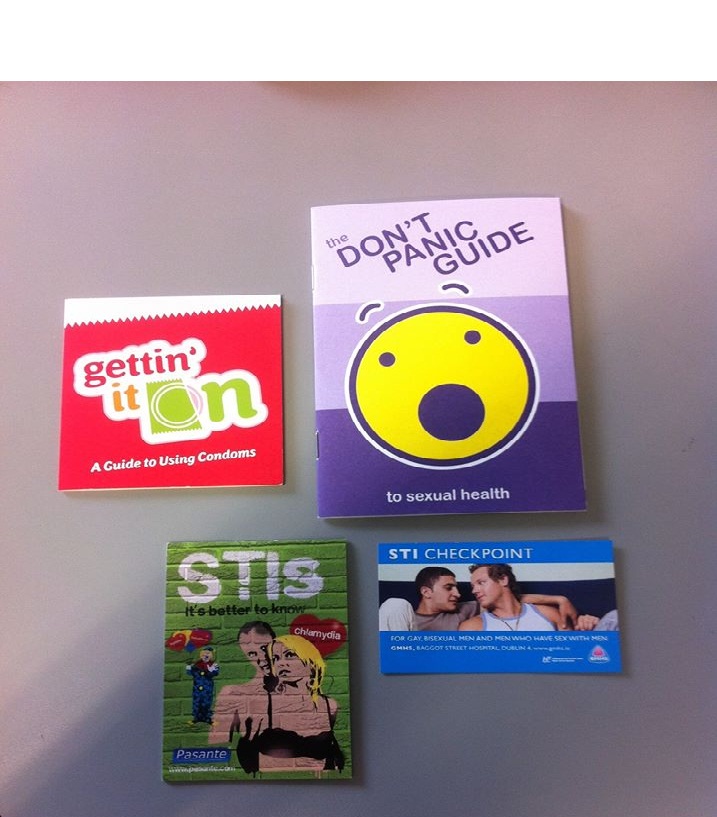
    Pamphlets from DIT medical centre. Photo by Rachael Hussey
    Pamphlets from DIT medical centre. Photo by Rachael Hussey

    Ireland has experienced huge changes in society over the last thirty years. While traditionally Ireland was a predominantly catholic and conservative country, attitudes and behaviours around sex are changing and with a more liberal contemporary Irish population emerging, our sex lives have transformed along with this.

    The National Medicines Information Centre says, “A recent Irish study found that there was a lack of awareness amongst young people (17-34 years) of symptoms suggestive of STIs, and that there were significant levels of high risk behaviour.”

    In 2006 the Crisis Pregnancy Agency and the Department of Health and Children published research on The Irish Study of Sexual Health and Relationships by UCD.  This study analysed the behaviours and attitudes of a group of Irish people in relation to sex, sexuality, contraception and sexually transmitted infections.

    Statistics on STI rates Ireland

    The Irish Study of Sexual Health and Relationships by UCD say “There is a great deal of evidence from research that sexual culture in Ireland is undergoing immense change and moving closer to that of the UK and continental Europe.” With these changes, awareness and education surrounding the dangers and challenges faced with unprotected sex needs to be addressed in a more vigorous way, particularly for young adults.

    The study revealed that younger people’s attitudes are now more liberal “Between 1973 and 2005, the proportion of Irish people agreeing that sex before marriage is ‘always wrong’ fell from 71% to 6%. Attitudes among younger Irish people have become more liberal at a faster pace than those of older Irish people.” The change in attitudes has impacted on average number of sexual partners for Irish people, which contributes to the higher levels of STIs in young adults. “Although 29% of men overall have had a single partner over lifetime, this proportion increases across age cohorts: 46% of men aged 55-64 reported a single partner compared to 23% of those aged 18 to 24.”


    While the rates of partners have increased the risk of contracting a sexually transmitted infection increases with that. Ireland’s change in attitudes and behaviours surrounding sexual activities may not reflect their knowledge and practise.  DIT students Louise Casey, 22 years old and Zoe Kinsella, 20 years old, both reveal they first received sex education in fourth year of secondary school but fail to remember any significant information given on STIs. “Just a few scary pictures, that was it” said Zoe Kinsella.  Louise Casey remembers an ‘ice-breaker’ with a condom and a banana but admits she “was still a bit foggy on the STI details”.

    The first year students feel female contraception methods such as the contraceptive pill impact on the use of condoms. “I think lads definitely rely on the girl to be on the pill and they look at it like it is so handy” says Louise Casey.  “I feel like if you are in a relationship and both of you have been checked then you are free to have sex without a condom if you are on the pill but besides that, if you are having sex with random people and you are like ‘well I am not going to get pregnant so that’s fine’ but you can still catch loads of STIs because if that is your attitude, how many other people have that attitude?” says Zoe Kinsella.

    The girls see alcohol as a huge factor for unprotected sex rates. Casey says, “When you are drunk nothing matters. You are so much more impulsive, if you want to do it you are going to do it, there is nothing stopping you.”

    Chlamydia being the most prevalent STI in Ireland, reveals the highest rates in young adults. According to the Health Protection Surveillance Centre in regards to the 2013 annual report, rates of chlamydia in 2013 were 6,262 with the highest age specific rate in 20-24 year olds. The rate in females (1,060 per 100,000) was almost 1.5 times greater than in males in this age group (687 per 100,000).

    HSPC STI 2013 annual report

    Femi Bankole, DIT’s student union welfare officer believes that education is key and thinks it is down to maturity as teenagers leaving secondary school and entering college start experiencing a lot of new things and experiences while education helps navigate young people towards safe sex. Bankole ran a sexual health campaign within the first six weeks of the first semester to ensure new students receive the most knowledge as early as possible.

    “Drink and drugs are a huge factor,” says Bankole. On a positive note Bankole sees a rise in the rates of young people who are choosing to get checked out after unprotected sex and an increase in students desire to learn and educate themselves on STIs.

    According to The Irish Study of Sexual Health and Relationships by UCD, the most common reasons for non-use among respondents aged 18 to 24 are: drinking alcohol/taking drugs (20%), no contraception available (18%), sex not planned (16%) and not thinking to use contraception (15%). A further 18% of those aged 18 to 24 report ‘no contraception available’, 16% that sex was ‘not planned’ and 15% that they ‘didn’t think to use’. The results suggest that, for the 18-24 group at least, unpreparedness and situational factors such as alcohol and drugs are the major reasons for failing to use contraception.

    Overall STI annual rates in Ireland have increased from 2,228 in 1989 to 12,753 in 2013. Alcohol and drugs, access to contraception and freedom are all factors when it comes to the rates of STIs amongst the under 25s. While Femi Bankole, welfare officer in DIT, sees a rise in student’s awareness and education around safe sex, there is still a long way to go in regards safe sex education in the early years, provided in an accessible way. As Zoe Kinsella states, “The most information I have ever received was from the back door of the girls toilets in DIT where they say 80% of women with chlamydia do not know they have it.”

    Info on sexual health and contraception

    By Rachael Hussey