Tag: Culture

  • Far from home, Poojan Mahajan builds Sui Dhaghaa

    Far from home, Poojan Mahajan builds Sui Dhaghaa

    The clothing brand Sui Dhaghaa is the story of Poojan Mahajan’s journey of creativity and resilience. When Mahajan moved from India to Ireland for her studies, she never imagined she would build a clothing brand that blends South Asian traditions with a new country.

    Poojan Mahajan in a Sui Dhaghaa outfit. Photo Credit: Poojan Mahajan

    “I was having an Indian Masala Tea and thought I needed to do something to feel more confident, not lost in life. I wanted a pathway to success,” she said


    With ambitions in her suitcase and uncertainty in her heart, she arrived in the unfamiliar streets of Ireland in 2018 and navigated emotional challenges. “I did not have a plan to start a business here. I finished my master’s in international business at the University of Limerick, landed a new job, and once you have a job, it feels like you have a stable career, but I was not happy. I was doing marketing in a construction company,” she said.


    Thousands of miles from home, Poojan Mahajan was often shadowed by the sense of not belonging. “I was in a foreign land, but still missed home. I missed the feeling of belongingness,” Mahajan said, “I realised I need to build something for myself; I am the one who will be recognised. This is how I thought of starting the Sui Dhaghaa.”


    Mahajan’s Sui Dhaghaa- meaning needle and thread – symbolises connection and simple tools that stitch pieces of fabric together. “I want to connect it back to my origin. And if you tell someone in English that it means needle and thread, they will connect as well. To me, needle and thread stress the meaning of boutique,” she said.


    For Poojan Mahajan, it has become a way of bridging cultures in Ireland, keeping traditional roots alive. “I noticed the local community wanted to find out about Indian wear. People could not travel back to India that often, so that’s where I see a huge demand, but there was no supply,” she said. “I do stitch here; get dresses altered, but get my raw materials from India because you cannot get that clothing in Ireland.”


    Mahajan believes that not every passion is taught; some are passed through inheritance. “It is not always what you studied; sometimes it is what you inherited from your parents. In India, my mother and my father run a clothing business. I have seen my parents since childhood working on it, so I know how to do it. I know the basics; I need to upskill and learn how to do business.”


    Turning the idea into reality comes with a set of emotions, doubts, and determination. “I first started to build Sui Dhaghaa in 2023, but at the beginning, I feared judgment and how the public would respond. That was the first question,” Mahajan said, “and the second was how I would even start. I did not have a team. I had to do everything on my own. I have experience in International Business, and I know tricks and ways that I could facilitate building a brand.”


    Despite her doubts, Mahajan’s idea began to take shape in Lucan, Dublin. “In a foreign land, it was challenging to start; how to comply, how to really start. I just took a leap of faith and opened an Instagram page. I come from marketing; I know that social media would help reach a mass audience and could save huge amounts on advertising.”


    The challenge, she says, was straightforward. Building something from scratch comes with some hurdles. “Operating a business in a foreign land is very different,” she said, “I face the challenges in the supply chain, with logistics proving the complicated part. If you ship something from India, it takes much longer. The expected time could be 10 to 15 days; realistically, it could take a month.”


    For Mahajan, some challenges are unavoidable and are a part of the process. “In this situation, there is not much you can control; you must give it time.”


    With hard work and dedication, Mahajan began to earn customers’ trust. “I now have more than 500 clients, and we are currently delivering all over Ireland. It’s not only the Indian diaspora. But now Indian and Irish weddings are becoming more popular. The people were delighted that they didn’t have to travel to the UK to buy dresses for such events now.”


    “I remember the milestone in this journey when I prepared dresses for 11 bridesmaids, and it was a life-changing experience and gave me confidence to do a job for someone,” she said


    Through Sui Dhaghaa, Mahajan created a space for women to bring their own vision of clothing to life. “I realised it was a means for women to customise dresses as they like. It gives women the freedom to bring their own fashion ideas to life,” she said.

    Photo Credit: Poojan Mahajan

    Mahajan’s little wins and passion aim to expand her business. “I am trying to make efforts to extend it to larger audiences. I am also trying to get on Amazon.”


    Looking back on her journey of Sui Dhaga, she carries a simple message, “Until you don’t try, you don’t realise your potential. Initially, it does not have to be perfect. At least put yourself out there, be vulnerable, and have a zeal to learn. It is only about taking a leap of faith in yourself because if you don’t, no one else will.”
  • Bringing my culture, my soul, out with this place 

    Bringing my culture, my soul, out with this place 

    Inspired by the ancient civilisation of Mohenjo-Daro, Moenjo restaurant blends its centuries-old traditions with contemporary dining in Rathmines, Dublin.

    By Iqra Siddiqui

    Irish customers outside the restaurant are reading about Pakistani traditional cuisine, drawing attention to the Moenjo as a cultural bridge between Pakistani Cuisine and Irish dining culture. Photo Credit: Iqra Siddiqui/TheCity.ie 

    Moenjo Restaurant officially opened in Dublin on 9th February 2026. Founded by entrepreneur Afkar Ahmed, the halal Pakistani restaurant draws inspiration from the Indus Valley Civilisation. Serving traditional dishes prepared with authentic spices and recipes that bring the essence of Pakistani heritage to the plate.

    “To me, Moenjo feels like Munjho- in Sindhi language, it means mine,” owner Afkar Ahmed said. “It feels like my own. It’s personal.”

    The owner, Afkar, stands in front of the traditional poster of the Hallmark of Mohenjo-Daro, inside the restaurant. The vibrant pattern reflects the heritage of Sindh and the ancient city of Mohenjo- Daro. It inspired the restaurant decor and menu. Photo Credit: Iqra Siddiqui/TheCity.ie

    “I wanted to show where I am from, who I am, who this culture belongs to, how long it has existed, what these people do, what their contributions to the world are, because it seems like all the world has forgotten about it,” he said to TheCity.ie

    A traditional poster hangs on the wall of a restaurant.
    Photo Credit: Iqra Siddiqui/ TheCity.ie

    A traditional piece of cloth, “Ajrak”, is hung on the wall. Ajrak is a block-printed textile pattern. It represents a rich cultural and artistic ancient tradition.
     Photo Credit: Iqra Siddiqui/ TheCity.ie

    “We come from a huge legacy and history behind it. It is just a means to share the culture,” Afkar said. 

    “Ajrak patterns are inspired by the designs seen on artefacts uncovered at Mohenjo-Daro by British archaeologists. In our culture, it is used to honour guests to show a respectful gesture,” he said. 

    A framed piece of cloth representing the linguistic identity of the Sindh region, the archaeological site of Mohenjo-Daro.
    Photo Credit: Iqra Siddiqui/TheCity.ie

    “Bringing in the colours of Sindh, calligraphy, and a different wall art that tells you about the culture and history of a place,” owner Afkar said. 

    This corner of the restaurant features the prominent figure of Mohenjo- Daro and antiques. The painting of Priest King reminded one of the prosperous years of the Indus Valley civilisation. And the bronze Dancing Girl reflects the artistic expression and sophistication of the ancient city of Mohenjo-Daro. Decorative clay pots and handmade Pindi reflect the heritage and provide insights into the domestic household. The display revives long-standing cultural practices. 
    Photo Credit: Iqra Siddiqui/TheCity.ie

    The beauty of this landscape developed a culture of harmony and peace. This map traces the cradle of civilisation, telling how the Indus River connected the Himalayas to the sea, which historically enabled the city to thrive. Before it was ruined, the city was engaged in trade and counted among the world’s earliest cities to have proper infrastructure. 
    Photo Credit: Iqra Siddiqui/TheCity.ie

    “These people were Buddhist; these people were Hindus. People live there in peace and harmony, that’s what we wanted to show.”   

    These were not technical achievements but a route to cultural integration, where daily life, work, and culture brought the community together. 

    “This is the way to keep my culture alive. This is close to my heart. This is my soul on the walls. This is me on the wall,” Afkar said. 

    Inside the restaurant, the ancient city speaks, a place where cultures blend; people share a sense of belonging, and the restaurant embraces diversity.  
    Photo Credit: Iqra Siddiqui/TheCity.ie

    “The idea is to make this place a hub for cultural enthusiasts, so people come in and experience a new culture,” the owner said. 

    “A lot of Irish people, people from Pakistan and India, and a mix of different cultures are coming to taste the food and experience the newness of the place.” 

    “The Irish people have been extremely supportive. John Stephens was here, the Deputy Lord Mayor, to open the place,” he said 

    Chef Abid places the spice-marinated plump pieces of chicken onto a skewer, bringing the flavours of tradition to life.  
    Photo Credit: Iqra Siddiqui/TheCity.ie

    “It is more than work, but a way to connect with people,” Chef Abid said.

    The Clay oven is the secret ingredient to keep the tradition alive. This traditional oven tells a story of fire and flavours. This illustrates the culinary heritage of people in Mohenjo-Daro and other Indus cities. 
    Photo Credit: Iqra Siddiqui/The City.ie

    “Everything about this place refers back to the Indus Valley Civilisation,” Afkar said. 

    Sindhi Chicken Karahi, Roti, and Biryani serve the taste of homes miles away. The rich colour, spices, and the smell of food are a way to touch cultural roots. 
    Photo Credit: Iqra Siddiqui/TheCity.ie

    “This place is not just about food; It’s about storytelling,” the owner said. 

  • A match made in TUD: When flowers are no longer enough

    A match made in TUD: When flowers are no longer enough

    Technological University Dublin’s African society Valentine’s event represents love beyond just romance and serves as a medium for promoting cultural integration.

    By Samuel Adeleke

    Photo credit: Samuel Adeleke

     With Valentine’s Day around the corner, a time often seen as a period to show and express love, TUD African Society brought the celebration early by organizing a Valentine’s event on 10th of February, at Bst259 Bolton Street.

    For Sharon Ojuade, President of the TUD African society, the theme of ‘A match made in TUD’ was not chosen for love and romance alone.

    “With this event, we aimed to create a relaxed and comfortable environment where people from the same background, different backgrounds, and experiences gather in one room, enjoying the atmosphere,” said Ojuade.

    In organising the event, the committee also sought the support of student entrepreneurs who offered services or provided freebies to participants in an African style.

    This included DJs, photographers, MCs, and the types of foods to be served.

    “Events like this give people a sense of belonging and serve as an avenue to promote student entrepreneurs from Africa and allow them to thrive,” said Ojuade.

    “Before the world loves you, your community must also love,” she added.

    The committee has experienced a record number of ticket sales for the event. For the president, it is inspiring to see that they live in a country with a strong sense of community.

    “Just because we live here doesn’t mean we shouldn’t have fun moments; people should still pursue what they need to pursue outside the community,” said Ojuade.

    Although it is an African society gathering, the event is open to other nationalities. “The first person to get a ticket for the event is an Asian. He reached and said he wanted to be part of it.” said Ojuade.

    According to Divine Nebo, the social director of the society, “the event is not just about finding love, it is about finding people who are like you to bond with on a different level.”

    And by extension, the theme of the event, ‘A match made in TUD’, is to show that love can be found anywhere, not just in school, but in environments like this, outside of social media.

    With students outside the African community feeling the pull of the event, Divine said, “the event is not only about Africa, but expressing the depth of African culture to non-Africans to see what African culture is about, beyond what social media portrays.”

    John Ologunlola, the event manager, also collaborated and highlighted the potential of the event to serve as a platform for non-Africans to experience African culture.

    “Even though they might not fully understand the African culture in its entirety, it is a valuable learning process,” said Ologunlola.

     Ologunlola mentioned that, as a Nigerian, he is learning more about the African culture and finding expression in the community alongside other African nationals, including Ghanaians and Congolese.

    With students like River Rogers, who is half Irish and half Polish, the intentions of the TU African society executive came to light.

    “It is my first time being in an African event,” Rogers said. “I am not African, but I can still attend and make some new friends,” he added.

    Not only did Rivers find the Afrobeat songs being played amusing, but he also left with the intention of trying an African dish. “I definitely need to try the African jollof rice,” he said.

    Mark Ologunlola, a former executive of the society, commended the event as a brilliant way of promoting cultural pride.

     “Events like this help people develop real relationships, and give people a picture of what love is,” he said.

     Ologunlola expressed excitement at seeing other people at the event, “no matter what part of Africa or the world you come from, we are all one body.”

    While the event promotes communal love, in a friendly society that helps people socialise, Nicole Okerikre, an African national from Nigeria, who participated in the event as a contestant, said, “This is a period of love, but people should find love in themselves first.”

    Denoting that self-love is non-negotiable.

    For Jaeson Jang, an Asian, ‘A match made in TUD was not just a Valentine’s event, but an opportunity to find expression among people of other cultures.

    “The African culture is amazing, I feel like family, I feel welcome. Everyone is enjoying themselves; no one feels lonely,” Jang said.

    Jang’s experience underscored the aims of the TU African Society to promote an atmosphere where joy, laughter, and love are shared without identity being a barrier.

    “Everyone can integrate into every culture; you only have to do it respectfully,” said Jang.

    By the end of the night, a match was indeed made in TUD as the event ended with Jaeson Jang from Asia and Nicole Odunsin from Africa emerging as winners.

    It was a reminder that love in its most powerful form goes beyond just being African or giving flowers; it is in identifying with people from other nationalities and embracing a sense of community.


  • Fringe Frenzy: The Importance of Festivities For Everyone

    Fringe Frenzy: The Importance of Festivities For Everyone

    The Dublin Fringe Festival 2025 has come to an end, with thousands of people attending different events of creative and performing arts. 

    The 31st annual edition of the festival showcased its usual sites of creative and performing arts, with some events being ticketed and some being free, providing an affordable experience for anybody interested in engaging with cultures such as this.  

    The festival is known for its inclusivity, with a diverse group of performers and attendees alike visible in every corner. 

    With ranges of performances, there is also art exhibits, such as the Minaw Collective, an outdoor visual art exhibition, completely free to the public to go and see. 

    Art piece at the Minaw Collective. Photo by Nathan Clarke

    While there were many venues that transformed into a culture hub during the festival, Bewley’s Café Theatre turned into a hotspot for events, with five different events taking place over September.  

    I spoke to Colm Maher, who was involved in the running of these shows in the café theatre and described the importance the festival brings in providing “a platform to young artists starting their career in theatre.” 

    “It also gives a platform for artists in other disciplines to tell their story on stage. For example, in Bewley’s this year Davina Devine, who is a drag queen, put a show together telling her story. And Farah Elle, a singer/songwriter, got to tell her story about growing up in Libya.” 

    As well as this, Colm also explained the importance that events like this brings to the venues themselves, explaining that “for Bewley’s the Fringe brings in a demograph of young people that the café might not otherwise attract.” 

    Of course, it is mainly the performers who can reap the rewards from performing at the Fringe Festival, as Colm proudly explained the many success stories that have come from some of these shows: 

    “Dublin Old School that transferred to the National Theatre in London and was then made into a movie and My Left Nut, going on to become a TV series. They follow this format of one hour shows breaking out of a fertile festival environment, in Edinburgh they had Fleabag and Baby Reindeer. In short, a Fringe show mounted on a shoe-string budget has the potential to break out into the mainstream. That is the dream! Which is part of what Fringe is all about.” 

    Bewley’ Café. Photo by Nathan Clarke

    Stories such as this perfectly encapsulate why it is so important to have shows such as this, opening the doors for young and talented performers to further develop their stage skills and provide a platform to be picked up by other venues. 

    Colm goes onto develop this point, as “the intense and concentrated atmosphere of a festival environment help incubate fresh and exciting talent, ensuring theatre is kept alive in our age of online streaming platforms; Fringe festival remind people that you can’t beat a live show!” 

    The festival is renowned for it’s incredible atmosphere, which evidently takes a lot of parties’ involvement to foster. 

    With the Fringe Festival entering it’s 32nd year next year, it is clear to see the impact it can have on businesses, performers and consumers alike, as Colm put it: 

    “Though, more importantly, I like to ensure all the companies have a good experience in the venue. I like to foster a collaborative and creative atmosphere, which is what the spirit of Fringe is all about.” 

  • Marina Carr brings ancient Greece to the Irish Stage

    Marina Carr brings ancient Greece to the Irish Stage

    The Boy: A Two-Play Theatrical Event, is finally opening in Dublin after a five year delay. Carr’s brilliant retelling of old Greek myths finally gets to be shown on Ireland’s national stage. The official opening night is Wednesday, October 1st and it is already sold out.

    The two-play spectacle is based on three Greek myths – Oedipus Rex, Oedipus at Colonus, and Antigone, written by Sophocles. The audience is encouraged to see the plays back-to-back, but they can also see them individually. Carr has spoken about these plays trying to “marry the ancient with the contemporary”.

    The two actors taking centre stage are Frank Blake and Eileen Walsh, who are playing Oedipus and Jocasta, respectively.

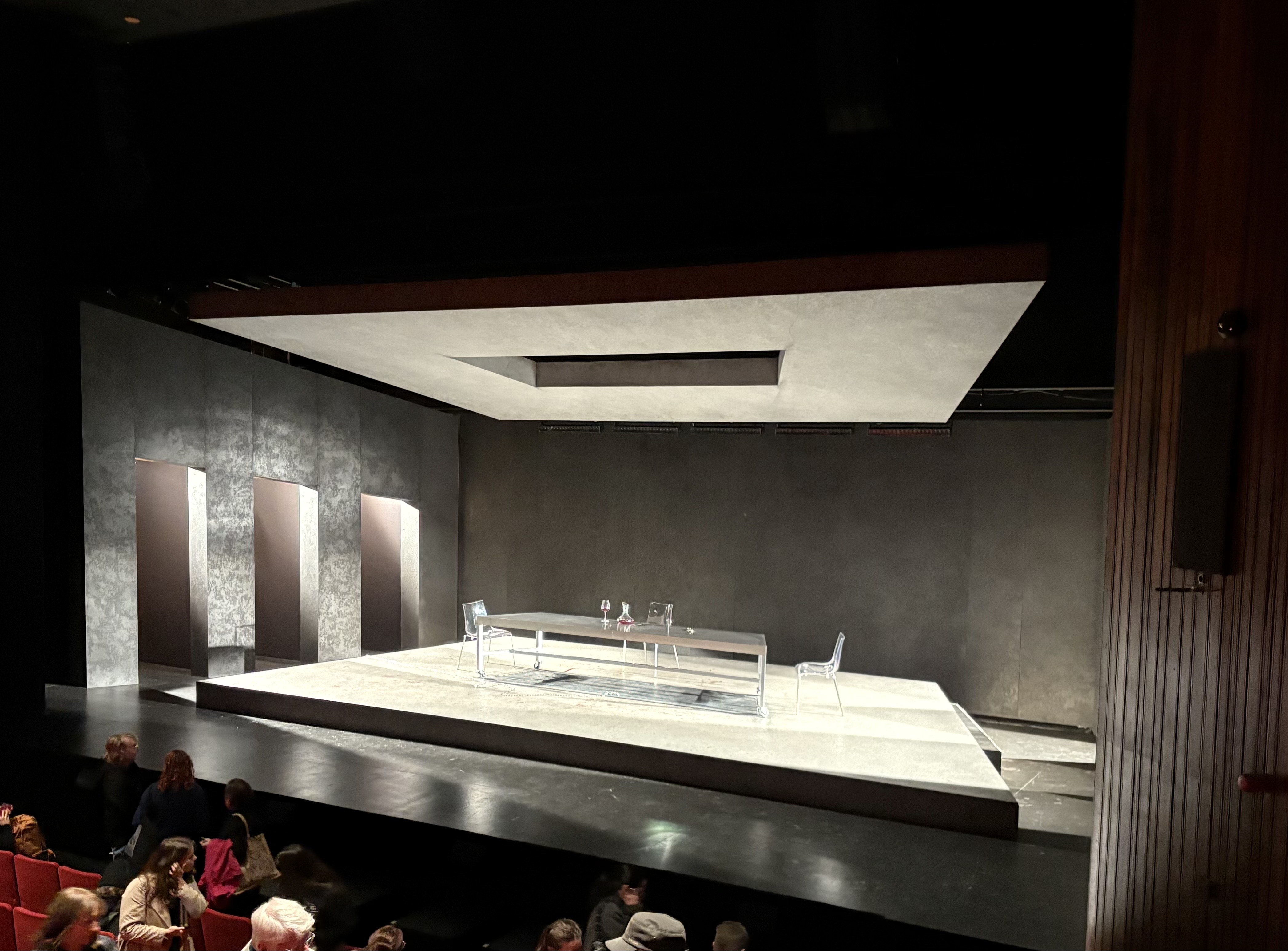
    The staging is deliberately basic, forcing the audience to focus on the actors and not their surroundings. For most of The Boy, the stage only has a dining table on it. Above the stage there is a projection of what is being shown on the stage from above; this represents the gods always looking down over the action – they are ever-present in this world. There is a thick plastic curtain that comes and goes throughout both plays, acting as a barrier between the audience and stage. The sound-heavy plastic whooshing across the stage gives an eerie feeling to the audience, almost like we were watching a crime scene.

    The Boy

    The first play The Boy surrounds the life of Oedipus from birth to after he fulfils his curse. It is based on the Greek myth, Oedipus Rex. The play is set in the kingdom of Thebes, where Oedipus’ father Laius is king.

    The audience finds out that Oedipus has been cursed from when he was a child, or more so that his father, Laius, was cursed. He gets confronted by The Shee (played by Olwen Fouére) after he captures and rapes a young boy, Chrysippus (played by Noah Behan and Harley Cullen Walsh). Laius’ curse is that he must not have a child for if he does, his child would grow up to kill him and marry his wife, Jocasta.

    The poster that can be seen outside The Abbey Theatre and on the front of the programmes promoting the show. The two main actors (Blake and Walsh) are at the centre of the poster. Captured by: Zita Fox

    The God and His Daughter

    The second play opens with the exact same dialogue as the first but the context has shifted. The audience knows about the crimes Oedipus and Jocasta have committed together; we also know that in comparison to the first play Thebes is suffering under new kings and its crops are failing.

    This play is based on the Greek myths, Oedipus at Colonus, and Antigone. The play follows Oedipus in the final stages of his life and how his curse has continued onto his children, particularly his daughter, Antigone.

    The star of the show is Éilish McLaughlin who plays Antigone. Though she is only on the stage for the first half of the play she is what the audience is drawn to the most. Her presence and monologues are incredible, it was impossible to take your eyes off her.

    TheCity got the chance to talk to Fionnuala Maher, a costume supervisor assistant. Though Maher was mainly working in the background of the costume department, she did give us an insight to what it is like to prepare for a show. Maher mentioned how the decisions were made by the designer, Catherine Fay, and the main costume makers, Tara Mulvihill and Breege Fahy. She would then go out with a brief and grab samples or photos of items she deemed appropriate. She said: “Sometimes we had to make sure there were doubles available of everything in case they were used in any scenes with blood, [amongst other things].”

    She went onto explain how like with a lot of shows, a lot of the costume changes would come down to the practicality of the clothes. She continued: “Something could look perfect on the hanger and even on the actor but might not sit correctly on them in the action of a scene.”

  • Emporium gives Dublin a taste of the big apple 

    Emporium gives Dublin a taste of the big apple 

    By Rían Cahill

    Dublin-based streetwear brand Emporium announced a brand-new collaboration last week with their New York-based counterparts Brigade, along with a special homecoming show with Wiki in the Sugar Club.

    Emporium, who have rapidly grown from a small local brand to a cultural hub in the centre of the capital in the form of their Drury Street Store, also announced a surprise culture night pop up on the 19th with music and complimentary drinks from long time partners Hennessey. 

    The exclusive collection and shows were announced on the brands’ Instagram page in a video hosted by New York rapper Wiki, a longtime friend of both brands with deep roots in Ireland.

    Emporium Owners, Robbie Fidgeon (left) and Charlie Proctor Quigley (Right) with American Rapper Wiki (Middle)

    The brand and rapper’s relationship was first displayed at the 2024 Paris Fashion Week, where they bonded over their similar approaches to fashion and culture. Wiki’s regular visits to Ireland also encouraged his decision to join the brand for future projects. 

    “I might have stopped by the shop before, but not put it all together, then at Paris Fashion week, we put it all together” 

    Wiki

    The culture night pop up shop brought some New York style to the city, with the collections boasting exclusive, one-off caps featuring both brands’ graphics, and a heavy knit jumper with graphics of the Wiki flag, a combination of the Irish and Puerto Rican flags, an Ode to Wiki’s family ties with the two island nations. 

    In classic Emporium fashion, the crowds and sounds from the store leaked out onto the streets, and the event turned into a public reminder of the influence that the brand has gained on the city’s youth. 

    On Saturday, the crew took over Leeson Street for their Sugar Club show with DJ sets from Brigade’s resident DJs and a set from Irish rapper Curtisy before Wiki was welcomed to the stage for his second show in the country since 2023. 

    Poster for Wiki's Sugar Club Show with Emporium and Brigade

    The former Ratking Member has harboured a cult following from devoted rap fans throughout his solo journey since 2016 with a rough and fast-paced approach to his music, which portrays his New York attitude to life. 

    Emporium

    This Dublin Brand has exploded in popularity in recent years, with their logo being featured in a glimpse of any trendy bar around the city centre, and a mainstay of the Irish DJ culture through collaborations with nightclub, Index.  

    They have also continued their tradition of a free drop of exclusive, one-off shirts at the Heineken stage at Electric Picnic in collaboration with the brand. 

    Growing in leaps and bounds, Emporium have also just announced a new collaboration with NFL team the Pittsburgh Steelers, consisting of varsity jackets, jumpers and t-shirts. 

    Emporium's newly announced collaboration with NFL team, the Pittsburgh Steelers

    Brigade USA

    Brigade is a New York-based brand which deals in unisex, one-off clothing releases which prides itself in firmly rooting itself in the essence of New York life.

    Similar to Emporium, they take pride in creating a community through ongoing collaborations with local artists, designers, models, stylists and musicians. 

    Although Emporium originates from the bedroom of two young Dubliners, ambition has forced their vision out of the confines of the Irish fashion scene as they continue to conquer worldwide fashion. From New York Collabs to Japanese stores, Emporium seem to have a solid grasp on worldwide fashion so far. 

  • Irish Pride is Never Far in New York City

    Irish Pride is Never Far in New York City

    Irish pride is never too far away in New York City… and neither is a drink. 

    By Katie Shadlow

    Talking about the accomplishment and reward in owning an Irish pub in the city that never sleeps with Blaggards Pub owner Liam Lynch is enough to make you realise that Irish pride is alive and well in New York, and Irish craic is only ever a block away for the homesick. 

    Originally from Celbridge, Co. Kildare, Liam Lynch moved to New York and has been running his business on 8 W 38th Street for 26 years, and though he misses home, he has no regrets. 

    While there is evidence of Irish workmanship throughout the city in forms of architecture, cultural influence and more, it seems only fitting that the Irish bring great pubs and great craic to New York City, and here’s just a few. 

    All photos taken by Katie Shadlow

    Blaggards Pub, opened on 8 W 38th Street, New York, in 1998 by Liam Lynch. Run by an Irish man, this pub really offers the piece of Ireland that the homesick are missing. 

    McGee’s Pub, located in the heart of Hell’s Kitchen, was the pub that posed as the inspiration for the iconic ‘McLaren’s Pub’ in the hit TV series ‘How I Met Your Mother’. 

    The Keg Room located on 53 W 36th Street, is an upscale Irish- American sports bar, which offers the perfect blend of cultures for those who miss home but not enough to want to feel at home. They also delightfully welcome you to their website with some comforting Irish words, ‘Céad Mile Fáilte’, meaning ‘One Hundred Thousand Welcomes’. 

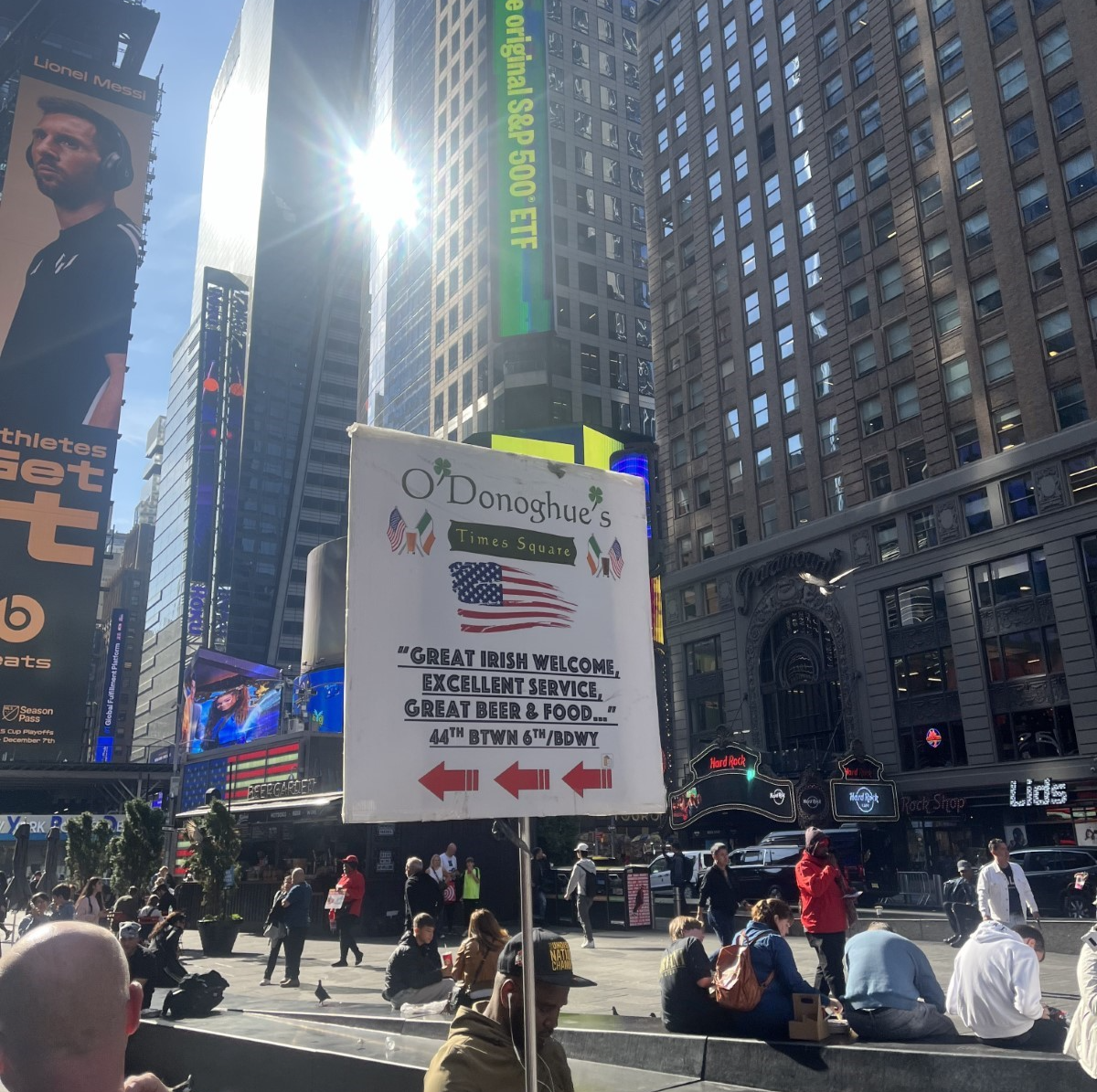
    O’Donoghue’s blends the excitement of the Big Apple with the old Irish warmth right in the heart of Times Square. 

    The Long Acre Tavern is a contemporary Irish American pub, located on 146 W 47th Street is more in tune with its traditional American roots, but makes a nod to the Irish with its flag outside and their frequent use of their Instagram page to advertise Irish sporting events that they show in their bar. 

    The Playwright Irish Pub and sportsbar, located between 5th and 6th avenue, is owned by John Doherty, and while it may not have the most authentic Irish atmosphere, many reviews raise their glass to their great pint of Guinness! 

    Nobody does advertising like O’Donoghue’s, with this nod of appreciation to both the bar and the Irish, with the words “Great Irish Welcome” waved for everyone to see in Times Square, New York City. 

  • Meet Dublin’s Newest Art Collective Celebrating Black Alternative Culture

    Meet Dublin’s Newest Art Collective Celebrating Black Alternative Culture

    By Dearbhla Kiarie 

    The AV Club is a new art collective seeking to promote Black alternative culture in Ireland, by curating events that celebrate Black individuals in subcultures, such as punk, goth, rock, metal.  

    Founders Tina Wekare and Jasmine Odabi described their creation as an aim to “return these subcultures to the control of their original creators.”   

    They have also said they are “dedicated to creating a welcoming and inclusive environment, where everyone can express themselves authentically and connect with like-minded individuals, fostering a sense of community and empowerment within the vibrant subcultures we champion.” 

    The new art collective opened their doors to the public for the first time this month with their inaugural event, ‘BLACKOUT.’ The event included a headline performance from band Cable Boy, as well as pop up stalls for various Black Irish artists. 

    Cable Boy performing at BLACKOUT event – Photo: Lucia Burke

    According to organisers Wekare and Odabi, this event was created to “foster a burgeoning Black Irish alternative scene, which is only now starting to reach mainstream. It was created in a response to the constant racism within alternative spaces, which for the longest time, has been predominantly white.” 

    However, the aim of these events is not only to benefit Black people seeking community in Dublin. A portion of the proceeds of ‘BLACKOUT’ ticket sales were donated to Friends of the Congo, a nonprofit organisation who strive to “bring about peaceful and lasting change” in the Democratic Republic of Congo (DRC).  

    Event organisers said the reason behind making the event a fundraiser was to start a conversation.  

    “We need people to join the dialogue and the fight. We want people to leave with a sense of empowerment; to feel like they too can help out – no matter how small the impact. Every little helps,” they said. 

    When asked about plans in the works for more events like this for the Black Alt community in the future, Wekare and Omondi said, “Absolutely! There is a need for more events and safe spaces for Black alternative people in Ireland. AV stands for ‘Audio Visual’. And we plan to have a lot of events that explore alternative art in all its mediums, from music to fashion to films to visual art etc.” 

    Eventgoer Ani Dhore said the event evoked “a sense of belonging” and was “inspiring” for her, which organisers said was one of their many goals. 

    DJ Booth at BLACKOUT Event – Photo: Dearbhla Kiarie

    “We want people to come out feeling like they’ve found like-minded alternative people,” they said. “And we want others to feel like they have a safe space to be loud as well. To be truly heard. To feel seen.” 

    The AV Club has plans to host a movie night as one of their next projects in December, as “Christmas time is notoriously a lonely time for the outcasts. It will hopefully be a great time, having people just hang out and get to enjoy being weird and free and together.” 

    What the event organisers want people to take away from their collective is that “Black people aren’t a monolith. We fit into a vast variety of subcultures which is why intersectionality is so important to us; and why we are dedicated to curating a safe space for people all over the diaspora.” 

  • In Photos: Oscariana Sees Oscar Wilde’s Childhood Home Open to the Public

    In Photos: Oscariana Sees Oscar Wilde’s Childhood Home Open to the Public

    By Adam Stynes

    Last month, marked the 170th birthday of Oscar Wilde. The City.ie took a visit to the famous poet’s childhood house where the event Oscariana was taking place, while also going to see key locations around Dublin associated with the poet’s life.  

    Some of the key items in Oscar’s life were on display in the home where he grew up. Many people attended the open house tour at 1 Merrion Square, which occurred over the weekend. 

    A walk on the Wilde side showed off aspects of his life, from where he was baptised to when he studied at Trinity College at the old library. Each stop showed a vital part of the poet’s life from early places to memories of his later life. 

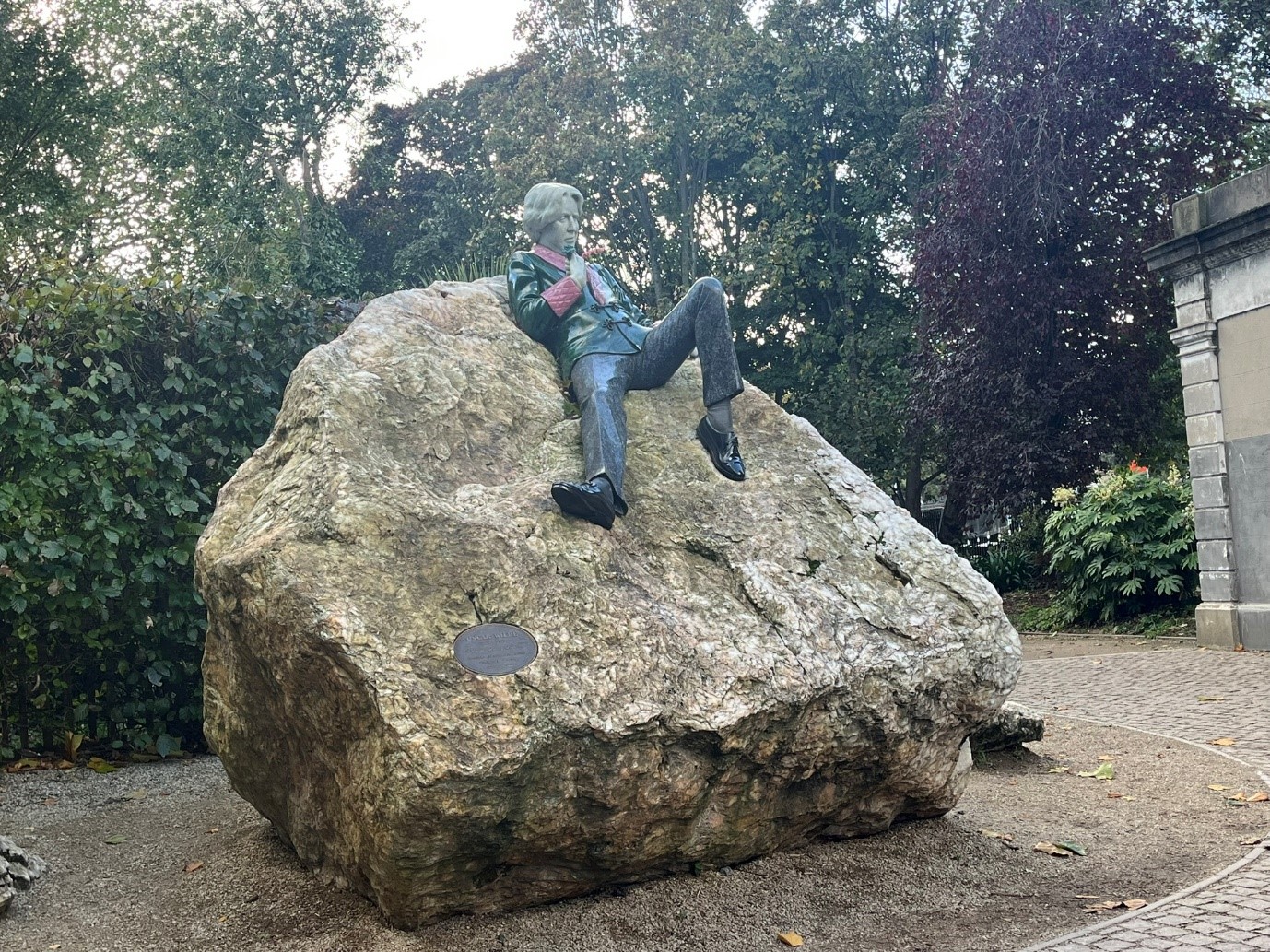
    The Oscar Wilde statue in Merrion Square opposite the Oscar Wilde house. 
    A statue of Oscar Wilde by Melaine lo Brecquy  
    The outside of Wilde’s family home from 1855 to 1879
    An image published in Harper’s Bazaar during Oscar Wilde’s tour of America.  
    A portrait of Oscar Wilde in his childhood bedroom  
     A portrait of a young Oscar Wilde in a dress hung in his childhood bedroom
    Oscar Wilde’s birth and baptism certificate and a copy of his parent’s marriage certificate.
     Some books that were written by Oscar Wilde and an Oscar Wilde action figure  
     A portrait of Oscar Wilde hanging at his house.  
    Some of Oscar Wilde’s published works
    The outside of Oscar Wilde‘s house at 1 Merrion Square 
    The outside of the Old Library at Trinity College, Dublin, where a young Oscar Wilde studied.
  • Vale Tudo exhibition by Nelson Jamal

    Vale Tudo exhibition by Nelson Jamal

    Abderrahmen Ben Chouchane presents the artist Nelson Jamal, an ex-MMA champion who decided to retire to pursue his artistic career. From a young age he was involved with art and sports. In his latest exhibition called “Vale Tudo”, which means everything counts, he demonstrates how sports and art work perfectly together to describe us.