It’s tough to break the ‘emo’ mould, but Surrey quintet You Me At Six managed to unleash a brand new, gritty edge at their first Dublin show in three years.
(Source: Rachel D’Arcy)
If you’ve never heard of You Me At Six, I wouldn’t blame you. Despite never having particularly hit the mainstream in Ireland, they achieved top ten status with their last two albums at home in the UK, as well as embarking on a sold-out arena tour early last year. Having locked themselves away for a bit to write their newest effort, ‘Night People,’ the five lads embarked on their smallest tour in five years, taking in a night at The Academy last Monday.
You Me At Six haven’t played Dublin since a sold out Olympia Theatre show just over three years ago, so anticipation was at a stratospheric high. Despite it being an 18+ gig, queues formed along the cold, dark street of Middle Abbey Street over an hour before doors at 7pm. With under 18’s and those without ID turned away, those lucky 500 that made it through the doors were treated to what was definitely You Me At Six’s best Irish show yet.
While the ‘Stay With Me’ hit-makers kept true to the classics, sticking to what they knew best, front man Josh Franceschi’s almost guttural vocals brought a new dish to the table. Even ‘Underdog’ and ‘Reckless’, two of the more pop-infused tracks of their back catalogue, were given a darker, more adult revision.
An impressive lighting rig only added to the already impressive show, with blues, reds and strobes brightening the faces of Franceschi (and most importantly, Franceschi’s fantastic two-step during ‘Safer To Hate Her’), bassist Matt Barnes, guitarists Chris Miller and Max Hayler, and drummer Dan Flint. Drum beats were illuminated, riffs electrified and vocals emphasised all by the impressive light show, only adding to YMAS’s talent as performers.
For someone who frequents gigs at The Academy, I’d never seen an audience more in unison than at this gig. The lyrics were screamed along to by all the twenty-somethings reliving their teen years, and by those who are impatiently anticipating the upcoming album. Strangers threw their arms around one another, while friends sat on each other’s shoulders. It was a sight to see, only amplified by the energetic display put on by the band themselves.
With Franceschi teasing a return to Dublin in early 2017, it won’t be one that fans of the band – past or present – will want to miss out on.
The third annual Dublin Beatles Festival will take place this coming weekend from Friday, November 6 to Sunday, November 8 across the city.
This year the event marks the 52nd anniversary of the quartet’s performance in the Irish capital on November 7th, 1963.
The highlight of the event is set to be the appearance of Freda Kelly, former secretary, fan club manager and subject of the documentary film, ‘Good Ol’ Freda’.
Kelly will do a public interview with Newstalk presenter Tom Dunne after a screening of the award-winning documentary on Sunday, November 8 in The Grand Social.
Other events which will take place on the weekend are a gig in The Cobalt Café and The Workman’s Club as well as a Beatles table quiz in the latter.
On the final day of the festival, the short film ‘Lennon Vs McCartney’ will be shown for free in The Grand Social before ‘The Finale Show’ with The Newspaper Taxi Men in the same venue later that night.
Also on that day there will be a free performance of part of the upcoming stage play ‘Pete Best of the Beatles’, which will debut in The New Theatre in Temple Bar in February 2016.
Georgina Flood will be exhibiting some of her drawings of the Fab Four on the closing day, and memorabilia and merchandise group, Beatles Days, will also be on hand throughout the weekend.
The people of Dublin are anxiously waiting on November 13 to find out if they will be announced as the European Capital City of Culture for 2020.
Running for the past 30 years, the European Capital City of Culture is an annual competition between two host countries within the European Union – with the host cities for 2020 being in Ireland and Croatia.
The winning city within each country will be given the coveted title for a period of one calendar year, and the potential to generate large amounts of revenue in tourism and business.
Limerick, Galway, the South-East and Dublin are all competing for the title.
The initiative aims to promote and highlight the diversity of culture across the EU, as well as promoting healthy competition between its members.
The programme also offers an excellent opportunity to tackle issues within the chosen city, such as homelessness and other social issues.
Ireland is no stranger to the Capital City of Culture; with Dublin having won the prestigious title in 1991 and Cork following suit in 2005.
So what exactly is the bid?
The Dublin 2020 bid is about social change through involvement – so get involved! A team of hardworking journalists, event managers, videographers, photographers, singers, dancers, teachers and everyone in between, have spent months preparing to put the bid forward to the EU.
The bid is essentially a book filled with thousands of reasons why Dublin is unique, special, and most importantly why we as a county should be chosen.
Niamh O’Donoghue and Marie Cogan spoke to Dublin’s youngest 2020 campaigner, Jamie Harrington, about the importance of the competition.
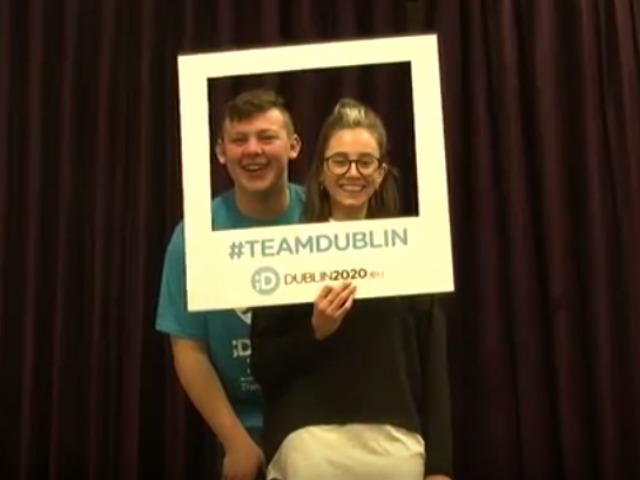
Want to join #TeamDublin? Start spreading the message of the bid and simply inform others. If you think you have a great idea to help boost our chances of winning then get in touch and #TeamDublin will support you as much as they can.
Coming up to Halloween, everyone is getting in on the action, including Temple Bar’s IFI cinema, who will play host to their annual Horrorthon this weekend. The Horrorthon’s formula is simple, 27 screenings of hair-raising, spine-tingling feature films spread out over a single weekend. We here at The City have compiled a choice selection of films for the weekend, and it goes like this:
The Serpent and The Rainbow & The People Under The Stairs Double Bill
Celebrating the work of horror auteur Wes Craven, this double bill looks at some of his lesser known pictures. The Serpent and the Rainbow, made in 1988, is based on the non-fiction book by ethnobotanist Wade Davis. It follows Davis’ experiences in Haiti, investigating the story of Clairvius Narcisse, who was allegedly poisoned, buried alive and revived by a potion, producing what is commonly known as a zombie. Loosely based on a true story, this is a change of pace from Craven’s usual slasher style of film and a film which John Wirt of Baton Rouge describes as “a trippy, guilty pleasure”.
The People under The Stairs sees a more tongue in cheek approach to the horror genre. This 1991 feature tells the tale of a young boy who has broken into the home of his evil landlord, after he evicted his family from their ghetto tenement. Inside, the boy discovers the true horror of the dwelling, told in the manner of bizarre slapstick and not without its fair share of scares.
This double bill screening is on Friday 23rd October at 11pm.
The Exorcist III
This is the third installment in what is widely agreed on as one of the scariest and most menacing film series in cinema history. William Peter Blatty, the author of The Exorcist, directs this thriller which is based on his novel Legion. The Exorcist III stands up well on its own, despite the legendary status of the original, and the meandering into mediocrity that was the second feature.
The Exorcist III screens Sunday 25th October at 11pm.
Hardware
Hardware sees a young sculptor in a post nuclear future trapped in her apartment with a killer robot. This is definitely the wildcard for the weekend, but this 1991 B movie looks to be a visceral and terrifying rollercoaster. It is a film with a low budget, but big ideas and impressive special effects, which seem to overcome the film’s low-end production value. One thing that can be said though is that the film’s script seems reminiscent of many other sci-fi horrors around from that time. But it’s nonetheless a cheap, no frills, many thrills, low budget robot sci-fi horror, and sometimes that’s just what’s needed.
Oktoberfest returned to Dublin’s financial district on Thursday, September 17th and will run until this Sunday, October 4th.
Oktoberfest, also known as Volksfest in Germany, is the world’s largest beer festival and travelling funfair. The 16-day event originated in Munich and attracts over 6 million visitors every year.
The historic festival, celebrating its eighth year here in Dublin, honours the best of German food, beer, folklore, music and dance.
Oktoberfest in September?
This follows the tradition of the original Oktoberfest which began in late September in Munich, and has now been running for 182 years consecutively. Fact: veteran beer vendors in Munich take on average 1.5 seconds to pull a pint of beer. How much does the event cost?
The event is free to enter and is open to everyone over the age of 18 (children are permitted, but must be off the premises by 7pm). Seeing as this is Oktoberfest’s final weekend in the capital it’s expected to be very busy, as is the queue to enter – so the earlier you arrive the better.
Beer and food prices vary, but it will cost €17 for your first pitcher of beer because everyone must pay a €5 deposit for the glasses. Your deposit is returned when you hand back your glass. Small glasses of beer are also available at €6.50, but if beer is not your thing, there is a full bar service available.
Although the drinks may seem expensive, you are not only paying for the alcohol, but the overall experience of the festival. Authentic German cuisine like sauerkraut, bratwurst sausages, and haxn is also served and starts from €5.
What happens once I’m inside?
The event is laid out with a number of tents, a large stage where daily entertainment takes place (with a DJ every evening), and seating areas.
The seats are on a first-come-first-served basis, but you can make a reservation online by clicking here to book a table in the main tent.
Opening times are as follows:
Monday – Wednesday: 12.00pm – 11.30pm
Thursday – Saturday: 12.00pm – 00.30am
Sunday: 12.00pm – 10.30pm
Follow @Oktoberfestdub to find out more about the festival and upcoming competitions.
Female culinary students are at a premium but where are all the female chefs?
Aoife Lawless looks at what is holding back women chefs in high-end restaurants…
What’s happening to all our female chefs? When I enrolled in Culinary Arts six years ago my fellow female classmates were in the majority, and most of us wanted to be chefs. A recent study conducted a survey of 170 Irish head chefs: only 15% were female. So where have the women gone?
“Cooking has traditionally always been female,” says Máirtín Mac Con Iomaire, veteran lecturer at DIT Cathal Brugha Street. Mac Con Iomaire doesn’t agree that the industry as a whole is male dominated, and says the issue of gender divide in the professional kitchen boils down to “positions of seniority rather than a question of male dominance”.
There is, he admits, a historic division of labour. “Historically, the female ‘cooks’ veered into institutional cooking, such as in hospitals and schools, whereas their male counterparts sought out ‘status’ as leading chefs in renowned restaurants. Female cooks, male chefs!” Similar “glass ceilings”, he says, loom over other professions such as teaching and nursing.
Mac Con Iomaire went on to give me at least twenty names of prominent female chefs in the present day, most at Michelin level, spanning Britain and Ireland. However, such a short list succeeding only in driving me back to my original question: Where are all the female chefs?
“Female chefs are often pushed towards the pastry section,” says researcher Mary Farrell. “A female chef interning at Dublin’s prestigious Michelin starred restaurant, Chapter One, was directed towards pastry by her male mentor, advising her that‘that’s where you’ll make money’.” Farrell, a PhD student, is trying to answer, in rigorous academic terms, that same question as to the whereabouts of leading female chefs.
“They’ll make excuses about unsociable hours, the desire to rear a family and the assumption that female chefs will want to veer into pastry at some stage of their careers”,says Farrell, who doesn’t buy these answers and instead believes that “the industry itself is to blame”, that the male chefs in positions of leadership are controlling the fate of their female subordinates.
A successful business woman herself, Farrell graduated from Cathal Brugha Street in 1984, long before the Culinary Arts programme became a degree. She has owned multiple businesses in the hospitality industry; she was head chef at one of these, Café Fresh, a vegetarian restaurant in the Powerscourt centre.. At present she owns and runs a catering company accommodating for special dietary requirements such as Coeliac disease, dairy intolerance and diabetes.
She has in the past worked with a male head chef who was “aggressive and resistant to change”, she says, creating an awkward and hostile kitchen environment for all his colleagues. As a woman, she was treated as though she “didn’t know what she was talking about”, no matter what the issue, and his opinion was “absolute”. When he left her organisation he went on to work at a Michelin level restaurant and she was forced to take over the kitchen. “In his absence a change occurred in the kitchen – the tension was lifted and the staff were happy.” She doesn’t think male chefs can look far enough past their own ego to see a restaurant as a whole entity, as a business, not just a stage on which they play the lead.
Tom Kerridge, head chef of the Hand and Flowers, a Michelin two-star gastro-pub in England, made some controversial statements regarding female chefs at the Cheltenham Literature Festival in October. “I like girls in the kitchen a lot: it brings down that testosterone level.” He continued to disparage female chefs, stating that women lack the “fire in the belly” to make it at Michelin level. “They are out there; it’s just whether it’s the industry for them. I’m not sure, at that level,” he added before further patronising remarks such as “girls in a kitchen make blokes feel happy at work” before covering himself with a last-minute save: “This doesn’t apply to just girls. We have loads of blokes who do a runner because the pressure and intensity of cooking at that level is so intense.”
All this talk made me think about my own kitchen experiences and reflected on how I had been treated as a young female chef.
On my first internship I was immediately referred to the pastry chef for training in a separate kitchen from the main one. The pastry chef was delighted to have company in his usually segregated kitchen and I was relieved to not be joining a much feared “boys’ club” environment. I meekly pointed out in my mid- apprenticeship review with my college supervisor and head chef that I had no interest in pastry and perhaps I could be involved in the workings of the main kitchen. I was then entrusted to the sous-chef, a pregnant Polish woman who was strict but kind and taught me more in one month than I’d learned in all of my first year in college. The chef directly under her, a male chef, barked orders at me daily and refused to give me measurements for recipes whilst scoffing at my inadequacies.
In my third year I interned at Fallon & Byrne and it was here that I fell back in love with cooking; I had already begun plotting a career as a writer, but this place drew me toward a career as a chef. The hierarchy of the restaurant was equally divided between males and females. The head chef was only 30 and had risen to his position not only through years of experience, but also through education. He had returned to Cathal Brugha Street a couple of years after completing his chef training in order to study management and it was with his combined skills he achieved head-chef status. His sous-chef was a very pregnant and very capable woman of the same age. They had worked together at a hotel and when he graduated to the position of head chef at Fallon & Byrne he took her with him, along with two other female chef-de-parties. Below the head- and sous-chef, male chef-de-parties outnumbered females three to two, but the numbers were evened out with the addition of a pastry chef and occasional chef-de-partie. Another intern from Cathal Brugha Street was female and, lastly, the recently promoted kitchen porter was a male commis-chef. The female chefs were both feared and respected, though they rarely raised their voices. They made it clear they had standards and these were adhered to even when they were not present. I continued to work for them throughout my final year in college and was never put in a position where I felt uncomfortable or undervalued because of my gender and the kitchen environment maintained constant professionalism.
My experiences in a professional kitchen highlighted many of the issues Mary Farrell raises about attitudes to female chefs. I was directed towards pastry. Male chefs did, sometimes, try to undermine and bully me and certainly did succeed in clouding my judgement for a time. Yet the main excuse, as was given to Mary, of females stepping back for family life was unfounded in my experiences, I had witnessed female chefs balancing family life and their careers whilst still providing positive role models.
But I was never content to chop and peel for endless hours, or endure burns, cuts and scalds on a regular basis in the hope of eventually obtaining a senior role in a kitchen after spending four years completing my degree. Perhaps therein lies the answer: education creates aspirations beyond manual labour for minimal reward. Many male chefs rise through the ranks from porter to head chef. The male students who dropped out of Culinary Arts continued in the profession, some of them very successfully. Many of my female peers continued their education at Masters and PhD level in areas of product development and education, the latter now delivering the lectures they once attended.
The glass ceiling of female seniority in the professional kitchen may remain unbroken, for now, simply because female chefs may have their eyes on a bigger prize.
The word vintage can cause a serious debate nowadays, all depending on your company. To some it’s the idea of couture and nothing less, whereas for others it’s a unique find while bargain hunting off the beaten track.
However vintage branding to a lot of people is a fancy adjective to pawn off second hand goods, which is unfortunately the case in some shops. But Dublin itself has a buzzing vintage scene, that attracts not only hipsters but a range of individuals from brides looking for bargain couture gowns to people going that extra mile for a more alternative look.
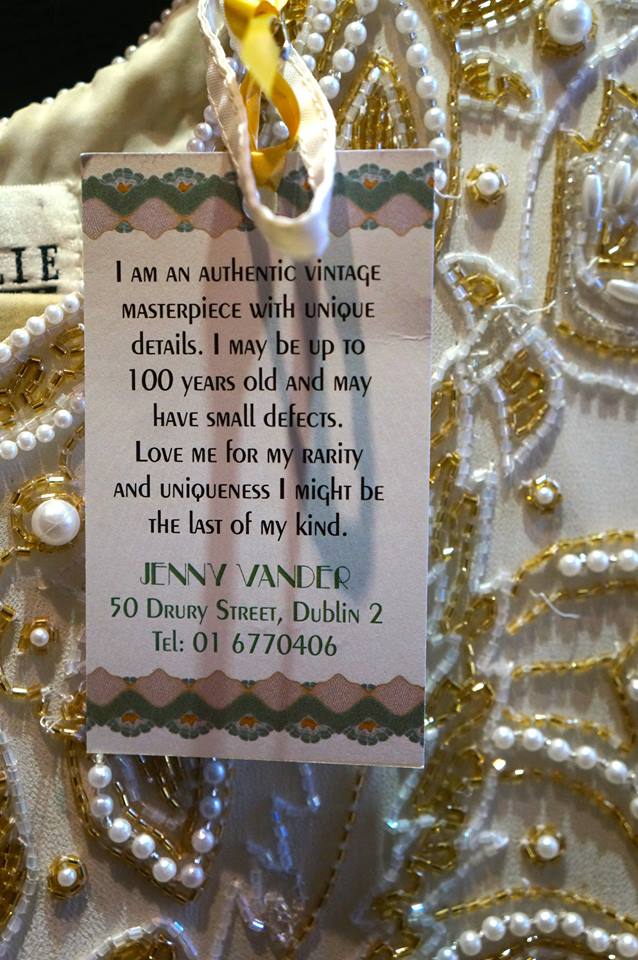
Jenny Vander is the original vintage shop and is a treasure trove of unique handmade clothes from different eras. The clothes themselves have their own history. How often is it possible to say you own a dress that’s older that your parents, and is still in immaculate condition?
Marion Sullivan from Jenny Vander explains what she would class as vintage and her opinion of how vintage is a new buzz word.
“Vintage is normally 1950’s or older, really anything over 100 years is antique, but anything younger than the 1950’s is at it’s very best retro, so even very cool 70’s, 80’s and even 60’s is retro, more recent stuff is second hand.
“Vintage is a buzz words in the last few years, a lot of places are throwing it around and the thing is that people don’t know what is vintage and their not informed. People think that’s 80s era is vintage because it says it in the books but it’s not.”
For anyone who hasn’t been inside Jenny Vander go even if it’s only to stare at the amazing selection of clothes – each era is represented. The shop itself had me in awe of the clothes, it was like a treasure chest of forgotten icons.
“It’s beautiful to be able to wear a piece of history which has been cherished and is unique to you, no one will have anything like the piece that you have; it’s got the history and beautiful craftsmanship. What you’re buying is handmade couture,” said Marion.
“If I’m being honest my favourite era is the 1920’s, the dresses were so beautiful and original, also the Victorian era, as nearly all the clothes are handmade and the materials were the best money could buy. The Victorian clothes here would have come from aristocrat or wealthy families. Back then it wasn’t like now where we can all afford nice things even though we would be considered the working class. The Victorian clothes are similar to the early style of Downton Abbey, all original and completely handmade with silk, it’s really unbelievable couture.”
However the revival of vintage into everyday wear means that younger generations are putting their own spin on these historical pieces.
“Young girls are still doing their own thing going out by themselves putting their look together with whatever they want that’s in fashion at the moment but there still putting the more unusual pieces with it and I think that’s the way to got with fashion,” said Marion.
“Vintage is being brought into the modern era and funked up a bit. My advice for vintage style would be to walk the walk in your own shoes and don’t follow the crowd.”
The revival of vintage clothing comes with a sense of individuality especially in Dublin fashion at the moment. However is it possible that the uniqueness of clothing item is vintage itself?
“ I think that vintage is open to interpretation, in my own philosophy it’s clothing from a different era or a somewhat special piece,” said Fiona Smith from The Harlequin.
The Harlequin is another of the original vintage shops in Dublin, just off Drury street, both floors of the shopped are filled with not only different era pieces, but vintage designers pieces that inspired former seasonal trends.
“We’re selling one off pieces , not only stuff from different eras but more unique clothing. I think it is trendy at the moment to wear vintage and a lot of people are wearing it, but it comes in waves. We’ve been in it so long, but it’s a matter of taste. Some people have never worn vintage and never will. It’s a different case for different customers and a lot of people who wore it for years will always wear it,” explained Fiona.
The One4All gift card competition is to be based on the theme of Happiness this year
One4All, the multi outlet gift card company, has launched its annual Design a Card Competition for the third year in a row.
The competition is open to all budding artists and designers, in which they are required to design a cover for the new One4All card along with an accompanying carrier.
The theme chosen for this year’s competition is ‘Happiness’, and the judging panel will consist of esteemed graffiti artist James Earley; artist and fashion designer Helen Steele; the Group Marketing Manager at One4all Aoife Davey and Jerry Kennelly, founder and CEO of Tweak.com.
James Earley expressed his excitement for the competition by stating that; “One4all’s Design a Gift Card competition is a fantastic opportunity for young up and coming designers and artists to gain professional design experience. Last year we were blown away by the creativity and standard of the entries and I am looking forward to seeing how people interpret the brief this year.”
Last year’s winner, Julianna Szabo, was chosen from more than 200 entries. Her card followed that year’s ‘Wedding and Engagement’ theme, and is available for sale throughout the country.
Aoife Davey from One4All commented on this year’s theme, saying that it was kept broad on purpose. “We have kept the brief quite broad this year as gifting is all about spreading happiness and I can’t wait to see the variety of designs that come in. I would like to wish everyone taking part the very best of luck.”
This year’s wining designer will receive a MacBook Pro and their design will be turned in to a limited edition One4All giftcard to be sold throughout Ireland in 2015.
The closing date for the competition is the 31st October at 5pm. For further information on the competition requirements and how to enter, visit www.one4all.ie/design.
We Irish are usually typecast as a rowdy, drunken bunch with good anecdotes and generally fun to be around. Not the worst stereotype out there, not by a long shot! Would you rather be identified as loud-mouthed, fat and stupid or unhygienic with terrible teeth?
But we tend to be a good-humoured group and are praised for our ability to take a joke on the chin. With recent outbursts in the media and considerable public backlash, notably by infamous comic Ricky Gervais, is there a line that should not be crossed when it comes to stand-up comedy?
Irish comedian Al Porter talks to The City to give his opinion on the nature of the art.
“As a comedian, it’s our jobs to address the things going on in peoples’ minds that maybe they don’t want to say. If you even go back to Shakespearean or Medieval times, you have the court jester. He was the only one permitted to slag the king. He was the only one allowed to rock the boat and talk about the establishment.”
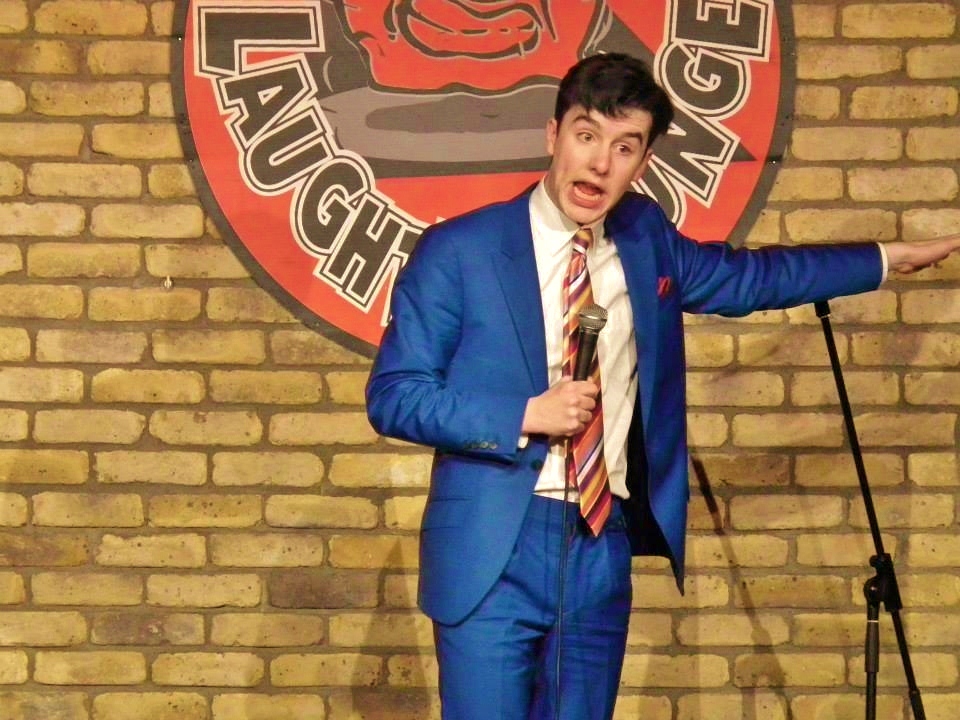
Al recalls a night in the Laughter Lounge where the issue of people taking offence on behalf of others arose at a comedy gig. Do people have a right to take offence on behalf of others, even if the butt of the joke may not necessarily concern them?
Al Porter performing at the RTE New Comedy Awards
MC on the night Steve Cummins usually pokes fun at the audience, luring them into a sense of comfort at the beginning of the shows. On this particular night he had 40 people in wheelchairs in the audience.
“He usually tells people the emergency rules and that night said: ‘in case of a fire you’re f*cked’, looking over at the 40 people in the wheelchairs,” said Al.
However, they all found it hilarious but eight people rang in to Joe Duffy the next day to complain about how rude Steve had been. Following this, members of the group in the wheelchairs rang in jumping to the comic’s defence, explaining that they recognised it was a joke and found it quite funny.
“In Ireland, and anywhere in the Western world, I think freedom of speech comes with the right to be offended but also the right to offend. If you have the right to be offended then I have the right to offend you. I mean I have the right to say things in the name of entertainment.”
Although there are very sensitive issues in regard to race, religion, culture and sexuality, many comics have successfully incorporated these topics into their routine – Chris Rock on race, Louis C.K. on homosexuality etc. Are there issues comedians should avoid joking about and how does one know where to draw the line?
“The problem is that you can’t mark something out as taboo – as something not to be talked about, because that is the reason that comedy exists. It’s there for these things to be talked about.”
“A sensitive issue for an audience is one where you are going to upset people inadvertently, and that’s not doing your job. And that’s things like people who can’t defend themselves, people who have issues that they can’t change about themselves. You can’t change the fact that you are disabled; you can’t change the fact that you have a mental disability; you can’t change the fact that you’re blind.”
“I do religious material and one of the elephants in the room in Ireland is child sex abuse. Now that’s very hard to make fun of. How do you make fun of child sex abuse? It’s a very difficult thing to do comedy on.” said Al.
Al is a regular feature on the Irish comedy circuit, performing here at the Laughter Lounge
Although child sex abuse is the overriding sensitive topic in Irish culture, we have seen the likes of Tommy Tiernan achieve success in his comedy on the subject, taking a light-hearted approach on the matter.
“My way of doing it is to take a light-handed approach. For example, ‘I was an altar server until I was seventeen but I was only in it for the action’. And people tend to laugh at that. And then I say, ‘if you think the Jews were cruel to Jesus you should have seen how Father Billy nailed me’ and it gets a good reaction,” said Al.
“If we’re going to say that everything is okay for you to talk about, then the only lines we can draw are moral, ethical or boundaries of taste and decency. The problem there is that everybody differs. If you really want to be a top comedian, you should have enough audience entity to know your audience’s moral compass.”
“For example I don’t do those religious jokes down the heart of the country. If I’m in a bar in Sligo or a small village in Tipperary, and that’s because I understand that these audiences don’t particularly want to hear this. I’m here to entertain. I’ll do those jokes up in Dublin where people are more accepting.”
It is obvious that audience entity and knowing your particular audience’s moral compass at any given show is vital for a comedian’s outlook. Pushing the boundaries in comedy comes with great success if done correctly, but it is such a difficult skill to master and one has to accept that they are not going to please everyone. Someone will usually always be offended where sensitive topics are joked about.
“I watched a video of David Walliams recently which made me uncomfortable. He brought a man from the audience up on stage, The man didn’t know what he was volunteering for and he pushed him to the ground, pulled down his trousers and dry-humped him on stage. I think that’s gone too far.”
“The line can be drawn there because it’s not immoral to talk about dry-humping somebody with their trousers down, but he has breached an ethical code, where his audience was not given a yes or no choice here. If that was a verbal joke, the man hears it, but he can hear it, get offended, leave and never buy a ticket to see David Walliams again. The fact that this guy didn’t have the choice to leave and that his own personal space was invaded was wrong.”
“I do stuff that I flirt with men in the audience and they might be rubbed on the shoulder or the leg, but believe me, I am looking at his face and for his reaction. I know when to move away and who to leave alone.”
“That is when it becomes immoral – when somebody else’s freedom is being breached. Nobody is breaching your freedom by censoring you. You’re allowed say what you want and nobody is breaching the audience’s freedom by making them stay there and suffer because they can leave whenever they want.”
“If people are going to allow you the freedom to do what you want, you should allow them the freedom to consent as to whether they want it done or not.”
Al Porter has hosted a set of successful comedy shows in Dublin’s Woolshed Baa & Grill, the last of which takes place on December 16th in a Christmas comedy special.
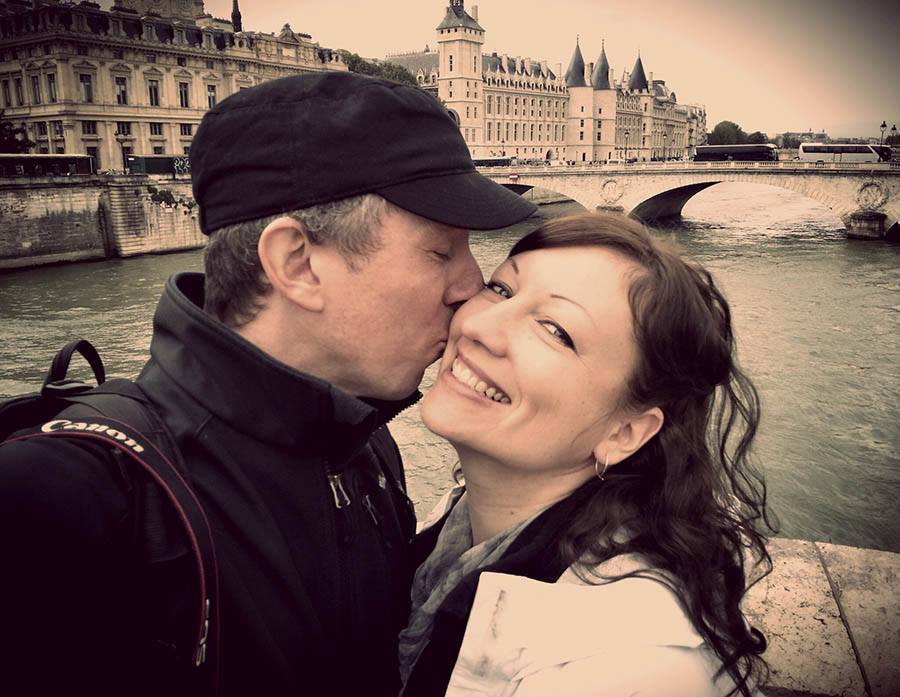
Images by Dalene and Peter Heck via hecktictravels.com
In 2009, having overcome personal tragedies, Canadian couple Dalene and Peter Heck did what many dream of doing – they quit their jobs, sold their house and set out to explore the world.
Since then, the couple have traveled to over 40 countries: Morocco, Peru, Croatia, Malta, Finland, Guatemala, Jordan and Turkey, to name but a few, and have no intentions of stopping.
So how do they afford it? The pair have been house-sitting their way around the world for four years. This has allowed them to greatly reduce their costs. Aside from this, Dalene and Peter run a blog called “hecktictravels.com”. They have also published a book about house-sitting entitled “How to Become a House-Sitter and See the World”.
In an interview with Dalene Heck she spoke of one of their most recent escapades: “Our venture to Greenland was our most adventurous and “off the beaten path” destination to date. We completed an eight day kayaking/camping excursion up the east coast, covering over 96 kilometers. It was one of the most rewarding travel experiences we’ve ever had,” said Dalene.
The two self-proclaimed nomads recently stopped off in Ireland: “We were just in Ireland for a conference on travel blogging, and also to spend some more time in a country that we love. We last visited for the summer of 2010, taking care of a house for a friend in County Meath. We saw a lot of the country during those two months, and we knew we had to come back.”
“Just a few hours in the country reminded us exactly why we wanted to return – because of the incredibly friendly people. We always feel well taken care of and this visit was no different. We loved every minute of it,” said Dalene.
Don’t be fooled, this lifestyle is not easy. “Most of us nomadic-types work very hard at a number of different things in order to make this lifestyle sustainable.”
Between them, the couple share a host of skills that they utilize to “put food on the table”. Dalene is a writer, event planner, social media consultant, teacher and videographer. Peter is a professional photographer and teacher.
“This has all been a long time in the works, and anyone who thinks they can start a blog and simply travel the world for free is sadly mistaken,” they write on their blog.
Like everything in life travelling has its ups and downs, fatigue and frustration can creep in at times says Dalene. However, those moments “are few in comparison to how much we absolutely love our lifestyle”.
Whether you’ve got wanderlust in your blood or you simply wish to get away from it all, there has never been a better time.
“I do think that people should just travel more. There is so much to be learned by visiting a new corner of the world – not just about how others live, but to learn more about ourselves.”












You must be logged in to post a comment.