Tag: dublin

  • How local cafes are coping with Level 3 restrictions

    How local cafes are coping with Level 3 restrictions

    Dhai Almutairi checked on the local cafe to see how they are managing with Level 3 restrictions in place.

    Photo by Monika Pienkos.

    The government announced last week that all counties will join Dublin and Donegal in Level 3 of the Living with Covid-19 plan for the next three weeks.

    Indoor dining in pubs, cafes, and restaurants is banned across Ireland under Level 3 restrictions. Serving food can remain open for takeaway, delivery, and outdoor dining only. Outdoor dining is allowed outside bars, restaurants, cafes with a maximum of 15 customers. This limitation is an effective closure order for many struggling businesses.

    Many businesses wouldn’t be able to survive with public health limits of 15 customers given that winter is approaching, and the Irish climate doesn’t help to provide outdoor dining for customers. 

    The Restaurants Association of Ireland (RAI) stated  Level 3 restrictions with outdoor dining would mean that staying open was unfeasible for many restaurants. 

    The Social Fabric Café is a local café located in the heart of Stoneybatter, Dublin 7. The cafe took over an old post office and transformed it into a local spot for healthy, delicious food and coffee.

    Before the initial lockdown in March, the café closed its doors as there was a decline in the number of customers coming in. The café remained closed for six weeks then reopened following government advice for takeaway only.

    Social Fabric Cafe in Dublin city centre. Photo by Miguel Ruiz.

    “We noticed coffee sales increase, and that made 75% of our revenue,” said Monika Pienkos, the café’s owner. “Some of our regular customers started asking for food, so we prepared a small menu for takeaway. 

    “We started to look into click and collect stores, and we advertised takeaway services.”

    Despite their effort in running the cafe smoothly, the café was forced to lay off all its employees. “The owners worked the hours to minimize the costs,” they explained. “We managed to cover our costs and maintained a regular customer base”, said Pienkos.

    With the introduction of Level 3 restriction, the café reported a continued decline in its customers and revenue. “We don’t have an outside sitting area, and the weather is changing now, so we are considering to be open for five days a week.”

    Running a café during a global pandemic means adapting to survive amid the COVID-19 restrictions.  

    The Social Fabric Café made more call and collect order ads and created an online click and collect shop in order to maximise their reach. “We introduced wearing masks at all times, supplied three sanitizing stations, and made strict cleaning and sanitizing procedures,” Pienkos explained.

    Business owners and customers alike have been debating whether the closure of indoor dining is going to lower the number of COVID cases in Ireland. 

    “We are not sure if closing indoor dining is making a significant difference,” Pienkos said. “Our indoor dining was reorganized to adhere to all social destining regulations, and we operated on a half capacity basis.”

    The Social Fabric Café recently obtained a Covid-19 safety certificate from Failte Ireland and is doing all they can and need to keep their place and customers safe.
  • Merrion’s open-air artists persevere through Level 3

    Merrion’s open-air artists persevere through Level 3

    With Level 3 restrictions ordering galleries to close, Eibhin Kavanagh talks to the artists still able to display their work at the Merrion Square Open-Air Art Gallery.

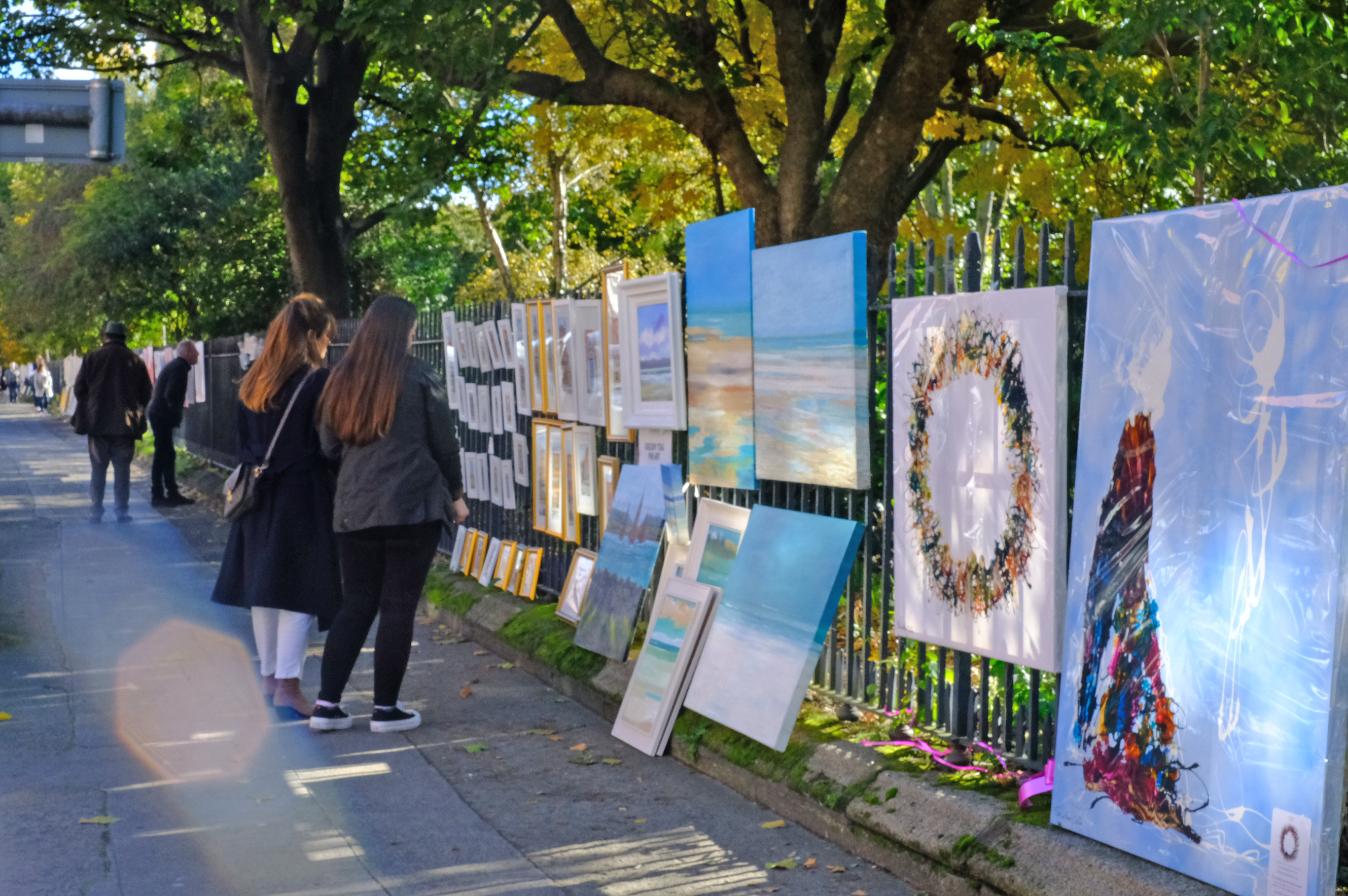
    Artists display their work at Merrion Square every Sunday from 10am until 5pm. Photo by Eibhin Kavanagh

    With the introduction of Level 3 restrictions in Dublin last month, art galleries and other cultural institutions have been forced to close.

    Despite this, the Merrion Square Open-Air Art Gallery has weathered Level 3 restrictions, and every Sunday artists gather in this Georgian garden square to sell their work and bring colour to Dublin City Centre.

    Brendan Higgins has been displaying his art at Merrion Square for over ten years.  He talked to The City about the changes experienced since artists started exhibiting again in the Summer.

    Brendan Higgins at Merrion Square with his artwork. Photo by Eibhin Kavanagh

    “There was a huge drop in footfall,” he said. “It is a business area Monday-Friday and on the weekends, there were a lot of tourists.” he continued: “But business hasn’t been too bad, because people are coming in just to buy paintings.” 

    In regard to the level 3 restrictions, Brendan said: “We’re one of the only open-air events, when the galleries were open as well, they were also attracting people, so the last three weeks with the galleries closed we did notice a drop in footfall.”

    Kevin Sharkey, who has been exhibiting for around five years now, said: “An open-air art market is perfectly suited to deal with the coronavirus because it’s not close contact. I find most people are very relaxed about it when they’re outside and they have space.”

    “The main thing I noticed was that people who before would’ve done things like go to the cinema or go for a meal or whatever, are instead looking for outdoor activities. Merrion Square suits this perfectly.”

    “For the last lockdown, most people were doing two things. They were staying home, and they were decorating. You can only paint so many rooms in your house but at some stage when you want to finish off your design you think, ‘ah we need a nice painting.’ In Ireland, there’s very few places where you can see such a wide breadth of different artistic talents in one sitting, and that is something people who are looking for art want; choice,” Kevin said.

    Artist Kevin Sharkey with his work. Taken by Eibhin Kavanagh

    Peadar Sheerin, who has been displaying his work at Merrion Square for nine years now, said: “Since this is an open-air exhibition it is reasonably safe Covid-wise.”

    Peadar also reflected on how the exhibition used to be: “I miss the American tourists, they were great customers. ‘I like those three honey. Wrap em up’. Also the Germans, French, Japanese, Chinese, and good ole UK, to mention a few.”

    Councillor Cat O’Driscoll, chair of the City Council Arts, Culture, Recreation and Leisure Strategic Policy Committee commented on the importance of the open-air gallery with restrictions limiting arts and culture in Dublin City.  

    “I’ve been inspired by how innovative so many have been to bring arts and culture to everyone safely,” Cat O’Driscoll said.

    “The Merrion Square Open-Air Art Gallery is an institution and it is wonderful to have it while so many other spaces are closed.”

    “It’s important we still get out and about in a safe way to keep well physically and mentally. Weather permitting, a social distanced stroll around the Merrion Square Gallery on a Sunday with a take away hot beverage is highly recommended.”

    She also noted: “Don’t forget your mask.”

    “With Merrion Square, you’re dealing with the artist directly. If I was going out to get a painting, I’d go to Merrion Square before I’d go to a gallery,” Brendan Higgins said.

    “In Ireland there are very few things that you can bring your whole family to that doesn’t cost you anything,” Kevin Sharkey said.

    The Merrion Square Open-Air Art Gallery takes place every Sunday from 10am until 5pm.

    In December the artists will be exhibiting daily.

  • Watch: Saudade – A Reflection on Lockdown

    Watch: Saudade – A Reflection on Lockdown

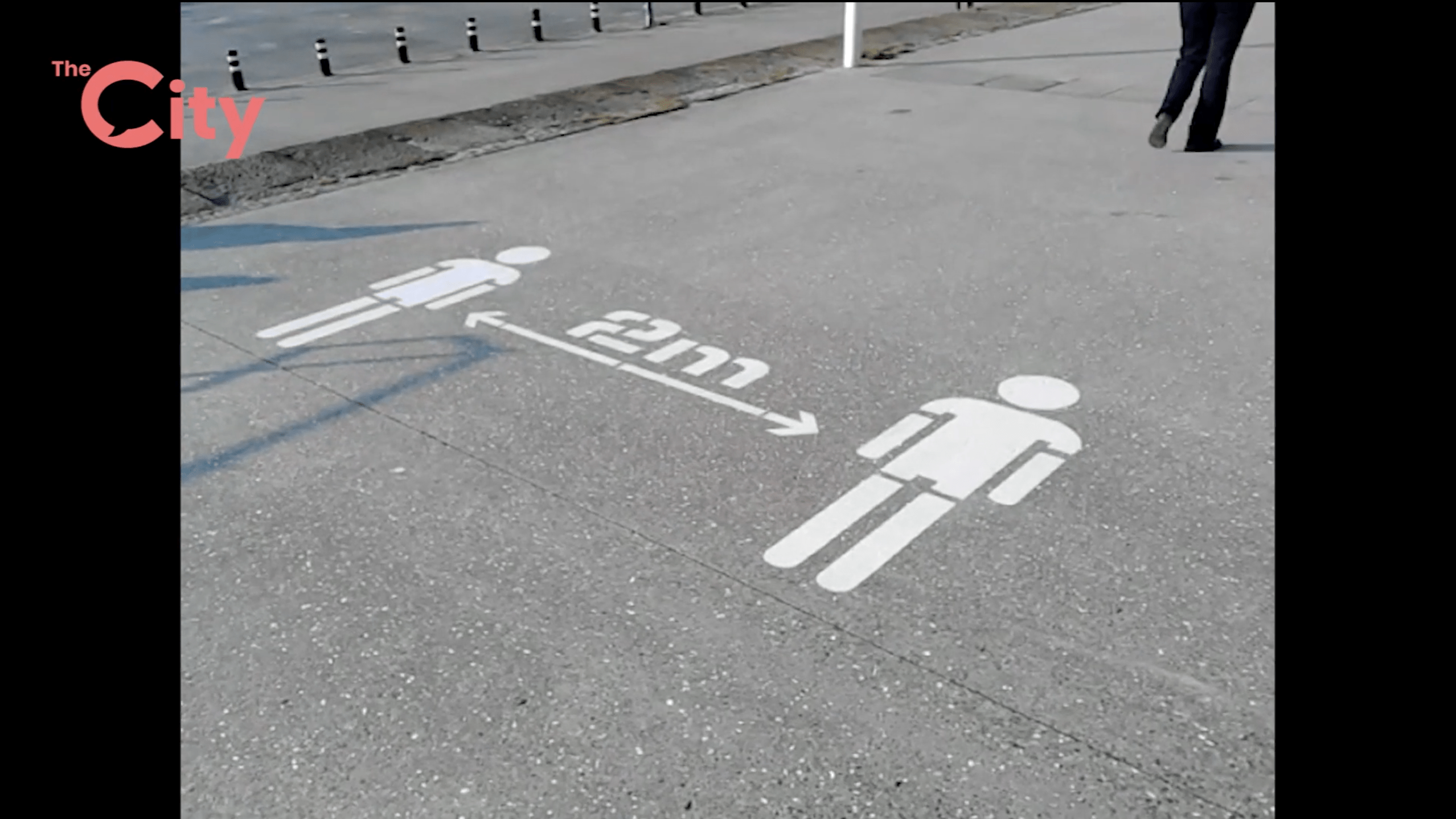
    A sign on a walkway in Dún Laoghaire. Photo: Paul Caffrey

    By Paul Caffrey, Ruadhan Jones and Kim O’Leary

    Have you found yourself longing for normality, for the simple things you took for granted? The Portuguese have a word for it – saudade. It means to long for the presence of the absent thing.

    TheCity.ie offers this visual poem, full of the longing and nostalgia we feel for normality. The reflection draws together footage from our journalists’ localities of Dún Laoghaire, Cork City and Newbridge, with a musical composition by TheCity.ie’s Paul Caffrey.

  • Abner Browns – Not your average barbershop

    Abner Browns – Not your average barbershop

    By Aidan Coyle

    Dave Judge is something of a celebrity these days. The story of how he turned his little barbershop into a live music venue has led to three documentaries and has been covered in many of the national papers including the Irish Times.

    Dave initially worked as a barber before opening his own shop on Cork Street. He then did very well in the property business and opened Abner Browns in Rathmines. That was when the recession hit.

    Dave went from being picked up at the Galway races in big cars to cutting hair on the floor of Abner’s. He said: “We lost everything in the recession. Banks took the lot. It was a really, really tough couple of years. I was left with nothing.”

    “I kept the family home and I kept the barbershop cause I just leased it and didn’t actually own it. Thank God. If I owned it, it would probably be gone too,” said Dave.

    Dave fortunately managed to hold onto Abner’s and that is where his career took another unexpected turn. He had previously played in a band as a teenager and decided to redecorate the barbershop with music memorabilia. Canadian singer-songwriter Blair Packham agreed to play a few songs and became the first of many artists to grace the shop with live music.

    Although Dave confessed he somewhat stumbled back into the industry with the advent of Abner’s music nights, he has always loved music. Dave said: “I had a load of albums at home cause I’m a music head. I played music years ago. When I was in my late teens/early 20s, I played in bands around town.”

    Dave believed his love for music mixed with many years’ experience in business gives him an advantage over other people in the industry. He said: “I think that’s it; I fell back in love with it I suppose. It was always there but when I went into business, you’re focused in a different way. I brought that back to this in that all the music heads, they’ve a different way of thinking than I would have. So, I’m able to channel it better.”

    Dave Judge: Owner of Abner Browns and The Underground (Credit: Aidan Coyle)

    Dave became so sought after in the music scene that he had to stop the night-time gigs at Abner’s. He is involved in festivals around Dublin including running the 2FM stage at Electric Picnic. He also opened a venue called The Underground on Dame Street that features music from up and coming independent artists.

    Dave named and based The Underground after the 80’s venue on Dame Street that was significant to him. He said: “It’s about up and coming independent bands which is what I was when I was 20 years old and we had nowhere to play. There was the old Underground, that’s what it’s modelled on. Back then it was just down the road, pretty similar to what we are. But there was no Whelan’s, there was no Grand Social.”

    Dave’s aim with The Underground and with the music nights in Abner Browns is to give rising musicians that platform they need to perform. “It’s an opportunity to play and some people say; ‘Ah, some of them are shit’. ‘Well yeah, so were U2 when they started off’. You have to start. I was a shit barber when I started off. Give people a chance, that’s what we do, that’s it.”

    Abner Browns in Rathmines (Credit: Aidan Coyle)

    He said: “For me it was never about making money. Obviously, The Underground now has to make money. I would actually make more money if I played this type of shit and had someone playing Galway Girl all day and a load of Leprechauns on the stairs but it would break my heart.”

    Despite his scenic route into music promotion, there is no doubting that Dave is an expert on the Irish scene now. “People see me as the knowledgeable person in Dublin for up and coming bands and I would know them all. Like we had a Brazilian company here last week and a Los Angeles film company. They’re doing a thing about independent music around the world and doing Dublin. And they made me the centre of the Dublin thing which is a bit mental to be honest with you.”

    Last month, Dave brought the popular music nights back to his barbershop Abner Browns in Rathmines after a year and a half hiatus. ELLYD and Statelights lit up the small venue. “It was brilliant and straight away I got the next one booked in now and back at it again. I kind of missed it a bit because it was just about music.

    “Whatever you have in your head, you go in there and everyone listens,” said Dave.

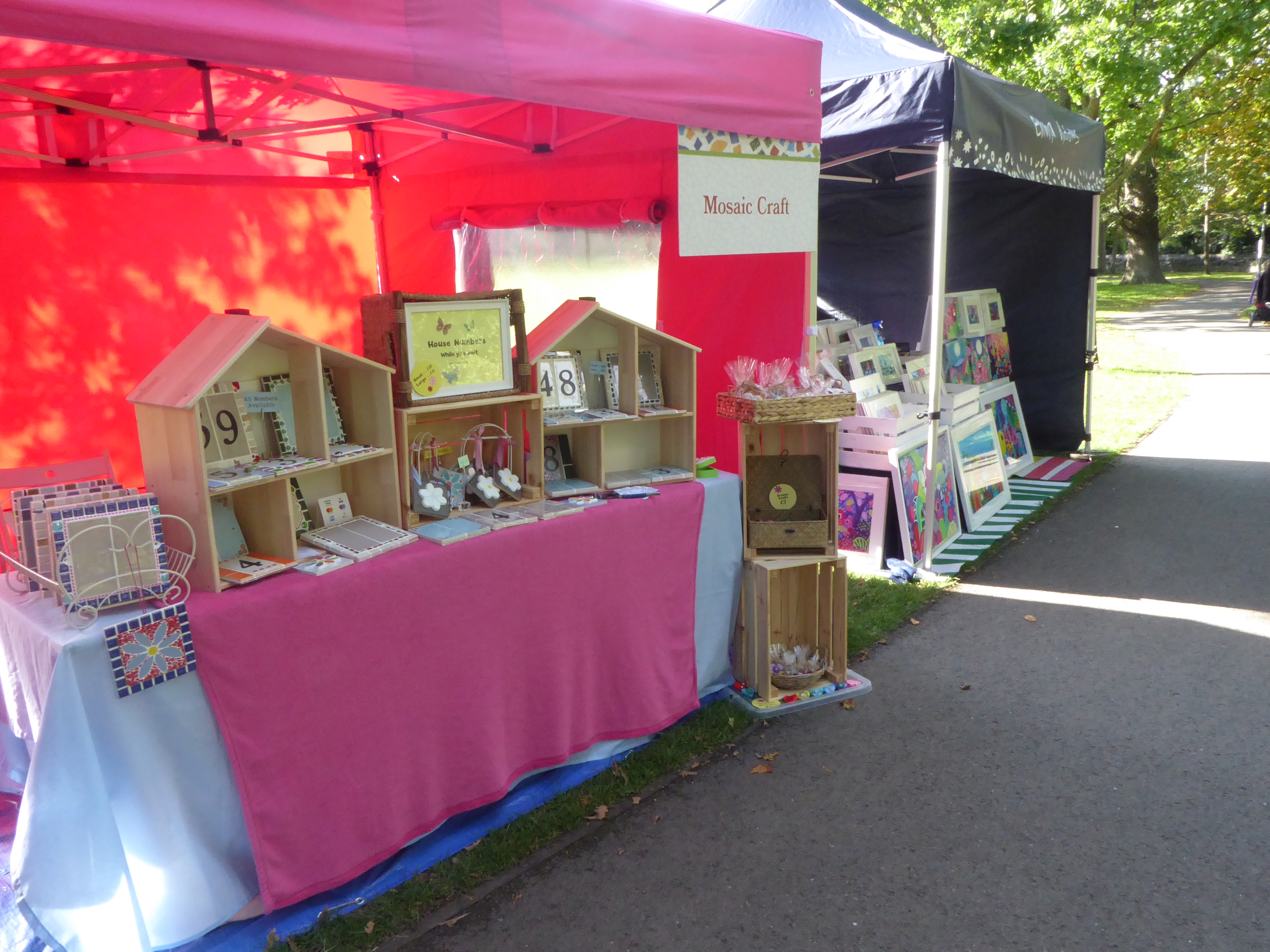
  • Dublin street markets continue to thrive

    Dublin street markets continue to thrive

    By Aidan Coyle

    Dubliners love a good market. The Liberty Market, George’s Street Arcade and Moore Street Market are just a few of the more iconic examples. So, why is it that within the unstable and uncertain business climate, markets remain a vital and thriving part of Dublin industry?

    One of the undoubted features of markets is the personal touch that they offer shoppers and each market manager and stall owner has their own story to tell. Des Vallely is the owner and director of Irish Village Markets who run in various locations around the city and country. Despite his success, Des does not come from a trading background.

    “I took an interest in organic growing whilst working in the IT sector. What initially started as a hobby, developed into a full-time career,”said Vallely.

    “Terenure would have always had farmers markets back in the day so it was to bring something old back and to try and revitalise it”

    – Des Vallely

    “Once I started growing vegetables, I needed an outlet for my produce and decided to start my own market in Monkstown and set up a market every weekend. We were soon joined by other growers and producers which led to the establishment of Irish Village Markets.”

    Anne Talbot’s Bushy Park Market is relatively new to the scene in Dublin terms. The market she runs with Georgina Culshaw first set up its stalls in 2014 in Terenure Village before relocating to Bushy Park. The market has quickly become a great asset to the area and its community.

    Anne said: “It was set up initially as a volunteer project. Terenure would have always had farmers markets back in the day so it was to bring something old back and to try and revitalise it.

    “It’s now a destination for young families and people in the community to really come out and hang out and enjoy”

    – Anne Talbot

    “This is its fifth year that it’s been running up here and it’s now a destination for young families and people in the community to come out and hang out and enjoy a really nice park at the same time,” said Anne.

    “Parents are able to come down and watch their kids and have a coffee and then hang around. It has just become a concrete Saturday destination that people rely on in the area.

    “It’s very heavily community focused though. That’s the main agenda for it. The purpose of it was to create a destination for young families and that is still its purpose and I think that will remain its purpose.”

    Vallely believes markets need to capitalise on the community feeling they can generate as it’s one of their prized assets.

    “Visitors seem to enjoy the atmosphere and experience when visiting markets and share this experience with family and friends,” said Vallely. “This generates a good level of interest and drives additional footfall to markets.”

    There are also practical benefits to shopping in markets. Karl Merry, Assistant Inspector at the Licensing Section of Dublin City Centre believes it is vital for members of the public to support local markets. He said: “There is a growing awareness that supporting local businesses is good for the local economy, the standard of produce is probably better, and it is generally a more sustainable way to shop.”

    “The standard of produce is probably better, and it is generally a more sustainable way to shop”

    – Karl Merry

    Anne Talbot agrees that markets offer a great opportunity to support local businesses: “We have a policy here as well that most of the people are local so we let local people come in first and then if we can’t fill that niche then we start going out further.

    “It just gives small little industries a chance to show off their wares and not have to pay extortionate rents at the same time it’s kind of a win/win situation.”

    Sustainability and protecting the environment are becoming increasingly important factors in determining where people choose to do their shopping. Local markets have a big advantage over bigger national and multinational retailers in this area.

    “Climate change is becoming a consideration in how people shop,” said Merry. “People are more conscious of buying food in a way that impacts less on the environment.”

  • Trinity animal testing increases by 90 percent

    Trinity animal testing increases by 90 percent

    The number of animals used for biochemical experiments by Trinity College Dublin more than doubled last year, according to figures released under the Freedom of Information Act.

    There was an increase from 12,490 to 26,252 animals used in various tests and experiments between 2016 and 2017.

    Trinity College has a range of research projects which involve the use of animals in the investigation of human diseases including Alzheimer’s and others relating to genetics, arthritis, autoimmune diseases and “age related memory loss”.

    2016 saw Trinity College testing three times the amount compared to University College Cork (UCC) in the same year, with UCC having a total of 4,100 live animals used for research experiments.

    In 2014, Trinity spent €400,000 on mice and rats alone. By 2016, the amount decreased to €310,000.

    Laura Broxson, founder of the National Animal Rights Association (NARA) said she was “one hundred percent opposed to animal testing” and believes this practice is unnecessary.

    “Today when there is a wealth of sophisticated techniques including computer modelling, tissue cultures, epidemiological studies and clinical studies available for use that offer a cruelty-free, reliable alternative to vivisection, it makes no sense whatsoever to continue to use animals.

    “Animal research has been shown time and again to hold back medical progress for people…[the] arthritis painkiller Vioxx, which was withdrawn in 2004, caused…strokes and heart attacks…even though it appeared safe when tested on animals.”

    Trinity has an Animal Research Ethics Committee (AREC) which aims to “foster ethical behaviour among the college scientific community” who wish to use animals for research.

    According to a statement given with the figures obtained through the Freedom of Information Act, all studies are conducted on the basis of well-defined consideration and with consideration taken of the animal welfare by minimising the number of animals used and using animal tissue or other replacements where possible.

    “Scientists in TCD are required to demonstrate that there are no alternatives available before the ethical review process will permit the procedure.”

  • Closing time: too early or too late in Dublin’s pubs?

    Closing time: too early or too late in Dublin’s pubs?

    There has been a lot of debate in recent years surrounding the closing times of pubs and nightclubs in Ireland.

    Much unlike a lot of our neighbours on the mainland, closing times for nightclubs especially in Ireland are quite early, around 2 to 3am. This often leads to a bottleneck of people leaving at once, creating a multitude of problems in managing club-goers.

    There are many who would rather see the closing times extended to between 4 and 5am, as well as introducing gradual closing, which would ensure that a massive, hard to organise group is not leaving all at once. However, there are also some people who think that the current closing times of pubs and clubs is acceptable.

    The City took to the streets to ask people around Dublin what they think of the current situation surrounding pub and club licensing laws.   


  • Dublin’s Christmas food market

    Dublin’s Christmas food market

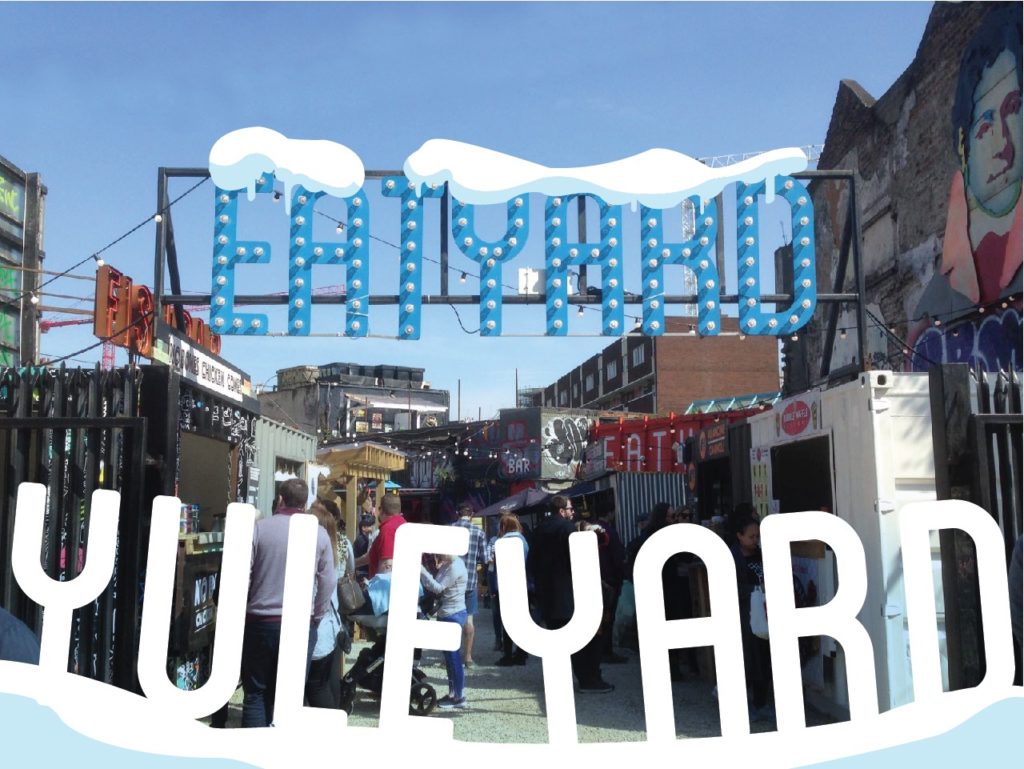
    Yuleyard, Dublin’s Christmas food market, was open to the public recently. TheCity decided to head down to the place and see what was the buzz going on there. 

  • Dublin Street Style 2018

    Dublin Street Style 2018

    We took to the streets to find Dublin’s most stylish, where they got their clothes and inspiration for our readers.


  • The art of mixology

    The art of mixology

    Megan Kavanagh speaks to Jarlath Stevenson about the art of mixology and what goes into making a great cocktail.

    Over the years, the rise of the speakeasy’s popularity has drawn great attention to the way drinks are made. Which brings us to mixology.

    The word speakeasy was first coined in the US during the Prohibition era, when the sale of alcohol was generally illegal from 1920 to 1933 and is the place you’re most likely to meet a mixologist.

    Mixology is a term used to describe the art of mixing cocktail drink recipes.

    Being a mixologist isn’t quite like being a bartender but according to Mr Stevenson the secret to being successful is to be an all rounder behind the bar.