Tag: dublin

  • ‘Unexpected’ queues outside Chapters Book Store after closure announcement

    ‘Unexpected’ queues outside Chapters Book Store after closure announcement

    By Fantine Carron

    After almost 40 years in business, the Chapters book store announced its permanent closure in early 2022. Following the news, hundreds of book lovers went to pay a last visit to the deeply loved shop.

    Hundreds of people came to take advantage of the “2 for 1” clearance sale.  [Photo by Fantine Carron]

    Patience was needed this weekend to shop at the Chapters book store as the queue of customers extended in the street. After the announcement of its closure on Twitter this Friday, the shop faced a massive crowd of bookworms who came to make the most out of the bookshop’s last moments.

    To celebrate the long history of Chapters, the store launched a 2 for 1 clearance sale set to last until the closure in just a few months.

    The store announced its permanent closure on Twitter this Friday. [Source: Twitter]

    The store’s owner, William Kinsella told RTE the shop was facing economic difficulty linked to the increase of online shopping and the “loss of tourists and commuters” in the city centre. “The numbers don’t stack up”, he said.

    The customers’ responses to the announcement were numerous both online and in store. Many people shared their sadness on social media mentioning stories about how Chapters bookstore was a big part of their life.

    Customers online expressed their disappointment after the announcement. [Source – Twitter]

    In Chapters store, a large queue of people could be seen all day long in Parnell Street. The exact number of people who came to Chapters this weekend is unknown but an employee shared his surprise.

    “We were not expecting this many people to show up so we had to set a limit of customers inside of the shop so you would still be able to move easily”, he said in a laugh.

    A queue of around 45 minutes took place in Parnell Street all day long. [Photo by Fantine Carron]

    The City met with Connor Perry who has been a customer of the bookstore for as long as he can recall.

    “I couldn’t even tell you when I first visited Chapters because it really feels like I’ve been coming here since I was born”, said Perry.

    “I remember coming here with my parents and my sister every Friday after school. We would spend an hour, maybe more just browsing through the books, not even buying something every time. It’s just a nice place to spend time in, time flies when you’re looking through everything.”

    Perry shared his regret of seeing the bookstore go. “It really feels like a part of history is going to leave Dublin. Chapters will truly be missed and I’m hoping this doesn’t mean the beginning of the end of physical bookstores.”

    Connor Perry used to spend his Friday afternoon in Chapters when he was younger. [Photo by Fantine Carron]

    Established in 1983, Chapters is the biggest independent Irish bookstore. Its two floors offer a variety of both new and second-hand books. Anything you can think of, you can find in the great assortment of genres going from general fiction, to politics as well as sports, Irish literature, poetry, and many others.

    After moving from Wicklow Street to St Stephen’s Green, Henry Street, and Abbey Street, Parnell Street will be the last home of Chapters.
  • Superclubs in the Celtic Tiger – the Temple Theatre revisited

    Superclubs in the Celtic Tiger – the Temple Theatre revisited

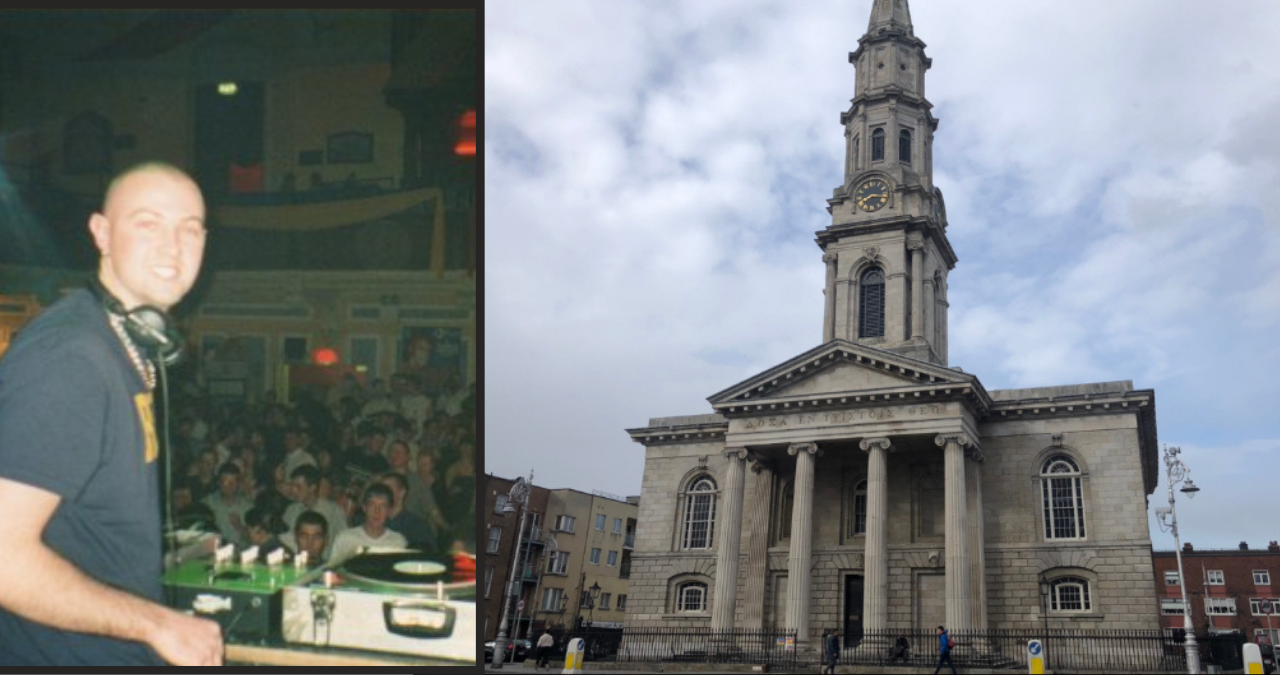
    Dj Orbit playing in the Temple Theatre (left) Image via Temple Reunion. St George’s Church (Right), photo taken by Mario Bowden

    Ah, clubbing. How I miss it.

    The past year of idle inactivity has confronted many people my age with a tug-of-war-like stand-off between the inevitability of growing up and past memories of socialising in basement dance floors with chest-rattling baselines. I prefer the latter.

    This trip down memory lane led me to wonder: What was clubbing like in Dublin during the Celtic Tiger era? Was the extravagance of the times retold to me an exaggeration? Or a fever dream? Were they really living it large in ridiculous and experimental ways? As it turns out, yes, yes they were.   

    Passing hands

    The Temple Theatre was a nightclub in St Georges Church on Temple Street, in Dublin’s north inner city. Set up in 1996, three million pounds was invested in the site to convert it into a music venue and theatre space. The club held 3,000 people, with two bars – converted in the vaults of the former church.

    Formally home to the Church of Ireland, St Georges Church dons a triple-tiered steeple. The original architect, Francis Johnston, also designed the GPO on O’Connell Street. The Church’s bells are also of note, having been mentioned in Dublin-writer James Joyce’s Ulysses.

    Up and running

    After building momentum and enthusiasm from the general public, Temple Theatre became a hit. The club started picking up big names coming into the millennium – Paul Todd, Paul Cox, Green Velvet and Italian DJ Mauro Picotto – to name a few. Temple Theatre always had a host of local DJ’s too, providing space to play to a crowd and promote their work.

    But Temple Theatre was not a standalone thing in Dublin in terms of ‘superclub’ stature. Dublin hosted an array of similarly big clubs like The Kitchen in the Clarence Hotel, owned by Irish rock-band U2 and the Spirit nightclub on Abbey Street. What Temple Theatre offered differently was a unique clubbing space – tucked far away from Temple Bar’s jarring bustle.

    Of course, when we think of Temple Street, techno is not the first thing that comes to mind. With the children’s hospital a stone’s throw away – an über nightclub club does not seem like the most suitable of neighbours. Loud music, drink and drugs and disobedience all became a fixture outside the place – a ‘rough shop’ one local tells TheCity.

    The club used to do “Flash event” promos too – getting a famous person into the club to build a bit of hype. One such celebrity drafted in for the night was former Irish TV host and Big Brother star Anna Nolan. Former journalist Jason O’Callaghan remembers covering a story on Nolan’s appearance – but also remembers the pitfalls the club began to see.

    St George’s Church, formally the Temple Theatre, photo by Mario Bowden

    “It was a massive club to fill. [There was] no parking and it was hard to get to. So they started letting everyone in to fill it,” says O’Callaghan, speaking to The City.

    Alas, Temple Theatre closed its doors in 2003, having its last party in late September. The superclub era was dying, and after seven years, the fire went out. A spokesperson at the time of its closure told The Independent, “superclubs are not happening anymore, and people would rather stay in smaller, more intimate venues.”

    Changes to Ireland’s licensing laws for pubs and bars that same year are also noted as a factor in Temple Theatre’s locking up for good. Clubs required an extra music licensing law to stay open longer than 12:30 am. And, at most, they could only stay open until 2:00am at the latest rather than the former time of 4:00am.

    Dublin’s clubbing future

    As Ireland emerges from its lockdown, nightclubs and music venues will inevitably be among the last things to reopen.  And with Dublin being dug up for rental properties and the hotelier industry, it is unclear what cultural spaces will be available, come the day.

    On 26 April, Jigsaw, a cultural and clubbing space on Belvedere Court announced that it was shutting its doors for good.  The spokesperson for the Give Us the Night campaign, Sunil Sharpe, told the Oireachtas that cultural spaces and venues need more protection.

    “We are going to need a lot more spaces. We need a clause, a cultural clause,” Sunil says.

    “With all the development going on right, there has to be cultural spaces within those buildings. It’s not good enough to let developers do what they like with these spaces,” Sunil continued.

    Undoubtedly, Dublin’s music spaces are feeling the heat of the pandemic. Could Dublin’s vast amount of empty properties and spaces be used more creatively? While it was a different time and era, the Temple Theatre proved that just anywhere can be a dance floor.

    To visit the Temple Reunion facebook page: click here

  • Packing plastic: The rise of zero-waste shopping

    Packing plastic: The rise of zero-waste shopping

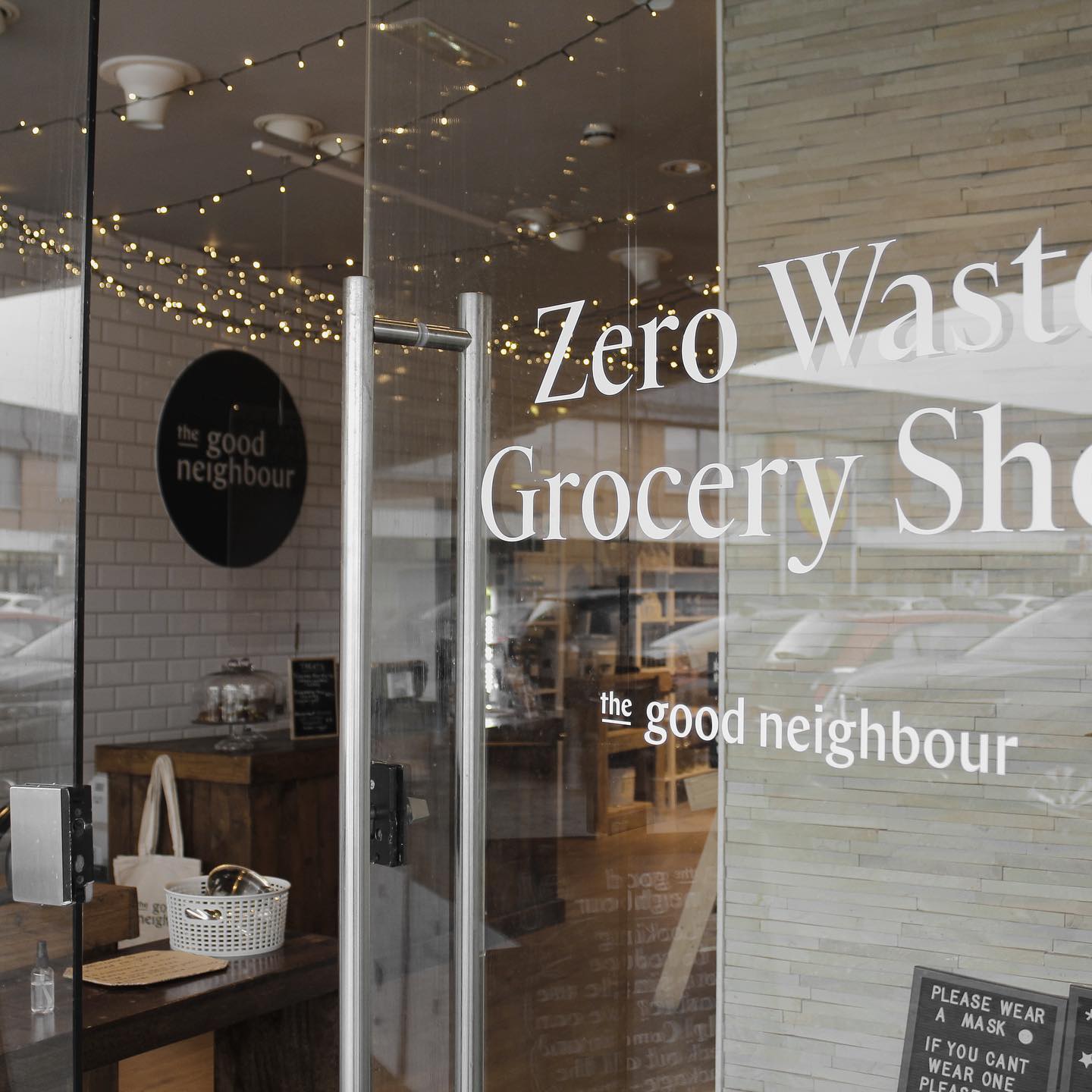
    Zero-waste shop, The Good Neighbour, in Dundrum . Image courtesy of The Good Neighbour

    Waste probably isn’t the first thing that comes to mind when you think of your local grocery store. 

    As you coast through its aisles, fixated on convenience and choice, the harsh reality is easy to forget – our weekly shopping runs are wasteful endeavours.

    The plastic packaging our food comes in is a nasty ecological sore. Thankfully, the solution is easy: come prepared with alternative/reusable packaging options.

    The Good Neighbour in Dundrum is one example of a business that is following the increasingly popular zero-waste model, designed to focus purely on reducing the amount of plastic waste.

    “The concept is simple – bring your own container, and we weigh it in-store and deduct the weight of your container, so you are only charged on whatever food you take home,” says Jess Dollinger, the owner of The Good Neighbour.

    The zero-waste shop initially opened its doors to the public in December 2019, which happened to be just four months before the Covid-19 pandemic hit.

    The interior of The Good Neighbour, with containers of rice and grains on display. Image courtesy of The Good Neighbour

    According to Dollinger, The Good Neighbour was forced to “pivot” in order to deal with the impact of the pandemic. 

    “We didn’t originally offer the option for customers to place orders, but we now offer orders for delivery and collection. Offering that service has really helped the business due to the high volumes of people quarantining,” Dollinger said.

    “We’ve also got a great community of customers who want to make sure the shop thrives, so we’ve been very lucky throughout the pandemic,” she continued.

    The shop offers over 300 bulk goods including grains, fruit and veg, spices, and several cleaning products – all package free.

    “Our mission is to be as organic and plastic-free as possible. At this point, around 60% of our products are organic, and we’re constantly working on increasing our organic offering to customers,” Dollinger stated.

    It’s “crucial for the industry”, says Dollinger, that her shop sells affordable products, as there’s a perception that choosing to live a zero-waste lifestyle is exorbitant for the everyday consumer.

    “I think that we’ll eventually see a zero-waste shop in every area of Dublin”

    Jess Dollinger

    The Good Neighbour works alongside multiple local growers and producers to stock as much Irish produce as possible.

    “Wherever possible we source locally. Unfortunately, a lot of things simply can’t be grown here, but where we can we purchase from local growers and suppliers.

    “We’ll continue to support local farmers and produce, particularly throughout the pandemic,” Dollinger says. In recent years, climate change awareness has increased, and consumer habits have shifted to reflect that.

    In Ireland, some companies are responding to that change with supermarkets taking action to reduce packaging and waste. Vegan and vegetarian sections have increased in size, and a lot of single-use coffee cups are now compostable.

    Now, more and more people are choosing to live a zero-waste lifestyle. 

    Currently, there are eight zero-waste shops open for business in Dublin alone. The majority of these shops opened within the last two years.

    “I stumbled across my first zero-waste [shop] when I was living in the UK. When I returned to Dublin, I noticed that several [zero-waste] shops began popping up across the city,” says Orla Browne, an environmental activist and frequent zero-waste customer.

    “Living a zero-waste lifestyle is becoming more fashionable than ever before”

    Orla Browne

    Although the attitudes towards an eco-friendly lifestyle for many has changed, Ireland still currently produces the highest volume of plastic waste per person in the EU at 57 kilos per capita, which is considerably more than the EU average of 33 kilos per capita.

    “Since returning home, I have noticed a change in attitude towards these issues, but you only must observe the stats to see how far behind we are in comparison to the rest of Europe.

    “To contribute to the greater good, embarking on a zero-waste lifestyle by reducing small amounts of plastic in your household is a start,” Browne added.

    However, Browne feels like we are still far off when it comes to acting on reducing plastic waste.

    “The stats show that Ireland is well behind when it comes to dealing with environmental issues. This is something we as a nation should be wary of.

    “I think people hesitate to go zero-waste because they are afraid that other [zero-waste] advocates will judge them if they don’t fully commit at all times.

    “However, it’s not true. I found encouragement and the will to try harder by surrounding myself with like-minded people,” says Browne.

    The zero-waste movement has arrived and the greater availability of this retail option to all Irish shoppers will allow it to become the norm.

  • Bloody buses

    Bloody buses

    The 33A bus pulling into Lusk village. Photo by Izzy Rowley

    Public transport can change the shape of someone’s day entirely. For health care workers, it can add hours onto their already lengthy days, as they battle long wait times and social distancing issues. 

    “Transport, as stupid as it might sound to most people, makes such a difference if you can get home quicker because you are so tired,” says student nurse Sarah Reid who is currently working in St. James’s Hospital in Dublin.

    Reid lives in Swords, north county Dublin. To get to work, she has to take two buses or a bus and a Luas regularly.

    Her journey usually starts around 5:00am and ends at 6:30am, when she arrives into work an hour early for her shift. She could get a later bus, but according to Reid, it doesn’t leave her with enough time to get ready for her shift. 

    “Because of the pandemic, when we get to hospital, we have to change, and we have to PPE up before, because I’m on a Covid ward,” Reid explains.

    Getting home presents its own problems. After her 13 hour shift, she could often be waiting up to 35 minutes for a bus home.

    The 33 bus driving down Station Road in Lusk, north county Dublin. Photo by Izzy Rowley

    Dublin Bus services are currently running at a reduced capacity and regularity, operating on a Saturday schedule, leaving fewer buses with less room for passengers.

    In an email statement to The City, Dublin Bus said that the Saturday schedules are “augmented by additional services, especially in the early morning peak” and “the schedules reflect the current demand for services.”

    The reduction in both the frequency and the capacity of the buses can lead to issues with social distancing.

    “Especially in the level five situation, I know the service is reduced to a Saturday service, and that just doesn’t make sense to me. 

    “It would make more sense if the services still ran as normal – people would be given the opportunity to keep their distance more,” says a social care worker based in Fingal, who has chosen to remain anonymous to protect her privacy.

    The accessibility of transport is also an issue, this social care worker notes that recently, real time displays in train stations have often been broken: “If you’re an older person that doesn’t have a phone, or people with disabilities like the ones I work with, it makes it difficult.”

    “If the services still ran as normal, people would be given the opportunity to keep their distance more”

    Anonymous

    However, the health and safety of bus drivers can’t be ignored either.

    Dublin Bus said that these reductions are in place to protect the health and safety of passengers and staff, which is their “first priority”.

    “We’re just like everybody else, we don’t want to bring it home,” says Dublin Bus driver Joe O’Dwyer.

    O’Dwyer feels lucky to still be working during the pandemic and notes that “the company is supplying PPE stuff” including masks and hand sanitiser.

    “We’re just like everybody else, we don’t want to bring it home”

    Joe O’Dwyer

    “One of the things we’re trying to do with the Saturday timetable, it’s called an enhanced [timetable], so there’s an extra couple of buses that go out on certain routes that are busy – they’re trying to do their best with it,” O’Dwyer says.

    “It’s all about health and safety, isn’t it? Keeping the staff safe and the public safe,” O’Dwyer adds.

    Public transport has been an issue in Fingal before the pandemic, and the reduced services have worsened the situation.

    “With ongoing and increasing development in Lusk, Skerries, and Rush, it’s obviously putting more strain on the public transport system,” says Councillor Robert O’Donoghue, the Labour Party local area representative for Rush and Lusk in Fingal, who is working with a local action group to increase public transport in the area.

    The action group has asked Fingal County Council to assess public transport services in the area in relation to population and housing development. 

    “Any assessment that goes on, I can’t see the possibility of services being pulled back,” O’Donoghue says. “There’s just too much housing development going on in the north county.”

    “Fingal, I think, is being used almost as a relief valve for the housing crisis to some degree.

    “That can either be a good thing or a bad thing, depending on your way of looking at it. They’ll serve where the people are, and with more and more people moving out our way, I do believe the services will come,” he adds.

  • Dublin’s white-water rafting  project could be in deep water

    Dublin’s white-water rafting project could be in deep water

    Dublin’s white-water rafting facility was met with a lot of backlash when it was first announced. Eibhin Kavanagh looks at what the White-Water Rafting facility could be in a post-Covid world.

    Image source: Pixabay

    Dublin’s white-water rafting facility could be in deep waters in a post-Covid environment.

    The controversial facility, costing €22 million, would be used for training for emergency services including Dublin Fire Brigade, who asked councillors to support the proposal. When first announced, the facility was met with controversy.

    Criticisms for the project were related to the plans being announced in a housing and homelessness crisis.

    Construction on the white water facility was initially meant to start at the end of 2020, however the project has been delayed into 2021 to consider the price of construction going forward.

    Given the current pandemic and economic uncertainty, some councillors who initially supported the project have had a change of heart.

    Initially costing €12 million, the project increased to €22 million because of additional elements such as a water treatment plant and construction of two new buildings instead of using the Dublin Docklands Development Authority building.

    Councillor Christy Burke said: “As of now, I believe the project can’t go ahead.”

    Burke , who is chair of the Central Area Committee, initially supported the project and believes it would create local jobs in the area for construction and for instructors.

    The facility has been postponed into 2021 to discuss the cost of the project. Burke believes the facility can’t go ahead “given the cost now and the fact the Dublin City Council budget is shortfall of about €40 million.”

    The initial proposal was passed by 37 votes in favour to 19 against.

    “My support for it would be no,” Burke said.

    The breakdown of the funding for the project consisted of €13 million in government grants, €4.9 million in development levies and €4 million from capital reserves.

    A €6.6 million grant was refused by the government in January, before the coronavirus pandemic. In a post coronavirus environment, funding the facility may be a problem.

    “The budget is down by millions for next year,” Burke said.

    Emergency services including the fire brigade and gardai would use the facility for training for rescue in flooding, and from submerged cars. These courses can cost up to €20,000 in Ireland at present.

    It was projected last year that the facility would attract 36,000 visitors a year, according to area manager Derek Kelly. Charging  €50 per head would result in a profit turn from the second year of the facility. The project has been compared to a similar facility in Cardiff.

    Cardiff International White Water is located in the International Sports village in Cardiff. It offers courses in water rescue, similar to the proposed plans in Dublin. This Olympic standard white water rafting and indoor wave facility attracts around 85,000 visitors a year.

  • Remembering pints past with Old Dublin Pubs

    Remembering pints past with Old Dublin Pubs

    Facebook Group Old Dublin Pubs is a place to share nostalgic memories of wet pubs that are long-gone. Rebecca Daly spoke to members of the group to find out what the group offers and why it is so relevant today.

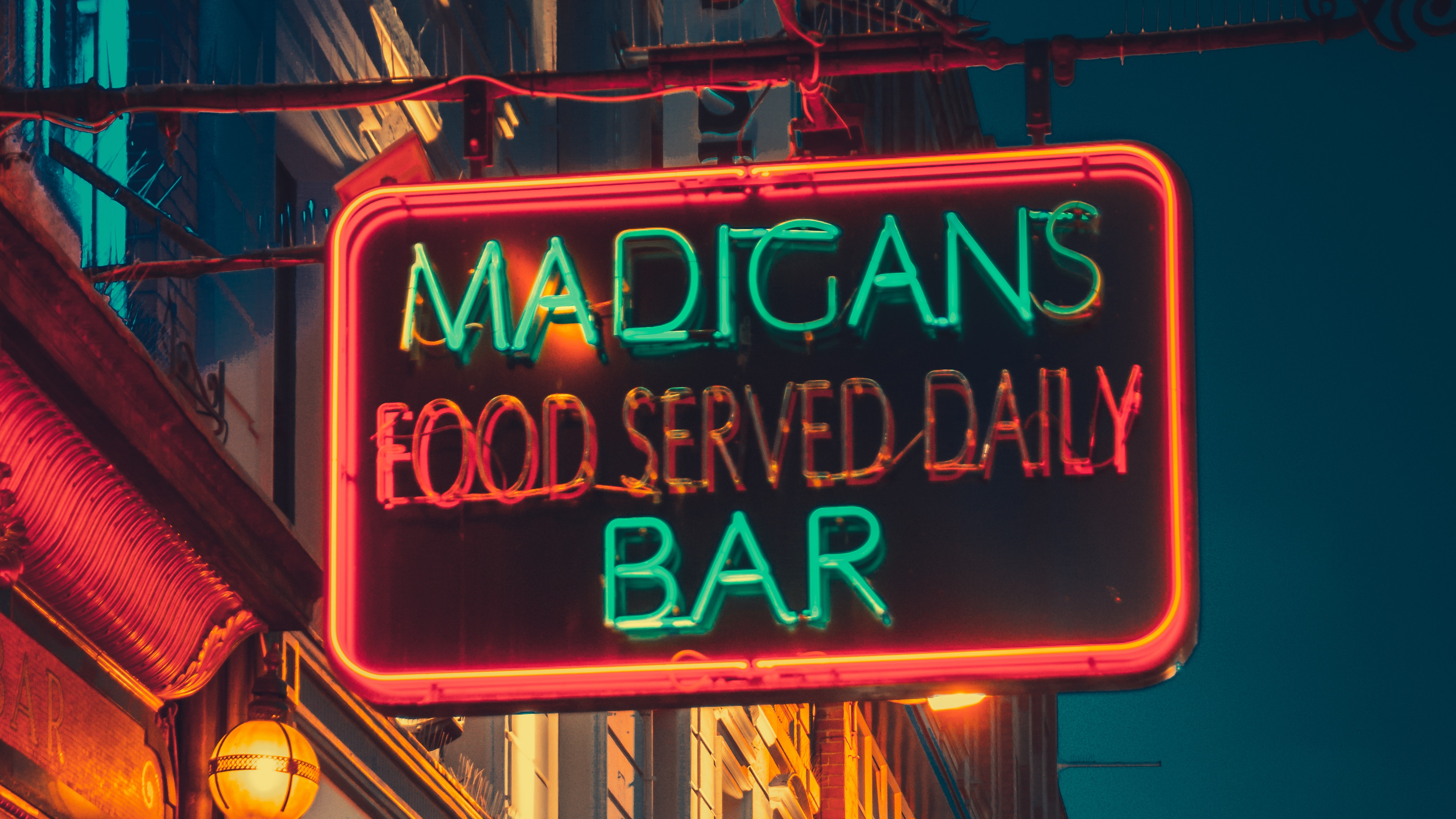
    Madigans Bar on Amiens Street. Photo by Lucian Petronel Potlog via Pexels.com

    The 15th of March brought with it the closure of all pubs in the country as a result of concerns over the then-new virus COVID-19. 

    While wet pubs in other counties were given the green light to re-open on the 21st of September, Dublin’s pubs were told to remain shut due to a rise in positive coronavirus cases. Now with the introduction of Level 5, it will be another four weeks at least before they can even consider welcoming patrons in again. 

    Eager pub-goers in the capital have certainly been missing the act of heading to their local for a few rounds with their friends. 

    However, one Facebook group has come together to recall times spent in their favourite pubs over the years and share retro photos of long-gone spots. 

    Set up in 2014 by a group of Dubliners, Old Dublin Pubs looks to bring nostalgic memories of popular watering holes together. Some of the charming images shared there are of pubs that shut their doors before the new millennium, while others only shut their doors in March.

    Regardless of if the pubs have still traded up until the pandemic, the group asks members to focus on pre-2000s images and stories. 

    Throughout the hundreds of photos on their page, you’ll find familiar places such as the Brazen Head, The Liberty Belle and Toners, as well as pubs that have long since shut down or changed their name. Some of the images even go back as far as the 1900s. 

    Under each photo are comments from strangers around the county. They recount memories of lively nights filled with song, dance and conversation

    Some photos feature famous faces in their local pubs such as The Dubliners, Phil Lynott and even Christy Brown. 

    Pub adverts are also featured on the page, which can bring a whole new level of nostalgia to the group members. One 1967 ad for The Embankment in Tallaght reads, “There you can leave behind congested city streets, park your car in the roomy car park, take a seat in the spacious Lounge, and relax over your drinks to the best of entertainment.” 

    Tony Carey from Tallaght had his first pint of Guinness in the Tap Pub in Chapelizod in 1964. Four years later, he became a distillery delivery driver until 1986. Carey would deliver to pubs across the country as well as in Dublin City. He recalls that in those days, bartenders would offer free pints to their delivery drivers. 

    For Carey, going to the pub was not about alcohol. It was more a social event than an opportunity to drink.

    Joining the Old Dublin Pubs group allowed him and many others like him to recall the golden days in their favourite spots. 

    “It’s like going down memory lane of one’s social life of the past.” He said.

    The group helps people to relive the joy of heading to the pub in pre-Covid times. Carey said, “It’s important to remember the Dublin culture of socialising in different ways, and of the enjoyment of being part of that and remembering friends present and past who were part of your life.”

    Old Dublin Pubs now has 5,100 members and will allow anyone with an interest in getting nostalgic over some of Dublin’s greatest pubs to join.

  • How has the Covid-19 pandemic changed cycling in Dublin City?

    How has the Covid-19 pandemic changed cycling in Dublin City?

    Since the start of the Coronavirus pandemic, people have looked for alternative methods of travelling to avoid busy public transport. Eibhin Kavanagh investigates how the pandemic is affecting cycling in the city.

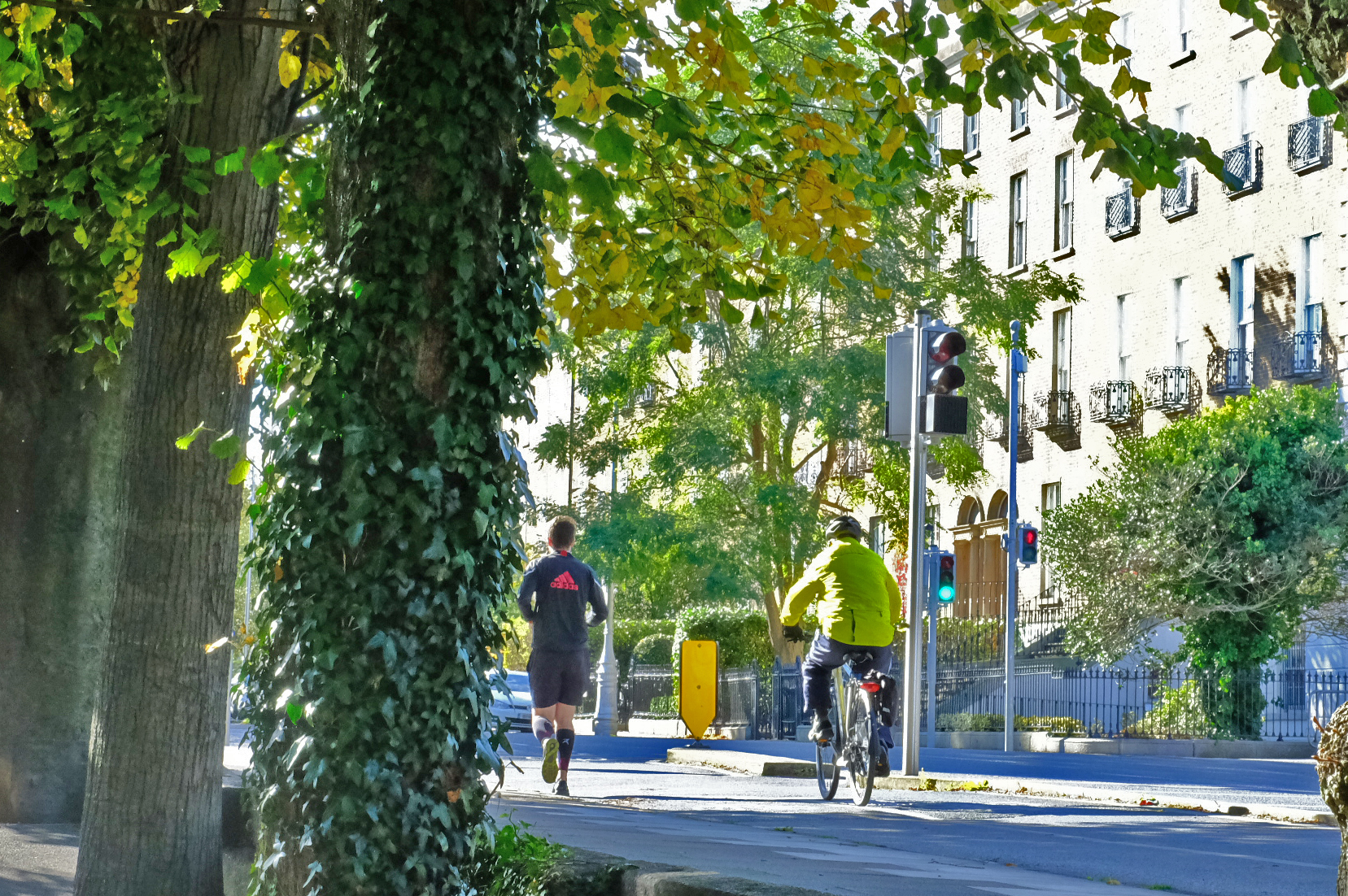
    Is cycling in Dublin City safe? Photo by Eibhin Kavanagh

    With our movements once again restricted, people in Ireland are limited to travelling within 5km of their homes. Walking and cycling have become a more popular means of exercising as a result of gyms closing and sporting events being cancelled.

    In the last ten years, Dublin has seen an increase in the number of people cycling. A number of bike share schemes have become well established. However, 2020 has seen an exponential increase in cyclists, which Dublin City has had to accommodate. This change, due to social distancing restrictions, means more space is required for both pedestrians and cyclists to make their way around the  city.  

    Councillor Michael Pidgeon talked to The City about the recent changes related to cycling in Dublin City.

    “In some ways I think the people are ahead of where the city is,” Pidgeon said. “We know that outside of peak hours there are now more people cycling than there were at this time of the year last year; there’s been a huge increase.”

    Dublin City Council projected  a 200% increase of cyclists in Dublin City from 2019 to 2020.This would be an increase from 13,131 to 39,000.

     2019 FiguresLikely Future ChangePotential Future Figures
    All Public Transport116,28780% Capacity Reduction30,000
    Car57,985Approx. 30% reduction41,000
    Taxi2,661Assume 30% reduction1,900
    Walk24,691Target 100% increase50,000
    Cycle13,131Target 200% increase39,000
    Goods983No change1,000
    Motorcycles1,485No change1,485
    Total (persons)217,223 164,385
    Source: Dublin City Council 

    Source: Dublin City Council 

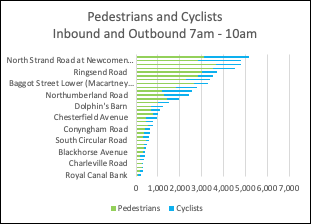
    The Canal Cordon Count was analysed by Dublin City Council to determine where the greatest demand for walking and cycling was recorded. The table below shows the number of people crossing the canal cordon (both directions) during the morning peak period from 7am to 10am in November 2019.

    Source: Dublin City Council 

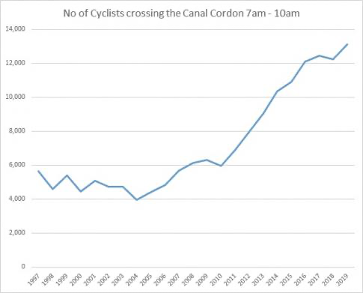
    From 1997 to 2019, the number of cyclists crossing this cordon heading into the city centre between 7 am and 10 am increased by 133%, from 5,628 to 13,125.

    The number of cyclists remained between  4,000 and 6,000 between 1997 and 2010 before increasing by approximately 15% year on year until 2015 when the increase slowed up until 2017.  There was a small decrease in 2018,  but cycling numbers increased by 7.3% in 2018 and 2019. 

    Source: Dublin City Council 

    According to research conducted by the Road Safety Authority, 4 in 5 cyclists are injured on urban roads. More cyclists are  injured during morning and evening commutes. Of all collisions involving another vehicle – 4 in 5 cyclists are injured by cars. 1,056 cyclists were injured in collisions in 2018.

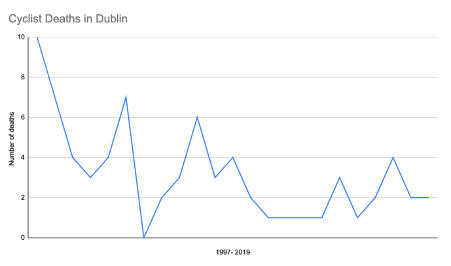
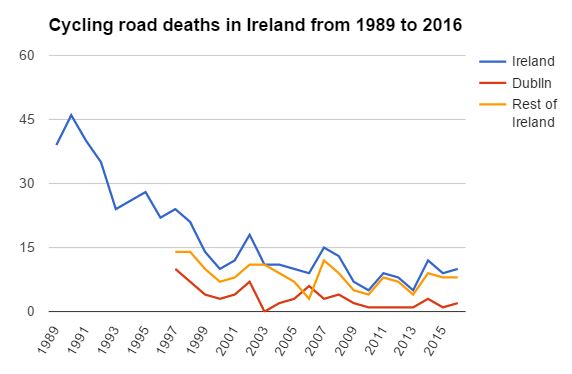
    In Dublin, the number of cyclist deaths since 1997 has remained relatively low with a slight increase in 2017, according to figures collected by the Road Safety Authority.

    Image Source- Irish Cycle.com

    Dublin has over 120 miles of cycle routes. While changes have been ongoing to improve cycling infrastructure in the city, especially since lockdown in the spring, the demand is high for safe and accessible cycling.

    “It felt like at the start of the pandemic there was a real understanding that we needed to take more space for cycling to encourage more people to do it, but it feels like that momentum has dropped a bit,” said Pidgeon. “So, I think that we need to get that going again.

    “In terms of infrastructure, I think the big changes we have seen are some of the temporary measures along the quays, particularly along the northside quays.”

    Some of the Cycle Safety interventions introduced since April include the installation of Nassau Street contra-flow cycle track from Clare Street to Dawson Street, the partial installation of key sections of the Interim Liffey Cycle route, removal of on-street car parking from Inns Quay and Ormond Quay, and a section of work from Church Street to Ha’penny Bridge, according to Dublin City Council.

    Dublin City Council also discussed other plans to ensure safe cycling in the city, including the reduction of the number of traffic lanes to accommodate protected cycling facilities on both sides of the road, while maintaining a balance for other required services. While there have been major changes made within Dublin City Centre to ensure safe cycling, other parts of the city have yet to see changes that will make cycling accessible and safe.

    “One of the things is to start looking at the urban villages, so instead of just focusing on the very core city centre, you would be looking at areas like Inchicore, Rialto, Stoneybatter, Phibsborough, Rathmines,” Pidgeon said in relation to making cycling consistent for everyone.

    “What we seen in the pandemic is that people are happy enough to stay within a few kilometers of where they live, so we shouldn’t just be designing a cycle lane with a view that will just take office workers from the suburbs to the city centre, because that’s not what the demand is right now. That’s important, we should definitely do that, but it will have to also be about making sure that local routes around your home are safe.

    “There’s still a lot to do, but equally I’d like to say that cycling in Dublin City is safe. There’s a perception of danger that I don’t think is entirely there. There’s a lot the city needs to do to feel a lot safer and be safer with segregated lanes, but if anyone’s considering it, I’d say just ask a friend who does cycle regularly and they can show you some good routes give you some tips and you’ll be up and running in no time.”

  • The 2020 International Literature Festival in Dublin

    The 2020 International Literature Festival in Dublin

    The International Literature Festival Dublin has revealed the programme for this year. And like many of this year’s cultural events affected by the pandemic, this programme will take place online. Dhai Almutairi chats with those involved in the upcoming virtual festival.


    Photo taken by Michael Casey. Sourced from Flickr.

    Joey Kavanagh from the International Literature Festival Dublin spoke to The City about this year’s programme. 

    “Normally the festival takes place in May with physical events that people can attend in person, but due to the Covid 19 pandemic, we had to postpone this year,” said Joey Kavanagh, 

    The programme is scheduled to run from the 22nd to the 28th of October 2020. It offers pre-recorded conversations, live streams, and podcasts for literary fans of all ages.

    Dublin City Council initiative, International Literature Festival Dublin annually presents a collection of great Irish and international authors and artists, and this year is no different.  

    There is a new podcast series, Tall Tales, which will feature interviews with children’s writers for the younger readers.  

    There will be discussions on representation in children’s books, book recommendations, and tips on how to get children reading.  

    The lineup of authors for younger readers includes Frank Cottrell Boyce, Adiba Jaigirdar, David Stevens, Sharna Jackson, Chris Riddell, Laureate na nÓg Áine Ní Ghlinn, Lorraine Levis, and David O’Callaghan, as well as events with Oliver Jeffers, Onjali Rauf, Robin Stevens, Sinead Burke, Chris Judge, Maggie O’Farrell.

    There will be a fun family writing workshop with Gerard Siggins and the innovative Buggybird art and story workshop with Niamh Sharkey and Mary Murphy.  

    The lineup of participants for grown-up readers includes international famous authors and artists like Roxane Gay, Yanis Varoufakis, and artist Ai Weiwei. Irish participants include Roddy Doyle, Mark O’Connell, Elaine Feeney, Bob Geldof, Anne Enright, and Patrick Freyne. 

    The International Dublin Literary Award’s recipient will be announced during the festival. In its 25th year, the International Dublin Literary Award is the world’s most valuable annual prize for a single work of fiction published in English, with the winner receiving €100,000. 

    “The nomination process for the Award is unique as nominations are made by libraries in the capital and major cities throughout the world,” said Mr Kavanagh.

    He added, “Participating libraries can nominate up to three novels each year. Over 400 library systems in 177 countries worldwide are invited to nominate books each year.”

    The novels on this year’s shortlist were nominated by public libraries in Canada, France, Germany, Greece, Ireland, Jamaica, New Zealand, Poland, the UK, and the USA.

    The Award is open for novels written in any language and by authors of any nationality, given the book has been published in English or has an English translation. The Award will be announced on Thursday the 22nd of October, at 11am. The shortlist includes one Irish author Anne Burns, author of Milkman, and winner of the 2018 Man booker Prize for Fiction. 

    Lord Mayor of Dublin and Patron of the Award, Hazel Chu, applauded the Award for the opportunity to promote Irish writing internationally and promote excellence in world literature. 

    “It’s more important than ever that Dublin City Council does its best to support the Arts in such challenging times, and the International Dublin Literary Award is a huge statement of encouragement for writers.” said Lord Mayor Chu.

    The International Literature Festival Dublin has also started a new initiative, ‘Compass’, a series of events that celebrates contributions and stories of those whose roots lie outside of Ireland. 

    “With the Compass initiative, ILF Dublin is showcasing new voices and fresh perspectives from a number of people now living in Ireland whose roots lie outside of the country,” explained Kavanagh. 

    “Following an invitation for proposals in February 2020 from Black, Asian and Minority Ethnic (BAME) individuals and groups with stories to share, six events will be presented next week in the festival,” he added

    The themes explored by the six events include the concept of Irishness, migration, and the power of language, stories, and multiculturalism with art forms ranging from poetry and theatre to music and dance. 

    Compass’s six events are free to attend, but the festival is inviting donations from audiences, and the donations go directly to the artists and writers in the programme.

  • In Pictures: #EndSARS Protest takes place in Dublin

    In Pictures: #EndSARS Protest takes place in Dublin

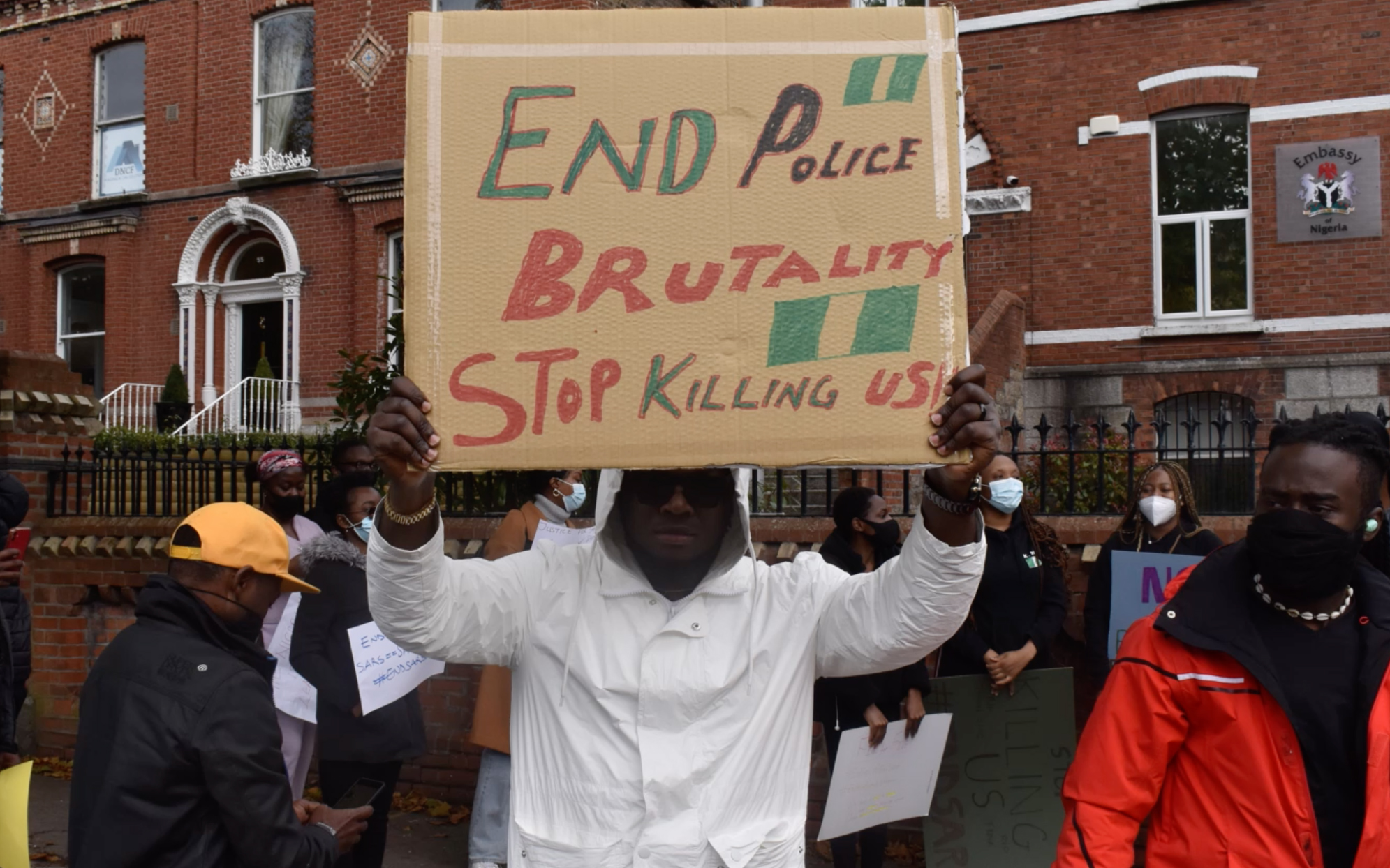
    Nathan Davies attended the #endSARS protest in Dublin last week, bringing you images from the event and opinions from protestors on recent police brutality in Nigeria.

  • Good Vibrationz continue to operate outdoors as Dublin remains in Level 3

    Good Vibrationz continue to operate outdoors as Dublin remains in Level 3

    Events host and organiser Good Vibrationz are continuing to operate their events outdoors, despite last week’s news that Dublin will remain in Level 3, with the rest of the country joining them and Donegal. Erica Carter discusses with them how they’re adapting to the new restrictions.

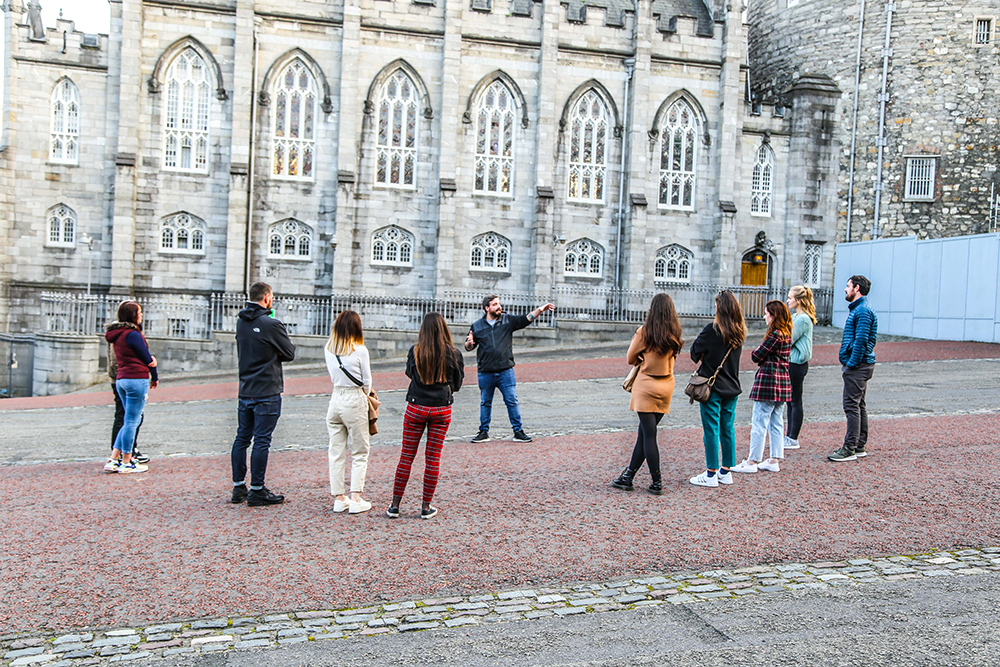
    Good Vibrationz Street Walking Tour. Photo taken by Diarmuid Montgomery Clery.

    Based in Dublin, Good Vibrationz are a collective of artists, filmmakers and self-proclaimed “messers”. They are known for their Photo Walks, Drink and Draw classes and Dublin Night Tours. They resumed their photowalk events in July, after being out of action for months.

    “The response has been so good,” said Diarmuid Montgomery Clery, one of the organisers. “Despite the lockdown, it seems people are more eager than ever to get back out there and have fun.”

    In order to comply with public health guidelines, Good Vibrationz have reduced the capacity of their events by 70%, allowing only 15 people on their outdoor photo-walks and tours. “It’s going to be tough but sure look, be grand,” Diarmuid said. Their walking tours are back on every Saturday and Sunday, with a whole host of new themes, including a music based walk, starting in the days of Dublin folk music and ending with the emergence of Irish hip hop. 

    Image courtesy of Good Vibrationz.

    Back in September Good Vibrationz started hosting their events in their new city centre space, the Arts Bar – however mere weeks later they were forced to close their doors as Dublin entered Level 3 restrictions.

    The Arts Bar is a new pop up gallery and events space on Francis Street in Dublin City Centre, above bar Drop Dead Twice. They were operating with a full bar and food menu.  “The new premises is a commission free art gallery and artists are welcome to put on shows and keep all the profits and our team will help with the production free of charge also,” explained Diarmuid. “We’ll be hosting our own events, classes and shows to keep it financially viable.”

    Despite all of these plans, the Arts Bar has had to postpone all of its indoor events. “It’s really hard because we put so much into the project then had to close so soon after,” expressed Diarmuid. “For us it’s about constantly trying to innovate to survive.”

    “For us it’s about constantly trying to innovate to survive.”

    “We know that when this is over the demand for our events will go through the roof. We just need to be able to keep paying all the bills and staying focused – I’ve noticed lots of friends who have been forced to leave the event industry and we don’t want that to happen.”

    Good Vibrationz’s walking tours have proved very popular as an activity people can still partake in safely amid restrictions, but Diarmuid is concerned about the future of the tours as the weather grows colder: “It’s going to become more difficult but it just means we need to be the best we can be,” he asserted.

    If Dublin moves to Level 5, they’re prepared for that scenario too. “We have started virtual walking tours and events through our new brand Alternative Experiences.ie,” Diarmuid explained. “Thankfully we’ve gotten a few bookings from various organisations and previous clients even before we launched so that was a great motivator.

    “We are also launching several more events at home including a Christmas crafts set that people can create at home with our instructor!”

    Businesses have been forced to adapt and get creative during the Covid-19 pandemic, and Good Vibrationz are certainly doing the most to keep going during such a dark time.