Tag: dublin

  • ‘It’s time to stop being nightwalkers’: Identity coach Ché Fegan on creating a new landscape for gay men in Ireland 

    ‘It’s time to stop being nightwalkers’: Identity coach Ché Fegan on creating a new landscape for gay men in Ireland 

    Ché Fegan. Photo Credit: Alex O’Brien 

    In a time where many gay men still struggle to find themselves, Ché Fegan is making space for them to feel more honest and aligned with themselves. Following his own struggles and travelling the globe, Fegan reflects on his journey to finding himself.  

    By Kelly Smyth 

    As toxic masculinity and identity politics dominate the online world, identity coach and wellness practitioner Ché Fegan is making space in the real world for gay men to stop chasing validation and embrace who they truly are. 

    Hailing from a rural town in Northern Ireland, growing up wasn’t always simple for Fegan. “From a younger age I was always odd. I had this wild imagination and connection with the outdoors. I was very sensitive and in tune with my emotions,” he said.  

    While this was seen as acceptable for a young boy, things changed as he entered puberty, which is when he believes many men in Ireland are taught to deny who they are in favour of society’s masculine model. 

    “Once you hit puberty, you begin to look like a man instead of a boy. You are kind of pushed away by the men in your life. You are told ‘don’t feel anything’, ‘man up’, ‘toughen up’ – to fit into those already established gender roles. For men, that often means killing everything inside you,” he recalled.  

    For Fegan, being a young gay man caused issues; his sexuality attracted bullying. “It was a place where something different was a curse rather than a blessing,” he said. 

    Despite this, Fegan’s sexuality was a guiding light for who he wanted to be. Although it was “distorting” to be both gay and facing up to masculinity as a young man, his identity brought a real drive for equity in his heart. 

    “My homosexuality gave me a lot of needed fight, and I’ve always had a strong sense of fairness. It fires something up in me,” he said. 

    While this drive to move forward carried him through his teenage years, he found himself battling his identity and sexuality through his twenties. “As a man, regardless of sexuality, you can still go through identity issues. You tend to figure out things behind the scenes. It could be arguing, travelling, hypersexuality. Anything to get away,” he shared.  

    Much of his young adulthood was spent travelling, with his move to Australia finally breaking the cycle of battling his own identity. 

    “Between twenty-eight and thirty I lived in Australia, and I felt incredible loneliness. It was a moment when I was finally feeling. I remember thinking ‘this is f-cked up’ because I should have been able to feel comfortable by myself. But I felt like a stranger in myself. I thought I knew myself, but really, I was just a people pleaser. I had never truly known who I was,” he revealed.  

    This revelation is ultimately what led Fegan to spirituality, beginning with reiki before embracing breathwork, yoga, and sound healing. Part of his spiritual journey was almost serendipitous, with a book on Buddhism he found on the streets of Berlin introducing him to new ideas and a “broadening of the mind”. 

    Embracing wellness has led him to learn more about himself. Now he is ready to share it with others. “I am at a point where I know things now that I want to share. I want to help people feel how I feel now,” he said. 

    Ché Fegan leads one of his breathwork classes. Photo Credit: Ciaran Gildea. 

    Hearing more and more about men in Ireland struggling with their mental health and suicide, Fegan decided it was time to create space for men to find themselves. He also noticed gay men in particular had no spaces beyond nightlife.  

    “If you don’t drink or don’t go out it can be very isolating. It’s time to stop being nightwalkers and time to be seen and heard,” he said. “The space I want to create is based around community. I want to start getting men together and create an environment of softness.” 

    Part of how Fegan is doing this is by offering Men’s Circles, where any man can go to experience somatic movement, breathwork, and a sound bath aimed to help them reconnect with themselves. 

    Additionally, Fegan runs retreats for gay men to help them break harmful patterns surrounding their identity. 

    “Because the gay community is so new in terms of history, so many patterns of harm are repeating regarding shame. I want the next generation of gay men to heal. Why not rule out hate all together?” he said.  

    While many men who are on this journey tend to be older, Fegan reaffirms “the door is open to anyone who wants to come”. 

    “The work I do is about helping men slow down and actually reconnect with themselves through breathwork, nervous system work, and deeper pattern awareness. It’s not about fixing them. 

    “It’s about helping them understand themselves, so they can stop performing and start making choices that feel more honest and aligned with who they are. I think a lot of men are quietly dealing with this, but don’t always have spaces where they feel safe enough to explore it. That’s something I’m trying to change through the work I do.” 

  • “That was a light I had never felt before” 

    “That was a light I had never felt before” 

    The journey to New York and the unexpected encounter of discovering God beyond Catholic beliefs. 

    By Samuel Adeleke 

    From the rave club to the altar, Samuel Walsh, a 22-year-old Irish man, has come a long way, He was born into a Catholic family and studied biochemistry at UCD.  

    Although he has always been passionate about science and biology, he made a big switch to sales and business. 

    He has always been interested in sports and trained in taekwondo, football, and hockey when he was younger.  

    Walsh had a much stronger desire to know God beyond just a household religion. “I grew up as a normal Irish teenager not knowing God,” he said.   

    “When I got to college, things got ramped up, I started partying a lot and got surrounded by the wrong crowd 

    “I remember I had just finished my school leaving certificate examinations when my friends and I started smoking throughout the week, and it grew from there,” Walsh said. Not only did Walsh develop the habit of smoking weed, but it also became a gateway to many more. 

    Things got worse when Walsh started his first job. “My manager was a DJ, and he invited me into the rave scene, and as a naïve teenager, I joined and started taking rave drugs and was also consumed with the lust for women.” 

    While Walsh believed he was fulfilling his desires and turning fantasies into reality, he soon faced an internal spiritual conflict that brought awareness of his identity. “I felt terrible, I was going away from myself and going down a way that leads to destruction,” he said. 

    However, the change that this awakening would bring about didn’t occur until Walsh spent a summer holiday in the USA. “Two years ago, there was a visa that allowed Irish students to spend a summer abroad, and my friends from college and I flew to New York and worked as bartenders for the summer.”  

    “As young Irish guys in New York, we were enjoying ourselves, smoking and partying,” he said. 

    One day in New York, Walsh had an encounter that would change his life. “I met this young woman in a smoothie shop. She asked what my name was, and then asked, ‘Do you believe in God?’” Without hesitation, she started mentoring Walsh in Christianity, faith, and the truth of God’s word. 

    “That was a light I had never felt before, a moment I clung to, and at that point, everything just fell into place.” “I felt this need and a calling to step into the light.” He said. 

    Photo Credit: Samuel Adeleke

    With this calling came the need to move from darkness and from the friends who wanted to pull him back into that world 

    “It was difficult, but God really provided me with light to step into, and I am eternally grateful for this,” Walsh said.  

    “It was truly an inner knowingness and an inner certainty placed in my heart and in my soul by God, an alignment I couldn’t turn down,” he added. 

    Although Walsh acknowledged that he had a religious inclination growing up with his dad being Catholic and his mother a Protestant, he said, “they were just labels, they were not practicing at all, my dad used to when he was a child, but not anymore.”  

    But Catholicism was also deeply woven into Irish life, shaping not only people’s beliefs but also their cultural identity. “The Catholic Church was the government back in the days. They controlled everything, so they had a lot of power.” Walsh said. 

    “Catholicism never interested me as a child; that’s why I never touched religion because I saw it as slow and boring, but when I first heard about Christianity in New York, it was like a fire, a spark of energy, this flow of the Holy Spirit that I’d never felt before.”  

    “While Catholicism involves a lot of traditions and rituals, Christianity is very relationship-centered,” said Walsh. 

    Walsh, who was concerned about how his parents would react to his shift from Catholicism to Christianity, was pleasantly surprised by their reaction.  “They were surprised because they never expected it, but they were happy for me.” 

     By extension, Walsh’s friends began to see changes in his personality.  “I used to be very arrogant before Christ, but afterwards they saw that I acted and treated them differently,” he said.  This in turn prompted a change in his friends, some of whom have started going to church themselves.  

    Not only did Walsh start attending church, but he also joined a Christian community on campus, where he continued to grow his faith.  

    This community gave him the opportunity to share his testimony of newfound faith in just two months into his journey, in front of about 100 people.  

    “I was nervous, but it was a great opportunity and a moment to express what God has done in my life,” he said. 

    From sharing his testimony to just 30 people, Walsh was also allowed to preach during communion in his church in Tallaght and to the larger young congregation at St. Mark’s Church in front of 2-300 people.  

    “From there God has just been taking me from step to step and I think that’s how he works” he said.  

    “If he can trust you to speak in front of 30 people then he can trust you to speak in front of 300 people but you must not jump the steps.”  

    Photo Credit: Samuel Adeleke

    With such great momentum Walsh has experienced in such a short time, from raving in the club to becoming a spotlight on the altar, he has been enjoying the presence of God that has humbled him and kept him grounded.  

    But “Christianity is not all rosary, it is a difficult journey that brings hardship, slander, and persecution, but we are grateful that we have the grace of God through Christ, which helps us get through it and be victorious,” Walsh said. 

    While Walsh mentioned that he will not shy away from an opportunity to explore Catholicism as an adult, he said, “young people trapped between the Catholic traditions and Christianity as a way of life, should read the word of God, seek counsel from older Christians, and not be afraid to explore different churches.”  

    “Find a group of Christians or mentors who can guide you along your path. If you try to search for God on your own, you might find reasons to fall off.” He added. 

    Walsh saw the church as a wonderful community.  

    “The church is one of the most welcoming places on earth. When I am in church, I feel this overwhelming sense of welcome around the church, and now I call it my second family because that’s what they truly are,” said Walsh. 

    For Samuel Walsh, the trip to New York was more than just a summer vacation; it was a moment when he encountered the light of God’s word, a time that helped him understand Christianity beyond tradition and gave him the chance to share his testimony. He now invites others to see that same light by sharing his story. 

  • Far from home, Poojan Mahajan builds Sui Dhaghaa

    Far from home, Poojan Mahajan builds Sui Dhaghaa

    The clothing brand Sui Dhaghaa is the story of Poojan Mahajan’s journey of creativity and resilience. When Mahajan moved from India to Ireland for her studies, she never imagined she would build a clothing brand that blends South Asian traditions with a new country.

    Poojan Mahajan in a Sui Dhaghaa outfit. Photo Credit: Poojan Mahajan

    “I was having an Indian Masala Tea and thought I needed to do something to feel more confident, not lost in life. I wanted a pathway to success,” she said


    With ambitions in her suitcase and uncertainty in her heart, she arrived in the unfamiliar streets of Ireland in 2018 and navigated emotional challenges. “I did not have a plan to start a business here. I finished my master’s in international business at the University of Limerick, landed a new job, and once you have a job, it feels like you have a stable career, but I was not happy. I was doing marketing in a construction company,” she said.


    Thousands of miles from home, Poojan Mahajan was often shadowed by the sense of not belonging. “I was in a foreign land, but still missed home. I missed the feeling of belongingness,” Mahajan said, “I realised I need to build something for myself; I am the one who will be recognised. This is how I thought of starting the Sui Dhaghaa.”


    Mahajan’s Sui Dhaghaa- meaning needle and thread – symbolises connection and simple tools that stitch pieces of fabric together. “I want to connect it back to my origin. And if you tell someone in English that it means needle and thread, they will connect as well. To me, needle and thread stress the meaning of boutique,” she said.


    For Poojan Mahajan, it has become a way of bridging cultures in Ireland, keeping traditional roots alive. “I noticed the local community wanted to find out about Indian wear. People could not travel back to India that often, so that’s where I see a huge demand, but there was no supply,” she said. “I do stitch here; get dresses altered, but get my raw materials from India because you cannot get that clothing in Ireland.”


    Mahajan believes that not every passion is taught; some are passed through inheritance. “It is not always what you studied; sometimes it is what you inherited from your parents. In India, my mother and my father run a clothing business. I have seen my parents since childhood working on it, so I know how to do it. I know the basics; I need to upskill and learn how to do business.”


    Turning the idea into reality comes with a set of emotions, doubts, and determination. “I first started to build Sui Dhaghaa in 2023, but at the beginning, I feared judgment and how the public would respond. That was the first question,” Mahajan said, “and the second was how I would even start. I did not have a team. I had to do everything on my own. I have experience in International Business, and I know tricks and ways that I could facilitate building a brand.”


    Despite her doubts, Mahajan’s idea began to take shape in Lucan, Dublin. “In a foreign land, it was challenging to start; how to comply, how to really start. I just took a leap of faith and opened an Instagram page. I come from marketing; I know that social media would help reach a mass audience and could save huge amounts on advertising.”


    The challenge, she says, was straightforward. Building something from scratch comes with some hurdles. “Operating a business in a foreign land is very different,” she said, “I face the challenges in the supply chain, with logistics proving the complicated part. If you ship something from India, it takes much longer. The expected time could be 10 to 15 days; realistically, it could take a month.”


    For Mahajan, some challenges are unavoidable and are a part of the process. “In this situation, there is not much you can control; you must give it time.”


    With hard work and dedication, Mahajan began to earn customers’ trust. “I now have more than 500 clients, and we are currently delivering all over Ireland. It’s not only the Indian diaspora. But now Indian and Irish weddings are becoming more popular. The people were delighted that they didn’t have to travel to the UK to buy dresses for such events now.”


    “I remember the milestone in this journey when I prepared dresses for 11 bridesmaids, and it was a life-changing experience and gave me confidence to do a job for someone,” she said


    Through Sui Dhaghaa, Mahajan created a space for women to bring their own vision of clothing to life. “I realised it was a means for women to customise dresses as they like. It gives women the freedom to bring their own fashion ideas to life,” she said.

    Photo Credit: Poojan Mahajan

    Mahajan’s little wins and passion aim to expand her business. “I am trying to make efforts to extend it to larger audiences. I am also trying to get on Amazon.”


    Looking back on her journey of Sui Dhaga, she carries a simple message, “Until you don’t try, you don’t realise your potential. Initially, it does not have to be perfect. At least put yourself out there, be vulnerable, and have a zeal to learn. It is only about taking a leap of faith in yourself because if you don’t, no one else will.”

  • Iconic Blackrock landmark reopens as new ‘Mister Magpie’ café

    Iconic Blackrock landmark reopens as new ‘Mister Magpie’ café

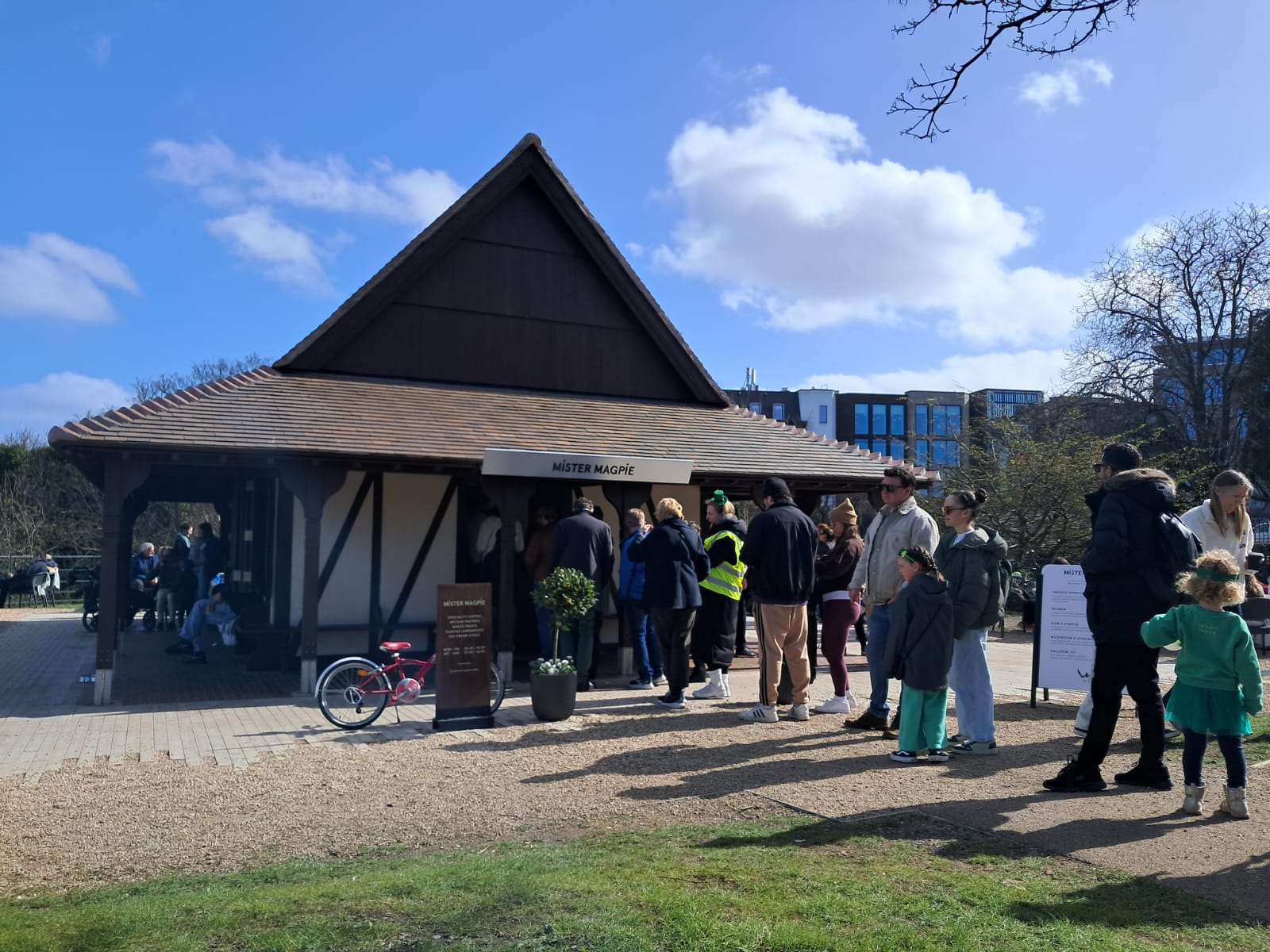
    Image: The reinvigorated kiosk, alive with customers – Photo credit: Oscar Meagher

    The newly restored Blackrock Tearooms has become the site of a new Mister Magpie café. The restoration is part of a larger development plan by the Dún Laoghaire-Rathdown County Council.

    By Oscar Meagher 

    A landmark of Blackrock Park has become the site of the new Mister Magpie Café.

    First built in the 1890’s, this historic kiosk has re-opened its doors following years of disuse.  

    The structure served as a residence for park staff until its closure in the 1970s. Reasons for its abandonment and the following decades of inactivity are unclear. 

    The restoration is part of a broader redevelopment plan focused on improving the park’s facilities and accessibility.

    Image: The Blackrock Tearooms, a month before its grand re-opening – Photo Credit: Oscar Meagher

    Plans to restore the landmark were first announced in June 2024 and is reported to have cost €1.1m.

    Damaged windows and timber elements have been replaced while the distinctive Tudor-style wraparound veranda has been fully refurbished.

    The structure is intended to become a new social hub for the renovated Blackrock Park.

    “Restoring a building of this age and character required significant conservation work, and we are proud to see it renewed in a way that respects its heritage while adapting it for modern use,”said Jim Gildea, Cathaoirleach of Dún Laoghaire-Rathdown County Council.  

    Image: Mister Magpie Blackrock interior – Photo credit: Oscar Meagher

    The site is the latest branch of the Mister Magpie coffee chain.

    Since its establishment in 2019, the company has grown significantly with locations in Ballsbridge, Leeson Street and Killiney Hill. 

    Image: The Blackrock Tearooms, overlooking the bustling park – Photo credit: Oscar Meagher

    “I used to cycle out to Blackrock, and I couldn’t help but notice how beautiful the building was,” said Bernard O’Neill, Co-founder of Mister Magpie.

    “It was so striking and contrasted the surrounding area beautifully.”

    Image: Newly installed seating areas provide a wide view of the park and coast – Photo credit: Oscar Meagher

    “It had great potential. It’s close to the DART line and has an amazing view of the sea,” he added.

    “It’s an ideal summer location.”

    Image: The busy streets of Blackrock Village – Photo credit: Oscar Meagher

    The surrounding Blackrock Village is home to many alternative coffee companies, which could either create challenges or business opportunities.

    “There’s a strong coffee culture in Blackrock that seems to have only grown since the pandemic,” said O’Neill.

    “I don’t view them as competition. More coffee shops only draw more people to the area.”

    Image: A Mister Magpie coffee, served on its own pedestal – Photo credit: Oscar Meagher

    Image: Ice creams being handed out via the outdoor-service station – Photo credit: Oscar Meagher

    “We make the majority of our food,” said O’Neil. “Our brownies and ice creams are proving to be very popular.”

    An outdoor service station dispenses drinks and delicacies.

    “Many of our customers are dog walkers, so we provide free treats for the pups and jellybeans for smaller children,” he added.

    “We refer to every one of our customers as a GUEST, meaning Give Us Extra Special Treatment.”

    Image: St Patrick’s Day draws in a large crowd for the recently opened cafe – Photo credit: Oscar Meagher

    The historic kiosk officially reopened its doors on March 11th as the new Mister Magpie café.

    “The reopening marks an important milestone in delivering the Blackrock Park Masterplan,” said Frank Curran, Chief Executive of Dún Laoghaire Rathdown County Council.

    “Restoring the historic kiosk is a significant improvement for both the park and the wider Blackrock area.”

  • You’re having a laugh!  

    You’re having a laugh!  

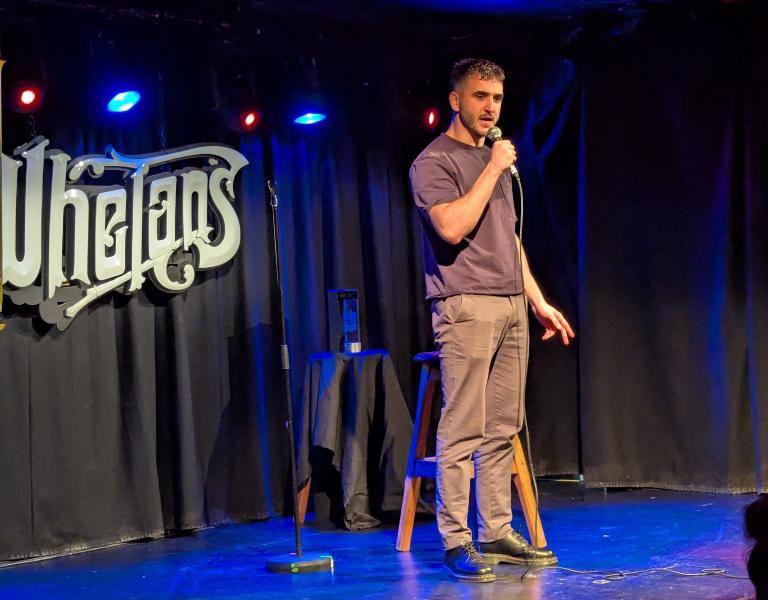
    TheCity caught up with up-and-coming comedian Darren Gaffney to chat about his first solo gig, the high and lows of live performance, and why getting barred from a place isn’t always permanent. 

    By Rebecca Reilly 

    Originally from the small village of Kilnaleck in County Cavan, which, according to Darren, had the record for most pubs per capita in Ireland, his upbringing was typical of rural Ireland. His mum is a nurse and dad a plumber, Darren was influenced heavily by the two f’s of country living – farming and football. “My uncle had a farm, so I spent a lot of time with him, playing football and going to mass – all that crack,” he laughs. A childhood that would be familiar to many rural inhabitants of Ireland, Darren maintains, is why his comedy hits. “People get it!”  

    Having been bitten by the performance bug early in life, Darren performed at Scór and Réadóirí competitions, both of which focused heavily on Irish culture. Participants would showcase the likes of Irish dancing, poetry, and music. “I remember there was a segment called recitations. I dressed up as a farmer and recited a funny poem. I always loved being on stage.” 

    Darren Gaffney. Photo credit:  Sinéad Murphy and Zoe Sanford 

    One would be forgiven for thinking Darren might have dived right into performing arts, but a more serious route came calling. “I did politics, economics and law in college. I thought it might become a TD for the craic!” But after a year’s Erasmus in Poland, Darren decided to bite the bullet and try to crack comedy on his return home. “I never thought about being a comedian. But I had a lot of friends who kept telling me I should do it. When I came back to Ireland, I signed up for an open mic on the Ha’penny Bridge.”  

    It was a daunting experience. “You don’t have a clue when you start, so I didn’t tell anyone. I kept it a secret and just drove up to Dublin,” he recalls. “The first gig went well, but I think on the second gig, I got drunk, and I was so nervous. And it went awful! I don’t drink at all now before going on stage.”  

    In 2020, COVID hit and like so many, Darren had to put his career on pause. It didn’t deter him; he was adamant he was going to succeed, a slog that was going to be much harder than he was prepared for. “You must have thick skin. Nobody cares about you at the start; you must fight for everything. If I knew how much work it was going to be, I don’t know if I would have done it!”  

    Darren Gaffney. Photo credit: Sinéad Murphy and Zoe Sanford. 

    A tenacious attitude led Darren to forge his own path, not to be dependent on others for his success. “That’s why I started a comedy club, Bite the Bullet, in the Cat and Cage in Drumcondra. Trying to book gigs at the start – you’re just another comedian; there are loads of them. Not everyone wants to help; you’re on your own, really. You get a bit of respect if you have some get-up-and-go.” Bite the Bullet comedy also runs in the Chelsea Drugstore in Dublin city centre, The Tap House in Ranelagh and an ad hoc show in the Imperial in Cavan – where, ironically, Darren was once barred from. 

    With his first solo gig in Dublin just around the corner (two sold-out nights in Little Whelans on the 12th and 13th of April and a third night added on the 14th), Darren says his comedy sets are very reflective of his genuine self. “I try to really like myself on stage. In real life, I’m always messing around. It’s high energy and unpredictable as hell,” he laughs. With a big emphasis on Irish life and growing up in rural Ireland, the 28-year-old draws his inspiration from observing life and interacting with the audience. “A lot of comedians look down on that audience interaction, but it was something I was good at from the outset.”   

    Observational and genuine comedy is something that has granted Darren success on TikTok, social media almost being a prerequisite for comedy now. Living a dual life online and on stage can come with its difficulties. “Stuff that works on TikTok might not work on stage and vice versa,” he said. “The stuff that comes out of nowhere is usually better. I was trying to think of content before a gig the last day, and I just came up with a video about how nobody puts children in the back of vans or cars anymore – and it blew up! I took it in one take. Other content I take a long time thinking of, maybe comes across a bit forced? It’s weird.”   

    Darren Gaffney. Photo credit: Sinéad Murphy and Zoe Sanford. 

    As the old saying goes, what goes up must come down, and being on stage has become something of an addiction to Darren.  “It’s such a rollercoaster of emotion; you come from the highs of your life to crushing lows,” he reveals. “You get home after being mental on stage for an hour – you can’t sleep. I was chatting to a comedian who was doing a small gig in London once, and he went walking around London and ran into Ricky Gervais, who was on his way to Wembley on a post-gig walk as well.”   

    “One time after a good gig in Mullingar, I was driving home, and the guards started following me. They stopped me and asked me if I was on drugs. I drove the whole way out of the road with no lights on! Since that moment, I’ll always chill for half an hour after a gig.”   

    Darren is hoping to do a tour of Ireland, and all going well, across the water in the UK. Like his comedy hero, Tommy Tiernan, Vicar Street or the Olympia is the primary objective. “Selling out either of those would be class. Although if I did that, I’d probably be thinking of the next thing. That happens to me a lot. But if I sold out either of those, that would be the dream.” 

  • Tibetan bowls, Botox and bee beds: a day at the Dublin Mind Body Experience

    Tibetan bowls, Botox and bee beds: a day at the Dublin Mind Body Experience

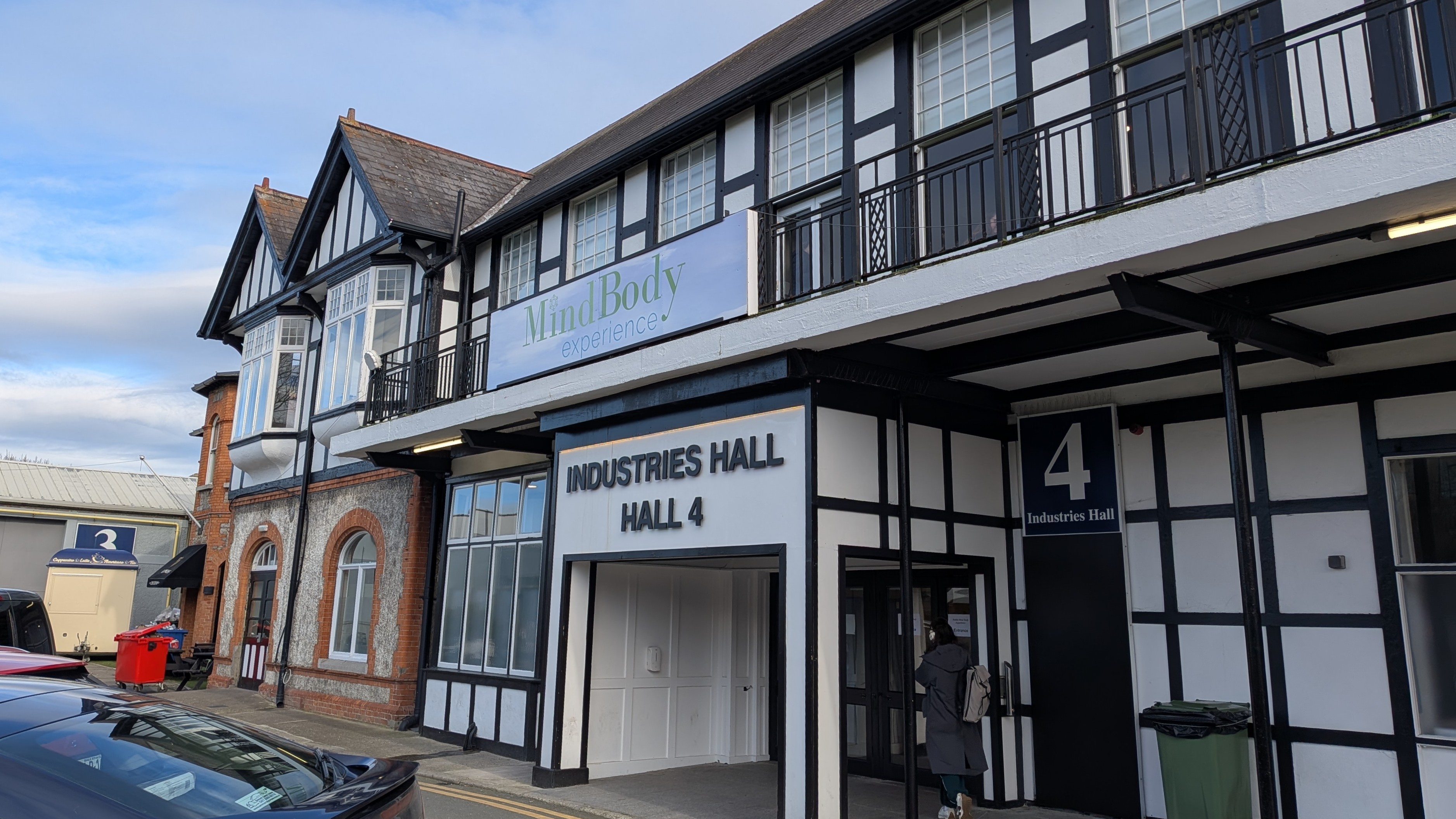
    The Dublin Mind Body Experience was held over three days at the end of February and the beginning of March, bringing together a variety of exhibitors in the fields of holistic health, yoga and general wellness.  

    By Adam Jackson  

    The scent of incense was thick in the air in the RDS hall four, with almost 200 stalls set up, displaying a variety of products and organisations.  

    The Dublin Mind Body Experience might have seemed overwhelming at first, with so many different things jammed into a relatively small area, but after doing a circuit of the hall, one would be likely to see something that attracted their interest.  

    The event was a combination of four different elements: the Mind Body Soul Expo, the Yoga and Meditation Festival, the Dublin Wellness Expo, and the Dublin Psychic Fair.  

    As well as exhibitors desperately trying to make eye contact with anyone window-shopping, there were those consistently drowning in customer inquiries.   

    A café area, where people could take a break from perusing the stalls. Photo Credit: Adam Jackson 

    Immediately to the left upon entering, was a stall that might be easy to miss, with the intriguing name Ballyhubbock Bee Beds.  

    Gillian Moody, who managed this stall, talked about her experience attending the Mind Body Experience for the first time, drawing particular attention to the difficulties that came with exhibiting bee beds.  

    “This is my first time ever exhibiting or even attending the Dublin Mind Body Experience, and I’m here for people to understand what bee bed therapy is,” Moody said.  

    Moody’s bee beds are beds filled with multiple colonies of bees, the idea being that the vibration of the bees’ wings has some sort of therapeutic property.  

    Understandably, Moody was unable to bring one of these beds to the event.  

    “For the likes of these shows, I don’t necessarily have something that people can sample. Some people pass the stand, and you can see the hesitant look on their faces,” Moody said.  

    Moody explained that although it was difficult to get people interested without something physical to show them, once she explained the concept of the bee beds, people became more interested.  

    “People automatically assume that it’s bee venom therapy or that they might get stung, but with bee bed therapy, you don’t physically interact with the bees,” Moody said.  

    Although Moody did not have the ability to bring along her bee beds, there were plenty of stalls providing samples of different therapies or simply selling products.

    One stall that sold a variety of tarot cards, among other things. Photo Credit: Adam Jackson

    There was an entire corner dedicated to psychic readings, as well as beds and chairs set up for various types of mental, spiritual and physical therapy.  

    One thing that was impossible not to notice were the gongs and other sound devices set up in various stalls, all to demonstrate something called sound therapy.  

    One such stall was set up by AOSTI (Association of Sound Therapists Ireland), who were there to promote entering sound therapy as a profession.  

    Jennifer Cruise, the chairperson of AOSTI, explained the practice as the use of certain sound frequencies as a form of therapy, using instruments like Tibetan bowls, crystal balls and gongs.  

    “We’ve been absolutely inundated with people,” Cruise said.  

    “This fair, which is the largest indoor holistic fair in Ireland, has had far more sound therapists this year than any other year.”   

    Cruise attributed this popularity to the ease with which most people can use sound therapy.   

    “Anybody can experience sound; you don’t have to be a musician, you just have to understand how sound affects people,” Cruise said.  

    Although human wellbeing was a major focus of the event, somewhat surprisingly, there was one stall set up for the wellbeing of non-human animals.   

    IAVS (Irish Anti-Vivisection Society) were there to spread the word about animal testing in Ireland, specifically focusing on Botox testing.  

    “We’re here to publicise the amount of abuses carried out on non-human animals every year, both in Ireland and the world,” Catherine Morrow, IAVS chairperson, said.  

    While the EU has banned cosmetics testing on animals, Botox testing is still allowed on a technicality.  

    “At the moment, we are particularly focused on campaigning against the testing of Botox on mice, which kills thousands of animals in Ireland every year,” said Morrow.  

    Morrow emphasised the existence of humane alternatives to animal testing that she said were “more reliable” and “far cheaper”.   

    The Dublin Mind Body Experience seems to have been the right event for IAVS, with plenty of interest coming from the event’s attendees.  

    “We’ve had crowds of people today, a number of vegetarian and vegan people coming to the stall, so they are automatically sympathetic,” said Morrow.  

    Later on in the day, the event was no longer quite so busy. Photo Credit: Adam Jackson

    Things were dying down by six o’clock, although the event was indoors, the skylight above made the waning light apparent.   

    There were no longer nearly as many attendees as there had been earlier in the day, and exhibitors were beginning to pack up their stuff and leave.   

    Exhibitors who had been previously eager to catch the attention of passing attendants were, at that point, comfortable with the lack of engagement, many of them using the downtime to read.  

    Like so many other things, the Dublin Mind Body Experience ended, slowly fading out.  

  • Bringing my culture, my soul, out with this place 

    Bringing my culture, my soul, out with this place 

    Inspired by the ancient civilisation of Mohenjo-Daro, Moenjo restaurant blends its centuries-old traditions with contemporary dining in Rathmines, Dublin.

    By Iqra Siddiqui

    Irish customers outside the restaurant are reading about Pakistani traditional cuisine, drawing attention to the Moenjo as a cultural bridge between Pakistani Cuisine and Irish dining culture. Photo Credit: Iqra Siddiqui/TheCity.ie 

    Moenjo Restaurant officially opened in Dublin on 9th February 2026. Founded by entrepreneur Afkar Ahmed, the halal Pakistani restaurant draws inspiration from the Indus Valley Civilisation. Serving traditional dishes prepared with authentic spices and recipes that bring the essence of Pakistani heritage to the plate.

    “To me, Moenjo feels like Munjho- in Sindhi language, it means mine,” owner Afkar Ahmed said. “It feels like my own. It’s personal.”

    The owner, Afkar, stands in front of the traditional poster of the Hallmark of Mohenjo-Daro, inside the restaurant. The vibrant pattern reflects the heritage of Sindh and the ancient city of Mohenjo- Daro. It inspired the restaurant decor and menu. Photo Credit: Iqra Siddiqui/TheCity.ie

    “I wanted to show where I am from, who I am, who this culture belongs to, how long it has existed, what these people do, what their contributions to the world are, because it seems like all the world has forgotten about it,” he said to TheCity.ie

    A traditional poster hangs on the wall of a restaurant.
    Photo Credit: Iqra Siddiqui/ TheCity.ie

    A traditional piece of cloth, “Ajrak”, is hung on the wall. Ajrak is a block-printed textile pattern. It represents a rich cultural and artistic ancient tradition.
     Photo Credit: Iqra Siddiqui/ TheCity.ie

    “We come from a huge legacy and history behind it. It is just a means to share the culture,” Afkar said. 

    “Ajrak patterns are inspired by the designs seen on artefacts uncovered at Mohenjo-Daro by British archaeologists. In our culture, it is used to honour guests to show a respectful gesture,” he said. 

    A framed piece of cloth representing the linguistic identity of the Sindh region, the archaeological site of Mohenjo-Daro.
    Photo Credit: Iqra Siddiqui/TheCity.ie

    “Bringing in the colours of Sindh, calligraphy, and a different wall art that tells you about the culture and history of a place,” owner Afkar said. 

    This corner of the restaurant features the prominent figure of Mohenjo- Daro and antiques. The painting of Priest King reminded one of the prosperous years of the Indus Valley civilisation. And the bronze Dancing Girl reflects the artistic expression and sophistication of the ancient city of Mohenjo-Daro. Decorative clay pots and handmade Pindi reflect the heritage and provide insights into the domestic household. The display revives long-standing cultural practices. 
    Photo Credit: Iqra Siddiqui/TheCity.ie

    The beauty of this landscape developed a culture of harmony and peace. This map traces the cradle of civilisation, telling how the Indus River connected the Himalayas to the sea, which historically enabled the city to thrive. Before it was ruined, the city was engaged in trade and counted among the world’s earliest cities to have proper infrastructure. 
    Photo Credit: Iqra Siddiqui/TheCity.ie

    “These people were Buddhist; these people were Hindus. People live there in peace and harmony, that’s what we wanted to show.”   

    These were not technical achievements but a route to cultural integration, where daily life, work, and culture brought the community together. 

    “This is the way to keep my culture alive. This is close to my heart. This is my soul on the walls. This is me on the wall,” Afkar said. 

    Inside the restaurant, the ancient city speaks, a place where cultures blend; people share a sense of belonging, and the restaurant embraces diversity.  
    Photo Credit: Iqra Siddiqui/TheCity.ie

    “The idea is to make this place a hub for cultural enthusiasts, so people come in and experience a new culture,” the owner said. 

    “A lot of Irish people, people from Pakistan and India, and a mix of different cultures are coming to taste the food and experience the newness of the place.” 

    “The Irish people have been extremely supportive. John Stephens was here, the Deputy Lord Mayor, to open the place,” he said 

    Chef Abid places the spice-marinated plump pieces of chicken onto a skewer, bringing the flavours of tradition to life.  
    Photo Credit: Iqra Siddiqui/TheCity.ie

    “It is more than work, but a way to connect with people,” Chef Abid said.

    The Clay oven is the secret ingredient to keep the tradition alive. This traditional oven tells a story of fire and flavours. This illustrates the culinary heritage of people in Mohenjo-Daro and other Indus cities. 
    Photo Credit: Iqra Siddiqui/The City.ie

    “Everything about this place refers back to the Indus Valley Civilisation,” Afkar said. 

    Sindhi Chicken Karahi, Roti, and Biryani serve the taste of homes miles away. The rich colour, spices, and the smell of food are a way to touch cultural roots. 
    Photo Credit: Iqra Siddiqui/TheCity.ie

    “This place is not just about food; It’s about storytelling,” the owner said. 

  • The ‘Vinted Effect’ in Ireland’s Thrift Economy 

    The ‘Vinted Effect’ in Ireland’s Thrift Economy 

    The rapid growth in resale platforms shows a shift in how young Irish consumers shop, as rising living costs accelerate a boom in Dublin’s thrift economy. 

    By Peace Okolo

    As inflation and the high cost of living continue to shape consumers’ spending habits, second-hand fashion has emerged as one of the fastest growing retail businesses among young consumers in Dublin.  

    Globally, the second-hand apparel market is projected to reach $350 billion by 2028, growing three times faster than the overall apparel market, according to the ThredUp 2024 Resale Report. 

    Recent research by PayPal also shows that over 780,000 adults purchased second-hand clothes in a single year, totaling more than €61 million, with Gen Z making up nearly half of this group. 

    “I love shopping secondhand fashion because a lot of the items are vintage, so you’re unlikely to look the same as everyone else,” said Sasha Robinson (20), from Dublin.  

    The clothing rack in a thrift store. Photo credit: Peace Okolo 

    Second-hand shops and online resale platforms like Vinted and Depop are expanding at a faster rate than conventional clothing retailers, and this growth is driven largely by Gen Z buyers. 

    Dublin college student Erin Murray said she initially joined the platform to find unique pieces at affordable prices. 

    “I started using Vinted about a year ago because I’m always looking for cool, unique clothes,” she said. “I love fashion, but as a broke college student it has to be done on a budget.”  

    Since launching into European markets, including Ireland, Vinted has seen an accelerated growth in consumer engagement and activity.  

    In 2024, the online shopping platform reported a 36% increase in global revenue (€813.4 million) and a 330% jump in net profit.  

    The company’s expansion into markets such as Ireland, Croatia, and Greece was cited as a key factor in this growth.  

    According to Vinted’s latest EU filings as of 31 January 2026, the platform had an estimated 29.3 million monthly active users across Europe, including countries like; France, the Netherlands, Spain, Italy, Portugal, Austria, Germany, Belgium, and Luxembourg.  

    The app lets people buy and sell second-hand items directly with each other, creating a large marketplace network. 

    “I sell on Vinted because my income is too small, and I buy on Vinted because I can’t afford to buy new,” Murray said. “It feels like the price of everything just keeps going up.” 

    Many young people in Dublin are now using these platforms not just to clear out their wardrobes, but as a way to manage the rising cost of living. 

    Kala Akinniranye, 19, said the rising cost of living has forced her to rethink how much she spends on clothing. 

    “The ads on Vinted were really enticing, the whole ‘get rid of clutter’ idea. It was well marketed,” she said. 

    However, affordability remains the main factor behind her interest in second-hand shopping. 

    “It’s more sustainable, but it’s also cheaper,” she said. “In this current economy, I can either buy clothes or buy food.” 

    She added that resale and thrift fashion have become normalized among her peers. 

    “All my friends use Vinted or Depop. Poverty is touching everybody right now.” 

    Holly O’Donnell, like many young consumers in Dublin, said the rising cost of living has increased how often she uses resale platforms. 

    “Whenever I want to buy something, I check Vinted first because it’s nearly always cheaper,” she said, adding that she buys or sells around ten items a month.  

    For many, resale platforms are not just about decluttering; they have become a side hustle. 

    Thrift store manager, Siobhan Murphy, 34, from Dublin’s Temple Bar, said: 

    “We’ve definitely noticed more young customers coming in who are curious about resale and thrifting. They buy from us, sell online, and sometimes come back looking for new stock to flip. It’s a completely different kind of shopping now.” 

    According to a 2025 PwC circular fashion survey, around 40 % of Gen Z and 28 % of millennials surveyed have bought second-hand fashion, and 41 % of Gen Z have also sold thrift items.  

    Emma Okoli, 21, who both buys and occasionally sells on Vinted, said resale has changed how she thinks about shopping. 

    “I don’t see it as decluttering anymore; it’s more like managing my wardrobe as an asset. If I buy something, I’m already thinking about what I could resell it for,” she said. 

    The growth of the resale economy is also evident in delivery trends.  

    By late 2025, An Post reported that online sales made up almost 7% of all Irish retail, with packages sent between consumers – like those from Vinted or Depop – growing faster than traditional online shopping.  

    This suggests that buying and selling second-hand is no longer a small niche, it’s now a normal part of Ireland’s retail scene.  

  • ‘We finally have an international-level card show’: a Dublin Card Show photo essay 

    ‘We finally have an international-level card show’: a Dublin Card Show photo essay 

    The Dublin Card Show has established itself as the largest card convention held in Ireland to date with a headcount of nearly 5,000 people. 

    By Alex Cloud 

    The Dublin Card Show held on February 28th is quickly becoming a staple in the card collecting and hobbyist community. The show is amongst the first of its kind to host two floors in the Convention Centre Dublin to accommodate international sponsors and attendees.  

    “My background is in sports cards, and I would always have to tell vendors at international conventions that we didn’t believe the Irish scene was ready for a show on this large a scale. Through their support, we took a leap of faith,” said Jason Flynn, co-organiser of the Dublin Card Show. 

    The Convention Centre in Dublin has been used by the Dublin Card Show for the last two consecutive years in a row.

    Early entry attendees queued around the convention centre at 9:30am, eager to enter. 

    “Our first year, we had about 1,200 in attendance, and last year it was 2,800. This year, we had nearly 5,000. The tickets sold out, and we had to add afternoon tickets too,” said Flynn. 

    A representative of the convention centre confirmed these figures. 

    Topps, a leading trading card and collectible manufacturer, has sponsored the event and brought the genuine Premier League golden boot trophy to showcase. 

    “They have been fantastic to work with and continue to support us as we have grown,” said Flynn. 

    Richie Elliot and his daughter Lacey donating a binder of cards to Titan TCG, a vendor at the event, so he may give them to other children who come to the stall. 

    “We don’t have a lot of space for collecting in Dublin, so seeing the community come together and giving back really makes you feel good,” said Thomas Cahill, vendor and owner of Titan TCG. 

    “It’s wild to think that we finally have an international level card show after all this time.” 

    Items from various collecting hobbies such as sports, Pokémon, Yu-Gi-Oh, Magic: The Gathering and more were showcased and available for purchase. 

    “We just brought our international sports card community here and were met with this really enthusiastic and indigenous trading card community,” said Flynn. 

    “Once we pulled off the first year, and word got out. It’s just taken on a life of its own.” 

    Young Alex Larkin ecstatic to show off his Pokémon collection and share with the community of like-minded individuals.  

    “This is by far the biggest event in Ireland to date for the collectors and it’s something adult collectors can share with their kids for sure,” said Cahill. 

    Although there was a designated trading area, attendees chose to sit in the heart of the action on the first floor, where the majority of vendors were based. 

    On the second floor of the convention, another partner who flew in internationally for the event, GTS Distribution, sponsored a live selling stage. 

    “People watching on the live stream can be at the Dublin Card Show without being physically there on the day,” Flynn said. 

    There were mini-games, raffles, spin-the-wheels and more activities available on the second floor of the venue next to the live selling stage. 

    The creative scene has also been given a spotlight, as various vendors who produce their own products were in attendance.  

    “We plan on making it even bigger and better in 2027, hopefully in a way that hasn’t been done before,” said Flynn. 

  • Cycling for a living: The untold realities 

    Cycling for a living: The untold realities 

    Delivery cycling in Dublin, and the overlooked challenges of making a living on Dublin’s busiest road.

    By Samuel Adeleke 

    I Citizens’ concerns in Dublin are usually centered on motorists and pedestrians. Still, recent statistics from the Road Safety Authority (RSA) shows that the greatest share of serious injuries was among those cycling for social trips, at 76 per cent.    

    In addition, the statistics also revealed that 187 cyclists were seriously injured while commuting to and from work, and the majority of these injuries occurred in Dublin. 

    These figures raise questions about the challenges faced by cyclists in the city center, especially for delivery cyclists whose livelihoods depend on riding these roads daily and who are exposed to different road and weather conditions without the protection of a vehicle. 

    Damilola Foluwashayo, a delivery cyclist with the delivery service Just Eat, said, “Cycling can be tedious when it rains. The roads become slippery, and there is a higher chance of getting a flat tire.”  

    This not only makes riding more difficult but also increases the risk of injury to the rider. 

    “If you ride too fast and want to apply the brakes on a slippery road, you might fall because there is no friction to hold your tires,” Foluwashayo said. 

    One of such fall led to Foluwashayo sustaining a serious injury. “I was trying to avoid two kids playing on the road. In the process, I stepped on the wrong brake, my tires got spoiled, and I broke my leg,” he said.  

    The changeable weather presents other challenges for cyclists. “In the first seconds it’s raining, the next seconds it’s not raining, just always take your safety gears with you and have your lights, lights make you safer,” said Judge Eddy, who uses his bicycle for grocery shopping for his wife. 

    In addition to challenging weather conditions, cyclists also have to deal with careless drivers.  

    “We often encounter reckless drivers on the road,” said Thomas Nve, a delivery cyclist with Deliveroo.  

    “Taxi drivers, in particular, seem determined to meet the metrics and quickly get to their next client,” he added. 

    But other road users criticise delivery riders for breaking the rules.  

    “I have a big thing against delivery riders; they have no lights, they go through red lights all the time, and they tend to just cross over all the time,” said Judge Eddy.  

    Eric Andrel, a delivery cyclist with Deliveroo, attributed an accident he had to the deplorable state of the road.  

    “There have been a lot of potholes because of the rain, I had an accident because the pothole was covered by water,” he said. 

    “The roads are also narrow and don’t give room to swerve safely,” Andrel said. To constantly keep himself safe, Andrel said, “I wear high-visibility clothes and always have my helmet on.” 

    Andrel says The Government should do more to keep all road users safe “They should create a system where, after 6pm, only public transport is allowed in the city.” 

    Mariann Finan, who is an all-year-round cyclist, said conditions have improved for Dublin cyclists, but problems remain.  “In terms of infrastructure for cyclists, it is better than it was; at least we have a lot of cycle lanes now, but they are not really finished. They stop and start, and you don’t really know where the next lane is.”  

    Photo credit: Samuel Adeleke

    Finan also noted a pandemic of wearing headphones among cyclists.  

    “I don’t even know how anybody can wear headphones while cycling, because there is so much going on around you that you need to be alert to,” she said. 

    Finan warns of dangerous overtaking by cyclists. She said: “A lot of the Brazilians and Chinese delivery riders have electric bicycles and tend to overspeed, but they should always use their bells to alert other road users.” 

    Cliff Nolan, the owner of Bike Stops on Capel Street, Dublin, which sells and repairs bicycles, said, “I service a lot of delivery riders’ bicycles. The most recurrent issue with them is a puncture in the tyres, and their brakes always need a lot of attention.” 

    “Delivery riders should always buy quality parts instead of going for cheap parts, which puts them at risk,” Nolan advised. 

    Photo credit: Samuel Adeleke

    One Chinese worker with Deliveroo, who did not wish to be named, said, “There are many dangers on the road. There are robberies by teenagers, and our bicycles are easily stolen.” 

    He also highlighted other issues with the healthcare system that discourages drivers from seeking treatment for injuries.  

    “I have fallen so many times on my bicycle and have had to treat my own wounds,” he claimed.   

    “We generally don’t go to the hospital because going to the hospital will be troublesome and takes a lot of time. We figured we could handle it ourselves, and it would be much faster.” 

    “Cyclists should ensure that both they and their bikes are visible to other road users by investing in good sets of front and rear lights, and by wearing clothing that helps them be seen,” said John Paul Guiheen, the Executive Officer of Communications at the RSA, in an email correspondence.  

    “They should also consider wearing high-visibility materials and obeying the rules of the road,” he added. 

    The RSA stated that there was a deliberate effort last year to inform major food delivery companies about changes to the law concerning electric bicycles as introduced in the Road Traffic and Roads Acts 2023.  

    “Riders must obey the same rules of the road as drivers; the roads are a shared space. Hence, drivers must follow all speed limits, traffic signals, and parking regulations,” said Guiheen.  

    On other issues bothering on weather conditions, cycle lanes, and bicycle theft, the RSA said, “That should be directed to the NTA, local authorities who maintain roads, and the Gardai respectively.” 

     But “during severe weather events, we issue advice to all road users, including cyclists,” he said.