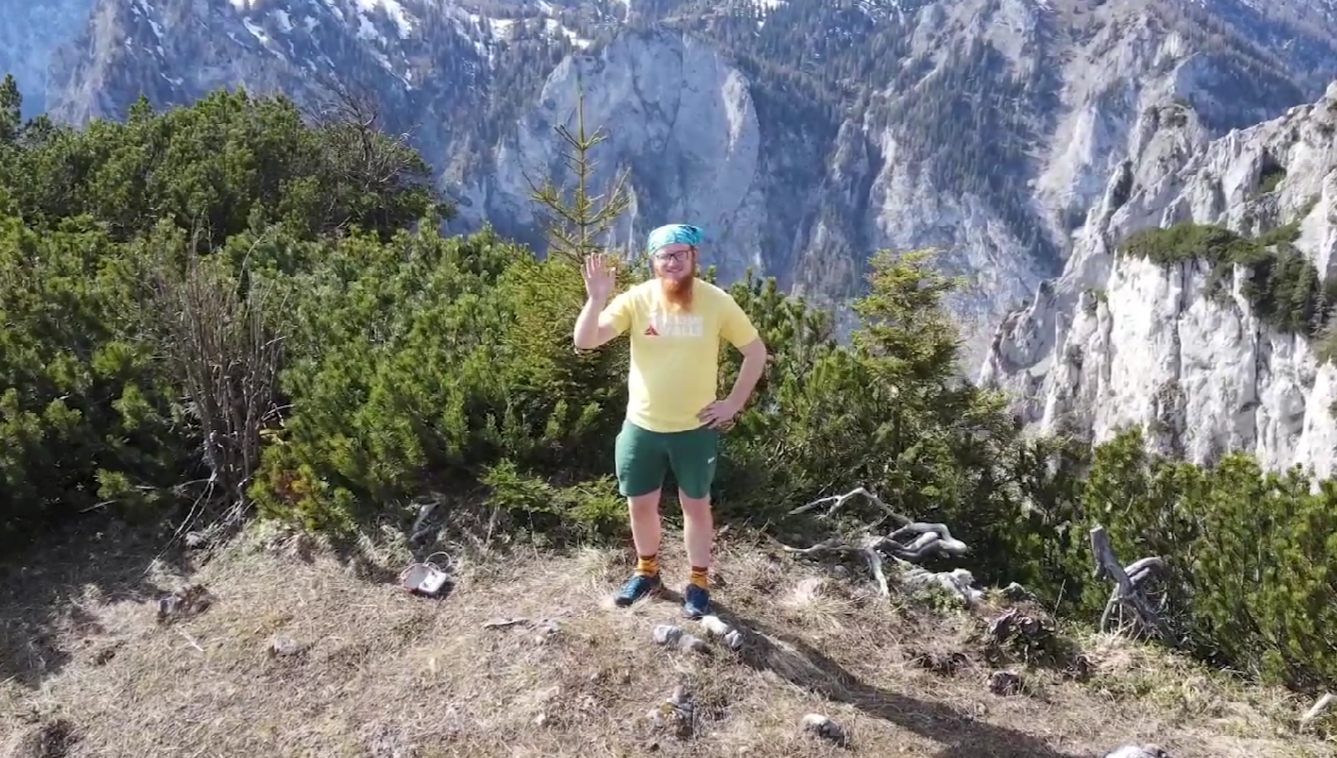
Aidan Sheridan, a 25-year-old from Co. Cavan, decided to take his love of travelling a step further when he explored Europe out of a small caddy van.
Aidan flew from Ireland to Czech Republic in Spring and purchased a van that had been customised into a small but liveable space with a mattress in the back to sleep at night.
His trip ended up lasting for more than 7 months in which he drove through Europe, clocked up over 25,000 kms and visited 10 countries.
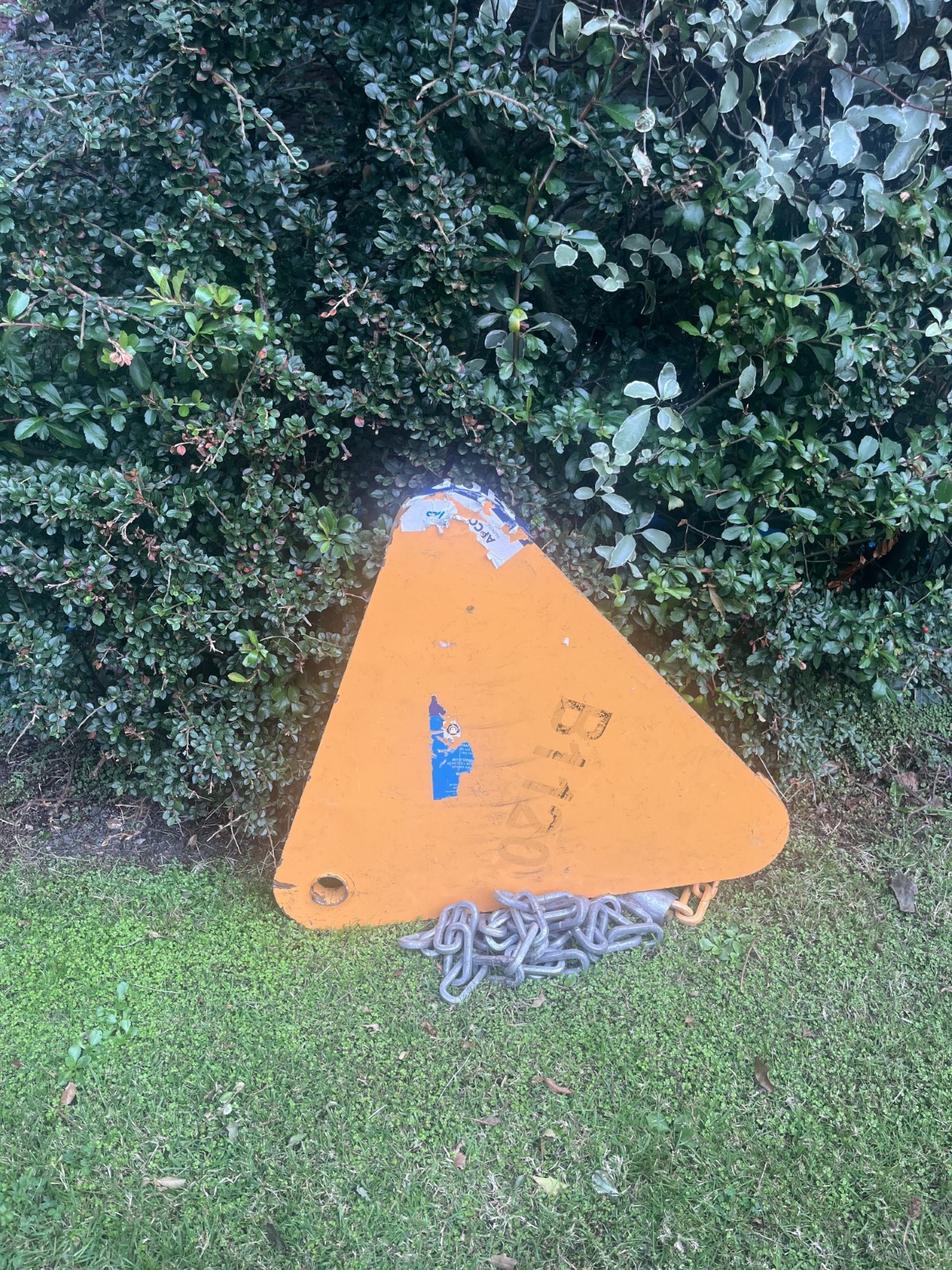
As the epidemic of clamping down on cars becomes rampant around the Capital, there are three things guaranteed in life in Dublin; death, taxes and clamping.
It is no secret that the housing crisis has seeped into student life in Dublin, resulting in many in neighbouring counties commuting to college or having to find accommodation for the academic year.
Despite the argument there are plenty of transport to use or places to “pull in,” many Irish students have been left lost and have had no choice but to fork out a sum to release their car from the shackles of the clamper.
The fee for clamping is a release fee of one hundred and twenty-five euro, which is operated by Dublin Street Parking (DSPS).
However, if the release fee is not paid within the 24 hours of being initially clamped, not only will your car be towed away to the city car pound, but there is also a fee of 250 euro and an additional 35 euro per day according to the DSPS website.
Dublin City council has released the statistics for clamping of cars around the city from 2022 with a total number of clamps of 40,732 excluding invalids (disabled parking badges out of date is an example of an invalid)
Credit Millie Storey
Although the reasonings behind the clamping may seem obvious, there can be virtually nowhere for people to park even when paying elevated levels of rent for accommodation.
For instance, in private accommodations and estates it is not an unusual sight to see a car with a registered parking ticket clamped.
Dublin City Council provide an appeals process that must be submitted within 60 days from the original day the car was clamped.
One Dublin driver, who did not wish to be named, had their car clamped last year whilst it was parked on a private estate in Dublin. Not only was their car the only one clamped on the street, but without their knowledge it was moved from Cabra to Stoneybatter.
Is this Dublin’s latest trend amongst students?
Marese Masterson, originally from Leitrim, who studies in Maynooth said her car is a necessity during her time in Dublin for her work as an intern. Masterson drives to work five days a week and says the lack of parking is taking a toll on her finances.
“They even clamp in Supervalu in Ranelagh, there is barely any street parking just loading bays and clearways. I have gotten clamped twice, said loading bay and once got clamped at 7 in the evening,” she said.
“The parking price per hour is extortionate for students- example twenty euro a day, very unfair as this leads to students unable to pay the ticket, which in hand leads to clamping.”
Masterson is not the only student feeling the pinch. Elli Duggan from Kilkenny recently studied social care in TU Dublin Grange Gorman and lived in student accommodation in Phibsborough. Her car was a necessity for her work placement as well as getting to and from her job in Kilkenny.
“In my student accommodation of 400 students there were only 8 parking spaces available, which were 50 euro a month, I would have to park on the North Circular Road.”
According to DSPS website, clamping can occur when a park has expired by as little as ten minutes.
The City.ie asked the DSPS to comment on allegations that clamping was excessive around Dublin. They declined to comment but said further contact can be made with those in higher management or an FOI (freedom of information) application can be made.
Listen to Johannes Thom speak to James Molloy about how Germany handled the pandemic
Germany had its first reported cases of Covid-19 in January of 2020 near Munich, and has been in and out of regional lockdowns ever since. The country is currently in its third wave of the virus.
Varying levels of restrictions have been imposed on a region-to-region basis depending on the severity of the virus. Currently, Chancellor Angela Merkel is calling for unified Covid-19 restrictions nationwide, which would see an “emergency brake” in order to try and control the spread of the virus.
Since we recorded this interview, 7.3% of Germany’s population of 83 million have been fully vaccinated with just under 26 million doses given in total. This is due to the accelerated rollout of vaccines. From next month, it is hoped that GPs will be able to administer their preferred vaccine, with the federal government providing family doctors with the choice of vaccines from BioNTech/Pfizer and AstraZeneca.
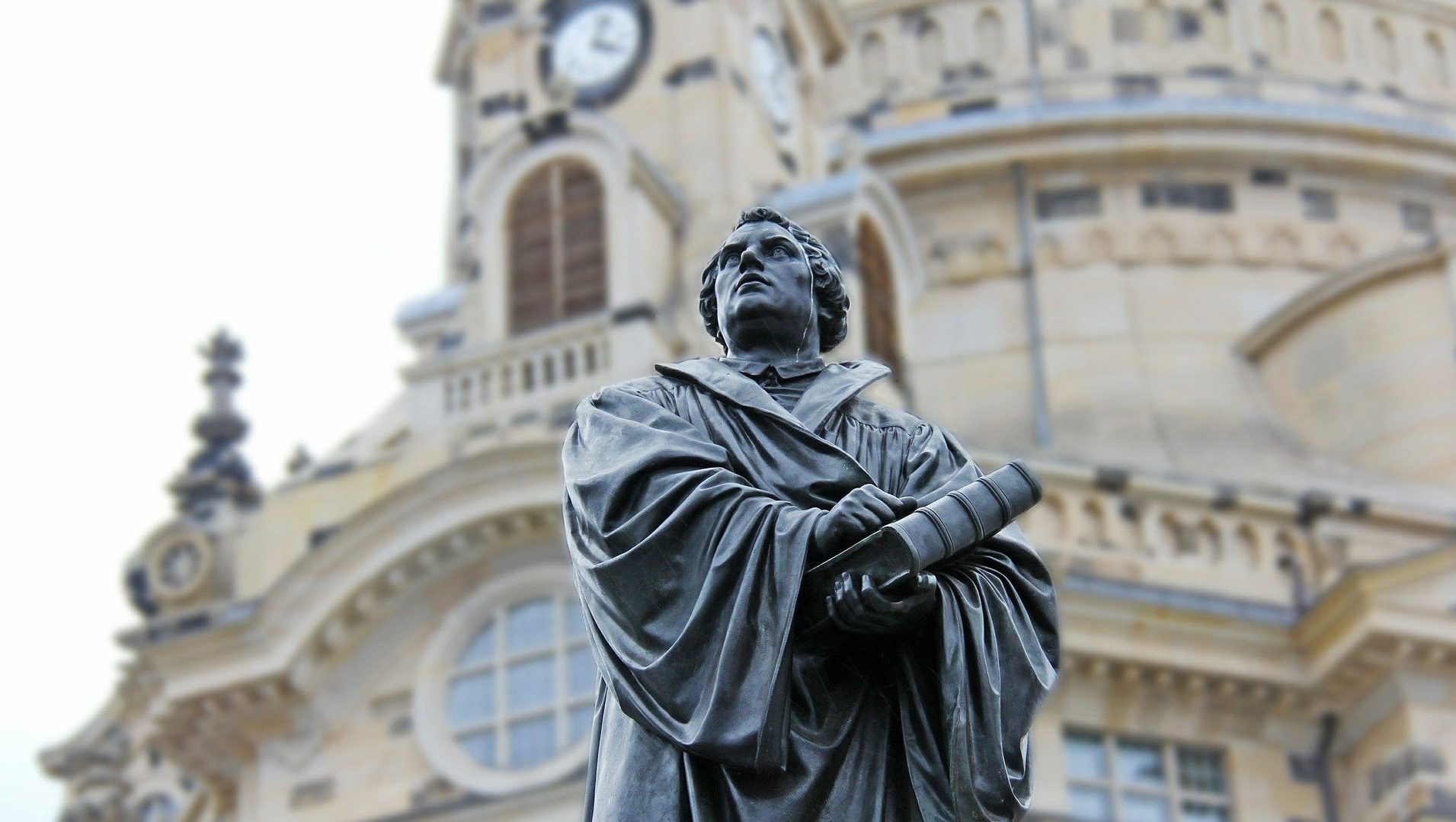
Martin Luther’s statue at Dresden via Pixabay
Europe has seen a rise in anti-lockdown protests from Paris to London and even closer to home, as Dublin saw violent protests in late February. Germany too has seen this rise in protests over Covid restrictions with regular demonstrations taking place across the country.
The most recent protests planned for Dresden in Saxony were banned by the Saxony Higher Administrative Court.
The banning of these protests is significant especially in the state of Saxony where the highest mortality numbers in Germany have been recorded. One of the main reasons for this is that the region has an ageing population and a large number of retirement homes that have been devastated throughout the pandemic.
A snap of Dresden taken by James Molloy
Another factor is its proximity to the Czech border, with many crossing it for work. The Czech Republic has been one of the worst hit countries worldwide. Saxony has been fighting an uphill battle from the start.
Just under half of Irish men between the ages of 25 and 29 years have attained third level education, while 57.3 percent of Irish women have achieved the same level of education.
According to Eurostat, the 49.6 percent average for men is over double Italy’s 21 percent rate for the same demographic. Their free tool is available to all EU citizens who want to compare themselves to their European counterparts. The European average of men this age who get a third level education is 32.8 percent.
Ninety percent of European men this age use the internet every day. Finland leads the way, with 100 percent of their young men using the web daily. Ireland is close behind with 92 percent, while Romania has the lowest engagement of this demographic, with 72 percent. Overall, 86 percent of Irish women meanwhile use the Internet every day.
Social media is the main reason young Europeans use the internet with 79 percent of young Europeans using social networks.
The average European lifespan is currently 78.1 years. Irish males have an expected lifespan of 79.3. Italy has the longest expected male lifespan of 80.7, while Latvia has the shortest expected lifespan for males with 69.1 years. Irish women’s expected lifespan is longer than Irish men by 4.2 years (83.5 years).
Ireland’s population average of people who do not own their own residences is above the EU average by 1.3 percent. According to Eurostat, the EU average of people who do not own their own residence is 30.1 percent while 31.4 percent of Irish people own their own dwelling. This is lower than Germany with its 47.5 percent rate but considerably higher than Romania where it is just 3.8 percent.
Finally, yesterday “The Climate Change Performance Index 2019,” results were published and Ireland was given the lowest score of any European country. Despite this, Eurostat calculates Irish citizens as having the lowest rate in the EU for “reporting pollution, grime or other environmental problems in their neighbourhood.”
On average 14.2 percent of EU citizens have reported environmental issues in their neighbourhood. Malta has the highest rate with 37.7 percent.
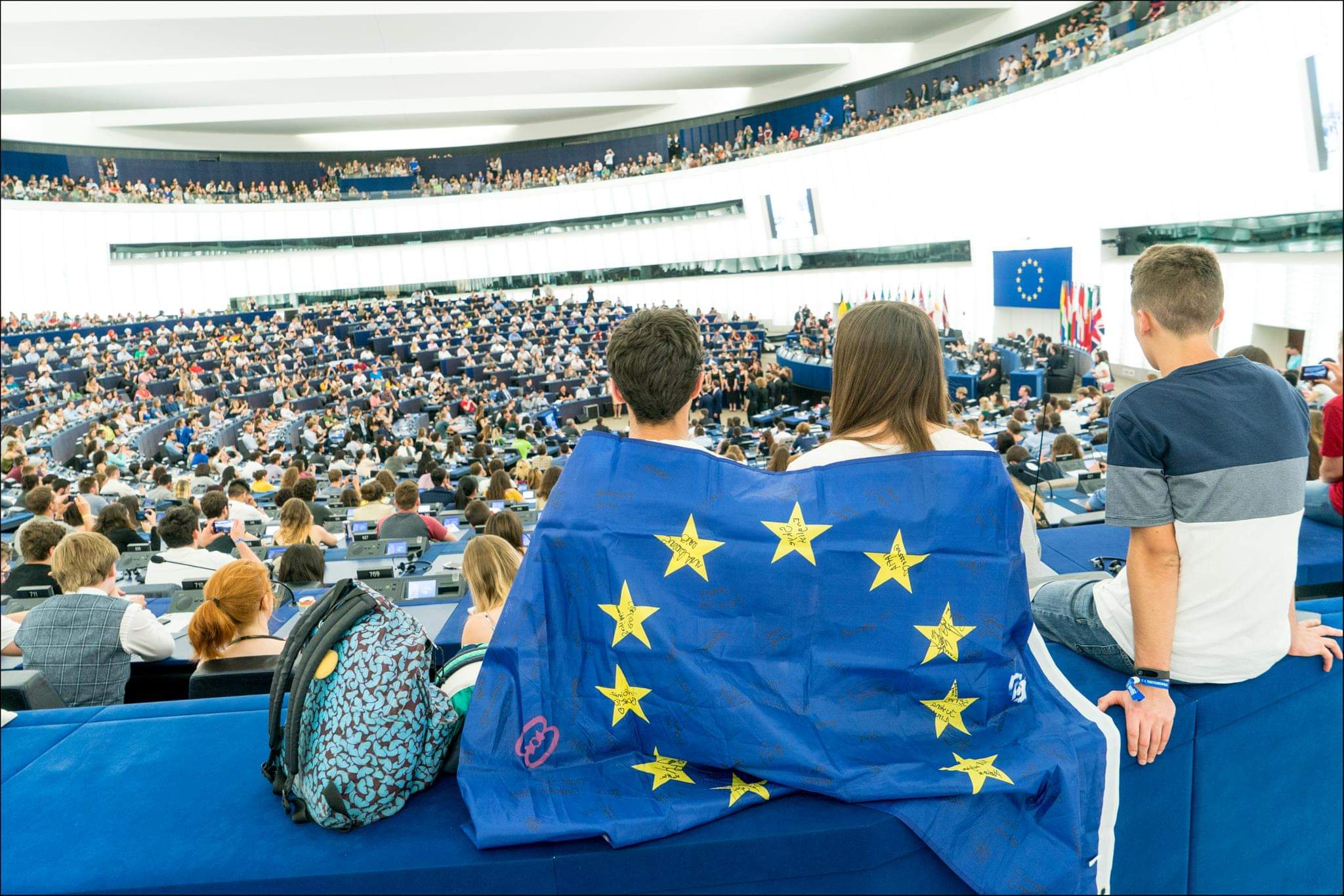
This Time I’m Voting is a campaign run by the European Parliament (EP) in order to encourage European citizens to vote in the upcoming elections.
The campaign is supported by thousands of volunteers across Europe who are committed to promoting the campaign, and ultimately motivating the public to vote. However, social media is the main platform used to promote the campaign, aiming to attract the attention of young users.
Sanne De Ryck, EP press officer, said: “It is indeed important for young people to go out and vote as we are all aware that it is now crunch time, that the future of Europe is at stake. Young people have a whole life ahead of them and will face the consequences of the 2019 European elections.”
De Ryck said social media is ‘part of the answer’ to grab the attention of potential young voters.
The campaign has over a thousand volunteers in Ireland and over 88,000 volunteers across the EU, and aims to inspire citizens to campaign for issues they feel passionate about.
Sarah Buttle, 23, a recent Griffith College graduate, will vote in the upcoming elections and hopes young citizens will do the same. Ms Buttle said: “I would encourage all of my friends to use their vote to help shape the future of the EU. EU issues affect us all, whether it’s migration, privacy or climate change, and having elected MEPs that can voice the Irish opinion, our vote does matter.”
Ms Buttle supports the This Time I’m Voting campaign and hopes the elections will see a big turnout from Irish voters. She said: “The upcoming elections in the EU need an increased voter turnout, especially within the youth.”
Jack Moloney, EP press officer for Ireland, said: “Ultimately, we wish to increase interest in European affairs and de-mystify the electoral process. I have often been asked ‘what does the EU do for me?’ or been told that Brussels is too far removed from everyday life. Our active, young and intelligent participants have already begun to communicate on their own behalf why Europe matters to them and I have found it to be truly amazing.”
The EP also organise events to promote their campaign and on Wednesday December 5, there is a EU pub quiz held in the Boar’s Head pub on Capel Street, Dublin. European Parliament elections take place from 23 to 26 May 2019.
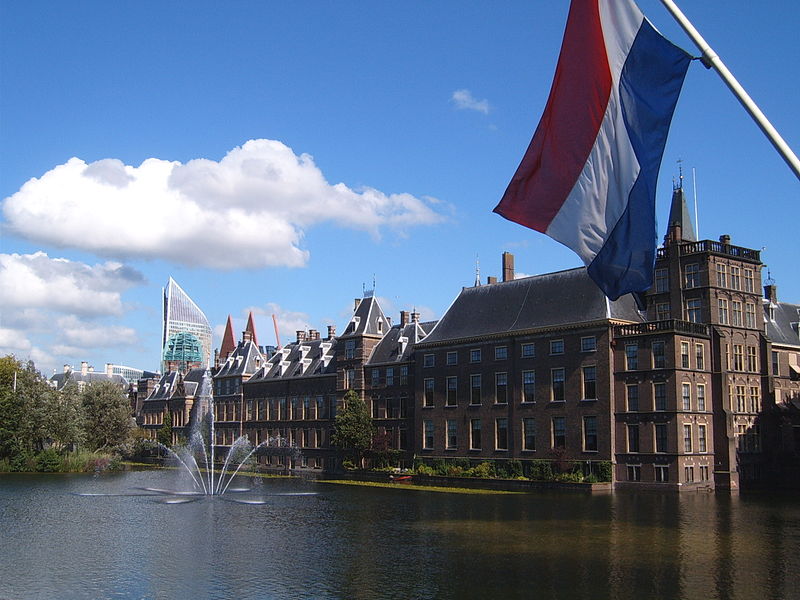
Cormac Murphy examines the significance of the recent Dutch elections and considers whether populism has reached its limits in Europe.
Swept up in a sensationalist frenzy, one of the most anticipated and fiercely contested elections in Europe produced, at best, modest electoral success for the far-right.
Dutch voters defied earlier predictions that suggested Geert Wilders’ Party for Freedom (PVV) was on course to snap up thirty or more seats in a parliamentary election dubbed “Europe’s quarter final” by incumbent Prime Minister, Mark Rutte.
The seemingly high importance of the election in the run-up to further European elections in France (Europe’s “semi-final”) and Germany (Europe’s “final”) sparked a storm of international media attention.
Geert Wilders campaigning in Spijkenisse. Image by Peter Van der Sluijs via Wikimedia Commons
Branded as a pivotal battle for populism in Europe, the PVV managed to increase their share of seats from twelve to twenty.
However, this is significantly lower than earlier indications suggesting a thirty seat win.
Furthermore, their second place showing was barely ahead of the next largest line-up of parties. The Christian Democrats and Democrats 66 came in joint third, with nineteen seats each.
They are also distant second, being paled by Rutte’s People’s Party (VVD) which won thirty three seats — thirteen seats more than the PVV.
Image by Cormac Murphy
Negotiations to form governments in The Netherlands are notoriously drawn-out and difficult.
According to Bloomberg, since 1945 the average time taken has been seventy two days— a process that, if repeated, would take us well past the French presidential and parliamentary elections scheduled this year.
Locked out of power as others unite against him, the final tally is not even Wilders’ best electoral outcome — falling short of the 2010 election results.
Total score of Dutch populist radical right in past 3 elections:
Considering the electoral wind-down for Wilders, was the heavy media coverage justified and do these elections have a wider significance for Europe as a whole?
Unravelling the Far-Right
Speaking to The City, Gavan Titley, a senior lecturer at Maynooth University who specialises in media studies of race, racism and multiculturalism in European politics said:
“The relationship between results [in different European countries] are often overemphasized and are generally much more complex, involving very particular national issues.”
However, he stated a common theme among the far-right in Europe is their ability to bring the issue of national identity into the spotlight – stating the Dutch election became a “question of Dutch identity”.
Despite Wilders being locked out of power, Titley says the election was in fact “ a dual victory for the far-right” and cited that the PVV not only managed to increase its share of seats from the previous election but also managed to shift political discourse to one that was “openly racist.”
When asked about the fractured nature of proportional representation and the thresholds many far-right political parties fail to advance beyond, he emphasized that power is not defined solely as “executive or governmental”:
“Far-right parties have the ability to shape the news agenda and change the political culture of a country – even if they can’t take office and be involved in the decision making.”
When questioned about the future of the far-right and whether Wilders’ PVV would attempt to ‘de-demonise’ the party to broaden their appeal, he stated:
“There is no incentive for [Wilders] to defuse his language” — as he is able wield a strong degree of influence, without entering government.
The bigger European picture
The Brexit referendum and Donald Trump’s presidential win shook established politics during 2016.
Scattered in-between these two earthquake results were a series of smaller, yet emblematic elections.
Heinz-Christian Strache, head of the Freedom Party of Austria. Image by Thomas Prenner via Wikimedia Commons
On December 4 2016, Austrians went to the ballot box for a second time to elect their president. While the role is purely ceremonial, Austria’s tight presidential race reflected a shifting political tide.
The far-right candidate Norbert Hofer lost to Alexander Van Der Bellen (The Greens) in the end — with it came a sigh of relief but, nevertheless it was a close call for an already embattled EU.
The same day, Italians took to the polls to vote on a constitutional referendum, which if passed, would have granted the Italian government a broader range of powers.
Populists in the country rallied behind a no vote and a no vote it was.
Following the vote Italian Prime Minister, Matteo Renzi resigned and Italian populists rejoiced. Speaking toTime.Alfonso Bonafede of the Five Star Movement stated “Our victory shows that Italians have also said ‘no’ to the austere and destructive policies of the European Union and to the diktats of Germany. It’s about time to ask Italian voters, through a new referendum, whether they want to stay or leave the euro-area.”
Fast forward a few months and all eyes were focused on The Netherlands.
Writing in The Guardian, prominent Dutch political scientist and lecturer, Cas Mudde criticised excessive media coverage of the Dutch Election – claiming the international media declared The Netherlands “the bellwether” of European politics despite lacking a winner takes all system.
In hindsight, the media may have offered Wilders an overtly ample platform.
However, given the bigger German and French elections on the horizon and a string of past close calls across Europe, the coverage was understandable.
Contagion from the Right
Despite negligible gains for the PVV, the most noteworthy result of the elections was a general move to the right.
Aping Wilders’ inflammatory language towards immigrants, Rutte made a series of strongly worded statements towards minorities in The Netherlands.
Demarcating a greater distinction to his rival, Rutte wrote an open letter in January stating that “The solution is not to tar people with the same brush, or insult or expel whole groups, but to make crystal clear what is normal and what is not normal in our country.”
“If you reject our country so fundamentally, I’d prefer you leave,” he added.
Another feature of the election was a highly charged diplomatic dispute between The Netherlands and Turkey, which threatened to blow the Dutch elections apart, just days before voters took to the polls.
The Turkish Foundation in Amsterdam. Image by Persian Dutch Network via Wikimedia Commons
Turkish efforts to hold political rallies and campaign for a Yes vote in the upcoming Turkish constitutional referendum backfired when Turkish officials were banned from The Netherlands.
Mevlüt Çavuşoğlu, Turkey’s Foreign Minister urged all Turkish citizens in The Netherlands to protest outside the Turkish consulate in Rotterdam as a response.
Despite the fiery rhetoric and explosive escalation of the incident, it did not aid the far right in the Netherlands. Instead, Rutte’s hard-headed handling of the affair boosted his appeal among Dutch voters.
Wilders attempted to exploit the diplomatic rift by portraying Turkish immigrants as a fifth column. The tweet above translates as “Four decades, open borders, mass immigration, preservation of culture, zero integration, dual nationality…. This is the result.”
A similar sentiment echoes across Europe as mainstream parties scramble to keep their grip on power.
Angela Merkel who welcomed over one million migrants into Germany in 2015 has made several political U-turns.
In a seemingly desperate attempt to prevent voters straying to the fledgling, far-right Alternative for Germany (AfD) party, Merkel has spearheaded a burka ban as well as revoking her open doors policy to incoming asylum seekers.
She has faced several state elections in the last year that have witnessed AfD gains at the expense of her own Christian Democratic Union (CDU) party.
With the larger federal elections scheduled for September this year, Merkel may find herself struggling to retain her position as German premier.
One down, two to go: Three of the far-right contenders who are to contest elections this year. Marine Le Pen – France (left), Geert Wilders – Netherlands (centre) and Frauke Petry – Germany (right)
Much of the centre-ground was ceded — highlighting and perhaps, partially validating some of Wilders’ positions in the eyes of the electorate.
On 25 March, EU Leaders gathered to celebrate the 60th anniversary of signing of the Treaty of Rome. Considering Britain’s departure, and a surge in populist Eurosceptic politics, it is unclear if the union will last another 60 years.
With more elections on the horizon, Europe will have to brace itself once again. Will Le Pen take the Elysee in May and deliver a fatal blow to the EU, or has the dust settled for the populist right?
Either way, the issue of national identity is rising to the forefront of many EU countries’ political agendas — aided and abetted by a far-right holding their feet to the fire.
A Netherlands’ exit from the EU, or ‘Nexit’ has failed to materialise, but with Marine Le Pen promising a ‘Frexit’ in the upcoming French elections, anything is possible, even if her chances at victory are improbable. Time will tell who wins and how much the mainstream will mimic populist politics in an attempt to regain its appeal. Even if far-right efforts at power prove unattainable, their ability to influence the broader political spectrum is abundantly clear.
Featured Image by Markus Bernet via Wikimedia Commons
Some 163 people have been killed on Irish roads so far in 2016, compared to 131 people at this time last year. Specific figures will not be released until early next year, but trends that were looking optimistic after last year aren’t holding up.
Source: Wikipedia
Looking at the figures and statistics on road deaths last year and over the last 10 years can help discover what kind of trends are occurring and who is most at risk.
Road deaths were the second lowest in Ireland in over half a century in 2015. Mayo had the highest number of fatalities per 100,000 people (10), while Dublin had very few, with just 1.3 per 100,000.
Dublin (17) and Cork (16) had the highest number of road fatalities in Ireland (because of their high populations) while Roscommon and Waterford both had no road deaths. Cathal Lynch from the RSA said that even though the two counties had no road fatalities last year, “It’s impossible to infer a trend from just one year of data,” so this does not necessarily mean they will continue on this course.
Some 29% of people who died in 2015 were not wearing seat belts, which could have been the deciding factor in their death. Almost one in three collisions were alcohol related with even a small amount of alcohol increasing the risk of being involved in a fatal crash. A shocking one in ten drivers (284,000) admitted to drinking before driving in the 12 months prior to November 2015, with 2 out of 5 of these drinking two or more drinks.
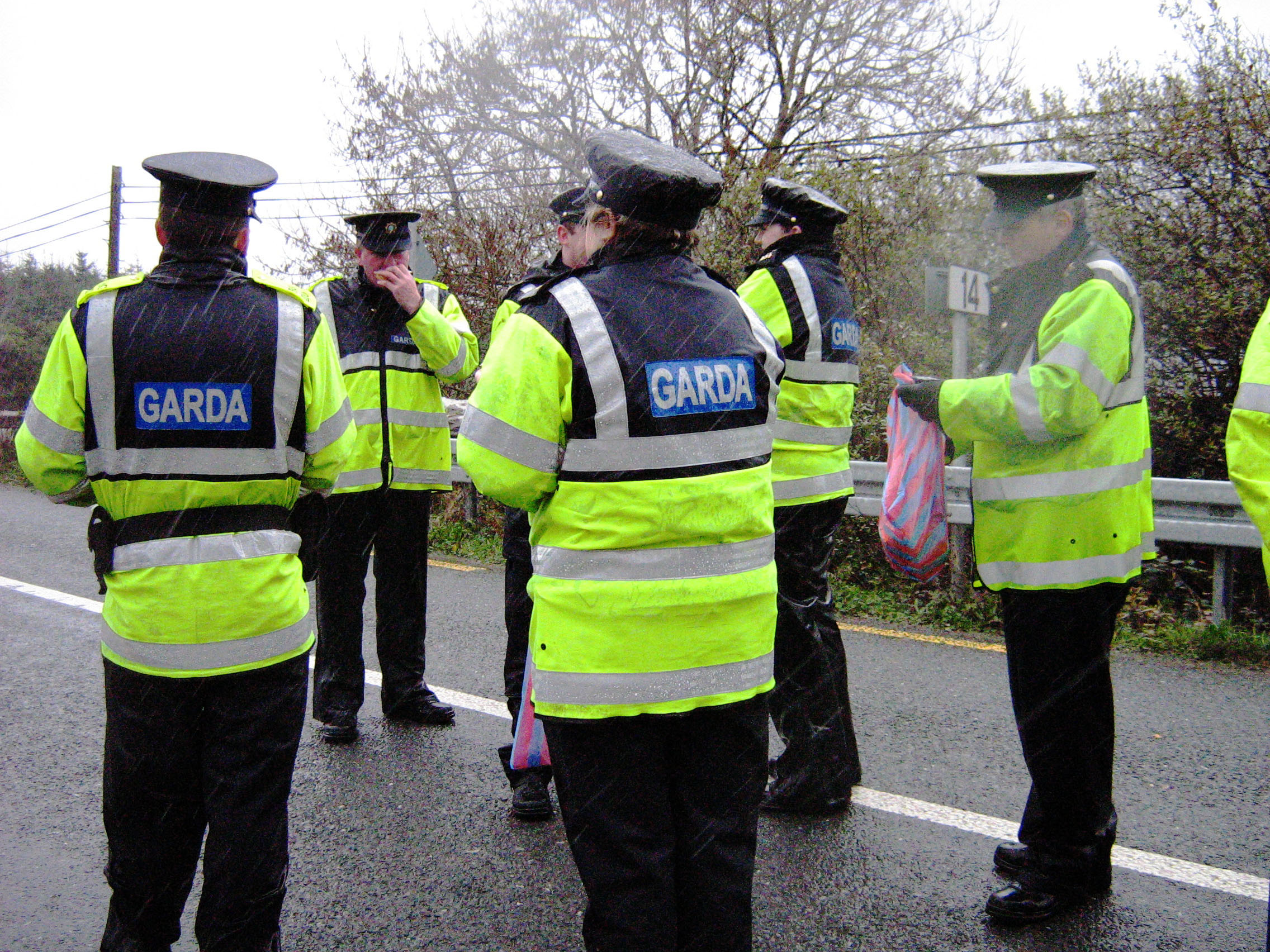
Garda Grace Byrne of Blackrock Garda station said, “People might see the stereotypical drink driver as a man having a few pints after work and then driving home. But I have noticed in recent times that there is an increase in young females being arrested for drink driving.” She has also noticed that there are more people being arrested the morning after, “they’ve been out drinking the night before and are still over the limit the next day, without even realising.”
Donegal has had the highest number of fatalities for its population continuously in the past decade, with 18.3 per 100,000 in 2005, but is making improvements, going down to almost a third of that in 2015 with 6.8 deaths per 100,000. In the last five years Roscommon has gone from 14 in 2010 (per 100,000 people) to 0 in 2015. Dublin and Cork are steadily getting lower and Galway had a huge drop from 2005 (9.1) to 2010 (2.4) but rose again in 2015 (4.8).
Created by: Kieva McLaughlin
In 2015, the most vulnerable age group was 16- 25 year olds with 27% of all road fatalities. The elderly had the second highest number of road deaths with 19% and the 26-35 year age group closely followed with 17% of all the road fatalities.
Created by: Kieva McLaughlin
The highest number of road deaths are drivers, totaling 46% of road fatalities in 2015. Vulnerable road users (pedestrian, motorcyclist and pedal cyclist) accounted for 38% of road deaths with the highest number being pedestrians. This was only down 2% in 5 years from 21% in 2010 to 19% in 2015.
Created by: Kieva McLaughlin
A total of 76 drivers were killed in 2015, this is the same number as 2014 and down from 91 drivers in 2010.
Younger drivers were most susceptible, accounting for 25% of all drivers killed (16-25 years). The majority of driver fatalities occurred on country roads, and in particular on roads with a higher speed limit (shown below). Garda Grace Byrne thinks the main reason for accidents in Ireland is speed, “Speed is a killer, the faster you are driving and collide with a vehicle the less likely your chances are [of surviving].” As shown below, males accounted for 76% of driver fatalities.
Created by: Kieva McLaughlin
Speed Limit
No. of Deaths
30 km/h
1
50 km/h
6
60 km/h
6
80 km/h
31
100 km/h
29
120 km/h
3
Total
76
Table 1 (Created by Kieva McLaughlin, Figures Source: RSA)
In 2014, almost 25,700 people died in European Union countries. Over 200,000 people suffered serious, life changing injuries. However, in 2000 very few EU member states had a fatality rate lower than 8 deaths per 100,000 inhabitants but in 2014 there were only 5 EU countries with a fatality rate higher than that. There were a total of 5,700 less deaths from 2010 – 2014.
Malta, the Netherlands, the United Kingdom, and Sweden had the lowest number of fatalities, all below 3 deaths per 100,000. Lithuania, Bulgaria, Romania and Latvia had the highest number of road deaths all having 9 or more per 100,000. Latvia had the highest with 10.5 road fatalities per 100,000 people living there.
The road fatality rate of nearly every country lowered from 2010 to 2014 except Latvia which rose from 10.3 to 10.5 (per 100,000). Sweden and Lithuania both increased by 0.1 each and Estonia stayed constant at 5.9 deaths (per 100,000).
The EU average in 2010 was 6.3 and lowered to 5.1 in 2014. Ireland was below the EU average both years going from 4.7 to 4.3. An EU road safety plan wants to reduce the road deaths by half from 2010 to 2020. Although the rate has lowered by around 19% since 2010 it has only lowered 1% from 2013 to 2014. This means the rate is slowing down rather than speeding up, which, if continued at this rate, will not reach the EU’s goal.
Pedestrian fatalities are not decreasing as much as the overall rate, with 22% of all killed on the roads in 2013 being pedestrians. Pedestrians are at a higher risk in urban areas and the elderly are particularly vulnerable. Ireland was below the EU average at 18%. The Netherlands, Finland, Belgium and France were all below 15% and in Poland, Latvia, Lithuania and Romania over a third of people killed were pedestrians.
The EU has the lowest fatality rate of any region in the world, with the USA having double its rate at 10.2 (per 100,000) in 2014.
Created by: Kieva McLaughlin
Footnote:
Country Abbreviations: AT Austria, BE Belgium, BG Bulgaria, CY Cyprus, CZ Czech Republic, DE Germany, DK Denmark, EE Estonia, EL Greece, ES Spain, FI Finland, FR France, HR Croatia, HU Hungary, IE Ireland, IT Italy, LT Lithuania, LU Luxembourg, LV Latvia, MT Malta, NL Netherlands, PL Poland, PT Portugal, RO Romania, SI Slovenia, SK Slovakia, SE Sweden, UK United Kingdom.
Whether it be a romantic getaway or some fun and frolics with friends, Christmas is the perfect time to book a weekend break in one of Europe’s cities. Stuck for ideas of where to go? Check out The City’s pick of the best European destinations, with plenty of tips and things to do.
Munich
“Ein bier, bitte!” First things first, when that plane hits Bavarian soil, you must grab one of Munich’s famous beers. The touristy thing to do is head to the Hofbräuhaus, where you can enjoy some Hofbräu beer together with some traditional Bavarian music and dance. The “Haus” also serves food, however, you can save your euros and grab much nicer bratwurst, or german sausage, on the street. Some other famous beers to try include Augustiner, Paulaner and Löwenbräu. If you’re not a big beer fan, then order a radler, a combination of beer and lemonade that’s very popular in Munich.
The Englischer Garten, German for “English Garden”, is a large public park in the centre of Munich, and is well worth the stroll. Kleinhesseloher Lake in the centre offers a nice seating area where you can grab a beer and some food, or bring your own picnic. Release your inner child and take a peddle boat out on the lake.
For the boys and their toys, a trip to the BMW museum is a must. The museum is basically a gigantic showroom, displaying hundreds of models of cars, jeeps, and bikes for you to climb into, or on. Grab a selfie in that red convertible you’ll never afford! If it’s any consolation, the museum is free. Good of them, eh?
Munich lies at the foot of the Alps, so if you have the time then hop on a train and head to the mountains. Neuschwanstein Castle, “the fairytale castle”, is one of Bavaria’s finest castles to visit, with breath-taking views of the surrounding countryside. With a nice hike up, you’ll even get some exercise in to work off that beer belly.
Prague
If you’re looking for a laid back getaway and some “good vibes”, then the Czech Republic’s capital Praha is for you. Old Town Square is a charming place to start, located in the heart of the city. The architecture by itself is pretty eye-catching, but the combination of buskers, street traders and al fresco dining in this cobbled square provides a great atmosphere.
Known for its great partying scene and never-ending supply of absinthe, nights out in Prague can get quite interesting. For those of you still yolo-ing out there, it is a must that you attempt one of Prague’s infamous pub crawls. The night starts off with a t-shirt and an unlimited supply of some lethal alcoholic mixture that’s impossible to drink. After a quick pep talk with your friends you’ll put your head down and drink it anyway, because hey, it’s free. Nobody really knows what happens after this, and then if you’re lucky you might even wake up in your own hostel the next day. Happy days!
If you can manage it, a visit to the John Lennon Wall is sure to reach into your soul and soothe your hangover blues. Bring a marker and spread your words of love on the wall, every inch of which is covered in colourful graffiti from the thousands who have come to visit before. Some guy is sure to be killing it on his guitar singing “Let It Be” or “Hey Jude”, so chill out and enjoy!
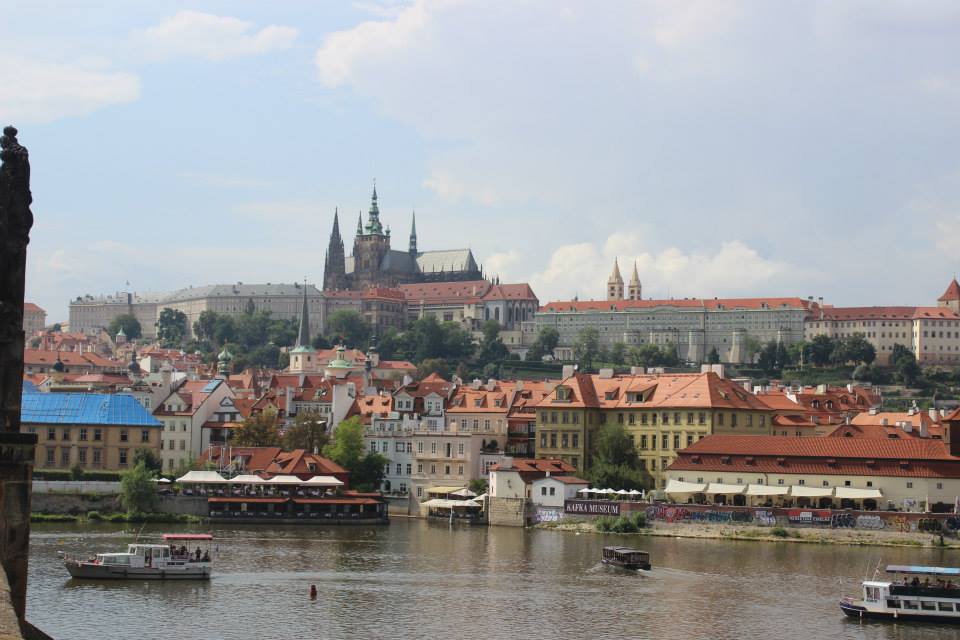
Overlooking the entire city is Prazsky Hrad, or Prague Castle, which is well worth the visit for the views alone. If you’re a history head, then the castle is the best place to learn about the city’s past. Some parts are free to the public, if you just want to have a stroll around the castle grounds, while others require a ticket for entry.
If you’re wondering what that sweet, sugary scent is in the air as you wander around the streets of Prague, then that would be Staroceske Trdlo – a chewy, cinnamon, sugar-dusted pastry. Just try it. That is all.
Krakow
Referred to by locals as “The Real Capital of Poland”, Krakow is definitely underestimated when it comes to European cities. Post-communism, it has developed into a cultural hub of excellence – from its exciting galleries and museums to its quality cafés, pubs and nightlife. The Main Market Square, an impressive 10 acre square in the centre of Krakow, is one of its main attractions. Here you will find Kosciol Mariacki, otherwise known as The Church of the Virgin Mary, where a trumpet player sticks his head out of the tower on the hour, every hour, and gives you a tune. Legend has it that during the 2012 UEFA Euros the English team, who stayed in a hotel just around the corner, blamed the trumpet player for their poor performance on the field as he “kept them up all night”.
If you like walking tours, then Krakow is top of the list when it comes to witty guides and really interesting tours. A general tour of the city will bring you to all the main attractions, such as the hilltop castle. The tour of the Jewish Quarters is particularly interesting. Like most central European cities, Krakow is steeped in WWII history, and this tour gives a great insight into the life of the Jewish community in Krakow during Hitler’s reign. Famous sites include the old ghetto walls and Schindler’s Factory. The infamous Auschwitz Concentration Camp is just an hour outside the city, and buses travel to and from the site daily.
Budapest
Hungary is famous for its thermal springs with healing qualities, and you cannot visit Budapest without a few hours of relaxation in the baths. Also known as ‘The City of Baths’, Budapest has many different medicinal baths to try. Széchenyi is one of the best public baths, with both indoor and outdoor baths of varying temperatures and medicinal qualities. If you’re visiting during the summer months then hit it’s famous bath parties for a night you’re guaranteed (not) to remember.
If you fancy some sightseeing, Gellért Hill offers the best view of Budapest and the river Danube, which separates Buda on the west bank from Pest on the east. Dohány Street Synagogue is Europe’s largest synagogue, and marking the border of Budapest’s Jewish Ghetto, is steeped in the history of World War II. If you take a stroll along the banks of the Danube on the east, you will come across ‘The Shoes on the Danube Bank’, a Jewish memorial for the jews who were ordered to take their shoes off and line up to be shot into the river. You will also find Hungary’s impressive Parliament Buildings along this bank.
The hop-on hop-off City Bus Tour is probably the best way to get around to all of the attractions in Budapest, working out about €20, the buses come around every 15 minutes and will save you time and walking on a short city break. As for the local cuisine, you cannot leave without trying some traditional goulash, a perfect dish for a cold winters day.
Every continent has its array of beauty, culture and heritage. Asia has its oriental mysteries, Africa with savannahs of land, the enchantment captures a visit to South America whilst north of the Mexican Gulf lay the sky scrapers of the USA.
And then there’s Europe, so many different cultures and histories. A people so vast and different, it makes for a wonderful visit. I’m going to look at five European cities that you have to see before you die.
5. Milan
Fashion capital of Europe and home to all things Italian, the Milanese love to socialise and you regularly see them enjoying the easier side of life. Milan has so much to offer from Teatro alla scala to the San Siro to ill Dumo. Milan is definitely worth a visit.
Milan, the fashion capital of the world
4. Marseille
One of the most picture esc cities in Europe, Marseille is on France’s south coast touching the Mediterranean Sea. Marseille’s restaurants offer loads of traditional French cuisine and some excellent wines.
The beautiful port of Marseille
Longchamp Place and the Old Port are just some of the great experiences you can have whilst in the French Riviera.
Amsterdam, really is a continential city
3. Amsterdam
The most continental city you’ll find, ‘The Dam’ has so many trams, and bike’s and boats. The Dutch are such a friendly people, maybe due to their choice of how to relax, and will be most eager to assist you. The beautiful canals, the lovely streets and of course the local beers are some of the things that make Amsterdam a must see before you die. The Heineken experience and the Anne Frank house are just some of the trips you can embark on once in Holland.
Arc de Triomph, Barcelona
2. Barcelona
The Capital of Catalonia, the home of great night clubs and also the longest pedestrian street in the world. ‘Las Ramblas’ is 12km long and stretches from plaza de Catalina to the Iberian Peninsula. Barcelona has so many UNIESCO world heritage sites, and so much to see and do. The Gaudi Cathedral, the Arch de Triumph and of course the Camp nou. The local food, beer and lifestyle are so desirable.
Berlin’s Checkpoint Charlie
1.Berlin
The German capital has been through an awful lot, but for a tourist it’s a pleasure. The second biggest city in Europe area wise, Berlin has four city centres. The former Russian centre of ‘Alexanderplatz’, the British centre ‘tiergarten’, France’s ‘podstammerplatz’ and America’s ‘Bundesplatz’. The history that accompanies berlin is amazing, Sauchausen concentration camp is a real eye opener and so too is the Topograph of terror museum. The German beer is the nicest in the world and a look at checkpoint Charlie is a must do. Berlin ‘the experience’ is what the City should be called, as it really is Europe’s bundci













You must be logged in to post a comment.