Plans are underway for the return of the SPECIES Gothic and Industrial arts and culture festival to County Leitrim after a short absence.
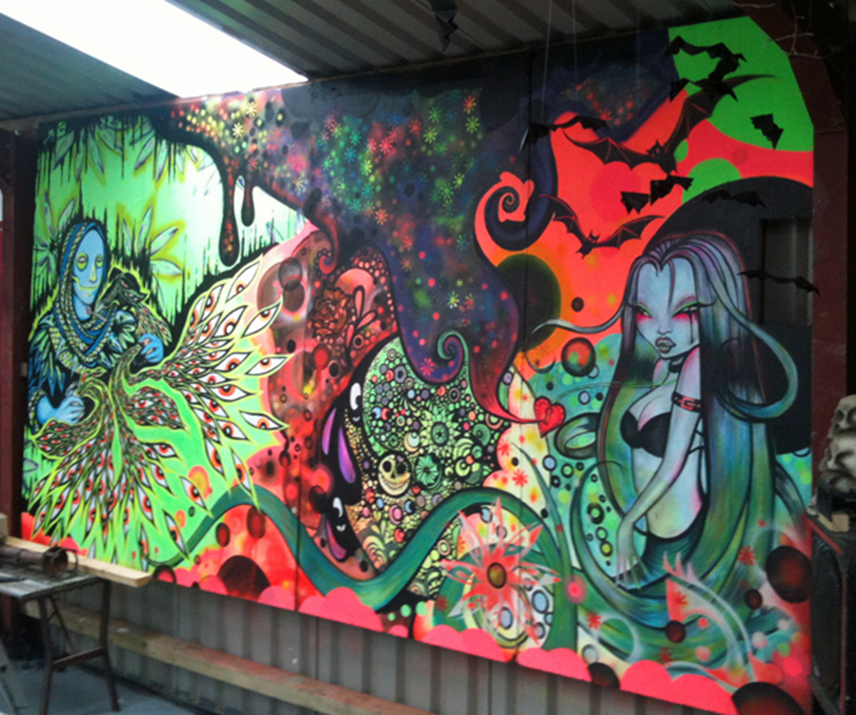
SPECIES is a yearly festival that takes place in the Iron Mountains in County Leitrim. The festival is organised and run by Ilíocht O’Brien and his wife Harriet at their mountain home, and it features a vast array of Irish talent from both sides of the border, and abroad. The festival venue site has a very striking appearance with psychedelic coloured spiritual (but fun) murals mixed with Halloween images dotted around the venue. The first SPECIES festival was held during the May bank holiday weekend in 2015.
Now, over at An Dómhan Ilíocht, as Mr O’Brien calls it, they are busy preparing for the next Gothic and Industrial arts and culture gathering.
On the subject of the SPECIES festival return, Ilíocht said: “We are taking a break from hosting festivals up here while we are working on upgrading the site. SPECIES will return when we are ready, and at that time we will advertise extensively, and hope to re-unite all the beautiful weirdos up here!”
Psychedelic looking mural on site at SPECIES (above). (Photo: Derek Price)
The Great Hall band and DJ performing area at SPECIES. (above). (Photo: Derek Price)
A colourful wall mural at the venue. (above). (Photo: Derek Price)
Dublin duo Freak Control onstage. (above). (Photo: courtesy of Kilian McLiam)
DJ Syrinx (above). (Photo: Derek Price)
Outdoor scenery at SPECIES. (above). (Photo: Derek Price)
There is a big selection of vendors at the festival, selling all types of wares like clothing, furniture throws, and various kinds of fun bric-a-brac and knick-knacks. (above). (Photo: Derek Price)
Cute cuddly items on sale at the stalls. (above).(Photo: Derek Price)
SPECIES revellers keep warm well into the night (above). (Photo: Derek Price)
A view from the camping area (above).(Photo: Derek Price)
Species spooky environment with appropriate mysterious figures (above). (Photo: Derek Price)
Ilíocht,- the festival organiser, on the right, with a friend. (above). (Photo: Derek Price)
The number of people reaching out to sexual abuse services has almost tripled since before the Covid-19 pandemic.
By Aly McGrath
In 2020, WomensAid.ie recorded that they had 29,717 contacts with the organisation. This is a rise of 10,628 from 2018.
WomensAid is an organisation that works to protect women and children from domestic violence. It offers support to those who have been affected by abuse and work towards receiving justice and social change.
The number of contacts dropped slightly since the climax of the pandemic with it currently standing at 26,906 according to the National and International Statistics on WomensAid.ie.
Covid-19 was found to be one of the busiest years for organisations such as WomensAid. In 2020, Safe Ireland found that within the first six months of the pandemic 3,500 women and 600 children contacted the domestic violence service for the first time. This equates to 19 women and 3 new children every day.
In a press release done by WomensAid on February 15th, 2021, the organisation said that “young women experiencing abuse risk are being left behind during the covid-19 pandemic. Reports from other jurisdictions indicate that instances of image-based sexual abuse have surged since last March.”
In the same press release CEO, Sarah Benson talks of the dangers of online and digital sexual abuse. “We need to remember that you do not need to be living with a partner for them to target and abuse you when you can be achieved through digital and online means. This abuse can disproportionately impact young adults.”
Sexual abuse online or in person can have disastrous effects on a person. 84% of young women have reported that they suffer anxiety, depression and low self-esteem whilst being isolated from family and friends as a result of the abuse. Other results have been reported, such as suicide ideation and hospitalisation due to physical injuries.
“We cannot continue to stand over a situation where such a significant number of young women, many minors, are deeply harmed and traumatised at the hands of current and former intimate partners,” Benson explains.
The organisation announced a new campaign early this year called the ‘Too Into You’ campaign. It provides a wide range of tools and resources for young people including a relationship health check quiz. This quiz checks for the signs of abuse in relationships and has information on legal protection and a guide to staying safe online. The organisation hopes that this campaign may help anyone affected by intimate relationship abuse or concerned about a friend or loved one who is at risk.
“We encourage anyone who is anxious or worried about their relationship to reach out for support and remember if it feels wrong, it probably is.” says Benson.
If you have been affected or know anyone at risk of any topic in this article, please call the WomensAid 24hr National Freephone Helpline on 1800 341 900 or contact their private chat rooms to receive support and advice.
Taxi’s warn that the shortage of drivers will only increase over the Christmas period.
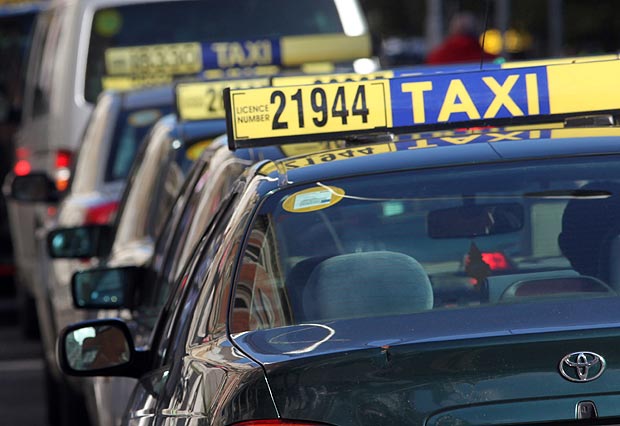
Taxi rank in the heart of the city.
By Lucy Harris
After two years of staying home, Dublin city is slowly starting to return to her old self.
The beginning of the Christmas chapter only confirms this fact. The streets, now filled with happy shoppers and dotted with musicians give an atmosphere of a pre-pandemic Dublin. December is, without fail, one of the busiest months that Dublin experiences every year.
But, with the average rent in Dublin City Centre sitting at just over €2000 per month, many locals face the daunting experience of trying to return home after a day in town. It’s no secret that Dublin’s transport system is in need of improvement. In comparison to other European cities, it rates pretty low.
Berlin has the U-Bahn, which runs 24 hours, at 15 minute intervals. Paris has the Noctiliens night bus, a series of 47 lines which crisscross the city and outer suburbs of the French capital. Madrid boasts a rate of 89% of its inhabitants living 1 km or less from their nearest station.
In Dublin, after midnight, the options become very limited. The Luas and train cease running, along with the majority of buses. The exception, of course, being the Nitelink, which operates on a Friday and Saturday night with 13 buses running once an hour between midnight and 4am.
For many people, a taxi is the only course of action. The introduction of apps such as, Free Now and Bolt have streamlined the act of getting a taxi. A quick click of a button and within 3 minutes a taxi will apparate, as if from thin air.
But it seems that the demand far outweighs the supply. Reports from individuals who have been left wandering the city centre in hopes of flagging down a taxi for hours after their night out finished, are being told on Twitter. One user expressed his disappointment in the situation, “I’ve been so frustrated lately living in Dublin. Everything is expensive. On top of that, we have a taxi shortage. I was out last night and although my night ended at 1am, I couldn’t find a taxi for an hour. I felt so helpless”.
“Covid played a big part for a lot of drivers”, explained David Dunne, local taxi driver in the Dublin 7 area.
“Before the pandemic, nobody had a second to think, for me anyway I was working over 60 hours a week but then all of a second, I had all of this time.”
He goes on to explain how during the lockdown he switched nights for daytime work. A sentiment that was reflected in a survey released by the National Transport Authority (NTA) that stated that only 29% of registered taxi drivers in Dublin are currently working on Friday and Saturday nights. An element of fear regarding safety also has a part to play for the decreasing amount of taxi drivers left on the streets.
“If a group of drunk people get in the car there’s a way higher risk of something going wrong”, says Dunne. “I’ve had a few cases of people running off without paying or getting sick in the car- if that happens the car is off the road for the night and I’ve lost my income for the week”.
Dunne also goes on to explain how argumentative people can get late at night, saying how a lot of drivers “just don’t want the hassle of it anymore”.
Other contributing factors include the rise in the fees that apps like Free Now take from each journey. Free Now increased the fees that they charge drivers to 15% per journey effective from March 2021.
“When I started it was a 10% fee with Free Now, it keeps gradually getting higher and higher each year”. Dunne also goes on to talk about how, because of these fees, many drivers opt to switch off the app during busy periods and attempt to avail of cash payments.
So what does the future look like? Well, according to Dunne, the announcement of a 6am closing time for nightclubs should ease the load. “At the moment everyone in Dublin is looking for a taxi at 3am because that’s when everything ends. I’m hoping the new rules give us a bit more of a gradual night of work” ends Dunne.
Diwali, (festival of lights) is a popular Hindu festival which celebrates the triumph of good over evil is celebrated in conjunction with the Hindu New Year all over the world.
By Nimra Ahmed
‘Diwali’ or the ‘festival of lights’ is a religious festival for Hindus and ties in with the Hindu New Year. It is celebrated by Hindus, Jains and Sikhs. Diwali means ‘row of lights’ in Sanskrit. It is a five day festival between October and November depending on the moon sighting. Diwali is generally a time for visiting family and friends, exchanging gifts, wearing new clothes, feasting, feeding the poor, and setting off fireworks. Diwali represents the triumph of good over evil, light over darkness and wisdom over ignorance.
For the Hindus, it stands for different traditions in various area. In the north of India, it symbolizes the victorious return of Prince Rama with his wife, Sita, and brother, Lakshman, from a 14-year-long exile and war. People of Ayodhya lit lamps along the way to light their path in the darkness. In the south, it is the day Lord Krishna defeated the demon king Narakasura. In western India, the festival is the day that Lord Vishnu, the Preserver (one of the main gods of the Hindu trinity) sent the demon King Bali to rule hell.
For the Jains, Diwali is the day when the last of the Jain Tirthankaras, Lord Mahavira, reached nirvana, also known as complete knowledge and enlightenment.
For the Sikhs, Diwali is a story of the struggle of freedom because it celebrates Guru Hargobind’s, (the sixth guru) victory from Emperor Jahangir, who had him imprisoned and 52 other princes with him, in 1619. Guru Hargobind did not leave the prison for freedom until he was able to take the princes with him.
Diwali- by Nimra Ahmed.
Many consider Diwali to be a fresh start, similar to the Lunar New Year in January. Many people clean, renovate, decorate their homes and buy new clothes in preparation for the upcoming year.
The ‘Tilak ceremony’ is where the hosts apply a red ‘Tilak’ (made of red paste) on the forehead to welcome and honour guests.
The colours for Diwali are: Red, Yellow Magenta, Blue . Rangoli’, which means “an array of colours” in Sanskrit. Rangoli is a tradition that dates back nearly 5,000 years to the Aryans.
Rangoli has different names depending on the Indian state and culture. They are usually made outside the main entrance, in the early mornings after cleaning the area as a welcoming gesture to the Gods for good luck. Rangoli designs are bright, colourful and beautiful made using rice, flower petals or coloured sand. Rangoli is intended to welcome Lakshmi (the goddess of wealth and good luck) into their homes and lives. It represents the happiness, positivity and liveliness of a household.
During Annakut, people prepare and offer a large variety of vegetarian food to Lord Krishna as a mark of gratitude. There are 56 different dishes. Annakut means ‘mountain of food’. The story behind it is that Lord Krishna saved the people from torrential rain by lifting Govardhan Hill as shelter, so the ‘mountain of food’ represents the hill and the food represents the people’s gratitude towards Lord Krishna.
The national Indian dress for men is Kurta (shirt) and pajama (bottoms). Kurta is a long loose shirt, which falls below or may be just above the knees. It used to be worn by men but now it is a uni -sex dress. For the women it is the sari. There are many other traditional dresses depending on which area of India you belong to. The word ‘sari’ comes from a Sanskrit word meaning ‘strip of cloth’.
Reporters Shay Galon, Leigha O’Reilly Hughes and Jane Byrne all take to the streets of Dublin to ask people about their Christmas wishes and the best spots to be in at this festive time of year!
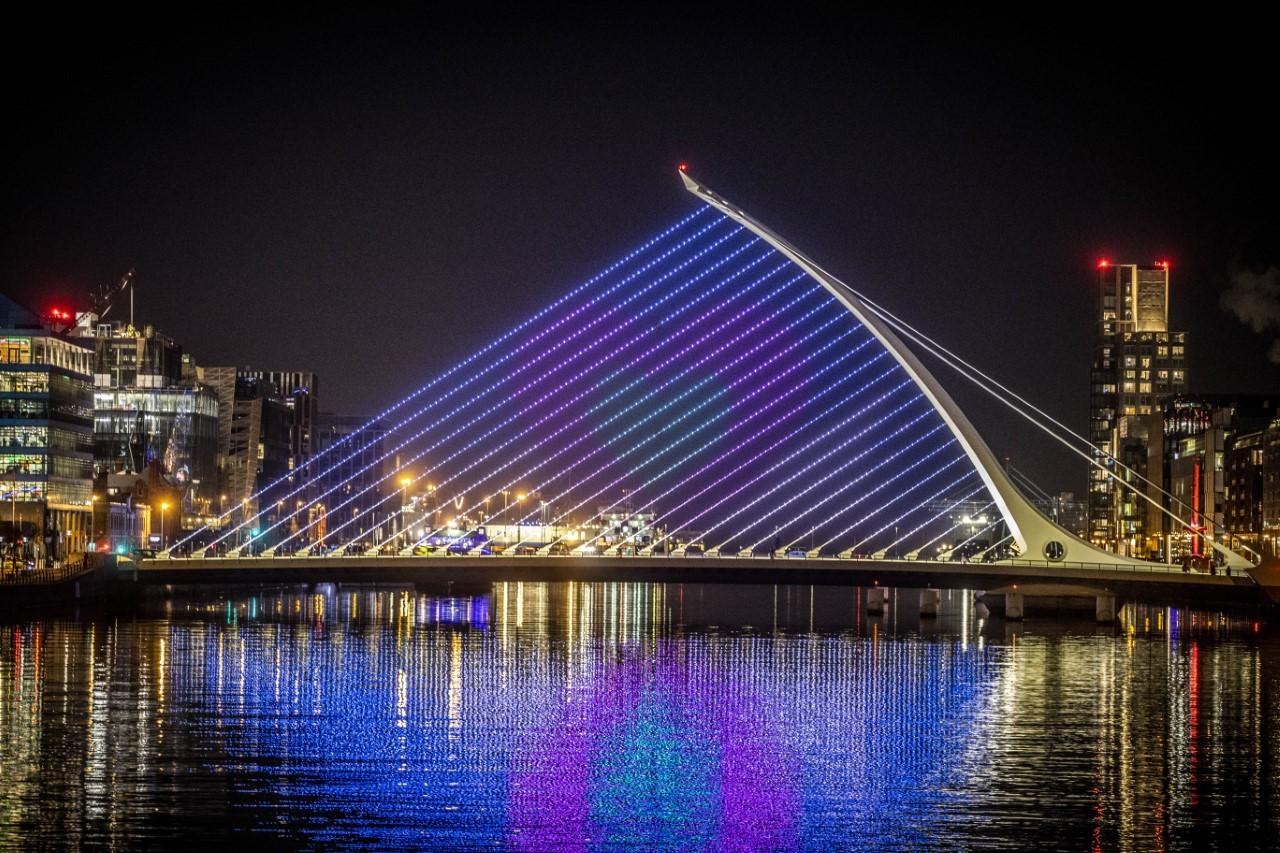
Samuel Beckett Bridge, photo credit: Conor McCabe
After a long year and the beginning of a cold winter, Dublin lights up to get everyone in the Christmas mood.
Dublin City Council returns with their very popular ‘Dublin winter lights.’ The lights were first switched on, on November 15th and will stay on until January 1st. Twenty one locations, which is an increase of five from last year have been transformed with colourful projections and light displays. Two locations, one on the Southside and the other on the Northside are walking trails that bring the public across Dublin in the most Christmassy way. A team of over sixty people work hard every year to deliver the winter lights.
The Lord Mayor of Dublin, Alison Gilliand welcomes the Christmas lights back. “I’ve been a huge fan of ‘Dublin Winter Lights’ ever since it began in 2018. The contrast between the bright lights and the dark evenings makes for a stunning backdrop to the city.”
Custom House – Photo credit: Conor McCabe
In an effort to cut down on CO2 emissions Dublin City Council announced that no diesel generators were used this year. Instead, where main power was not accessible, they used Hydrotreated Vegetable Oil which is made from 100% renewable waste materials and results in an up to 90% reduction in CO2 emissions. Furthermore, they recycle all materials and branding from year to year and store all lighting in wooden crates instead of single use plastics.
A new location that was added this year and is proving very popular is the light installations at Merrion Square park. So much so that six new dates have been added allowing the light show to run every day up until December 22nd.
The park has been transformed into a magical winter walk with light installations, a 15m high Christmas tree in the heart of the park projected with magical images, a virtual snowstorm and dancing penguins and polar bears. At the end, children are seen begging their parents for a nutella crèpe whilst adults can enjoy a mulled wine under the lights. Although tickets are free, due to limited numbers you are asked to book your free ticket online before attending.
Other locations garnering spectacular sights include, Trinity College, Grafton Street, City Hall, Millennium Bridge and the Samuel Beckett Bridge among others.
Btec GPO, photo credit: Conor McCabe
New restrictions on nightclubs, the hospitality sector and vaccine requirements mean that we will be looking at a Covid Christmas for the second year in a row. However, a free walk around the Christmas lights in Dublin City is sure to lift the spirits. In the video attached, we talked to the people of Dublin and gave you a look around the winter lights to get you in the Christmas mood.
By Jane Byrne, Shay Galon and Leigha O’Reilly Hughes
After a long year and the beginning of a cold winter, Dublin lights up to get everyone in the Christmas mood.
Jane Byrne, Shay Galon and Leigha O’Reilly Hughes asks people in Dublin what they want for Christmas
Dublin City Council returns with their very popular ‘Dublin winter lights.’ The lights were first switched on November 15 and will stay on until January 1. Twenty-one locations — up five from last year — have been transformed with colourful projections and light displays. Two locations, one on the Southside and the other on the Northside, are walking trails that bring the public across Dublin in the most Christmas-y way. A team of over 60 people work hard every year to deliver the winter lights.
The Lord Mayor of Dublin, Alison Gilliand, welcomed the Christmas lights back. “I’ve been a huge fan of ‘Dublin Winter Lights’ ever since it began in 2018. The contrast between the bright lights and the dark evenings makes for a stunning backdrop to the city.”
Custom House – Photo credit: Conor McCabe
In an effort to cut down on CO2 emissions Dublin City Council announced that no diesel generators were used this year. Instead, where main power was not accessible, they used Hydrotreated Vegetable Oil which is made from 100% renewable waste materials and results in an up to 90% reduction in CO2 emissions. Furthermore, they recycle all materials and branding from year to year and store all lighting in wooden crates instead of single use plastics.
A new location that was added this year and is proving very popular is the light installations at Merrion Square park. So much so that six new dates have been added allowing the light show to run every day up until December 22nd.
The park has been transformed into a magical winter walk with light installations, a 15m-high Christmas tree in the heart of the park projected with magical images, a virtual snowstorm and dancing penguins and polar bears. At the end, children are seen begging their parents for a nutella crèpe whilst adults can enjoy a mulled wine under the lights. Although tickets are free, due to limited numbers you are asked to book your free ticket online before attending.
Other locations garnering spectacular sights include, Trinity College, Grafton Street, City Hall, Millennium Bridge and the Samuel Beckett Bridge among others.
Btec GPO, photo credit: Conor McCabe
New restrictions on nightclubs, the hospitality sector and vaccine requirements mean that we will be looking at a Covid Christmas for the second year in a row. However, a free walk around the Christmas lights in Dublin City is sure to lift the spirits. In the video, we talked to the people of Dublin and gave you a look around the winter lights to get you in the Christmas mood.
Reporter Jane Byrne went out on site to document the aftermath of the Stoneybatter eviction.
On Wednesday the 23rd of October, a private security firm, attempted to evict housing activists at 23 Prussia Street, Stonebatter.
The site has been occupied by housing activists since early September and is known amongst the community as Sunnyvale.
The activist group known as ‘ThatSocialCentre’ on Instagram, announced on 10 September that they had “occupied an empty corner of Stoneybatter.”
They outlined the plans for the space by saying, “we hope to clean up, build infrastructure, host events and workshops, and resist any further eviction attempts.”
Since then, the group has hosted environmental workshops, bike fixing days and food drives.
On 23 October, the group called out for support at the site on social media. Footage of the private security firm violently evicting activists was quickly shared around and soon, the story had dominated Twitter and Instagram newsfeeds.
The McGrath Group, who owns the site, are ‘a privately owned investment and development company operating in Ireland, the U.K. and Germany’ according to their website. Randelswood Construction LTD which is an extension of the McGrath group wishes to demolish the infrastructure currently at 23 Prussia Street and replace it with 166 build-to-rent apartments. This is in accordance with a planning submission considered by An Bord Pleanána, Ireland’s national independent planning body that decides appeals on planning decisions.
In a statement given to The Irish Times, The McGrath Group was issued with a High Court order by Dublin City Council, instructing it to remove squatters from the site on Prussia Street. The group was legally required to keep the site vacant because of the council’s concerns about “serious fire and safety risks and the overall poor condition of the existing buildings,” it said.
The Guards were present at the eviction. A Garda spokesman told Dublin Live no injuries had been reported during the altercations but they will be carrying out further investigations into the incident. He continued, “Gardaí from the Bridewell attended at a property on Prussia Street Dublin this morning, 27 October 2021, where a property owner, in compliance with a court order, was securing a premises and facilitating access to persons to remove personal items.”
Although the group managed to resist the eviction, the area was destroyed. Currently, they are working on rebuilding the space and are calling out for help across their social media platforms. Supplies needed include food, kettles, boilers, and gardening gloves among other things.
In the video attached, you can see the aftermath to the site. We spoke to Em, one of the activists who wishes to conceal her identity.
As this is an ongoing story updates can be found at thatsocialcentre on instagram
**The McGrath group refused to comment on this matter.
The Guards could not be reached for comment.
All comments in the video are those of activist Em.
February 29th 2020 marked the first confirmed case of Coronavirus in Ireland. With the pandemic nearly at the two year mark, mental health has plummeted to record lows.
Unprecedented challenges such as working from home, health and safety concerns, nationwide lockdowns, financial stress and the loss of loved ones have caused mental health to decline at a rapid rate. Many argued that services were inadequate even before the pandemic and concerns of a mental health crisis are rising with some even dubbing it a ‘second pandemic.’
With new restrictions being announced daily, limits on hospitality reintroduced and work from home mandates being encouraged, mental health will continue to decline.
The Central Statistics Office began conducting surveys in April 2020 which included the mental well-being of respondents. ‘The Social Impact of Covid-19’ surveys asked people a variety of questions over four different periods of the pandemic. Topics asked included, general mood, feelings of loneliness, government compliance, easing of restrictions, financial situation and the future of the pandemic.
Statistician and author Claire Burke notes, “The first Social Impact of COVID-19 survey was undertaken in April 2020 with the purpose of measuring the impact COVID-19 was having on Irish society and how it was impacting different people in different ways.”
The surveys were conducted at significant points throughout the pandemic. They began in April 2020, when Irish society first endured the impacts of COVID-19. The second survey was in August 2020 when the public were living under Level 2 restrictions. Again, in November 2020 when the people of Ireland were living under Level 5 restrictions with the expectation of returning to some form of normality and finally to February 2021, during the third lockdown.
There was no more surveys conducted after this time. This was due to the vaccine rollout and the hope that Ireland had gotten over the worst of the pandemic and resource issues.
The survey asked people to rate their overall life satisfaction at that current time. As the pandemic continued, more people began rating their life satisfaction as “low” all or most of the time. The only time an increase in life satisfaction occurred was in August, notably when the public were living under Level 2 restrictions which included ease of travel restrictions and good weather.
Data on overall life satisfaction and more can be found here:
At every single interval, female recipients were more likely to identify as feeling depressed or down all or most of the time and admitting to having a lower overall satisfaction with life. Female respondents were also more likely to report being extremely concerned about their own health, somebody else’s health and maintaining social ties than male respondents.
Image: CSO
Women aged between 18-34 were most likely to express feelings of loneliness in every interval. This was followed by men in the same category. Whereas people aged 70+ were least likely to report feeling lonely. This is surprising as over 75s were ‘cocooning’ under Government restrictions and were the least likely to be mixing with friends and family or working during these four intervals.
Mental Health Ireland CEO, Martin Rogan discusses the impact the pandemic has had on people.
“Anxiety in the face of an uncertain, unfamiliar threat is a perfectly healthy response, designed to keep us all safe and alert to risk. However, it is not possible for an individual or indeed a community to maintain this level of hyper-vigilance over a protracted time period and this can have a depleting and exhausting effect. Over time this can impact mood and a sense of purpose and can reduce our sense of self-efficacy, self-agency, confidence and hope.”
This has translated to more people relying on mental health services. “We have seen our online traffic double over the past year and nine months. When the protective Public Health Measures were introduced, isolation and loneliness came to the fore. Other providers have reported to us a rise in Domestic Violence,” explains Rogan.
This is mirrored in Spectrum Health’s data. The counselling company recorded that over 75% of their pre-existing in person clients moved to their digital services when the pandemic started. Furthermore, over 90% of clients continued with video or phone counselling for more than three sessions.
The pandemic has also brought mental health difficulties to people who otherwise would have never suffered. “Taking away hobbies such as sport caused stress and impinged on the person’s sense of wellbeing and identity. This was an unfamiliar experience for them and many were unsure how to address this new experience or where they could seek support”, Rogan says.
He continues, “Women are more likely to seek help from friends and family and our society encourages and allows for this, until recently, men were expected to simply ‘get on with it’, be self-reliant and macho and to remain silent and stoic. These stereotypes are hardwired into our social expectations and have profound effects on how people understand and recognise distress in themselves and others.”
Experts predicted mental health in Ireland would improve overall with the vaccine rollout as life would be able to continue as normal. However, with cases as high as they were pre vaccine, the issue has only been exacerbated.
Counselling psychologist Dr Martha Whelan reflects on how the pandemic has affected mental health for her practise.
“Since September of this year I have nearly doubled my clientele. A lot of the same issues are arising – depression, anxiety, worry, loneliness and hopelessness.”
She explains that a lot of her patients are fearful over case numbers and loosing that sense of normality again.
“If the CSO were to conduct more well-being surveys I’m sure they would find the same outcomes of people who are increasingly worried, stressed and lonely.”
Dr Whelan’s advice is clear. “Mind yourself by doing something you like, whether that be getting out for a walk a bit earlier for some sunlight or meeting friends, it is important to stay connected to people and get outside when possible.”
The surveys shone a light on the drastic effect the Covid-19 pandemic has had on people over the last 20 months. Mental health Ireland has set up a support page on their website which can be found here: https://www.mentalhealthireland.ie/get-support/covid19/.
Alternatively you can call Pieta House 1800 247247 or text “HELP” to 51444, Contact Aware at 1800 80 4848 or supportmail@aware.ie or the Samaritans at 116123 or jo@samaritans.ie. You can also text “HELLO” to 50808.
Shay Galon reports on the Stepping Stone Forests in the Sean Walsh Park, Tallaght, allowing future generations to interact with the biodiversity that exists in a forest.
Stepping Stone forests are small densely planted forests of native Irish trees. The method of planting these small forests is inspired by the world-renowned botanist Professor Akira Miyawaki. The soil preparation and dense planting ensures that these forests grow and develop extremely quickly. The proposal is to create a forest within the grounds of almost every school in the Tallaght area.
Many of these are DEIS schools in areas of social and economic deprivation.
Stepping Stone forests consist of a variety of native Irish trees and shrubs and can be as small as 100sq meters. The soil preparation, dense planting, and extensive mulching means that these small forests grow very rapidly. Using bare root plants and shrubs is cheaper, easier and generates less waste (there are no pots to get rid of).
One aim is “to convert open parkland,” which John Kiberdy, creator of the project, coins as a “green desert”, to large areas filled with local greenery and plants to both battle the negative effects of global warming while also allowing schools to learn about biodiversity directly.
“Where suitable space and conditions exist, we will plant the forests in a horseshoe shape. The space within the horseshoe will give the school children access to the forest as well acting as an outdoor classroom.”
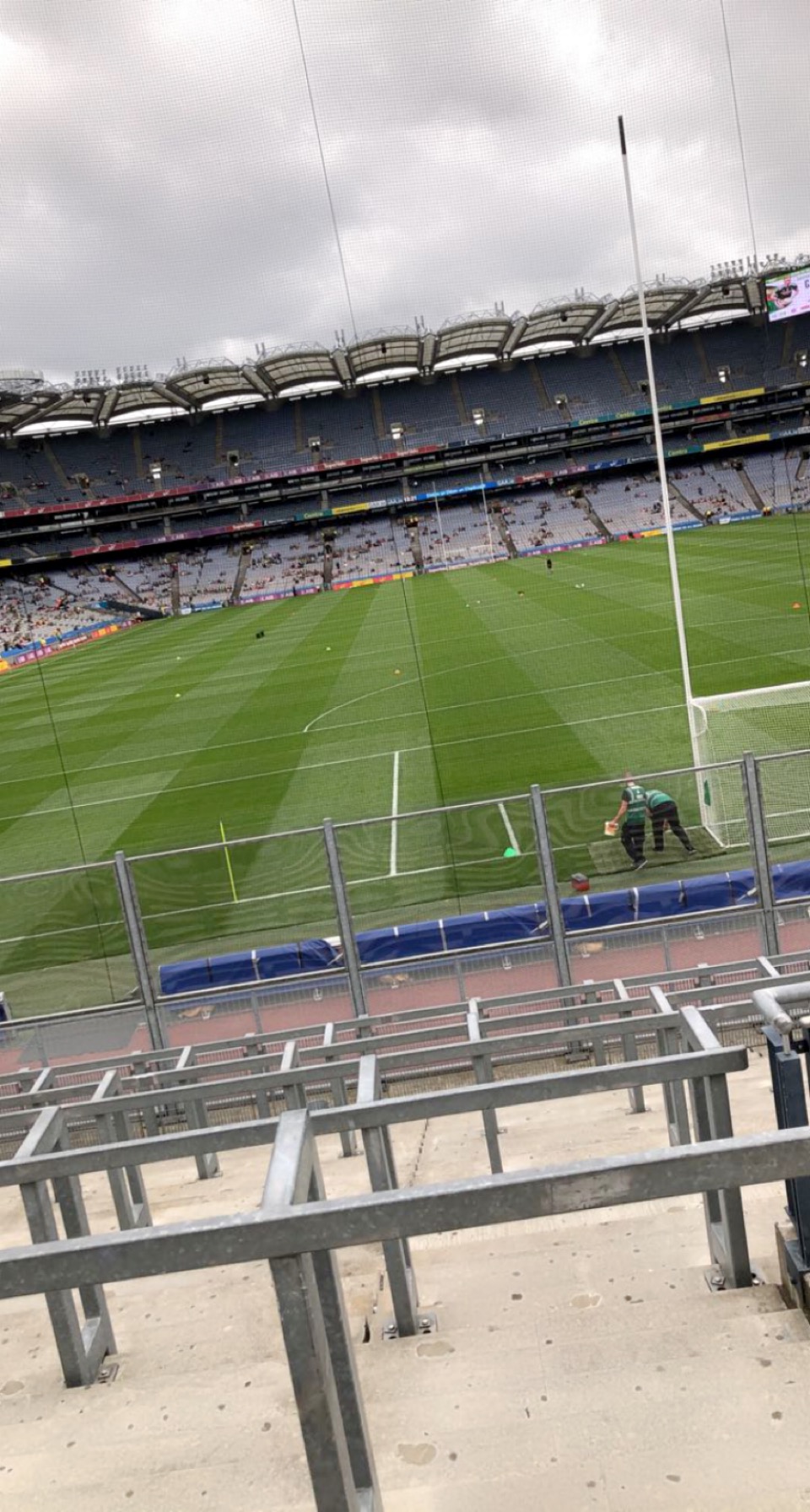
Dylan Kerrigan is joined by David Rispin from the ‘WeAreMeath’ podcast to discuss Meath GAA’s successful 2021 and the counties aspirations for 2022.
With the Meath minor team winning their first All-Ireland in 29 years and the Meath ladies winning their first ever Senior All-Ireland title, 2021 can be deemed as one of the most successful sporting years for the county to date.









You must be logged in to post a comment.