
An amendment to the Adoption Act 2017 now recognises foster children, who were born to married parents, as eligible for adoption.
The new legislation, which was implemented in mid-October, opens a new door for children in foster care to be adopted. Before this, they were not permitted to be adopted, even if they had spent a significant amount of time living with one foster family.
According to figures provided by TUSLA, the Child and Family Agency, under the FOI Act, the number of children in the Irish foster care system has been decreasing since 2013.
In 2013, the overall number of children in foster care, whether based with a foster family, or living with relatives, was at 6,009. This was the highest it’s been in the past five years.
The newest report show that as of 31st December 2016, 5,817 children were in the foster care system, a decrease of 192 since 2013, but still higher than in years previous to that.

Under this new act, unmarried couples who have been living together for more than three years will also benefit from this change, as they will be able to adopt a child together. Gay couples who are in a civil partnership can also now adopt.
This is one of the most significant changes in family law since the Children and Family Relationships Act 2015. The act addressed anomalies in family law and gave a new meaning to the word ‘family’. It gave rights to grandparents, step-parents and gave other relatives new avenues in which they could seek custody and guardianship of a child.
However, domestic adoption figures have dropped significantly in the past decade or so, from 253 adoptions in 2005 to just 95 in 2016.
“Overall, adoption numbers had been in decline generally over the past number of decades, mainly due to a wide variety of social and cultural factors and changes in attitudes, and this has continued through the changeover,” said Mark Kirwan of the Adoption Authority of Ireland (AAI).
The largest decrease in domestic adoptions between the years 2005 and 2016 was between 2010 and 2011. Figures dropped from 189 in 2010 to 39 in 2011.

The main reason for this was because the Adoption Act 2010 commenced in November of that year. The enactment of the Adoption Act 2010 made it a requirement that all applicants wishing to adopt in Ireland must be in possession of a valid Declaration of Eligibility and Suitability before an adoption order can be made.
It necessitated major changes in the assessment procedure, leading to a drop in orders granted immediately afterwards as new responsibilities were assumed by Tusla.
In 2016, a total of 95 Adoption orders were granted. The majority of these, 65, were made in step family adoptions.
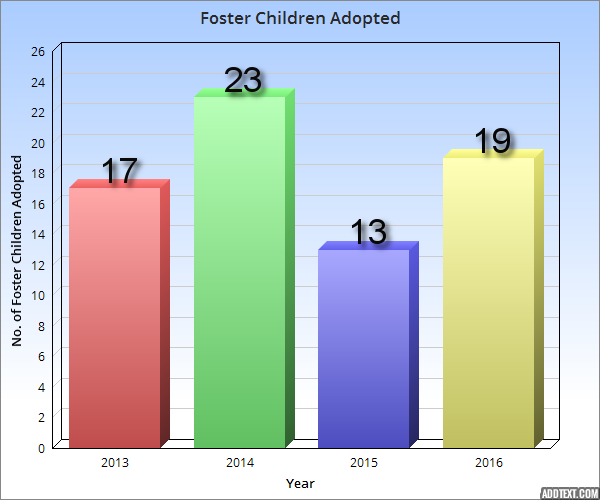
While the majority of these were step family adoptions, nineteen adoptions were made in respect of children who had been in long term foster care. This was an increase of three since 2015 where there were sixteen foster care adoptions made.
2014 still had the highest number of foster care adoptions in the past five years, with 23, an increase of six from 2013.
It is expected that these numbers will rise over the coming years because of the modified Adoption Act.

By Megan Walsh and Keeva Tyrrell


You must be logged in to post a comment.