Tag: Food

  • A catch up with the World Young Chef of the Year, Mark Moriarty

    A catch up with the World Young Chef of the Year, Mark Moriarty

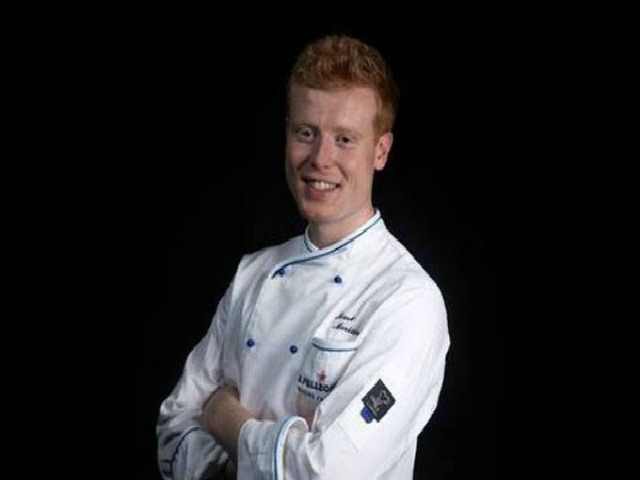
    Mark Moriarty is one of the busiest men in Ireland at the moment. After winning the title of World Young Chef of the Year, it has been all systems go for the young over-achiever and last weekend was certainly no exception.

    Moriarty served as one of the main attractions at the brand new four day food festival – Taste City Fusion – and created a four-course Medieval Banquet in Christchurch Cathedral, cleverly coining the phrase ‘peasant chic’ for the event.

    At just 23 years of age Moriarty has a CV that would be envied by some of the most esteemed and experienced chefs in Ireland. From working as a chef-de-partie at the Michelin star Greenhouse restaurant to winning the ‘Euro-Toques Young Chef of the Year’ at just 21 and going on to win the ‘San Pellegrino World Young Chef of the Year’, he’s definitely a force to be reckoned with.

    Thankfully, Moriarty was able to take time out of his hectic schedule to talk to The City. During our catch up, he revealed how he came to terms with giving up his dreams of working in a cockpit for working in a kitchen and how he has tried to remain humble and down to earth despite his extraordinary success.

     Where did your love of food stem from?

    “It all started when I was a kid and I used to go fishing with my dad in Co. Kerry. He had a small boat, so we used to fish for lobster and mackerel, that’s when I first realised food was something I was really interested in. I then started watching Hugh Fearnley Whittingstall’s River Cottage series religiously and after that my interest in food continued to develop and I started reading and watching as much about food as I could.”

    When did you first decide you were going to be a chef?

    “When I was in fourth year I was really interested in home economics and my teacher at the time told me I should write to some restaurants and ask for work experience. So, with his advice, I took it upon myself to hand write ten letters to the restaurants I deemed to be the best in Ireland at the time. This endeavor resulted in me completing two weeks of work experience in Kevin Thornton and Neven Maguire’s restaurants and after that I was hooked.”

    Could you ever see yourself doing something else?

    “I think if I was to ever do something else it would always have to be food related. I just love the buzz of working in a kitchen too much to ever give it up. However, the first thing I ever wanted to be was a pilot, but that ended when I was about thirteen or fourteen once I realised my real passion lay with food.”

    What made you decide to enter the competitive side of the culinary world?

    “I wasn’t the best at sports in school, so once I discovered I was good at cooking I knew it’d bring out my competitive side and let me excel at something I enjoy. When you enter a competition on your own it’s a totally different ball game to working in a restaurant for a chef, because when you’re working for someone you always know that it’s going to come back to the head chef if there are any major problems, whereas when you enter one of these competitions independently it’s just your neck on the line. Although it’s really scary, it’s also really thrilling.”

    Describe in just three words how it felt being named ‘San Pellegrino World Young Chef of the Year’.

    “Proud, satisfied and fearful.”

    You’re an advocate for Irish food at home and abroad, do you think Irish food has gotten the international recognition it deserves?

    “No, I don’t think it has, but the last two years have suggested that the next five years are going to be very big for Irish food. The past year we have had the World Young Chef award, the Michelin guide handed out four new stars to Irish restaurants and the Food on the Edge symposium that took place in Galway. So, I think now that our culinary talents can be seen on a world stage we will finally start getting the recognition we deserve.”

    Dublin city has an abundance of excellent, high quality restaurants, what would be your three favourite food spots?

    “The Greenhouse, 777 on George’s Street and Forest Avenue.”

    Do you think events like ‘Taste of Dublin’ and ‘Taste City Fusion’ will help showcase the talent and quality that Irish cuisine has to offer?

    “Yes, definitely, these events make food very accessible to the general public as well as the ‘foodie’. The events vary in price so you can still make the most out of the festivals without breaking the bank. I’d love to see these events expand around the country over the next few years.”

    Finally, what advice would you give to any budding young chefs who want to mirror your achievements?

    “Focus, believe and achieve. It’s also really important to have a good balance, especially if working as a chef is going to be sustainable in the future. I made sure not to miss out on all the things I wanted to do while I was working. I went to Thailand and on a J1, so as well as doing crazy hours in work, I always made sure there was a balance and I always had something to look forward to.”


    Photo: www.electricpicnic.ie
  • A behind the scenes look at Taste City Fusion

    A behind the scenes look at Taste City Fusion

    This weekend saw food festival Taste City Fusion arrive in Dublin.

    The four day event, which was sponsored by CityJet, celebrated the Irish food scene with cookery workshops, masterclasses and a selection of culinary treats on offer throughout the weekend.

    The City headed along to the event and brought you behind the scenes, showing what exactly the event had to offer, and what the vendors made of the experience.

    By Niamh Haskins, Laura Somers and Michelle Dardis

  • A taste of the sea at Matt the Thresher

    A taste of the sea at Matt the Thresher

    By Aoife Lawless

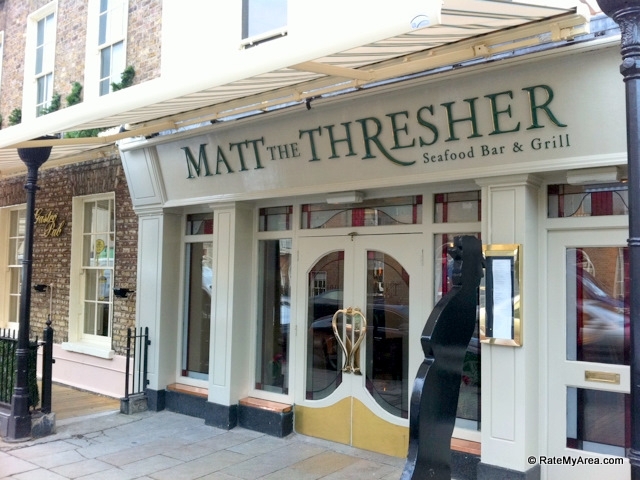
    Matt the Thresher, Pembroke street
    Matt the Thresher, Pembroke street

    Seafood lovers of the nation, stop what you’re doing and listen up! If like me, the edible bounties of the sea linger first and foremost in your ideal culinary experience then I give you; Matt the Threshers of Pembroke street, Dublin.

    I had heard of this restaurant many times and was aware that it promotes fresh fish and seafood in a fine dining and elegant arena, yet it was only recently that I had the joy of beholding its fishy wonder and wares first hand.

    Being a coastal native, I’ve grown up with an inherent respect for all the delights our ocean has to offer. As a child collecting periwinkles and crab fishing was a common pastime during summer months. The sight of crates of whelks by the pier, wafting their fresh and salty odours as they squirmed helplessly by the basin in Courtown is a vivid memory from childhood.

    This being the case, when I crave seafood I will not be sated by pathetic offerings of defrosted king prawns, frostbitten sea soldiers disguised in rich sauces.

    It is exactly for this reason that when I visit coastal areas renowned for their seafood, such as Donegal and Wexford that I become positively childlike in my excitement at the treasures proffered in their eateries. In my twelve years in Dublin my expectations for the capital to meet these expectations in the same manner has become pessimistic and positively jaded.

    It was then to my absolute delight to stumble upon the online menu for Matt the Thresher upon googling ‘top seafood in Dublin’. While hungrily ogling the menu online, my jaw dropped and quickly reset into grinning even drooling position to read of their ‘taste of the sea’ platter, an oceanic cacophony of oysters, crab arms and toes, prawns, lobster and a seasonal variety of shellfish. My mind was blown! The downside was, oh dear, the asking price of €60. Was I deterred? Was I heck! I may be a student on a budget but I have my priorities. I have been searching for the holy grail of the marine world, so who am I to look it in the face and argue over value. The ‘Phew’ moment came when my companion and I were seated and I enquired as to whether it was a sharing platter, the relieving answer was, “Yes, of course!” Happy days, €30 saved! I’ll have a glass of Sancerre to celebrate and celebratory it should be at €11.95 a glass.

    Our waitress for the evening was most intuitive. Once we learned of the sharing aspect of the platter and paused to deliberate over starters, she helpfully suggested the main course crab claws to share which, in our ravenous states we jumped upon eagerly and jokingly noted her telepathy.

    The crab toes were a wonder, not purely because of their fleshy goodness, but because of the simply rich and glorious savoury butter that dressed their de-shelled bodies. My palate recognised the usual notes of lemon, dill and chilli within the clarified butter which was a vibrant amber colour. They were served up with simply delicious homemade brown malt bread which was made to marry successfully with all seafood.

    When the platter itself was set in front of us, it was indeed a taste of the sea and nothing short of all my wildest seafood imaginings. The bountiful collection of crustaceans and molluscs were ingeniously spread over two tiers, one hot, one cold.

    The chilled bottom tier consisted of shucked oysters and little boats of baby gem leaves holding king prawns in marie rose. In the middle lay a small bowl of cold crab meat in a light dressing.

    The top tier was filled with steaming mountains of mussels and clams along with crab toes and prawns. Atop this sat huge crab arms and lobster claw and tail. The latter called for the use of the weaponry we had been armed with on ordering, a nutcrackers and a special long and thin fork-like device, used to draw the meat from beneath the stubborn shells of crustaceans. The hot molluscs were deliciously fresh and salty. We plucked them from their shells in quick succession one after another after another, breaking only to tackle the big guns; the crab and lobster.

    This slideshow requires JavaScript.

    At this point I should also mention the assortment of condiments and sauces we received with our mammoth dish, these included two flavoured butters, one of which was citrus, marie rose sauce, shallot vinegar (perfect for oysters) and Tabasco. It was after some time that we began to slow down and eventually come to a very final halt. It was with a heavy heart that I looked at the still teeming two tiered tower of uneaten shellfish. My personal mantra of ‘never leave a prawn behind’, instead of encouraging was now taunting. I was defeated.

    In retrospect, I think that not alone should this be advised as a sharing platter for two, but for three. The leftovers could have easily fed a third person amply. A doggie bag was never so necessary.

    That night I slept with one eye open half expecting a knock on the door from Greenpeace calling me to task for depleting the oceans.

    The experience overall was fantastic and I shall definitely return and probably very soon, but next time maybe to try their Dover sole or even just for a bowl of fresh mussels and that tasty brown bread. The best part of it all, guilt aside, was the bill at the end of the meal only came to €130 including various glasses of wine, the aforementioned Sancerre, Chablis and a less costly but much more palatable Viognier. Pretty good considering the excellent quality of the meal, great service and pleasant surroundings.

    Matt the Thresher, I will certainly be darkening your door again, Greenpeace and creatures of the ocean, please forgive me for I have sinned and will again..

  • Jimbaran sunset

    by Aoife Lawless

    This slideshow requires JavaScript.

  • Why does the kitchen have a glass ceiling?

    Female culinary students are at a premium but where are all the female chefs?
    Female culinary students are at a premium but where are all the female chefs?

    Aoife Lawless looks at what is holding back women chefs in high-end restaurants…

    What’s happening to all our female chefs? When I enrolled in Culinary Arts six years ago my fellow female classmates were in the majority, and most of us wanted to be chefs. A recent study conducted a survey of 170 Irish head chefs: only 15% were female. So where have the women gone?

    “Cooking has traditionally always been female,” says Máirtín Mac Con Iomaire, veteran lecturer at DIT Cathal Brugha Street. Mac Con Iomaire doesn’t agree that the industry as a whole is male dominated, and says the issue of gender divide in the professional kitchen boils down to “positions of seniority rather than a question of male dominance”.

    There is, he admits, a historic division of labour. “Historically, the female ‘cooks’ veered into institutional cooking, such as in hospitals and schools, whereas their male counterparts sought out ‘status’ as leading chefs in renowned restaurants. Female cooks, male chefs!” Similar “glass ceilings”, he says, loom over other professions such as teaching and nursing.

    Mac Con Iomaire went on to give me at least twenty names of prominent female chefs in the present day, most at Michelin level, spanning Britain and Ireland. However, such a short list succeeding only in driving me back to my original question: Where are all the female chefs?

    “Female chefs are often pushed towards the pastry section,” says researcher Mary Farrell. “A female chef interning at Dublin’s prestigious Michelin starred restaurant, Chapter One, was directed towards pastry by her male mentor, advising her that‘that’s where you’ll make money’.” Farrell, a PhD student, is trying to answer, in rigorous academic terms, that same question as to the whereabouts of leading female chefs.

    “They’ll make excuses about unsociable hours, the desire to rear a family and the assumption that female chefs will want to veer into pastry at some stage of their careers”,says Farrell, who doesn’t buy these answers and instead believes that “the industry itself is to blame”, that the male chefs in positions of leadership are controlling the fate of their female subordinates.

    A successful business woman herself, Farrell graduated from Cathal Brugha Street in 1984, long before the Culinary Arts programme became a degree. She has owned multiple businesses in the hospitality industry; she was head chef at one of these, Café Fresh, a vegetarian restaurant in the Powerscourt centre.. At present she owns and runs a catering company accommodating for special dietary requirements  such as Coeliac disease, dairy intolerance and diabetes.

    She has in the past worked with a male head chef who was “aggressive and resistant to change”, she says, creating an awkward and hostile kitchen environment for all his colleagues. As a woman, she was treated as though she “didn’t know what she was talking about”, no matter what the issue, and his opinion was “absolute”. When he left her organisation he went on to work at a Michelin level restaurant and she was forced to take over the kitchen. “In his absence a change occurred in the kitchen – the tension was lifted and the staff were happy.” She doesn’t think male chefs can look far enough past their own ego to see a restaurant as a whole entity, as a business, not just a stage on which they play the lead.

    Tom Kerridge, head chef of the Hand and Flowers, a Michelin two-star gastro-pub in England, made some controversial statements regarding female chefs at the Cheltenham Literature Festival in October. “I like girls in the kitchen a lot: it brings down that testosterone level.” He continued to disparage female chefs, stating that women lack the “fire in the belly” to make it at Michelin level. “They are out there; it’s just whether it’s the industry for them. I’m not sure, at that level,” he added before further patronising remarks such as “girls in a kitchen make blokes feel happy at work” before covering himself with a last-minute save: “This doesn’t apply to just girls. We have loads of blokes who do a runner because the pressure and intensity of cooking at that level is so intense.”

    All this talk made me think about my own kitchen experiences and reflected on how I had been treated as a young female chef.

    On my first internship I was immediately referred to the pastry chef for training in a separate kitchen from the main one. The pastry chef was delighted to have company in his usually segregated kitchen and I was relieved to not be joining a much feared “boys’ club” environment. I meekly pointed out in my mid- apprenticeship review with my college supervisor and head chef that I had no interest in pastry and perhaps I could be involved in the workings of the main kitchen. I was then entrusted to the sous-chef, a pregnant Polish woman who was strict but kind and taught me more in one month than I’d learned in all of my first year in college. The chef directly under her, a male chef, barked orders at me daily and refused to give me measurements for recipes whilst scoffing at my inadequacies.

    In my third year I interned at Fallon & Byrne and it was here that I fell back in love with cooking; I had already begun plotting a career as a writer, but this place drew me toward a career as a chef. The hierarchy of the restaurant was equally divided between males and females. The head chef was only 30 and had risen to his position not only through years of experience, but also through education. He had returned to Cathal Brugha Street a couple of years after completing his chef training in order to study management and it was with his combined skills he achieved head-chef status. His sous-chef was a very pregnant and very capable woman of the same age. They had worked together at a hotel and when he graduated to the position of head chef at Fallon & Byrne he took her with him, along with two other female chef-de-parties. Below the head- and sous-chef, male chef-de-parties outnumbered females three to two, but the numbers were evened out with the addition of a pastry chef and occasional chef-de-partie. Another intern from Cathal Brugha Street was female and, lastly, the recently promoted kitchen porter was a male commis-chef. The female chefs were both feared and respected, though they rarely raised their voices. They made it clear they had standards and these were adhered to even when they were not present. I continued to work for them throughout my final year in college and was never put in a position where I felt uncomfortable or undervalued because of my gender and the kitchen environment maintained constant professionalism.

    My experiences in a professional kitchen highlighted many of the issues Mary Farrell raises about attitudes to female chefs. I was directed towards pastry. Male chefs did, sometimes, try to undermine and bully me and certainly did succeed in clouding my judgement for a time. Yet the main excuse, as was given to Mary, of females stepping back for family life was unfounded in my experiences, I had witnessed female chefs balancing family life and their careers whilst still providing positive role models.

    But I was never content to chop and peel for endless hours, or endure burns, cuts and scalds on a regular basis in the hope of eventually obtaining a senior role in a kitchen after spending four years completing my degree. Perhaps therein lies the answer: education creates aspirations beyond manual labour for minimal reward. Many male chefs rise through the ranks from porter to head chef. The male students who dropped out of Culinary Arts continued in the profession, some of them very successfully. Many of my female peers continued their education at Masters and PhD level in areas of product development and education, the latter now delivering the lectures they once attended.

    The glass ceiling of female seniority in the professional kitchen may remain unbroken, for now, simply because female chefs may have their eyes on a bigger prize.

    By Aoife Lawless

  • Food Nostalgia


    A positive food memory never goes out of fashion.
    A positive food memory never goes out of fashion.


    By Aoife Lawless

    The rather ghoulish tradition of the the ‘last meal’ on Death Row was the inspiration for Melanie Dunea’s 2007 book The Last Supper, where she asked celebrity chefs about what they would choose as their final repast.

    The first instinct of many of the chefs was to impress, spouting a collection of pricey, luxurious ingredients prepare with complex cooking methods into dishes with exotic titles. However, more interesting was the reaction of a few other chefs who answered, one imagines, more honestly, with menus inspired by memories.

    One chef expressed a desire for his mother’s gravy to be the last thing he would taste. Another ‘envisions a picturesque white house on a farm, big sky, blueberries and a slow-cooked, cumin-rubbed, citrus-y pig, and his father making ice cream’ .

    The chef’s desire to taste his mother’s gravy before he departed the earth was a clear need for comfort, a comfort he imagined would be received through tasting something that had such positive connotations for him, a reminder of his mother and his childhood. A positive memory through the sense of taste, through food.

    The memory of a father making ice cream is again a memory of comfort associated with food and the senses. Even the thought of tasting the ice cream made the man be once again the boy on a farm watching his father making it. The clear images he conjures up displays the strong link between food and memory.

    Various autobiographical books have been written with the theme of food as a focal point throughout the lives of the authors. In The Gastronomical Me MFK Fisher puts her whole life experience in culinary perspective. Each milestone and important episode in her life is depicted through a gastronomical experience.

    So Fisher can recall when she first began to appreciate food, when her elderly grandmother took in a housekeeper who was a talented cook, creating new and exciting dishes for the family. The story of her life is told through culinary associations: for instance, a chapter is dedicated to her first school dance, yet the focus of the story centres on her first experience of tasting a raw oyster, which gives the chapter its name.

    Anthony Bourdain, chef and author of Kitchen Confidential, also uses food to tell his story. He recalls how he understood food was something wonderful from an early childhood trip to France. He recounts tasting Vichyssoise for the first time and describes it as the first food he’d really noticed as a ten-year-old kid. The fact that the soup was cold was completely new to him and he looked upon it as a discovery of amazing culinary proportions.

    While on the same trip, Bourdain, like Fisher, vividly remembers his first oyster and being utterly transfixed by this ‘glistening almost sexual looking object’. He was on a fishing boat with his family and they were each asked if they would like a fresh oyster from the water; he describes his fearless desire to be the first to try it as ‘proudest moment of his young life’.

    He also recollects, his parents pulling up outside La Pyramid, in Vienne, run by the famous and feared Fernand Point, on the same trip. They abandoned him and his brother leaving them a stash of Tintin books as a babysitter while they rushed in to dine. Immediately the young Bourdain’s brain set to work wondering what could possibly be contained within these walls. It  is to such childhood memories that he attributes his desire to cook and become involved with food, eventually becoming the successful chef he was for 25 years in Brasserie Les Halles, New York.

    The importance of memory for human beings is an invaluable tool which intertwines all the experiences of a lifetime and puts all new and future memories in context and perspective. The intrinsic connection of memory to our senses makes it all the more powerful as our senses are what in essence make us experience feelings and reactions towards people and things and situations in our lives. What each of the above examples has depicted is that our early memories of eating can influence us throughout our lives.

    Sometimes, in fact, we can be returned vividly to a moment in our forgotten past through our sense of taste. The taste of warm tea mingling with madeline crumbs in his mouth, returns Proust to a bygone moment of his life, where his aunt Léonie shared the ‘shell shaped biscuits’ with her nephew on Sunday mornings during his youth in Combray. Proust had completely lapsed the memory before revisiting the sensory moment. “The sight of the little madeleine had recalled nothing to my mind before I tasted it. And all from my cup of tea”.

    A childhood memory of a new and unusual taste such as Fisher’s incident of tasting the oyster for the first time at a school dance and being unsure how to eat it, or Bourdain’s delight at eating soup only to discover it to be cold yet delicious, is so powerful it can last a lifetime and the mouth’s memory of the taste will last a lifetime. Even when a memory is forgotten, if it were powerful enough at one time, taste can trigger it again in the future. It is an overwhelming concept, an ingenious trick by mother nature, to allow pleasant moments never be forgotten.

    Memory as it is associated with food through the senses is personal to all humans with their senses intact. Everyone has a clear memory of trying a new taste or tasting something disgusting and spitting it out. We go about our lives trying and tasting new things and creating new memories daily. The human experience is lived and remembered through the senses, the most powerful tool we have at our disposal.

  • Forget hangover deliveries – Dublin has a new delivery service

    Forget hangover deliveries – Dublin has a new delivery service

    561596_10152095843730637_1049667909_n

    The Dublin Hangover Service popped up on my radar around a year ago, invading my Facebook newsfeed as its page gained thousands of ‘likes’, seemingly overnight.

    The service was designed to bring items like McDonald’s, coke and crisps to punters who needed food the morning after a night out, but who also felt the journey to the outside world was just that little bit too much. The idea is undeniably genius, so I decided not only to track down the guys who started the idea, but also some people who had opted in for the service.

    However, there were a few problems.

    Problem 1: For a service that has over 33 thousand ‘likes’ on its Facebook page I couldn’t track down a single person who had used it. In fact, many people seemed to think that the idea was some kind of parody, even though many of these people had themselves ‘liked’ the Facebook page.

    Problem 2: (probably more of an actual problem than problem 1) The Dublin Hangover Service isn’t even a thing anymore.  It already came and went, running from August 2013 to Christmas the same year.

    10553364_735117426524044_1439782907051169540_n
    Image courtesy of Munch Run

    But, the story doesn’t end there. The makers of DHS have started up a new service in Dublin, called Munch Run. Munch Run is effectively the same idea, but take hangovers out of the equation and replace items like burgers and nuggets with sweets and crisps.

    I talked to James Bull, the brains behind both DHS and Munch Run, who explained that the swap to non-perishable food items was to “make the whole process economically viable”. James also said Munch Run currently operates in a different and smaller area than DHS did: in Knocklyon, Firhouse and Tallaght. But despite the smaller delivery area James says that Munch Run is going really well since its launch in July of this year.

    Delivery hours are also a major difference between Munch Run and its predecessor – the morning hangover shift has been traded for a more sensible 8pm start. However, the social media reaction to Munch Run hasn’t spiked in the same way that it did for DHS. As many people stated on DHS’ Facebook page, the idea of hangover deliveries was extremely Irish, and perhaps that has something to do with it. Delivering sweets in the night-time just doesn’t say ‘Irish‘ like a greasy hangover-cure delivered straight into your hands.

    What lies in the future for Munch Run remains to be seen, but I can’t help but think that the service could be a genius idea for people suffering with a disability, who may be unable to walk to the shop whenever they desire.

    As well as hungry students, of course.

    For a taste of what Much Run delivers their ‘menu’ and info is below, along with a link to their Facebook page.

    https://www.facebook.com/themunchrun

    Munch Run's current menu
    Image courtesy of Munch Run
  • In Pursuit of Dublin’s Greatest Pizza Slice

    In Pursuit of Dublin’s Greatest Pizza Slice

    Screen shot 2014-10-07 at 19.58.40
    Photo: Hilary Pidgeon

    “Pizza is like sex, even when it’s bad it’s still pretty good” – some genius

    A month ago I vowed that I would embark on a mission to find the greatest slice of pizza that Dublin has to offer. I chose slices over full pizzas, not because I’ve ever doubted my ability to consume whole pizzas, but because Dubliners are definitely busy enough these days that we, like New Yorkers, should start celebrating delicious food on the go.

    The contestants were as follows:

    Steps of Rome – Southside

    Rays – Temple Bar

    Di Fontaines – Temple Bar

    Sbarro – Northside

    Each slice was rated 1-5 on crust, sauce, cheese, toppings (we went with the classic pepperoni), and that all-important cheese-sauce-base ratio. 1 = Speaks for itself really 2 = It’s really not great, but it’s pizza so I’m still gona finish it 3 = Average. But pizza is like sex – even when it’s bad it’s still pretty good 4 = You, Sir Pizza, have impressed me 5 = Practically pizza perfection Joining me was my pizza-partner and pizza photographer. Here’s what we discovered.


    Steps of RomeGreat for a sit-down slice to take your time over

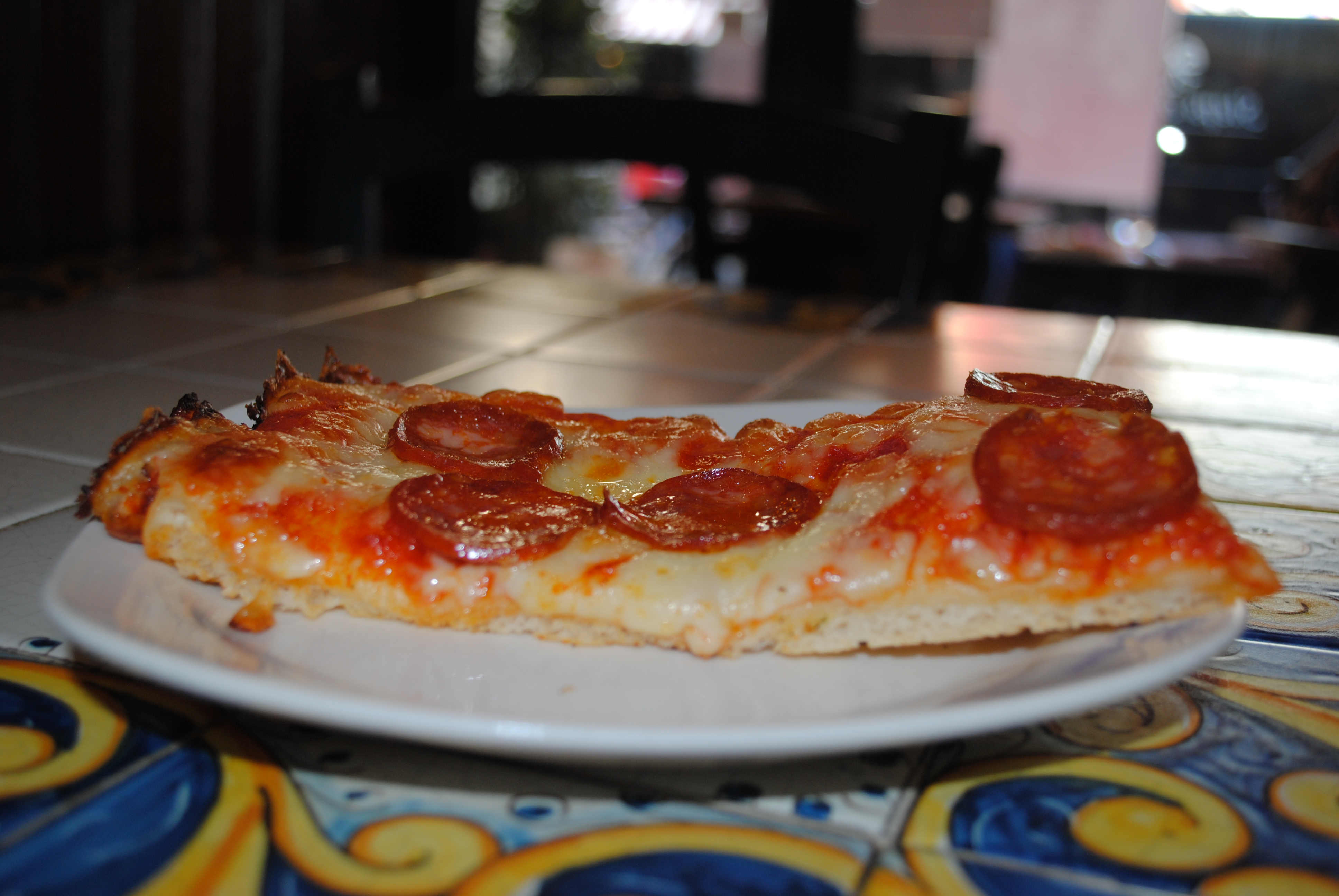
    1 Chatham St, Dublin 1             Slice of pepperoni: €4.60 Cheese: 4.5 Sauce: 4 Crust: 5 Toppings: 4 Ratio: 3.5

    Average score: 4.2

    What I have to say about the Steps of Rome is that the crust was amazing. It was thin, yet fluffy and also had that perfect pizza crunch. My pizza-partner felt that the pepperoni wasn’t tender enough, but personally it was one of my favourite things about this pizza. It was thicker than normal and full of flavour. The most expensive of all the slices we tried, but definitely worth it.

    DSC_0015


    RaysGood for when the clubs close and you’re still drunk

    2 Upper Fownes St, Temple Bar                  Slice of pepperoni: €3 Cheese: 2.5 Sauce: 1.5 Crust: 2.5 Toppings: 3.5 Ratio: 2.5

    Average score: 2.5 (Technically at 2.5 the score was between two ratings, but we rounded up. Just to be nice.)

    Ray’s is known as the go-to pizza place in Dublin for when the party’s over and the night club is done, and I can see why. It’s central, cheap, and probably tastes hundreds of times better if you’re drunk. I was pretty thankful for the pepperoni, as other than that I couldn’t really taste much going on. I’m not one to leave pizza, but my pizza partner abandoned hers with a few bites left (naturally I swooped in and ate it.) She also broke the plastic cutlery cutting the pizza, and while no reflection on the flavour, that can’t bode well for the disorientated drunk people who frequent Ray’s at night-time.

    DSC_0062


     Di FontainesDublin’s hotspot for pizza to go

    22 Parliament St, Temple Bar             Slice of pepperoni: €4 Cheese: 4 Sauce: 3.5 Crust: 4.5 Toppings: 4.5 Ratio: 4

    Average score: 4.1

    When asking around to find out which places to try for the best slice in Dublin this place came up again and again, and it didn’t disappoint. Ratio of cheese-sauce-base was awesome, and my pizza-partner went so far as to exclaim that it was the pepperoni she’d always dreamt of (it’s always good to feel passionate about your pizza). She also seemed delighted over the fact that they had a stone oven. As ‘New York’ a pizza as you’ll find in Dublin.

    DSC_0086


    Sbarro Should’ve stayed in America

    Jervis Shopping Center, Dublin 1            Slice of pepperoni: €3.95 Cheese: 1 Sauce: 1.5 Crust: 2 Toppings: 1 Ratio: 1.5

    Average score: 1.4

    Firstly, I want to say that I love Sbarro’s branches in America. I worked in Chicago for four months and I ate Sbarro at least twice a week. In that time I ripped through four pairs of jeans (not even a joke). But unfortunately it just doesn’t taste quite the same over here. I’ve been told if you’ve nothing good to say then you shouldn’t say anything at all, so I’ll have to stop here. Sborry.

    DSC_0120


    For me and my pizza-partner clear winners are Steps of Rome and Di Fontaines. As for Rays, I may stumble in after a night in Workmans to re-evaluate. Disagree with our findings? Vote for your favourite here!

  • Turning up noses: Food Snobbery

    Turning up noses: Food Snobbery

    Make no mistake, I’m not the most health conscious person around when it comes to food. I eat what I like and tend to avoid what I don’t.

    But with obesity affecting more people than ever before, especially children, there are fewer and fewer reasons left to justify bad diets.

    Sadly, even the most prudent of food shoppers will struggle to feed themselves and others on a budget. It’s a well-known fact that junk food costs less because it’s cheaper to produce.

    Worse still, it’s that time of year where you have to pre-order a turkey just to avoid disappointment and selection boxes are stacked to high heavens.

    I did cookery as part of my Transition Year programme, which was a new but enjoyable experience. If I ever felt like picking it up again, I would certainly be wary of the ‘experts’.

    A traditional cookbook packed with recipes could consume a whole day if you weren’t careful, given the sheer size of some of them.

    Ready, Steady, Read! Cookbooks are a useful starter guide but may have more content than needed. Photo credit: natalie's new york on Flickr.
    Ready, Steady, Read! Cookbooks are a useful starter guide but may have more content than needed. Photo credit: ‘natalie’s new york’ on Flickr.

    I remember when Jamie Oliver awkwardly tried to trade a can of Coke with a schoolboy for a healthy food voucher – the same Jamie Oliver who paraded festive treats on behalf of Sainsburys.

    Gordon Ramsay’s foul-mouthed vision of culinary perfection could drive even the cold-blooded Vince McMahon character to tears.

    Rachel Allen’s signature range at O’Briens caught my attention at the time of its launch but I cannot for the life of me describe what a ‘Croque Monsieur Provencal’ sandwich is.

    The new kid on the block – Donal ‘Kitchen Hero’ Skehan could be the answer to my problems. However, just like the other celebrity chefs, he makes a living out of his talent and has made wise investments in cooking equipment and work stations. How can full-time college students like me possibly compete?

    Speaking of competing, the biggest culprit of food snobbery is without doubt, MasterChef. Normally, I would lap up a spot of competition, but it is most depressing and counter-productive to have a TV show put a plethora of hopeful cooks against each other and have their efforts judged one by one. You could easily have a World Cup of MasterChefs given how many versions there are.

    As mentioned before, I’m not the healthiest eater in the world, but I’m just grateful to have food at all. I don’t want to take the moral high ground per se, but when I bother to take up my fair share of cooking responsibilities, I aim to serve safe food and keep people happy. I wouldn’t be here if that wasn’t the case in my family.

    Featured image by epSos.de on Flickr

  • It’s Pumpkin Time

    It’s Pumpkin Time

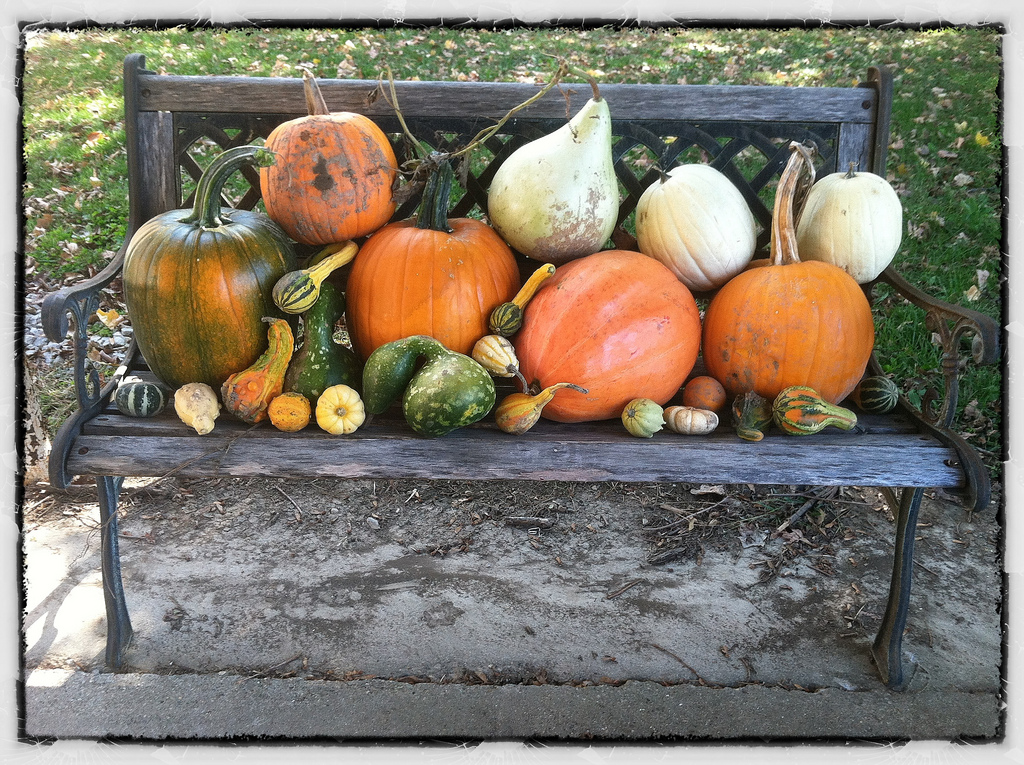
    As Halloween quickly approaches, pumpkins are once again popping up around the city. This versatile winter vegetable can be used in endless sweet or savoury dishes from pumpkin pie to pumpkin risotto. In order to celebrate the return of this orange squash, here is a guide on how to use every part of the mighty pumpkin.

     pumpkins

    Pumpkin soup

    1 Pumpkin or butternut squash

    1 onion

    2 carrots

    1 sweet pepper

    Half a red chilli

    1 garlic glove

    1 tbls Olive oil

    Vegetable stock

    Fresh parley

    Freshly ground black pepper

    Pinch salt


    1.      Halve or quarter the squash or pumpkin, remove the seeds and skin, then cut the flesh into chunks.

    2.      Heat the oil in a large saucepan and fry the onion, garlic and chilli for 3-4 minutes, stirring frequently.

    3.      Add the squash or pumpkin, and stir-fry for a few minutes.   Add the carrots, sweet pepper and seasoning.

    4.      Pour in the stock and stir well, cover, and simmer gently for about 20 minutes, stirring occasionally.

    Croutons

    1 tbls butter

    Selection finely shops fresh herbs

    Bread of any type

    Combine butter and herbs together, spread over the bread on one side. Instead of cutting the bread and frying it, try placing the slice of bread into the oven at 200C for 5 minutes or until golden brown. One cooled cut into small cubes.

    If looking to impress or having a Halloween dinner party, the best way to serve pumpkin soup is inside small cleaned out pumpkin or the bottom of a cleaned out butternut squash.


     Pumpkin seed pesto

    Pumpkin seed and spinach pesto

    ·         A large bunch of spinach

    ·         100g pumpkin seeds

    ·         1 garlic clove

    ·         150ml extra virgin olive oil

    ·         50g parmesan or any hard cheese

    ·         Juice of ½ a lemon

    ·         Pinch of sea salt

    ·         Freshly ground pepper

    Preparing the pumpkin seeds

    1.      After removing the seeds from the pumpkin, pick off any stringy bits, place in a colander and rinse with cold water.

    2.      Spread seeds onto a baking sheet and drizzle with extra virgin olive oil.

    3.      Roast seeds at 150° for 10 minutes.  They are ready when the shell is slightly golden, crispy and easy to bite through.


    Making the pesto

    1.      Place the spinach, pumpkin seeds and garlic into a food processor or blender and pulse into coarse grains.

    2.      Gradually add the extra virgin olive oil in a steady stream until a thick grainy paste has been created.

    3.      Scrape the mixture into a bowl.  Add the cheese and lemon and adjust the seasoning to taste.


    Social Media note

    Pumpkin season is back again and to celebrate The City had put together some recipes.