Riding is a popular activity and pastime for younger children. Despite this, the risks involved are rarely discussed, and it is considered one of the most dangerous sports, with the most injuries and fatalities.
LiveScience reported in 2024 an average of 32 deaths per year in the United States from the sport, and 320 deaths between 2011 and 2021, compared to boxing, which is responsible for 10 recorded deaths a year.
Equestrian eventing at the Olympics, specifically in the cross-country segment, has been described as “perhaps the most dangerous sport at the Olympics,” by The Conversation in 2016. This is due to high speeds, solid fences and very low dropped shelves.
But why and how is this sport so dangerous, and how can we make it safer?
The injuries
In a 2004 study 144 horse-related injuries were documented across 56,000 hospital visits in Southeast Ireland from March 2002 to March 2003.
Injuries presented most in females (54%), with the highest age demographic being 15-20 (24%). Head injuries (6%), upper-limb injuries (36%), and lower-limb injuries (18%) accounted for the visits. 67% were due to a fall, while 18% resulted from a kick.
A 2018 study looked at cases in the Midwest of the country, taking similar statistics about gender, age and cause of injury. With 149 cases, 27.5% of radiological abnormalities were skeletal fractures, 12.5% were concussion-related, 5% were dislocation/subluxation, and 1% were splenic laceration/intraperitoneal haemorrhage.
The study also states: “Equestrian activities were responsible for over 40% of sports-related spinal injuries admitted to the Irish National Spinal Injuries Unit over a ten-year period”.
How they happen
What has been labelled as ‘freak accidents’ and tragedies make news headlines as they happen in Ireland.
Even though head injuries take up a smaller percentage of the recorded hospital cases due to mandatory helmet wear, they are one of the largest concerns of the sport.
The Fédération Équestre Internationale (FEI) provides numbers on falls, and whether they have been rotational or not. The act of a rotational fall is that of a horse and rider rotating upside down.
In 2024, they reported that out of 196 falls, 21 of these were rotational. This is similar to 2023, where 25 out of 247 falls were rotational.
This type of accident is also common with the eventing discipline and the solid fences the horse and rider face in the cross-country segment.
Horse racing results in high injury rates yearly, with Horse Racing Ireland reporting 0.32% of runs resulting in fatality. Rotational falls are a big concern with jump racing, due to the high speeds and tall fences.
Staying safer with horses
Protective equipment is mandatory for both horse and rider in Ireland under Horse Sport Ireland, with correctly fitting tack and helmets being required. Recommendations for grooms and those handling horses have also been given the push to wear correct gear on the ground when around horses.
The FEI has dedicated safety measures for national and international competition, similar to the regulations in Ireland.
In the Irish racing industry, they take measures pre- and post-race to ensure the safety of horses and jockeys. Veterinary checks are required for runners, while the ground is monitored for the duration of the race.
In a study conducted by Alannah Reville for a DCU research article in 2025, she states: “Injury rates in Irish horse-racing have decreased since previous studies, which may be due to the implementation of new safety measures such as upgraded body protectors, increased weight requirements and the introduction of mouthguards”.
In addition to this, collapsible fences, or frangible pins, were introduced across the world in the early 2000s with eventing, to try and reduce the likelihood of rotational falls and fatal accidents, according to Horse Sport Ireland.
With such a popular sport, mainly with young children, knowledge of the risks is vital for safety and progression within the industry.
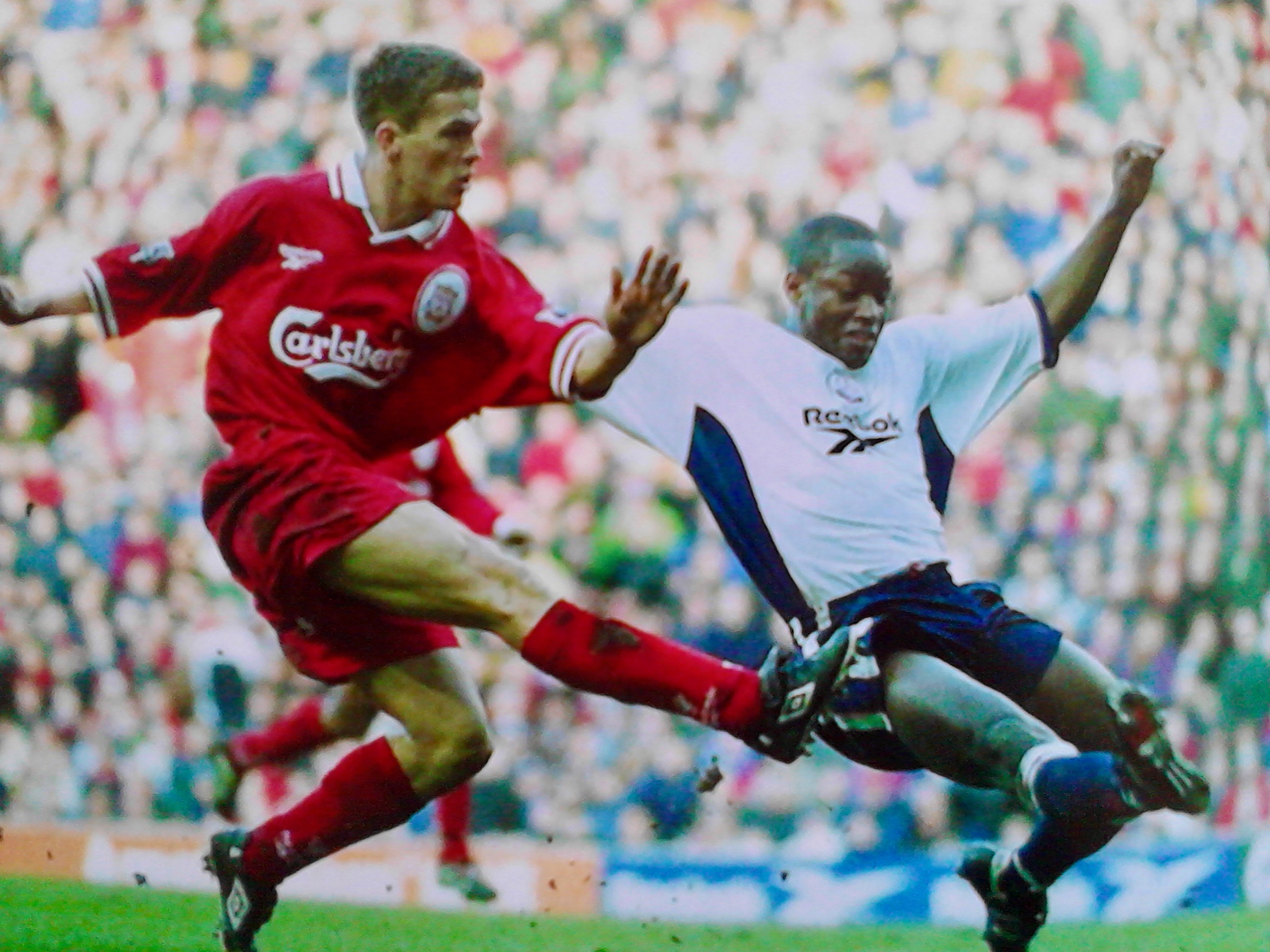
At just 18, Liverpool striker Michael Owen had the huge honour of being picked to play for his country in a World Cup (Photo: Paul Caffrey/BBC)
While promoting his memoirs, Michael Owen has revealed the alleged bullying he endured as a teenage Premiership star. TheCity.ie’sPaul Caffrey examines the longstanding culture of bullying in professional football — often misdescribed as ‘character building’ — and asks if this has any place in the Beautiful Game in 2020
During a 16-year playing career that’s always divided opinion among fans, Michael Owen was generally a reserved character who preferred to let his talent do the talking.
But the former striker — who scored 158 goals for Liverpool and 40 goals for England between 1997 and 2013 — has been opening up a lot lately.
Ever since releasing his controversial tell-all memoirs eight months ago — in which he recalls being constantly “picked on” by Kevin Keegan as a young footballer in his late teens and early 20s — it seems Owen is never out of the sports headlines.
As if his no-holds-barred book Michael Owen: Reboot (an excellent read in my opinion) isn’t packed with enough revelations, Owen has followed up in recent weeks with further harrowing accounts from his early career.
Michael Owen: Reboot was published by Reach Sport last year and TheCity.ie recently purchased a copy by mail order (Photo: Paul Caffrey)
Last month, speaking on Sky Sports, Owen described how, as an 18-year-old just back from his first World Cup, the much more physically imposing (and twice his age) Stuart Pearce had threatened him in a shocking fashion.
Owen told the sports channel that the encounter with a 36-year-old Pearce, just before Owen’s Liverpool kicked off against Pearce’s Newcastle on August 30, 1998, went as follows:
“Straightaway it was ‘you’re playing against me today son’ and it was serious talking about legs breaking and everything…. He tried to frighten me a little bit.”
TOUGH: Stuart Pearce calls himself a ‘nutter’ on his own Twitter (Photo: YouTube)
Owen still managed to deliver a first-half hat-trick of goals, with Liverpool winning 4-1 at St James’ Park that day.
But the experience, that he spoke about publicly for the first time in recent weeks, clearly stayed with him.
Pearce, who describes himself as a “nutter” on his own Twitter, doesn’t appear to have answered those allegations yet.
The blurb for Owen’s weighty 368-page offering, that’s become one of the most talked about football books of recent years, says the ex-striker “felt he had no real voice — until now”.
Recalling his torment after Kevin Keegan took over as England manager in 1999, the married father-of-four, now 40, writes:
“With hindsight, I felt like I was being picked on all the time.”
Michael Owen says he was ‘picked on all the time’ when Kevin Keegan (pictured) was in charge of England (Photo: YouTube)
Owen was 19 when Keegan took charge. Owen writes that as he entered the 2000/2001 season with Liverpool, he was “physically reasonably fit, but still mentally scarred by the happenings of Euro 2000 under Kevin Keegan.”
He says Keegan “was doing exactly the opposite” of what he was generally known for — supporting and motivating players — and that his Reds and England team-mate Steven Gerrard felt the same at the time.
For example, Owen recalls being berated by Keegan in front of other players at half-time during a Euro 2000 qualifier against Portugal — even though England were 2-0 up.
Keegan then subbed him — even though he’d appeared to back Owen by starting him in the first place. Owen recalls thinking to himself at the time, “what is going on here?” He adds:
“I was getting so many mixed messages, and I wasn’t buying any of them.”
Keegan, who finished his management career at Newcastle United in 2008, doesn’t appear to have answered those allegations yet.
“Michael was a big match player. Look at the goals he scored when he was younger in particular. He was 17/18. He was unbelievable, like a 35-year-old guy in his head.”
GLORY DAYS: Owen celebrates after his two late goals secured FA Cup Final victory for Liverpool in May 2001. He writes in Reboot: “I’ll treasure the 2001 FA Cup final forever.” (Photo: YouTube)
Unfortunately, there’s a longstanding culture of bullying in English football that’s rarely discussed openly.
It’s based on an outdated notion that young players need to be “hammered”, so to speak, to prepare them for the physical battles of the game.
Despite increased awareness about the mental health of young people, and players now being encouraged to think for themselves about playing strategies, allegations of bullying remain rife within the Beautiful Game.
But surely, no form of bullying should have any place in football in 2020.
Bellamy then apologised — though not unequivocally — to the players and parents concerned.
In response to the findings of the investigation — insisting that he still “categorically denied” all allegations against him personally — Bellamy said last October: “My only aim was to produce winners… If I inadvertently offended anyone then I am truly sorry.
“I have probably relied too much on my own life experiences playing under some of the best coaches in the world, rather than assessing the sensitivities of a new generation of players.”
However, the Welshman had reportedly remarked a few years before, tellingly:
“My biggest concern with most kids now is that they don’t have that edge to want to be better than their mate. Football takes such good care of you now at every age group that some of the hunger’s gone.”
WONDROUS: A teenage Owen seconds from single-handedly beating Argentina’s defence at France ’98 to score one of the most talked about goals of the past three decades (Photo: Paul Caffrey/Michael Owen: Reboot)
Relatively small in stature for a footballer, standing at 5’6, Michael Owen always admirably used his exceptional speed on the pitch — rather than brute strength — to beat the opposition and deliver goal after goal both at club and international level.
That goal at Saint-Étienne on June 30, 1998 was “the most significant” moment of his whole playing career, Owen writes in Reboot, adding:
“It just happened that I was ready to be the best I could possibly be at a young age. I’d never want to change anything.”
In The Day England Played Argentina, a documentary screened by the BBC in 1999 and unearthed on VHS by TheCity.ie, seasoned TV sports presenter Des Lynam says that goal “proved the boy had nerves of steel and it made him a superstar”.
Break-out panel: Paul Caffrey
Owen was just 17 when he began his professional career at Liverpool in 1997. Within 12 months he’d got the call up for England and was being compared to world all-time greats like Pelé.
No doubt, his considerable achievements must have attracted some jealousy or resentment from other more seasoned players. Owen reached the peak of his career between the ages of 18 and 22 and won the Ballon D’Or, one of football’s most prestigious awards.
PROUDEST MOMENT: After scoring against Porto in the UEFA Cup fourth-round second leg at Anfield on March 15, 2001. Owen’s header at 37 minutes helped seal a 2-0 victory for Liverpool and he calls it his all-time best performance (Photo: YouTube)
While in Owen’s case, it appears he was headstrong enough not to let any harassment affect his playing, bullying has sadly forced other promising young players to quit the game at professional level.



You must be logged in to post a comment.