
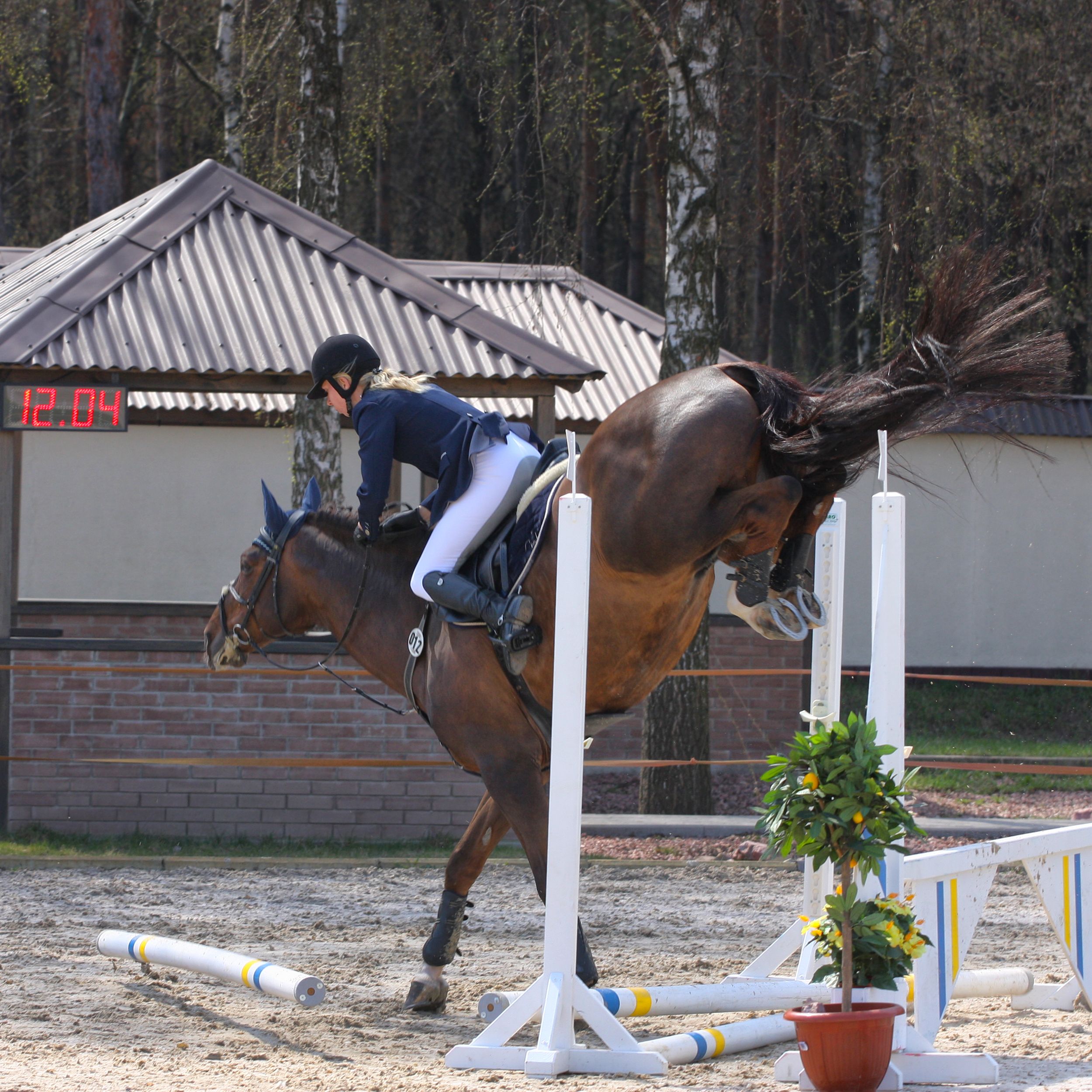
Riding is a popular activity and pastime for younger children. Despite this, the risks involved are rarely discussed, and it is considered one of the most dangerous sports, with the most injuries and fatalities.
LiveScience reported in 2024 an average of 32 deaths per year in the United States from the sport, and 320 deaths between 2011 and 2021, compared to boxing, which is responsible for 10 recorded deaths a year.
Equestrian eventing at the Olympics, specifically in the cross-country segment, has been described as “perhaps the most dangerous sport at the Olympics,” by The Conversation in 2016. This is due to high speeds, solid fences and very low dropped shelves.
But why and how is this sport so dangerous, and how can we make it safer?
The injuries
In a 2004 study 144 horse-related injuries were documented across 56,000 hospital visits in Southeast Ireland from March 2002 to March 2003.
Injuries presented most in females (54%), with the highest age demographic being 15-20 (24%). Head injuries (6%), upper-limb injuries (36%), and lower-limb injuries (18%) accounted for the visits. 67% were due to a fall, while 18% resulted from a kick.
A 2018 study looked at cases in the Midwest of the country, taking similar statistics about gender, age and cause of injury. With 149 cases, 27.5% of radiological abnormalities were skeletal fractures, 12.5% were concussion-related, 5% were dislocation/subluxation, and 1% were splenic laceration/intraperitoneal haemorrhage.
The study also states: “Equestrian activities were responsible for over 40% of sports-related spinal injuries admitted to the Irish National Spinal Injuries Unit over a ten-year period”.
How they happen
What has been labelled as ‘freak accidents’ and tragedies make news headlines as they happen in Ireland.
Even though head injuries take up a smaller percentage of the recorded hospital cases due to mandatory helmet wear, they are one of the largest concerns of the sport.
The Fédération Équestre Internationale (FEI) provides numbers on falls, and whether they have been rotational or not. The act of a rotational fall is that of a horse and rider rotating upside down.
In 2024, they reported that out of 196 falls, 21 of these were rotational. This is similar to 2023, where 25 out of 247 falls were rotational.
This type of accident is also common with the eventing discipline and the solid fences the horse and rider face in the cross-country segment.
Horse racing results in high injury rates yearly, with Horse Racing Ireland reporting 0.32% of runs resulting in fatality. Rotational falls are a big concern with jump racing, due to the high speeds and tall fences.
Staying safer with horses
Protective equipment is mandatory for both horse and rider in Ireland under Horse Sport Ireland, with correctly fitting tack and helmets being required. Recommendations for grooms and those handling horses have also been given the push to wear correct gear on the ground when around horses.
The FEI has dedicated safety measures for national and international competition, similar to the regulations in Ireland.
In the Irish racing industry, they take measures pre- and post-race to ensure the safety of horses and jockeys. Veterinary checks are required for runners, while the ground is monitored for the duration of the race.
In a study conducted by Alannah Reville for a DCU research article in 2025, she states: “Injury rates in Irish horse-racing have decreased since previous studies, which may be due to the implementation of new safety measures such as upgraded body protectors, increased weight requirements and the introduction of mouthguards”.
In addition to this, collapsible fences, or frangible pins, were introduced across the world in the early 2000s with eventing, to try and reduce the likelihood of rotational falls and fatal accidents, according to Horse Sport Ireland.
With such a popular sport, mainly with young children, knowledge of the risks is vital for safety and progression within the industry.
You must be logged in to post a comment.