Tag: ireland

  • Focus on peace: Ireland’s pro-Palestine demonstrations  

    Focus on peace: Ireland’s pro-Palestine demonstrations  

    By Leon Thompson

    Ireland’s support during the Gaza crisis has extended following the announcement of €13 million in aid being sent to Palestine.

    Tánaiste Micheál Martin announced the aid in Dáil Éireann as an acknowledgement of the escalated violence in the Middle East. 

    Mr Martin hopes “a lasting and sustainable peace” can be achieved following Israel’s declaration of war on Hamas when Israeli citizens were attacked two weeks ago. Mr Martin has also said the Irish government unequivocally condemns the attacks made by Hamas and expresses their deepest condolences for the Israeli people affected.  

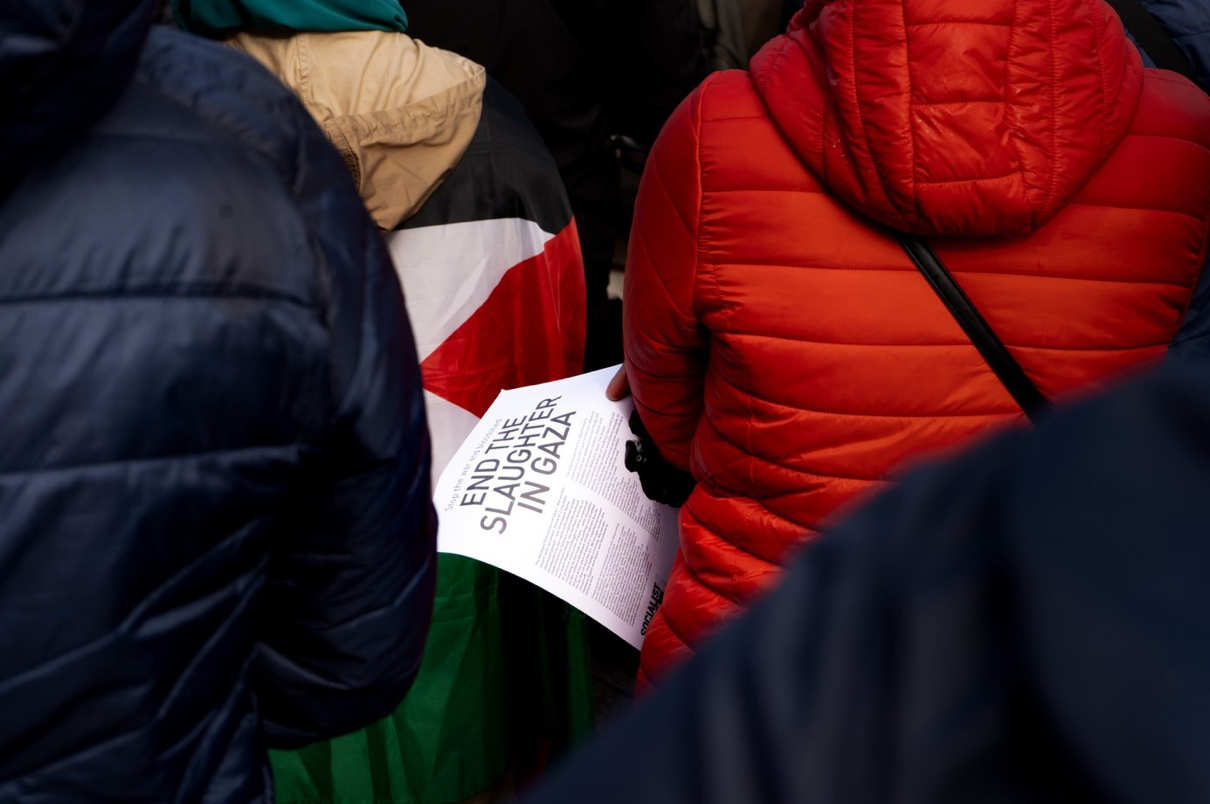
    The Ireland-Palestine Support Campaign (IPSC) is supporting demonstrations nationwide, while the national demonstration to end the slaughters in Gaza will take place in Dublin tomorrow afternoon. 

    Cork, Cavan, Clare, Kerry and Belfast will also see demonstrations tomorrow. 

    The Garden of Remembrance in Dublin 1 should expect demonstrators at 1pm on the 21st of October following IPSC’s announcement saying, “As Apartheid Israel continues pounding the captive and besieged people of Gaza with indiscriminate bombing and gets ready for a full-scale invasion, all with the blessing of Western powers, we ask you to join us at an emergency solidarity rally in support of the Palestinian people.” 

    Crowds are expected to attend while TD Mr Paul Murphy has announced his support and attendance saying, “When does Palestine get the right to defend itself? 75 years of ethnic cleansing and apartheid…17 years of a brutal siege on Gaza…10,000 Palestinians killed in the last 15 years. Stop the slaughter!”

    Demonstrators at a protest. Image: unsplash.ie

    Other counties such as Tipperary and Antrim saw protests yesterday, October 19th while counties such as Louth, Longford, Cork, Down and Armagh will hold more demonstrations throughout the month of October. 

    The last demonstration supported by the IPSC is anticipated for Co.Mayo on the 25th of October. 

    Campaigners were outside of the Dáil on October 18th with Diarmuid Breatnach in attendance calling it “a duty and a pleasure” as he anticipated the outcome of the debate happening inside.  

    In Cork, one demonstrator Patrick Hobbart said: “…it’s deeply distressing to witness the enduring hardships faced by the Palestinian people who have carried the heavy burden of apartheid and colonialism for generations. It’s imperative to acknowledge that Hamas doesn’t speak for all Palestinians. The Israeli government must heed this plea and halt their relentless assault on innocent civilians. In this conflict, there are no victors…the international community must unite to demand an immediate ceasefire.” 

    Kevin Callinan, General Secretary of Fórsa Trade Union echoed Mr Martin’s sentiments, “The killing of Israeli civilians by Hamas and the collective punishment of the people of Gaza by the Israeli government will do nothing to end the occupation and bring about peace,” he said. 

    President of the EU Commission Ursula von der Leyen’s statement declaring “Europe stands with Israel” has led to a lot of pushback from members of the European Parliament (MEP) especially  

    MEP Clare Daly commended protesters that occupied the European Commission’s Office in Dublin saying: “So proud of friends and comrades…currently occupying the European Commission offices in Dublin as we here in Strasbourg go in to vote on a shameful Parliament motion that fails to condemn Israel for its ongoing crimes against humanity in Gaza.”

    Protesters outside of Dublin’s European Commission’s Office. Image: X

    The office was occupied by concerned citizens organised into a group called Dublin for Gaza, with one member Lamia Tadjine saying: “Let us be clear—blood is on the hands, not just of the Israeli military and leadership, but on the hands of those states and institutions who have provided cover for these atrocities, such as the European Union.”

  • Muddy Hell!

    Muddy Hell!

    by Diana Lazar

    Source: Diana Lazar

    Hell and Back is an 8k run and obstacle course that tests your physical limits. The weather conditions made their name to be taken quite literally at their last event on Saturday in Wicklow. 

    Many food and drink vans were set up at the event, but the heavy rain made their customers scarce.  

    Some of the spectators and participants chose to use umbrellas while others chose to embrace the weather as it was.

    Participants changed clothes at the back of the event, through some woods.

    Source: Diana Lazar

    Some decided to wrap their belongings, as well as their shoes, in plastic bags to battle the mud and rain.  

    Before the competitors started the run, they had a high-spirited warm-up to prevent injuries.

    Source: Diana Lazar

    “The warm-up also helped me with the freezing cold. I was shaking before it,” said participant Liliana.  

    Source: Diana Lazar

    They made promises to honour the competition followed by one last celebration before beginning the course.

    Source: Diana Lazar

    The participants burst over the start line and helped each other to pass through the obstacles from start to finish.  

    The last obstacle was going down a slide, straight into a pool of mud, just in case the rain didn’t get people wet enough.  


    Source: Diana Lazar

    The finish line brought out the best emotions and bonded friends together. 

    Source: Diana Lazar

    Despite the conditions that would have others staying indoors, everyone made the most out of the experience.  

  • “Five percent for the future of Ireland”: Students rally for affordable living 

    “Five percent for the future of Ireland”: Students rally for affordable living 

    By Leonardo Parada Borda

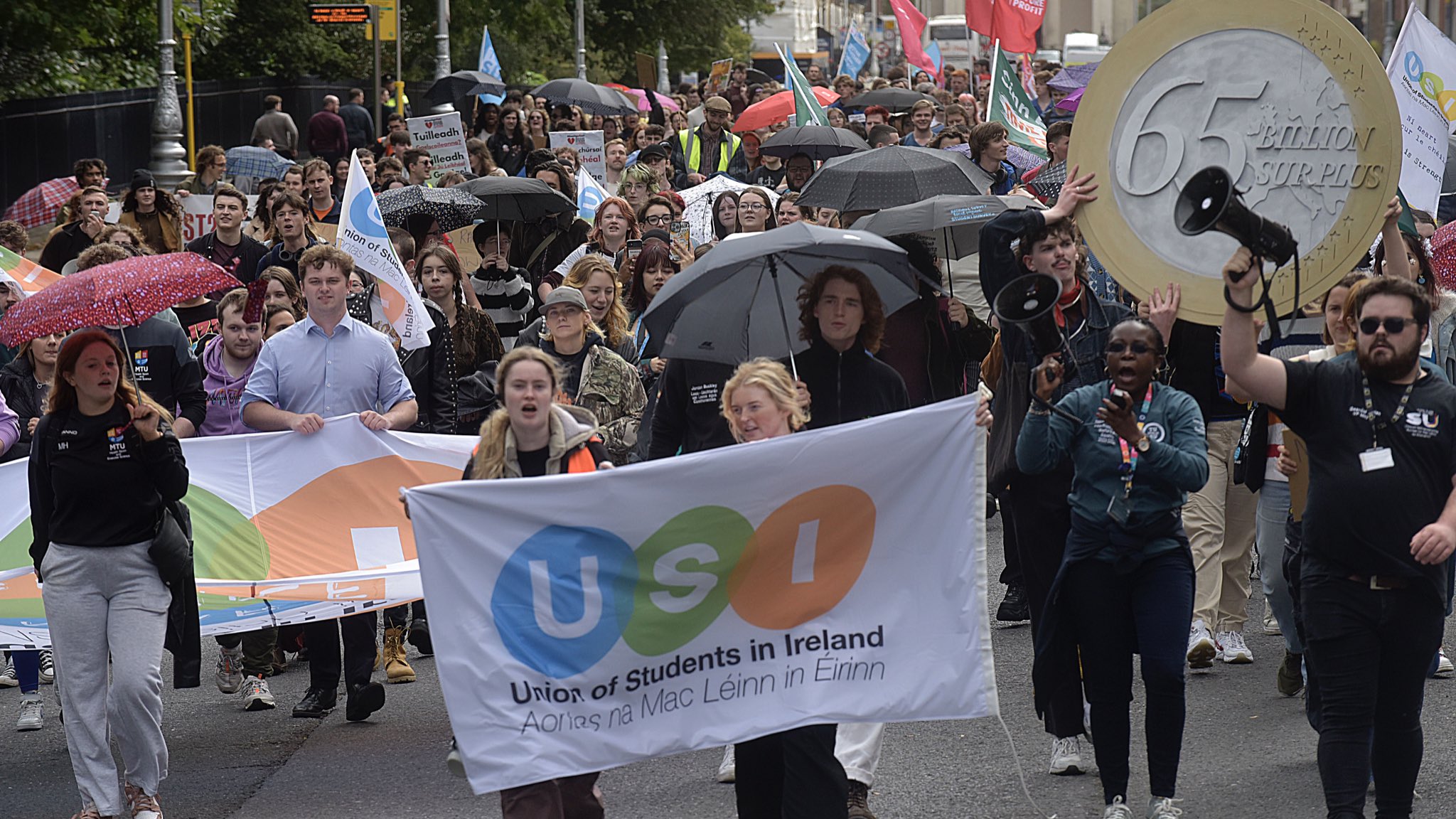
    University students took part in a national demonstration, organised by the Union of Students in Ireland (USI) last Wednesday, where they protested the €65 billion budget surplus the Government is said to accumulate over the next three years. Students nationwide were outraged to hear the surplus would be used for a ‘rainy-day’ fund instead of the cost-of-living crisis. 

    The protest began at the Garden of Remembrance and made its way down to the Dáil with students chanting and singing about the issues they face while studying in higher education. 

    The student-led demonstration was organised to highlight the issues surrounding third-level education and to offer the Government solutions to fix these problems. 

    Brian Jordan, president of the Technological University Dublin’s Student Union said, “This is a national demonstration organised by USI […] The reason we’re protesting is because we’ve seen a lack of student accommodation. The Government has failed to give [students] capital investments, even though that is a clear solution.” 

    “We have a huge amount of private rented accommodation all over Grangegorman. Students are paying up to €1,100 [monthly], and that’s because the university hasn’t built their own accommodation,” he added.


    Brian Jordan and the TU Dublin SU at the Garden of Remembrance. Image: @theusi/X

    Environmental science student, Megan Tynan described how stressful it was to find accommodation closer to college. 

    “For my second year, I was commuting an hour and a half from college. By the time you get home, you’re wrecked,” she said. 

    “I was staying at a hostel for a few days during exams because my landlord decided to sell [the accommodation].” 

    “I was staying in a room with nine people, who were all strangers. It affected me negatively because it’s embarrassing to admit that you are struggling to find a place,” she added.

    “It didn’t just fall out of the sky; it did not just happen. It was caused by Government policy.” 

    Dr Rory Hearne, Assistant Professor of Social Policy at Maynooth

    According to the Pre-Budget Submission for the Budget 2024, submitted by USI, 33% of the total student population says they are experiencing serious financial issues. In 2019, that percentage sat at 26%. 

    President of Maynooth University Student Union, Alex Balfe said that “hundreds of students”, many of whom come from Donegal and Cork, are struggling to find accommodation on campus which is not “sustainable” for students. 

    “Students are waking up at five o’clock in the morning for their commute and they’re not getting home until very late in the evening,” Balfe said. 

    “There’s absolutely no accommodation in Maynooth, considering we’re a university town with more students than residents at the moment,” she added. 

    Third-level students march to the Dáil in protest of the accommodation crisis. Image: @rosspjboyd/X

    The latest figures on Funding the Future — a document released by the Government in August 2023, mentioned that full-time student numbers are increasing and are expected to “peak” at 233,000 in 2030. It is also mentioned that there are currently 29,773 “oversubscribed” students who will not get accommodation in the 2023/2024 academic year. 

    The document mentioned that Minister Simon Harris confirmed “Government approval” for a new policy to be introduced that will provide “state assistance” to the “development of new and additional student accommodation for higher education institutions”. 

    The Government also “approved €62 million in additional funding” for 1,072 additional beds in universities like the University of Limerick (UL), Maynooth University (MU), University of Galway (UG), and Dublin City University (DCU). Assessment is still ongoing for all five Technological Universities (TUs). 

    Dr Rory Hearne, an assistant social policy professor at Maynooth said, “The housing crisis is forcing students to drop out of college, forcing them to pay unaffordable rents and to live in hidden homelessness. College days are supposed to be the best days of your life, but now, it’s a nightmare for many students.” 

    “It didn’t just fall out of the sky; it did not just happen. It was caused by Government policy.” 

    “Rents have increased by 100% since 2011, and 60% since 2020. Here’s a radical idea, in Berlin, in 2020, they reduced rents and put a five-year rent freeze in place. Why doesn’t the Government reduce all rents by 20%, back to the level they were in 2020?” Hearne said. 

    In 2021, Berlin’s Mietendeckle — a rent control law in Berlin, was declared ‘unconstitutional’ and was replaced with Mietpreisbremse — a new rent control law that limits how much rent the landlord can ask for. It is also possible to claim money that was overpaid for rent.

    Video: Elio Bonelli

    President of USI, Chris Clifford said, “How far away from reality is our Taoiseach when students and graduates are leaving the country by the plane load, when students have to decide between food and printing, and when a student’s room is the front seat of their car? That is the reality that this country has created for students.” 

    “We’re looking for the Government to fund the future of this country […] There’s a ‘rainy day’ fund of €65 billion and we’re asking for five percent of that. That five percent reduces waiting lists in hospitals, that five percent means that there’s enough childcare practitioners in this country, and it also means that there are enough civil engineers out there to get these houses, that not only students, but the public are crying out for.” 

    “Five percent for the future of Ireland,” Clifford added.

  • Office for Public Works extends consultation period on gigs at the Iveagh Gardens 

    Office for Public Works extends consultation period on gigs at the Iveagh Gardens 

    By Elio Bonelli

    Irish comedians and musicians are speaking out at the prospect of commercial events at the Iveagh Gardens being shut down. 

    According to event organisers and locals in Dublin, a small group of people are campaigning against events being held in The Iveagh Gardens, which is already having a negative effect on the use of this space. There were no clear reasons as to why they were campaigning against them. 

    The Office for Public Works (OPW) is running a consultation into these events happening and will run until Friday, 6 October, having been extended from its original date of 29 September. 

    In the deadline set by the OPW, words of support must be sent to them by this date. 

    Source: Office for Public Works

    Stuart Clark is the Deputy Editor of Hot Press, and he took to X, formerly Twitter, to voice his opinion.

    Sharon Mannion is a comedian, actor and improviser and she echoed the same sentiments. 

    “We will definitely miss the events at this venue. It would be such a shame if one of Dublin’s best gigs were to go. The festival here is a highlight for the community and a highlight for comedy.” 

    “It would be a loss for the comedy scene in Ireland if gigs stopped here and what would that mean for us?” she concluded. 

    “I will miss coming here if the gigs are cancelled, especially with how easy it is to get to.”

    Nellie O’Neill, Social care worker

    Nellie O’Neill is a social care worker and has attended events at the Iveagh Gardens at least once a year over the last decade.  

    He said, “The gigs have become part of my summer with a lovely venue in the city centre of Dublin. There is great public transport with great access to the heart of the city.” 

    “The thoughts of that venue not being allowed to run just because some small group of people had other ideas of what this park should be used for, worries me. Stephen’s Green is just over the road and there are no problems there!”

    “I will miss coming here if the gigs are cancelled especially with how easy it is to get to,” he added. 

    In a statement, the Office for Public Works (OPW) said: 

    “A public consultation about how the Iveagh Gardens accommodates all visitors is taking place. This consultation has been extended to Friday, 6 October.”

    “This consultation is inviting all visitors to share their experiences of the gardens and their views on how the gardens are used. We are seeking to gather a wide range of views on how visitors enjoy the Iveagh Gardens to balance the needs of all visitors.” 

    “This is to ensure that all visitors can share their views on our events. The views received will help inform the role this wonderful historic garden plays in Dublin in the coming years,” the statement concluded. 

  • From likes to learning: Irish university launches new social media ‘influencing’ course 

    From likes to learning: Irish university launches new social media ‘influencing’ course 

    By Leonardo Parada Borda

    A new university course in content creation and social media was introduced last week by the South East Technological University (SETU) for people looking to become ‘influencers’.

    The programme (bachelor of arts content creation and social media) will begin in Carlow next September, with applications opening in November this year. 

    Although courses in social media and content creation already exist in Ireland, this course is slightly different. It is the first full-time bachelor’s degree (NFQ Level 7) course in Ireland, with a course duration of three years. 

    Other courses, like the social media marketing courses at University College Dublin (UCD) or the Atlantic Technological University (ATU), offer part-time courses in which you receive a diploma (not on the NFQ) or a certificate (NFQ Level 6) and runs for a duration of three months. 

    So, what makes it different to other courses like social media marketing or journalism? 

    Dr Eleanor O’Leary, the programme director of the course, said that the programme focuses a lot more on practical skills like creative writing, creative video and audio skills, journalism, and crisis management.  

    “The bachelor in content creation and social media is designed to provide students with a broad education to work in front of and behind the camera in digital environments,” she said. 

    Dr O’Leary mentions that the course intends to develop “students’ creativity and individual aesthetic”. 

    “We are also very focused on preparing students for working online and understanding the risks and challenges of operating in this space and the impact on mental health and wellbeing,” she added. 

    “Influencing has grown, and I think it will continue to grow as a form of marketing.”

    Alan Kelly, Social Media Marketing Coordinator at ATU

    With its ever-changing nature, social media poses another obstacle. Influencers must learn how to adapt to the latest trends within the industry to succeed. It’s a way for them to maintain authenticity and address cultural and societal issues. 

    “We stay up to date by working with industry experts, supporting and undertaking research, co-creating our educational offerings with students and industry leaders and reviewing what we offer every year,” Dr O’Leary said.

    Photo by: Carlos Muza/ unsplash.com

    “Having worked in media education for over a decade, you are attuned to the aspects of media industries that change and those that stay the same. Core skills are often consistent over time, and it’s about paying attention to how audiences respond to, utilise, and communicate through new media technologies,” she added. 

    Mr Alan Kelly, the course coordinator for social media marketing at ATU, mentioned that the new course integrates all aspects of marketing, business, and technology into the programme. 

    “I think the degree itself isn’t focused only on influencing, so I think it’s sustainable because it has many aspects,” Kelly said. 

    “Fair play to them. They’re trying to be seen, and by including the words ‘influencer’, they’ve managed to market the programme really well based on that.” 

    “Influencing has grown, and I think it will continue to grow as a form of marketing,” he added. 

    Kelly said the course has a promising future and will ‘continue to evolve and grow’ if there is more emphasis on marketing and business rather than influencing. 

    “I don’t think there will be that many sustainable jobs, I think a lot of people are already there, but I think the course itself offers a lot more than influencing, which I do think is really important.” 

    “You can go out there and be an influencer without doing a course. If you have some decent technical skills, you can look up a YouTube video, but people don’t know enough about the ethical issues and the legal aspects that come with it.” 

    Kelly mentioned that Meta and the virtual world will also help social media influencers stay active and have an additional platform to market themselves. 

    “It will evolve. New platforms have come out. We can look at Meta and the virtual world as an example. Marketing will migrate there, and so will influencers,” he said. 

    “I think there is still that ethical and legal minefield out there […] There will also be people who want to fight with you on social media, and the way they communicate that with you can be terrible. There are going to be problems going forward.”

  • What will Ireland’s changed defamation law mean for journalism now? 

    What will Ireland’s changed defamation law mean for journalism now? 

    by Mariam Maroof

    Ireland witnessed a landmark change in the defamation law on the 28th of March that welcomed significant reforms. The amended Defamation Act of 2023 has been approved by the Cabinet, with the hope to bring improvement to a law that is considered the strictest in Europe. 

    The draft legislation, proposed by Minister for Justice, Simon Harris, targeted key issues within the law that posed great difficulty to working journalists.   

    Among the most significant improvements that have been welcomed by journalists is the removal of juries from High Court defamation actions.  

    Eavan Murphy, a full-time lecturer in law at TU Dublin discussed the difficulties surrounding the presence of juries in cases of defamation. According to Murphy: “The difficulty of having juries in these cases was that judges could not give any real direction, as the juries would have to decide whether there was defamation and if there was, then the level of damages to those defamed would be decided. The level of damages is what the concern has been about.” 

    “There have been cases where damages have gone up to a million and up to 10 million in others. While these have been reduced on appeal, it’s the level of damages that got juries a bad reputation. In these cases, judges’ hands have been somewhat tied because they couldn’t really give a quantification and say, ‘this is worth X and that is worth Y.’ Overall, it made the jury system very unpredictable,” says Murphy. 

    Robert Cox, Editor of the Irish Mail on Sunday, and a lecturer at TU Dublin, is happy with the new ruling. “We were involved the discussion of the changes that went into the review,” he says. “The biggest was to get rid of juries and this was designed so that judges would be able to distinguish between arguments as juries tend to be pursued by the emotions of those allegedly defamed. However, there are cases that we know we’re right, and the complaints only come through because they know they can threaten you. Their perspective isn’t backed up by documents, but it might be a case that the jury might see their perspective more than the actual truth of the situation.” 

    According to Cox, abolishing juries was a priority for news brands for many years.  He believes that this move will award more power to judges, whilst also holding them to account. 

    Among other changes, the new act also gives stronger defences to cases of accidental defamation in live broadcasting situations, as well as in the reasonable and fair publication on matters of public interest.  

    Cox said, “We only ever do investigative pieces on matters of public interest and if we get a small mistake and it’s an honest mistake, we ensure to do our part and apologise or mediate. While we hold our reporting to high standards and defend it as well, we are mindful and deal with these issues in the right way. I think there is a real need to recognise that in legislation and that is finally happening.” 

    Along with that, solicitors will now also be required to inform clients about alternate dispute resolution options. According to a press release published by the Department of Justice, the options include ‘mediation before issuing defamation proceedings, and obliging parties to have considered those options.’ 

    With this reform, the hope is that fewer cases will end up in court and in turn, reduce time, money and effort spent by news organisations defending their reporting. However, things are still not completely sorted for journalists. 

    “It takes time away from finding the next story or following up on the same one,” says Cox. “Because of issues like declining revenue, we are incentivised to settle cases that we don’t necessarily want to settle. If we were to take on cases and lose, that would be a significant hit. While I say this, it’s important to note that we still defend our cases, and we don’t settle every case. We’re willing to defend but, more and more people are aware that newspapers are in a tricky situation as far as current defamation laws stand.” 

    “A large part of my time as an editor is devoted to dealing with legal issues. We are also dedicated to ensuring we have proper editorial discussions related to any public interest stuff that we do. If we do something wrong, we offer to correct it quickly – mistakes do happen.” 

    As for what the new act means for journalism in Ireland, Murphy says it will make a difference. “It’s definitely an improvement on what existed once as the previous Defamation Act of 2009 didn’t really take into account a lot of important elements of the defamation law.”  

    There is now more hope and confidence among Irish journalists. Cox concludes that the Defamation Act of 2023 “gives more strength to our legal position to say no, and that we stand by our reporting.” 

  • Lost and Left Behind: The Ongoing Struggle with Homelessness in Ireland

    Lost and Left Behind: The Ongoing Struggle with Homelessness in Ireland

    by Alla Pavlutska

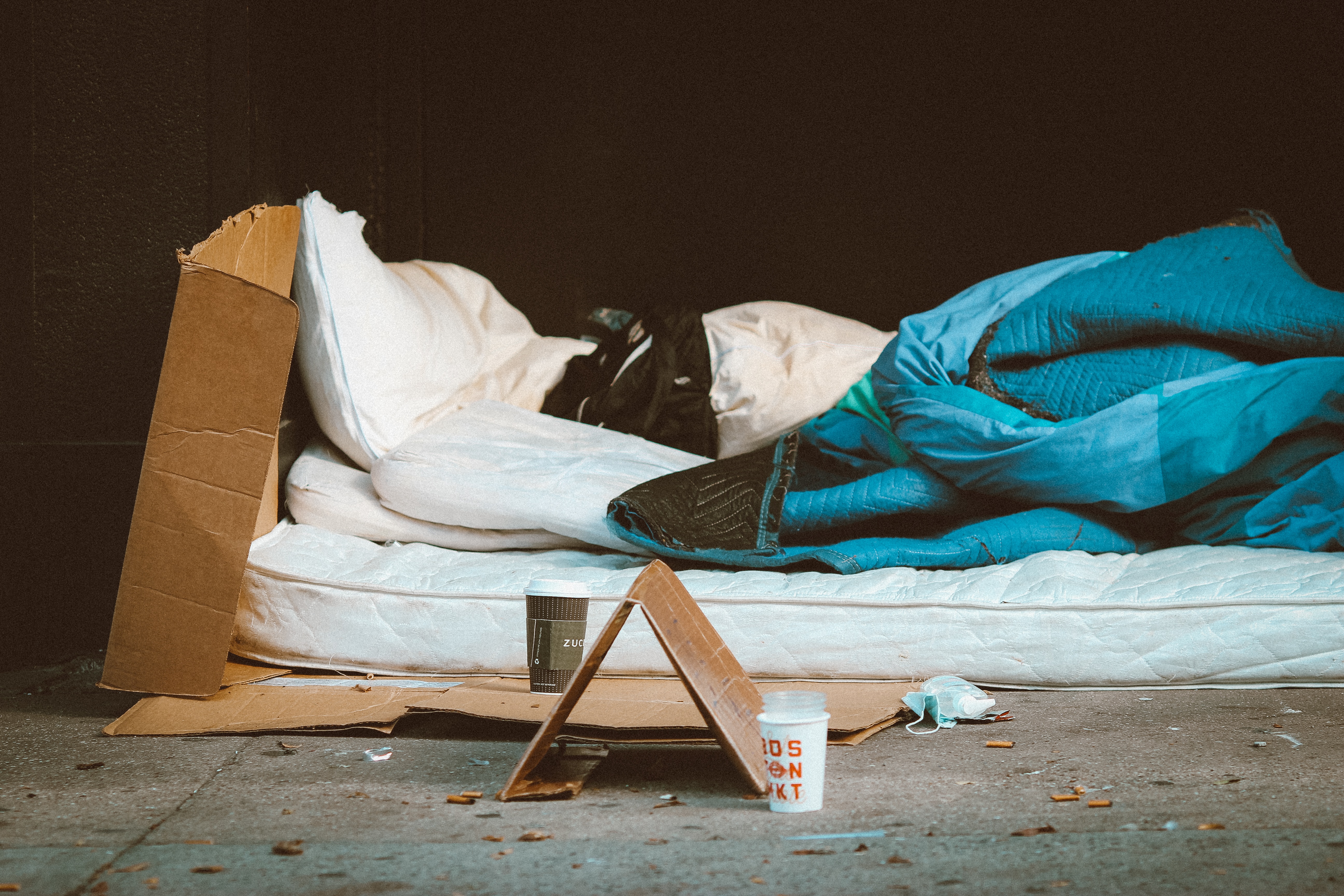
    Photo by Jon Tyson on Unsplash

    Homelessness is an issue that has been plaguing many countries around the world, and Ireland is no exception. Despite efforts by various organisations, the number of people experiencing homelessness in the country has continued to rise. In March 2023, a new report was released that shed light on the current state of homelessness in Ireland. TheCity will explore the key findings of the report, the factors contributing to the issue, and the measures being taken to address it. It will also delve into the lived experiences of those affected by homelessness and the impact it has on their lives.

    According to the latest report from the Department of Housing, the number of people accessing emergency accommodation in the country decreased slightly in February to 11,742 – a drop of 12 individuals compared to the previous month. However, it was a 23% increase over a year – from 9,492 in February 2022. 

    A total of 8,369 adults and 3,373 children were living in emergency accommodation during the week of 20 to 26 February. There were 1,599 families, of which 876 (55 per cent) were headed by single parents.

    The figure includes 5,057 Irish citizens, 1,862 European Economic Area / UK citizens and 1,450 non-EEA citizens. 

    “In Dublin, where over 70% of the homeless population reside, the number of people in emergency accommodation actually increased in February 2023,” says Caoimhe O’Connell, spokesperson for the Dublin Simon Community.

    She explains that the reason for this is a lack of supply. As people continue to fall into homelessness, fewer and fewer are exiting, causing a blockade in the emergency accommodation system.

    “People are spending longer than ever before stuck in emergency accommodation due to the chronic lack of social and affordable housing, which is robbing people of their futures as sustained periods in emergency accommodation negatively impact the physical and mental health,” she says.

    Kenny Eivers, a Secret Street Tours guide who spent a decade living on the streets of Dublin, is convinced that the statistics are inaccurate and that the number of homeless people is higher than reported.

    “The government is not doing much [to solve this problem],” he claims. “They’re building new hotels and offices, but they’re not building apartments that people can afford. You won’t be able to pay three and a half grand a month to rent a two-bedroom apartment. It’s crazy.

    “I think we need to look at Norway and Finland. These countries have a lot better [fight homelessness] strategy. Whereas over here, the rich get richer, and the poor get poorer.”

    Housing for All

    Despite Mr Eivers’ criticism, the Housing for All plan launched in September 2021 reveals that measures have been put in place to deal with the homelessness crisis. The plan aims to ensure that everyone in Ireland has access to a secure and affordable home and has set a target of delivering 300,000 new homes by 2030.

    The latest report shows that over 20,000 new social houses were built for the first three quarters of 2022. Furthermore, the building commenced on almost 21,000 between January and September last year.

    Eviction ban

    An eviction ban was in place during the winter emergency period from 30 October 2022 to 31 March 2023. It had been introduced as a temporary measure to provide relief for renters and homeless services. However, a bill aimed at extending this ban until 31 January 2024 was rejected by the Government.  

    One Man’s Journey to Overcoming Adversity

    Kenny Eivers told TheCity that he had been struggling with addiction for a long time.

    “I started off with alcohol at the age of 11,” he says. “I couldn’t stop, no matter what. If I took drugs, I just took more than everybody else. In my late teens, I found heroin. Eventually, when you’re on heroin, you either end up in homeless services or in prison.”

    Subsequently, the latter happened to him. However, he is sure that it saved his life.

    “If I hadn’t ended up in prison, I would have been dead. That’s how some of us survive. It’s crazy because you don’t really do drugs there. You just eat healthily and go to the gym.”

    There are people, though, who “did not make it to prison”. This is what Mr Eivers remembers about the worst day of his life.

    “It happened around 14 years ago. I was in a hostel. My friend and I bought heroin and used it. Then I woke up, and he didn’t. He overdosed.”

    However, serving time in prison had an unfortunate consequence. Upon his release, Mr Eivers found himself without a place to call home, effectively rendering him homeless.

    “I kept on overdosing all the time, purposely trying to kill myself, and then I kept on being found by paramedics. The last time it happened, I woke up in Beaumont Hospital. There was a guy in the bed next to me, who was dying of cancer. He had a breathing machine. I was left lying there for about six hours. Basically, I was listening to his last breaths, and something inside my head just clicked and said I couldn’t go on like this. It was my rock bottom. I decided there that I would change.”

    It was a long journey for Mr Eivers. He had to recover, put in a lot of effort to improve himself, and practice before he eventually became a guide. Currently, he provides tours, using his own past experiences of being homeless to bring attention to the issue.

    Root Causes of Homelessness

    There are various reasons why people have nowhere to live. According to the Dublin Region Homeless Executive, the most popular are:

    • Shortage of housing supply
    • Low income
    • Unemployment
    • Mental health problems
    • Addiction

    Words You Should Never Say

    “I’ve experienced when people asked me, ‘Why don’t you go out and steal?’” says Mr Eivers. “I’ve spent years robbing and stealing, and I don’t want to go back to prison again.”

    You don’t look homeless

    “I was begging, and a guy came up to me and went, ‘Why are you doing that? You have a pair of €250 runners [Nike Air Max].’ I said these runners were given to me. I didn’t avoid them, and they’re actually fake.”

    Why don’t you stay in a shelter?

    “Sometimes it’s safer on the streets than in a hostel. You can have ten people in a room. Then, you wake up, and your stuff is gone. You get robbed or even beaten up.”  

    Get a job

    “People think we’re all the same. But they don’t know that some people who are homeless were abused as kids and have childhood trauma, addiction, or mental health issues. You can’t just get a job if you have mental health issues. You need to work on yourself. It’s not straightforward.”

    How to Interact with People Experiencing Homelessness

    There are a lot of stereotypes about people affected by homelessness. However, Kenny Eivers says they can be the nicest people you’ve ever met. “Some are very good artists, musicians, painters, rappers,” he says. “You can offer to buy them coffee, tea or cigarettes. If you don’t have money, just be polite. You don’t even have to say words, only acknowledge and smile. A smile makes someone’s day.”

  • Dublin Christmas Lights During Energy Crisis 

    Presenter : Chloe Seymour
    Producer: David Little
    Video / Edit : Injae Kang

    TheCity.ie asks residents of Dublin City Centre about the atmosphere created by the Christmas lighting and asks whether the government is doing enough to keep electricity bills low for the holiday season. 
  • This weekend will be Ireland’s coldest of the year so far

    A winter weather advisory for Ireland has been put in place until Monday, with temperatures set to reach as low as minus seven degrees overnight.

    The advisory was issued by Met Eireann on Tuesday – which takes effect on Thursday – with an extra yellow warning for ice set to be in place from 10pm on Thursday night until 10am on Friday. 

    The most severe impacts will be on driving conditions which could be treacherous in places on Thursday morning, particularly during commute times,” said Meteorologist Andrew Doran Sherlock. 

    “An Arctic air mass will bring sharp to severe frosts with ice on footpaths and roads. Showers of hail, sleet, snow and freezing rain are likely with fog and possibly freezing fog towards the weekend,” said Andrew. 

    Ice in Ireland during December 2010, the country’s coldest recorded month

    “A cold front will hit Ireland on Wednesday, that’s going to introduce Arctic air, the air mass will be coming directly down from the Arctic,” said Met Éireann’s head of forecasting Evelyn Cusack.

    “That’s coming down into all of northern Europe, Ireland and the UK. That’s going to introduce very cold weather for Thursday, Friday, Saturday, Sunday and next Monday, possibly longer.

    We will have daytime temperatures really close enough to zero, just low single figures at best. The nighttime temperatures will be gradually dropping down,” said Evelyn. 

    A statement from Met Eireann reads: ‘Fog is essentially thick, low-lying cloud composed of tiny water droplets where visibility is reduced below 1km. The reduced visibility is a major hazard for those travelling on or near roads. 

    ‘Freezing fog is where the water droplets are supercooled, and while suspended in the air, can be converted to ice upon contact with a surface such as a car windscreen. This leads to further hazardous driving conditions.

    ‘Black ice is especially dangerous as it is invisible and can be mistaken for wet surfaces – leading to treacherous conditions on roads and paths. Freezing rain can also lead to ice build-up on car windscreens impairing visibility,’ the statement read.

    A statement has not yet been issued by the department of education on the closing of schools due to the cold weather. If various factors are at play, such as the conditions of the school, its facilities and population will determine whether they will be advised to close. 

    Cold weather can have quite a few negative effects, as noted by the HSE: 

    ‘The negative health effects of cold weather start at temperatures of 4-8°C (39 – 46°F) or below’. 

    ‘It can affect your body’s ability to fight off viruses and infections. The body is not as effective at fighting a virus when cold air enters the nose and upper airways, so viruses such as the common cold, the flu and COVID-19 often spread more easily in the winter.

    It can worsen underlying health conditions such as heart and lung disease and can increase the risk of a heart attack, stroke, falls, injuries and hypothermia. It is also associated with an increased risk of mental health problems, such as depression and anxiety.’

  • Vacancy reports lack correct ‘classification and consistency’ says TU Dublin Planning professor

    A planning professor has called for a consistent definition of vacancy and dereliction across all stakeholders as “fit for purpose data has not been achieved”.

    The Residential Buildings Report by GeoDirectory found that the number of vacant properties in Q4 of 2021 represented 4.4% of the national housing stock.

    In comparison, the Census Vacancy report shows 166,000 vacant properties in Ireland, with 48,000 dwellings recorded as vacant since 2016, according to the Central Statistics Office (CSO).

    Helen Murray O’Connor of the School of Transport Engineering, Environment & Planning at TU Dublin has called for ‘stronger definition and classification’ when preparing reports on dereliction and vacancy. 

    “These reports are authoritative and statutory sources of data, but we need to look at what definitions they are using,” she said. 

    GeoDirectory says their database distinguishes between a ‘dwelling’ which is a single residential unit as opposed to a ‘building’ which can comprise one or more dwellings”, the Residential Building Report predominantly focused on individual ‘dwellings’.

    In comparison, the CSO, who deems a vacant dwelling as “classed as vacant by census enumerators if it is unoccupied on Census night, is not used as a holiday home and is not usually inhabited by occupants who are temporarily absent at the time of the census”.

    The Census definition of a vacant dwelling is a point-in-time indicator taken on Census night as to whether the property was inhabited or not on Sunday 03 April 2022.

    The GeoDirectory report contained a range of variables on residential dwellings such as address point for each dwelling and building type, dwellings by building type (detached, semi-detached, terraced, duplexes, bungalows, temporary), there was no separate classification for apartments, but GeoDirectory defines an apartment as a dwelling which exists in a building of 5 or more dwelling and buildings under construction. 

    “Although both the Census and GeoDirectory’s databases are thorough and useful data, I do not think there’s consistency in it as we don’t know what they are measuring and what they are counting,”

    “There needs to be a consistent definition between vacancy and dereliction across all researchers, publishers, county councils, and government departments to achieve truly fit-for-purpose data”, O’Connor said. 

    Reports findings 

    According to the report, the counties with the highest rates of vacant properties were Leitrim (13.3%), Mayo (11.9%) and Roscommon (11.6%). Dublin had the lowest vacancy rate with 1.4%, followed by Kildare (2.1%), Waterford, and Louth (both 2.8%).

    In addition, the report said there were 22,096 residences classed as derelict, a 7.3% decrease since 2016. 

    Annette Hughes, director of EY Economic Advisory, said “based on our analysis for this report, the 90,158 vacant residential properties and the 22,096 derelict residential properties across Ireland should be investigated to ascertain if they can be returned to the housing stock, a move which would also support our retrofitting targets.”

    Kevin Duff, Planning Officer for An Taisce believes stakeholders do not have the resources or the correct understanding of the vacancy and dereliction issue in Ireland. 

    “We need to look at how councils and agencies are differentiating between a dwelling or a building, while also ensuring the stakeholders have defined the difference between a vacancy and a derelict building”, he said.

    Duff believes the regeneration or redevelopment of derelict buildings can help aid the current housing crisis, whilst also maintaining the heritage and history of the city. 

    The redevelopment of formerly derelict buildings at 71-75 Aungier Street is a perfect example of this he says. Truncated buildings were retained and reconstructed adding additional stories, with individual shop units developed below. 

    Speaking of the redevelopment, Duff said “This is a great example of inner-city regeneration, where 

    derelict buildings were maintained and reconstructed with a new student housing development behind,”

    “It goes to show how derelict buildings can provide a good mix of uses that add to a city.”