Tag: ireland

  • Dublin Divided: Anti-immigration Protest Faces Counter Demonstration 

    Dublin Divided: Anti-immigration Protest Faces Counter Demonstration 

    By Áine McKeon 

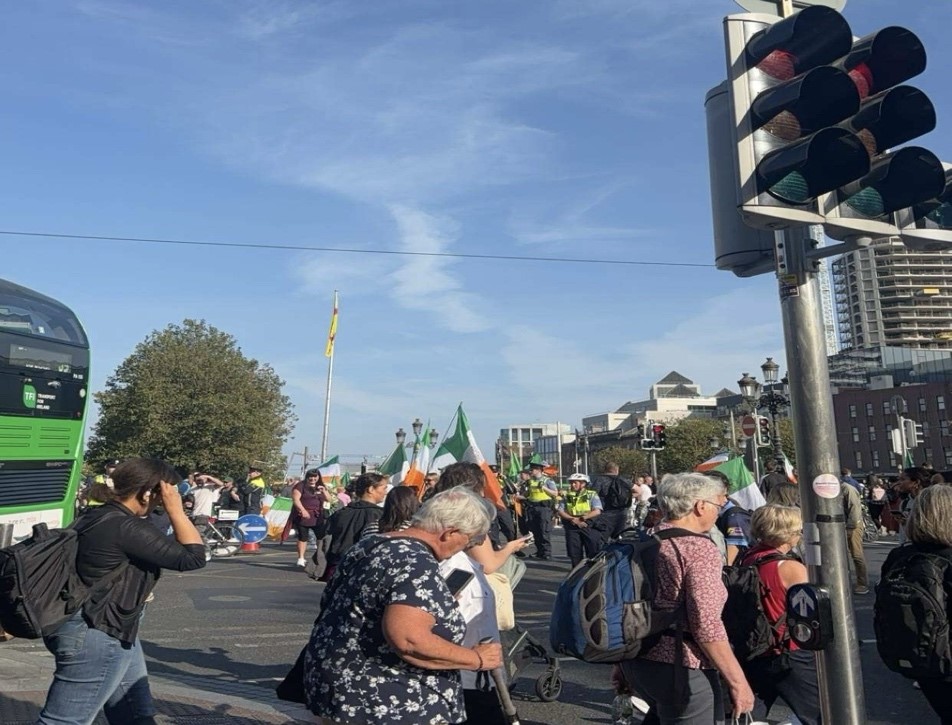
    On Thursday September 19th , Dublin witnessed a sharp division as anti-immigration protests were met with vocal opposition from counter protesters, displaying deepening divisions over the country’s immigration policies. 

                      Source: TheBurkeanIE on X 

    The protest resulted in considerable disturbance for the public and multiple arrests. Groups against Ireland’s immigration laws organised the march, which began in front of the General Post Office (GPO) on O’Connell Street. 

    Protesters expressed their disproval of the country’s immigration and asylum seekers laws. During the demonstration chants like “Get them out” and “Irish Lives Matter” could be heard. 

    Lorraine Vallessca, originally from the Philippines, who has lived in Ireland for nearly 16 years, described how she felt walking past the protest. 

    “I was on my way to work when I first saw the protest – as an immigrant myself who’s lived here basically my whole life, for the first time I felt scared”, she said 

    Irish flags and banners with anti- immigrant messages were held by the protesters and upon arriving at Leinster house, the marchers retreated to O’Connell bridge where they staged a sit-down protest that blocked important roadways.  This led to significant delays in Dublin City Centre, stopping the Luas and other public transportation systems causing extensive disruption. 

    “Close the borders” and “foreigners” were just some chants screamed at passerby’s during the march. 

    “Hearing the chants and anger in their voices was uncomfortable when I finally got to work, I thought I’d feel relieved, but I was anxious my whole shift” explained Lorraine. 

           Source: Aine McKeon 

    The Gardaí dispatched public order units in reaction to the crowds’ unwillingness to disperse on top of the increasing tensions.  

    Nineteen people were taken into custody for defying Gardaí instructions and causing disruption to the public. Investigations into the event are still ongoing. No injuries were recorded. 

    A short distance away, at the bottom of Grafton Street, a small anti- racism organistaion staged a counter protest, chanting “refugees are welcome here”. Gardaí were stationed to prevent clashes between the two groups. 

    The protests have generated a lot of discord. Numerous civil rights and community organisations have organised counter demonstrations to promote diversity and inclusion. The Irish Refugee Council and MAS (Movement of Asylum Seekers in Ireland) have denounced the anti-immigration discourse whilst highlighting Ireland’s longstanding status as a haven for refugees. 

    This protest follows a rising trend of far-right and anti-immigration protests in Ireland in recent years. 

    One of the onlookers of the protests who asked to remain anonymous said, “it is upsetting to see this happening in our country – Dublin hasn’t felt like a safe place in a very long time, it’s just not the same.” 

    The individual who claimed to have lived in Dublin for over 20 years, emphasised that the protest’s driving force was dissatisfaction with the way the immigration system is being run, not hatred. 

    Anti- immigration protests have been more frequent over the past year, which is reflective of the growing dissatisfaction among a minority of people with how the government is managing immigration and asylum policies. The highly publicised demonstrations have sparked a national conversation on Irelands Immigration laws, ranging from nonviolent marches to more aggressive riots. 

    Source: TheBurkeanIE on X             


    Over the past year, there has been a noticeable increase in the number of refugees and asylum seekers in Dublin’s inner-city areas, such as Ballymun, East Wall and Finglas. Anti-immigration sentiments have been concentrated in certain places, where locals have expressed discontent about the increasing demand for healthcare and housing provided by the influx of people. 

    Tensions in Ballymun escalated due to demonstrations at a shelter for asylum seekers, citing rising homelessness and stretched public resources. Nonviolent protests included vandalism and police clashes. 

    On November 23rd, 2023, after a stabbing attack that left three children and one adult injured, rioting broke out in Dublin. Rumors of the attacker’s immigration status contributed to the incidents anti-immigration riot. A few hundred people gathered in the throng, who at first expressed protest but soon turned aggressive. Buses, Gardaí vehicles and businesses vandalised and set on fire by rioters, Dublin’s city Centre was also looted, resulting in extensive damage.  

    While Ireland adjusts to the reality of its shifting demographic despite the polarising nature of the protests. The government has previously discussed enhancing efforts and discuss concerns between immigrant communities and Irish citizens. 

  • ‘It’s a disgrace at present’ – Dublin Councillor Welcomes Controversial Redevelopment Plan 

    ‘It’s a disgrace at present’ – Dublin Councillor Welcomes Controversial Redevelopment Plan 

    By Liam Murphy 

    Dublin Councillor Nial Ring has welcomed An Bord Pleanála’s decision to approve Hammerson’s controversial redevelopment plan, calling Moore Street’s current state a disgrace.

    This comes days after An Bord Pleanála’s approval of a highly debated plan that will see a €500 million redevelopment undertaken between Moore Street and O’Connell Street. 

    The UK property group first made applications for this redevelopment in summer 2021, with approval following just seven months later in January.

    However, appeals were made to the board and Dublin City Council by a number of Moore Street preservationists, campaign groups, and businesses, which caused for more than two and a half years’ worth of delays.

    “I see huge benefits of this project for the local area,” said Councillor Ring, who, along with being a member on the Moore Street Advisory Group, represents the North Inner City electoral area.

    “Not only in preserving the history and heritage of the street, but also in bringing Moore Street back to life. It is a disgrace at present.”

    The plans, made up of three applications, include the demolition of several buildings, the construction of a nine-storey hotel, the development of a public gallery and café, and the development of a public square – plans which are allowing Hammerson up to 12 years construction on site. 

    A generated image of Moore Street post-Hammerson development – Photo: Dublin Central / Hammerson 

    The An Bord Pleanála decision and announcement coincides with the 10-year anniversary of campaign group ‘Save Moore Street from Demolition’, who have gone on to receive over 380,000 signatures opposing Hammerson’s plans.

    The group started in September 2014, when members Bróna Uí Loing, Vivenne Kelly, Diarmuid Breatnach and Mel Mac Giobúin met to begin a weekly presence on the street with a campaign table, leaflets, and petition sheets.

    “Moore Street is of huge importance, not just to Dublin, or Ireland, but to the world,” Breathnach told The City. “We have been here over 500 Saturdays. We talk to people, we take photographs, we hear stories – sometimes stories from people coming up with their parents when they were children, others tell us of them coming up to Croke Park for matches and coming home with bangers.

    “People have different views as to what we can do with the street,” he said. “Some of us think there should be small shops and stalls here, no chain stores. Any restoration work done should be done piece by piece so that there’s not a huge disruption to the street”.

    “The Hammerson plan envisages destruction of some buildings, a high-end shopping area, a street cut through the terrace and up to 12 years of building,” Breatnach said. “That would just kill any street market here.” 

    Diarmuid Breatnach, co-founder of the ‘Save Moore Street from Demolition’ campaign group – Photo: Liam Murphy 

    The National Monument buildings of 14-17 Moore Street are currently earmarked for a 1916 Rising Commemorative Centre with an estimated cost of €16.25 million.

    The building was originally due to open in 2016 to mark the centenary, before being pushed back to 2023.

    Work, however, has not yet started.

    “The National Monument site has approval for funding, and it is imperative that this be worked on immediately,” Councillor Ring said. “Now that this [An Bord Pleanála’s] decision is out, I think it will give everyone time to reflect and, in memory of the men of women of 1916, make sure that the work starts immediately.”

    “I have an interest in the project, not only as a local councillor, but my grandfather and his four brothers were in the GPO garrison,” Ring said. “It really distresses and depresses me to walk down the street and look at the national monument site, in particular, knowing that some people with their own agenda have managed to delay work on that site for many years.” 

    One of the many stalls on Moore Street – a street currently under threat of demolition – Photo: Liam Murphy

    Hammerson’s plan outlines potential for up to 2,500 jobs after the development, but those currently trading on the street aren’t as optimistic. 

    “The plan means losing my job,” Andrea, a jeweler who has been trading on the street for two years said. “While there may be jobs after the building, it will destroy our jobs during that time. I’m only new here, but there are people here whose family have traded for 100 years. No one will want to come to a market if there’s construction being done nearby.” 

    “Other than what it means to me losing my job, my trade, and my community, it’s also what it means for the people of Dublin,” she said. “Those people care about this street. This street’s history is retail.” 

    “I lived in Spain for quite a while and saw a lot of markets,” she said. “But I have never seen something like Moore Street. Here we have a street full of its background, culture, and history, but also a marketplace. There’s a lot of potential in this street and I don’t think it’s being used.” 

    “In what world does someone think it’s a good idea to erase all this history to put more shopping centres and hotels.” 

  • Comedian Vittorio   Angelone kicks off   Irish leg of extended tour with Vicar Street gig 

    Comedian Vittorio Angelone kicks off Irish leg of extended tour with Vicar Street gig 

    By Gary Petrov

    Stand-up comedian Vittorio Angelone is kicking off the Irish leg of his extended sell-out tour with a gig in Dublin’s Vicar Street on November 3.

    Vittorio Angelone during one of his stand-up shows. Photo: @vittorioangelone and @nicomedyofficial 

    The sell-out ‘Who Do You Think You Are? I am!’ tour saw the Irish-Italian comedian bring his humour to UK and Irish cities with 68 gigs between January and May 2024. 

    Angelone announced on Instagram earlier this year that he was extending his tour into the Autumn with “loads of new places” and “loads of old favourites” across the UK and Ireland. 

    His upcoming Irish leg of the extended tour commencing in Dublin on November 3 will mark his second solo gig this year in the Irish capital’s Thomas Street comedy house – as he hosted one of his tour’s original 68 gigs here on March 22, this year. 

    Angelone also hosted a fundraiser show ‘Gig For Palestine’ in Vicar Street with fellow comedian Mike Rice on September 1, this year, for NGO Medical Aid for Palestinians

    The Dublin stop is one of 13 in Ireland for his extended tour’s dates. 

    The City reached out to Vittorio Angelone for a comment regarding the 13 Irish dates for his extended tour in which he said, “Ireland isn’t full but my tour shows will be. Get your tickets now!” 

    November stops on the tour in Ireland after his Dublin gig include – Cork on November 4 (The Everyman), Ballymena on November 8 (The Braid), Coleraine on November 9 (Riverside Theatre), Belfast on November 11 (Ulster Hall), Derry on November 12 (Millennium Forum), Bangor on November 15 (Court House), Killarney on November 16 (INEC Club), and Sligo on November 17 (Hawk’s Well). 

    Running into December, his Irish stops conclude with Westport on December 7 (Town Hall), Galway on December 8 (Kings Head), Dundalk on December 12 (Spirit Store) and Kilkenny on December 14 (Watergate Theatre). 

    The City spoke to avid fan of Angelone, Terri-Ann McNally, who said, “I used to see clips of him on social media all the time, so I ended up going to see him earlier this year, which he was truly unreal!”

    “I’m going to one of his shows again now in November. I mean, he’s just gas with what he comes out with. It’s going to be a great laugh,” she said. 

    Growing up in Belfast, the comedian, both of Irish and Italian heritage moved to London to train as a classical musician before diverting towards a career as a funny man. 

    Angelone has made several TV appearances since his career in stand-up began and has also supported several huge names including Russell Howard, Jason Manford, Adam Rowe, Shane Todd, and Dan Nightingale. 

    In 2022, his debut run at the Edinburgh Fringe Festival was a sell-out and earned him the award for Best Newcomer at the Dave’s Edinburgh Comedy Awards. 

    Vittorio Angelone at the Dave’s Edinburgh Comedy Awards in 2022. Photo: @vittorioangelone 

    In 2023, Angelone toured his solo-show ‘Translations’ after his 2022 debut during the Edinburgh Fringe Festival and released the full special on YouTube in September of the same year. 

    English stand-up comedian Adam Rowe, who Angelone has been a supporting act for, called Angelone “so much better than he has any right to be at this stage of his career.” 

    “If you’ve already seen Translations don’t worry, I’m touring a brand new hour of great and funny stuff very soon,” Angelone said on his website of his debut tour and what’s to come. 

    Angelone is one half of the podcast ‘Mike and Vittorio’s Guide to Parenting’ with regular collaborator and comedian Mike Rice – and their podcast is available to listen to on YouTube and streaming platforms. 

    You can keep up with everything Vittorio Angelone by visiting his website, here

    Tickets prices for ‘Who Do You Think You Are? I Am!’ range from €20-€30 depending on the venue and additional ticket vendor booking fees apply. 

  • Sickle Cell Disease – Q&A with Lora Ruth Wogu, CEO of Sickle Cell and Thalassaemia Ireland (SCTI) 

    Sickle Cell Disease – Q&A with Lora Ruth Wogu, CEO of Sickle Cell and Thalassaemia Ireland (SCTI) 

    By Elio Bonelli

     
    Image sourced from Facebook with the permission of Lora Ruth Wogu 

    It’s wintertime and many conditions can be exacerbated by the cold and chilling drop in temperatures. One of those conditions is Sickle Cell Disease and thecity.ie had a chat with the founder and CEO of Sickle Cell and Thalassaemia Ireland (SCTI) Lora Ruth Wogu to find out more about the disease.

    SCTI is managed by families impacted by Sickle Cell and Thalassaemia, along with dedicated volunteers. Their mission is to promote awareness and offer support to individuals facing Sickle Cell and Thalassaemia challenges, as well as their loved ones, within Ireland. 

    What is Sickle Cell Disease? 

    “Sickle Cell Disease is a genetic condition that affects red blood cells. It is a condition caused by a mutation in the HBB gene, which provides instructions for making hemoglobin—a protein responsible for carrying oxygen in red blood cells. The mutated gene leads to the production of abnormal hemoglobin known as hemoglobin S (HbS). 

    The presence of such a gene leads to the red blood cells becoming solid and rigid which leads to clogging. The cells end up resembling a C shape or sickle, which is where the name sickle cell comes from.” 

    What are the symptoms of Sickle Cell Disease? 

    “The main symptoms of the condition are pain crises which are periods of intense pain, weakness and fatigue, mental delays, strokes and infections. The weakness and fatigue are caused by anemia which is when the number of red blood cells or levels of hemoglobin within them are much lower than usual. We would also see weakness of the elbow and joints due to the small areas in which the blood vessels are in.” 

    Does Sickle Cell Disease affect certain populations? 

    “Anyone can get it, not just certain demographics. The condition is more predominant amongst patients with African or Carribean backgrounds, but the disease is not exclusive to just that group.” 

    How is Sickle Cell Disease inherited? 

    “The disease can only be inherited if both parents have the genetic mutation. If only one parent has the gene, then the child will not get the disease.” 

    How many people are affected by Sickle Cell Disease in Ireland? 

    “Around 800 people in Ireland are affected by the condition and the vast majority of the patients are based in Dublin.” 

    What are the mortality rates of this condition? 

    “The mortality rates of Sickle Cell in high-income countries are significantly lower than those in lower-income countries. 

    For example, the rate is usually five years in Africa but in the likes of Ireland or the UK, the rate would be 45 – 55 years. I have seen people survive for nearly sixty years with the condition.” 

    How is Sickle Cell Disease treated? 

    “It is usually treated firstly with folic acid and penicillin, but we mostly treat the disease with blood transfusions and blood exchange. There is a big difference between blood transfusions and blood exchange.  

    Blood transfusions involves giving a patient blood to essentially “top up” the patient with good blood cells.  

    A blood exchange involves removing some of the patients’ blood and replacing it with a substitute.  

    Patients are also treated with Hydroxyurea which is a medication that helps to increase the production of fetal hemoglobin, which can reduce the frequency of pain crises and other complications. It is classified as a chemotherapy drug but is dosed differently to what you would see in a cancer patient.” 

    Are there any issues that Sickle Cell Ireland have faced? 

    “Yes. We have faced issues with trying to get supplies of blood. There is currently a shortage of blood for our patients and there is not enough pace in securing the supplies that are badly needed.  

    There are some children with SCD in Crumlin Children’s hospital who have to stay there beyond the age limit of sixteen for treatment. Otherwise, there are not many treatment options available after they leave the hospital.” 

    What about the future? 

    “We hope to have our own designated centre as we have had none since we started in 2015. We would also love to see the introduction of gene therapy which was very recently approved in the UK. Gene therapy involves replacing a faulty HBB gene with a normal, functioning one.  

    The more treatment options that can become available means that there can be less of a strain on supplies of other treatments like blood transfusions.”  

  • Macnas Parade – Photo Collage

    By Elio Bonelli

    The Macnas Parade: Cnámha La Loba took place on the streets of Dublin for the first time since 2019 as part of this year’s Bram Stoker festival. 

    The festival, which is now in its tenth year, celebrates the life and work one of Ireland’s most beloved and iconic writers. 

    This festival was produced by Schweppe Curtis Nunn and brought to life by Dublin City Council. 

    One of the highlights of this festival was the Macnas Parade which drew in thousands of spectators despite the rainy weather. 

    The parade, which was directed by James Riordan, tells the story of La Loba, a wild wolf-woman, who wanders the world collecting bones and preserving that which is in danger of being lost to the world. 

    It is said that, as darkness falls, she prowls the streets along Lough Corrib, singing the bones – or “cnámha” in Irish – back to life by the light of the moon. 

    The parade started at 7pm in Moore Street, turned onto Henry Street and travelled up to Mary Street, then turned right onto Capel Street, then left onto Little Britain Street and left again to finish on Halston Street. The parade lasted just over an hour. 

  • Worry spreads among Irish XL bulldog owners – will the UK’s ban on the breed cross overseas? 

    By Taylor Mooney 

    Irish XL bully dog owners express concern over the UK’s ban on the breed following Rishi Sunak’s announcement that the dogs are “a danger to the community.” 

    Image: Megan Pryor

    Concern is growing across Ireland and the UK as the Prime Minister calls for the breed to be banned.  

    The Southeast Inner-City Councillor Mannix Flynn expressed his concerns to the Chief Executive at a Dublin Council meeting earlier this week.  

    He asked the Chief Executive to initiate a review of how many XL Bully dogs are now in the Dublin City Council-administrated areas.  

    “Having clear tabs on the number of XL Bully dogs and owners in an area is one way to manage the breed if people are worried about the threat they pose to a community,” said XL Bully dog owner Megan Pryor.  

    Since Sunak’s announcement, Pryor has taken to the social media platform TikTok to showcase her loving “best friend,” Torvi, a 9-month-old XL Bully, who she fears she might lose in future, as no clear information has been given to XL Bully owners since the ban was first announced.  

    “We haven’t got any information from the government about their plans and what is going to happen to us families with XL Bully dogs.  

    “Hopefully, it will be a case that clear regulations will be put into place – including a registry on who owns these dogs so that the government and our communities can know these breeds are owned and existing.” she said.  

    Chief Executive of Dublin City Council spoke for Dublin saying; “There is currently no database in Dublin to provide figures in any given Local Authority Area other than the register of dogs held at the municipal shelters. Microchips are held by 4 separate organisations making it very difficult to get an overall picture of breeds in any particular area.”  

    Pryor explained how the temperament of these dogs is something every owner should get used to, and that owners should be held responsible for their dogs. 

    “It is the owner’s responsibility to know their dogs and how to properly train them. I’m starting to muzzle-train Torvi and I’ll have her wear a muzzle on walks outside. It would be irresponsible of me if I didn’t.”  

    At the Council Meeting, Councillor Mannix Flynn also called for the Chief Executive to outline the potentially dangerous threats of this breed on a community. 

    “The XL Bully is an extremely powerful dog with a perceived tendency towards aggression and for that reason is defined as a Ban Dog under the S.I. No. 123/1991 – Control of Dogs Regulations.” answered the Chief Executive.  

    Image: Megan Pryor

    The UK’s ban on the breed came after several vicious attacks, including one incident where a man was mauled to death in Walsall last month. Sunak said he “shared the nations horror” and that he was working with experts to define the breed.  

    “My son is 8 months old, and Torvi is 9 months old, and they’re besotted by each other,” said Pryor.  

    “[Torvi] is great with my son and will always cuddle up to him when he’s crying or try to get into his bouncer with him, they’re great,” she added.  

    The ban will be implemented in the UK at the end of the year and will see all domestic and criminal gang-related American XL bully dog owners affected.  

  • ‘It is the charities job to ensure that they get good value for them’: Why Charity Retailers have priced-up its clothing items 

    By Renee Melia

    Today Charity retailers consider themselves high street retailers as the standards of the shops have improved to attract buyers looking for a pocket-friendly second-hand piece of clothing and more. Chairperson of Charity Retail Ireland, Mark Sweeney explains the reasons behind the increases and confronts misconceptions surrounding charity retail.  

    A common misconception about charity retailers is that it doesn’t pay rent or have the same overhead costs as other high street retailers, according to Mark Sweeney, Chairperson of Charity Retail Ireland, a representative body for charities that operate retail spaces for its charity on the island of Ireland.  

    “Most charity shops will have a paid manager and/or deputy manage.  With the nature of volunteering, not as many people are interested in volunteering as once used to be. We do have to put in staff to ensure that the shops are run correctly,” he said.  

    “We’re in a period where charity shops are trading very well, and that goes across the island,” Sweeney said.  

    Photo: Renee Melia

    In 2022, clothing sales accounted for the biggest proportion of sales at 66% or 7.2 million garments sold according to Charity Retail impact report. The report stated clothing sales are expected to increase due a move to a more circular approach to fashion-giving clothes and materials a extended life. 

    62,230 tonnes of carbon equivalent emissions were avoided through its members shops in 2022, stated the report.    

    In 2023, almost half of Irish consumers report that they are either extremely (19%) or very concerned (26%) about their personal financial situation. Over three-quarters said that they changed their non-essential spending. 15% have stopped non-essential spending altogether according to PwC report Irish Consumer Insights Survey.  

    Many Irish consumers are willing to pay a higher-than-average price for sustainable product types, despite Irish consumers not feeling confident in their financial situation at 77%.  

    In an article by The Irish Times buyers of clothing in charity retail said they noticed the price increases within the stores. 

    “We are there to raise money. And that’s why our pricing is reflective of that,” Sweeney said 

    Staff at St Vincent De Paul and Oxfam have said that items are priced according to the material that it is made from and the brand. And within Oxfam the charity retail is open to negotiate prices with customers. 

    “All charity shops sell really good value clothing. There are items in a charity shop, from trousers to jackets, to jumpers that are priced at a low price, that are affordable to all.  When a charity shop is donated a good piece of clothing, a high-end piece of clothing and designer piece of clothing, or a good high street piece of clothing. It is the charities job to ensure that they get the value for them. 

    “Because somebody that donates to a charity or given something from their wardrobe in hopes that whatever they they’ve donated will raise funds for that charity. And the charities have an obligation to ensure that we price that correctly and we do price things correctly,” said Sweeney.  

    Another misconception Sweeney points out about charity retail is, “that they’re mostly old, smelly, dusty and disorganised. They’re not.” He continues to add that nowadays someone shopping in a charity retail today will find “a much more organised and commercially viable retailer”.   

    “There are over 500 charity shops on the island of Ireland, and we have been one of the biggest preserves of sustainability and circular fashion without even knowing it.  And my ask of people is to go back to our roots. Repair your clothing. Reuse your clothing. Recycle your clothes and give them a second life,” concluded Sweeney.                                                                                                                                                                                                                                                                                                           

  • TU Dublin feeling the rise in violence happening in Dublin. 

    TU Dublin feeling the rise in violence happening in Dublin. 

    By Mia Waterhouse

    In recent months the violence in Dublin City Centre has been top of the news agenda and it seems that violence has reached the university TU Dublin’s campus.  

    TU Dublin president, Professor David Fitzpatrick, wrote directly to the minister for justice Helen McEntee, appealing for more security around the campus for the safety of all students and staff.  

    In the letter earlier this year to then minister for justice Simon Harris, Fitzpatrick wrote to report about the anti-social behaviour and the lack of safety for students, “we have received reports that the response is slow and are also constrained by the fact that the University’s Estates and Security team cannot respond to off-campus incidents.” 

    The incidents have not been one-off attacks but have been regularly happening at the Broadstone Luas stop just outside campus.

    Luas tram in Dublin City Centre. Image: Louis Hansel/Unsplash.com

    “The Union has received increasing reports of anti-social behaviour in the Broadstone Plaza, right beside the Broadstone Luas stop, as well as the ‘main entrance’ to our Grangegorman Campus. Students do not feel safe entering and leaving the campus, particularly in the evening time,” said Brian Jordan, president of TU Dublin Students’ Union.

    The attacks have also appeared to not be random students from the college as there has been a racial element. While it appears that ‘nobody is safe’, there appears to be a distinct racial element to many of the incidents. It’s also very possible from what I’ve heard and seen that these students are targeted specifically because of their race and/or ethnicity. Several victims of attacks here have reported that racial slurs were thrown at them during the incidents for example,” Jordan added.

    With this still going on and no sign of any measures being taken by the college itself, the TU Dublin Students’ Union took matters into their own hands and held a demonstration at the Luas stop.

    TU Dublin Student Union members held a demonstration to send a message to the Government. Source: @tudublinsu

    The union said the reason they held the demonstration was to ‘show solidarity with the students who consistently feel let down by the government’ and the second reason was to apply more pressure on the government and McEntee to coordinate a far better response between the Gardaí, Transport for Ireland (TFI), and TU Dublin.’ 

    “There were several speakers, including myself on behalf of the SU, Nekesa who is our VP for Welfare & Equality, who also happened to be a mature and international student in TU Dublin, several local ‘opposition’ politicians, as well as current students within the University who felt more needs to be done. 

    We received very little communication from the University about steps being taken (an unfortunately common trend). However, after a particularly ‘viral’ incident last semester, media reported that the President of TU Dublin wrote to the then-Justice Minister requesting more policing in the area,” said Jordan.  

    The previous attacks saw some students getting pelted with eggs and racially abused and another getting her hair pulled. This all happened at busy times in the evening when students were waiting at the Luas stop. Witnesses described the offenders as all boys aged around 15 years.  

    When asked what the desired outcome Jordan said, “We want Justice Minister McEntee to provide adequate governmental support to improve the safety of the Broadstone Plaza. This means improving resourcing to policing in that area like more of a garda presence, as well as a collective response from TFI and TU Dublin. It should not be the role of the Union to constantly try to coordinate these stakeholders when we have an incredibly well-paid Government whose role that is.”

  • No New Nuns – How Ireland’s convents have handled declining numbers 

    No New Nuns – How Ireland’s convents have handled declining numbers 

    By Aoife Daly 

    Religion used to be at the core of Irish society. Despite the Church scandals and abuses that have come to light in recent years, the organisations impact on Irish society can be seen to this day. Most primary schools still have a Catholic ethos, at 88.6% in 2021, and an Irish Times poll from 2015 indicated that 93% of parents have their children baptised. A 2023 survey by Amárach Research found that, despite dwindling mass attendance numbers, about 50% of Irish adults still believe in God. 

    Image source: Landgeist. Sourced from the following article: https://landgeist.com/2022/07/30/importance-of-religion-to-europeans/ 

    All of this makes it impossible to ignore the remaining pillars of the Catholic Church in Ireland today. Clearly, religion is still relevant in the current age. But how is this religious community adapting to a modern, increasingly secular, Ireland? 

    “Where the sisters are elderly and aren’t able to work, it’s the pensions keeping them going” 
     

    “There’s very, very few people entering religious life today,” said Sister Bríd Geraghty, the delegation leader of the Disciples of the Divine Master in Blackrock, Dublin.  

    “I was only 17 when I joined, I had just finished my Leaving Cert,” she said. “There were four in my class, three became Sisters of Mercy, [and I] chose the Disciples of the Divine Master.” 

     “It was a beautiful experience, because we were many together,” she continued.   

     “You had great company,” she said. “That’s one thing that would be lacking today, if a young girl decided to enter the convent.”  

    Image: Unsplash

    In 1950, the number of female religious figures in the diocese of Dublin was 3,031. In 2021, that number had dropped to 1,022. During this time, the overall population of Dublin rose from around 632,000, to well over a million.  

    The impact this has had on religious communities is palpable. It is no longer possible for nuns to remain in convents as they age, as the support system that previously surrounded them has shrunken to a fraction of what it once was. Many are sent to nursing homes, against their better wishes.  

     While Sister Geraghty’s convent manages to generate income through hospitality, other orders would struggle to sustain themselves. 

    “We have about four rooms where people would come on retreat,” she said. “For full board here, it’s €70… So that helps us, but in other orders, it would be the pensions… Where the sisters are elderly and aren’t able to work, it’s the pensions keeping them going.”  

    Image source: Unsplash 

    Sister Geraghty believes the best way for the Church to mitigate these issues is to expand the range of people it appeals to.  

    “There’s a lot of talk now about whether they should be blessing gay marriages, or whether there should be women priests,” she said. “People have sat down and said, ‘how would we like to see the Church today?’ It has to change.”  

    “The Church as it is now, is not attracting young people,” she continued.  

    “The younger generation have changed, culture has changed, but unfortunately, the Church hasn’t changed,” she said. “And it’s not going to change a great lot if we’re going to depend on all older priests, older men.”   

    “I think at the moment, women will be more involved in the Church, and given a different place, a more important place, in the Church, where they feel like they’re contributing,” she said. 

    “People have it be invited to help in the Church today, and that’s missing” 

    Sister Geraghty also believes the Church must join forces with those who may not be religious, but would still appreciate the community the Church could offer.  

    “There’s no need for so many religious [people] today. It’s the lay people, like yourself, that should be more involved with the Church, given a chance, encouraged, invited. They’re not invited… People have to be invited to help in the Church today, and that’s missing. Like, my own nephews and nieces, they don’t feel that they’re part of the Church,” she said. 

  • The end of disposable vapes- How vaping has been normalised among students 

    The end of disposable vapes- How vaping has been normalised among students 

    By Wiktoria Sobczak

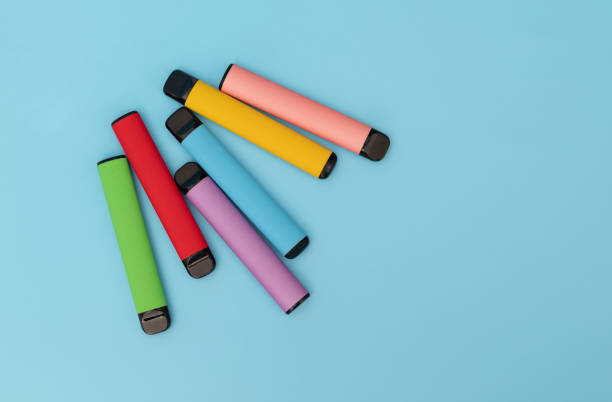
    Due to the negative environmental impact, TD Paul McAuliffe wants to ban disposable vapes. 

    The use of vapes among young adults is increasing at a rapid rate.  

    Greenpeace writer Kirsty Scheiby states that disposable vapes are harmful for the environment as they are powered by a battery which is made from lithium, a precious metal which is already facing global shortages.  

    Disposable vapes were first released in the early 2010’s and have grown in popularity quickly, especially amongst young people. Disposable vapes are sold in a variety of flavours which makes them appealing to young people. 

    Vaping has also raised multiple health concerns. In 2019, The Centers for Disease Control and Prevention found that people who vape had common symptoms such as respiratory symptoms, shortness of breath, cough, and chest pain.  

    Other vaping side effects include fatigue, sore throat, irritability, dizziness, nausea, and sleepiness. Although some experts consider vaping less harmful than smoking, there is still a lot to learn about its long-term effects. 

    Photo- iStock  

    TheCity.ie conducted a survey of 50 college students all around Ireland has shown that smoking disposable vapes is normalised within their friend groups.  

    William O’Hara, manager of Hale Vaping on Parnell Street, says most people who come in to buy disposable vapes are college students in their 20s.  

    “Most people who pop into the shop are students, I think when disposable vapes are banned, people will start smoking cigarettes again. I do not think vape shops will lose business, normal vapes are still making more money than disposables,” he adds.  

    The student survey has shown that in the case of disposable vapes being banned, 36% of students will move onto cigarettes, 32% will move onto regular vapes and 28% will stop smoking altogether. The survey has also found that 56% of students didn’t smoke at all before disposable vapes.  

    The growth of disposable vapes has also made littering a bigger problem, especially in nightclubs.  

    “I work in a nightclub and at the end of the night there is close to a hundred vapes laying on the ground, most of my colleagues vape themselves,’ says Darragh Casey, a student from University College Cork.  

    According to Irish Vape Vendors Association (IVVA), the main argument in favour of banning flavoured e-liquids is the potential risk of making vaping products more attractive to minors with child-friendly flavourings and packaging. However, the association between vaping flavours and subsequent smoking initiation is not backed up by evidence. 

    “Working in a club, I can see how popular vaping is, way more people have elf bars in their hand in the smoking area than actual cigarettes, I don’t smoke, but I find myself occasionally buying a disposable on a night out,” Casey adds. 

    Here are some of what people on X (formerly known as Twitter) have to say about the potential ban:

    “Disposable vapes should have been banned long ago,’’ says Joe Mullery. 

    ‘’They are an environmental nightmare due to all the materials in them, and people don’t dispose of them properly,’’ says Anne-Marie Fuller. 

    “I’m seeing them more and more dropped on the street lately, it seems like a terrible waste of battery/electronic materials,’’ says Derek O’Keeffe.  

    There have also been reports of hundreds of disposed vapes found during the Big Beach Clean weekend in Cork on the 28th of September. 

    “The Big Beach Clean weekend just shows the dire need for a legislative ban in Ireland,” adds Niamh Guiry on X.