Tag: ireland

  • Bolt powering Bray’s E-bicycle Movement 

    Bolt powering Bray’s E-bicycle Movement 

    By Jamie Ryan  

    Since June of last year, popular taxi app ‘Bolt’ has extended their services to provide the people of Bray Co. Wicklow with electric bicycles.  

    These bikes have been a massive success across the town among people of all ages due to their cheap costs and easy accessibility.  

    Green Party Councillor for Bray East, Erika Doyle, was one of those involved in getting the scheme up and running in the town.  

    “With the introduction of the bikes, there has definitely been a modal shift, which is great because in a town like Bray we have a congestion problem. It’s very hilly as well, so with the pedal assist it has become much more accessible for people that otherwise maybe wouldn’t have used a push bike,” Doyle explained.  

    “It’s been a really positive thing for the town, and data from Bolt shows that these are being used even during winter months, because originally, there was a suspicion that they might only be used during the summer, but people are clearly just dressing for the weather and using them regardless which is great.”  

    The success of this scheme is partly due to just how easy the bikes are for people to use. Users simply download the Bolt app, scan the barcode on the bike, and they will then be charged 18 cent per minute.  

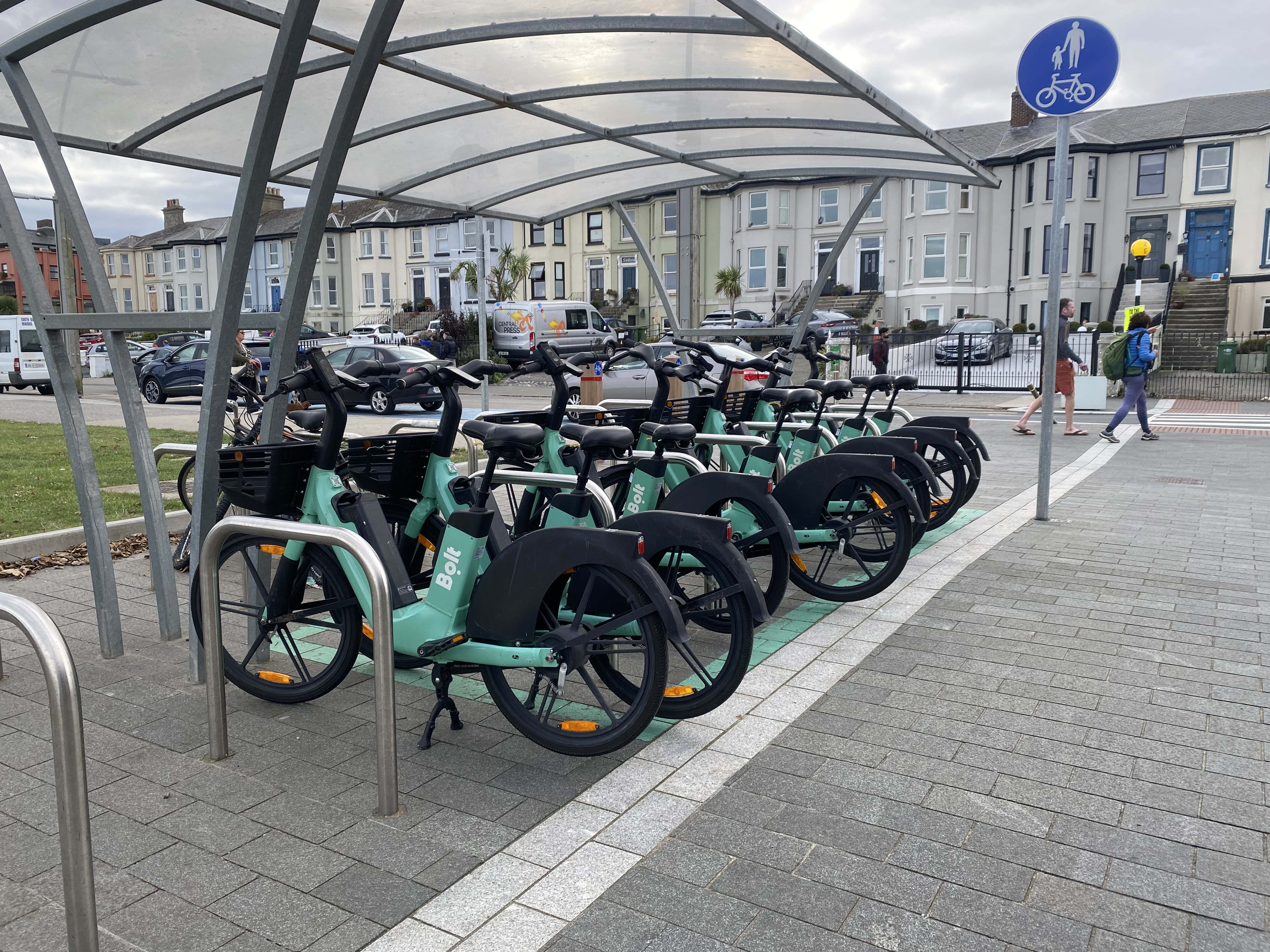
    Once the user completes their journey, they park the bike in one of the ‘park zones’ that can be found on the app or can be identified by a green square on the ground and bike racks.  

    Along with a pay as you use option, there are also a variety of subscription passes available to users too, such as a day pass, weekly passes, monthly passes and ‘unlimited unlocks for 30 days’. 

    The bikes go up to 25 kilometres per hour, but can be capped at 15 kilometres per hours if users wish.

    Bolt Bikes at Little Bray ’Parking Bay’ – Photo Credit: Jamie Ryan 

    Sinn Féin Councillor for Bray West, Dermot O’Brien, speaks highly of the impact that the bikes have had in Bray.  

    “I would say overall there has been a very positive impact from the introduction of Bolt bikes in Bray. The user numbers are a good reflection of this, and the feedback from local people who see them as an alternative to the car, or as an easy option for getting around the town,” he said.  

    “I particularly notice the variety of local users, young and old, as well as tourists and exchange students who benefit from an easy and accessible option to move around the area.” 

    “On a personal level, I would use Bolt bikes very often, and they are a wonderful asset to someone who lives on the edge of being on time for meetings, as I bounce from one venue to another around the town.” 

    The bikes are easily maintainable due to there being no shock absorbers in their frames, and the tyres not containing air.  

    However, although there has been a plethora of extremely positive experiences from Bolt bike users, there have been issues with bikes being damaged, defaced or suffering from wear and tear.  

    Councillor O’Brien himself has fallen victim to this, he explained. 

    “In recent weeks, I changed my bike four times because of malfunctioning and ultimately, I just walked home which was frustrating,” he said. 

    Adam Byrne, 20, regularly uses Bolt bikes to get around the town.  

    “The bikes have made such a difference for me. Getting to and from work has become so much handier and it only costs me maximum €3 per journey which is much better than spending it on petrol – not to mention not having to sit in traffic the whole time,” Byrne said.

    Bolt Bike at Bray Harbour with graffiti at the rear mud guard – Photo Credit: Jamie Ryan 

    “Of course, like anyone else who uses them regularly I’ve had one or two issues, but nothing crazy, more so just maybe a lack of maintenance with the brakes and minor damage to the pedals, but overall, I really can’t say any bad about them. I hope they stay around for a long time.”  

    The contract between Bolt and Bray Municipal Council has recently been extended for a further year, for locals to enjoy and utilise.  
  • In Photos: Thousands take to the streets for Dublin’s largest Palestine protest to date 

    In Photos: Thousands take to the streets for Dublin’s largest Palestine protest to date 

    By Liam Murphy

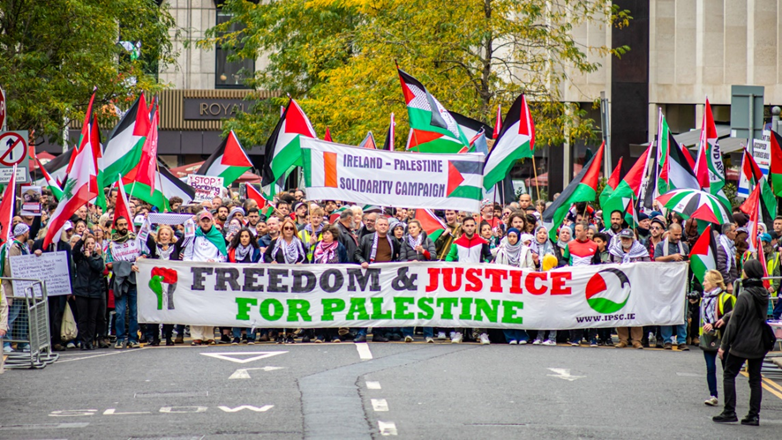
    On Saturday, October 5, thousands of people took to the streets of Dublin to mark one year of Israeli escalation in Gaza. 

    The march, the biggest of its kind to date in Ireland, called for an end to Israel’s occupation, an end to the use of Irish airspace for transporting weapons, and for the Irish Government to act in holding Israel accountable.  

    Several chants were also heard supporting Lebanon, following recent attacks there, also by Israel. 

    The national march, titled ‘GAZA: One Year of Israel’s Genocide’, began at the Garden of Remembrance and made its way to Molesworth Street, where a stage had been set up. 

    Speakers on the stage included Oscar-nominated and BAFTA-winning Palestinian filmmaker Farah Nabulsi, Palestinian photojournalist Eman Mohammed, Zak Hania, who recently returned home from Gaza after seven months, and Ireland Palestine Solidarity Campaign’s chairperson Zoë Lawlor. 

    Music on the day came from renowned Irish singer-songwriter John Spillane, Palestinian-Irish singer Roisin El Cherif, and Palestinian rapper Talha Alali.   

    All photos taken by Liam Murphy

    Protestors gather at Dublin’s Garden of Remembrance with signs and banners. 
    A group gathers with signs; Some with donation QR codes, others with song lyrics, others with art – Each with meaning. 
    Supporters gather around a 30ft Palestinian flag, as the crowd prepares to march. 
    A young girl wearing a keffiyeh poses as the march makes its way down O’Connell Street. 
    ‘From the River to the Sea, Palestine will be free’ – chants are heard across the capital city. 
    Protestors feel the heat as one bloc light up flares as the march moves down O’Connell Street 
    A masked up keffiyeh-wearing group stand roadside on O’Connell Bridge holding a red Hezbollah flag. 
    A woman holds up a scarf, branded with the Keffiyeh pattern and the Palestinian flag and Irish tricolour flag. 
    ‘You’d care if it was Cork!’ – A protestor holds up a sign on Molesworth Street, calling out the Irish Government 
    The march makes its way around the corner from Dawson Street, now heading up towards Leinster House. 
    Cork singer songwriter John Spillane tuning up before taking to the stage to perform his song ‘Palestinian Sunbird’ 
    Zak Hania smiles as crowds applaud his entrance. Hania spent seven months in Gaza unable to return home. 
    Palestinian rapper Talha AlAli (known as Wise Wolf) performs his newest single ‘Inshallah’ with Irish artist Blue Niall 

  • Apple Day-Harvest Festival

    Apple Day-Harvest Festival

    By Luke Hurson

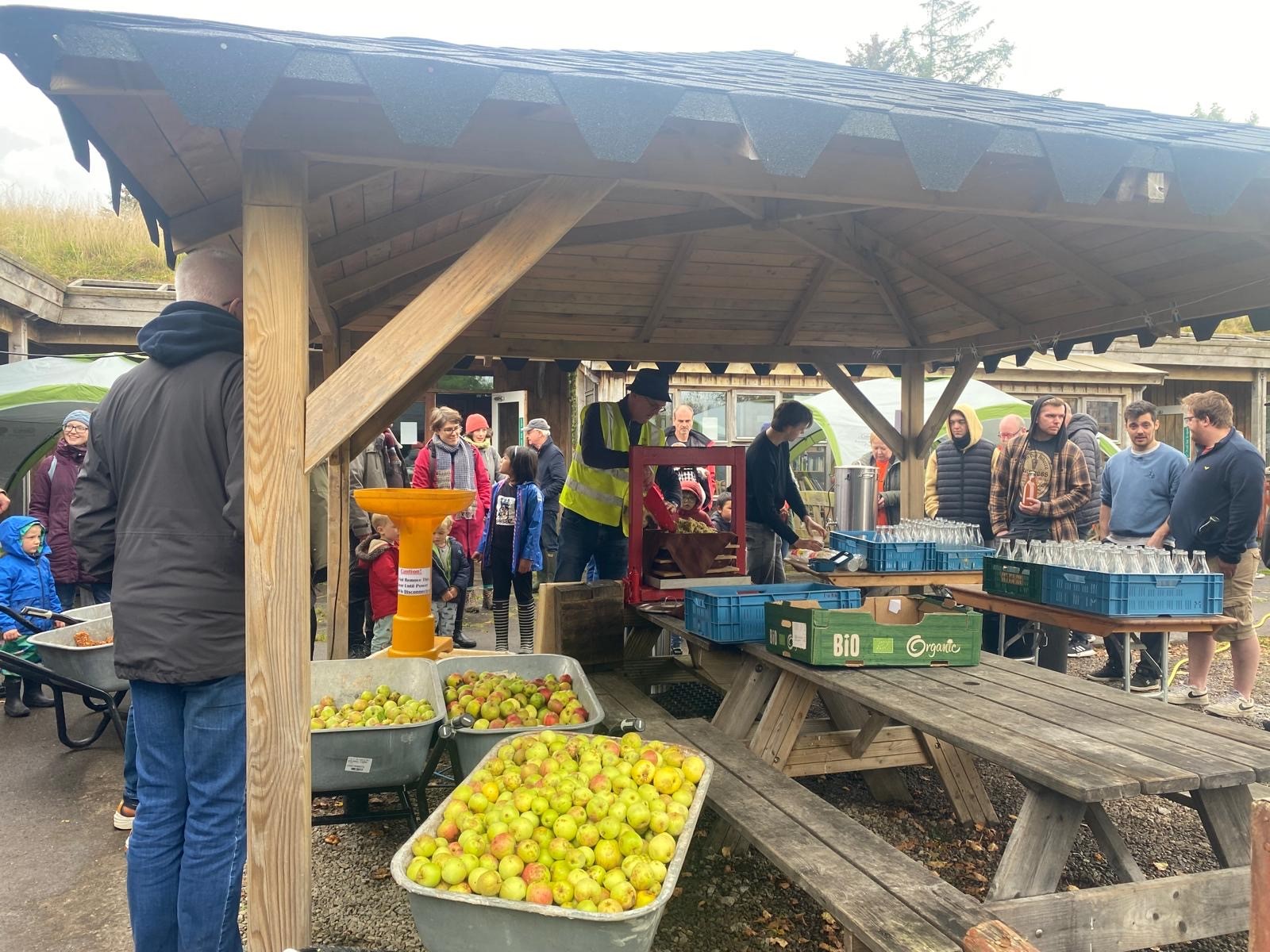
    The Organic Centre in Rossinver Co. Leitrim hosted its Apple Day-Harvest Festival on 29 September and The City went to check it out. 

    The festival had a great turnout with lots of activities and stalls for the visitors. The highlight of the day was the apple pressing, where festival goers were shown how apple juice was made and could sample the finished product.  

    The stalls were full of sustainable crafts both inside and outside the building. There were craft demos, stone carving, weaving and wool spinning to keep the crowds entertained. 

    Talks and tours were on throughout the day by experts including The Organic Centre’s resident apple expert Phil Wheal and Botanist Maria Cullen. The Grass Roof Cafe provided all diverse kinds of apple tastes for the people to enjoy.

    All photos by Luke Hurson

    The crowds were shown apple pressing techniques
    The grass-roofed Organic Centre
    The Apple Day Harvest festival drew good numbers
    The greenhouses were full of organically-grown fruit and vegetables 
    The inside of one of the greenhouses
    The craft tent was a popular attraction
    The Grass Roots Cafe kept the visitors going throughout the day
    A different angle of the apple pressing where pressure is put on the apples to squeeze the juice out of them 
    Some beautiful wildlife paintings were on display 
    One of the many craft stalls with handcrafted goods 

  • Ireland Implements first stage of XL Bully ban: Key changes starting from October 1st

    Ireland Implements first stage of XL Bully ban: Key changes starting from October 1st

    Ireland has officially implemented a ban on XL Bully dogs, which came into effect on October 1st, 2024. The ban was introduced by Minister for Rural and Community Development Heather Humphreys in response to a series of high-profile attacks involving the breed. 

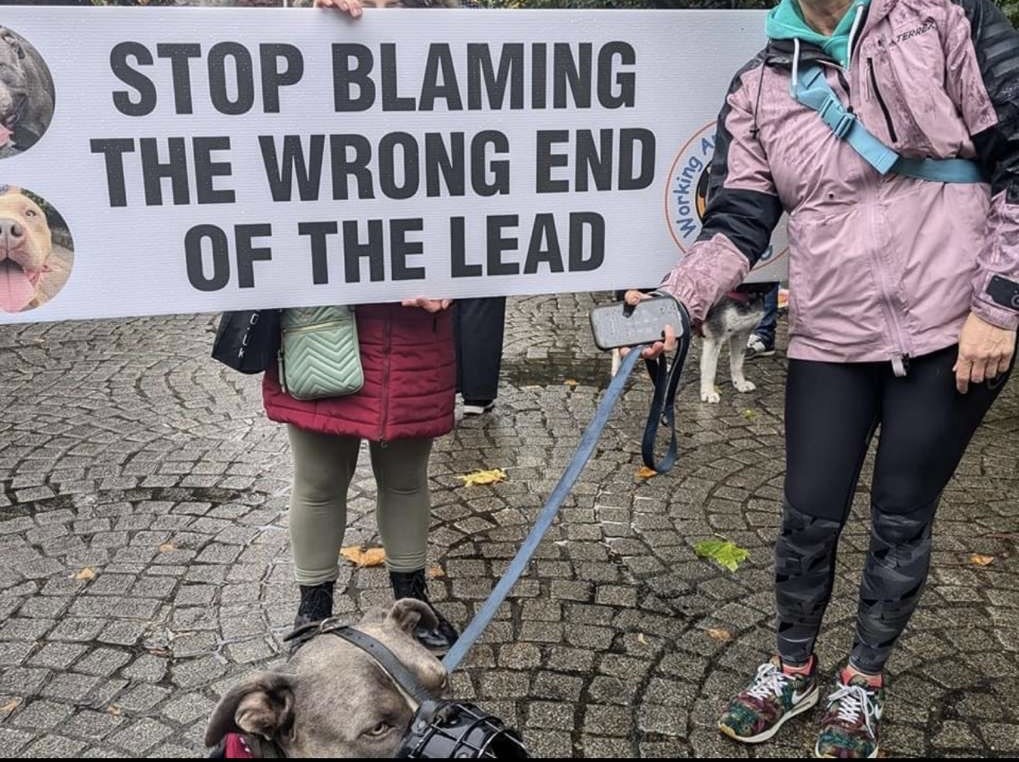
      Banners at XL Bully ban protest. Photo by Sandra Dudkiewicz 

    The ban will be enforced in two phases. As of October 1, 2024, it is illegal to import, breed, sell, or rehome XL Bully dogs. From February 1, 2025, it will also become illegal to own an XL Bully unless the owner has obtained a ‘Certificate of Exemption’. 

    This certificate will allow owners to keep their current XL Bully dogs, provided they meet certain criteria such as licensing, neutering, and microchipping the animal. 

    A deadline of February 2025 has been set for animal welfare groups and shelters to rehome or export XL Bullies already in their care. 

    The decision has generated debate, with some supporting the move as a necessary measure for public safety, while others, including animal rights groups, express concerns about the future of these dogs and the impact on shelters 

    A joint statement published by Dogs Trust Ireland, Irish Blue Cross, MADRA, and the ISPCA states that they will continue to urge the government to prioritize enforcing and adequately funding existing laws that address the root causes of dog aggression across all breeds and types of dogs. 

    This includes cracking down on unscrupulous breeders who prioritize profit over dog welfare and public safety, penalizing irresponsible owners of dangerously out-of-control dogs, and educating and empowering responsible dog owners. 

    “While we are disappointed with the approach the government is taking, we remain committed to continuing our work to advocate and ensure that the welfare of all dogs is protected,” the statement said. 

    Sister of Nicole Morey who was tragically killed by an XL Bully earlier in June this year spoke to RTE news and expressed that the ban is not enough and fears that there will be more accidents linked to the breed. 

    “I think there should be a stricter law brought in. They’re dangerous dogs. They’re not small little puppies. They’re not dogs that you could just mess around with. They can just switch in two seconds,” she said. 

    Earlier in September almost 200 people attended a protest at Stephans Green in Dublin following the news of the new regulations related to the breed. 

    XL Bully owner and attendee Wiktoria Kumorek spoke to The City. “It truly breaks my heart it is unfair that these dogs are being judged solely on their appearance. My dog is gentle, and affectionate and with proper training and care, they are no more dangerous than any other large dogs.” 

    “The problem is not the breed, it is irresponsible ownership just like with any other dog or animal,” she added. 

    XL Bully ban protests in September in Trinty Point. Photo by Sandra Dudkiewicz 

  • ‘Just one won’t hurt’:  A closer look into Ireland’s drinking habits 

    ‘Just one won’t hurt’:  A closer look into Ireland’s drinking habits 

    By Áine McKeon  

    ‘Don’t be rude, have a drink with me’, ‘You deserve a drink, after the week you’ve had’, ‘It’s tradition, you have to’ – these are just a few phrases you may hear around the table while having a few drinks.  

    Drinking as a social activity is quite common between friends and family across Ireland. 

    Stereotypes surrounding Irish people and drinking are deeply ingrained in popular culture, often exaggerating or misrepresenting the role of drinking in Irish society – whether that be heavy drinking or holding our liquor well. 

    But how much truth is behind them? If you read between the lines, you could argue that Ireland may have a few underlying issues with drinking that may have been swept under the rug. 

    As figures rise, an increasing worry is brewing regarding the effects of drinking, shifting how Irish people view their  drinking habits. 

    But how much do we really drink in Ireland? 

    When experts talk about the dire health implications linked to excessive alcohol use, people tend to assume that it’s directed at individuals who have an alcohol use disorder – but health risks from drinking can come from moderate consumption as well. 

    In 2023, alcohol consumption was 9.9 liters of pure alcohol per capita over the age of 15 years. This shows a fall of 10% since the passage of the Public Health (Alcohol) Act in 2018. 

    Alcohol consumption per capita has reduced in recent years from its historically high point, in the early 2000s. We are now drinking at a level of just under 10 liters per capita. 

    According to |Alcohol Action Ireland per capita consumption in Ireland in 2023 equated to 284 cans of beer, 12 bottles of spirits, 43 bottles of wine, and 35 cans of cider.

    Photo Credit: Sheila Gilheany, Alcohol Action Ireland 

    “If the whole of the country was drinking within the HSE lower risk drinking guidelines, we would be consuming about 40% less,” said Dr. Sheila Gilheany, CEO of Alcohol Action Ireland.  

    “We have very high levels of ‘binge drinking’. Ireland is the 8th highest within OECD countries,” she added. 

    About 70% of the population consume alcohol. Over half of all drinkers do so in a manner that is considered hazardous. About 20% of the drinking population have an alcohol use disorder. 

    Consumption and affordability  

    “Consumption patterns are driven by price, marketing and availability. You can see the changes in consumption in the graph above. In recent years, drops in consumption are usually linked to changes in alcohol taxation. Alcohol remains very affordable, despite industry protests,” said Dr Sheila Gilheany. 

    The price of alcohol in shops today is essentially the same as it was 20 years ago. 

                    Alcohol-Affordability-Ireland – Photo Credit: (Sheila Gilheany, Alcohol Action Ireland) 

    The Organization for Economic Co-operation and Development (OECD) found that Ireland has the second most affordable alcohol across OECD countries. 

     The Irish alcohol business spends a minimum of €115 million a year promoting its goods. This excludes sponsorship agreements like those for Guinness Six Nations.  

    Ireland ranks the 3rd highest in the world for the number of pubs per head, and three-in-four people live within walking distance of a premises licensed to sell alcohol. 

    “The term ‘responsible drinking’ is very much an industry term which has no public health meaning – i.e. it is not defined,” said Dr. Sheila Gilheany. 

    The HSE has guidelines on lower risk drinking, although, as these are now in the process of being revised, it likely will decrease in common with other jurisdictions which have examined this recently in Canada. 

    Finance and office manager Jennifer Bergin at Drinkaware said, “Anybody wanting to change up their drinking habits and are looking for information can access our 2023 barometer research paper and consumption page available on our website.” 

    It’s likely that the majority of people have encountered someone who has struggled with their alcohol intake. Excessive drinking is a widespread problem in Ireland that affects not only the individual, but also those around them. Alcoholism can affect a drinker’s emotional, financial, and physical well-being, which can be harmful to those around them as well.  

    According to Alcohol Action Ireland, Ireland’s drinking culture is evolving towards more mindful consumption, with health becoming a priority.  

    The impact of these changes on the country’s drinking culture remains uncertain. 

  • Bees, Trees and World Oxygen 

    Bees, Trees and World Oxygen 

    By Derek Price

    Planet Earth could be in serious danger of losing its main oxygen source.  

    With the Amazon rainforest continually being felled for its timber and cattle grazing at an alarming rate (since 1988, humans have destroyed an area of the rainforest roughly the size of the American State of Texas), what can Ireland do to try to offset and remedy this huge loss of oxygen- producing plants?  

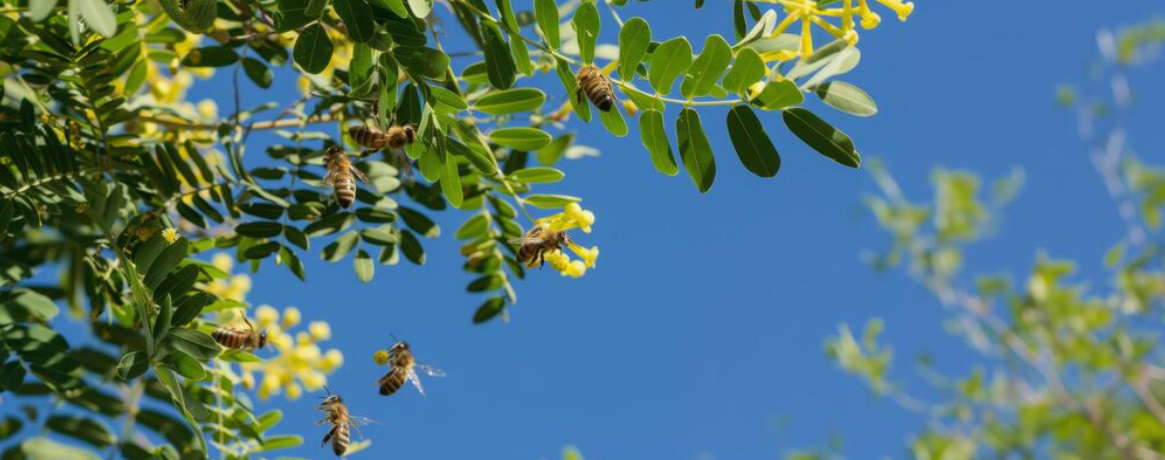
    To say it is important for people to support the growth of trees, which support pollinating insects in Ireland and elsewhere, may seem like an understatement. Pollination, and having the right native trees and plants, which contribute to the ecosystem being in balance – is a vital part of nature.  

    If tree planting is knocked out of balance by human activity, it could have a devastating effect, resulting in the extinction of bats, bees, and other pollinating insects, and hence the plants that rely on them. Also, certainly, birds may be affected. This could have a domino effect, which could eventually lead to the extinction of the animal kingdom, which of course includes our own species, human beings. 

    It has been reported in the Irish Times by Ella McSweeney, that a third of all bee species in Ireland will be extinct by 2030.  

    Hanna Backmo, a beekeeper in Ireland, recently told Louise Walsh in the Irish Times, “It’s been a bad year for honey, but the native honeybees are real survivors. Two years ago, because of lack of rain, we had the worst summer in 30 years for honey production. Last year was excellent but, unfortunately, this year doesn’t look too good,” she said. 

    Orla Farrell is the project leader for the Easy Treesie organisation, whose objective is to plant and grow a million trees in Ireland by 2030. The City asked Orla her opinion on some important environmental issues currently happening in Ireland. 

    Orla Farrell, the Project Leader for the Easy Treesie. (courtesy of https://easytreesie.com)


    Do you think that Irish County Councils giving away thousands of Hawthorn, Mountain Ash and other trees natural to Ireland ahead of National Tree Week every year is a good idea? 

    Orla: “A super idea. Easy Treesie and Crann do this regularly. The members of the public are thrilled to get such a donation. We ask them only to take them if they have space and if they are going to plant them immediately. The Easy Treesie project is all about planting trees wherever we can find a corner or little spot, to put them. It is vital as a Climate Action.” 

    Do you think the public are made aware enough about the possible extinction of bees and other insect pollinators in the Irish media? 

    Orla: “Everyone my age remembers insects at the windows and on car windscreens in profusion in our youth. I was doing a tree-athalon in Sligo on Monday, discussing Yeats’ poem where ‘Moths like stars were flickering out’. Does that happen now? I don’t think so. On the day that Michael D. Higgins called for action on the extinction event that was happening during his address at the Biodiversity Conference in Dublin Castle, the report was only on page 6. The front page had the usual stories.” 

    I see you have a campaign to plant one million trees by 2030. I see this as a great objective, and I hope it is achieved. You are now halfway to that target. Do you think you will get that number planted by 2030? 

    Orla: “Yes. All we need is public land. This has been the only slow part of the project. Councils are not yet familiar with our project, so we are really happy Derek, that you are writing about our initiative. Once word gets out about how we are experiencing such success (500, 011 trees at present), we think they will find us space local to the children. We are also open to planting on a really mass scale where children have to travel to the site, though local is our preferred option where the children can easily watch the trees grow.”  

    At the end of the day, it may be preferable in the long run, for people around the world to choose to get active, and instead of preaching to the Brazilian and South American governments, plant their own trees, woods and forests, which would make a solid positive difference, to ensure planet Earth will continue to produce plenty of oxygen for many more years to come. 

  • Vigilante Maestro Brings the Rage to the Soundhouse 

    Vigilante Maestro Brings the Rage to the Soundhouse 

    By Mene Agbofodoh

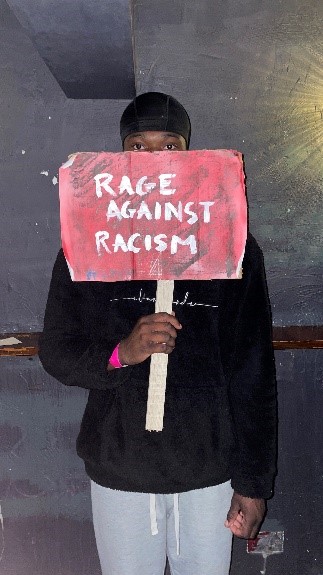
    The Vigilante Maestro also known as Fortune Igiebor brought the rage against racism to the Soundhouse on the 19th of September. 

    Fortune Igiebor is an emerging creative talent known for his work in visual arts, particularly in music and mixed media. He focuses on themes like identity, culture, and the experiences of Black people in Ireland and beyond. 

    The Soundhouse is home to many hip hop and rap concerts in Dublin. Not too long ago, the venue held the first-ever IRIS event from the collective, SPG with which Fortune Igiebor has collaborated in the past. 

    The show was titled Rage against Racism as that is the genre Mr Igiebor’s music reflects the most. “Rage Against Racism is a call to action for all who believe in the fundamental values that define the Irish spirit: kindness, inclusivity, and the unwavering belief in the dignity of every human being,” he said. 

    “Ireland has always been a land of welcomes, where communities are built on the foundations of solidarity and shared humanity. We are a nation that knows the pain of discrimination, the struggle for equality, and the joy of standing together in the face of adversity. At a time when hate seeks to divide us, it is more important than ever to reaffirm our commitment to these values and each other.” said Mr.Igiebor. 

    The event was free of charge and instead, attendees were asked to support the charities the event was hosted for, Doras and NASC, the two charities that help to fight for the rights of migrants in Ireland. 

    “We could have charged maybe €10 or €15 for the tickets but we decided to let the people decide how much they want to put into it, we have a lot of people in the Irish music scene right putting on events and as a performer myself I know sometimes not everyone has the money to spend to go to these concerts. That was one of the reasons why the event was also free of charge.” 

    “After dropping the Love Rage and Vigilante Maestro EP, the opening track ‘Scorching Sun’ which was inspired by the Dublin Riot that happened back in November, I started seeing more anti-immigration protests around the country and wanted to do something for the community because you see the Vigilante Maestro is someone who believes he is a man of the community something like a Robin Hood.” 

    The atmosphere in the Soundhouse was powerful, there was a sense of unity and understanding among the attendees at Rage Against Racism. 

    Nealo, an Irish artist kicked off the show with Under the Weather from his ‘All the Leaves are Falling’ album, which set the tone for not only his set time but for the night. 

    He continued his set with songs like ‘Tears You Cry’ and ‘You Can’t Go Home Again’ however the song that moved the audience the most was ‘What Colour Would Our Friendship Be’, the song from the vocals to the melody was enough to sway people to tears. 

    Nealo, performing at the Rage Against Racism Concert. Credit- Mene Agbofodoh 

    Celaviedmai brought the energy and stage presence with her performance, her performance was immersive and all-around good vibes.  

    Celaviedmai is an Irish rapper and singer known for her energetic performances and versatile style, blending elements of hip-hop, grime, and dancehall.  

    She has gained attention for her powerful lyrics, often touching on themes like identity, race, and personal empowerment. She raps primarily in English but incorporates her cultural influences into her music, giving her a distinctive sound in the Irish and international music scene. 

    Her rise in popularity reflects the growing diversity in Ireland’s music scene, and she’s seen as a pioneering voice, particularly for women in Irish rap. 

    She performed some of her songs from her recent EP ‘Issa New Era’, and hearing songs like ‘Break Me Down’ and ‘Reckless’ being performed live really added to the overall atmosphere. Celaviedmai had the whole place jumping and screaming her lyrics, she had the crowd going and it led to a great transition to the night’s main attraction, Mr. Igiebor. 

    If there is one thing to expect from a Vigilante Maestro performance, there is going to be energy and mosh pits, and for the people who were at the event, there was that and more. 

    Mr. Igiebor never fails to get the crowd going, creating chants for the people to say, from coming down from the stage to performing hit songs like ‘Leechers’ and ‘Paris at The Metro’. 

    Mr. Igiebor left the night off with the chant ‘Nobody’s free till everybody is free’ and that statement was repeated louder each time by the audience, thanks were given and the amazing night with a great cause came to an end. 

    As for what is next for the Vigilante Maestro, Mr. Rage Stage Three is currently in the works, it needs to be handled with care. 

    “Stage three will show Mr. Rage (myself) in a completely new light, something that has been teased but never shown”. Fortune said. 

    Headline Image; Credit- Mene Agbofodoh 

  • Dublin City Council Clamping Down on Parking 

    Dublin City Council Clamping Down on Parking 

    by Molly O’Reilly

    Credit Molly O’Reilly 

    In Ireland’s busiest city, full of life,  

    As the epidemic of clamping down on cars becomes rampant around the Capital, there are three things guaranteed in life in Dublin; death, taxes and clamping.  

    It is no secret that the housing crisis has seeped into student life in Dublin, resulting in many in neighbouring counties commuting to college or having to find accommodation for the academic year. 

    Despite the argument there are plenty of transport to use or places to “pull in,” many Irish students have been left lost and have had no choice but to fork out a sum to release their car from the shackles of the clamper. 

    The fee for clamping is a release fee of one hundred and twenty-five euro, which is operated by Dublin Street Parking (DSPS). 

    However, if the release fee is not paid within the 24 hours of being initially clamped, not only will your car be towed away to the city car pound, but there is also a fee of 250 euro and an additional 35 euro per day according to the DSPS website.  

    Dublin City council has released the statistics for clamping of cars around the city from 2022 with a total number of clamps of 40,732 excluding invalids (disabled parking badges out of date is an example of an invalid) 

    Credit Millie Storey 

    Although the reasonings behind the clamping may seem obvious, there can be virtually nowhere for people to park even when paying elevated levels of rent for accommodation. 

    For instance, in private accommodations and estates it is not an unusual sight to see a car with a registered parking ticket clamped. 

    Dublin City Council provide an appeals process that must be submitted within 60 days from the original day the car was clamped. 

    One Dublin driver, who did not wish to be named, had their car clamped last year whilst it was parked on a private estate in Dublin. Not only was their car the only one clamped on the street, but without their knowledge it was moved from Cabra to Stoneybatter.  

    Is this Dublin’s latest trend amongst students? 

    Marese Masterson, originally from Leitrim, who studies in Maynooth said her car is a necessity during her time in Dublin for her work as an intern. Masterson drives to work five days a week and says the lack of parking is taking a toll on her finances. 

    “They even clamp in Supervalu in Ranelagh, there is barely any street parking just loading bays and clearways. I have gotten clamped twice, said loading bay and once got clamped at 7 in the evening,” she said. 

    “The parking price per hour is extortionate for students- example twenty euro a day, very unfair as this leads to students unable to pay the ticket, which in hand leads to clamping.” 

    Masterson is not the only student feeling the pinch. Elli Duggan from Kilkenny recently studied social care in TU Dublin Grange Gorman and lived in student accommodation in Phibsborough. Her car was a necessity for her work placement as well as getting to and from her job in Kilkenny.  

    “In my student accommodation of 400 students there were only 8 parking spaces available, which were 50 euro a month, I would have to park on the North Circular Road.” 

    According to DSPS website, clamping can occur when a park has expired by as little as ten minutes.  

    The City.ie asked the DSPS to comment on allegations that   clamping was excessive around Dublin. They declined to comment but said further contact can be made with those in higher management or an FOI (freedom of information) application can be made. 

  • Local Opinion Split Regarding Government Plans to Extend Carlingford-Omeath Greenway

    Local Opinion Split Regarding Government Plans to Extend Carlingford-Omeath Greenway

    by Ethan McDonagh

    Despite vocal protestation from locals regarding the proposed extension of the Carlingford-Omeath ‘Greenway’ there are those who are in support of the project. The existing trail in Co. Louth provides residents and tourists with a publicly available trail for both cycling and walking. 

    The proposal to extend the Greenway is part of the National Development Plan (NDP) 2021-2030 which is advertised by our current government as being a major benefit with the announcement document stating, “the investment planned under the NDP will result in increased GDP, employment and wages out to 2030.” 

    However, what these government documents don’t show is the localised impact of projects and the direct effect, whether positive or negative, they have on small communities. 

    Map of existing greenway. Source: Carlingford Tourist Office 

    Built along the old Dundalk Newry & Greenore railway line the Greenway, which opened in 2014, is subject to a government proposal under the NDP whereby the existing route will be extended from Carlingford to Dundalk.  

    The announcement has been met with a lot of vocal opposition from locals who have taken to constructing signs saying ‘No to Greenway’ at several points along the proposed route.  

    As the project would be placed on or near people’s homes and land used for agricultural purposes there has been a lot of resistance from people who believe the extension of the Greenway would only be detrimental to them and their livelihoods.  

    Many of the older residents in the peninsula have bad memories of government involvement in the area when the foot and mouth disease broke out in 2001 leading to the forced killing of farmer’s livestock and eradication of the local wild deer and goat population.  

    One homeowner in the locality, who wished to remain anonymous, is annoyed by the lack of proper consultation with locals surrounding the whole process. They spoke of “farmers who are going to have their fields cut in two, so they won’t be able to get cattle from one side to the other.” 

    “A friend is going to have the greenway going through her already very small garden which she is very upset about. I also don’t understand all of the proposed route and why some of the route can’t be on some of the quieter roads, they said. 

    Sign in resident’s garden opposing the greenway extension: Photo by Ethan McDonagh

    However not all local reaction is negative, with one local shop owner Aaron Farnon saying: “As a local person who has been working in Carlingford for the last six years I believe that the greenway will greatly enhance the business opportunities and the footfall in Carlingford.” 

    With a lot of Carlingford’s businesses being largely tourism- based and thus highly seasonal, Mr. Farnon believes that: ”The greenway gives people more of an initiative to go to Carlingford during the summer months and weekends and see the beauty that the village holds as well as giving local businesses and small shop owners the opportunity to showcase their offerings and bring people in to support them in these hard times.” 

    Optimism and support are a commonly shared sentiment among business owners in the region with David Hanlon, owner of a Carlingford bike hire company, stating: “The new proposed Dundalk to Carlingford Greenway will be the greatest infrastructure investment in Cooley in decades. It will create a safe passage for our kids and families to cycle and walk safely off the busy, truck laden, roads of the Peninsula.  

    “It will have massive health benefits for the people of the peninsula as it will encourage a lot more people to get out for walks and cycles, reducing obesity and mental health problems by building lifelong healthy habits. Finally, the Greenway will create hundreds of ancillary jobs through tourism to the area, just look at places like Waterford and Mayo. Louth County Council needs to work with landowners to find a pragmatic approach to getting a route agreed with minimum impact.” 

    Conversely, what is outlined on the government website for the proposal is that “The R173 Regional Road connecting Dundalk with Carlingford, along with other regional and local roads in the study area have no provision for pedestrians and cyclists.” 

    One of the stated goals of the greenway extension would be to change this with a key goal of the NDP being to “recognise the importance of active travel not only in reducing carbon emissions, but also in achieving other national strategic outcomes such as compact urban growth and balanced regional development.” 

    The website also states that the proposed greenway meets the seven appraisal headings identified in the Department of Transport’s “Transport Appraisal Framework” from June 2023; transport user benefits and other economic impacts, accessibility impacts, social impacts, land use impacts, safety impacts, climate change impacts and local environmental impacts. 


  • District X – Index, Dublin’s Popular Nightclub Takes on the Festival Scene 

    District X – Index, Dublin’s Popular Nightclub Takes on the Festival Scene 

    By Amy Murphy

    A brand new one day festival, District X came to Palmerstown House, Co Kildare. It was a techno and house music fans dream.  

    The festival saw Irish artists like blk. and Kettama perform throughout the day. Other international artists that performed were Chris Stussy, Hannah Laing and Pawsa.  

    The event was an enormous success, a sold-out event with people searching for tickets right up to outside the venue just before it started.  


    The event had high security, medical tents, and transportation organized for people arriving and leaving the festival. However, there was no service which made ordering a taxi a little difficult if people wanted to leave earlier than planned.  

    There were after parties scattered across Dublin city center after the festival, with some of the Dj’s playing in different nightclubs.  

    The City sent some of our photographers into the festival to capture the energy throughout the day. 


    Tents were placed close together, enabling festival goers to move with ease from one place to another. This allowed people to see multiple acts and as many as possible, as there were crossovers with some artists’ set times.   

    There were carnival rides, which cost around 10 euro per person. Despite the price there were people queuing up throughout the day.  

    Kerri Chandler drew an enormous crowd at the District X stage. Many people were pushing to the front for one of his most popular songs ‘You are in my system.’  

    Elena Gatica, 22, an attendee who has traveled to popular rave destinations like Ibiza and Berlin. She was most excited to see Dj Heartstring.  

    People were feeling the love during Skepta’s set. The backstage section was packed with people.  

    As it got darker the lights placed around the venue started to light the way for the crowd trying to find their next stage.  

    “I am most excited to see BLK, I met him once and it makes me proud that he’s from Ireland.” Orla Shortt, 21, from Meath.  

    Despite the fun being had, it was a long day for some. Rodney Jones, 22, from Dublin, had been there since 1:00pm and his bus home was not scheduled till 11:30pm that night.  

    Some visuals during Chris Stussy’s set who later guest appeared during Ketama’s set.  

    As the event ended the lights from the rides and ‘X’ statue became more vibrant and led to the long walk back to the car park.  

    All photo credits: Amy Murphy