Tag: ireland

  • Bet fixing “happens more than it is reported”

    Bet fixing “happens more than it is reported”

    Las Vegas and Atlantic City are the only cities that allow gambling in the U.S, which has led to a lot of corruption issues. Image by Martin Davidsson
    Las Vegas and Atlantic City are the only cities that allow gambling in the U.S, which has led to a lot of corruption issues. Image by Martin Davidsson

    Sport is rife with corruption and bet fixing “happens more than it is reported”. That is the opinion of Irish sports betting journalist Wayne Bailey.

    Wayne, who writes a sports betting column for the Irish Independent, said that the betting industry is becoming the scapegoat for an issues that goes beyond the industry’s control.

    “I think it would be easy to simply blame the betting industry, said Wayne. “It’s the criminals who carry out this type of thing and a lot of the betting firms are losing money because of it. It would be simple to say that if there was no betting on the sport, it would be corruption free but that’s not necessarily true – look at cycling for example.”

    Wayne further explained how the ‘corruption’ within the industry is obviously not in its best interests and has serious financial ramifications.

    “The money involved for reaching certain competitions is massive so there’s always a reason for corruption, even if you removed the betting. The betting industry doesn’t have much to gain – they can often lose large sums and their reputation gets damaged too so it’s in their interest to make sure it stops.”

    Improper regulation is the problem according to Wayne.

    “From what I gather, a lot of these recent cases are to do with Asian betting firms. These don’t seem to be properly regulated at all, and in countries like the U.S. betting is illegal so you have Italian Mafia running betting shops in places like New York and in Boston, Irish ‘Mafia’ types run the show.”

    Wayne, who is a former editor of Betfair.com’s opinion and advice website, stressed that the the betting industry at home is ‘clean’ and one that leads the way in terms of regulation.

    “In Ireland and the UK, I think that the industry has totally cleaned up its act in the last ten years. There is a paper trail and websites such as Betfair now hand over any suspicious activity to the police so it’s harder to be corrupt in this part of the world.

    “When the exchanges (person to person betting as oppose to betting against a bookmaker) came about which allowed laying (backing a team or horse to lose), people said it would cause more corruption. But the ability to back a team to lose was always there – you would just back the opposition to win or draw which is effectively the same thing.

    15 or 20 years ago, there was no paper trail but with the online stuff, it’s easy to trace people who are suspicious. So I’d argue that betting companies are trying their best to stop it, in this part of the world.”

    Wayne, who also runs his own betting advice website, based on horseracing, believes that the corruption runs deep, and in horse racing maybe breed in the sport due to its links with the betting  world.

    “I do think it happens more than it is reported. In horse racing, there is quite a bit of corruption going on although I suppose that’s to be expected as it is a sport which revolves around gambling. Other sports take place for sporting reasons but racing takes place in order for people to gamble.”

    Wayne also believes that the reportage of bet fixing as “a new problem” in the media  is false and that the real losers in this is the general public.

    “Corruption in racing has been going on forever and it’s been going on a long time in football too. Although he was cleared of the charges, Bruce Grobbelaar was up on charges in the 90’s for supposedly throwing Liverpool games. While the case against him fell apart, it was clear that corruption was certainly taking place in the game. It’s certainly a problem though and the real loser is the Joe Soap punter who bets on a team or horse in good faith, not knowing that they don’t have a chance.”
  • Chicago J1 could be a thing of the past

    Chicago J1 could be a thing of the past

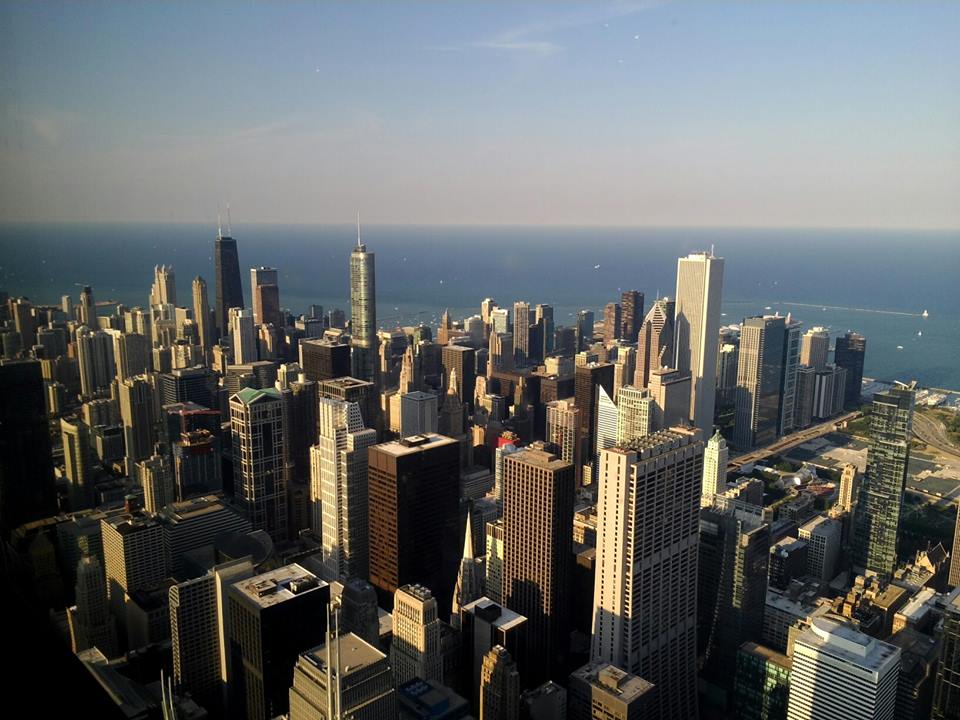
    Irish J-1 visitors to Chicago could become a thing of the past as leading programme-provider USIT has advised students against travelling to the Windy City in 2014.

    In an email circulated to US work and travel participants, the company cites “a lack of suitable accommodation and job offers” in the city, traditionally a mainstay for the Irish expat community, which may make their J-1 more difficult as the reason behind the announcement.

    The call comes in the aftermath of a turbulent couple of years for J-1 visitors to Chicago, with the unruly behaviour of such young people causing landlords and employers to turn their backs on temporary visa holders.

    According to Chicago Irish Immigrant Support, as many as 2,300 such travellers ended up in the Mid-Western hub in 2012 as opposed to the usual 700 or so, an increase which resulted in dozens of hospitalisations as well as a number of arrests.

    Image courtesy Al Foran
    Image courtesy Al Foran

    Despite a reduction in this year’s number, where Chicago’s J-1 community accounted for just only 1,000 of 8,000 such visitors to the States overall, USIT says it was prompted to make the unprecedented call in light of numerous complaints from clients last year over the lack of suitable jobs and accommodation.

    The announcement has been met with derision by members of the city’s large Irish-American community, with local business owner Dan O’Donnell, a cult figure for many J-1 students having voluntarily helped thousands find safe work and housing since 1997, labelling it a “stupid” decision.

    “I sent out emails and letters last year to college newspapers in Ireland encouraging a sensible amount of students to come out to Chicago so we could manage the situation better, and it worked as evidenced by last summer. We want to encourage them to come over and enjoy American cities, not discourage it,” said Mr. O’Donnell.

    The revelation, which comes after the Irish Government lobbied successfully earlier this year to protect the J-1 programme in its current format, will cause many future J-1ers to reassess the wisdom of travelling to Illinois next summer.

    (Feature image courtesy Al Foran)

  • Are we happy to accept failure?

    Are we happy to accept failure?

    Image courtesy of Wikipedia commons
    Image courtesy of Wikipedia commons

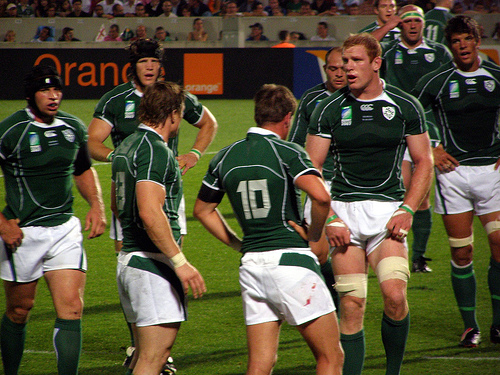
    Ireland’s agonizing defeat against New Zealand’s All Blacks in the Autumn Internationals last weekend signaled yet another disappointment for Irish sports. Having lead the game the whole way through, all it took was one try from the Blacks to crush Irish dreams in a matter of seconds.

    Within minutes of the final whistle being blown, Facebook and Twitter were awash with comments from members of the public expressing their anger and disgust. Then, just like that, the public’s words of resentment were replaced with words of consolation for a team that had “played so well.”

    In his post-match interview to BBC, Seán O’ Brien expressed his frustration at his teammates for letting such a monumental victory slip through their fingers. Despite receiving words of encouragement from the journalist, he summed it up for all of us when he said: “we lost.”

    The question that must be asked then is, are we as a country happy to accept failure?

    Ask yourselves, would New Zealand have been so quick to emphasis the positives had the roles been reversed? The answer: probably not.

    As the Irish sporting history books would suggest, we have come to be known as a nation of “second bests.” Back in 1990, Ireland suffered a harrowing loss to Italy in the world cup quarterfinals. Despite not managing to win a single game during the tournament, thousands thronged the streets to welcome home our “heroes.”

    Evidently, there are those who will argue that it was a massive achievement for a country so small, but Portugal and Switzerland who are of similar population size to us have both managed to reach the top level in various sports, so why can’t we?

    Ireland is a small nation that punches well above its weight in many aspects of life. We are home to some of the world’s greatest writers like Oscar Wilde, and great musicians like U2, so why doesn’t the same success transcend to sport?

    Of course, we have produced many champions such as Ronnie Delaney, Michael Carruth, Robert Herffernan, Eammon Coghlan, and Sonia O’ Sullivan among others, but in recent times, our results have failed to match our potential.

    Sports Psychologist Canice Kennedy believes that this is because “ we have a national inferiority complex which is typical of small, young nations previously occupied by a large foreign power.  This transfers into low levels of expectation in terms of sporting success in some sports particularly where we have not been successful in the past or where we do not have modern training facilities. In these sports we cannot compete with our neighboring countries…while we are never happy to lose, we are often happy not to lose badly.”

    The reality is that there is a very thin line between success and defeat. In his famous poem entitled If Rudyard Kipling said “If you can meet with triumph and disaster, and treat those two imposters just the same…you’ll be a man, my son!” However, Roy Keane, one of Ireland’s leading sportsmen is one who is unwilling to accept this mentality as he famously once said, “show me a good loser, and I’ll show you a loser.”

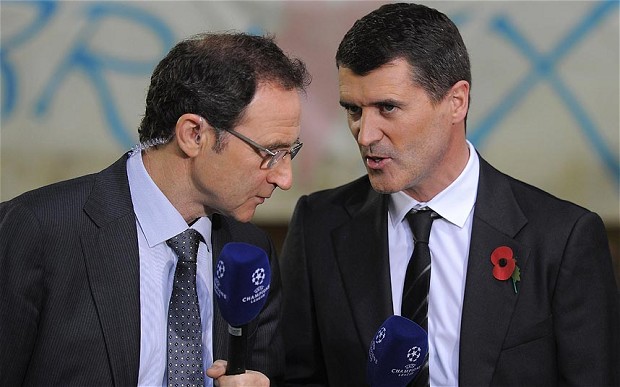
    Ultimately, if you can find happiness in defeat, then you’ll never be a winner. Keane has recently taken up post as assistant to Ireland’s new football manager Martin O’ Neill. Only time will tell if he’ll be able to communicate his winning ideology to a bunch of players who are in desperate need of some tough love. And, who knows, if he can succeed, then maybe other sports will follow suit.

  • Christmas Fair at the National Print Museum

    Christmas Fair at the National Print Museum

    Step back in time and come along to the Christmas Fair at the National Print Museum at Beggars Bush, where you can start your Christmas shopping and pick up unique presents you won’t see elsewhere.

    On the ground floor you will find the permanent exhibition of printing machines, printing blocks, photographs, books and pamphlets as well as a coffee shop looking out onto the old military barracks of yesteryear.

    As you walk up the steps to the sounds and smells of Christmas, you will see all the stalls selling home-made chocolates, hand-made soaps, 3D jewellery, home-made preserves and most importantly, there is a letterpress stall.

    This is the third year the Christmas Fair has been running and Carla Marrinan, managing the museum, told me the museum tries “to create a shopping experience that is beyond a regular shopping mall and they have a variety of stalls with only two of the same stalls having participated every year”.

    Carla pointed out “there are also activities for children, a chance to see the collection and, you can also try the printing yourself and make a Christmas poster”.

    The National Print Museum has a reference library, ideal for research at third-level, as well as an online searchable catalogue.

    It’s open every week day from 9am-5pm and in the afternoons on Saturdays. You can book a guided tour or browse at your leisure.

    This slideshow requires JavaScript.

  • Blog to basics

    Blog to basics

    blog_awards_irelandThroughout the history of blogging you can find news outlets writing its obituary, citing dramatic declines from reports and statistics that hold no true value, only standard data manipulation. I could name but a few said publications, but their readership continues to drop as blogging seems to be still finding its feet. Like everything new, it’s become that much more accessible and the market is over saturated with contenders vying for your attention.

    According to WordPress, over 358 million people view more than 11.3 billion pages each month. Furthermore, users produce about 47.2 million new posts and 68.7 million new comments each month. And that’s just WordPress.

    Furthermore there are numerous places to host your own personal blog from Blogger to Tumblr and so on and so forth until we look at the microbloggers taking over Twitter and other such mediums.

    Statistically speaking, people have never blogged more in their lives. Now that’s not to say that the stigma against blogging isn’t unwarranted, but that stigma isn’t leading to blogging’s own funeral march.

    Said stigma comes from peoples weariness of blogs, and the consistent approach of people to define themselves as experts on certain subject matter when they have no such qualification of experience in the area, but the mere ability to Google. But that’s not to say that you won’t find something exceptional among the droves of voices taking over the internet.

    Claire Kane of web award nominated website Music and Everything stated “some bloggers are being recognised as thought leaders in their specialist subject; like Suzanne Jackson of So Sue Me who is about to release a book, or Nialler9 who has one of the most respected opinions in music. I already think blogs are better than “bigger” sites. Typically they aren’t attempting to fit a certain bill, image or popular thought so I think people see them as more reliable and down to earth.”

    But that said, even the established bloggers have their own critique of the platform.

    Niall Byrne of Nialler9 is one of the most recognised names in Ireland when it comes to music. He is the voice behind one of the longest running and most consistent sites in the country, receiving recognition from across the globe.

    Byrne stated himself that “I think the concept of blogging is something that’s not fresh and new anymore so it’s kind of less celebrated or a thing than it was five or six years ago and therefore there are less people starting blogs. People are expressing themselves in so many ways these days – via Tumblr, Twitter or Pinterest – that blogging in its personal form is left to the writers and hobbyists.”

    nialler9newlogo

    Byrne adds, “It does seem quaint to think in terms of blogging vs. traditional media these days. It’s either online or offline and blogging big and small is a part of that. Bottom line is: if you want blogging to be more than a hobby in Ireland then a one-person blog is probably not big enough scope to make a living from. It’s still a great way to get noticed by established media: online or offline. “

    Blogging serves a function for many writers, whether it is a way to keep yourself in practice or a means of enabling a hobby, and for many who are good at it, it is a means of making a steady income.

    Ireland recently played host to its own Blog Awards where numerous categories played host to even more nominations. It is not assumed that it can serve a purpose beyond just personal blogging. Twitter is increasingly a point of breaking news.

    “I think it is more important – it’s becoming increasingly influential as well as being used as a news source. Take the fact that the traditional news media weren’t covering the recent Atlas blizzard in the States and how it affect farmers and their livestock there, it was blogging and Twitter that got the word out and in turn, people were then able to send their support to those affected.”

    “Apart from anything else, blogging gives individuals a voice plus it helps them to connect with like-minded people and communities”, Lorna Sixsmith of the Blog Awards team told us.

    Blogging’s growth has been phenomenal over the years. And yes, you will have to wade through a lot of the bad to find anything of value. People spew out opinions like there’s no tomorrow. It’s not journalism, it’s not always factual, and most of the times it’s not even right, but blogging is a platform of expression.

  • Berlusconi in hot water once again

    Berlusconi in hot water once again

    Former Italian Prime Minister Silvio Berlusconi was expelled from the senate of his country last Wednesday, after four months of debate on the subject. He was voted out by 194 votes to 112.

    His expulsion was ultimately due to his conviction in August for tax fraud by his Mediaset TV Company, however Berlusconi has also been slammed for carousing with young girls- allegedly prostitutes, and political corruption.

    This decision comes just under 2 months after he was forced, due to a lack of support from his own party, to opt for an official vote of confidence in his arch political rival, Enrico Letta, whom he had originally been vociferously against.

    Though it has been an undeniably unfortunate couple of months for the politician, most political pundits believe that we have not seen the last of the tenacious Italian, with many news headlines unironically referring to the “long road” ahead of him or the fact that he is “down but not out”.

    Irish politicians are no strangers to criticism. Credit: Labour youth on flickr
    Irish politicians are no strangers to criticism. Credit: Labour youth on flickr

    While Irish politicians are used to being shamed, it seems that once they have been taken down a peg or two, they remain there. Unlike their international counterparts, such as Toronto mayor Rob Ford, who, despite admitting to using crack and being videotaped threatening to kill somebody refuses to give up his post.

    Brian Cowen stuck it out for as long as he could back in the day; however he was ultimately forced to resign after multiple no confidence votes and public shamings.

    However the vast majority of commentators seem absolutely certain that Berlusconi will not merely fade into obscurity. In October after Berlusconi’s shock vote of confidence, TheCity compared the corruption of Italian and Irish politicians, with inconclusive results. However it’s safe to say we have a clear winner in the “Who’s more persistent” category.

    Featured Image photo credit: Simone Ramella

  • Grappling with the Irish Muay Thai scene

    Grappling with the Irish Muay Thai scene

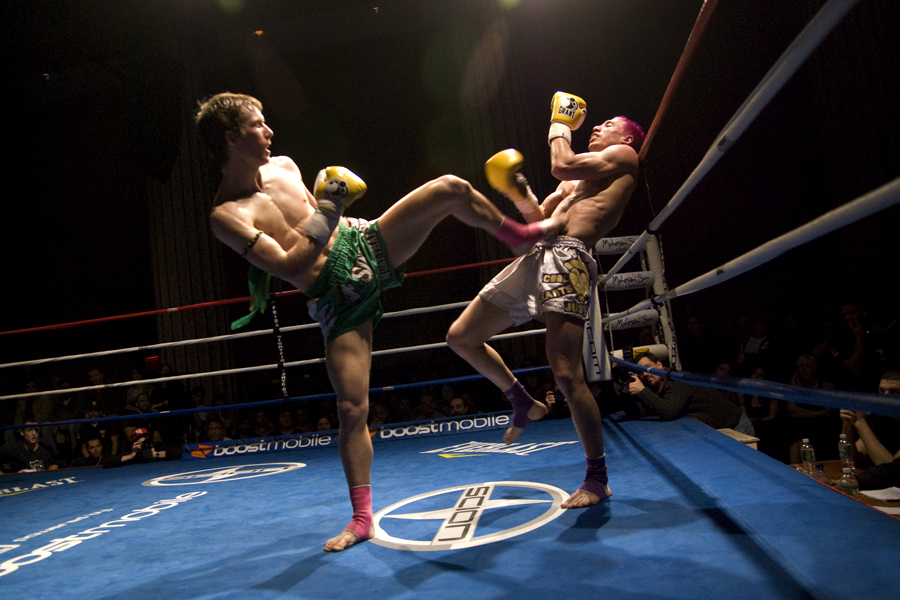
    In a country gripped by medals success in Olympic boxing and the UFC’s pay-per-view extravaganza, it is perhaps difficult to uncover the strong Muay Thai presence in Ireland.

    Muay Thai, occasionally known as Thaiboxing, is a combat sport that utilises all parts of the body for striking, kicking and clinching. A match consists of five three minute rounds with scores being kept by judges.

    There are approximately 30 Muay Thai gyms in Ireland where potential champion fighters learn and study the art. In recent years, the Irish Muay Thai scene has been boosted by the talented Dubliner Jono Bracken and the booking of a fight featuring the legendary Saenchai which was held in Cork earlier this year.

    Wishing to learn about the sport, The City spoke to Daniel O’Reilly, a Muay Thai student and fighter from Dublin. He has been balancing his passion with work commitments since 2009.

    “I had always been fascinated with the sport due to the film Kickboxer, which was my favourite film throughout my childhood,” he said.

    Daniel has experienced several venue changes during his time with the Warriors Thai Boxing Dublin Gym, but has stayed true to the art. “They were first located in Loughlinstown Leisure Centre but then moved to Bray, where I started my training under Mike Dockery,” he explained.

    “Then in late 2009 the club moved to a permanent specialised location in Monkstown. Also now there is a head trainer, Cian Cowley. He is also a multiple title holder in Muay Thai and also K-1.”

    Photo credit: MartialArtsNomad.com on Flickr
    Photo credit: MartialArtsNomad.com on Flickr

    Daniel also described the similarities between Muay Thai and the likes of MMA and boxing, both in advertising and style. “Yes [Muay Thai and MMA share techniques in common], although most MMA fighters have a hybrid style of stand up fighting. It wouldn’t be possible to fight with a true Thai stance due to takedowns so the techniques are slightly altered,” he said.

    He continued, “there are many shows, promoted just like MMA and boxing cards. Fighters are flown in from all over Europe and some even from Thailand. Just last month, Siam Warriors gym in Cork held a super show with two elite Thai fighters, Pornsae and Rungravee.”

    Luckily for Daniel’s Warriors gym, they have an event of their own to look forward to this month.

    It is relatively inexpensive to buy the necessary gear for Muay Thai, according to Daniel. Items used by Thaiboxing fighters include gloves, shin pads, shorts, a protective cup and gumguard and wrist wraps. Gyms provide certain pieces of equipment until a student wishes to commit to training.

    Muay Thai is primarily taught to adolescents and adult students, but younger students can be catered for. “In Thailand they start from a very young age. Over here it’s limited due to the intensity of the sport. Junior classes are held but they’d be heavily padded and only really learn the techniques of the style,” he said.

    Featured image by Mario_Arias on Flickr.

  • A dream start for the Dream Team?

    A dream start for the Dream Team?

    The Irish dream-team of Martin O’Neill and Roy Keane have now presided over two friendly matches, and the country is once again tentatively optimistic about Irish soccer. We asked the people of Dublin what they thought:

    How do you think Martin O’Neill and Roy Keane will do? Let us know in the comments.

  • Lead us not into Temptation…

    Lead us not into Temptation…

    Image

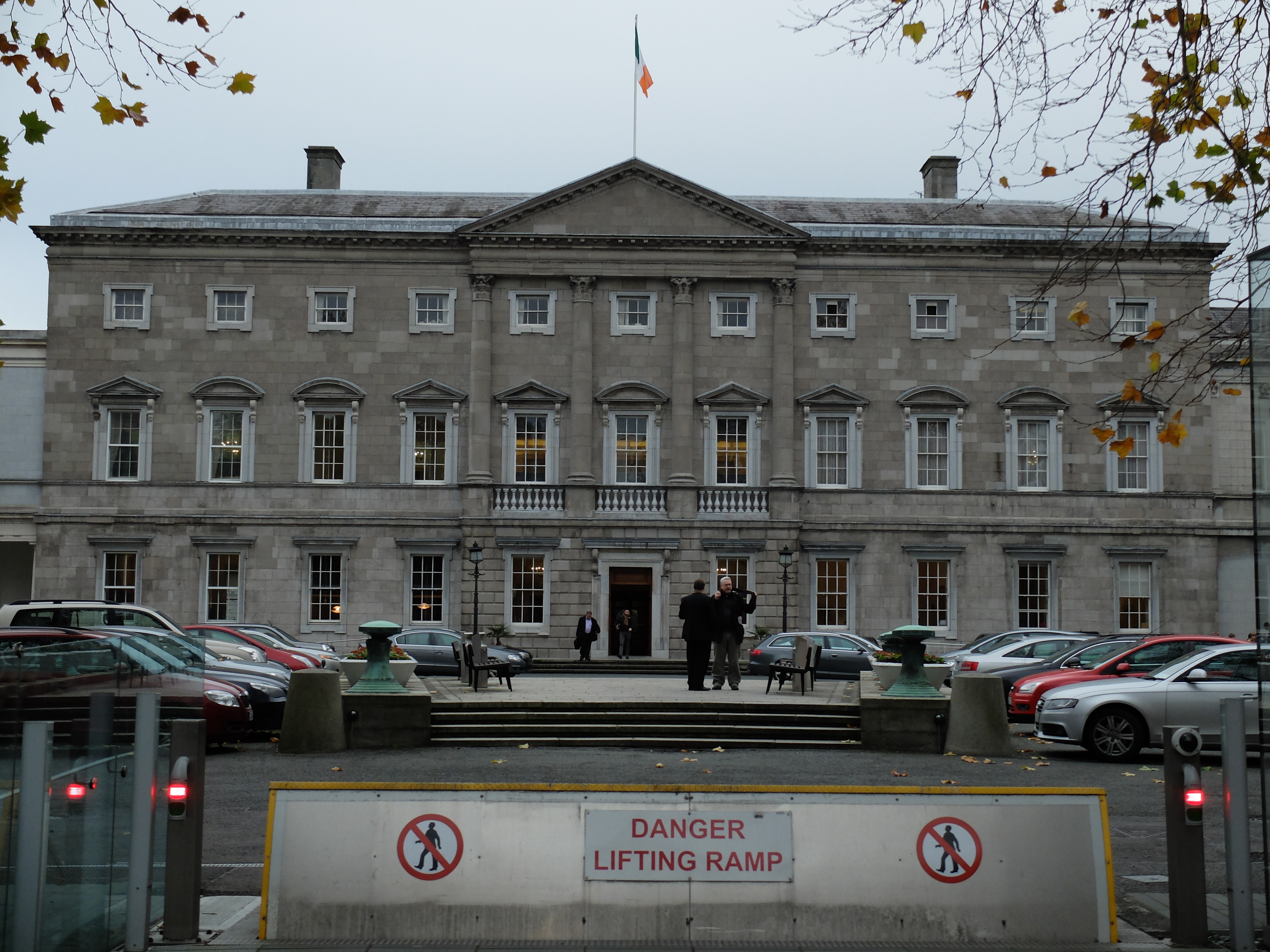
    It was Ronald Reagan, of all people, who pointed out that if prostitution was the world’s oldest profession, and politics it’s second oldest, there was often not a lot of difference between the two. Political corruption is as old as the hills, but is it inevitable?

    “You will never get rid of the human tendency to corruption, but it can be combated with better safeguards, more openness and transparency,” said Sean Byrne, a lecturer in economics at Dublin Institute of Technology.

    It’s important not to overstate the problem of corruption in Ireland. Political corruption was at its worst in the years before the Celtic Tiger and Ireland is currently ranked 25th out of 176 in Transparency International’s annual Corruption Perceptions Index, ranking joint 11th with Austria of the E.U member states. Corruption is certainly not as bad as some would have you believe, nor as widespread as in the past.

    “Ireland ranked rather high in the official corruption index in the late nineties and early noughties, but since then levels of corruption have been declining significantly,” said John Gallagher, a PR course director at DIT.

    It is a view echoed by Sean Byrne: “Relative to other countries, we are not doing too badly. A country like Italy, for example, is far more corrupt. The amount of over regulation by the state inevitably leads to corruption, because it is simply impossible to get anything done without it.”

    If Ireland is not anymore corrupt than comparable European countries ,it has traditionally been weak at holding corrupt politicians to account.

    “Parliament in Ireland is weak relative to government, and has no right to launch independent investigations,” said Sean Byrne, “contrast this to the UK, where independent parliamentary inquiries are common, for example, the recent Leveson Enquiry in to the press.”

    It is often said that a society gets the politicians it deserves. Perhaps the public must shoulder some of the blame for allowing corruption to go unpunished in the past.

    Sean Byrne detects an air of ambivalence from people and perhaps a level of tolerance:
    “People don’t like the idea of corruption, but at the same time often have the idea that one day they might benefit from it,” he said.
    But things are moving in the right direction. This July saw the publication of the Protected Disclosures Bill which provides for the protection of whistleblowers in all sectors of the economy. It was a move welcomed by Transparency International Ireland, an organisation dedicated to the eradication of corruption.

    “This could be a hugely important step in the fight against corruption and promotion of good governance in Ireland” said John Devitt, Chief Executive of TI Ireland. “With almost half of all cases of fraud and other forms of wrongdoing exposed by whistle-blowers, it’s time that they enjoy the protection of the law for acting in the public interest,” he added.

    “Our politicians have learnt a bitter lesson,” said Sean Byrne. “All the political parties are now eager to show themselves as full of probity – Fianna Fáil are particularly anxious to show that the era of Haughey and Ahern is behind them.”

  • 4 Reasons For Irish Rugby Fans To Feel Positive

    4 Reasons For Irish Rugby Fans To Feel Positive

    Irish rugby took a significant step toward forgetting last year’s horrific campaign with a 40-9 victory over a disappointing Samoa on Saturday.

    Joe Schmidt’s first game in charge could not have gone better, though the New Zealander was eager to dampen enthusiasm and described his side’s performance as “untidy” but “earnest” in a post-match interview.

    Regardless of Schmidt’s views, Ireland’s performance showed there are indeed several reasons to feel positive going into this season’s 6 Nations.

    Debutantes have a Ball

    Schmidt handed a starting debut to Jack McGrath in place of Cian Healy, while Dave Kearney made his first Ireland appearance as a substitute in the 60th minute. McGrath went on to win the RTÉ Man-of-the-Match while Kearney scored a try five minutes after being introduced, following it up with a second 13 minutes later.

    McGrath’s performance in an impressive scrum, as well as his work in the loose, means Cian Healy will now have to fight the 24-year-old for the loosedhead position at both provincial and national level.

    Captain Fantastic

    Last season much focus was given (undeservedly) to Jamie Heaslip’s captaincy, critics pointing to his perceived lack of form or experience as proof the decision was a mistake. There can be no such discussion this time round, with the talismanic Paul O’Connell chosen to lead his country. Though Heaslip captained the side on Saturday due to O’Connell starting on the bench, the Munster second-row was introduced in the second-half and had a telling impact as Ireland scored three tries in that period.

    However, with Heaslip and Munster captain Peter O’Mahony in the team alongside former Ireland captains Brian O’Driscoll and Rory Best, there will no shortage of leaders in the dressing room.

    Strength in Depth

    The calibre of the replacements available to Ireland on Saturday was great to see, especially after the previous injury-ravaged campaigns. The fact that the match-day squad was missing quality players such as Simon Zebo, Johnny Sexton, Stephen Ferris and Luke Marshall is testament to the resources available to the national manager.

    Added to that, Paddy Jackson’s performance confirmed the fact that Ireland can now call on three top-quality No. 10’s. After years of needing utility-man Paddy Wallace to act as cover for Ronan O’Gara, there is a genuine competition for places with Jackson, Sexton and (despite his current situation at Leinster) Ian Madigan all vying for a starting berth.

    The Man in Charge

    Schmidt’s post-match comments made clear he will not be getting carried away after one match. Singling out Brian O’Driscoll, Irish rugby’s Messiah, shows that the Kiwi will not be phased by big names or past achievements.

    The fact that two of the manager’s substitutions converted three of the teams five tries highlighted his tactical nous, Sean O’Brien with a trademark barn-storming run over the line five minutes into the second half. Dave Kearney will draw great confidence from his cameo, while the selection of O’Connell as captain and his decision to start Jackson over Madigan will prevent any whispers of a Leinster bias from the former Leinster manager.