Tag: ireland

  • Reviving the spirit of 1913

    Reviving the spirit of 1913

    This slideshow requires JavaScript.

    As many of you will know, this year marks the hundredth anniversary of one of the seminal events in this country’s history- the 1913 Lockout.

    Centred around a dispute between employers and workers about the abhorrent living and working condition that affected one third of the city’s population 100 years ago, the lockout became the largest labour dispute Ireland had ever seen with over 20,000 employees ‘locked out’ of their occupations due to alleged membership of James Larkin’s ITGWU union.

    Although defeated after a five-month stand-off, those initial strikers set in motion a gradual change in attitudes amongst employers which would eventually put an end to Dublin’s infamous tenement slums and the squalid conditions which they perpetuated.

    With centennial celebrations higher in profile than many expected, artistic and literary tributes have come pouring in over recent months to commemorate the brave stance taken by the Irish labour cause’s trailblazing pioneers.

    Prominent among these tributes is the 30-panel 1913 Lockout Tapestry currently on display at the National Museum in Collins Barracks. Devised by artists Robert Ballagh and Cathy Henderson and put together by various community groups ranging from schoolchildren to prison inmates, the tapestry vividly narrates the struggles which strikers went through between August 1913 and January 1914.

    A passionate believer in the ideals of the working class, Ballagh, who also happens to be one of the capital’s most revered painters, is delighted to see the revival in attitudes towards the nation’s cultural and historical heritage.

    “I found it really encouraging, not just that the tapestry got a good response but there’s been a tremendous reawakening of interest in that period which has always been a period of great interest to me personally,” says Ballagh.

    “I’m just one participant in this whole project. It’s an impressive list of volunteers involved in the project, from the Embroidery Guild and Patchwork Society of Ireland to people who’ve never stitched a stitch in their lives before like recovering heroin addicts and prisoners in Mountjoy and Limerick.

    “A kind of camaraderie even grew up amongst people who’ve never met and found themselves working together on this project. It reflects the communal struggle in 1913 for justice and for better working and living conditions.”

    Hisotrian Padraig Yeates describes the last sequence in the tapestry as “a candle to be passed on to future generations”, and Ballagh is hopeful that this is just how current and future generations will view the exhibition, and indeed the very event which inspired it.

    “I hope that our efforts do inspire people to realise that the only way to get what you deserve in life is not working as an individual but to work in a cooperative and communal way to make your demands, and I would sincerely hope that that would become more evident as we move forward in these very difficult times.”

    Robert Ballagh and Cathy Henderson’s 1913 Lockout Tapestry will be on display at the National Museum of Decorative Arts and History, Collins Barracks, until November 14th.

    Both artists will be joined by historian Padraig Yeates in a seminar at the museum entitled ‘Dublin Lockout- Impact and Objects’ on Saturday, October 26th. A full itinerary of events for the day can be viewed HERE.

  • International Rules at the crossroads

    International Rules at the crossroads

    With the latest set of International Rules tests between Ireland and Australia now in full swing, many people are wondering whether or not the compromise rules concept has a viable future.

    Given its former reputation of being a hard-hitting and fiercely-contested battle between two proud sporting cultures, the appetite for future installments of the hybrid game between Gaelic and Australian rules football appears to be waning.

    Growing Apathy

    Although Ireland’s 57-35 victory over the Australian select was regarded as an enthralling spectacle by some, there appears to be a growing apathy amongst the sporting public in both countries which is beginning to be reflected in the attitude of the associations involved.

    By and large the mass brawls of earlier years have been confined to the history books (Photo credit Jimmy Harris on Flickr)
    By and large the mass brawls of earlier years have been confined to the history books (Photo credit Jimmy Harris on Flickr)

    Australia caused controversy this year with the announcement of an all-indigenous selection for the first time in series history. Labelled by some as ‘reverse racism’, the Australian Football League wanted to honour the contribution of Aboriginal players to the country’s national sport, and picked what they believed to be a more agile and skilful selection in the process.

    However, despite the best intentions in the world, the fact remains that not one member of Australia’s 33-man panel was part of this year’s All-Australian team lineup. Ireland, in stark contrast, had five members of last year’s equivalent All-Star side included in the home squad, with many more set to be named in the 2013 selection later this month.

    Declining player standards on one side at least has led to a predictable fall-off in support.

    From capacity crowds in both countries during the series’ reinstatement during the late ’90s and early 2000s, the average attendance figure of just 17’000 recorded during the 2011 test series in Australia was compounded by the sight of a half-full Breffni Park for Ireland’s victory at the weekend.

    Attendances for the rules matches have been dwindling Down Under (Photo credit Michael Spencer on Flickr)
    Attendances for the rules matches have been dwindling Down Under (Photo credit Michael Spencer on Flickr)

    Indicative of this decline was the Australian media’s complete lack of interest in the event. With not one major national broadcaster providing coverage of this latest series, the press Down Under generally seems to have gotten fed up with the sanitised version of what was once regarded as all-out warfare with a ball (merely incidental, of course) involved.

    Hope Remains

    However far it’s fallen from grace, the International Rules series does still retain some of its merits.

    From what started as a tenuous association during the two sports at the time of the series’ inauguration in 1984, relations have blossomed between the AFL and GAA in recent times, with intercounty luminaries such as Jim Stynes, Tadhg Kennelly and Marty Clarke swapping the round ball for an oval version in their quest to make it big in the Aussies’ premier indigenous sport.

    With many school and college teams from both codes now traipsing around the planet to test their skills against their compromise rules counterparts, it’s also initiated a valuable cultural exchange between the young peoples of two countries with a lot in common.

    But the fact remains that at its highest level, the series is plagued by a diverse set of problems. Speaking in Melbourne in 2011, GAA Árd Stiúrthór Páraic Duffy stated that unless series interest and attendances picked up in Australia, the Irish audience wouldn’t maintain a reciprocal interest.

    It appears that, following a sad and gradual decline, we’ve finally reached that crossroads. It’s now down to the GAA and AFL to pull their formerly proud combined sporting tradition back from the brink, or risk losing it forever.

    (Featured image credit Michael Spencer on Flickr)

    SOCIAL MEDIA NOTE

    @officialgaa

    @irfsofficial

    @gaaclub

  • King bows out after controversial spell as interim boss

    King bows out after controversial spell as interim boss

    Noel King’s time as interim manager after Giovanni Trapattoni’s swift departure as Ireland’s head coach was originally seen as a breath of fresh air by the majority of Irish fans.

    The 57-year-old Dubliner is no stranger to the beautiful game, having played for more than two decades in the League of Ireland, managing in it for twelve, and even had a spell at French second division club Valenciennes.

    Having managed the Irish women’s international team from 2000-2010 and the Irish U-21s for the last three years, King has more than enough experience to work with the senior players of the national team, having coached a handful of his squad at the U-21 level.

    Trapattoni's spell in charge took a drastic turn after the miserable performance in Euro 2012. Photo courtesy of Davit Hakobyan on flickr
    Trapattoni’s spell in charge took a drastic turn after the miserable performance in Euro 2012. Photo courtesy of Davit Hakobyan on flickr

    His decision to invite a couple of the Airtricity League’s top players to train with the national team before the Germany game was revitalising and invigorating to see, compared to Trapattoni who continually denied the fact that there is a competitive football league in Ireland.

    The easy approach for King to adapt in the last two qualifying fixtures of the campaign was to deploy an attractive, attacking philosophy of play with a ‘nothing to lose’ mentality, which has been called for on numerous occasions by the Irish supporters and also by some sections of the media.

    In doing so, King may have won some fans and finish his interim spell earning some plaudits for giving it a go against Germany and Kazakhstan.

    However, this was indeed the easy choice and King opted to take the harder and more courageous route by stamping his own authority on the squad for those two games and no Irish supporter can complain about the two results recorded, regardless of the performance against Kazakhstan in the Aviva.

    King’s defiant and belligerent reaction to RTE’s Tony O’Donoghue in the final post-match press interview was met with great interest. Asked about his team selection after the game, he jumped into a histrionic defence of his choices and berated the journalist after walking out of the interview.

    His short spell in charge has been a drastic contrast to his Italian predecessor and his outburst illustrated his passion, emotion and patriotism for the country’s football, unfortunately this also showed a certain naïveté about the demands on those involved at the top level of management on the world stage.

    Former Sunderland boss Martin O'Neill is the bookmakers' favourite for the Ireland job. Photo: dalli58 on flickr
    Former Sunderland boss Martin O’Neill is the bookmakers’ favourite for the Ireland job. Photo: dalli58 on flickr

    Noel King has been and will continue to be an influential character on the Irish football circuit, but he was never going to be chosen to fill the void as the national coach.

    John Delaney and the FAI have a tremendously important decision to ponder regarding the appointment of the future manager of Ireland, with Mick McCarthy, Martin O’Neill and Roy Keane all being deemed early frontrunners for the post.

  • All to play for in second International Rules test

    All to play for in second International Rules test

    A massive third quarter from Australia kept the series alive on Saturday, scores from Jake Neade and Lance ‘Buddy’ Franklin preventing a run-away Ireland victory.

    Michael Murphy opened the scoring for the home side, the Donegal and Ireland captain not letting thoughts of Glenswilly’s Donegal county final distract him as he put in a typically superlative performance.

    He was best assisted on the night by Laois trio Ross Munnelly, Colm Begley and Zach Touhy. Munnelly top-scored for Ireland, while Begley’s influence and experience from the interchange was vital as Ireland took an early lead.

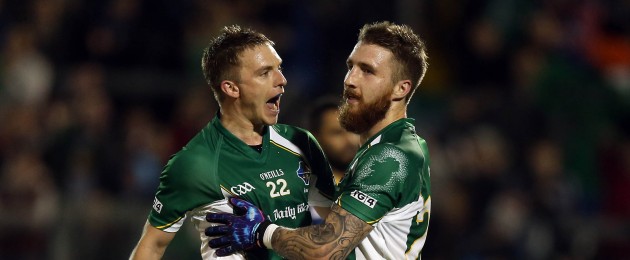
    Munnelly and Touhy celebrate during the first test last week [credit: news.msn.ie]
    Munnelly and Touhy celebrate during the first test last week [credit: news.msn.ie]
    It was Touhy that really shone though, scoring Ireland’s first goal with a magnificent run through the centre of the Australia defence, less than 24-hours before he would appear for Portlaoise as they recorded their seventh Laois county championship in a row.

    Despite some impressive Franklin scores and a third quarter that saw them outscore Ireland 18-11, the visitors couldn’t manage to close the gap, Kevin McLoughlin with Ireland’s second goal to really put the gloss on the performance.

    The indigenous Australia side’s improvement as the game wore on showed they are capable of adapting to the new game however, and the series is far from over going into the second test next week.

    Ireland: P O’Rourke; N McGee, F Hanley, C McKaigue; L Keegan, Z Tuohy (1-0-0), J McCaffrey (0-0-1); A Walsh, S Cavanagh (0-1-0); P Flynn (0-1-0), C Byrne (0-1-1), C Sheehan (0-1-1); P McBrearty, M Murphy (0-2-1), R Munnelly (0-2-3).

    Interchange:  C Boyle (0-1-0), P Conroy, C Kilkenny, K McLoughlin (1-0-0),  C McManus (0-1-2), A O’Shea (0-1-0), C Begley (0-1-0), M Shields.

    Australia: A McGrath; J Harbrow, C Yarran, T Armstrong; C Ellis-Yolmen, N Lovett-Murray, A Davey; L Franklin(0-1-3), D Wells (0-0-1); S Motlop (0-2-2), L Thomas, Leyroy Jetta; E Betts, M Stokes (0-1-0), J Hill.

    Interchange: Lewis Jetta (0-2-0), Alywn Davey (0-1-0), Aaron Davey (0-0-1), M Stokes, D Barry (0-0-1), S Edwards, S Wellingham, J Neade (1-0-0).

  • O’Shea’s swansong?

    O’Shea’s swansong?

    “What’s rare is wonderful!”- RTÉ commentator George Hamilton celebrating John O’Shea’s 27th minute goal which saw Ireland take a 2-1 lead against Kazakhstan in the final qualifying round match for World Cup 2014.

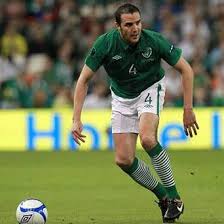
    Could O'Shea have made his last appearance for Ireland? [credit: eurocuppictures.com]
    Could O’Shea have made his last appearance for Ireland? [credit: eurocuppictures.com]
    That goal turned out to be the turning point of the match, a late own goal sealing the 3-1 victory in the final minutes. What Hamilton failed to mention was that O’Shea’s goal, his only competitive goal in a green shirt (he did score once before, against Australia in a 2003 friendly), was scored in what could very well be his last international match.

    By far and away the most successful Irish international in years, O’Shea is now 32, and with a new club manager and Sunderland in a less-than-enviable league position, this year looks like it will be anything but easy for the Waterford man.

    After breaking onto the scene at Manchester United (we all remember THAT nutmeg on Luis Figo), O’Shea established himself as the utility player in Alex Ferguson’s squad. Equally adept at playing anywhere across the back four, as a holding central midfielder (or even in goals), Johnno was partly a victim of his own adaptability.

    After finally nailing down a spot in the heart of defence at his new club, the last thing O’Shea will want is to see the Black Cats relegated. He may feel that, with an in-coming Ireland manager and youngsters like Ciaran Clarke and Shane Duffy waiting to make the step up, now may be the time to call a halt on his Ireland career.

    Many who play under Alex Ferguson tend to retire from the international game early, in an attempt to prolong their playing careers. Paul Scholes and Ryan Giggs are just two of many who prioritised their club over their country, and looking at the ever-green United pair now it is hard to fault their choice.

    With Shay Given, Damien Duff and Kevin Kilbane already gone, Richard Dunne crippled with injuries and eager to cement his place at new club QPR, and with Robbie Keane nearing 34, O’Shea may feel that now is the right time to leave gracefully and let a new manager build his team with the long-term in mind.

    Dunne’s retirement, if O’Shea does decide to call it a day, would give the new boss a serious hole to fill in the middle of his defence. With Clarke still learning the ropes, and Shane Duffy far from the finished article, it would fall to the supporting cast to fill the void.

    Sean St Ledger would seem the obvious choice, but finding a partner for him wont be simple [credit: irishmirror.ie]
    Sean St Ledger would seem the obvious choice, but finding a partner for him wont be simple [credit: irishmirror.ie]
    While enough has been written on Paul McShane’s short-comings to fill several articles, he remains an integral part of the Ireland squad. With Darren O’Dea deemed unfit to serve in a poor Celtic team and now plying his trade in Toronto, Stephen Kelly a square peg in a round hole, and Damien Delaney nearly 33, it may indeed fall to the Hull City man to lead a new-look Ireland team into the Euro 2016 qualifiers.

  • Craig Bellamy vs Robbie Keane

    Craig Bellamy vs Robbie Keane

    With barely a year separating Craig Bellamy and Robbie Keane in age, the Welsh forward’s decision to retire from international football following his sides failure to qualify for Brazil 2014 has some fans worrying that the 33-year-old Ireland captain may soon follow suit.

    Keane: On the way out? [credit: 3football.ie]
    Keane: On the way out? [credit: 3football.ie]
    The two have enjoyed remarkably similar careers at club level and broken transfer records on several occasions over the years, but while Keane found stability with Tottenham Hotspur between 2002 and 2008 (where he scored over 100 goals) Bellamy has failed to ever settle, never spending more that four seasons at any one club.

    Both are recognised as great leaders and senior statesmen for their national teams, though again Keane is far more prolific than his Welsh counter-part. The Ireland striker has scored 61 goals in 130 senior appearances, compared to Bellamy’s relatively tame tally of 19 goals and 73 caps, though it should be pointed out that injuries have curtailed Bellamy’s influence on the game, the Welshman failing to string more than 14 consecutive games together in his first 12 years as a professional. Keane, by comparison. has managed to avoid any major injuries through-out his career.

    This gulf in numbers can be explained by the difference in the pair’s styles of play. Keane is more in the traditional poachers mould, cropping up to finish from a couple of yards and generally staying in-and-around the box, occasionally dropping deep to set up attacks and take the pressure off the midfield. Bellamy, on the other hand, relies on his pace, running at opposing defenders and regularly switching out onto the wing.

    Bellamy and Keane have both also enjoyed extended runs as captains of their national teams, Robbie being handed the armband in 2006 while Craig succeeded Ryan Giggs as Wales captain a year later. Bellamy stood down as captain of Wales in January 2011 however, just two months after a divisive ‘club v country’ debate, citing injury troubles.

    Indeed, Bellamy’s tendency to get himself in trouble (more than once) has affected his career for both club and country, his fiery disposition causing problems both on and off the field. Sir Bobby Robson, Bellamy’s manager while at Newcastle, once described him as “a great player wrapped round an unusual and volatile character”, and later commented that the Cardiff-born player “could start an argument with himself. In contrast, Keane very rarely gets booked and is rarely in the news for anything other than his performances.

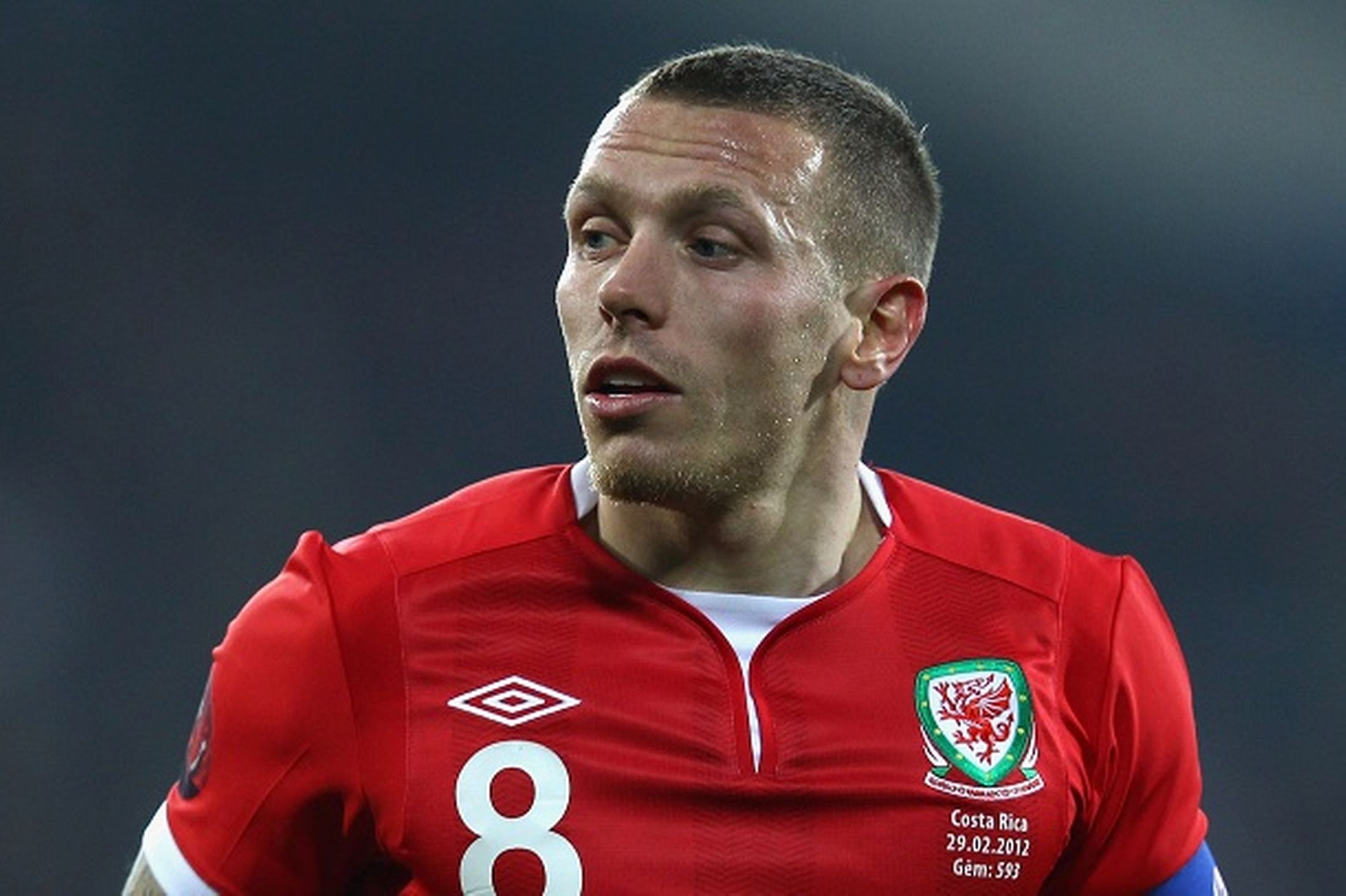
    Bellamy in one of his last appearances for Wales [credit: mirror.co.uk]
    Bellamy in one of his last appearances for Wales [credit: mirror.co.uk]
    Bellamy has cited the need for young players to stand up and be counted as one of his reasons for retiring. With a new crop of Irish talent currently emerging and young strikers like Shane Long and Robbie Brady chomping at the bit, will Keane also decide that the time has come for him to step aside?

  • League of Ireland Round Up

    League of Ireland Round Up

    On the penultimate weekend of the Airtricity Premier League, there were wins for Bray, Dundalk, Sligo and Shamrock Rovers.

    Bray won away to Bohs thanks to a Kieran Waters goal in the 76’ minute. The win was long overdue for the Wicklow men but still might not save them from the drop.

    Richie Towell has been terrific. credit goal.com
    Anto Flood has been terrific for pats. credit goal.com

    Dundalk coasted to a 4-0 victory over Cork at Oriel Park.  ‘The Town’ opened the scoring through Player of the year Richie Towell in the 33’ Minute.  Patrick Hoban doubled the advantage on 45’ minutes with a contender for goal of the season.

    A John Kavanagh own goal just after the break confirmed Cork’s misery before John Dillion sealed a fantastic season for the Lilywhites.

    League Champions St.Pats stumbled to a draw at home to Derry.  The Candy-stripes fell behind to a Mc Namee goal in the 34’ minute but Anto Flood rescued a point with his 81st minute equailiser.

    UCD suffered heavily to Rovers at home, the Tallaght men opened the scoring through Robinson in the eight minute before Gary Mc Cabe converted a penalty in the 11th minute.

    The excellent Richie Towell. credit goal.com
    The excellent Richie Towell. credit goal.com

    Robbie Benson pulled one back for the students in the 64th minute before Mc Cabe and Stewart put the result beyond doubt.

    On Saturday Sligo beat Drogheda 3-1.  Anthony Elding celebrated two fine strikes in the 38th and 66th minute, the latter being a spot kick.

    Evan Mc Millan made it 3-0 in the 73rd minute before Gavin Brennan pulled one back for the cup finalists albeit from a penalty.

    This weekend sees the final round of games in what has been an excellent season for Irish domestic football.

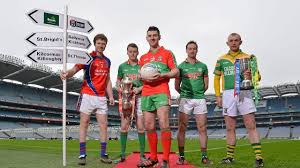
  • GAA round Up

    GAA round Up

    There was lots of club action across Dublin and Ireland over the weekend.  In the Dublin SFC there were wins for St. Jude’s, Ballymun, Ballyboden and St. Vincent’s.

     St Jude’s overcame Parnells on a score line of 1-12 to 1-9

    Ballymun-Kickhams advanced to the last four thanks to a Dean Rock inspired 0-15 to 0-7 victory over Raheny.  2011 champions St Brigid’s lost out to Ballyboden St Enda’s by five points, 2-13 to 1-11.

    Dean rock will be hoping that Ballymun can go one further this year. credit sport.ie
    Dean rock will be hoping that Ballymun can go one further this year. credit sport.ie

    St Sylvester’s battled valiantly but just fell short to the 2007 All-Ireland Club champion’s St Vincent’s. The Griffith Avenue based side beat Syl’s by 0-14 to 2-07.

    In Armagh Crossmaglen made it 17 wins in 18 years following a nine point win over Cullyhanna, 0-17 to 0-8.  Ireland captain Michael Murphy helps his Glenswilly side overcome Killybegs 3-19 to 2-6.
    Burren lost out to Kilcoo 0-9 to 0-7 in Down, whilst in the AIB Ulster GAA Club Championship Preliminary Round Ballinderry (Derry) beat Clonoe (Tyrone) by four points 0-14 to 0-10.
    Dr. Crokes beat Austin Stacks by 4-16 to 0-12 to claim a historic four in a row whilst in Limerick Monaleen lost by two points to Dromcollgher-Broadford 2-9 to 2-7.

    In Waterford Stradbally were hammered by Ballinacourty 0-12 to 0-05.

    Colm Cooper has never won a club All-Ireland. credit thescore.ie
    Colm Cooper has never won a club All-Ireland. credit thescore.ie

    Zach Tuhoy inspired Portlaoise to a 2-8 to 1-8 victory over Arles/Killeen. In Meath Summerhill beat Na Fianna 1-13 to 1-10.

    In Hurling Mount Leinster Rangers claimed a 1-20 to 0-11 victory over St Mullins in Carlow whilst in Westmeath Castletown beat Geoghegan 1-12 to 0-11.

    Oulart-The Ballagh beat Ferns St Aidan’s by two points, 3-12 to 1-16 whilst in Wicklow Glenealy beat Bray Emmets by 0-17 to 0-14.

  • Eircom releases ‘eVision’ to rival UPC and Sky TV services

    Eircom releases ‘eVision’ to rival UPC and Sky TV services

    Eircom are hoping to reach 1 million 'eVision' subscribers by June of next year. Image by: Eszter Hargittai

    Eircom has launched its new television service ‘eVision’ to its 450,000 fibre-powered broadband users.

    The new television service has been introduced by the company to rival that of UPC and Sky. The introduction of Eircom to the television market makes the company the first in Ireland to be a ‘quad play’ (television, phone, broadband, mobile) supplier.

    Speaking after a visit to Eircom headquarters where he saw a demonstration of the new eVision service Minister for Communications Pat Rabbitte said,

    “I am delighted to see Eircom continue to roll out telecommunications fibre around the country.

    “The new television service the company is launching today is a good illustration of the benefits that this investment can bring. This innovation should provide more choice for TV consumers, more competition driving down prices and a boost in demand for broadband services that are becoming available”.

    The basic package offers 34 channels (8 terrestrial) for €10. Consumers can increase their subscription services with the addition of 20 extra channels for €6.

    Sports packages are available for customers, with one pack consisting of Sky Sports 1 and 2 for an add-on fee of €29, while the Setanta/BT Sports package will cost an additional €19. Sky Movies is available for €24 and ‘eVision’ also offers a HD package for €5, with either 5 or ten high definition channels being offered depending on the existing subscription.

    Eircom will be the first company in Ireland to offer services in mobile, phone, broadband and TV. Image by: vivido

    However a shortcoming of Eircom’s ‘eVision’ service is that it is only available via their fibre-powered broadband, therefore it must be purchased in conjunction with a broadband package, or by an existing broadband subscriber.

    “This model doesn’t surprise me all that much,” said business consultant Adam Steadman, in relation to customers having to be a broadband subscriber to avail of ‘eVision’.

    “Most of the companies in that market offer all of the three – TV, internet, phone. UPC change an excess on their internet if you don’t have their phone or TV, so I assume Eircom are using this ploy to encourage people to move their internet and TV in one”.

    Some other shortcomings in the ‘eVision’ service is the exclusion of ITV/UTV from its channels, as well as there being no on demand tv, no catch-up service, no integrated iplayers, and no integrated box sets, all of which are included in UPC or Sky digital services.

    UPC customer Gwen Clack-Goodall said that her current service is “Ok” but that she still would not switch to Eircom’s ‘eVision’.

    “The price is good, but with no catch-up service or on-demand I see no point changing. The catch-up and on-demand services are a brilliant idea. I wouldn’t watch half the amount of TV I do without them.”

  • How Dublin won the treble

    How Dublin won the treble

    Dublin claimed the treble in 2013, the National league, Another Leinster crown and the coveted Sam Ma Guire.

    How and why did the Dubs have such a fine season, after Mayo exposed them in last summer’s All-Ireland semi-final?

    Jim Gavin took over from Pat Gilroy and introduced lots of youth into the metropolitan’s side.  Jack McCaffery, Paul Manion and Ciaran Kilkenny to name but a few.

    Dublin topped the league table and set up a league final meeting with Tyrone.  In a magnificent game of football Dublin won by the minimum, 0-16 to 0-15.

    Five weeks later Gavin’s boys overcame Westmeath quite easily on a score line of 1-22 to 0-09.

    Kildare and Kieran Mc Geeney were next to challenge; a goal from Tomas O Connor inside the first minute gave the Lillywhites a great platform but Dublin hit back with four goals of their own to hammer Kildare by 16 points, 4-16 to 1-09.

    Bernard Brogan is a hero for the Dubs. credit liberty.ie
    Bernard Brogan is a hero for the Dubs. credit liberty.ie

    For the third year in a row Meath were in the Leinster final, having only been outdone by a Bernard Brogan goal in 2012 the Royals were full of confidence.  And after an excellent first half Meath looked to be on their way as they lead by four at the break.

    Second half goals from Paul Manion and Bernard brogan, however, ended Meath hopes as Dublin won their 52nd title.

    In the All-Ireland quarter final Dublin had 85% of the possession, six clear cut goal chances and hit the post on a couple of occasions and still only managed to beat Cork by five points, 1-16 to 0-09.  It was in this game that the Dubs showed their real strength as a force in Gaelic games.

    In the semi-final Colm Cooper showed why he is the greatest player of all time with a virtuoso display.  However the great man’s efforts couldn’t stop the champions elect as they ran out winners by seven points, 3-18 to 3-11.

    Dublin before the All-Ireland final. credit the liberty.ie
    Dublin before the All-Ireland final. credit john mulhollandbookmaker

    In the final, the biggest in history if you believe the hype, Mayo were hoping to bridge a 62 year wait for Sam.  In the first 25 minutes Mayo were sharper, hungrier, fitter and more coherent but their failure to convert their chances in scores coupled with Bernard Brogan’s first goal eight minutes before the break shattered James Horans’ side.

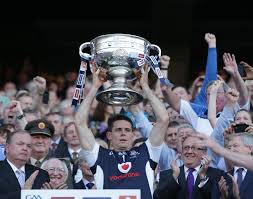
    Another Brogan goal in the second half cancelled out Andy Moran’s earlier strike and the Dub’s were celebrating their second title in three seasons and 24th in total.