Tag: Irish

  • Government adds Irish language interpretation to EU meetings

    Government adds Irish language interpretation to EU meetings

    By Adam Jackson 

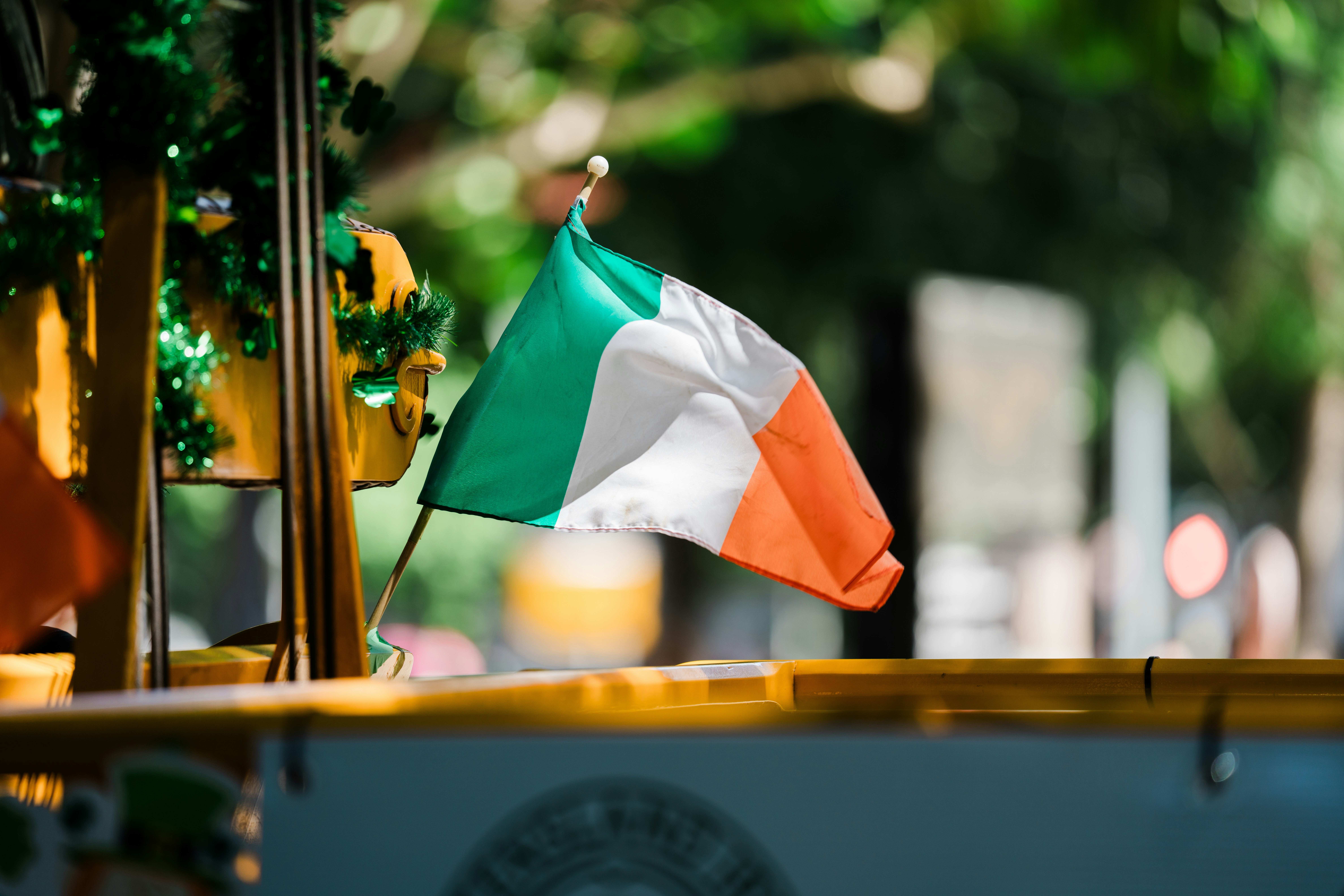
    The Irish Government will be providing interpretation services for meetings held in Ireland throughout the country’s first EU Presidency since Irish reached full status as an official EU language. 

    European Affairs and Defence Minister Thomas Byrne signed an agreement in January providing interpretation services for informal ministerial meetings and summits in Ireland. 

    These services will last the duration of Ireland’s eighth European Union Presidency from July to December this year, meaning that Irish will be given equal status to the other 23 official languages of the EU.  

    This is the first time that Ireland has held the Presidency since the Irish language gained full status as an official language of the EU, and the Irish Government is taking the opportunity to promote the language. 

    “The agreement marks a significant milestone in Ireland’s linguistic and cultural engagement with the EU and provides an opportunity to reaffirm Ireland’s commitment to multilingualism, and the full integration of the Irish language, in European affairs,” the Department of Foreign Affairs and Trade said in a statement. 

    Interpretation provisions, as well as the establishment of Irish as an official EU language, are part of the Government’s ongoing attempts to promote the use of the Irish language in an official capacity. 

    “I believe that the ability for Ministers and officials, from across the EU, to engage fully in their own languages supports meaningful dialogue, effective negotiations and good decision making,” Minister Byrne said in the statement.  

    By using the Irish language at an official level, the Government seeks to promote the use of the language more broadly and create more jobs for Irish speakers within the Government.  

    “I think it’s incredibly important that Irish, like any other official language, be given the necessary provisions for interpretations within the EU,” said Hannah Ní Dhoimhín, manager of Dréimire Language Services.  

    Dréimire is a company that provides resources for Irish language translation to organisations and individuals across Ireland. It is one of many organisations dedicated to current Irish language revitalisation efforts. 

     “It’s necessary that provisions be given to Irish language translation, in all areas, not only because Irish is our official language, but because Irish speakers are a minority group that the government needs to consider,” said Ní Dhoimhín. 

    While emphasising the importance of translation services, Ní Dhoimhín also acknowledged that the Government has been lacking in its engagement with Irish speakers, claiming it has not been taking its responsibilities to Irish speakers seriously enough. 

    “They just have to engage with Irish in a much more meaningful and serious way; because it is a minority language, the Government has been able to back away from any actual responsibility to the language,” Ní Dhoimhín said. 

    Despite its status as the official language of Ireland, Irish is not the primary language of most people living in Ireland.Of the 40% of the population who reported speaking Irish in the 2022 census, over half of that number said they couldn’t speak it very well.  

    “Any minority language revitalization effort should be led at the micro level. It must be a bottom-up situation, but bottom-up doesn’t mean that there is no responsibility at the top. It’s a stalactite-stalagmite situation. They need to meet in the middle,” Ms Ní Dhoimhín said. 

    In January Rural and Community Development and the Gaeltacht Minister, Dara Calleary announced that the Action Plan for Irish Language Public Services 2026-2028 had been approved by the Government. 

    This plan seeks to provide public services in Irish on the same level as they are in English. This includes public services such as healthcare, policing and social welfare. 

    It remains unclear how effective this plan, or the interpretation provisions for Ireland’s EU Presidency, will be in the preservation and revitalisation of the Irish language.   

  • Late Late Toy Show- Every Irish Child’s Dream

    Credits to RTE for the clips.

  • Kilmainham Gaol: Prison turned Museum 

    Photo Credit: Kelsey Doogan 

    By Kelsey Doogan 

    Kilmainham Gaol is a former prison located in Kilmainham, Dublin just south of Phoenix Park. Now it is a museum run by the Office of Public Works in Ireland. The admission fee is certainly cheap compared to similar museums in other countries. 

    While it did cater as a prison for even the most common of prisoners, it is primarily known for the imprisonment of the leaders of the 1916 Easter Rising such as Patrick Pearse, Seán Mac Diarmada, and Joseph Plunkett. All were executed within the walls of the prison byy order of the British Government at the time. 

    “One of the aspects of the site I find most interesting is the fact that it was often used to imprison the most marginalised groups in Irish society in the 19th and early 20th century,” said Brian Crowley, Curator of Collections at Kilmainham Gaol. 

    Photo Credit: Kelsey Doogan 

    It serves as a bleak reminder of a dark period of Irish history and a time of oppression and suffering in our past and this can very much be felt as you walk through the doors. 

    “Kilmainham was more or less abandoned after 1924 and was semi- ruined when the Kilmainham Gaol Restoration Society was formed in the early 1960s to restore it. The Gaol was officially opened as a museum in 1966 by President Éamon de Valera, a former prisoner in the Gaol. In addition to restoring the Gaol they also began to collect and display material related to the struggle for Irish independence,” said Crowley. 

    The Gaol is only accessible through guided tours and is definitely worth a visit. Even if you aren’t a history fanatic, there is something about standing where some of our greatest heroes stood that will live with you forever. 

    Photo Credit: Kelsey Doogan 

    As you wait for your tour guide and the tour itself to begin you are invited to wait within the old courtroom located within the Gaol, where many of these historic prisoners would have received their damning sentences. 

    Photo Credit: Kelsey Doogan 

    Within the walls of the Gaol, there were two chapels, for both protestants and Catholics. Now however, only the Catholic chapel is open to the public. You are invited to sit where the prisoners would have sat during mass. 

    The room is most notable for its red walls, a design used to distinguish the Catholic cells from the blue Protestant cells. Hours before his execution, Joseph Plunkett married the love of his life, Grace Gifford in this very room. 

    Photo Credit: Kelsey Doogan 

    The oldest section of the Gaol is called the West Wing. This part of the Gaol is dark, dull and downright gloomy.  

    Photo Credit: Kelsey Doogan 

    When first built, there was no glass in the windows, and no heating or light and the original stone walls still standing only adds to the sense of eeriness.  

    Photo Credit: Kelsey Doogan 

    The most recognisable part of Kilmainham Gaol is the East Wing, known for its huge glass roof letting in lots of natural light. During the Irish Civil War, many of the prisoners in this wing went on hunger strike.  

    Photo Credit: Kelsey Doogan 

    The East Wing has featured in many films on Irish history such as ‘Michael Collins’. 

    Photo Credit: Kelsey Doogan 

    The Tour ends in Stonebreaker’s Yard, which got its name due to the fact it was mainly used by men who had been sentenced to hard labour where they would have to manually break up stones. 

    It was in this very yard where the leaders of the Easter Rising were executed and you can stand where they stood next to the two crosses which were placed in their memory.  

    As time goes on it is easy to forget about our history as a country but places like Kilmainham are striving to not let their stories and sacrifices be forgotten. 

    Word count: 645 

  • The Irish-speaking Monk

    The Irish-speaking Monk

    From Gaelscoil to Monastery, Joey O’Toole is a unique Gaeilgeoir Monk living in Thailand but born in Dublin. 

    From studying “Géibheann” to studying the Dharma, from praying Sé do bheatha, a Mhuire to “Namo tassa Bhagavato”, Joey is living an extraordinary second life as a Buddhist Monk, after attending Gaelscoil Mide in Kilbarrack and Gaelcholáiste Reachrann in Donaghmede. 

    Joey on his Communion day
    Joey on his Confirmation day

    “I have been living in Thailand for three years now. I had a feeling I would be moving somewhere out of Ireland and thought we would move here because my granny lives here and so do my cousins in the village. We had to move because we were struggling financially in Ireland”. said Joey. 

    Joey was born in Dublin to a Thai mother and an Irish father. Growing up in Donaghmede Joey spoke Thai with his mother and his older sister, Ath and spoke English with his father at home. As well as speaking Irish in school and with his friends. 

    Once Joey and his family decided to move to Thailand, he chose to keep the tradition of his people alive. 

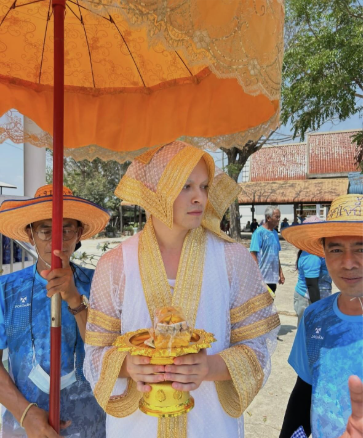
    “It is tradition in Thailand that when a male of the family turns 20 years old, they have the decision to get ordained as a Monk. I chose to keep the tradition alive and also to have some self-discipline, because Monks follow strict rules. I’m in my last month here, but usually people don’t do it as long as me. I’ve been here eight months, but people usually only stay for a week or two after being ordained.” 

    Joey and his family are extremely proud of him for keeping tradition and for the fact he is currently the only Monk in his family. Joey’s whole village are proud of him too as over 200 people turned up at his ceremony for ordination. 

    Joey surrounded by the people of his village and other Monks during his ordination
    Joey having his head shaved

    “There is three days of ceremony before the ordination,” said Joey. “First, I had to cut my hair bald all the way down to the skin and then shave my eyebrows too, then there’s a big ceremony that your family have for you in the house with food, singing, drinking, like a party. There were so many people there for that too, everyone in my village is proud of the little half Irish, half-Thai boy following in the traditions.” 

    Joey mid ceremony after having his head and eyebrows shaved
    Joey receiving his Monk robes

    Joey’s routine in Thailand is very different to his normal routine he had here in Ireland for years. In Ireland Joey, would wake up at 7am to get up for school, have a small lunch at 10:30am, big lunch at 12:45pm and then finish school at 3:25pm and have the rest of the day to himself to do whatever he wanted.  

    In Thailand his routine is quite different for the last eight months he’s been a Monk. 

    “I have an early morning like all the Monks at 3:50am and I have my first morning prayer from 4:30 to 5:30 am. Then we all have our first meal of the day from 6am to 7am when we walk around the small village near the temple and the people living in the village feed us all. I’ll then have my first chores of the day to do at 8am and finish around 10am. We all then have our last meal of the day from 11am to 12am. We can’t eat after 12am but we can have mints and drinks are also allowed. If you are struggling with not eating after 12 and you are just freshly ordained, you can eat in that exception, but you must be fully honest with yourself if you can go without it until you’re allowed. From 1pm to 3pm I’ll have my long break and after that I have more chores from 3pm until our evening prayer from 5:30pm until 7:30pm. After 7:30 it’s light out.” 

    With such a hard strict routine, you would wonder if Joey ever missed his life here in Ireland. 

    “The last eight months have been so rewarding for me here because I am half Thai but of course I miss Ireland. I couldn’t say I prefer one over the other because I grew up in Ireland and loved it and also love my life here. All my friends I grew up with are in Ireland and there are some things I miss like Irish things. I do think Thai cuisine is better, but I really miss chicken fillet rolls and breakfast rolls and spice bags.” 

    Along with his rigorous schedule where there are no days off, there are also many rules that he and the other Monks must follow such as not being allowed to drink alcohol. 

    “Theres 227 rules we all have to follow, four of the rules are forbidden rules that you absolutely cannot break or else you will be banished from the Temple. Then there’s 13 of the rules that are slightly less serious than the forbidden four. If you break any of the 13, you won’t be banished but you will be punished. A punishment for this would be sleeping in the forest for ten days with other Monks that have also broken the rules.  

    “I can’t say too much because I don’t want to sin but some things I can’t do here would be to play football and also sing but we can’t express too much so I can’t sing songs like I would in Ireland”. 

    Joey was unable to give the name of his Temple or the village surrounding because it’s against the rules, however the city in which he and his fellow Monks reside in is Suphanburi. 

    One of the buildings in Joey’s Temple

    Joey doesn’t see his family very much as it’s important for him to spend as much time in the Temple as possible.  

    “I’m allowed to leave to go see my family if I want but it’s important I stay in Temple as much as I can and they can come visit me here, I’ll see my mam and sister more when I’m finished here”. 

    Once Joey is finished at the Temple this month, he is hoping to visit Ireland again sometime at the end of the year or the start of next year. 

  • Winter Price Freezes- The People React 

    Photo by American Public Power Association on Unsplash 

    By Kelsey Doogan 

    Over the last couple of weeks both Electric Ireland and PrePay Power, two major energy and gas suppliers in Ireland, announced they would freeze their gas and electricity prices as we head into the winter months. 

    As temperatures drop and the evenings get darker, we tend to use more energy in the later months of the year, which also makes it the most expensive time of year to heat and light homes. 

    This is not a government-driven initiative and while there is pressure being put on them to introduce a nationwide freeze, one has not yet been agreed or announced.  

    Because this is an individual business decision, not a government- imposed freeze, other companies have not followed suit.  

    Energia, Bord Gáis, FloGas and others have raised their prices, further increasing the burden on their customers in Ireland. 

    “Makes you wonder how one company can do it but others can’t. We all know the winter months are expensive enough without energy suppliers increasing prices.” said Melissa McCabe, a Pinergia customer from the north east Region. 

    The government also announced that there would be no energy credits as part of this year’s budget, unlike in past years where a €250 credit was available.  

    This, paired with rising general cost of living pressures, could lead to an especially costly winter for many low and middle income households across the country. 

    For those select few companies choosing to freeze their prices, that freeze is due to stay in place until the 1t of March at the earliest. 

    “It is a relief to get word of the price freezes. It means that we can focus more money on other bills like food. In the winter months, everyone is home more often than during the summer,” said Frances Kieran, a PrePay Power customer who chose to comment on the recent news. 

    PrepayPower has had two price decreases since the start of 2023 and they also haven’t had any increases in that time frame either. 

    Photo by Henning Wiekhorst on Unsplash 

    PrePay Power serves around 240,000 customers, which represents approximately 4.5% of the Irish population. Electric Ireland, another company announcing a price freeze, has over 1.1 million customers — about 20.8% of the population. 

    While those two companies together cover about one quarter of all households in Ireland, the remaining 75% of consumers now face the possibility of price hikes in the coming months. 

    “When providers like Electric Ireland knock on the door offering their services, I may actually consider it now. I need to do what’s best for my family and while energy costs are going up, my wages certainly aren’t,” said Thomas Burns in reaction to the news of the price increases imposed by some companies over the month of October. 

    Reactions to the announcements have been mixed. People benefiting from the freezes are relieved and grateful for the financial breathing space, especially as winter bills rise. But for those with other suppliers, frustration is growing — some say they may be forced to switch providers or reduce usage, while others warn of longer-term uncertainty costs remain high. 

    Word count: 567 

  • The Cearta protest – thousands march to save the Gaeltacht

    The Cearta protest – thousands march to save the Gaeltacht

    Over the last 15 years, the number of daily Irish speakers has fallen by 13%, from 83,000 to 72,000. With the government investing only 0.1% of state expenditure into the Department of the Gaeltacht, it’s not difficult to see why numbers are dropping so drastically. On Saturday, September 20, thousands of people took to the streets to protest and campaign for the Irish Language and Gaeltacht investment plan 2024-2029. We spoke to attendees and two top level members of Conradh na Gaeilge about their demands. 

  • The Silent Champions: The Battle for Recognition in Women’s Sport 

    The Silent Champions: The Battle for Recognition in Women’s Sport 

    By Áine McKeon

    Despite breaking records, winning major championships and motivating generations, female athletes are frequently overshadowed by their male counterparts.  

    Even though their performances on the field, court or track are on par with that of any male athlete, they are continuously having their achievements overlooked, and they receive an unfair level of media coverage, sponsorships and public attention that they receive. 

    This not only downplays these women’s achievements, but also worsens the restrictions that have prevented women up until now from participating in sports, especially in Ireland. This begs the question; why does this disparity still exist today, and how can it be improved?  

    Media Coverage: The Numbers Tell the Story 

    According to a survey carried out by HerSport, gender disparity in sports participation is only at 3.4% in Ireland, with women’s sporting efforts receiving only 6% of the country’s sports media coverage. Despite this, the study also found out more than 60% of Irish people wanted to see women’s sports receive greater attention. 

    Less than 20% of all sports coverage goes to women’s sports, according to the Irish Sports Monitor. This coverage is typically saved for high-profile events, or when women’s teams accomplish something remarkable, such as their historic 2022 World Cup run. 

    In contrast, regardless of the importance of their games or events, male sports receive regular and everyday attention. For instance, the success of local or national women’s teams frequently remains unrecognised until they hit a significant milestone, while men’s club football or rugby matches frequently receive media focus.  

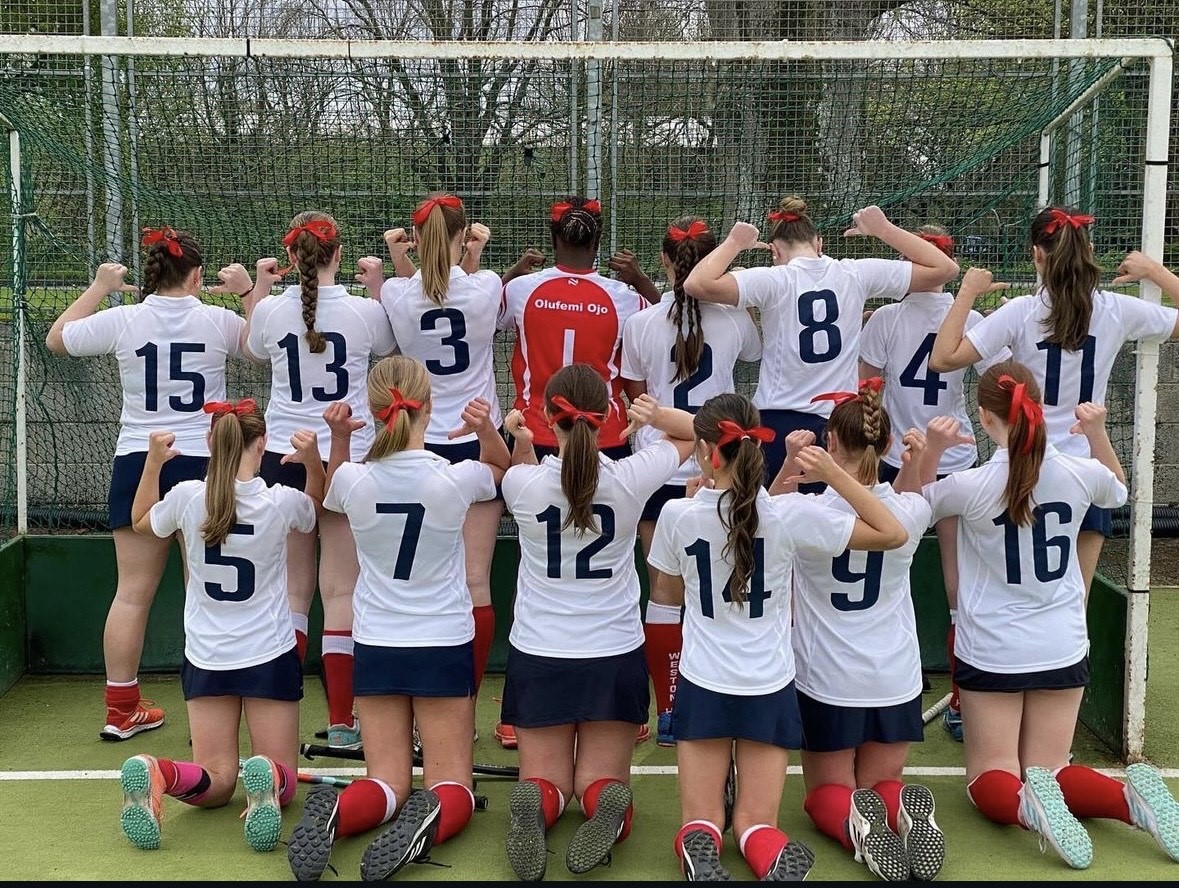
            Photo credit: Weston Hockey Club 

           “We have to do more to be seen”

    Síofra Ní Dhonghaile, a midfielder for Lucan’s Weston Hockey Club, has been playing the sport for several years. Despite her team’s consistent effort at a senior level, she feels the media attention that their achievements receive is only a fraction of what the men’s hockey team get. 

    “Even when we do win a major championship, it’s nothing more than a little headline in the occasional publication – but when compared to the men, it’s disappointing,” she admitted. “We seem to have to put in twice as much effort just to get noticed, I’ve seen my male counterparts receive attention for much less.” 

    Many Irish female athletes in a variety of sports feel the same as Ní Dhonghaile. Women’s sports are frequently confined to smaller portions and are only highlighted during significant international achievements, while men’s sports like hurling and Gaelic football receive hours of coverage throughout radio, television, and print media. 

    TheCity.ie spoke to Brian Percy, who has been coaching both men and women’s field hockey teams for over a decade now.  

    “To be honest, the gap is pretty clear,” he said. “Even for smaller matches, our men’s team receives significantly more media attention than the women’s team, who may win a major tournament and yet not garner a lot of buzz. The ladies put in just as much work, if not more, which is frustrating.” 

    Women’s sports lack sponsorship, which creates an endless cycle whereby companies are reluctant to make investments when there is no media attention, female athletes find it difficult to gain recognition. When the Irish women’s soccer team went public with their complaints in 2017, it became apparent that they were forced to share kit bags and change in airport restrooms. While improvements have since been made after their strike, sponsorship and money are still major problems 

                 Photo credit: Maynooth University Volleyball team via Trisha Zaragoza 

    Despite the challenges, there are signs that change is on the horizon, and the media is slowly starting to catch up.  Sports such as volleyball are mainly female dominated, although more male teams are forming. 

    Kildare native, Trisha Zaragoza, plays volleyball for Naas Cobras, Maynooth University and Valkryies. 

     “I’ve been playing since I was 11, for nearly 10 years now, because volleyball is a female dominated sport in Ireland I haven’t felt left out – although there are many male teams beginning to form,” Zaragoza said. 

    “Regardless of gender, sport to me is my outlet, my way of blocking out reality and stress. I’ve made many friends through volleyball and that’s been the most rewarding part for me,” she added. 

    What needs to happen next? 

    Experts, campaigners, and female athletes all concur that prioritising funding for women’s sports should begin with equitable access to sponsorship opportunities, more regular media coverage, and structural adjustments within sports organisations. 

    “We’re not asking for favors, we’re asking for fairness,” said Zaragoza. 

    Irish female athletes will continue to work hard, achieve success, and break down barriers even if the spotlight isn’t always shining as brightly on them as it should be. 

  • An Ghaeilge: Exploring the Revival of Ireland’s Native Language

    An Ghaeilge: Exploring the Revival of Ireland’s Native Language

    By Liam Murphy

    “Why would you bother learning that? Sure, it’s a dead language” – the words many Irish speakers have heard while growing up.  

    However, in 2024, that could not be further from the truth.  

    Today, TheCity.ie speaks with Mícheál Ó Nualláin, director of Baile Átha Cliath le Gaeilge and Ola Majekodunmi, Irish language programme co-ordinator with Fighting Words, about all things Irish, and in particular, their own journeys with the language. 

    From schooling to job opportunities, to what they believe the Government needs to do to further progress the language, the Gaelgóirí tells all.  

  • Pop in to the Pop Up Gaeltacht

    Pop in to the Pop Up Gaeltacht

    By Isabel Ní Challaráin

    Tá an Pop Up Gaeltacht ag dul ó neart go neart, sé bhliana ónár thosaigh sé. 

    Six years on from its first event in Bar Rua on Clarendon Street, the Pop Up Gaeltacht is still bringing people together to speak their ‘cúpla focail’.

    On the last Thursday of every month, the Pop Up Gaeltacht occurs in a different bar in Dublin. This month, Gaelgeoirí from as far as Kerry, Galway, Donegal and Belfast travelled to the Foggy Dew in Temple Bar.

    Loretta Ní Ghabháin got the train from Galway to Dublin at 7:30 on Thursday morning. Ní Ghabháin speaks Irish daily, either at home with her twin daughters while reading them bedtime stories, with her friends in WhatsApp groups or at her work office. Ní Ghabháin said that speaking Irish is important to her because it is a big part of our identity and culture as a country. She said: “We can understand ourselves better as Irish people when we understand our language.”

    Robert Brennan is a primary school teacher from Dundalk, he attended his first Pop Up Gaeltacht last July and it has become the place for him and his friend from home to meet once a month. “It is a great opportunity to meet and speak Irish. I’m very proud to be Irish and I know that the Irish language is an important part of our culture,” he said.  

    New York, Hollywood and Brussels are just a few of the other well-known cities the Pop Up Gaeltacht has taken place. It has become an international success. Conor MaCaba from the United States was accompanied by his Italian friend Maria whom he is currently teaching Irish. Although last night was their first time at the Pop-Up Gaeltacht, MaCaba started learning Irish in college and he’s still studying it now. 

    “The Irish language is a significant part of Irish culture. I grew up in the States but most of my family is Irish. The laboratory I work in is bilingual so we speak Irish and English together each week,” he said.

    Hugh Cerr first heard about the Pop Up Gaeltacht when its organisers, Osgur Ó Ciardha & Peadar Ó Caomhánaigh spoke to his college class about it in 2016. He says it’s been an integral part of his life in Dublin ever since. Cerr has been attending the Pop Up Gaeltacht since its very beginning. Cerr explained in his lovely Donegal accent, “Without Irish, I wouldn’t have my career, my friends or my passion for stand-up comedy. It is without a doubt, the most important part of my life.”

    All standards of Irish are welcome and at October’s Pop Up Ghaeltacht, comedian Michael Fry was there filming with his latest show ‘Creidim Ionat’ with RTÉ. In this show, three Irish celebrities including Marty Morrissey and Merissa Carter are supported by Irish speaking mentors in their journey toward regaining their confidence in speaking Irish.

    The ‘Creidim Ionat’ campaign will run until the 11th of November 2022. If you would like to learn more Irish or support someone else to reach an Irish language goal, set a target by the end of the campaign. 

    You can find the time and place for the next Pop Up Gaeltacht on their Facebook page.

  • Green Screen: The impact of the pandemic on the Irish Film Industry

    Green Screen: The impact of the pandemic on the Irish Film Industry

    Daithi Ó’Cinnéide on camera and in his element. Image courtesy of Daithi Ó’Cinnéide

    The year 2020 has provided highs and lows for the Irish film industry, and 2021 is already calling into question the future of our domestic productions.

    This time last year it seemed Ireland was reaching new heights in the domestic film and television industries. Ridley Scott had begun shooting his next blockbuster with Matt Damon – who was spotted ‘slumming it’ in Dalkey – and Normal People was hitting screens worldwide, with Paul Mescal engrossing audiences in O’Neill’s shorts.

    Like everything else, the Irish entertainment industry came to a crashing halt in March when Covid-19 struck.

    The production hiatus, which at the time of the first lockdown was indefinite, meant that up to 12,000 jobs in Ireland were put on hold and some were gone for good.

    Grip assistant Michael Nardone was hit hard by this hiatus.

    “Everything seemed to be going great, I was hopping from project to project, then like most people I’m sitting at home wondering what to do,” said Nardone.

    “Everything seemed to be going great, I was hopping from project to project, then like most people I’m sitting at home wondering what to do”

    Micheal Nardone

    Nardone has worked as a part of the crew in television series like Vikings, Dublin Murders, and Normal People. He had just begun exploring a new avenue, working with some fellow crew members on their own short film, when suddenly everything changed.

    “It was all out the window really, and without the backing that the big productions have, it seemed like it might never happen.”

    Nardone packed his bags for New Zealand.

    “I had been thinking about going for a long time, but I always had a reason to stay [in Ireland].”

    Productions had also been halted in Auckland, which gave him the time and opportunity to apply for work on bigger projects: “All the big productions were miles behind schedule, they were ramping up everything, preparing for reopening.”

    He is currently working on a new series for Amazon and has a full schedule right up to 2022.  

    “It’s mad hearing stories from back home, it feels like the whole pandemic has come and gone here.”

    One project, Paperboy, an independent feature film set in Belfast during the Troubles, was to begin filming in September.

    The project had attracted stars Bridget Moynahan (I Robot) and Colm Meaney (Law Abiding Citizen, The Snapper), with Donald Petrie (Mystic Pizza) attached to direct.

    Producer Kevin Murphy had spent the best part of two years trying to get the film made.

    Unfortunately, the lockdown proved too strenuous an obstacle and the project has since ceased indefinitely.

    “We are not doing much at the moment,” Murphy said in relation to production.

    An uncertain future has proved detrimental to independent filmmaking in Ireland. Filmmaker’s reliance on procuring funding from multiple sources is unstable in a time when producers and companies are keen to watch their expenditure.

    This is something that organizations like Screen Ireland and Screen Producers Ireland were aware of from the beginning.

    Screen Ireland acted quickly, first in making sure professionals were still getting paid – repurposing funding to support writers, producers and directors. 

    Screen Ireland and The Department of Culture, Heritage and the Gaeltacht have implemented funding initiatives to cope with the expanding crews and assisting in the hiring of “Covid Departments” working on set.

    The Covid Department monitors the sets to make sure people comply with rules like wearing masks and social distancing.

    “It’s mad hearing stories from back home, it feels like the whole pandemic has come and gone here”

    Nardone

    This has helped to keep bigger budget films operating in the country and it was these initiatives that allowed assistant director, Daithi Ó’Cinnéide to get back to work by late august and stay there until very recently.

    “The film industry seems to follow the construction industry, if they stay open, we stay open.”

    The diligence of these newly-proposed crews working in Covid departments has proven the real trick in allowing the productions to carry on while most other professions remain at home.

    The introduction of these protocols has helped to keep the industry running as smoothly as possible. However, at the drop of a hat operations can be shut down.

    “At the moment, I had work on another TV series coming up, 12 weeks work, but that seems to be pushed back until April, just with everything going on.”

    While film crews on the other side of the world get back to full swing, the future of the Irish film industry is called into question again. It may be awhile before independent Irish films grace our screens again, but the work of the governing bodies and industry professionals may provide a light at the end of the tunnel.