Tag: Irish

  • 11 Top sports stories of 2013

    11 Top sports stories of 2013

    Following 2012 was always going to be tough to match with regards sporting moments, but 2013 certainly left us with some memorable sporting events. The City took a look back at some of the most unforgettable sports stories of 2013.

    Lance Armstrong admits to doping: In January 2013, Lance Armstrong shocked the world by admitting to doping during all seven of his consecutive Tour de France titles. Despite the fact that most people suspected it, it was still fascinating to hear the former record holder admit to the doping after so many years of denial.

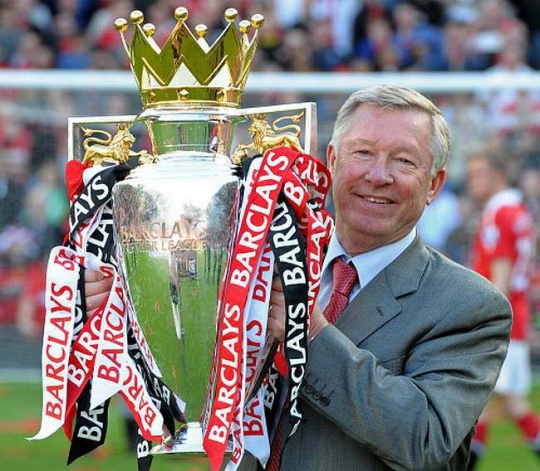
    Ferguson Retires: The premier league said goodbye to one of its longest serving and most successful managers when Sir Alex Ferguson announced his retirement as manager of Manchester United in May this year. The 26 year stint at the club saw him win 13 Premier League titles, 5 FA Cups, 4 League Cups and the Champions League twice. He ended his final season at the club in great fashion leading United to their 13th Premier League title and 20th English title overall.

    Oscar Pistorius murder charges: On February 15th,  the world was shook by the news that famous Paralympian Oscar Pistorius may have murdered his girlfriend, Reeva Steenkamp. Pistorius has yet to stand trial for the case in which his 29 year old girlfriend was shot dead at his luxury home in South Africa.

    Andy Murray wins Wimbledon: It was the moment the British public had waited so long for, and the pressure was higher than ever for the young Scottish man, but Andy Murray held his nerve to win his first Wimbledon title in July this year. The 26-year-old Scot became the first British player to win the Wimbledon men’s singles title in 77 years with his victory over Novak Djokovic.

    4000th winner for McCoy: Northern Irish jockey Tony McCoy made history in November when he won his 4000th career win over jumps. McCoy, who had made no secret about his desire for a 4000th win, reached the milestone during a second of two races at Towcester Racecourse, Northamptonshire.

    Irish Ladies bring home the grand slam: The Irish ladies Rugby team made history in March winning their first ever Grand Slam after a muddy battle against Italy in Parabiago. Irelands captain Fiona Coghlan led the side to a 6-3 win as they secured their fifth win of the 2013 six nations campaign.

    Boston Marathon bombings: On April 15, the world watched in horror as bombs went off near the finish line of the Boston Marathon. The horrendous and cowardly act killed 3 people and left 264 gruesomely injured.

    Heffernan takes gold: Irish Walker Robert Heffernan won gold  after triumphing in the 50km walk at the World Championships in Moscow earlier his year. After narrowly missing out on a medal on four occasions at the championships, the Cork native took a clear lead after 44km to secure his victory. He became only the third Irish athlete to win a Gold medal at the World athletics championships, following on from Sonia O’Sullivan and Eamonn Coughlin.

    The Lions Tour 2013: The British and Irish Lions tour took place during the summer and saw the team take a 2-1 victory over Australia in a three test series. The win was perhaps overshadowed from an Irish person’s perspective by the controversial dropping of Brian O’Driscoll by Coach Warren Gatland before the final game.

    Clare Hurlers win All-Ireland: Clare won the All-Ireland hurling title for the first time since 1997 in September. They overcame a strong Cork side to win 5-16 to 3-16 in Croke Park. Hero of the day, Clare hurler Shane O’Donnell scored three goals in the opening 19 minutes of the game to help his county to victory.

    Ireland narrowly defeated by the All Blacks: Hearts shattered throughout the country as New Zealand made a remarkable come back to bring the sides level in the last seconds of Ireland’s test match against the All-Blacks at the Aviva Stadium in November. A conversion was all the separated Ireland from the biggest win in its rugby history. As the ball soared between the posts Ireland’s almost brilliant victory turned into one of the country’s most heart-breaking defeats.

  • Will the real comic please stand-up?

    Will the real comic please stand-up?

    We Irish are usually typecast as a rowdy, drunken bunch with good anecdotes and generally fun to be around. Not the worst stereotype out there, not by a long shot! Would you rather be identified as loud-mouthed, fat and stupid or unhygienic with terrible teeth?

    But we tend to be a good-humoured group and are praised for our ability to take a joke on the chin. With recent outbursts in the media and considerable public backlash, notably by infamous comic Ricky Gervais, is there a line that should not be crossed when it comes to stand-up comedy?

    Irish comedian Al Porter talks to The City to give his opinion on the nature of the art.

    “As a comedian, it’s our jobs to address the things going on in peoples’ minds that maybe they don’t want to say. If you even go back to Shakespearean or Medieval times, you have the court jester. He was the only one permitted to slag the king. He was the only one allowed to rock the boat and talk about the establishment.”

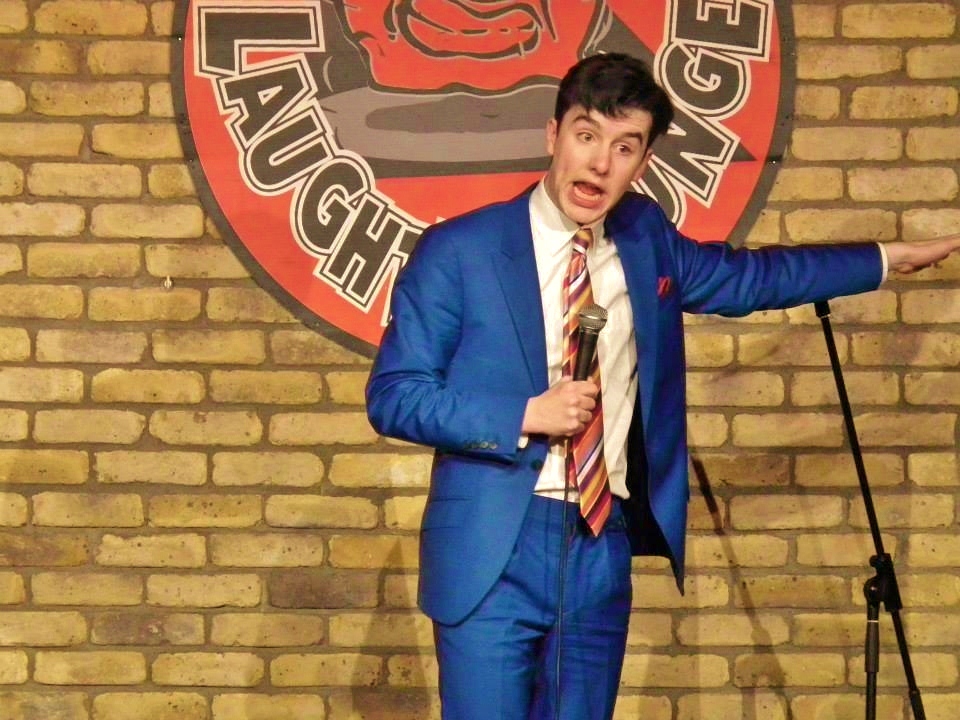
    Al recalls a night in the Laughter Lounge where the issue of people taking offence on behalf of others arose at a comedy gig. Do people have a right to take offence on behalf of others, even if the butt of the joke may not necessarily concern them?

    Al Porter performing at the RTE New Comedy Awards
    Al Porter performing at the RTE New Comedy Awards

    MC on the night Steve Cummins usually pokes fun at the audience, luring them into a sense of comfort at the beginning of the shows. On this particular night he had 40 people in wheelchairs in the audience.

    “He usually tells people the emergency rules and that night said: ‘in case of a fire you’re f*cked’, looking over at the 40 people in the wheelchairs,” said Al.

    However, they all found it hilarious but eight people rang in to Joe Duffy the next day to complain about how rude Steve had been. Following this, members of the group in the wheelchairs rang in jumping to the comic’s defence, explaining that they recognised it was a joke and found it quite funny.

    “In Ireland, and anywhere in the Western world, I think freedom of speech comes with the right to be offended but also the right to offend. If you have the right to be offended then I have the right to offend you. I mean I have the right to say things in the name of entertainment.”

    Although there are very sensitive issues in regard to race, religion, culture and sexuality, many comics have successfully incorporated these topics into their routine – Chris Rock on race, Louis C.K. on homosexuality etc. Are there issues comedians should avoid joking about and how does one know where to draw the line?

    “The problem is that you can’t mark something out as taboo – as something not to be talked about, because that is the reason that comedy exists. It’s there for these things to be talked about.”

    “A sensitive issue for an audience is one where you are going to upset people inadvertently, and that’s not doing your job. And that’s things like people who can’t defend themselves, people who have issues that they can’t change about themselves. You can’t change the fact that you are disabled; you can’t change the fact that you have a mental disability; you can’t change the fact that you’re blind.”

    “I do religious material and one of the elephants in the room in Ireland is child sex abuse. Now that’s very hard to make fun of. How do you make fun of child sex abuse? It’s a very difficult thing to do comedy on.” said Al.

    Al is a regular feature on the Irish comedy circuit, performing here at the Laughter Lounge
    Al is a regular feature on the Irish comedy circuit, performing here at the Laughter Lounge

    Although child sex abuse is the overriding sensitive topic in Irish culture, we have seen the likes of Tommy Tiernan achieve success in his comedy on the subject, taking a light-hearted approach on the matter.

    “My way of doing it is to take a light-handed approach. For example, ‘I was an altar server until I was seventeen but I was only in it for the action’. And people tend to laugh at that. And then I say, ‘if you think the Jews were cruel to Jesus you should have seen how Father Billy nailed me’ and it gets a good reaction,” said Al.

    “If we’re going to say that everything is okay for you to talk about, then the only lines we can draw are moral, ethical or boundaries of taste and decency. The problem there is that everybody differs. If you really want to be a top comedian, you should have enough audience entity to know your audience’s moral compass.”

    “For example I don’t do those religious jokes down the heart of the country. If I’m in a bar in Sligo or a small village in Tipperary, and that’s because I understand that these audiences don’t particularly want to hear this. I’m here to entertain. I’ll do those jokes up in Dublin where people are more accepting.”

    It is obvious that audience entity and knowing your particular audience’s moral compass at any given show is vital for a comedian’s outlook. Pushing the boundaries in comedy comes with great success if done correctly, but it is such a difficult skill to master and one has to accept that they are not going to please everyone. Someone will usually always be offended where sensitive topics are joked about.

    “I watched a video of David Walliams recently which made me uncomfortable. He brought a man from the audience up on stage, The man didn’t know what he was volunteering for and he pushed him to the ground, pulled down his trousers and dry-humped him on stage. I think that’s gone too far.”

    “The line can be drawn there because it’s not immoral to talk about dry-humping somebody with their trousers down, but he has breached an ethical code, where his audience was not given a yes or no choice here. If that was a verbal joke, the man hears it, but he can hear it, get offended, leave and never buy a ticket to see David Walliams again. The fact that this guy didn’t have the choice to leave and that his own personal space was invaded was wrong.”

    “I do stuff that I flirt with men in the audience and they might be rubbed on the shoulder or the leg, but believe me, I am looking at his face and for his reaction. I know when to move away and who to leave alone.”

    “That is when it becomes immoral – when somebody else’s freedom is being breached. Nobody is breaching your freedom by censoring you. You’re allowed say what you want and nobody is breaching the audience’s freedom by making them stay there and suffer because they can leave whenever they want.”

    “If people are going to allow you the freedom to do what you want, you should allow them the freedom to consent as to whether they want it done or not.”

    Al Porter has hosted a set of successful comedy shows in Dublin’s Woolshed Baa & Grill, the last of which takes place on December 16th in a Christmas comedy special.

  • Chicago J1 could be a thing of the past

    Chicago J1 could be a thing of the past

    Irish J-1 visitors to Chicago could become a thing of the past as leading programme-provider USIT has advised students against travelling to the Windy City in 2014.

    In an email circulated to US work and travel participants, the company cites “a lack of suitable accommodation and job offers” in the city, traditionally a mainstay for the Irish expat community, which may make their J-1 more difficult as the reason behind the announcement.

    The call comes in the aftermath of a turbulent couple of years for J-1 visitors to Chicago, with the unruly behaviour of such young people causing landlords and employers to turn their backs on temporary visa holders.

    According to Chicago Irish Immigrant Support, as many as 2,300 such travellers ended up in the Mid-Western hub in 2012 as opposed to the usual 700 or so, an increase which resulted in dozens of hospitalisations as well as a number of arrests.

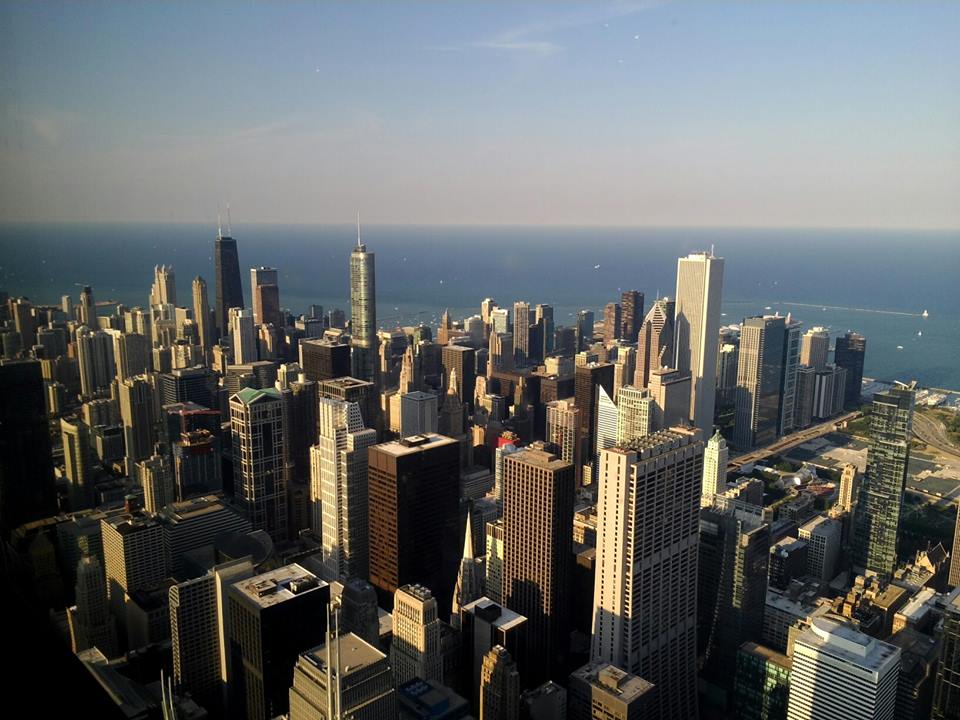
    Image courtesy Al Foran
    Image courtesy Al Foran

    Despite a reduction in this year’s number, where Chicago’s J-1 community accounted for just only 1,000 of 8,000 such visitors to the States overall, USIT says it was prompted to make the unprecedented call in light of numerous complaints from clients last year over the lack of suitable jobs and accommodation.

    The announcement has been met with derision by members of the city’s large Irish-American community, with local business owner Dan O’Donnell, a cult figure for many J-1 students having voluntarily helped thousands find safe work and housing since 1997, labelling it a “stupid” decision.

    “I sent out emails and letters last year to college newspapers in Ireland encouraging a sensible amount of students to come out to Chicago so we could manage the situation better, and it worked as evidenced by last summer. We want to encourage them to come over and enjoy American cities, not discourage it,” said Mr. O’Donnell.

    The revelation, which comes after the Irish Government lobbied successfully earlier this year to protect the J-1 programme in its current format, will cause many future J-1ers to reassess the wisdom of travelling to Illinois next summer.

    (Feature image courtesy Al Foran)

  • Lead us not into Temptation…

    Lead us not into Temptation…

    Image

    It was Ronald Reagan, of all people, who pointed out that if prostitution was the world’s oldest profession, and politics it’s second oldest, there was often not a lot of difference between the two. Political corruption is as old as the hills, but is it inevitable?

    “You will never get rid of the human tendency to corruption, but it can be combated with better safeguards, more openness and transparency,” said Sean Byrne, a lecturer in economics at Dublin Institute of Technology.

    It’s important not to overstate the problem of corruption in Ireland. Political corruption was at its worst in the years before the Celtic Tiger and Ireland is currently ranked 25th out of 176 in Transparency International’s annual Corruption Perceptions Index, ranking joint 11th with Austria of the E.U member states. Corruption is certainly not as bad as some would have you believe, nor as widespread as in the past.

    “Ireland ranked rather high in the official corruption index in the late nineties and early noughties, but since then levels of corruption have been declining significantly,” said John Gallagher, a PR course director at DIT.

    It is a view echoed by Sean Byrne: “Relative to other countries, we are not doing too badly. A country like Italy, for example, is far more corrupt. The amount of over regulation by the state inevitably leads to corruption, because it is simply impossible to get anything done without it.”

    If Ireland is not anymore corrupt than comparable European countries ,it has traditionally been weak at holding corrupt politicians to account.

    “Parliament in Ireland is weak relative to government, and has no right to launch independent investigations,” said Sean Byrne, “contrast this to the UK, where independent parliamentary inquiries are common, for example, the recent Leveson Enquiry in to the press.”

    It is often said that a society gets the politicians it deserves. Perhaps the public must shoulder some of the blame for allowing corruption to go unpunished in the past.

    Sean Byrne detects an air of ambivalence from people and perhaps a level of tolerance:
    “People don’t like the idea of corruption, but at the same time often have the idea that one day they might benefit from it,” he said.
    But things are moving in the right direction. This July saw the publication of the Protected Disclosures Bill which provides for the protection of whistleblowers in all sectors of the economy. It was a move welcomed by Transparency International Ireland, an organisation dedicated to the eradication of corruption.

    “This could be a hugely important step in the fight against corruption and promotion of good governance in Ireland” said John Devitt, Chief Executive of TI Ireland. “With almost half of all cases of fraud and other forms of wrongdoing exposed by whistle-blowers, it’s time that they enjoy the protection of the law for acting in the public interest,” he added.

    “Our politicians have learnt a bitter lesson,” said Sean Byrne. “All the political parties are now eager to show themselves as full of probity – Fianna Fáil are particularly anxious to show that the era of Haughey and Ahern is behind them.”

  • O’Neill and Keane appointed as Irish dynamic duo

    O’Neill and Keane appointed as Irish dynamic duo

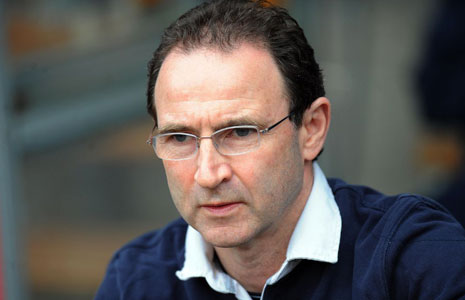
    FAI chief executive John Delaney has confirmed that Martin O’Neill will be the new Republic of Ireland manager, with Roy Keane as his number two in what the Irish support hope will signal “a new era for Irish football.”

    O’Neill is expected to appoint his own backroom staff with the combined package estimated to cost the FAI more than €2 million per annum.

    Delaney has stated that an official press conference and unveiling will take place on Saturday 9th November.

    Interestingly, it was Martin O’Neill’s decision to bring Roy Keane into the frame, with Delaney claiming that the FAI had no participation in the decision.

    The new number one and two have a lot in common despite their almost 20 year age difference. Both have played for Nottingham Forest under the great Brian Clough, and both men have held the reins at Sunderland football club.

    With Keane and O’Neill  both having taken a brief hiatus from the game since their last jobs, the Ireland vacancy seems like a fantastic opportunity for the two Irishmen to get back into the game, albeit at an international level which neither have experience in managing.

    Keane will take his first step back into the game after his spell at Ipswich Town in 2011.
    Keane will take his first step back into the game after his spell at Ipswich Town in 2011. Credit: Figo29 on WordPress

    O’Neill and Keane are a perfect balancing act – O’Neill, the affable Belfast man with his modest personality and calm temperament. Keane, with his determined and infallible attitude, renowned for his hot-headed nature and no-nonsense take on the game.

    Neil Lennon stamped his approval on the appointment stating “they’re two great characters with a vast knowledge of the game, two very proud men as well. God help the players!”

    On paper, this looks like a potentially successful appointment, although the danger is also there for all to see. It would have been a huge mistake to hire another foreign manager after Trapattoni’s spell, but Keane and O’Neill are widely respected and influential figures in the game. And more importantly, they’re Irish!

    However, can two big characters and personalities work so closely together and generate a successful partnership to take Irish football forward, or will it be a case of one step forward and two steps back for John Delaney and the FAI?

    The Irish support has already taken to social media sites such as Facebook and Twitter, in particular, to voice their opinions on the matter. The decision seems to be met with a widely mixed reaction.

    Paddy Power have tweeted: “Ireland to qualify for Euro 2016 now 5/6! 3/1 to qualify for World Cup 2018. First to leave their job, 4/6 Keane v 11/10 O’Neill.”

    Featured image credit: Wiki

  • 2013 – the year for celebrating the Irish language

    2013 – the year for celebrating the Irish language

    By Fionnuala Holohan

    2013 is fast becoming the year of everything Irish. The diaspora abroad are being invited back to Ireland as part of The Gathering 2013 and also, closer to home, organizations dedicated to preserving and promoting Irish as a living language are rowing in behind Bliain na Gaelige 2013 – the Year of the Irish Language.

    Over 80 organizations have signed up to-date – universities, teacher groups, student groups from all levels, radio, television and print media, local and national community groups, training organizations, governmental supports and the usual list of national agencies that promote the language, such as Conradh na Gaeilge (CnaG).

    Síne Nic an Ailí, a development officer in CnaG, spoke to theCity.ie about the plans for the year, and theCity.ie reporters Fionnuala Holohan and Patrick Gormley went in search on the streets of Dublin of some of the reported 1.7 million Irish residents who say they can speak the language:


    Le haighaidh níos mó eolais, téigh go dtí http://gaeilge2013.ie/