Tag: Nightlife

  • Tying Up Loose Ends: New Competition Amongst Dublin’s Student Nights 

    Tying Up Loose Ends: New Competition Amongst Dublin’s Student Nights 

    By Rían Cahill

    Blinding lights flashed, and the floor pumped with heavy kicks as I moved through the sea of awkward elbows to the bar at the back of the crowd. €3 for a shot or add a dash for €3.50. I was in it now; the defining factors of a Dublin student night stared me in the face as I watched cliques and crowds shift their feet and scream loudly over the music. Hands high in the air swung slightly out of sync with the music, highlighting inexperienced party goers. 

    “Loose Ends”, a brand-new student focused club night launched on Thursday in an effort to nurture a much-needed expansion in the growing dance music scene. Youth-friendly pricing has been at the forefront of their approach to create a hub for young people to experience their introduction to dance music or to encourage existing interests.  

    Jack Larkin, a student DJ who played at the club told me, “It’s great that college DJs are being given this chance and to contribute to many people’s introduction to the electronic music scene in Dublin”  

    Cheap tickets and effective drink deals have been put in place to create a valid alternative to their Harcourt Street competition, who can often afford to reduce prices to entice students. 

    Launched and facilitated by the country’s leading party starters, Index, Loose Ends have vowed to create a space “built for students” according to their Instagram account. Aiming to give both students a cheaper dance music-oriented student night out and student DJs a chance to cut their teeth on one of Dublin’s most desirable venues. 

    Student DJs have always found a home in the city though. Small and intimate venues have laid host to the growth of countless Irish artists over the years and this brash claim that “Dublin’s midweek student night out has been dominated by overpriced, tacky dancefloors”, comes as a slap in the face for many promoters who have been fighting for this cause long before this new endeavour by the country’s leading promoters. 

    Carefully curated lineups that cater to different tastes and genres throughout the year are a staple of Echo Exchange, another student focused event in the city, who have been running student nights every Tuesday since January. Constant variety in lineups catering to everyone’s interests has created a surprisingly tight-knit community which often fills up the back-alley smoking area with talks of music, dancing, friendships and much more. 

    Michael Wilson, co-founder of echo exchange, told me why he started his weekly event “We started this to create a cheaper alternative to the current midweek student nights while also delivering quality music. We hoped that that combination might educate some newcomers about quality dance music along the way” 

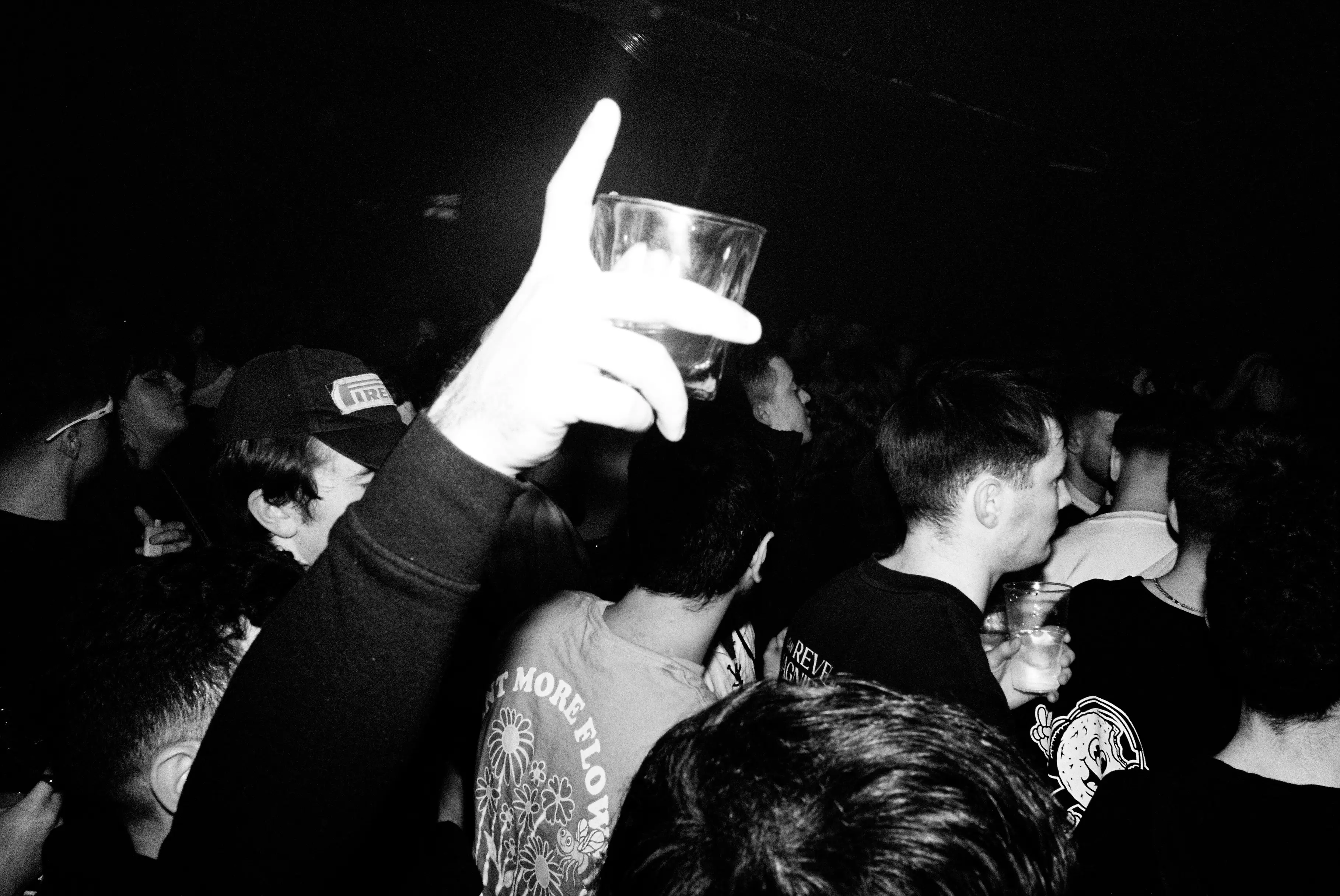
    Students dancing in a dublin nightclub
    Photo Credits: Rían Cahill

    With the number of clubs which have closed down in the city over the past 10 years, there has been an ongoing struggle for students to reach an ever-increasing price point. Venues that take the hit to facilitate regular student nights are often dependent on a large attendance rate on a regular basis to ensure the survival of their club. The introduction of another midweek club night, especially one in a venue which has the potential to cater to over 700 people with two rooms on a good night, may just be the competition necessary for many clubs to fold. 

    A common theme amongst the younger Abbey Street crowd was the focus on non-music-oriented discussions. Compared to the Dame Street punters who seemed to obsess over subgenres, categories and equipment, the crowd seemed blissfully unaware of any complexities in the music and were happy to just dance until the lights came on. This disparity creates a sort of safety net for both events as they will likely not have to share one demographic. 

    Although venues are closing and prices are increasing, students will always find a way to go out on the town whether they can afford it or not. The presence of one more student night then creates diversity in the events which they can choose from, creating communities around the city for different musical interests. 

  • HSE Safe Nightlife programme may be baby steps towards solving an adult problem

    HSE Safe Nightlife programme may be baby steps towards solving an adult problem

    By Chloe Seymour

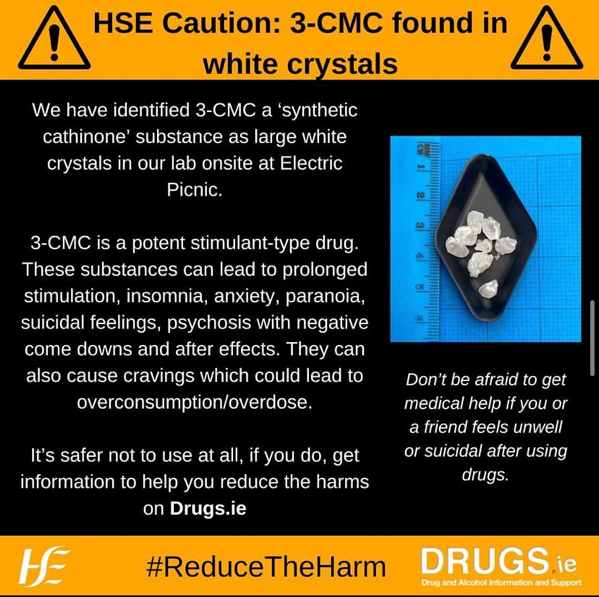
    The HSE Safe Nightlife programme 2022 launched a pilot initiative in September of this year that provided a ‘back door’ drug testing service at the annual Electric Picnic festival in Stradbally, County Laois.


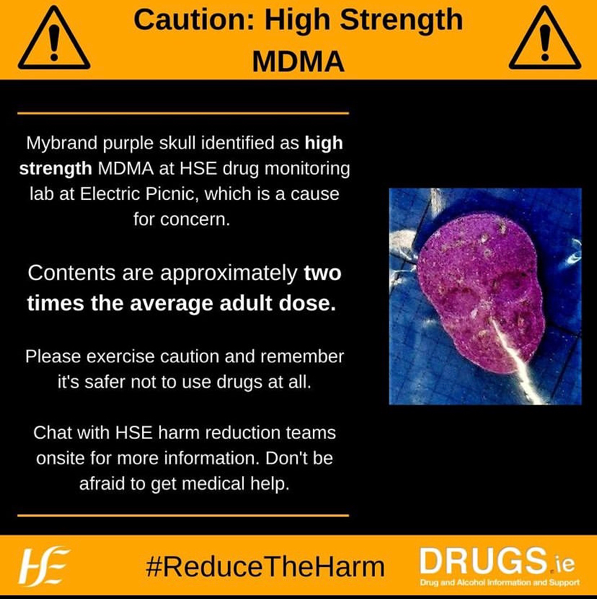
    Pictures courtesy of the HSE.

    This service allowed festival goers to anonymously leave drug samples in at the HSE tent, where the drugs were tested for potentially harmful substances, strengths etc. Any found dangers were published online and across the festival to warn attendees. 

    A subsequent report published by the HSE identified three new types of drugs that were not previously recorded in the country, including a new form of MDMA tablet that is double the recommended strength for a single adult.

    However, the health service’s attendance at Electric Picnic is only the first step in the Safer Nightlife programme, the HSE details further plans towards partnership with more festivals and events to expand their ‘back door’ testing facilities.

    This initiative’s aim is harm reduction when out socialising, be it at a concert or a festival. TheCity.ie spoke to Gerry Carroll from Cuan Mhuire substance abuse centre, Athy, on what he thinks of this new initiative and what he believes should be the Government’s next steps in reducing substance abuse. Mr Carroll works extensively with Cuan Mhuire’s gambling, alcohol and drugs programmes.

    “It’s a good idea, people usually start small with drugs, using things such as hash or marijuana, then they move onto bigger things and it’s all from people they don’t know, and they don’t have any idea what’s in the stuff,” he said.

    He felt that providing information to limit exposure to potentially harmful substances is a good first step in harm reduction, however, Mr Carroll stated that more needs to be done in order for the programme to be a real success.

    Early education on the harm caused by drugs and alcohol is a number one priority for Mr Carroll, who discussed his own initiative when attending schools to educate on the subject. “We have a girl down in a Cork programme for drug abuse, who is only sixteen, her life is destroyed already.” 

    Mr Carroll also discussed how the past rehab programme attendees of Cuan Mhuire give talks to educate those currently in the programme on their experience with substance abuse and recovery.

    Tim Kennelly of Tim Kennelly Solicitors in Naas, focuses mainly on criminal law and has first hand experience with clients suffering from substance abuse issues. He indicated that other decisions by the Government were less forward-thinking in terms of drug reduction.

    Mr Kennelly shared his lack of confidence in the introduction of new legislation to allow cautions for minor possession cases, rather than custody. “What this does is it sends out a message that being caught with drugs is okay to an extent, it’s a removal of the criminal deterrence for small possession matters.”

    Despite this, Mr Kennelly feels that the Government is on the right track, as long as specific steps are taken in order to tackle the problem effectively. He feels that changes such as allowing judges to remand people into treatment centres rather than custody, would be more effective in tackling substance abuse. “If there’s nobody buying drugs, then there’s no drug dealers.” 

    Arguing simple supply and demand and providing real rehabilitation to people moving through the criminal system would help to massively reduce the number of drugs in circulation across the county.

    According to Mr Carroll, there is a good turnout of people attending programmes who don’t return to treatment for substance abuse, indicating the effectiveness of rehabilitation services. “We have a client who was waiting in custody for 6 months to see a drugs counsellor. If someone doesn’t get help with these issues during their sentence, they are much more likely to return back to old habits once they are released,” Mr Kennelly stated.

    While the HSE Safer Nightlife programme has made progress towards combatting drug use, there is a clear consensus that more enforcement is needed to encourage rehabilitation and education and that more effort is needed to provide the necessary services for the same.

  • Irish hospitality reacts to new late licensing reform

    Irish hospitality reacts to new late licensing reform

    By Sadhbh McDonnell

    On the 25th of October, the Irish Government announced later closing times for pubs and clubs around Ireland, as part of a major new overhaul of licensing laws in Ireland.

    The new reform has been brought forward by Justice Minister Helen McEntee in hopes to modernise Ireland’s laws around nightlife, which can be seen as ‘outdated’ compared to several other neighbouring European Countries.  

    Since the reform proposal, the Government have additionally announced 433 Irish locations were granted The Night-Time Economy Support Scheme. Each location received up to €10,000 in funding.  

    While the people of Ireland will hopefully be allowed to stay out dancing as late as 6am across the country by 2023, what does this mean for workers within the Irish nightlife sector?

    Multi-Genre Electronic Music DJ Kaycee has played some of Ireland’s most infamous dance venues including Index, The Sugar Club, as well as popular Irish festivals such as Life festival in Belvedere, Co. Westmeath and Fuinneamh Festival in Dundalk Co. Louth. 

    A crowd of people at a concert

Description automatically generated with medium confidence
    DJ Kaycee via Instagram

    In a recent interview with TheCity.ie, Kaycee explained how longer opening hours for clubs means there’ll be much bigger lineups for events, “which will be fantastic for local acts to be given a chance.” 

    Not only will this be beneficial for the growth of Ireland’s small dance scene but for DJs like Kaycee, it also means longer set times, giving them more time to showcase a larger variety of genres. 

    “It’s really an opportunity to bring the crowd on a journey through an exceptionally well-built set instead of cramming as many tracks in as possible.”

    Reactions to the proposed new opening hours for pubs and clubs have been widely positive, with many people agreeing that Irish nightlife could aid Ireland’s economic growth and aligns it with the rest of Europe’s nightlife culture. 

    However, this economic sector has been left decaying for so long that issues around transport, venues, accessibility, and safety have begun to surface. For the Irish economy to reap the benefits of this new legislation, the government must also modernise public services, with a large overhaul needed for the current existing structures. 

    A common concern for many DJs and workers in the hospitality sector is the lack of transport in and around Dublin city centre. 

    DJ Richard Tracey, who plays venues such as The Academy and Lost Lane weekly, discussed the need for better after-hour transport links. “The taxi service in Ireland is an absolute joke, particularly in Dublin.”

    He added that it’d be nice to have the option to leave the car at home and get a bus or taxi, to and from work, but the lack of taxis and public transport services makes it “next to impossible to find a lift home” on a Saturday night.

    A person wearing headphones

Description automatically generated with medium confidence
    DJ Richard Tracey via Instagram

    Questions about how pub and club owners will accommodate their staff, working these unsociable hours, have also been a growing concern.

    TU Dublin student, David Bohan, who has worked in hospitality for over 3 years, admitted to the possibility of having to find new work outside the sector.  He explained how, like many people in the hospitality industry, working most days till 2-3AM, whilst needing to be up for a 9AM lecture, “would certainly have a negative effect on my studies.”

    It’s possible these new opening hours will remain a niche option for clubs, with most only availing of it for special occasions and big events.  However many hope in time, once most of the social concerns have been addressed, we will see Ireland showcasing talent from all around the world.

  • Superclubs in the Celtic Tiger – the Temple Theatre revisited

    Superclubs in the Celtic Tiger – the Temple Theatre revisited

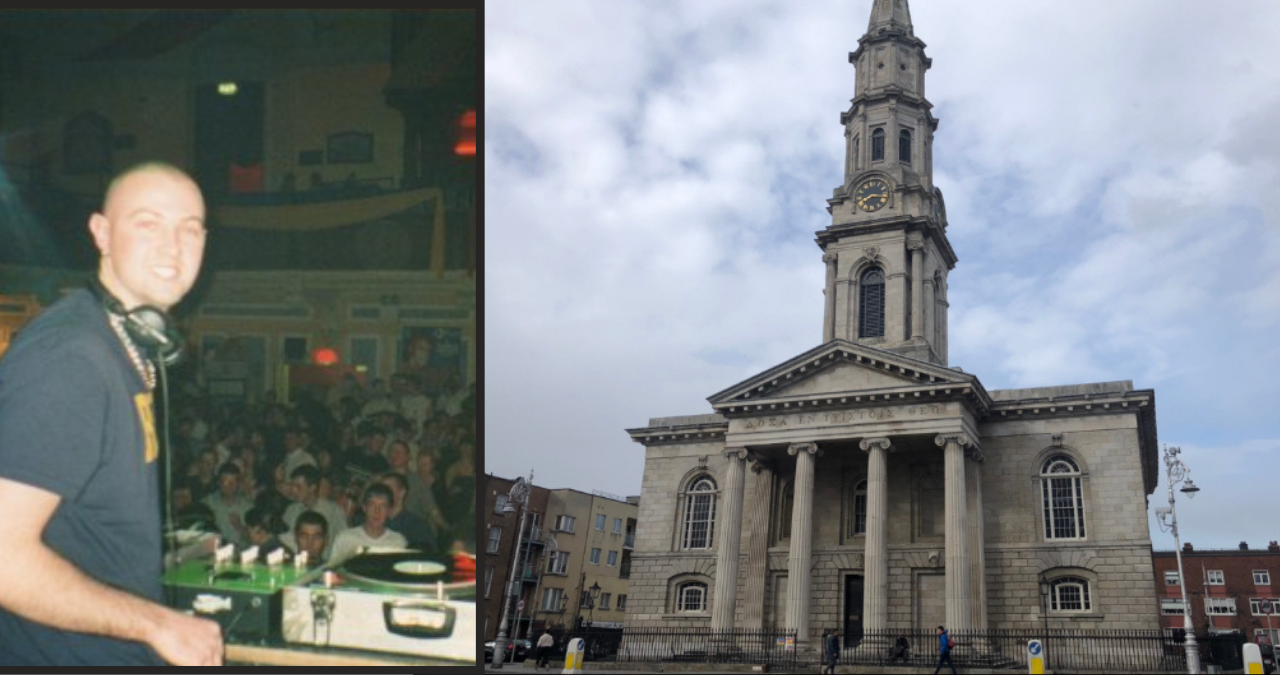
    Dj Orbit playing in the Temple Theatre (left) Image via Temple Reunion. St George’s Church (Right), photo taken by Mario Bowden

    Ah, clubbing. How I miss it.

    The past year of idle inactivity has confronted many people my age with a tug-of-war-like stand-off between the inevitability of growing up and past memories of socialising in basement dance floors with chest-rattling baselines. I prefer the latter.

    This trip down memory lane led me to wonder: What was clubbing like in Dublin during the Celtic Tiger era? Was the extravagance of the times retold to me an exaggeration? Or a fever dream? Were they really living it large in ridiculous and experimental ways? As it turns out, yes, yes they were.   

    Passing hands

    The Temple Theatre was a nightclub in St Georges Church on Temple Street, in Dublin’s north inner city. Set up in 1996, three million pounds was invested in the site to convert it into a music venue and theatre space. The club held 3,000 people, with two bars – converted in the vaults of the former church.

    Formally home to the Church of Ireland, St Georges Church dons a triple-tiered steeple. The original architect, Francis Johnston, also designed the GPO on O’Connell Street. The Church’s bells are also of note, having been mentioned in Dublin-writer James Joyce’s Ulysses.

    Up and running

    After building momentum and enthusiasm from the general public, Temple Theatre became a hit. The club started picking up big names coming into the millennium – Paul Todd, Paul Cox, Green Velvet and Italian DJ Mauro Picotto – to name a few. Temple Theatre always had a host of local DJ’s too, providing space to play to a crowd and promote their work.

    But Temple Theatre was not a standalone thing in Dublin in terms of ‘superclub’ stature. Dublin hosted an array of similarly big clubs like The Kitchen in the Clarence Hotel, owned by Irish rock-band U2 and the Spirit nightclub on Abbey Street. What Temple Theatre offered differently was a unique clubbing space – tucked far away from Temple Bar’s jarring bustle.

    Of course, when we think of Temple Street, techno is not the first thing that comes to mind. With the children’s hospital a stone’s throw away – an über nightclub club does not seem like the most suitable of neighbours. Loud music, drink and drugs and disobedience all became a fixture outside the place – a ‘rough shop’ one local tells TheCity.

    The club used to do “Flash event” promos too – getting a famous person into the club to build a bit of hype. One such celebrity drafted in for the night was former Irish TV host and Big Brother star Anna Nolan. Former journalist Jason O’Callaghan remembers covering a story on Nolan’s appearance – but also remembers the pitfalls the club began to see.

    St George’s Church, formally the Temple Theatre, photo by Mario Bowden

    “It was a massive club to fill. [There was] no parking and it was hard to get to. So they started letting everyone in to fill it,” says O’Callaghan, speaking to The City.

    Alas, Temple Theatre closed its doors in 2003, having its last party in late September. The superclub era was dying, and after seven years, the fire went out. A spokesperson at the time of its closure told The Independent, “superclubs are not happening anymore, and people would rather stay in smaller, more intimate venues.”

    Changes to Ireland’s licensing laws for pubs and bars that same year are also noted as a factor in Temple Theatre’s locking up for good. Clubs required an extra music licensing law to stay open longer than 12:30 am. And, at most, they could only stay open until 2:00am at the latest rather than the former time of 4:00am.

    Dublin’s clubbing future

    As Ireland emerges from its lockdown, nightclubs and music venues will inevitably be among the last things to reopen.  And with Dublin being dug up for rental properties and the hotelier industry, it is unclear what cultural spaces will be available, come the day.

    On 26 April, Jigsaw, a cultural and clubbing space on Belvedere Court announced that it was shutting its doors for good.  The spokesperson for the Give Us the Night campaign, Sunil Sharpe, told the Oireachtas that cultural spaces and venues need more protection.

    “We are going to need a lot more spaces. We need a clause, a cultural clause,” Sunil says.

    “With all the development going on right, there has to be cultural spaces within those buildings. It’s not good enough to let developers do what they like with these spaces,” Sunil continued.

    Undoubtedly, Dublin’s music spaces are feeling the heat of the pandemic. Could Dublin’s vast amount of empty properties and spaces be used more creatively? While it was a different time and era, the Temple Theatre proved that just anywhere can be a dance floor.

    To visit the Temple Reunion facebook page: click here

  • Closing time: too early or too late in Dublin’s pubs?

    Closing time: too early or too late in Dublin’s pubs?

    There has been a lot of debate in recent years surrounding the closing times of pubs and nightclubs in Ireland.

    Much unlike a lot of our neighbours on the mainland, closing times for nightclubs especially in Ireland are quite early, around 2 to 3am. This often leads to a bottleneck of people leaving at once, creating a multitude of problems in managing club-goers.

    There are many who would rather see the closing times extended to between 4 and 5am, as well as introducing gradual closing, which would ensure that a massive, hard to organise group is not leaving all at once. However, there are also some people who think that the current closing times of pubs and clubs is acceptable.

    The City took to the streets to ask people around Dublin what they think of the current situation surrounding pub and club licensing laws.   


  • Nights out in Dublin with a difference

    Nights out in Dublin with a difference

    With the holidays fast approaching, we are bombarded with invitations to work Christmas parties, to be the plus ones at other people’s parties who also don’t want to be there, and to catch up with friends whom we haven’t made an effort with all year.

    It’s a long and expensive month and can be quite repetitive if we end up going to the same place, sculling drink after drink. In order to combat this, we here at The City have tried and tested some of the best bars around that offer a little more than just alcohol, and will have something for everyone to enjoy. It was a tough job, but someone had to do it!

    First up, The Woolshed on Parnell Street; known as a Southern Hemisphere sports bar, they actually cater for a lot more than just sports fans. On Tuesday, they run a free table quiz, which they take pretty seriously as you have to hand over your smartphone so there’ll be no cheating. Grab four of your mates and head for the laugh. They also have some amazing drinks offers, so it won’t leave you afraid to look in your wallet the next morning.

    For those of you who can be found singing Adele’s ‘Someone Like You’ at the top of your lungs on Harcourt Street on a Friday night, then karaoke is what you want. Ukiyo Bar on Exchequer Street, offer private karaoke parties. They cater for a range of party sizes and include party platters, wine etc. in order to make your night one to remember, or one you’d rather forget, depending on how good your vocals are.

    For craft beer and board game lovers, get yourselves down to PMacs on Stephen’s Street. The quaint, dully lit bar is a sister of Cassidy’s Bar on Westmoreland Street and offers some of the finest craft beers around. They also have poky little pods that can hold up to six people in them, so it’s like having a pint in the comfort of your own home. Also, no one else can see when a heated argument about what colour eyes John has in “Who’s Who?” breaks out.

    The International Comedy Club is a hidden gem in Dublin’s fair city. Located on Wicklow Street, above the International Bar, it has hosted some of the finest comedians around, such as Des Bishop, Neil Delamere and Ardal O’Hanlon. At just €10 in Thursday to Sunday, make sure you get down early, as it will sell out, and in such a small and intimate venue, you don’t want to be sitting right up the front. Trust me.

    For foodies, looking for something a little different, why not try out some Teppanyaki? Teppanyaki is a Japanese way of cooking meat with veg or fried rice on a hot steel plate, in the middle of the table. Not only is it incredible to watch, it’s also mouthwateringly good. Chai Yo, on Lower Baggot Street offer extremely high quality food and entertainment. And at the end, you’ll enjoy probably the strangest rendition of ‘Kiss From A Rose’ by some very friendly Asian people with guitars. What’s not to love?

  • Dublin Bus and the ‘All-Nighter’

    Dublin bus is one of the transport units who are set to increase prices

    State-owned Dublin Bus are examining and considering the possibility of introducing a 24 hour service, just weeks after increasing fare prices.

    Public transport users will benefit from services that will run throughout the night if the proposal to the Labour Relations Commission is approved.

    Dublin Bus is in talks to oversee that a service to the people of the capital is provided throughout the day and night.

    At present Dublin Bus runs until approximately 11.45 p.m. midweek, with the highly relied on NiteLink service catering for the needs of those residing in Dublin city and the suburbs by providing a transport service on Friday and Saturday that doesn’t finish until approximately 4 a.m.

    Nitelink prices recently soared to €6.50 from €5.00 under revised plans by Dublin Bus.

    The visual difference between the Nitelink service and the ordinary Dublin Bus service is that the Nitelink bus is marked with an ‘n’, for example 25n. The ‘n’ represents the during-the-night, two day service.

  • TheCity does 12 pubs of Christmas.

    TheCity does 12 pubs of Christmas.

    This slideshow requires JavaScript.

    Its beginning to look a lot like Christmas so TheCity decided to test run a 12 pubs of christmas route. Those of you out there in the blogosphere who are considering kicking off the holiday season with this pub crawl why not try out our route!

    The 12 pubs have been a festive institution in Ireland for the past 10 years or so. This annual event has become so popular that its now done all over the world and I have to say its one of my favourite traditions.

    Wrap up warm when you’re going from pub to pub because ‘baby its cold outside’.

    Here is how you do the 12 pubs this Christmas with thecity.ie, warning this yuletide ritual is not for the faint hearted and also not for those who don’t like The Pogues because you will be singing fairy tale of New York all night long.

    The Requirements

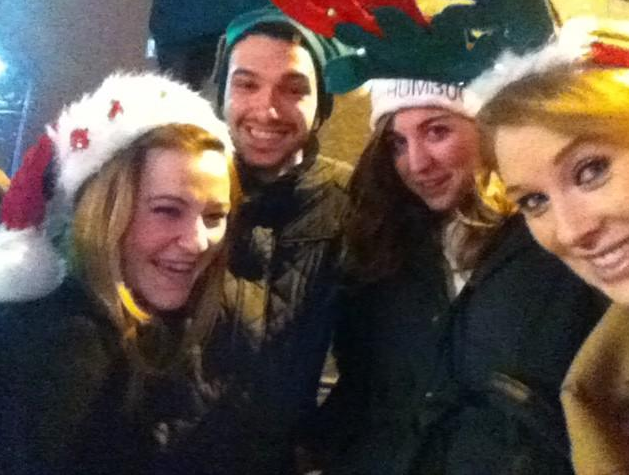
    • Christmas jumpers for every member of the group with festive headgear (I went for the reindeer look) a bonus.
    • 1 drink minimum per pub and only 30 minutes per pub to drink up!
    • Mulled wine is an acceptable drink for this challenge but I would stick to pints its far easier to pace yourself!

    The Rules

    1. The right-handed pub – all drinks to be held in your hand only.
    2. The fake accent pub – each participant to speak in a different accent for the duration of this pub
    3. The no pointing pub – no pointing
    4. The no swearing pub – no swearing!
    5. The no names pub – no calling anyone in your group by their name.
    6. The left handed pub – no using right hand to hold your drink.
    7. The strangers pub – no acknowledgement of other people in the pub.
    8. The buddies pub – pair up and hold hands with your buddy for this pub
    9. The no resting pub – no sitting down, leaning or letting your drink out of your hand.
    10. The swap shoes pub – swap one shoe with another member of your group, or a stranger.
    11. The down your drink in one pub – your so close to the finish you might as well do it! (Cheat and have a shot!)
    12. The final pub -you’re there, relax, enjoy the rest of your night if you’ve made it this far!

    Penalties for breaking the rules for each pub is one shot!

    The Route

    Map of the 12 pubs routePub 1 – Mulligans on Poolbeg street, one of Ireland oldest pubs and the perfect place to have our first pint.

    Pub 2 – Doyles on College street was our next stop.

    Pub 3 – The Palace bar on Fleet street.

    Pub 4 – The Auld Dubliner had some live music.

    Pub 5 – The Foggy Dew was really busy and full of other 12 pub attempters.

    Pub 6 – The Stags Head on Dame court.

    Pub 7 – The Exchequer – gastro pub

    Pub 8 – The Old Stand traditional sports bar.

    Pub 9 – Grogan’s pub on South William street.

    Pub 10 – Peters Pub on South William Street

    Pub 11 – Ryans of Camden street, Almost there!

    Pub 12 – Coppers

    Click on the map below for an interactive version.

    Rock around the christmas tree in every pub as its the most wonderful time of the year, merry christmas everyone.

    Dont forget to tweet us your attempt of this mighty challenge!

    This pub crawl was responsibly undertaken by Blaithin Henehan and Aidan Knowles.