Phase three of the Royal Canal Greenway reached its long-awaited completion earlier this month, opening the picturesque 800m stretch between Binns Bridge and the Bloody Sunday bridge. This allows for segregated walking and cycling facilities along a 2.1km route from North Strand Road to Phibsborough Road.
Binns Bridge pictured from the Royal Canal Greenway – photo by Will Daly
The Royal Canal Greenway project began in different stages, with some sections opening as early as July 2014. The official launch of the project began in 2021. In February of 2023, the construction phase of phase three began.
Croke Park overlooks the Royal Canal Greenway – photo by Will Daly
Speaking to TheCity, Senior Resident Engineer for the project Fergal Connolly shed some light on the Royal Canal Greenway project.
“Initially, phase three was meant to be a 24-month contract, and it had transpired to be 32-month contract,” he said.
One of many canal accessibility points along the Royal Canal Greenway – photo by Will Daly
With three of the four stages completed, the final phase will focus on the improvement and redevelopment of the 4.2km route between Phibsborough and Ashtown.
The Royal Canal pictured from Newcomen Bridge – Photo by Will Daly
“There has been talk that we possibly will not be starting phase four until 2028. As of now it is a speculative date, depending on the outcome of the planning process that’s currently underway,” added Fergal.
A mural dedicated to the Swans of the Royal Canal – photo by Will Daly
“It also depends on funding but 2028 will probably be the earliest we can commence phase four of the Royal Canal Greenway.”
“The NTA formed all these active travel projects, and they give us a certain amount of funding every year,” Fergal said.
A statue of poet and playwright Brendan Behan, found on the Royal Canal by the exit to Binns Bridge – photo by Will Daly
According to the NTA’s Active Travel Investment grants 2024, phase three of the Royal Canal Greenway has been granted €10 million.
Dublin’s Commuter train runs alongside the Royal Canal Greenway – photo by Will Daly
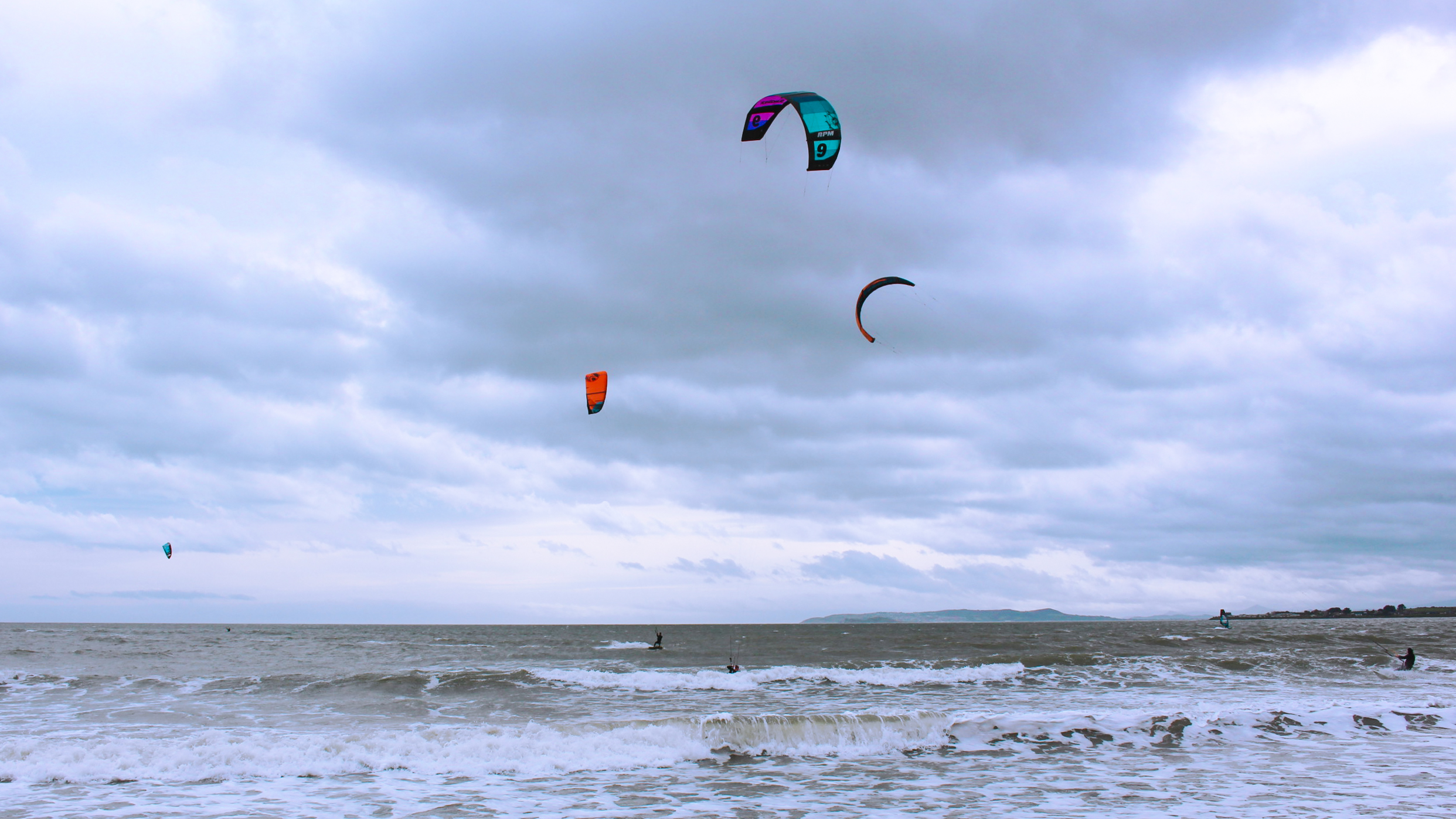
On Rush’s South Beach in north county Dublin, a collection of kite and windsurfers gather. It’s a way of blowing off the cobwebs, finding a community, and getting in touch with nature. Here are some of the incredible sights I saw and people I spoke to.
“I taught myself how to kite surf. I didn’t know anyone who did it, so I taught myself”
“I’ve spent my entire life learning about the water and the winds,” says Oisin van Gelderen, an Irish windsurfing champion who has set the Irish speed sailing record. He started at age six in “Killary adventure centre when I was on holidays”. He says that windsurfers live for the water and the wind – “in the depths of January it’s a bit bleak, but it’s blowing 40 knots of wind and it’s a great wavey day – we’re out doing jumps and loops and all kinds of things. We couldn’t be happier. I feel incredibly lucky that we can do this. I’ve barely missed a windy day since I started”
“Their power is 20 feet above their heads”
“Ours is right in front of us”
“Rush is one of the better wave beaches in Dublin”
“I can still see us doing this in our 60s and 70s”
“Even when you’re a beginner in windsurfing and you’re drifting along at five kilometres per hour, it feels like 50, because your body is part of the whole rig”
Steven, pictured left, started windsurfing at the age of 12. One day, after his summer job of cutting grass at a water sports centre, he made use of the free gear available “and I just never stopped after that.” Garret, pictured right, started windsurfing when he was just nine years old on a campsite in West Cork. He saw a father and son learning to kite surf. The father invited him to join in, taught him to surf, and “now, that man’s son is one of my best friends.” The two travel all over Ireland with the sport and have raced in the Irish slalom series for years
“We’re a very open group. If someone rocks up to the beach and they’re new, we’ll tell them where to go, where to get information, and welcome them in”
“Kitesurfers are the Evangelical Christians of water sports – always trying to convert people”
“I look at the clouds and see what way they’re going; I pay attention to the currents… I’m also glued to the weather app on my phone”
Sailing into the sunrise
Matthew is the founder of Fly High Windsurfing Ireland, an online group for windsurfers to connect. He’s also using the group to encourage surfers to clean up after themselves and leave no trace. “I’m obsessed with water sports,” he told me
“You have to know the currents and you have to know the wind. If you don’t you’re gonna be in big trouble”
“With the lockdowns you see all these sea swimmers now. For the first time ever, they’re considering swimming in the water. And people always ask, ‘is the water not freezing? Is it not mad wet?’ We’re wearing five mil wetsuits – I couldn’t be warmer. It’s like wearing a hot water bottle”
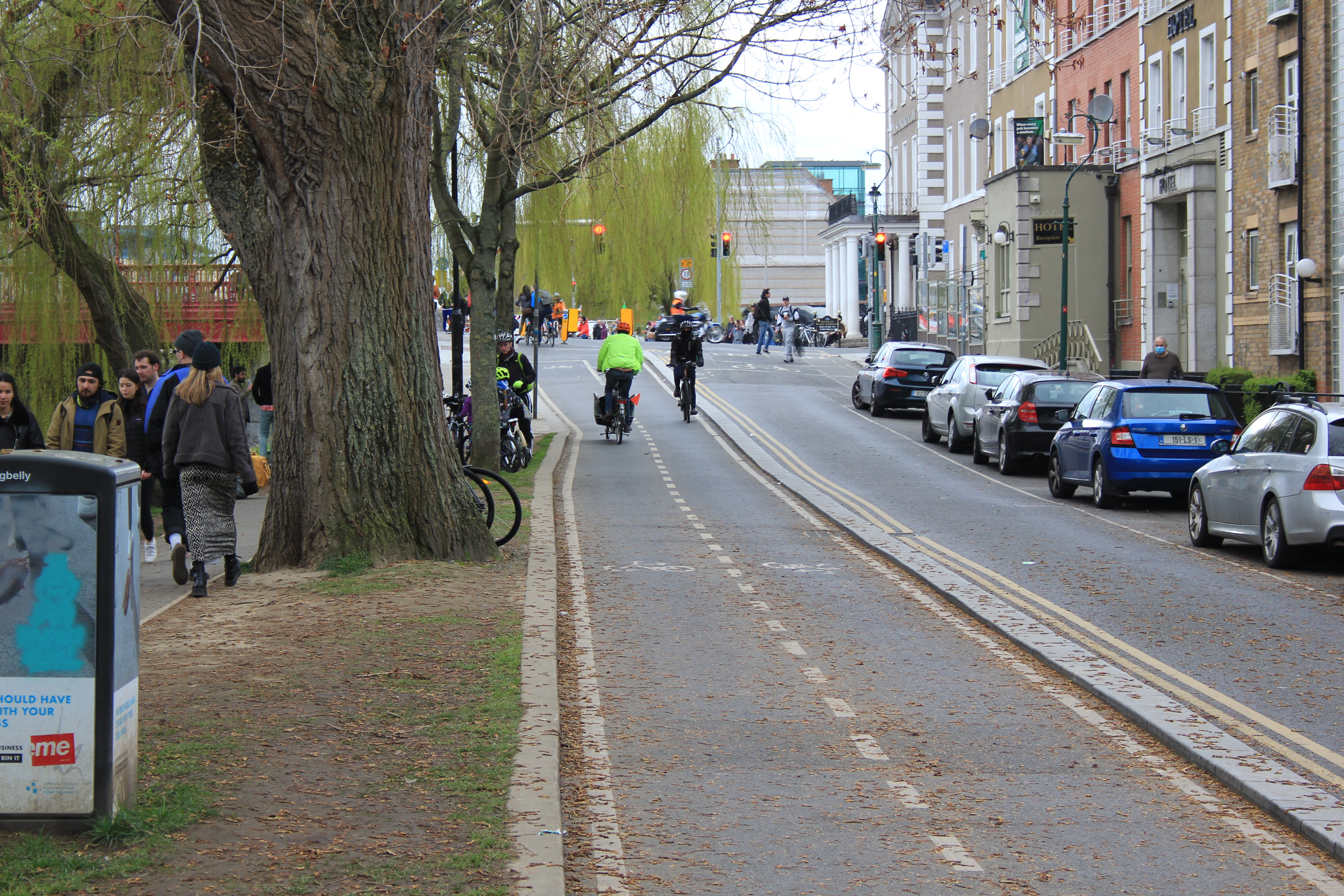
Double cycle lane along the Grand Canal, photo by Mario Bowden
Dublin city centre sits still and quiet these days. Traffic is noticeably tamer, with less gridlock traffic at rush-hour. For cyclists, this means less jostling and narrow manoeuvring through buses and cars. A bit of breathing space.
Certainly there are fewer people cycling in to work too – as people shift to working from home. But the bike is still in-motion. For some it’s a mode of work – takeaway drivers and couriers are still zipping around. For others it’s a form of escapism: people getting out and about in the sunshine, others doing ‘wheelies’.
Some are opting for the bike in order to avoid public transport too. Indeed, this trend is not unique to the current health crisis – people were encouraged during the 1918 Spanish Flu to get peddling.
With the lack of footfall in the city centre since the first lockdown, space became time. There was time for Dublin City Council (DCC) to implement various new and distinctly designated cycle routes across the city.
“I don’t think anyone would say cycling has been well provided for on Dublin city streets”
Ali Grehan
Some of the new cycle lanes across the city include the implementation of the the Liffey Cycle Route along the North Quays, contraflow lanes on Nassau Street, and the more recent route up O’Connell Street Upper and North Frederick Street. All of these are provided with bollards and black and white ‘orcas’ to segregate cyclist traffic from cars, buses and trams.
“The new cycling lanes are still a work in progress,” says Ali Grehan, Dublin City Architect at DCC.
Grehan continues: “They are much needed. I don’t think anyone would say cycling has been well provided for on Dublin city streets, particularly heavily trafficked ones – so in that sense they are successful in that they’re making necessary improvements.”
While the quick thinking of DCC has been a positive for the city, it is not without its pitfalls. For instance, the Nassau Street contraflow lane suddenly stops at Dawson Street, forcing cyclists to merge with traffic suddenly – not to mention Luas tracks – at one’s peril, with any false move.
The implementation of cycle lanes is not exclusive to the city centre either. Griffith Avenue on Dublin’s Northside has seen a fully segregated lane being rolled out across parts of its 4km stretch from Glasnevin to Marino. In May 2020 the Phoenix Park closed off sections of its roads to cars for the summer months – creating more space for people to mill about on their bikes.
On the Continent
European cities have always been miles ahead of Dublin when it comes to cycling infrastructure. But, we are not alone in terms of cities that took the current opportunity to shift the emphasis to cycling – Paris being the most prominent.
“The problem is, while you can look at Copenhagen or Amsterdam – [which have] great cycling infrastructure – it’s difficult to transpose one city’s approach to another,” Grehan says.
“Dublin has its own particular physical and cultural context and any initiative has to understand and respect this. It’s a complex issue. An example is Dublinbikes. There was a general expectation among commentators that the system would be vandalised. People were surprised when there was virtually no vandalism and Dublinbikes became very successful, very quickly.”
The full extent of the success of Dublin’s cycle lanes remains inconclusive as the city remains less active than in normal times, Grehan concedes. But with smarter innovation and progressive steps made by campaign teams and authorities, a change to Dublin’s road culture is being paved.
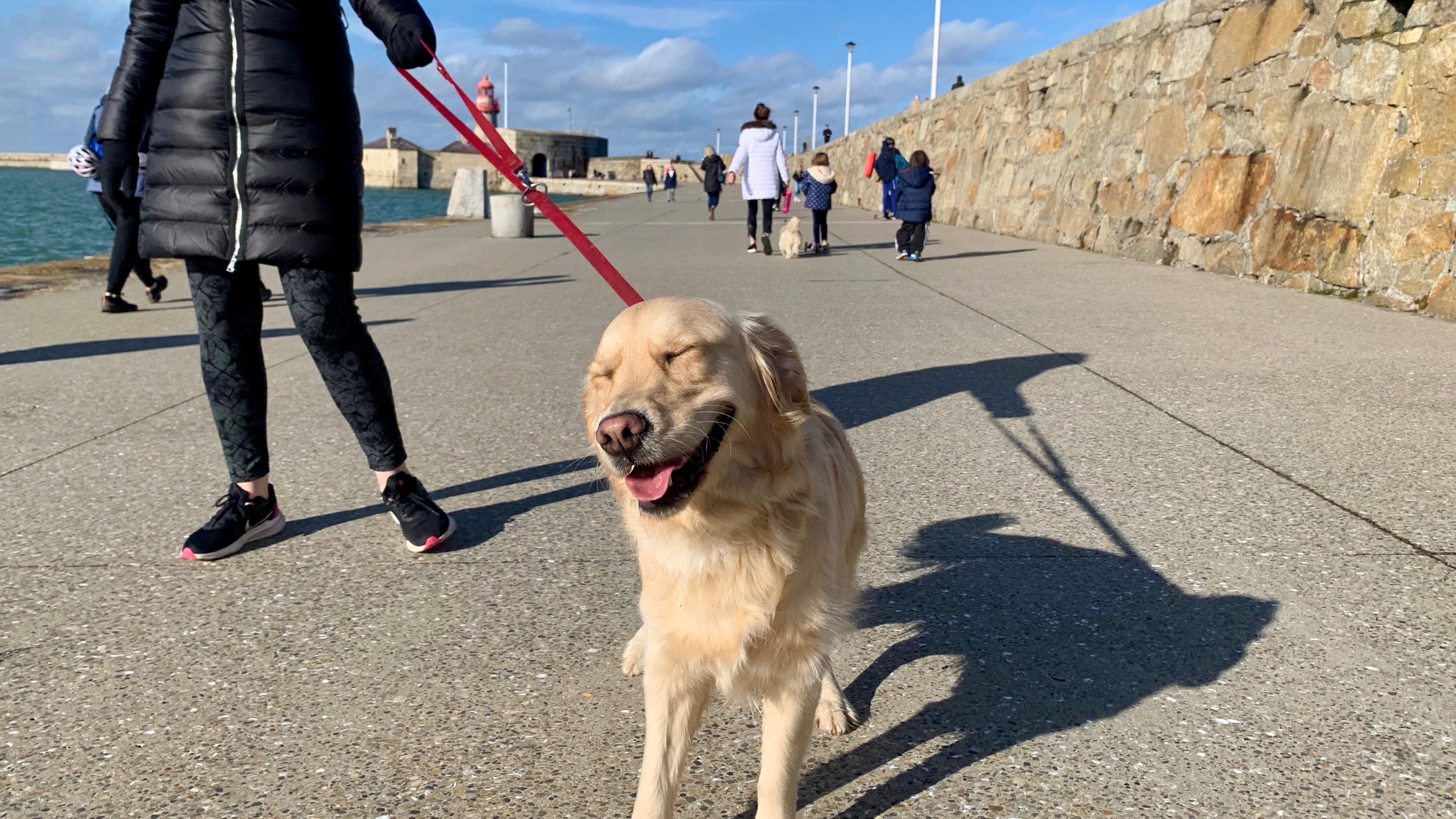
With a high of 13 degrees celsius, Monday, 15 February 2021 marked one of the of the warmest days of the winter this year. Like many South Dublin natives, I strolled the East Pier in Dún Laoghaire to enjoy this rare moment of warm weather and sunny skies. Here are some of the furry friends that I met on my journey.
“She’s almost a year old now, we’re lucky to have had the lockdown to train her”
“While you’re at it, make sure you tell the owner’s to pick up their pet’s crap too”
“She’s the model of the family”
Smiley Cosmo abiding by social distancing measures
“It’s hard for him to see all the action from so low down, so he loves when I let him stand on the benches”
Cone of no shame
“They’re just a bit camera shy”
“Bonnie isn’t one for walking”
“My record is thirteen dogs at once”
“We asked Lulu to sit, but she didn’t get the memo”
Major, the Siberian Husky
“It might be hard to capture them, since they never sit still”
“Don’t forget to make her the star of the piece”
Seeing triple with half siblings Woody, Buzz and Kenny.








You must be logged in to post a comment.