Tag: Politics

  • All-day protest outside the Dáil demands movement on the Occupied Territories Bill 

    All-day protest outside the Dáil demands movement on the Occupied Territories Bill 

    Protesters gathering on Kildare Street in favour of the OTB. Photo credit: Kelly Smyth. 

    Dozens of protesters from across the country gathered outside Leinster House aiming to progress the passing of the Occupied Territories Bill (OTB), with many calling for services be added to the bill. 

    By Kelly Smyth 

    Demonstrators have gathered outside of the Dáil urging the Government to push forward on passing the OTB, with many branches of the pro-Palestinian movement uniting for the protest. 

    Groups from as far as Kerry joined in the demonstrations, with artistic performances, poetry and speeches being notable features of the all-day demo. The groups were accompanied by politicians, notably Senator Frances Black, throughout the day. 

    The OTB is a proposed piece of legislation that would criminalise Irish businesses trading goods with illegal settlements as per international law. The Bill aims to prevent trade with Israeli settlements in occupied Palestine, such as the West Bank and East Jerusalem.  

    A protestor from Limerick spray-painting a sign at the scene. Photo Credit: Kelly Smyth. 

    Caroline O’Keane, a member of Irish Healthcare Workers for Palestine, spoke on behalf of the group regarding their presence outside of Leinster House. 

    “We’re here today because what they’re doing there is completely against all of our ethical beliefs and everything that we work for,” said O’Keane. 

    “It’s a mystery to all of us here why the government has not enacted this bill. So we’re here to try and push this bill forward in the Dáil, get it enacted, and stop buying goods from the illegally occupied territories in Palestine.” 

    Caroline O’Keane alongside Irish Healthcare Workers for Palestine members. Photo Credit: Kelly Smyth. 

    Another protester, Eileen Yates, expressed a much more personal reason for her presence at the protest; her experience of motherhood guided her support for the OTB. 

    “I am a mam. I see kids like my own being killed. I have a friend in Gaza with four kids who have never seen a life without genocide,” said Yates. 

     Eileen Yates holding her handmade sign. Photo Credit: Kelly Smyth. 

    As part of the protest, Sinn Féin TD Donnachadh Ó Laoghaire addressed the crowd, calling for services to be added to the bill. 

    “Why shouldn’t there be consequences for who trades not only in goods, but also in services? The Irish Government has fallen behind,” he said. 

    Donnachadh Ó Laoghaire TD addressing the protesters. Photo Credit: Kelly Smyth. 

    Following Ó Laoghraire’s address, Senator Frances Black attended the demonstration, meeting many of the organisers of the event. 

    Speaking to TheCity, Black expressed disappointment with the Government’s delay in passing the bill. 

    “We’ve seen absolutely no signs of this bill getting moved at all. The people have not forgotten those promises, that’s why they’re here today. The activists are saying, ‘We want this bill passed’, and they want it passed as soon as possible,” she said. 

    Senator Frances Black speaking with a protestor. Photo Credit: Kelly Smyth. 

    Black, who first introduced the bill in 2018, believes the passing of the bill will set an example to the international community on upholding international law. 

    “There are no consequences to what Israel is doing, breaking international law on a daily basis. And the reality is that if there are no consequences to what they’re doing to the Palestinian people, if we don’t stand up for what’s right and for international law, then none of us are safe. And I think that’s really important to say. So we need to now really get this bill passed as soon as possible.” 

    The last time the OTB was discussed in the Dáil was in November, with the Government claiming the legality of implementing the Bill being a reason it is being delayed.  

    “The trade in services is considerably more complex than goods and there remains considerable legal uncertainty as to whether the inclusion of services is permissible under EU law. We know for certain that the inclusion of goods is permissible under EU law. 

    We need legal clarity on the point on services. We must take into account practical issues with regard to implementation should services be included in the scope of the Bill,” said Minister for State for Europe and Defence Thomas Byrne. 

    It remains to be seen whether the Bill will be passed in coming months or if services will be included in any progress despite pressures from protesters. 

  • Taoiseach faces backlash from Latin American activists over upcoming Shamrock Ceremony with Trump 

    Taoiseach faces backlash from Latin American activists over upcoming Shamrock Ceremony with Trump 

    Ireland-based Latinx collective Sobremesa en Disidencia claim the US should not receive ‘unconditional support’ from Ireland amid ICE violence and invasion of Venezuela.  

    By Kelly Smyth 

    Sobremesa en Disidencia organisers Catalina Hernández, Barbara Sena and Shoshi Chong. Photo Credits: Sobremesa en Disidencia. 

    As Taoiseach Micheál Martin is due his annual visit the White House this St. Patrick’s Day, activist group Sobremesa en Disidencia says the move is “very strange”.  

    The recently established feminist collective has emerged with strength in recent months, working closely with left-wing political group ROSA to represent Latinx diaspora in Irish politics. 

    Organiser Catalina Hernández said that she felt the decision to uphold the 70-year-old tradition following the recent foreign-policy actions of the Trump administration is not good diplomacy. 

    “We understand this is a long-standing tradition but visiting Trump is legitimising the policies that are harming marginalised communities,” she said. 

    Hernández, a Mexican expat who has lived in Ireland for over a decade, believes that Latin American diaspora living in Ireland have been forgotten in much of the debate surrounding the Taoiseach’s affirmation to visit the White House in coming weeks. 

    “I don’t think it is reflecting the opinion of people in Ireland. I live here, I am a part of the community,” said Hernández. 

    Fellow organiser Barbara Sena, who moved to Ireland from Brazil four years ago, also felt the gesture neglects to consider the large Latin American population living in Ireland, with over 27,000 Brazilian citizens alone living in Ireland according to the 2022 census.  

    “We accompany the politics by being here. We shouldn’t have the Taoiseach agree to meet with someone who kidnaps other presidents, invades countries and bombs them,” she said.  

    A poster advertising the protest on Dawson Street. Photo credits: Kelly Smyth.

    Sobremesa en Dicidencia is not the only group to object to the Taoiseach’s White House visit, with ROSA Socialist Feminists and TD Ruth Coppinger backing the ‘No Shamrocks for Trump’ protest that took place outside the Dáil on the 8th of March, with thousands attending.  

    In a social media statement, ROSA condemned the Irish government for upholding the tradition, stating: 

    “The latest Epstein files released detail grotesque allegations of child sexual abuse against Trump. The genocide in Palestine and the ICE terror of immigrants and people of colour should be enough for an Irish government to boycott but the Epstein file revelations are yet another reason,” said the statement.  

    While Sobremesa en Disidencia are optimistic about the protest, they do feel the public attention to the Epstein files has cast a shadow over the Trump administration’s policies towards Latin America. 

    “Every week there is something new with Trump and it is easy to forget other important issues. From our own perspective, Venezuela and ICE are forgotten because of the Epstein files,” said Sena.  

    Hernández argues was part of the reason for the Latin American diaspora turnout which attend the protest on International Women’s Day, saying, “We need to take a stand as immigrants in Ireland. We will not allow this ceremony to happen.” 

     The organisation understands that diplomacy is important between the two countries – with over 245,000 people in Ireland directly employed by US-owned companies.  

    “We need to be less economically dependent on the US. We can’t say anything. What else does Trump have to do to us to finally say something?” said Sena.  

    The organisation strongly believes in Ireland’s global voice, with the Government’s recognition of Palestine as a state in 2025 being a beacon of hope.  

    “The rest of the world recognises our actions. It makes me really proud to live here. We can always do more,” said Hernández, “One small action can send a message.” 

    “Neutrality doesn’t exist at all. Silence is complacency,” said Sena.  

    Despite the large turnout at the protest and US military activity in Iran, the Taoiseach has confirmed that he is still visiting the White House tomorrow.  

  • Barry Heneghan discusses his political journey and plans for remaining government tenure 

    Barry Heneghan discusses his political journey and plans for remaining government tenure 

    Barry Heneghan is a 27-year-old independent TD for Dublin Bay North, elected in the 2024 Irish general election on his first attempt.  

    A graduate from both Belvedere college and DCU, Heneghan graduated with a master’s in mechanical engineering focusing on sustainable energy systems.  

    In an interview with The City, Heneghan discussed his political journey, his aspirations for the rest of his current tenure and his decision to support the Government as an independent. 

    “I saw how slow things could be in politics and I thought that I could speed up this process. My friend’s mother was diagnosed with cancer, and I made a portrait of Che Guevara in the style of Jim Fitzpatrick. When I brought it to her, by chance Finian McGrath was visiting and asked who made the portrait as he wanted one. This was around a month before the local elections (2024), and we just got to chatting, he mentioned that Damien O’Farrell was thinking of retiring, so there was the option of getting both their backing (McGrath and O’Farrell), we talked on key points of focus and he asked if I was willing to run with his help,” said Heneghan.  

    “-I always thought that I would be good for it, and then we ran a 4-week campaign ending up getting 2,450 votes (2,452), the highest that any independent got in the Dublin local election at that time. The general election was also looming, so there was an option there. Some people did say it was a bit cheeky to go straight for it, but if you think that you can represent the people the best, then you give them that option. I was hoping I could get the fifth seat and I ended up getting the fourth, but it will be a different game the next time if you look at the transfers I got.”

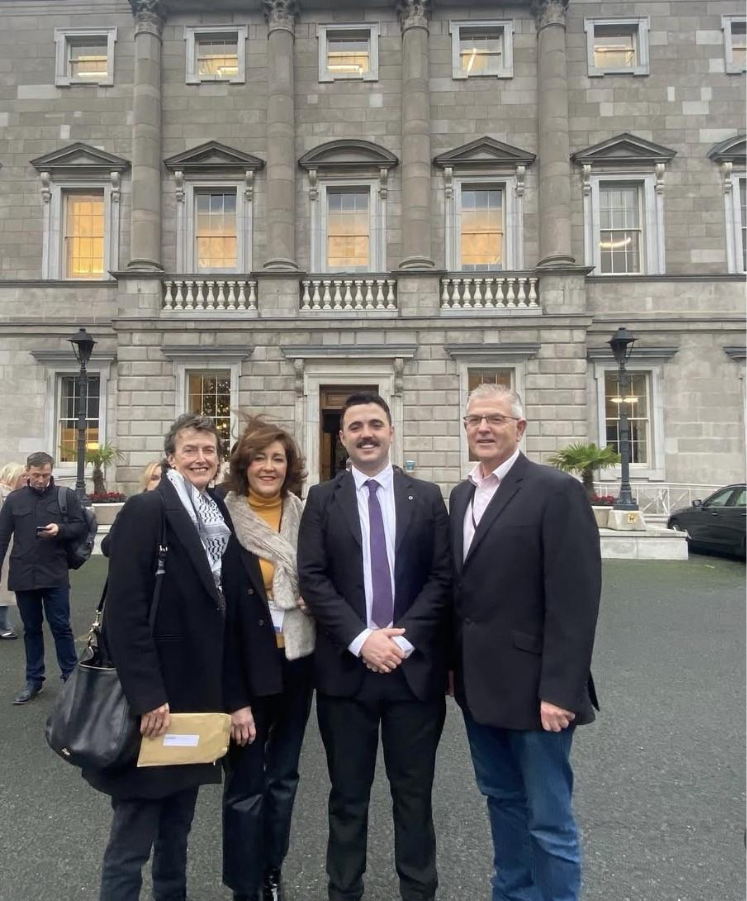
    (Barry Heneghan, middle right, outside of Leinster House. Provided by: Barry Heneghan) 

    Discussing his first year in office, Heneghan offered insights into the juggling act between working and speaking in the Dáil, as well as working with and for his constituents in the sprawling Dublin Bay North area.  

    “The days and weeks are jam packed. Tuesdays, Wednesdays, Thursdays we’re in here (Dáil Éireann) and then Mondays and Fridays were doing a lot of stuff in the constituency. I’m launching my clinics, were trying to get 7 locations in north Dublin. Initially I had an office for my first 8 months, but it had no signage, didn’t have my name you know compared to down the country, TDs would have their name for their constituency office.” 

    “For my constituency I want to have clinics in Baldoyle, Howth, Darndale, Coolock, Artane, Clontarf, Sutton, Kilbarrack, and Marino. If I can rotate clinics Mondays and Fridays and maybe a Saturday every so often up in Belmayne, it’s good to get people to meet you one on one. One thing I would not like in four years’ time when I’m going for re-election is for someone to say, “oh I never seen you”, so I want to be more visible. Social media is one thing (for visibility), but there’s an elderly cohort that wouldn’t see that, some people don’t have that access, and that’s what these clinics are for.”  

    Dublin Bay North’s demographical profile shows that Heneghan is correct in his aim for more visibility for older people, as 17.1% of voters are over 65, compared to the state average of 13.4%. Heneghan also named all of Dublin Bay North’s major settlements (Except Fairview) in his list for future clinics in the area, a sign of his knowledge of the area and his commitment to inclusion for the entire community. 

    “As long as I can continue to help people and think that my office and my team would offer people in north Dublin the best option to represent them, then I would seek re-election, or renewing my contract. I like to say that politics is like a contract, so you can see what I’m trying to do, be it climate change, energy, housing, childcare, disabilities, gaeilge, Dublin Bay itself, and if I can go back to people and say ‘well I done this, I helped with this’, if you don’t break your contract of the things you set out to do then people will be happy with you. In turn, hopefully they don’t break the contract for you.”- 

    “It’s always risky as a Government-supporting independent, people won’t always be happy with it, but when you see key issues that I wanted done being done, for example Gaelcholáiste Reachrann’s permanent building just went to tender, and while every TD will claim ownership, it was a joint achievement in the chamber and one of my key priorities. People elected me to get as much as possible done, this is how you get as much as possible done.” 

    “There are some issues that the Government do that I don’t agree with, but, I would rather have an ear to the ministers, have access to their offices, and be able to work with them. We had a meeting with the housing minister, before the housing plan that was just announced, where I expressed my key issues for disabilities, for the accessibility officer for Dublin City Council, and for the modular homes and flats. If I had of went in with the opposition, I wouldn’t have had that meeting, I wouldn’t be able to help people who get on to me. I had a decision, ‘do I want a long political career, sounding good, but getting nothing done, or the possibility of not getting re-elected, but being as affective as possible and having a short political career’ and I preferred the latter.”- 

    “The social economics of the constituency vary a lot, we have areas that are severely under pressure in terms of service, and people are looking for those services. One of the things I would love to see would be better support for youth who have left school, the crown paints site which as we know now is not going to be used as an IPAS centre, I would want even half of that to be for mental health and disabilities and also to have maybe the other half as a trade school, people who aren’t suited for school, can be the perfect mind for trades, these young people who may leave school early, then fall into the wrong side of life, but if you give the them support at the start of their life and say ‘hey there’s two roads you can go down, either the wrong road or you can go down a road where you can really make a good life for yourself’, you know the country already has a lack of tradesmen and women, if we can show people that they can go into these trades, this would be something I’d love to see for North Dublin.”-

  • Senator Tom Clonan, a man on a mission

    Senator Tom Clonan, a man on a mission

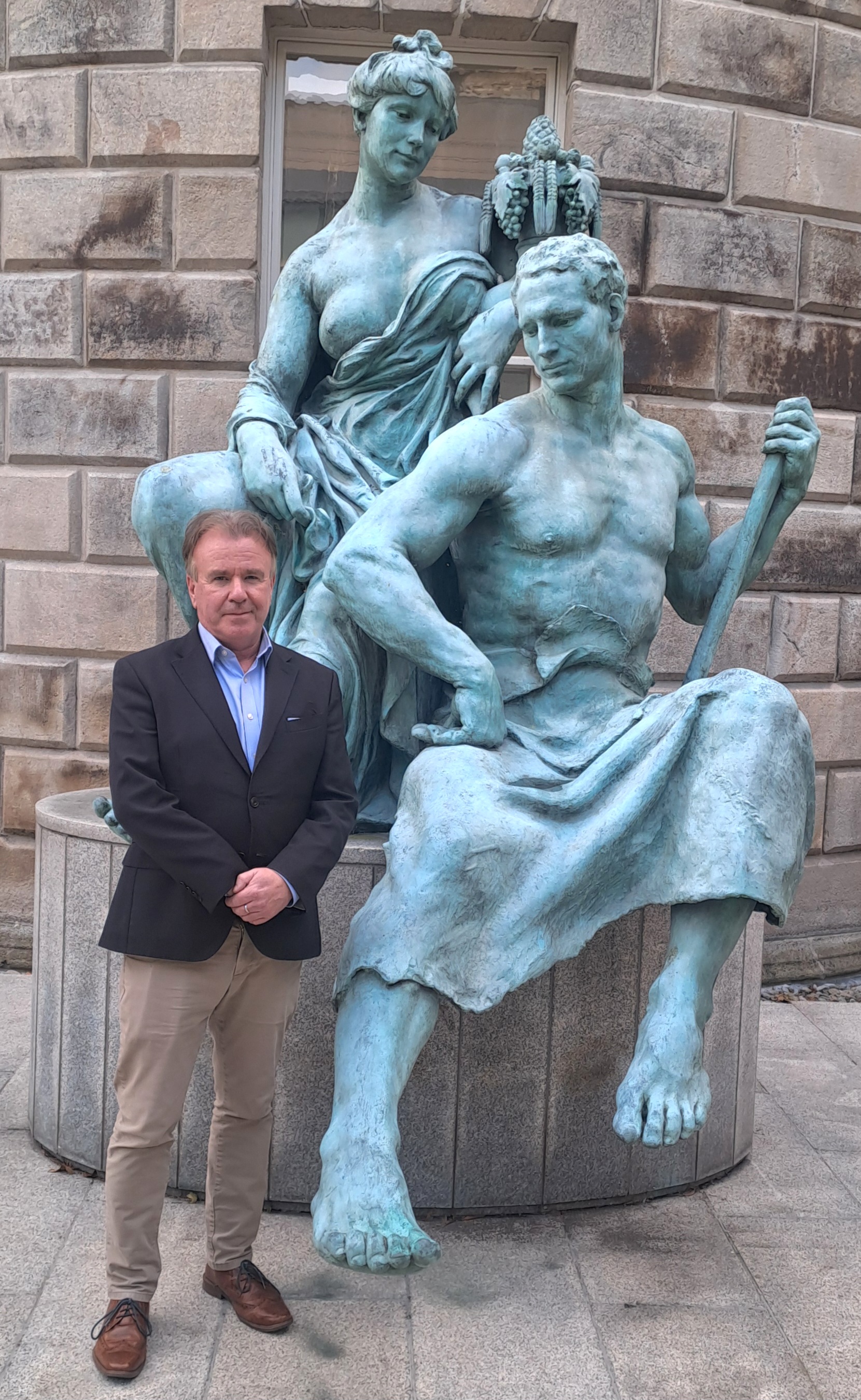
    Photo: Mary Phelan

    Senator Tom Clonan – retired army captain, security advisor, member of Seanad Eireann, author and carer

    Tom Clonan is a busy man. He started his working life in the Army. He later became an academic, lecturing in the School of Media at TU Dublin.  From 2001 to 2016 he was the Irish Times security analyst and since then has been an analyst for The Journal.ie.

     He was elected 3 yrs ago as an independent senator from a constituency of over 100,000 Trinity graduates from all over the world.

    The issue of disability rights is close to Clonan’s heart. He has recently drafted two important bills.

    “The first is to give disabled citizens the legal right to services, supports, therapies and surgeries that are set out in their assessment of needs, said Clonan.”   These socio-economic rights exist in every other jurisdiction in the European Union and in the UK.

    “In many ways we are 30 to 50 years behind the rest of Europe in relation to fundamental legal rights for disabled citizens. The reasons for this are historical. When the state came into being in the 1920s the catholic church played a central role in carrying out many functions in our society, such as education and medicine, whereas issues around disabilities were often dealt with in congregated settings by the catholic church.  This aspect of care was seen through the prism of charity.”

    He hopes to bring this Bill to its final stage by christmas and then seek to have it introduced into the Dail.

    “As a single lone independent senator and as a member of the opposition, I am very proud to bring a bill to completion.  I’ve learnt a lot”.

    The second bill is more complex. It is called the disability personalised budget bill of 2024. The plan is to progress this, so disabled people will have autonomy over the means of support they need to fulfil independent fulfilled lives.  “Due to cultural and historical reasons, we are outliers and behind Europe in this regard”.

     Even though today the religious orders no longer have the same level of control in society, the idea of charity compliance and conformity troubles Clonan. They have now been replaced by ‘for profit’ corporate care providers, which Clonan says is “an appalling vista” as they are still seen through the prism of charity, as the family, not the constitution, is considered the primary carer. We have chosen a very poor model due to our post-colonial catholic past.

    “The Government is not listening to us. They listen to the financial sector, construction, big pharma and hospitality, but don’t listen to us because their views are framed by charity. They seem rather surprised when disabled citizens and carers like myself speak out because we are supposed to be happy with what we are given”.

    Many of the disabled have major obstacles to overcome. They are living in enduring poverty or are enduring homelessness or suffering from sub-optimal care from not getting spinal surgery, occupational therapy, and speech and sports therapy.

    There are a number of disabled persons organisations run by disabled persons. However, they are not Government funded, so the government is reluctant to deal with them.  “They prefer to deal with more established corporate care providers, which is wholly inadequate”. 

    “It’s a bit like the Government dealing exclusively with IBEC and refusing to deal with trade unions. It is hostile to the idea of socio-economic rights for the disabled.  They don’t believe they are worth it and see it as a matter for charity.”

     Besides his interest in disability rights, he has a firm commitment to Ireland’s neutral status and is lobbying very hard to maintain the “triple lock” which the Government is trying to get rid of.

    “It is intimately linked to our neutral status, and this is a very dangerous situation for Ireland. The Government is not modifying or amending it but removing it completely, and once it is gone the government can send any number of troops to any part of the world by a simple majority.”

    “In the absence of the triple lock, we should have an explicit constitution on neutrality like in Switzerland and Austria, so decisions to send our troops anywhere would be tempered by what’s set out in our constitution”..

    Whereas I trust the democratic process, I don’t necessarily trust the decision makers.

    “Governments make mistakes, the current debacle concerning the Presidential election is one example”, said Clonan.   Ireland is completely defenceless in air, ground, maritime and cyber domains.  We need to invest in our own defence”. “If the government insists on removing the triple lock, I will table amendments to propose alternative safeguards to protect Irish citizens, particularly Gen Z and Gen Alpha, who have already been very badly treated in terms of their right to housing and homes”.

    As far as he is concerned, the concept of future peacekeeping is gone. “It is now peace enforcement”.  

    “We are coming under pressure from our European partners”. The government believes this view would be good for research and development and financially attractive in terms of foreign direct investment. They have agreed to sign up to a package of weapons investment of nearly one trillion dollars over the next 5 to 10 years”.

    He is adamant that more money needs to be spent on houses and the fundamental rights of disabled citizens, as very little has been done to address these issues in the budget.

    In 1996 he did a PhD on how women were treated in the army.  It looked at the discrimination and systematic sexual violence against female personnel. Military authorities alleged that he falsified the findings.

    He was subjected to whistleblower reprisal, isolation and character assassination. He is the only person to have been sanctioned for his enquiry findings.  In 2021 The Women of Honour from the army came forward and made fresh disclosures of sexual violence against them while serving in the Defence Forces.  

    Finally, Micheál Martin set up an independent group enquiry, which vindicated his findings in 2023.   

    His hopes for the future? That more money is spent on health, climate change measures and housing.   

    Does he have any down time?

    .

    “Apart from work and raising a family, I’m a full-time career. I have no hobbies or interests.  It is simply not possible. This is the case for most carers”.

  • “The people are your employers” – Former Labour party TD Eithne Fitzgerald

    “The people are your employers” – Former Labour party TD Eithne Fitzgerald

    Politicians come and go; some remain elected for years while others serve in government for a short term, and there are those who persist. The third could be said for former TD Eithne Fitzgerald, who ran for national office seven times.  

    Eithne Fitzgerald was a former Labour party member and a TD who served in the south Dublin constituency from 1992 to 1997. 

    Fitzgerald first joined the Labour Party when she was a college student in 1967 which fueled her interest in the field of politics. “I joined both the UCD branch and the one in my local area,” Fitzgerald said noting that back in the day “students were able to be in both a college branch and a local branch in their constituency” which for her was the south Dublin constituency branch.  

    Fitzgerald then left the Labour Party when she graduated in 1970 and worked in the civil service in the Department of Finance. “As the civil service must be politically neutral, I resigned from the Labour Party,” she said.  

    Eithne Fitzgerald worked in the Department of Finance for two years until she got married in 1972, she then lost her permanent job due to “the marriage bar still being in force for married women up to July 1973,” Fitzgerald explained. 

    After six years of not having a permanent job, she decided to put her name forward for city council candidate for the Labour Party in the 1979 local elections. “At that stage, Dublin County Council had no women members… I felt strongly that women’s perspective needed to be articulated in the council.” Fitzgerald wanted to discuss issues like play facilities for children, and the construction of streets and footpaths for people pushing prams and buggies. She eventually won that year’s election, the first time that she was elected for local office. 

    Fitzgerald was one out of 4 women who got elected to the local government that year. “It was considered kind of a big breakthrough and traditionally… there were 36 members of the county council, and four of us were women, and we came into a council that had no women,” she said.  

    Years in local office inspired her to go further in her career, and in 1981, she and a fellow councilor ran for election to the Dáil. That year she wasn’t successful in being elected but that didn’t stop her from running. “I ran in February of 1982…1987…1989…” Fitzgerald said. She then rejoined the Labour Party in 1986. 

    Despite losing several times she did not lose hope and ran again in 1992. 

    “My fifth attempt at running for the Dáil was in 1992, where I topped the poll not only in the constituency, but received the highest vote in the country of any candidate that year. I was an overnight success on my fifth try!” said Fitzgerald  

    Fitzgerald didn’t lose hope as this was what she wanted. “I felt I could make a difference, and I suppose having trained as an economist and having worked inside the public service, I knew how to make change,” she said.  

    Being part of the Dail presented her with more opportunities and challenges, like in 1993 when she had a dual role, she was appointed as minister for finance, and she also worked in the newly formed office of the Tánaiste.  

    Freedom of Information 

    One of Eithne Fitzgerald’s first pieces of legislation during her time working in the office of the Tánaiste was the freedom of information (FOI) legislation, which she and her fellow TDs wrote from scratch in 1992. 

    Fitzgerald was asked to write the legislation of the FOI as “it was a big part of the manifesto. The Labour Party’s manifesto was about putting justice into economics and trust into politics. That was the phrase that was used,” she said.  

    In writing the FOI they’ve had to take into consideration the British Official service act which was the preceding legislation before the FOI. “I knew that in changing this, that it wouldn’t work unless there was legislation behind it. You don’t change your culture overnight unless there are some strong guardrails,” Fitzgerald said.  

    During this time, they have reviewed several legislations from other countries which were used as models in forming the Irish version of the FOI. They spoke with several politicians worldwide who were involved in creating their country’s FOI.  

    Together with her team, they did thorough research on countries that have implemented their FOIs. “To do the nuts and bolts of the legislation, was a pure joy. It was delightful to do it. I was able to get my teeth into some research and there was less opposition to it,” she said.  

    In creating the legislation there was opposition to it as the FOI will be allowing the public to access vital information. “A lot of stuff that had to be dragged into the light,” Fitzgerald said.  

    The Fianna Fail party originally didn’t accept that there would be a Freedom of Information act but said that it should just be considered. Fitzgerald and her team took this as an opportunity to further their research and push through with the legislation.  

    “What we wanted to see was the practice change towards automatic publication of what should be published,” she said.  

    The first legislation of the Freedom of Information Act was first approved in 1997. “My proudest achievement is the Freedom of Information Act,” Fitzgerald said.  

    End of an Era 

    In 1997 Eithne Fitzgerald ran for the Dail elections for the sixth time but unfortunately, she lost her seat.  

    At this time there were two local issues that affected Fitzgeralds’ campaign “One would have been my support for the travelers, and the second one was about a school in Knocklyon in County Dublin,” she said.  

    Fitzgerald once again tried to run for national government in 2002, but she failed to garner enough votes to be re-elected.  

    After her seventh run she decided to throw in the towel and move on from politics.  

    Eithne Fitzgerald, though not in politics, is still in public service; she is currently working for the National Disability Authority.“I love the work, and I love the job,” she said.  

    Reflecting on her journey as a politician, Fitzgerald learned that

    “I suppose the people are your employers. They can vote you in with a big vote. They can vote you out with another vote. That’s democracy. It’s very personal when it happens, but you get on with life and there is a life after politics”

    -Eithne Fitzgerald 


  • “I think it’s historic that there are four women here, two interviewers and two female candidates and that should be recognised” – Humphreys and Connolly go head-to-head for one final Presidential Debate 

    “I think it’s historic that there are four women here, two interviewers and two female candidates and that should be recognised” – Humphreys and Connolly go head-to-head for one final Presidential Debate 

    On Tuesday 21 October, the final presidential debate took place on RTE’s Prime Time. Fine Gael’s Heather Humphreys and Independent Catherine Connolly’s final showdown came after what feels like a very long few months of campaigning, scandal, social media posts and debating. A breath of relief was let out across the country, as it does feel as though there have been more presidential debates than there are seasons of Grey’s Anatomy or films in the Scream franchise. 

    It’s a relatively peaceful hour with nothing said that we haven’t already heard in another debate or interview, and neither candidate says much to push themselves to new voters. Connolly refers to ‘when’ she is president, as opposed to ‘if’, a confidence which is yet to be deemed justified, while one could start a game in which they take a sip of their preferred beverage each time Humphreys starts the response to a question with “Well can I just say”, before dancing around what has been asked.  

    X Reacts to the final debate.

    The first question is to Humphreys. She is asked to assert why she would be a better president than the woman beside her. She doesn’t answer the question, she instead references the ongoing riots of the evening, which as important as they are, are not what was being asked. Miriam O’Callaghan states that she will come back to this topic, and encourages Humphreys to answer the question at hand: what will make her a better president than Connolly?  

    “I think it’s historic in the first instance that there are four women here, two interviewers and two female candidates and that should be recognised,” said Connolly. She was clever to make this point ahead of making her case for why she was a better presidential candidate, referencing herself, Humphreys, and hosts Miriam O’Callaghan and Sarah McInerney, who take turns asking the questions. “All women find it difficult to say I, but I believe that I have the characteristics to make a president. I represent a different kind of Ireland. Unfortunately, Heather is more of the same,” said Connolly.  

    Personally, I would have liked to see this final debate as a chance to show more humility from each candidate. I wonder if it was more normalised for a candidate to put their hands up and say, “Yes I made a mistake”, would that help or hurt their campaign?If there was more humanity in these candidates, more personability, would it be easier to feel like we are voting for actual people, not simply two seasoned politicians?  

    What follows is discussions around Gaza, Donald Trump, each woman’s career, questions around Connolly’s work on repossession cases that have been widely reported, to which she is adamant that she has been as clear as she can about the situation.  


    Personally, I would have liked to see this final debate as a chance to show more humility from each candidate. I wonder if it was more normalised for a candidate to put their hands up and say, “Yes I made a mistake”, would that help or hurt their campaign?If there was more humanity in these candidates, more personability, would it be easier to feel like we are voting for actual people, not simply two seasoned politicians?  

    What follows is discussions around Gaza, Donald Trump, each woman’s career, questions around Connolly’s work on repossession cases that have been widely reported, to which she is adamant that she has been as clear as she can about the situation.  

    “I’ve never avoided a question in my life. My life would be easier if I was less blunt.” – Catherine Connolly.  

    Humphreys is again questioned on the Irish language and her fluency and brief stint in the Gaeltacht. “I commit to returning to the Gaeltacht, returning to Donegal, I’m very proud of our language. I did spend a week in the Gaeltacht. I would like people to come on a journey with me.” My own Gaeilge abilities are called into question as Connolly and interviewer Miriam O’Callaghan have a back and forth in our native tongue. Connolly is clear to say that she has never criticised anyone for not speaking the language, and O’Callaghan talks about the use of the Irish language to alienate people, particularly in the northern part of the island. 

    Each candidate is asked about their plans for their Council of State. Humphreys says “I would like to appoint more women. First priority would be on women. I know that there are many women well qualified to sit on the Council of State.” Connolly made clear that all of her energy has gone into her campaign over the last three months, and that while she hasn’t specific people in mind, she knows what qualities she would look for. “I’ll be looking to have as diverse a range of people in those seven appointees. Disability, diversity, young and not so young.”  

    The point is made that a president must have humility, and each candidate is asked about something that they regret, in their professional career specifically. Humphreys speaks of Covid times. “What really hits me hard is the fact that there were regulations there that when a relative was dying you couldn’t hold their hand, you couldn’t whisper something in their ear and that stays with me, and I regret that I really do. I think we could’ve found some way,” she said. Connolly piggybacks on the same issue., “I regret agreeing with the Government (on the same issues). I agree with Heather, it was Government policy. My personal regret is that I agreed in the first place with the regulations.” She then uses the point to mention a break in trust (to which Humphreys interjects that they were following medical advice), and the evening draws to its close.  

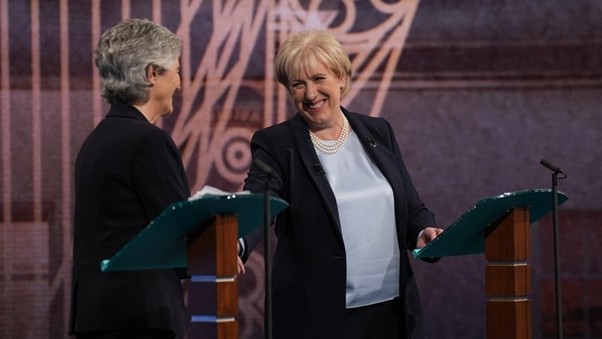
    It is wrapped up nicely. The two women smile at each other and shake hands, perhaps just for the camera, but still a nice show of mutual respect. It can be assumed that both candidates must be exhausted after what has felt like a very long run up to Friday October 24th.  

  • “It is here, and I don’t think it is going away any time soon” – an evening with President Barack Obama.

    “It is here, and I don’t think it is going away any time soon” – an evening with President Barack Obama.

    It’s my first time in the 3Arena since I went to a Billy Joel concert in 2013. Two trips for two extremely influential men. The seats are great (they would want to be for the €140 that they cost), and the atmosphere is buzzy. One would be forgiven for thinking that we were soon to be treated to a rock concert, not a discussion between one of Ireland’s top journalists and the 44th President of the United States. 

    A short montage of some of Obama’s career highs, as well as his visit to Dublin in 2011, set to the well-known bars of U2’s ‘City of Blinding Lights’, (a song used repeatedly by Obama throughout both of his presidential campaigns) plays out before Irish Times Journalist Fintan O’Toole takes the stage to greet the audience and introduce President Obama.

    Obama himself carries with him a level of aura many world leaders would envy. His security team blend in so well in front of the stage that you would be forgiven for not noticing them. His comfortable walk and wave onto the stage show a man who is well versed in these kinds of events.

    What follows in the next ninety minutes is twofold. First, reflections. Reflections on visits to Ireland, on facing issues with race, and identity. “Much of the history we do consume is fabricated,, he notes. Obama speaks of Donald Trump and refers to his censorship of media and the censorship and fallback on certain late night chat show hosts, without naming any names, an act of class that his successor would never take on

    .

    World War Two, The Cold War, Palestine, there were not many stones unturned. Naturally, these reflections turn to looking towards the future. The work of his foundation hopes for a resolution in conflicts and instilling a level of hope for the future.

    “Much of the history we do consume is fabricated,”, he said.

    Why is it that the Irish are so fond of Barack Obama? His Irish ties could be cited, but it is very common for the American people to have cousins over on our side of the pond. Negating all of that, a huge part of Obama’s appeal in this day and age is what he represents, what he reminds people of.

    The first African American President, with a wife who vulnerably put herself in the spotlight in more ways than one. Michelle Obama appeared on teen series such as iCarly, featured in a ‘Carpool Karaoke’ segment with James Corden, busting out Stevie Wonder and Beyoncé classics.

    The love for the Obamas stems from their being in touch with the everyday world and being seen as very human. This is not the general consensus when looking at the current administration and its first family members.

    As for what the former president is up to these days, he spoke contently of his work with the Obama Foundation, the non-profit organisation set up by Obama and his wife that aims to help and educate people internationally. He spoke specifically of Nika Kovǎc, founding director of the Institute of 8th of March Institute, (a movement-building organization that uses storytelling and advocacy to confront gender and economic inequalities across Slovenia, according to its website), and the work and advocacy that she did in her home country with the help of the foundation.

    Kovǎc successfully ran two referendums in her home country, after learning via the Obama Foundation how to appeal to people and voters. A big point on that was to reach out to people on their own level, to not talk down to anyone, especially when in a position of power and education.

    An inevitable wind down comes upon the stage as Obama says his final part. It is clearly important that the former president wants people to be looking forward and to be educating themselves on the goings on of the world. Though he is busy with his foundation and other ventures, we can be assured that Obama (who was awarded Freedom of the City shortly before the event) will be back to our country that he seems to have such a strong connection to.

  • Jim Gavin dropping out has significant effect on Presidential race

    Jim Gavin dropping out has significant effect on Presidential race

    When Jim Gavin pulled out of the presidential race, voters knew the big effect it would have on this now quite lethargic race. But which of the remaining two candidates would it impact the most?

    Before Jim Gavin pulled out of the race a poll from Sunday Independent/Ireland Thinks showed Gavin trailing behind Catherine Connolly and Heather Humphreys with just 15% of the vote.

    According to Gabija Gataveckaite, Dublin correspondent at BBC News Northern Ireland, “A sizeable chunk of the 15pc will likely go mostly to Humphreys. Recent elections have shown Fianna Fáil (FF)/ Fianna Gael (FG) are extremely transfer friendly towards each other. We saw figures of around 60pc in the general election.” 

    Many Fianna Fail supporters may decide to stay at home come October 24th, but Gatavekaite reckons it’s hard to know. “Technically, Fianna Fail voters can – and will – still vote for Gavin as he will be on the ballot. His transfers will also still count.”   

    Gatavekaite also added “Fianna Fail and Fianna Gael are very transfer friendly, so it is likely some Fianna Fail voters will just vote for Fianna Gael. Some may be very annoyed with the handling of the election by the party and rebel and vote for Connolly. Some who are super anti-FG and do not agree with Connolly’s votes may stay at home.” 

    The Sunday Independent/Ireland Thinks poll also revealed there was 31% undecided voters. With only two choices now for that 31%, things should get interesting.  

    “The presidential election now is very much so the establishment V the anti-establishment,” said Gatavekaite. “So, it may not be necessarily people who vote for Heather Humphreys or Catherine Connolly because they like who they are as a person but more so voting for them because they are either anti or pro establishment.” 

    “So people who typically vote anti FF/FG or gene pool independents may vote Catherine Connolly and people who vote for ruling parties will vote for Heather Humphreys.” 

    Some voters now feel disillusioned with the race. “My friends and I have honestly debated spoiling our votes,” said Aine Moore from Kildare. “We disagree on a lot of things but not on this. We seem to all have a similar opinion that there’s no real strong candidate.” 

    Paul Reilly 55, agrees. “It’s all very frustrating. Usually, I always have a candidate I like somewhat. This time neither of the three seem great. I’ll either stay at home or spoil my vote unfortunately.” 

    Andrew Kidd 35, from Louth says he’ll “still have Gavin no1 as I don’t agree with any of the other’s views” 

    Connolly(left) and Humphreys(right) will have to be on top form in the next debate. Credit: Rollingnews.ie 

    With debates still a determining factor for some of the undecided voters, Gatavekaite said the head-to-head debate could suit either. “Connolly is a very strong debater. She performed very well on The Tonight Show in the first TV debate.  Humphreys was quite poor here and seemed to be quiet. She got her mojo back for The Week in Politics debate on Sunday, but Connolly also performed well here too.   

    “There has been little ‘mud slinging’ so far so perhaps that may ramp up on the FG side as they are aware Connolly is ahead in the polls. Connolly hasn’t criticised her opponents directly but blamed the parties in which they got nominations from or governments they were a part of instead. She is likely to stick to this strategy to maintain to push the dignified message.” 

    Only time will tell what effect Gavin’s decision to drop out will have on this year’s presidential election. 

  • Aontú Commit to Calling Motion of No-Confidence in Tánaiste Simon Harris

    Aontú Commit to Calling Motion of No-Confidence in Tánaiste Simon Harris

    Aontú have committed to calling a motion of no-confidence in Tánaiste Simon Harris as soon as the opportunity arises for them to do so. This comes after public outrage directed at Harris following the death of Harvey Sherratt in July, while the Dáil was in recess. 

    Harvey Sherratt, who suffered with spina bifida and severe scoliosis, sadly passed away after spending almost three years on a waiting list for spinal surgery. Harvey eventually had his surgery in December of last year but died after a deterioration in his health. This led to the hashtags ‘#JusticeForHarvey’ and ‘#ResignHarris’ trending on social media and saw people gather in Dublin City Centre in August to remember Harvey and protest the suffering of children on waiting lists. Sinn Féin leader Mary Lou MacDonald, People Before Profit TD Paul Murphy and Aontú leader Peadar Toibín all spoke at the protest.

    Hundreds of people gathered in Dublin City Centre in August to demand justice for Harvey Sherratt and all children who have suffered while on surgery waiting lists. (Photo: RTE)

    The anger directed at Simon Harris stems from a claim he made back in 2017, while he was Minister for Health. While speaking on RTE Radio 1 in 2017, Harris claimed that by the end of that year, no child would have to wait longer than four months for scoliosis surgery, a claim which has still not been delivered eight years later.  

    Last year in the Dáil the Tánaiste also said that he would meet with Harvey’s parents, Gillian Sherratt and Stephen Morrison , another promise he didn’t keep. Harvey’s parents have said recently that Harris has agreed to meet with them on the 29th of this month. Harris spoke to the family by phone following Harvey’s death, but Ms Sherratt said that the conversation was ‘too little too late,’ when she appeared with Mr Morrison as guests on the Late Late Show. She also said that ‘it’s a pity that it took our child dying to have him willing to meet us now, because he ignored me when I tried last year.’ 

    Earlier this month, Aontú leader Peadar Toibín committed to calling a motion of no-confidence in Simon Harris at the earliest opportunity. Holding the government accountable for children, like Harvey, who suffered because of CHI, Tusla, homelessness and the cost-of-living crisis were outlined as the motivations for calling the motion. 

    Aontú leader Peadar Toibín committing to bringing a motion of no-confidence in Simon Harris before the Dáil.

    When asked about the motion, Aontú councillor Emer Toibín said that: 

    ‘Aontú is fully committed to calling a no-confidence motion against Simon Harris. However, that opportunity will not arise until October. That is how the system works, and we must await our designated turn.’  

    Dáil Eireann returned from recess last Wednesday, but government business will take precedence meaning Aontú won’t realistically have a chance to call the motion until October. Issues such as the upcoming Budget, the death of missing boy Daniel Aruebose and the alleged online threats directed at Simon Harris will be among topics discussed in the Dáil in the coming weeks. 

    When Aontú do call the motion of no-confidence in Simon Harris, it will be the second motion of no-confidence called in the Dáil this year after five opposition parties tabled one against Ceann Comhairle Verona Murphy in March. The five main opposition parties – Sinn Fein, Labour, Solidarity-People Before Profit, Independent Ireland and the Social Democrats tabled the motion of no-confidence in the Ceann Comhairle, alleging that she colluded with the Government to introduce new speaking rights for independent TDs who support the Government which were supposed to be for opposition TDs only. The Government countered the no-confidence motion with a motion of confidence, which was passed by 96 votes to 71. 

  • Students for Connolly

    Students for Connolly

    Subscribe to continue reading

    Subscribe to get access to the rest of this post and other subscriber-only content.