
Tag: social media

  • A match made in TUD: When flowers are no longer enough

    A match made in TUD: When flowers are no longer enough

    Technological University Dublin’s African society Valentine’s event represents love beyond just romance and serves as a medium for promoting cultural integration.

    By Samuel Adeleke

    Photo credit: Samuel Adeleke

     With Valentine’s Day around the corner, a time often seen as a period to show and express love, TUD African Society brought the celebration early by organizing a Valentine’s event on 10th of February, at Bst259 Bolton Street.

    For Sharon Ojuade, President of the TUD African society, the theme of ‘A match made in TUD’ was not chosen for love and romance alone.

    “With this event, we aimed to create a relaxed and comfortable environment where people from the same background, different backgrounds, and experiences gather in one room, enjoying the atmosphere,” said Ojuade.

    In organising the event, the committee also sought the support of student entrepreneurs who offered services or provided freebies to participants in an African style.

    This included DJs, photographers, MCs, and the types of foods to be served.

    “Events like this give people a sense of belonging and serve as an avenue to promote student entrepreneurs from Africa and allow them to thrive,” said Ojuade.

    “Before the world loves you, your community must also love,” she added.

    The committee has experienced a record number of ticket sales for the event. For the president, it is inspiring to see that they live in a country with a strong sense of community.

    “Just because we live here doesn’t mean we shouldn’t have fun moments; people should still pursue what they need to pursue outside the community,” said Ojuade.

    Although it is an African society gathering, the event is open to other nationalities. “The first person to get a ticket for the event is an Asian. He reached and said he wanted to be part of it.” said Ojuade.

    According to Divine Nebo, the social director of the society, “the event is not just about finding love, it is about finding people who are like you to bond with on a different level.”

    And by extension, the theme of the event, ‘A match made in TUD’, is to show that love can be found anywhere, not just in school, but in environments like this, outside of social media.

    With students outside the African community feeling the pull of the event, Divine said, “the event is not only about Africa, but expressing the depth of African culture to non-Africans to see what African culture is about, beyond what social media portrays.”

    John Ologunlola, the event manager, also collaborated and highlighted the potential of the event to serve as a platform for non-Africans to experience African culture.

    “Even though they might not fully understand the African culture in its entirety, it is a valuable learning process,” said Ologunlola.

     Ologunlola mentioned that, as a Nigerian, he is learning more about the African culture and finding expression in the community alongside other African nationals, including Ghanaians and Congolese.

    With students like River Rogers, who is half Irish and half Polish, the intentions of the TU African society executive came to light.

    “It is my first time being in an African event,” Rogers said. “I am not African, but I can still attend and make some new friends,” he added.

    Not only did Rivers find the Afrobeat songs being played amusing, but he also left with the intention of trying an African dish. “I definitely need to try the African jollof rice,” he said.

    Mark Ologunlola, a former executive of the society, commended the event as a brilliant way of promoting cultural pride.

     “Events like this help people develop real relationships, and give people a picture of what love is,” he said.

     Ologunlola expressed excitement at seeing other people at the event, “no matter what part of Africa or the world you come from, we are all one body.”

    While the event promotes communal love, in a friendly society that helps people socialise, Nicole Okerikre, an African national from Nigeria, who participated in the event as a contestant, said, “This is a period of love, but people should find love in themselves first.”

    Denoting that self-love is non-negotiable.

    For Jaeson Jang, an Asian, ‘A match made in TUD was not just a Valentine’s event, but an opportunity to find expression among people of other cultures.

    “The African culture is amazing, I feel like family, I feel welcome. Everyone is enjoying themselves; no one feels lonely,” Jang said.

    Jang’s experience underscored the aims of the TU African Society to promote an atmosphere where joy, laughter, and love are shared without identity being a barrier.

    “Everyone can integrate into every culture; you only have to do it respectfully,” said Jang.

    By the end of the night, a match was indeed made in TUD as the event ended with Jaeson Jang from Asia and Nicole Odunsin from Africa emerging as winners.

    It was a reminder that love in its most powerful form goes beyond just being African or giving flowers; it is in identifying with people from other nationalities and embracing a sense of community.
     

  • ‘The Dublin Sparky’: Wiring Up Social Media, One Job at a Time

    ‘The Dublin Sparky’: Wiring Up Social Media, One Job at a Time

    By Daniel Keegan 

    Known on social media as ‘The Dublin Sparky’, Eoghan Ó Conghaile is a Dublin-based electrician who has merged two of his biggest passions to propel his career.  

    With the use of modern technologies, he creates content that consists of sparky tips, product reviews, and video themes, such as “A Day in the Life of an Electrician,” all of which are intended to educate apprentices while showcasing his passion for content creation. 

    In just three months, he has amassed an audience of over 10,000 followers across various social media platforms, with some of his videos gaining over 100,000 views.

    (Credit: YouTube – The Dublin Sparky) One of Eoghan Ó Conghaile’s videos 

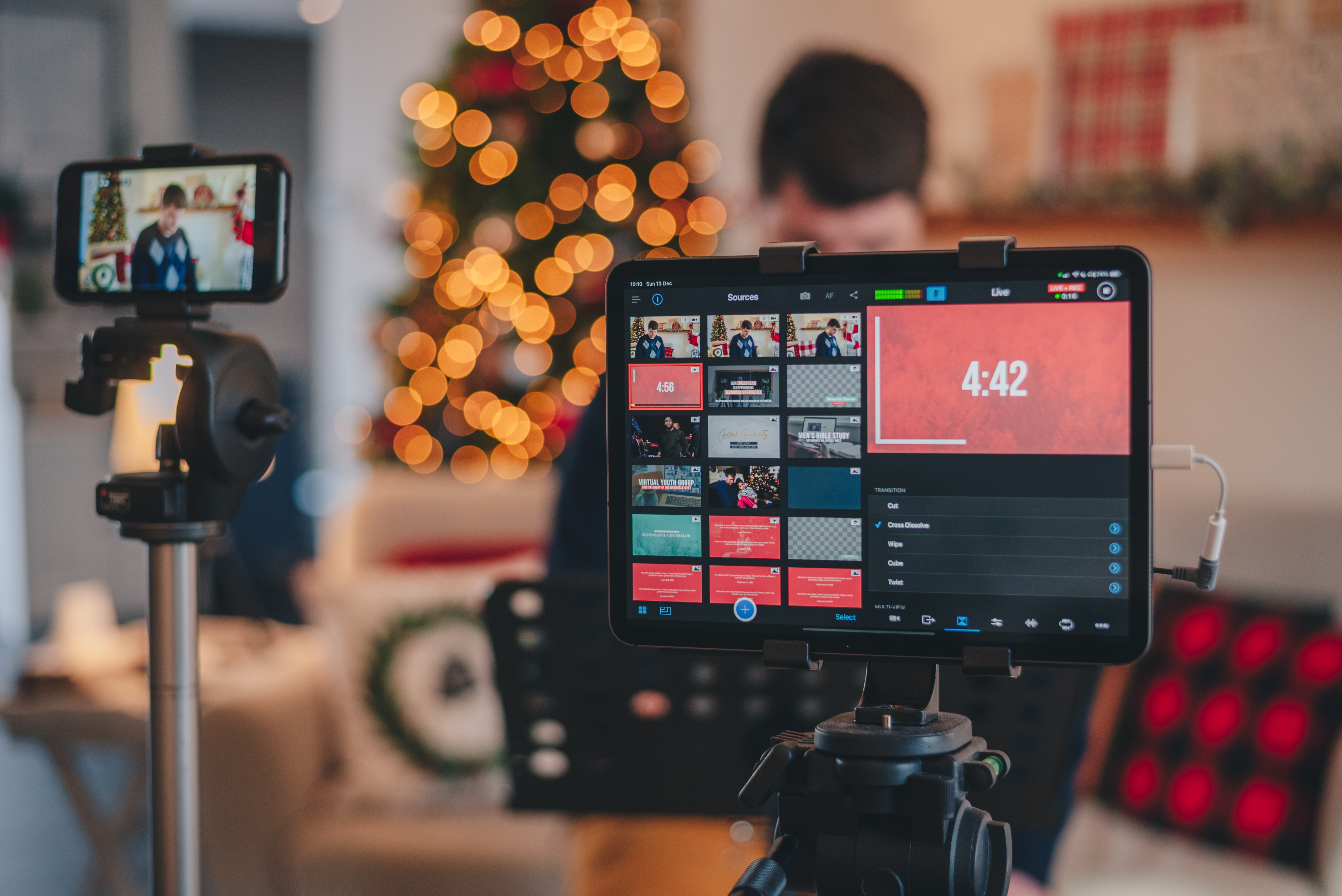
    A key aspect of Ó Conghaile’s filming process is the use of Meta Ray-Bans. These glasses appear to be ordinary Ray-Ban glasses; however, they are equipped with tiny built-in cameras that record footage at eye level. This allows him to capture what it’s like to be an electrician. 

    Ó Conghaile explains how his inspiration to purchase the glasses came while travelling. He was in Australia when he heard of someone recording themselves playing golf with the glasses and posting their videos on social media. The idea of using the technology in his working environment came to him immediately – this was the moment ‘The Dublin Sparky’ was created. 

    “I bought them in Australia, and at the time that I came back to Ireland, I don’t think you could buy them. So, I think I was the first person in construction to have them”, Ó Conghaile said. 

    After he came home and resumed his job, he started recording his activities while ‘on the job’. He describes how simple the technology is to use and how quickly he can create and edit his videos. 

    “The footage goes straight into your phone, and then you put it into a video editor, chop it up, and send it out. I’m so quick at it. I can get through a video in half an hour leisurely”, he said.

    (Photo Credit: VisionExpress) Meta Ray Ban Glasses 

    He has received largely positive feedback since posting on social media, especially amongst younger apprentices and fellow electricians. He laughs that his phone is becoming bombarded with electrical queries from apprentices and others involved in the trade. 

    “I get electrical questions all the time, and it’s getting to the stage where I have to turn my phone on ‘do not disturb’ when I’m going to bed,” he said. 


    “The apprentices I work with love the videos. They watch what I am doing and learn something because the content tries to be educational,”, he added. 

    Sitting back and sipping his tea, Ó Conghaile reflects on the ten years since he decided to pursue a career in electrical work. This journey has been filled with challenges, but it has also included experiences that he believes have been crucial to his success. 

    He says that getting a college degree or other traditional career options didn’t align with his interests and ambitions, so he decided to pursue a trade instead. 

    “I finished school and did an okay Leaving Cert. I then went to Maynooth for three weeks and knew straight away that college wasn’t for me,”Ó Conghaile said. 

    “I was doing computer science, and the first lecture was linear algebra. At that point, I knew I was going to be gone,” he added. 

    He chuckles about his life right after leaving college, working at a nearby supermarket, and unexpectedly receiving an apprenticeship offer through his uncle, who was working on a site. He adds that he had no intention of entering a trade.  

    “I never wanted to be an electrician. Never thought about it,” he said. 

    Fast forward to now: his career is thriving, and his social media following is only going one way. However, initially, not everything went to plan. Due to filming constraints on his previous employers’ work sites, ‘The Dublin Sparky’ channels were temporarily halted.

    (Credit: YouTube – The Dublin Sparky) A Day in the Life of an Electrician

    After being told that filming was not an option, he took a gamble by moving companies, as he was not willing to let his passion for showcasing his trade creatively be stripped away. 

    “My last company was like, ‘you cannot and never will do that [record] on any of our sites again’, he said.  

    “This led me to put up a post on TikTok looking for work, and because I built up a bit of a following, less than half an hour later, I had about 15 job offers.” 

    “So, I moved companies and now my new boss lets me do whatever I want. He’s getting free promotion, so he’s happy and pushes it, “he added. 

    It has proved to be a gamble that has paid off. Shortly after he began posting again, he received sponsorship offers from well-established electrical companies. 

    “CEF Tallaght were the first to reach out to me. Snickers Workwear also got in touch with me, so stay tuned for that,” he said. 

    Ó Conghaile’s passion for filmmaking pre-dates his ‘Dublin Sparky’ days, as he reveals that he has been making travel videos for several years. 

    “What a lot of people don’t know about me is that I’ve been making content for about five years. Every time my girlfriend and I go away, I make a travel video. There’s a whole bank of videos that no one knows about,” he said. 

    Additionally, he admitted that ‘The Dublin Sparky’ page is currently just a side hustle, but he hopes something greater could emerge from it and potentially become his primary job. 

    For now, though, he is delighted to continue creating content while working on his trade – scratching his itch for practical trades work and creative digital work. 

    “For me, this is the jackpot. This is the gold at the end of the rainbow,”, he said. 

    “I get to film what I’m doing at work, which I love anyway, and then get to blend it with making videos, which I love.” 

    “I’m getting paid to do it, but I would do it anyway,” he added.

  • From likes to learning: Irish university launches new social media ‘influencing’ course 

    From likes to learning: Irish university launches new social media ‘influencing’ course 

    By Leonardo Parada Borda

    A new university course in content creation and social media was introduced last week by the South East Technological University (SETU) for people looking to become ‘influencers’.

    The programme (bachelor of arts content creation and social media) will begin in Carlow next September, with applications opening in November this year. 

    Although courses in social media and content creation already exist in Ireland, this course is slightly different. It is the first full-time bachelor’s degree (NFQ Level 7) course in Ireland, with a course duration of three years. 

    Other courses, like the social media marketing courses at University College Dublin (UCD) or the Atlantic Technological University (ATU), offer part-time courses in which you receive a diploma (not on the NFQ) or a certificate (NFQ Level 6) and runs for a duration of three months. 

    So, what makes it different to other courses like social media marketing or journalism? 

    Dr Eleanor O’Leary, the programme director of the course, said that the programme focuses a lot more on practical skills like creative writing, creative video and audio skills, journalism, and crisis management.  

    “The bachelor in content creation and social media is designed to provide students with a broad education to work in front of and behind the camera in digital environments,” she said. 

    Dr O’Leary mentions that the course intends to develop “students’ creativity and individual aesthetic”. 

    “We are also very focused on preparing students for working online and understanding the risks and challenges of operating in this space and the impact on mental health and wellbeing,” she added. 

    “Influencing has grown, and I think it will continue to grow as a form of marketing.”

    Alan Kelly, Social Media Marketing Coordinator at ATU

    With its ever-changing nature, social media poses another obstacle. Influencers must learn how to adapt to the latest trends within the industry to succeed. It’s a way for them to maintain authenticity and address cultural and societal issues. 

    “We stay up to date by working with industry experts, supporting and undertaking research, co-creating our educational offerings with students and industry leaders and reviewing what we offer every year,” Dr O’Leary said.

    Photo by: Carlos Muza/ unsplash.com

    “Having worked in media education for over a decade, you are attuned to the aspects of media industries that change and those that stay the same. Core skills are often consistent over time, and it’s about paying attention to how audiences respond to, utilise, and communicate through new media technologies,” she added. 

    Mr Alan Kelly, the course coordinator for social media marketing at ATU, mentioned that the new course integrates all aspects of marketing, business, and technology into the programme. 

    “I think the degree itself isn’t focused only on influencing, so I think it’s sustainable because it has many aspects,” Kelly said. 

    “Fair play to them. They’re trying to be seen, and by including the words ‘influencer’, they’ve managed to market the programme really well based on that.” 

    “Influencing has grown, and I think it will continue to grow as a form of marketing,” he added. 

    Kelly said the course has a promising future and will ‘continue to evolve and grow’ if there is more emphasis on marketing and business rather than influencing. 

    “I don’t think there will be that many sustainable jobs, I think a lot of people are already there, but I think the course itself offers a lot more than influencing, which I do think is really important.” 

    “You can go out there and be an influencer without doing a course. If you have some decent technical skills, you can look up a YouTube video, but people don’t know enough about the ethical issues and the legal aspects that come with it.” 

    Kelly mentioned that Meta and the virtual world will also help social media influencers stay active and have an additional platform to market themselves. 

    “It will evolve. New platforms have come out. We can look at Meta and the virtual world as an example. Marketing will migrate there, and so will influencers,” he said. 

    “I think there is still that ethical and legal minefield out there […] There will also be people who want to fight with you on social media, and the way they communicate that with you can be terrible. There are going to be problems going forward.”

  • Rory’s Stories talks mental health

    Rory O’ Connor, author of the bestselling book Rory’s Story, delivered a seminar on Monday aimed at tackling mental health stigma to TU Dublin students.

    Known as Rory’s Stories on social media, Mr O’Connor is a prominent advocate for mental health in Ireland today, serving as brand ambassador for the Construction Industry Federation.

    During his talk at Blanchardstown Campus, he shared details about his own struggles and experiences to raise awareness for suicide prevention and mental health awareness.

    “When I was a young fella my cousin took his own life completely out of the blue, had everything going for him from the outside world but obviously he didn’t feel that internally. 

    “This is why mental health and suicide prevention is so important and trying to find ways to combat it.

    Speaking about a particularly low point in his life, Mr O’Connor said “In 2013, I hit rock bottom. The club I adored playing for were knocked out of the championship, when we were favourites to win.

    “I took that to heart, the next day I went into Dublin and spent all day in the bookies and pubs, running away from my problems.

    “I put my last 200€ on a roulette table in a casino and lost it in minutes. I should have really said to my friends I was going to go off gambling, but that’s the thing with addiction, you never want to admit it.”

    Since then, Rory has built a career doing what he loves, producing comedic skits and performing stand-up routines, while doing more to improve his mental health.

    “I met with Gerry Cooney from the Rutland Centre, he told me how my addictive personality could be used on a positive platform like some of the most successful people in the world.

    “I made a Rory’s Stories Facebook account in 2014, where I started to do sketches of the GAA and these started to go viral very quickly. That’s where Rory’s Stories came from.”.

    “I can’t emphasise how important exercise is for your mental health, along with talking about the good days and bad days.”

  • ‘Twitter Blue’ paused after large corporations net shares drop

    ‘Twitter Blue’ paused after large corporations net shares drop

    By Sadhbh McDonnell

    On the 9TH of November, Twitter launched its brand-new premium subscription service ‘Twitter Blue’.  Since its launch it has caused major controversy on twitter and big problems for large corporations.

    The new subscription service allows users to pay $8 (7.50 eur) per month in exchange for a verification blue tick beside their Twitter handle. The subscription is part of Elon Musk’s new vision for Twitter, after buying the platform for $44 billion (42 billion in eur) last year. 

    However, the subscription’s arrival has not only caused a stir on twitter but seems to have resulted in large corporation’s net worth plummeting.  According to Twitter user @rafael shimunov, pharmaceutical company Eli Lilly and Co’s net worth significantly dropped after a fake account with a similar handle to the company tweeted “We are excited to announce insulin is free now.”

    Graphical user interface, application

Description automatically generated

    Via Twitter

    Due to the fake account’s subscription to twitter blue, the verified blue check allowed many to believe it was the official real Eli and Lilly twitter account.  The company has since apologised on their actual twitter account, “to those who have been served a misleading message from a fake Lilly account.” 

    Graphical user interface, text, application

Description automatically generated

    Via Twitter

    The misleading posts have subsequently caused the pharmaceutical company to lose billions of dollars, as their net shares continue to plummet.  Several other accounts posing to be large corporations have been created since ‘Twitter Blue’ and many brands have filed complaints against Twitter, and Elon Musk personally. 

    Graphical user interface, text, application

Description automatically generatedVia Twitter

    A Twitter spokesperson nor Elon Musk have come forward with a statement on the matter, however the subscription service has since been paused. 

    A person in a suit

Description automatically generated with medium confidence

    Via Twitter

  • Biden administration pushes to grant Mohammed Bin Salman sovereign immunity: democrats split over the decision

    Biden administration pushes to grant Mohammed Bin Salman sovereign immunity: democrats split over the decision

    Mohammed Bin Salman in 2019 with Bolsonaro(not pictured) Photo: Alan Santos/PR

    The decision from the Joe Biden administration to push for immunity in the murder of Jamal Khashoggi has led to a split between lawmakers in the U.S.

    Democratic Rep. Adam Schiff said, “I think this is a tragic decision.” 

    Democratic Senator Ron Wyden urged Biden to hold Mohammed Bin Salman “accountable” for the murder of Khashoggi. 

    According to U.S Secretary of state Anthony Blinken, the relationship between Saudi Arabia and the U.S is “under review” after the Biden administration declared on the 17th of November that the high office held by Saudi Prince Mohammed Bin Salman should grant him sovereign immunity in the lawsuit over the killing of U.S.-based journalist Jamal Khashoggi.

    A court filing was made by U.S Justice Department lawyers because Bin Salman recently became the Prime Minister of the country. A role traditionally held by the King of Saudi Arabia, this grants Bin Salman immunity as a foreign head of government. 

    Hatice Cengiz Khashoggi’s fiancée, tweeted her reaction after learning about the filing by the U.S Justice Department, “Jamal died again today”. 

    This a direct turnaround from the 2018 intelligence report, released by the Biden administration in 2021, that stated the murder of The Washington Post journalist in 2018 by Saudi agents was “on behalf” of and “approved” by Saudi Crown Prince Mohammed Bin Salman.

    While campaigning in 2020 to become President of the United States, Biden said he would make a “pariah” out of the rulers of Saudi Arabia over the 2018 killing of Khashoggi. Biden said in 2019, “I think it was a flat-out murder.” 

    The murder of Jamal Khashoggi 

    Khashoggi went into a self-imposed exile in June 2017, heading for the United States.

    In 2018 Khashoggi needed to obtain a certificate of marriage eligibility from the Saudi consulate to be able to marry his fiancée in her birth country of Turkey. 

    On September 28th 2018, Khashoggi and Cengiz went to the Saudi consulate in Istanbul. Khashoggi was told he would need to return on October 2nd, 2018.

    On October 2nd 2018, he was murdered, in the Saudi consulate in Istanbul, Turkey, by Saudi agents. Khashoggi had been critical of the Saudi prince before his death in 2018. 

    The civil case 

    Khashoggi’s fiancée, Cengiz and DAWN (Democracy for the Arab world now) human rights organisation located in Washington, founded by Khashoggi before his death, brought the case against Bin Salman and 28 others on the 28th of October 2020, in the Washington DC, Federal district Court. Saudi Arabia has said the prince had no direct role in the killing of Khashoggi, a contradiction to the U.S intelligence report which says that Saudi Arabia’s Crown Prince Mohammad bin Salman approved the operation to capture or kill the Saudi journalist.

    Alegging they “kidnapped, bounded, drugged, tortured and assassinated” Khashoggi, the remains of Khashoggi have never been found.

    After cancelling his first trip to Japan in 3 years, Bin Salman arrived in Doha Saturday for the Qatar World cup opening ceremony, a competition and country struggling with its own human rights controversies. This comes as the two countries are continuing to improve their relations after reopening their shared borders last year.

  • Social media advertisements – do people trust them?

    Social media advertisements – do people trust them?

    Image from Pixaby

    By Leigha O’Reilly Hughes

    Advertising on social media is a field that is constantly growing. In order for brands to connect with their audiences they must produce advertisements that instantly drag them into the product they are selling. 

    These advertisements must be personalised to the users’ wants and preferences. The advertisements must be interactive to ensure people engage with the content the brand is producing. 

    When Instagram first introduced stories to their platform in 2016 they saw it as an opportunity for the business to use the powers of stories to connect with customers with products and content they are already engaged in. 

    “We saw how quickly people adapted to the new format. Everyday 400 million instagram accounts use stories,” says the Instagram business team. 

    “Of the 500 million accounts using Instagram stories, one third of the most viewed stories come from business and one in five stories get a direct message from viewers.”

    Large businesses not only benefit from advertisements on social media. Small businesses can take to their platforms to advertise themselves and their products. 

    “For me having a small business, sponsored stories and posts are so important to reach new audiences that I wouldn’t normally reach with organic content,” says Zoe Bates, owner of a small Irish business named ZoeCosmetics, which sells makeup products. 

    “I can specifically target places I want to dip in more and gain new followers and engagement. It brings the opportunity of new people visiting my page and new names on orders, which is one of the main reasons I promote on stories in the first place.”

    However, even with the heavy use of advertisements on the many different social media platforms, people are still skeptical about them. 

    According to SurveyMonkey, nearly 3 out of 4 users, think that there are too many advertisements on social media. Some 44% of users find the ads irrelevant to their wants and needs and don’t put a lot of trust into them. 

    Users feel as though there is a lack of security and legitimacy when it comes to advertisements on social media. This is due to the deceptive content that can be found on social media as people can be paid to say they enjoy a product when that isn’t how they really feel about it. 

    This ties in with the impact influencers can have on a brand or product’s success on social media . According to a study by Meteor Solutions, over 30% of a brand’s actions are determined by influencers. 

    Influencers can have a significant impact on the sales and reputation of a brand. They create sponsored advertisement posts that relate with their audience, as well as offering discount codes given by the companies. This is all a strategy to get people to buy products. 

    However, many people don’t trust influencers and their advertisements on social media. People believe that when an influencer posts an ad, they are being paid to say positive things about the product, which lowers the credibility amongst the audience. 

    This shows that even though advertisements are extremely big on social media, with an ad popping up after every few scrolls or the many influencers people follow pushing a product or a discount code in their face, not many people actually trust what they see. 

  • All things Influence – An inside look at the ‘Instagram Influencer’

    All things Influence – An inside look at the ‘Instagram Influencer’

     Influencers are beginning to pop up on everyone’s social media, especially in 2020. Amber Baxter talked to Teresa Walsh about her phone experience online as one such influencer.

  • The importance of social media to content creators

    The importance of social media to content creators

    Over the past number of years, social media has slowly become a large part of most people’s everyday lives. The popularity of Facebook, Snapchat, Instagram and Twitter has grown exponentially over the past decade. Erin Killoran explores how content creators now rely on social media.  

    Image source: Pixabay

    Over the past number of years, social media has slowly become a large part of most people’s everyday lives. This has led to a phenomenon of a new way of promoting products, services and content via social media. As a result of this large companies such as the popular skincare brand ‘The Ordinary’ have changed their marketing strategies to advertising their company exclusively via social media platforms. 

    Recent studies have shown that the average adult spends 2 hours and 3 minutes on social media per day. This consumption of social media has allowed for ordinary individuals to create content and upload it online for the general public to enjoy, with the possibility of financial reward for the creators. Presently, Youtube, TikTok and Spotify are by far the most popular platforms for content creation. 

    The rise in popularity of podcasts has led to a huge surge of people creating a production of their own, covering a number of different genres. This new phenomenon is revolutionary as it allows the audience to listen in their own time, unlike traditional radio programmes. But in order to gain  any form of traction with these podcasts, these content creators need to promote themselves on various social media platforms to prevent getting overlooked in this heavily saturated market. 

    TheCity.ie spoke to the host of ‘GleeCap Podcast’, Conor Burke, who said: “Social media is essential for me for not only promoting my podcast, but also plays that I produce and star in. It is single-handedly responsible for getting a few thousand listeners a week on the podcast. I always tell people if I didn’t have to promote anything, I probably wouldn’t have any social media because it just takes up so much time.”. 

    Becoming a creator online has become extremely accessible for most people as there is no longer a need for a significant amount of funding to start up a project. Burke said: “I set the podcast up in late May, and our following has just grown organically through Instagram. It not only grew the following of the podcast on social media, but also my own personal social media accounts. Before creating this podcast, I don’t think I particularly thought about how heavily I would have to promote it online to achieve a consistent audience.”

    Prior to social media, any form of promotion was solely reliant on print media, TV and radio advertisements. Now, this is no longer necessary and has made advertising significantly easier for everyone. Burke told TheCity.ie: “There’s absolutely no way that this podcast could have grown to the extent that it has without social media. Without it,  I would have just recorded an episode and posted it online, but no one would be able to discover it and listen to it.”

    This method of social media self-promotion has eliminated the need for advertising and the assistance of marketing experts. Therefore, removing unnecessary costs for content creators working with a limited budget.

    Studies have proven that when social media users engage with their followers, they gain more traction. Burke said: “Interacting with listeners on Instagram and Twitter has grown our podcast exponentially. 

    “We often post interactive memes and get people to ask us questions prior to an episode. And while recording our podcast we’ll answer them. I have definitely found that the number of listeners go up due to this interaction as it allows them to look forward to the next episode. I also think that the numbers go up depending on the guest that we have on due to them promoting the episode via their social media accounts.”

    Due to his consistent  promotion of this podcast on social media, Burke has garnered the attention of a number of stars from the TV show Glee, including Dot Marie Jones, which has given him the opportunity to interview her and soon, a number of other stars of the show. He said, “I know that when the cast episodes come out, more people will listen because of their large social media following.”

    Burke also mentioned the importance of having a business profile as a content creator. “Instagram’s ‘business profile’ feature has been very helpful for myself. It has allowed me to see what posts my followers react well to and how much overall traffic my account is getting each day and gives me some kind of indication as to how many people are going to listen to my most recent episode.”

    The uses of social media for content creators is endless and continues to help millions of people grow their audience each day. 

  • The rise of the “BoPo” movement on Instagram

    The rise of the “BoPo” movement on Instagram

    Loving your appearance can be hard. It often seems like everywhere we look, we’re being told we’re not good enough. Not thin enough, not pretty enough, not curvy enough. Niamh Talbot discusses how these tides are beginning to change, starting with social media.

    Stock photo from Pixabay.

    Body image concerns are common among young women and can have serious negative consequences. Most young women use social media daily, and research suggests that viewing idealised appearance-focused content is associated with poorer body image. But perhaps social media isn’t all bad?

    Looking back, social media hasn’t exactly been safe spaces for body positivity. However, a growing number of women online are pushing back against society’s ideals and the physical pressures engrained in so many of us.

    A new “body positivity” or “BoPo” movement has emerged on social media in recent years. The movement aims to challenge narrow beauty ideals and encourage acceptance and appreciation of bodies of all shapes, sizes, and appearances. 

    Instagram is leading the way on social media with BoPo accounts such as @bodyposipanda gaining over 1 million followers. These accounts are sharing their stories with hashtags like #bodypositivity, #bopo, #bodyacceptance, and #effyourbeautystandards to promote the notion that all bodies are beautiful and worthy.

    A search for the hashtag #bodypositive returns almost 9 million posts, and #effyourbeautystandards generates almost 4 million posts.

    Research has shown that viewing body positive Instagram content may improve women’s body image, at least in the short term.

    In a 2019 study, 195 young women viewed either body positive content, idealised content with thin women, or appearance-neutral content taken from Instagram.

    Before and after viewing this content they were asked to rate their mood, body satisfaction, and the extent to which they focused on their appearance.

    They found that brief exposure to body positive Instagram posts resulted in improved body image and mood in young women, compared to idealised and appearance-neutral posts.

    These women felt more satisfied with their bodies and had a more positive mood. In contrast, those who viewed idealised Instagram posts had poorer body image and mood.

    Popular Irish influencers have embraced this body positive movement, with the likes of Roz Purcell leading the way. Purcell has posted many ‘Instagram vs Reality’ shots to highlight that the version many people portray online is merely a polished persona. Speaking about her posts. She said, “In a world of beautiful strangers and comparison try remember what this place is, the highlight reel, that split second you see of someone’s day, that good angle or edited photo. That’s all it is – nothing more.”

    Other Irish influencers are following suit, like makeup artist Aideen Murphy (@aideenkate).

    Murphy hasn’t always had a good relationship with body image and explains it’s been a journey: “In the influencing world, you’re around a lot of women who have the ideal body type. It’s like people expect you to look exactly like them, and they expect you to want to look like them too. And I definitely did at one stage. I felt like skinny equaled successful.”

    After nearly two years of a strict gym and diet routine, Murphy decided to finally give it a break. “I wasn’t seeing the results I wanted which was so frustrating, I still wasn’t as slim as my friends and it felt like my body just wasn’t built for it. Then I started to see a lot more women, who looked like me, posting content embracing their bodies and size. They could still post fashion and beauty content being so called “plus-size” and their followers loved it.”

    “I just eventually decided, why am I being so hard on myself trying to be something I’m not. If these women could be confident in themselves and still be successful, why couldn’t I,” she said.

    Murphy believes it’s imperative that influencers take responsibility when it comes to editing and posting photos, “It can be so dangerous for young girls to see perfect bodies and clear skin all over their feeds and think that people naturally look like that. I think seeing someone you admire post photos showing all their so-called “flaws” can hugely affect how you think about yourself, especially as a teenager.”

    “Seeing other women in their bikinis and underwear with their rolls, cellulite, stretch marks, hyperpigmentation, and bellies on show normalised fat bodies for me and taught me not to feel ashamed in my own skin,” Murphy said.

    “I saw these beautiful, gorgeous bodies and saw myself.”