The women’s Six Nations had only an eighth. of the average television viewership of the men’s ix nations in 2025, according to the Central Statistics Office’s Women and Men in Ireland hub. This statistic shows a lack of engagement with women’s rugby from the Irish public. However, when compared with previous year’s statistics, it seems that this might be a positive trend for women’s rugby.
20-year old Dublin Ladies Football star Ashling Nyhan is representing her club, St Brigid’s, at the highest level,all while studying Sports Science and Health at TU Dublin. “From playing myself, I wanted to understand how athletes can get the very best out of themselves physically and mentally,.” said Nyhan.
Hailing from Castleknock in Dublin, near Phoenix Park, Ashling told TheCity how she got into sport and what drove her to play at such a high level.
“I was kind of nearly forced into GAA when I was younger. I have three older sisters who all play sports and I use to kick around with them in the garden, my oldest sister played underage for Dublin as well. My dad also coached a few underage Dublin teams, and I loved going out to watch their games, that definitely sparked my hopes to play for Dublin.”
As children we often brush off memories as our minds are so busy with different thoughts and it’s hard to remember things, but certain memories will live with us forever. Ashling told us about her earliest childhood memories.
“My earliest memory is probably playing the Go Games for both the girls and boys teams, I played with my cousin on the boys team which was quite funny as we were very competitive.”
The sports stars of today are expected to take on so much in their younger years between representing their school or college, to working a part time job. Playing for their club and doing it all while pulling on the Dublin jersey, and Nyhan is no exception to this trend.
“I do find it quite hard to juggle both college and training. Sometimes one has to give for the other to progress. Especially around exam time, I could have a very long training session the night before an exam. Some nights I’id be up late trying to get everything done but it all balances out in the end, so far anyway. I love what I study and the high intensity environment, so it’s worth the balance.”
For many of those who are lucky enough to succeed in their sport, it comes at a great sacrifice to their free time. Events and social gatherings often take a back seat as a result.
“I don’t really have much free time, but when I do I like to spend it with my family, friends and my boyfriend. I like to try switch my brain off from football the days I have off. I think it’s important to try separate the environments and basically have a life outside of football. I think it helps keep a good mental space for the long season we do end up having.”
Photo Credit: Maurice Grehan
The days are long for students like Ashling as they aim to squeeze their busy schedules into a short space of time that comes in a day. Athletes balance more than most adults do in their day-to-day routines.
“Typically if I am in season during college, In the morning at 5:45 I work in a gym as a PT so it’s early hours ( I am so bad for early mornings). I then head into college – the commute isn’t too bad its only around 25 mins to Tallaght. I get home after college around 4/5 and then I head to training around 5/6 ish. Training does go on for quite a while nearly 5 hours sometimes but we’d cover everything from pitch work, gym work, meetings and videos. I normally get home around 10:30pm and then It’s just about switching off and getting ready to go to bed.”
Reeping the rewards of a busy life is an amazing incentive to keep going and word through the hard times.
“Captaining Dublin at U14 was a really special moment because it was the first time I realised how much I loved leading and being part of something bigger than myself. Making the step up to the Senior panel and pulling on the Dublin jersey at that level was another proud moment ,it’s something I dreamt of as a kid, and to live it is unbelievable and play with some of the girls I looked up to growing up as well was surreal. But I think my proudest was winning the All-Ireland Final this year, I have been to watch the All-Ireland Finals every year, dreaming of doing it myself I never thought it would be possible so to do that with girls I have grown up playing with from u13 was a dream come true.”
Photo Credit: Maurice Grehan
Ashling as achieved so much already in her playing career so we asked her what helped to keep her going and the best piece of advice she ever received from a coach over the years that has stuck with her all this time.
“One thing that has stuck to me that coaches have said are “Control the Controllables” – there’s so much you can’t control in a game or training, but your attitude, your effort, and how you respond to things are always in your hands. I think that helps keep my head when going through the highs and lows of the game.”
Life is filled with goals and ambitions. There is life after college and we all take different paths, whether that is continue our studies in another field or gaining a job.
“After college I want to do a masters in physiotherapy. Any components of my course that relate slightly to physiotherapy I love and actually understand so well. It has always been an area of interest for me even outside of sports.”
Ashling is just one of the thousands of student athletes up and down the country balancing their busy lives and they are an inspiration to us all.
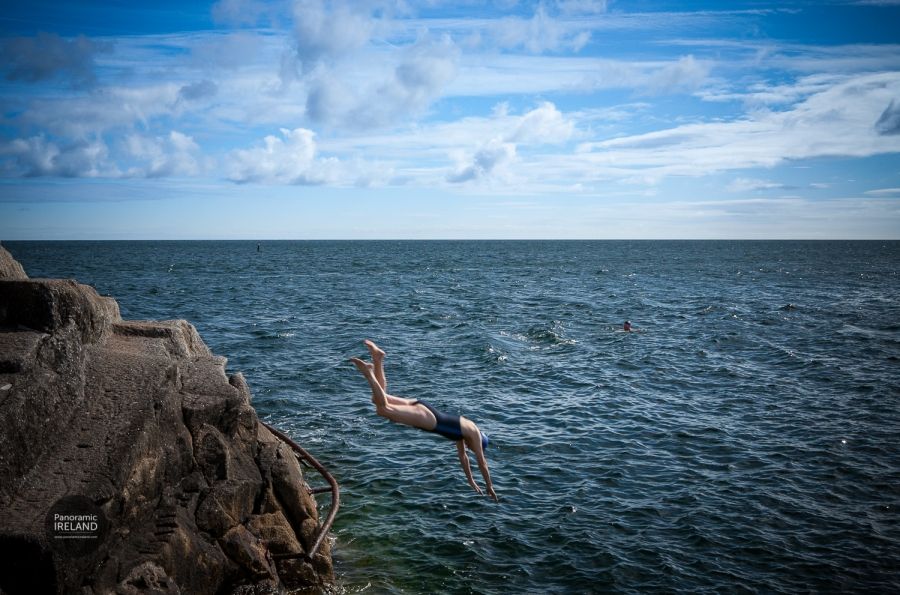
A sunny Sunday in autumn and the sea is still warm in Sandycove. Its a ritual for many people who have the time to make swimming a part of their routine. Some people shared their thoughts with me.
Ireland is on the brink of elimination from the men’s FIFA world cup qualifying, with this international break being the most crucial set of games so far.
“The boys in green” sit bottom of UEFA qualifying group B after two games, with pressure mounting on manager Heimir Hallgrimsson after an abysmal loss to Armenia and a hard-fought draw to Hungary at the Aviva Stadium in early September.
“It’s do or die, I think not only mathematically but mentally, and especially for Heimir [Hallgrimsson] as a manager,” Matthew Brennan, of OffTheBall, added.
Brennan added: “Portugal away is the toughest game, but you’d be thinking there needs to be something there for us to qualify, and Armenia at home should be a win. If you can’t win the on paper easiest game of qualifying, you don’t deserve to go to the World Cup.”
Hallgrimsson’s men will travel to group leaders, and one of the favourites for the whole World Cup, Portugal on October 11.
Spearheaded by an aging Ronaldo, Portugal will be looking to keep their 100% record by the end of the break, with the potential to qualify for 2026 World Cup should they beat both Ireland and Hungary.
Although the game against Portugal may seem like a write off, Ireland were very unlucky to not beat Portugal in 2021, also a World Cup qualifying game.
Manager at the time, Stephen Kenny, had the boys less than a minute away from a famous win, until a Ronaldo double broke the hearts of the nation.
The must-win game for Ireland is the second game versus Armenia. What was thought to be a routine game which would see Ireland climb up to second, turned to disaster.
Ireland was dominated in both halves, conceding 2 goals in 51 minutes, before Roma’s Evan Ferguson clawed one back before the hour.
Should Ireland lose to Portugal, they would have to hope for Armenia to draw to Hungary to have the best chance at qualifying.
However, two losses this international break will see Ireland eliminated from qualifying.
This would mean a decade-long absence from men’s football tournament finals and would stretch the World Cup drought to 24 years.
There are positives for Ireland fans, with Brennan adding his players to watch for the games.
“[Jayson] Molumby is a great addition, he might get some stick from supporters, but he’s having a great season for West Brom in the [English] Championship. Will Smallbone as well for Millwall is always one to perform and bringing back John Egan you know even with a few years absence from the squad is experienced and played in the [2-1] loss to Portugal,.” he said.
“It’s good to see Festy [Ebosele] back, he’s performing well with İstanbul [Başakşehir], he gives an extra burst of pace you might not normally get.”
With the games just days away, injury has already struck the team, with both Sammie Szmodics and Callum O’Dowda pulling out of the squad due to injury, with Dundee United midfielder Will Ferry accepting the call up in their place.
This leaves Hallgrimsson with just 23 men for the two games (as opposed to the usual 24).
Ireland’s two qualifying games will take place on October 11 and 14, with the game against Portugal being first, and available to watch on RTÉ.
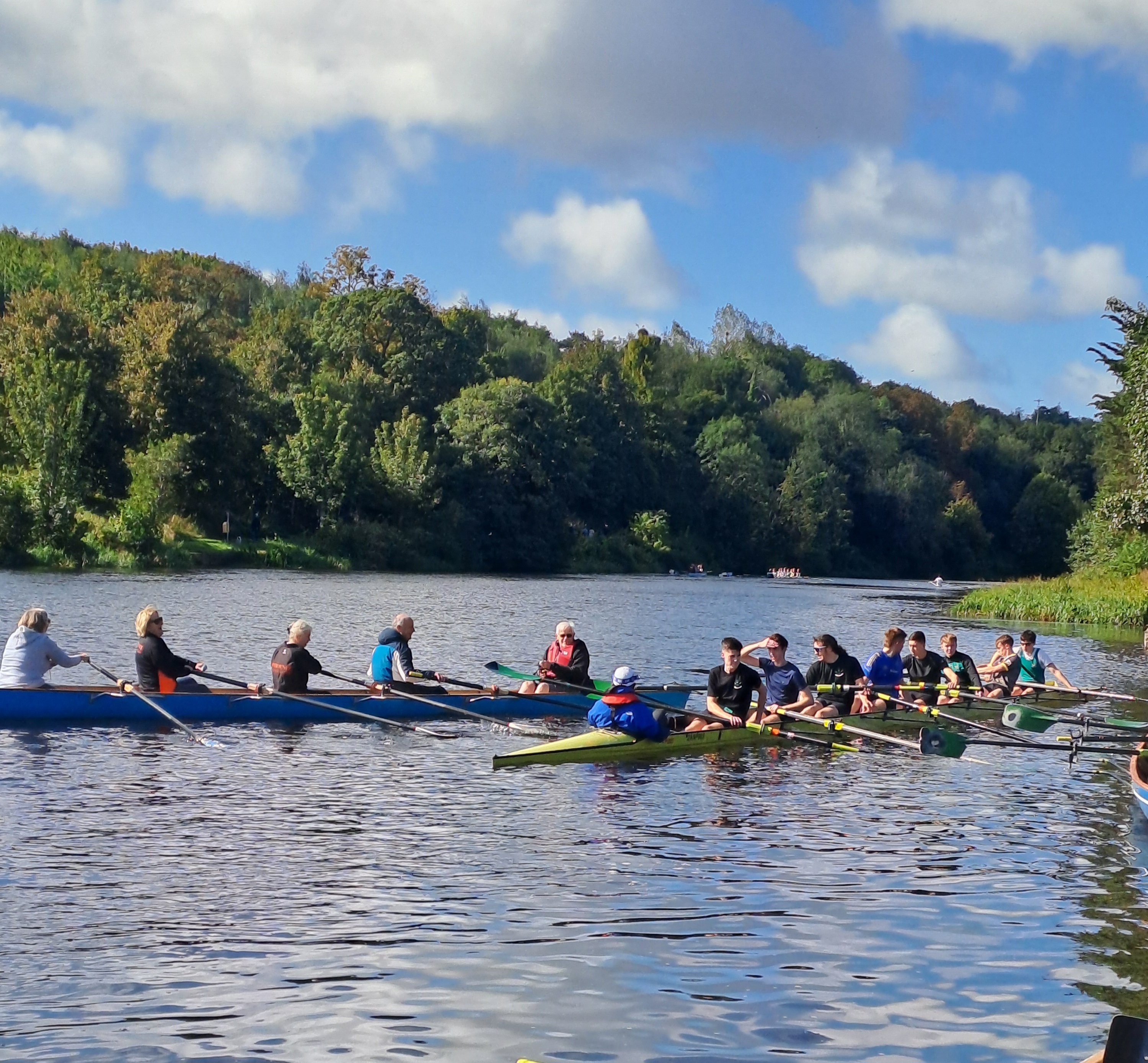
Rowing, which has been described as a natural anti-depressant, is gaining popularity in Ireland, and there are now over 100 clubs around the country which are affiliated with Rowing Ireland.
If you are looking for a low impact sport, but one which engages more than 80 per cent of your muscles, then rowing may be just the thing for you. According to Jennifer Butterly, a member of Neptune Club, It could even be life changing, She says “for that hour I’m not thinking about anything else, I’m completely in the moment. I’m so focused on trying to remember all the steps that I am removed from my everyday life. Whatever is going on is tuned out, and on the little breaks when a newbie is being instructed, I can take in the beautiful surroundings. It makes me so happy to be alive”.
Richard Ryan : Photo Mary Phelan
Richard Ryan is a coach with Neptune Rowing Club, Island bridge. After an invitation to the club over 30 years ago, he said he got hooked and just kept coming back. He rowed competitively for several years before becoming a coach.
“Rowing is like a natural anti-depressant”
Jennifer Butterly
He says “I just love the place, the river, and the setting. There are great health benefits with rowing, you’re using every bone in your body, from your neck to your toes. You learn a new skill; it’s a good all-round outdoors exercise – it‘s different”. He also enjoys teaching people who’ve never been in a boat before to master the skill of rowing.
“People often learn things about themselves too, like the need to be more flexible, or to stretch more, and to learn to concentrate and pay attention to detail as one false move, like stepping into the boat the wrong way, could cause damage to the boat, or endanger the lives of other rowers”.
Another reason why some people like the sport is because it is non-contact, which means you’re not going to collide with another player or get injured, unlike sports such as rugby or football. Richard adds “It’s not all about brawn, it’s also about engaging your brain, and mastering a technique”.
One of the reasons for the rising popularity in rowing is because of the success of Irish rowers in the Olympics over the last few years. Only last month Ireland won a double gold on the last day of the World Rowing Championships in Shanghai. One was for an individual gold, the other being won in a mixed double sculls.
“The main ingredients for success are “commitment, a good coach, a natural technique, and just showing up”.
Each rowing club is different, but in Neptune you can sign up for an 8-week course, for 1.5 hours on Saturday or Sunday mornings, all year round. If you miss a class for one week, it is not a problem, as they are run on a rolling basis, so you can go the following week instead. The classes consist of what they call ‘trips ‘– and for beginners, trips mean going up and down the river twice, which is the equivalent of 7 kms.
Another rower in the club, Ellen Roche, said that “apart from offering a full body workout, the personal benefits of learning something new feels like a great achievement. Also, the huge volunteer effort involved in making it all happen is very impressive”.
Here’s to learning new skills and the joy of being out in nature.
Shelbourne celebrate European qualification after victory over Northern Irish side Linfield. Photo:Stephen McCarthy/Sportsfile
By Adam Pigott
Shelbourne are set to kick off their UEFA Conference League campaign as they host Swedish side BK Häcken on Oct. 2.
The team from Drumcondra will play in the group stage of a European competition for the first time in the club’s history.
“We are so excited for it…we really want to kick off the campaign to with a good start”, said Shelbourne manager Joey O’Brien.
O’Brien, who brilliantly led Shelbourne to qualification after taking charge and assuming the responsibility of first team manager after the shock resignation of former manager Damien Duff.
“I think we need to relish the opportunity.. we have come so far to get to this stage so we need to show we belong among Europe’s elite,” added O’Brien.
However, Shelbourne will play the game not in their home ground Tolka Park, but will play in their cross-city rival Shamrock Rovers’ stadium Tallaght Stadium.
Tolka Park does not meet UEFA stadium standards and therefore all of the team’s home games will have to be played at a neutral venue.
According to UEFA, stadiums from the group stage up until the final, should be a Category 3-4 stadium, unfortunately Shelbourne’s home ground falls under Category 1-2.
Tolka Park, Photo:Shelsfc Instagram
The reigning League of Ireland champions have not made the best of starts to defending their crown and some fans believe this game in Europe comes at a good time and will help them to shy away from their up and down form to date.
“I think we need to put all our attention towards this European campaign now because it looks like we are not going to defend the league title, which is a real shame”, said Mya Breen, a Shelbourne season ticket holder.
Shelbourne sit in sixth place in the League of Ireland and after having been knocked out of the FAI Cup, European football looks like that is all there is left to play for, in what has been a rollercoaster season for the North Dublin side.
Shels host Waterford on Friday the 26th of September in the league as the reds look to build steam ahead of their clash with the Swedish side.
As for the opposition, BK Häcken, it is safe to say they are not having the best of seasons either. The Swedish side sit mid-table in Sweden’s Allsvenskan Premier Division, losing 4 of their last 5 games in the league and sit only 4 points above the relegation places.
However, the team did follow the same route as Shels towards qualification, having failed to qualify for the UEFA Europa League. They, like Shelbourne, ended up in a European Conference League play-off match, where they faced Romanian side CFR 1907 Cluj.
Häcken won the tie comfortably, defeating the Romanian side 8-3 on aggregate over the two games. It is safe to say that the Swedish side can score goals for fun, which is a worry for a Shelbourne side that have been leaking goals lately.
Tunisian forward, Amor Layouni, is the player to look out for on the opposition side. Layouni has 16 goal contributions in 25 matches in all competitions this season.
Amor Layouni Photo: bkhackenofcl Instagram
The forward broke a record when he became the first player ever in a European Competition to register 5 assists in just one match during Häcken’s 7-2 play off victory against CFR 1907 Cluj.
The match is set to be an enthralling clash in which Shelbourne will be looking to kick off their European campaign with a victory.
Kick-off is at 8 p.m, and the match will be shown live on TNT Sports. Controversially, no Irish broadcaster has confirmed whether or not they will televise the game.
Rugby is quickly becoming one of Ireland’s most popular sports – but has often been viewed by many as ‘upper-class’.
This is because a large majority of home-grown professional Irish rugby players have come up through the school system, which is heavily featured by fee-paying schools – particularly those who rose through the Leinster ranks.
The pinnacle of school-boy rugby in the East of Ireland, is the annual Leinster Schools Rugby Senior Cup – which is hotly contested by sixteen teams from across the province.
This has been dominated since its inaugural competition in 1887, by Blackrock College with 71 Senior Cup titles respectively.
De La Salle Churchtown was the last public school to claim Senior Cup glory back in 1985 – an achievement that has become increasingly more difficult to beat, as private schools have swept up every title since.
Back in 2014, the Irish Rugby Football Union (IRFU), appointed former Australian hooker, David Nucifora, as their High Performance Director. Since then, the IRFU have invested heavily in rugby playing private schools across the island with the aim of producing an athlete that is already prepared and has exposure to high intensity and pressure rugby by the ages of 18 or 19.
Schoolboy rugby in Ireland has become noticeably more professional in recent years with how these young players are expected to commit, train and diet, while also balancing their education.
This has put these players in a great position for when they graduate from schoolboy rugby to adult grades, however, the reason for rugby’s reputation as a posh sport is arguably because of these fee-paying schools having more funds at their disposal to dedicate to their school’s team.
This has no doubt played a vital role in many of these schools’ success while also reiterating the belief that rugby is upper-class by many, as the majority of public schools do not have the privilege of this financial backing.
European Champions Cup Final 2023 between Leinster V La Rochelle – Photo Credit: Jamie Ryan
Ryan McCormack, 18, played rugby right throughout his secondary school days with Temple Carrig, a public school is Greystones, and currently plays club rugby for Greystones Rugby club. “Rugby in private schools is such a culture – the players are given so many resources because they can afford to pump as much money into the sport as they want which adds to the idea that it is a posh sport,” he said.
“Blackrock College for example has nine rugby pitches, one of which being an astro turf. They have put so much money into gathering the best coaches and providing players with the best facilities at their disposal. It allows those players to get ahead of the curve but at the end of the day, it is worth nothing unless the player themself is willing to hard work and is determined to make it to the professional rugby scene.” said McCormack.
“I have been to many schools’ games with the likes of Blackrock, Clongowes, St Mary’s, and Belvedere and there are always at least three Leinster staff watching out for talent, but for other public schools’ games, there are very rarely Leinster development officers or scouts in attendance. There are far too many exceptionally talented players who have been overlooked due to where they play,” McCormack further explained.
While it is difficult to argue against the prioritisation of this focus given the results that have been achieved by the Irish team because of this system, many feel that it can appear from the outside looking in to be elitist and excludes young rugby players from reaching a professional level if they came through the club system or the public school system.
While this system clearly produces results for the national squad, it is also heavily catering to Leinster on an inter-provincial front – far more so than Munster, Ulster or Connacht due to the pure quantity of private schools in Dublin particularly.
On the island of Ireland, there are 30 private schools that play rugby with 12 of these being in Leinster, 6 in Munster, 6 in Ulster and 3 in Connacht.
This rhetoric does, however, seem to be slowly changing slightly in that interest in rugby is at an all-time high in Ireland thanks to the recent success of Irish Rugby in international competitions, but also in club competitions such as the URC, the Champions Cup and also in the AIL (All Ireland League).
Jamie Osborne has been one of the most recent examples of a player breaking the mould by rising through the juvenile ranks with his boyhood club, Naas, to now representing Leinster and Ireland but in recent times, playing coming from a non-private school system has been a rare sight.
Irish rugby fan Andrew Jones, 23, said: “It kind of sends a message really, doesn’t it? The best way for a player to get to that level is to go to a private school, which is unfair when you consider that where someone goes to school doesn’t tend to be their choice. As soon as that elitist aspect is brought to anything, there can also sometimes almost be a distaste toward the sport itself in certain areas.”
The IRFU has over the last number of years, been developing a series of strategic plans to promote growth in the game across the country beyond just the confines of just South Dublin and other surrounding areas’ private schools.
The promotion of the game in areas where rugby is not as popular would aid in combatting this ‘posh’ reputation that it currently has, as it would be more freely available for those who want to get involved.
Inclusivity and providing a safe space for all participants are core values of sport, especially when it comes to identifying as LGBTQ+.
A basketball club in Dublin has been set up this year – aimed at being an inclusive sports environment for members of the LGBTQ+ community, wishing to partake in basketball.
The basketball club in question is Shamrock Sióga. Set up in May of this year, it became the first LGBTQ+ basketball club in Ireland.
Shamrock Sióga had their first game of the season, last month, against Renegade and won 38-35.
The Shamrock Sióga team and committee before their first game against Renegades. Photo: @dublinlgbtbasketball
Tatiana O’Brien–Santos (She/her) is the coach at Shamrock Sióga and gave The City an insight into her experience in the LGBTQ+ inclusive club.
“Being the coach of Shamrock Sióga is so rewarding, all of our players are so hard working and give it their all at every session. There is nothing but respect both ways,” she said.
Speaking about what Shamrock Sióga means to her, she said, “LGBTQ+ people face their obstacles in life and many times these are in a sports setting. For women and LGBTQ+ people, there is almost always justification needed for their participation and I have felt this personally almost all of my sporting life. I want to eliminate that for everyone.”
The coach refers to Shamrock Sióga as the “beginning of history”. She said, “As the first LGBTQ+ basketball club in Ireland, it’s an example – a statement that’s paving the way for all and any LGBTQ+ athletes and any other minority communities, and sometimes you just have to create that space yourself.”
Coach Tatiana O’Brien-Santos in her element at a recent training session. Photo: Tatiana O’Brien-Santos
When asked about the club’s success since its formation, she said, “Our growth rate and the feedback from our members on how impactful the club has been in terms of helping people feel like they belong and feel confident in a sports context is something I’m so proud that the club has been able to achieve.
“We have been featured in national media three times over the last 6 months. We have over 140 people in our club, our followers on our socials have tripled. We played our first ever basketball match and won, we are about to host the first exclusively LGBTQ+ basketball match in Ireland. I couldn’t be happier to see the support we have received.
“Being involved in basketball for so much of my life, I wanted to use my knowledge to help fuel growth for the club and get it to where I knew it could be. Within 3 months, we were a fully established basketball club with registered members, a clear structure and a great club culture, something made possible in collaborating so well with the committee of the club who truly work so hard for Shamrock Sióga,” she added.
Along with O’Brien-Santos, Shamrock Sióga thrives in its current success thanks to several additional members of a dedicated committee.
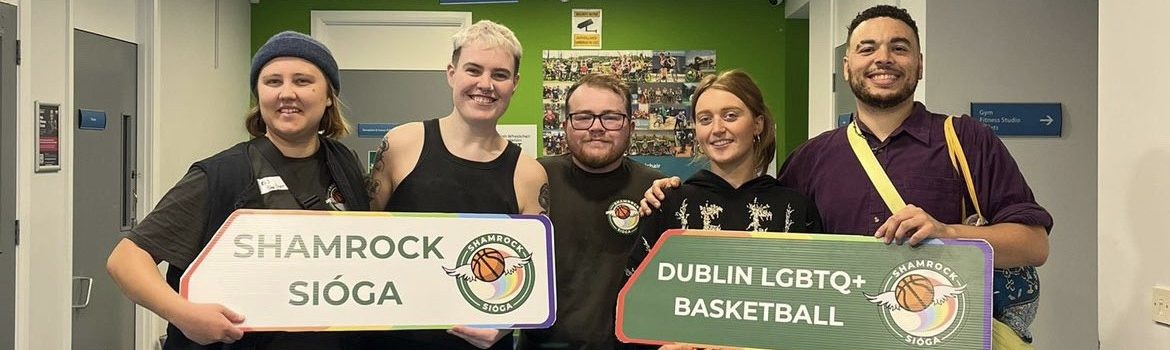
The Shamrock Sióga committee. Left to right: Kris Kalniņa, Jess Devine, Fionn Collins, Tatiana O’Brien-Santos and Danny Carby-Robinson. Photo: Tatiana O’Brien-Santos
DannyCarby-Robinson (He/Him) is the treasurer and registrar at Shamrock Sióga.
Carby-Robinson thrives on “connecting with others” and believes in the “power of small-scale community changes – to create a larger impact.”
“Being part of Shamrock Sióga has been such a fabulous experience. Having an LGBTQ+ basketball club is super important because it creates a safe and supportive space for people to enjoy the sport without fear of discrimination, judgment or shame,” he said.
He believes that everyone brings diverse aspects of being LGBTQ+, which will help ensure their work remains “inclusive, multifaceted, and representative of all walks of life.”
He attributes homophobia, transphobia and toxic masculinity in traditional sports environments as factors when considering LGBTQ+ hesitancy with engaging in sport.
“As a closeted teenager, I joined a rugby team but quickly became discouraged by the negativity around me during an impressionable time in my life. These experiences left a lasting impact.
“Joining an inclusive club has helped me rediscover my love for sports and has shown me the importance of creating supportive environments for LGBTQ+ individuals,” he said.
Carby-Robinson hopes for Shamrock Sióga to participate in the EuroGames 2025 in Lyon as the first ever Irish basketball club to do so.
“I also want to focus on building a stronger community. I hope to connect more with other queer organisations in Dublin on collaborative events, fostering relationships that strengthen our impact in the broader LGBTQ+ community,” he added.
Jess Devine (They/Them) is the club secretary and PR officer at Shamrock Sióga.
Devine calls their experience with Shamrock Sióga “life changing”. They said, “It’s a club I didn’t know I needed in my life. Now that I’m part of it, I can’t imagine my life without it. The community that has been built through this club is fantastic. I can’t wait to see this grow and flourish with more LGBTQ+ people.”
Speaking about inclusivity in sports, they said, “I think a lot of queer folk in sport would’ve played when they were younger and as they grow up there is no inclusive space for them anymore and they fall out of love with the sport.”
“I’ve felt this way in past basketball teams as a non-binary person on a women’s team. I didn’t feel included due to the language, the gendered terms in sport and not feeling safe to come out as non-binary.
Devine calls it “crucial” for people to have a safe space where they can be their 100% authentic self, and believes this should apply to sports clubs.
Devine’s future hopes for the club are to grow bigger and have an U18s division for queer kids. They’d also “love” to get into “as many tournaments as possible” and represent Ireland.
Fionn Collins (He/Him) is the chairperson at Shamrock Sióga.
Collins wanted to create a basketball team that “catered for all” in the LGBTQ+ community. He said, “The community we have created is amazing – a safe space for all the community in sports.”
Collins feels the club is opening doors for conversations about the LGBTQ+ community in sports. He sees it as a chance to educate people and show that sports is for everyone.
In relation to LGBTQ+ people staying away from sport, he attributes this to toxic masculinity – but believes things are “slowly changing” with the help of Sporting Pride and other organisations.
Collins believes it’s “super important to have an inclusive sport” – to have “all parts of minority communities” feeling recognised and seen in the sport they want to play.
Collins feels that improving inclusion in sports will reduce poor mental health in the LGBTQ+ community.
Collins’ future hope for the club is to become as big as other LGBTQ+ clubs in Ireland like Emerald Warriors and Na Gaeil Aeracha.
“I want us to also help push policies for our trans siblings within the basketball community, to allow them to be safe and play in the sport,” he added.
Kris Kalniņa (She/Her) deals with fundraising and court bookings at Shamrock Sióga.
Growing up in Latvia, where the sports culture is “rooted in the rigid traditions of the USSR,” Kalniņa felt isolated there as an LGBTQ+ athlete “as there was little room for openness.”
She claims being part of Shamrock Sióga’s committee has been “transformative”. She said, “It’s allowed me to help build a community that prioritises inclusivity and support for LGBTQ+ athletes – fostering connections among diverse individuals who share a love for basketball and sport.”
Kalniņa attributes “experiences of exclusion” to LGBTQ+ people avoiding sports and personally felt this way growing up. She said, “The fear of rejection often overshadowed my passion for athletics. Addressing these barriers is essential for fostering acceptance.”
“An LGBTQ+ basketball club is crucial for creating a safe space where individuals can express themselves freely while enjoying the sport,” she said.
Kalniņa’s future hope for the club is to “challenge the status quo by advocating for inclusivity and equity in sports,” and envisions “participating in competitions, proposing fair rule changes, and inspiring positive change.”
“It is something I’m incredibly passionate about. My experiences in sport have shown me the power and impact of creating a space where everyone feels they belong,” she said.
Unity Sports builds on the basketball coach’s mindset and approach, by “aiming to foster inclusivity and growth in sports,” particularly for women and the LGBTQ+ community.
O’Brien-Santos’ plan with Unity Sports is to “provide opportunities for people to be their best selves in sport, and to educate coaches, teams, and organisations on creating environments that truly welcome all athletes – all with the intention to grow the audience of women and LGBTQ+ sports events.”
“Whether it’s helping women feel valued in traditionally male-dominated sports or supporting LGBTQ+ athletes who’ve often felt overlooked, we’re focused on building leaders and advocates who can bring real change to sports culture.
“I’m creating Unity Sports to break down barriers and reshape what sport can look like for everyone,” she concluded.
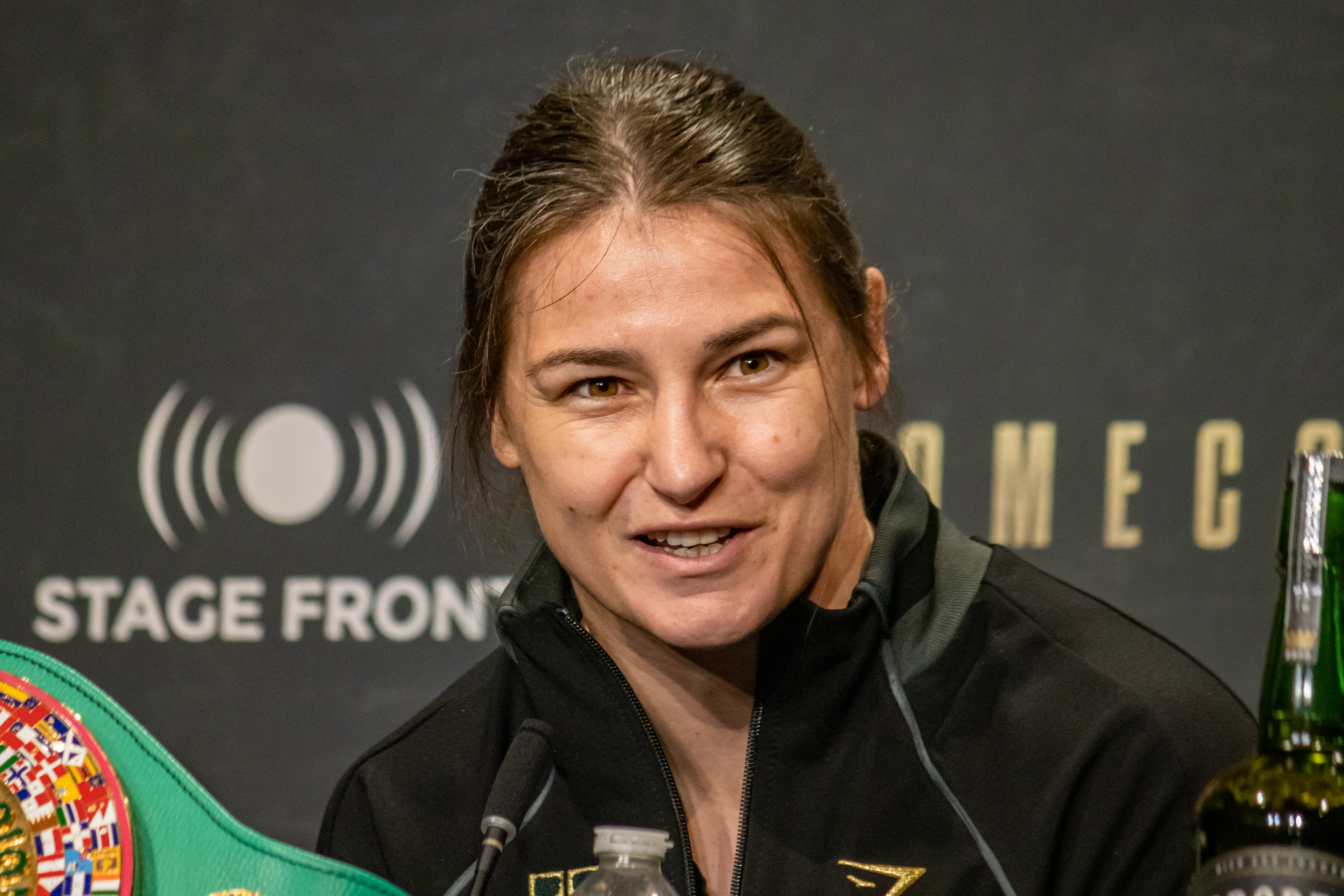
Irish boxing superstar Katie Taylor is due to fight Amanda Serrano in their highly anticipated rematch on tomorrow night, November 15.
The duo first met in Madison Square Garden in 2022, where the Bray native secured a split decision win in what’s been deemed the biggest ever fight in women’s boxing.
However, this time the pair will meet in Dallas, Texas, in the 80,000-seater home stadium of the Dallas Cowboys, on the undercard of Jake Paul and Mike Tyson.
Taylor’s influence in the boxing scene overall has been huge, but in particular, her impact in women’s boxing has seen the number of female fighters grow in ways no one could have predicted.
Katie Taylor speaking at the weigh in ahead of her fight against Chantelle Cameron in May 2023 – Photo: Liam Murphy
“Katie is my hero, my idol, and my inspiration,” Ella Thompson, an amateur boxer from Meath, said. “She has kicked down doors and paved a pathway for up and coming and present champions and has inspired young female amateurs like me”.
Ella Thompson, or Joyful as she goes by, was named as the All-Ireland Champion in 2022, fought in the 3Arena back in September, aims to get to the Los Angeles Olympics in 2028, and has trained with Taylor in the past.
“She is an idol and hero to me inside the ring, but more importantly outside the ring.
Ella Thompson
“It was amazing to share the ring with the greatest female boxer of all time,” Thompson said. “To look, learn, but most of all chat to Katie was amazing. I’m truly humbled and blessed.”
Big smiles from Katie Taylor in the ring at a public workout in Dundrum – Photo: Liam Murphy
It was only in 2012 that women’s boxing debuted at the Olympics. This moment was seen as the turning point, as Bray boxer Katie Taylor took home gold for Ireland in the lightweight division.
But it was also Katie Taylor that fought in the first ever women’s boxing fight in Ireland.
Despite voting to allow women’s boxing in 1997, the first women’s competitive bout took place four years later in Dublin’s National Stadium on October 31, 2001, between a 15-year-old Katie Taylor, who won on the night, and Belfast’s Alanna Audley.
Since then, Ireland’s become one of the Olympics’ strongest nations for women’s boxing contingents, with six of our 10 boxing hopefuls this year being female, with Dubliner Kellie Harrington taking home her second gold following a 4:1 split decision win against China’s Yang Wenlu in Paris, along with a successful run at the Tokyo games.
Acknowledging the success of a fellow pioneer, Katie Taylor tweeted following Kellie Harrington’s gold medal win, claiming she had sealed her place “as an icon of Irish sport and going down in history as a legend”
Kellie Harrington greets fans at her Portland Row homecoming following Ireland’s most successful Olympic games ever Photo: Liam Murphy
The history of women’s boxing is one of struggle; being rejected from clubs, fighting male opponents due to disparity within clubs, having to hide your long hair under a headguard and registering for fights under pseudonyms (Such as Taylor’s ‘K Taylor’ name when she was fighting male opponents), but it seems now the success has been worthwhile.
This week’s rematch bout, available to stream on Netflix, is set to be the biggest payday of Taylor’s career, with Boxing Kingdom reporting an estimated payday of $6.1million (€5.7m).
For those wanting to watch the fight, the Irish boxer is due to take to the ring at approximately 3am Irish time, followed by a main card bout of Jake Paul and Mike Tyson at 4am.
Richmond Park is the well-known venue, pitch, and home, of St Patrick’s Athletic football team in Dublin, in the heart of Inchicore in Dublin.
Photo: Derek Price
According to the team’s website, the ground was originally used as a recreational area by the British Army, from Richmond Barracks. This barracks has since been demolished many years ago.
The pitch was then unused for 3 years.
Brideville Football Club, originally based in The Liberties, Dublin. then began using the ground in 1925.
Although St Pats were founded in May 1929, back then they played their home matches in the Phoenix Park.
In 1930 Brideville F.C. moved from the Richmond Park football pitch to the Harold’s Cross Greyhound Stadium, as St Patrick’s Athletic then took it over and moved in. St. Pats used the ground until 1951, and then entered the League of Ireland, but the league declared the pitch inadequate, and for the best part of 9 years, St. Pats had to play on different pitches in Dublin, while they redeveloped Richmond Park.
In 1960, the team returned to the Inchicore pitch. The ground then closed for a upscaling in May 1989. Due to St Pats suffering financial difficulties, the team did not return to the site until 5 December 1993.
The ground is situated behind a row of terraced houses in a natural valley off Emmet Road, and is regularly used for the Republic of Ireland youth teams, and women’s soccer matches.
Richmond Park also is usually the venue for the non-league clubs in surrounding areas if they qualify for the FAI Cup.
Some music acts such as the 1970s and 80s rock band Thin Lizzy, have also used the venue to stage their concerts in the past.
In 2020, St Patrick’s Athletic used Richmond Park as a hub for donated items, and a food bank to provide aid to the needy during the COVID 19 pandemic, which was reported on the St Pats website, and in The Irish Times.
There are numerous shops, restaurants, cafes, and pubs in the area, which one could imagine, must enjoy the influx of football supporters and their families, buying lots of food and items, and increasing their business and livelihood.
There is also a high level of security provided by An Garda Síochána, at every match, to ensure that law and order is maintained, with several Garda squad cars, vans, and motorcycles present, to keep the fans and patrons on the straight and narrow.
The St Patrick’s Athletics’ fans have been very enthusiastic about their team staying in Inchicore village, but how do the locals feel about the soccer fans etc., being around the surrounding area?
“I’m not a Pats supporter myself, but I drink in the pubs around the area, and I’m usually there on the weekends. The atmosphere is great because of the matches, and I for one am in favour of it. It wouldn’t be the same without it,” said Johnny Byrne (48) from Inchicore.
Susan O’Donnell from Bluebell is a fan of soccer.
“I drop down to some of the home games in Richmond Park. I’ve not seen much of any serious trouble at the matches, I have to say. A bit of monkeying around at times, with some young fellas messing, shouting at, and slagging the other team’s fans, but nothing that would stop me from turning up at the matches. They’re a good bunch of lads overall, as far as I’m concerned.” Susan said.
Patrick Evans (55) said: “I don’t live around here these days, but my parents do. I’m not a football fan myself, but I do watch the odd match when it’s on TV. I come up on the weekends when most of the matches are on. The buzz here on match nights is great and livens up the area. The supporters seem so loyal and mad into it. I’d recommend any football fans to drop up and take in the experience, and see it for themselves, whether they’re from Dublin, Ireland, or abroad,” he said.
Several shop workers from the Inchicore area where also asked for comment regarding this article, but unfortunately all declined to voice their opinions, and participate on the day.















You must be logged in to post a comment.