Tag: Sport

  • Reilly ready for second test in Hurling/Shinty International Series

    Reilly ready for second test in Hurling/Shinty International Series

    Laois Goalkeeper Eoin Reilly in action during the All-Ireland Senior Championship. Picture credit: Diarmuid Greene/SPORTSFILE
    Laois Goalkeeper Eoin Reilly in action during the All-Ireland Senior Championship. Photo: Diarmuid Greene/SPORTSFILE

    Scotland shocked Ireland with a 3-14 to 2-8 win in the first test of the Senior Hurling/Shinty International Series this weekend. However, the Irish team have won the series for the past four years in a row and remain hopeful ahead of the second test. Goalkeeper Eoin Reilly talks to The City’s Áine Hennessy about this minority sport and what it involves.

    “I got involved in hurling/shinty when I was 19 years old back in 2009. I was selected as first-choice goalkeeper for the Irish U21 team ahead of three others from across the country,” he said.

    The Laois native is representing Ireland for his sixth year running in the International Series, a game which combines hurling with the traditional Scottish sport of shinty.

    The 24 year old, who is the current senior hurling goalkeeper for Laois, explains the basic rules of hurling/shinty.

    “The main difference between hurling and shinty is that you can’t catch or kick the ball. A player usually scores goals only, but the International Series uses a scoring system consisting of both goals and points.

    “We use hurls and the Scottish boys use shinty sticks. Their game is very skillful on the ground, whereas hurling is more skillful with high balls,” he said.

    The International Series is played on a home and away basis. The Irish team travelled to Scotland on Friday October 17, where they had a training session that day, followed by the game in Bught Park in Inverness on Saturday October 18 which was aired live on TG4.

    Eoin said that it was a great honour to play for his country, and is hopeful that Ireland will win their home game in Newry on October 25.

    “We have a strong team this year and all the lads are very skillful. The Scottish boys take it very seriously too. We’ve won it (the International Series) the past four years in a row but it has always been very close.

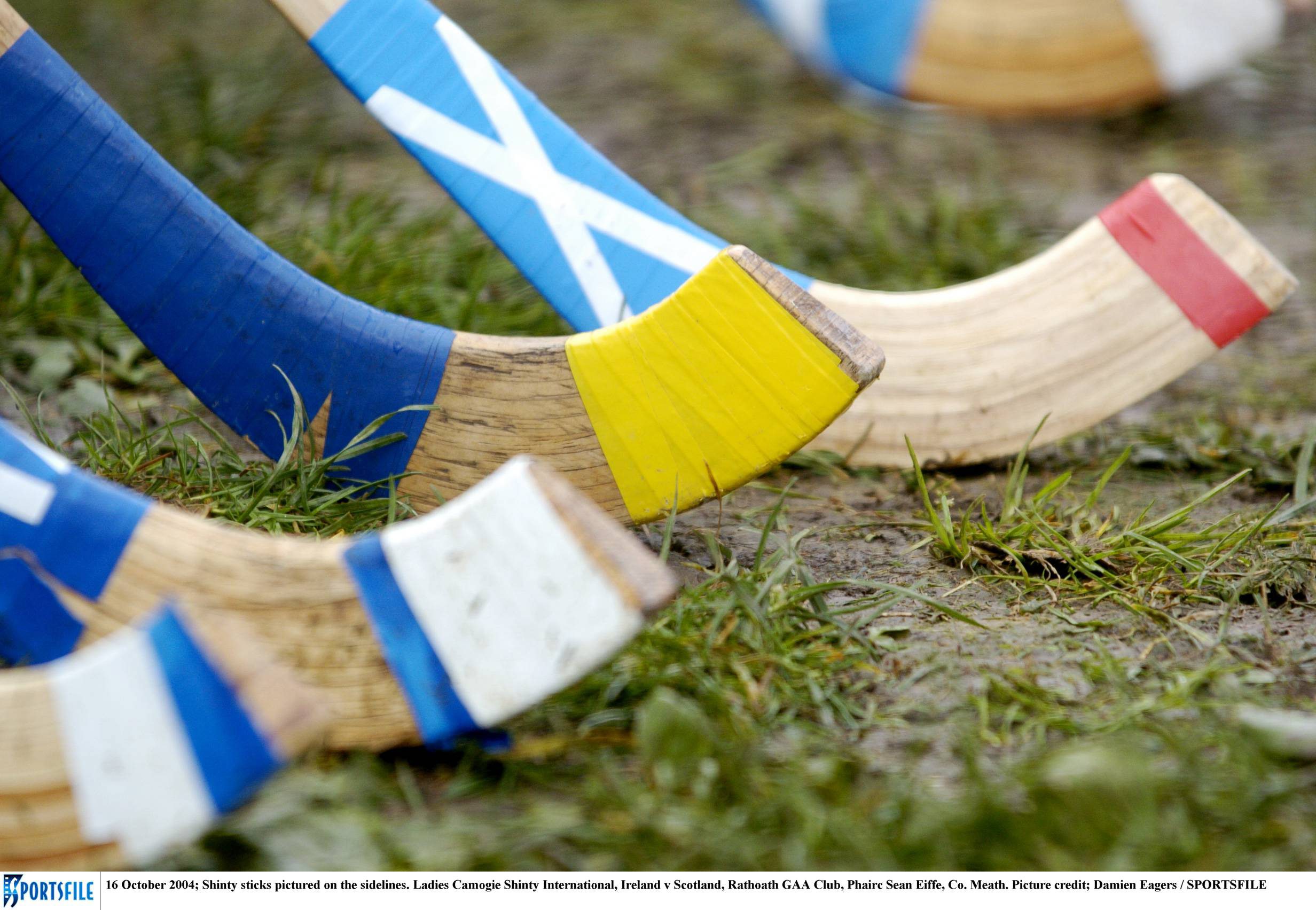
    Shinty sticks pictured on the sidelines. Picture credit: Damien Eagers/SPORTSFILE
    Shinty sticks pictured on the sidelines. Photo: Damien Eagers/SPORTSFILE

    “It’s not often that you get to play for Ireland, so it’s a great honour. The series is a date in my calendar that I look forward to every year,” he added.

    The Hurling/Shinty International Series gets little publicity in comparison to the Australian Rules Series. Eoin says the reason for this is probably centred around a lack of funding.

    “Shinty is a minority sport in Scotland. It’s only played in the Highlands. Aussie Rules on the other hand is a professional sport in Australia, so the funding for it is incredible.

    “As well as that the Irish Aussie Rules team is made up of an All-Star selection. In hurling/shinty, the team is made up of players from the so-called weaker hurling counties. Only a few players would come from the likes of Cork, Clare, Kilkenny and Tipperary,” he said,

    Around 2,000 spectators attended the first test of last year’s series in Scotland, a big crowd for shinty supporters in Scotland, and up to 3,000 attended the second test in Croke Park before last year’s Aussie Rules game.

    This year’s return game will take place in Newry on October 25 and will also be shown live on TG4. It kicks off at 5pm.
  • Boxer in the Ring; Lady Outside it

    Boxer in the Ring; Lady Outside it

    Video: Jennifer McDonald, Conor McMahon and Orla Stafford

    Boxing and beauty are not two words we usually link together, but European champion and female boxer Clare Grace sheds a new light on the contrast between femininity and the physical demands of the sport on the female body.

    Clare Grace, end of front row, right hand side.
    Clare Grace, end of front row, right hand side.

    Clare Grace is 20 year old student and boxing champion from Kilkenny. She’s in her third year of sports science and nutrition in DCU. Clare boxes for the Irish team and has ambitions of competing at Olympic level in the near future.

    It all started quite early for Clare when her father suggested she try out boxing. “My family has always been passionate about sport and when I was nine my dad brought me to my local boxing club just to try it out and I’ve never looked back,” says the European champion.

    It wasn’t long before Clare showed great potential and began to compete. “I was about 12 or 13 years old when I first entered the ring, it was overwhelming because I suddenly realised that my opponent was going to try and hit me in the face but after a while I got used to it and that’s the sport I suppose,” says Clare.

    Clare is now ranked 1oth in the World
    Clare is now ranked 1oth in the World

    Following Katie Taylor’s success at the Olympics in 2012, female boxing has become more recognised and discussed, but when Clare started boxing a little over a decade ago she recalls how it was very unusual for girls to be involved in boxing. “When I started it was all boys but now in my college club there are two senior girls including myself which is a lot even though it sounds otherwise, there are lots of girls signed up to the club but only the dedicated few turn up for training sessions,” says Clare.

    Clare never feels intimidated in the male dominated sport
    Clare never feels intimidated in the male dominated sport

    Boxing has long been associated with men, but Clare says that she doesn’t feel out of place because of that. “I never feel discriminated against because of my gender, in my boxing clubs you are a boxer, you are not categorised as a male or female, just as a boxer,” she explains.

    Opening up about her perception of femininity, Clare says, “Yeah I have muscles but I think things are changing, I think it’s okay for women to be strong and have muscle, of course there is still a stigma attached to how women should look and the perception of femininity but I do feel this is changing”.

    Clare explains how as a woman it is hard when you have bruising on your face. “It is often hard to explain to people that the reason you have a black eye is the fact that you are a boxer, people often look at me like ‘what happened to that poor girl?’,” laughs Clare.

    Clare says she has had to make many sacrifices to compete at this level
    Clare says she has had to make many sacrifices to compete at this level

    For a lot of women the idea of going into a male dominated sector would be intimidating but Clare never feels that way and she never feels like she has to impress anyone with anything other than her boxing abilities.

    “I never get dolled up to go training, you’re just going to sweat it off anyway so it’s a waste of make-up and make-up is expensive” laughs Clare. “It’s not really why I go training anyway.”

    Having a spot on your face as a young woman can often feel like a nightmare but for Clare even bruising on her face “is no longer the end of the world”.

    “When I was younger and in secondary school I was more self-conscious and I would try cover them up with make-up”, says Clare. She recalls one moment that a teacher held her back after class and asked if she was okay and what had happened to her face. “This was the first time someone actually noticed it enough to be concerned, in a way it made me even more self-conscious and I started to notice people giving me a few funny looks, but now I’m older it doesn’t bother me like it used to,” she explains.

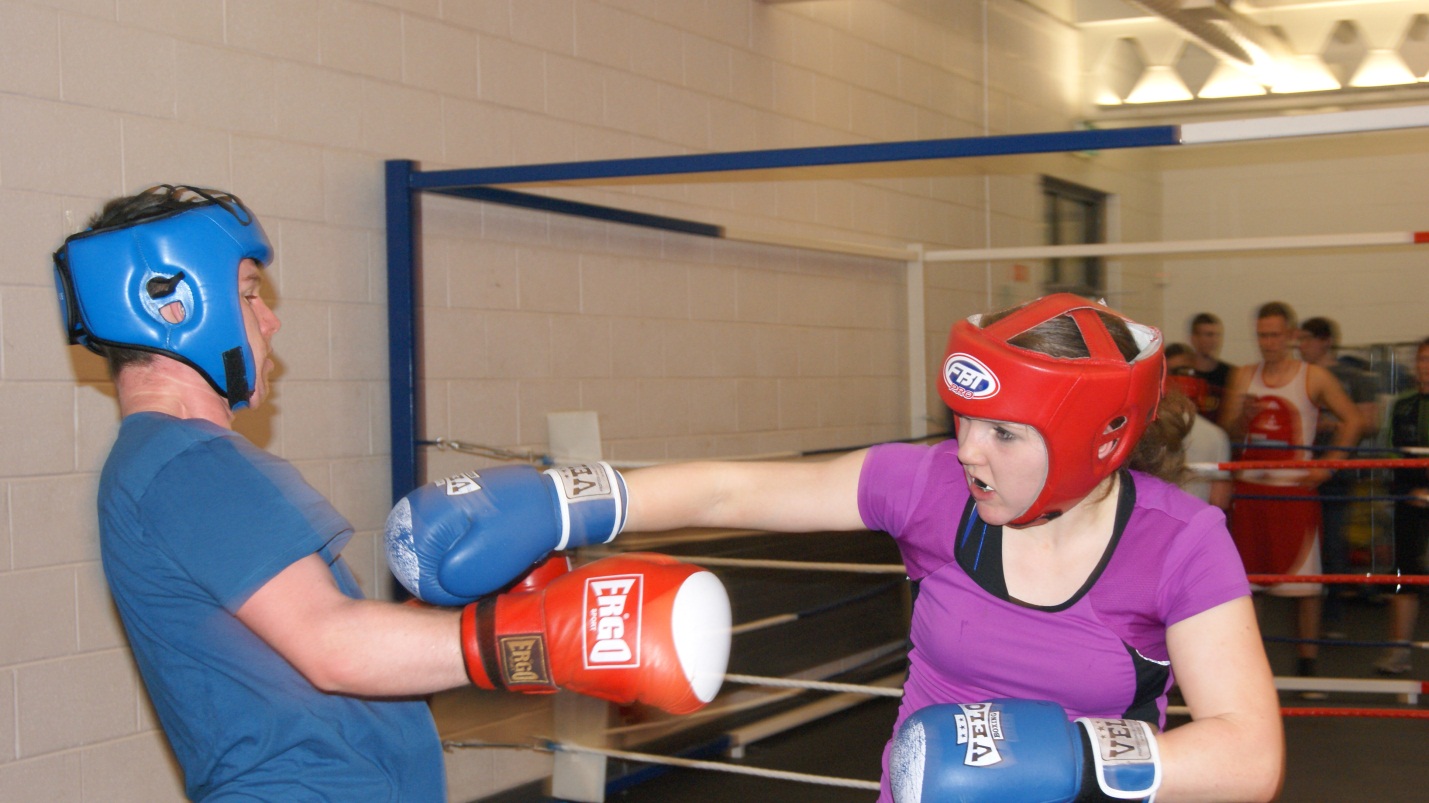
    Clare focusing on a sparing session
    Clare focusing on a sparing session

    Like any girl her age, Clare likes to go out and have fun and she says how sometimes it’s hard when all her friends are getting ready and she’s “trying to cover up a black eye”.

    “But that’s the kind of things you have to deal with if you want to compete at this level,” she says.

    "I do have to prep myself up before entering the ring"
    “I do have to prep myself up before entering the ring”

    “Humans are judging machines, and of course I get labelled”, says Clare. “I often get called the girl who boxes rather than by my name.

    “My close friends know me as Clare, a girl, but I’d be wrong if I said I didn’t get labelled.”

    Clare recently won bronze for Ireland in Europe
    Clare recently won bronze for Ireland in Europe

    And what about the sacrifices she has to make?

    “I’d be lying if I said I didn’t have to make sacrifices for boxing,” Clare explains. “Like when my friends are all going to the student bar and I have to go to training, or when all my friends are in relationships and I don’t have time to be, but I love the sport and for me that comes first.”

  • Grappling with the Irish Muay Thai scene

    Grappling with the Irish Muay Thai scene

    In a country gripped by medals success in Olympic boxing and the UFC’s pay-per-view extravaganza, it is perhaps difficult to uncover the strong Muay Thai presence in Ireland.

    Muay Thai, occasionally known as Thaiboxing, is a combat sport that utilises all parts of the body for striking, kicking and clinching. A match consists of five three minute rounds with scores being kept by judges.

    There are approximately 30 Muay Thai gyms in Ireland where potential champion fighters learn and study the art. In recent years, the Irish Muay Thai scene has been boosted by the talented Dubliner Jono Bracken and the booking of a fight featuring the legendary Saenchai which was held in Cork earlier this year.

    Wishing to learn about the sport, The City spoke to Daniel O’Reilly, a Muay Thai student and fighter from Dublin. He has been balancing his passion with work commitments since 2009.

    “I had always been fascinated with the sport due to the film Kickboxer, which was my favourite film throughout my childhood,” he said.

    Daniel has experienced several venue changes during his time with the Warriors Thai Boxing Dublin Gym, but has stayed true to the art. “They were first located in Loughlinstown Leisure Centre but then moved to Bray, where I started my training under Mike Dockery,” he explained.

    “Then in late 2009 the club moved to a permanent specialised location in Monkstown. Also now there is a head trainer, Cian Cowley. He is also a multiple title holder in Muay Thai and also K-1.”

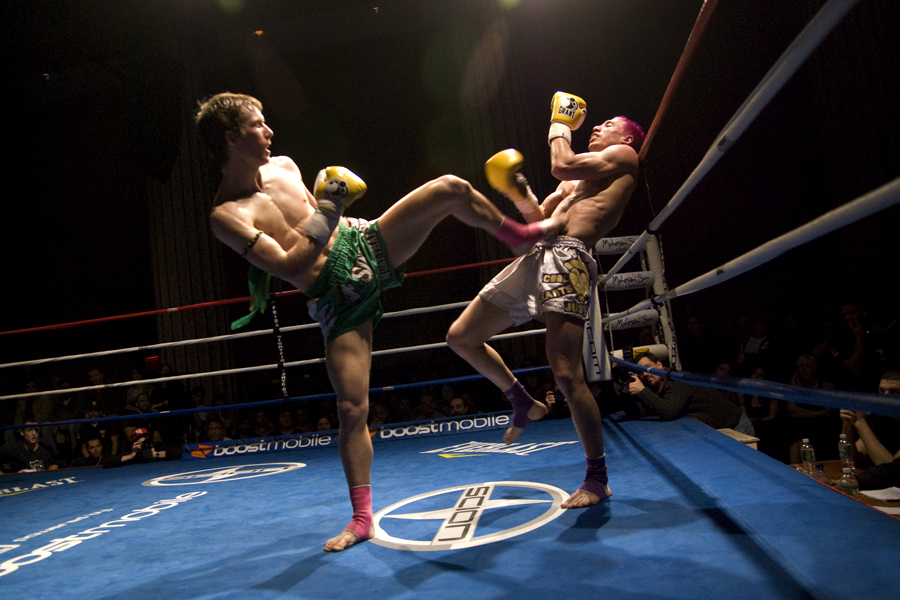
    Photo credit: MartialArtsNomad.com on Flickr
    Photo credit: MartialArtsNomad.com on Flickr

    Daniel also described the similarities between Muay Thai and the likes of MMA and boxing, both in advertising and style. “Yes [Muay Thai and MMA share techniques in common], although most MMA fighters have a hybrid style of stand up fighting. It wouldn’t be possible to fight with a true Thai stance due to takedowns so the techniques are slightly altered,” he said.

    He continued, “there are many shows, promoted just like MMA and boxing cards. Fighters are flown in from all over Europe and some even from Thailand. Just last month, Siam Warriors gym in Cork held a super show with two elite Thai fighters, Pornsae and Rungravee.”

    Luckily for Daniel’s Warriors gym, they have an event of their own to look forward to this month.

    It is relatively inexpensive to buy the necessary gear for Muay Thai, according to Daniel. Items used by Thaiboxing fighters include gloves, shin pads, shorts, a protective cup and gumguard and wrist wraps. Gyms provide certain pieces of equipment until a student wishes to commit to training.

    Muay Thai is primarily taught to adolescents and adult students, but younger students can be catered for. “In Thailand they start from a very young age. Over here it’s limited due to the intensity of the sport. Junior classes are held but they’d be heavily padded and only really learn the techniques of the style,” he said.

    Featured image by Mario_Arias on Flickr.

  • A portrait of our league

    A portrait of our league

    Last March I embarked on a photographic quest to depict the essence of our much-derided domestic football league.

    Historical, sometimes dilapidated but always characteristic, League of Ireland clubs’ stadia still retain a quintessential flavour of the game in its simplest form, something that is regrettably absent in the new generation of modern super-stadiums which have come to prominence around the globe.

    This slideshow requires JavaScript.

  • Dublin Marathon in Pictures

    Dublin Marathon in Pictures

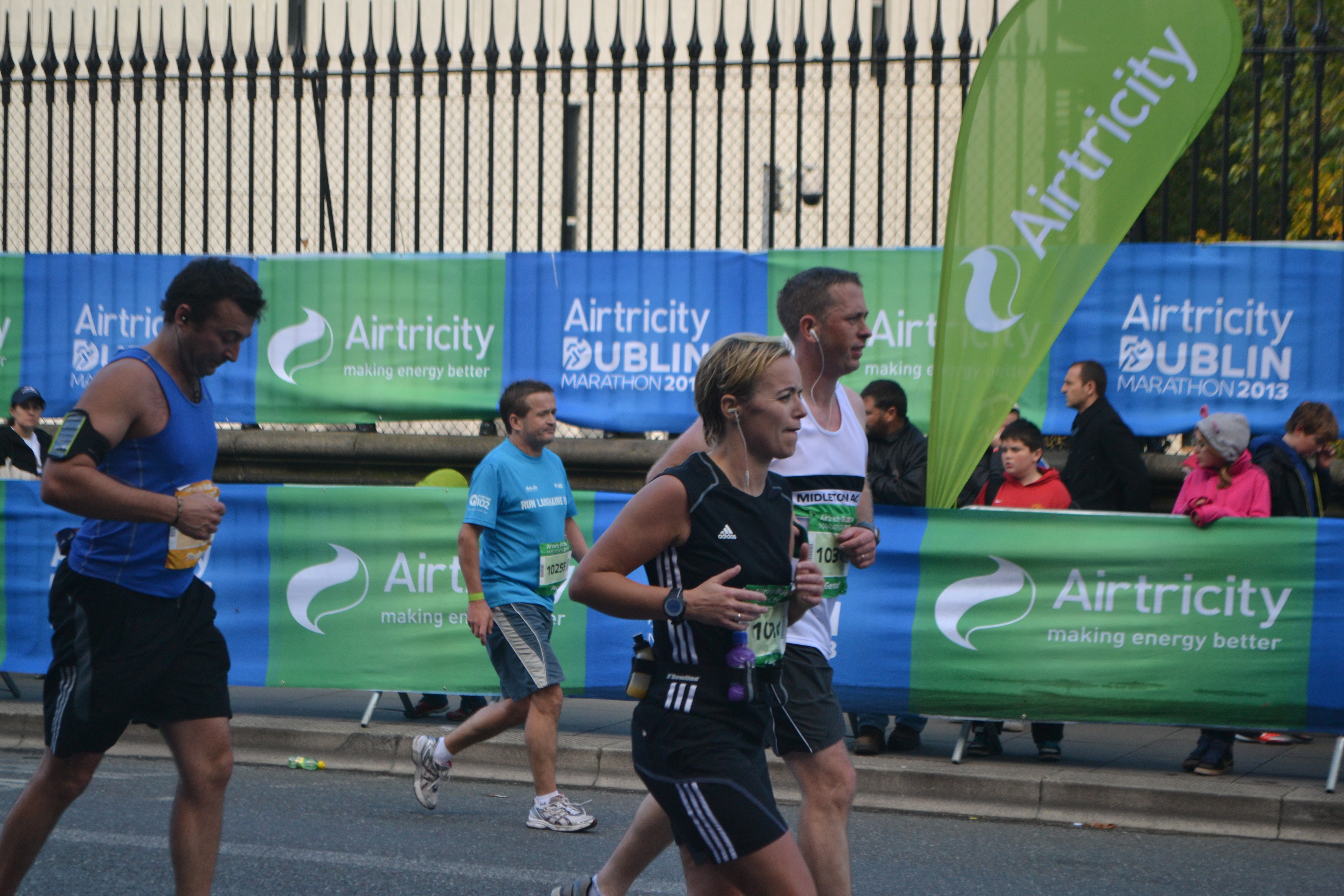
    Almost 14500 people ran in the Dublin marathon on Monday.

    The men’s race was won by Irishman Sean Hehir with a time of two hours, 18 minutes and 19 seconds with Dublin’s Maria McCambridge winning the women’s race in two hours, 38 minutes and 51 seconds.

    Liz O’Brien,  Irish Girl Guides leader, completed the Marathon in eight hours 30 minutes, making her the first Irish woman to complete a marathon on crutches.

    Below is a series of images from the finishing line at the marathon.

  • International Rules at the crossroads

    International Rules at the crossroads

    With the latest set of International Rules tests between Ireland and Australia now in full swing, many people are wondering whether or not the compromise rules concept has a viable future.

    Given its former reputation of being a hard-hitting and fiercely-contested battle between two proud sporting cultures, the appetite for future installments of the hybrid game between Gaelic and Australian rules football appears to be waning.

    Growing Apathy

    Although Ireland’s 57-35 victory over the Australian select was regarded as an enthralling spectacle by some, there appears to be a growing apathy amongst the sporting public in both countries which is beginning to be reflected in the attitude of the associations involved.

    By and large the mass brawls of earlier years have been confined to the history books (Photo credit Jimmy Harris on Flickr)
    By and large the mass brawls of earlier years have been confined to the history books (Photo credit Jimmy Harris on Flickr)

    Australia caused controversy this year with the announcement of an all-indigenous selection for the first time in series history. Labelled by some as ‘reverse racism’, the Australian Football League wanted to honour the contribution of Aboriginal players to the country’s national sport, and picked what they believed to be a more agile and skilful selection in the process.

    However, despite the best intentions in the world, the fact remains that not one member of Australia’s 33-man panel was part of this year’s All-Australian team lineup. Ireland, in stark contrast, had five members of last year’s equivalent All-Star side included in the home squad, with many more set to be named in the 2013 selection later this month.

    Declining player standards on one side at least has led to a predictable fall-off in support.

    From capacity crowds in both countries during the series’ reinstatement during the late ’90s and early 2000s, the average attendance figure of just 17’000 recorded during the 2011 test series in Australia was compounded by the sight of a half-full Breffni Park for Ireland’s victory at the weekend.

    Attendances for the rules matches have been dwindling Down Under (Photo credit Michael Spencer on Flickr)
    Attendances for the rules matches have been dwindling Down Under (Photo credit Michael Spencer on Flickr)

    Indicative of this decline was the Australian media’s complete lack of interest in the event. With not one major national broadcaster providing coverage of this latest series, the press Down Under generally seems to have gotten fed up with the sanitised version of what was once regarded as all-out warfare with a ball (merely incidental, of course) involved.

    Hope Remains

    However far it’s fallen from grace, the International Rules series does still retain some of its merits.

    From what started as a tenuous association during the two sports at the time of the series’ inauguration in 1984, relations have blossomed between the AFL and GAA in recent times, with intercounty luminaries such as Jim Stynes, Tadhg Kennelly and Marty Clarke swapping the round ball for an oval version in their quest to make it big in the Aussies’ premier indigenous sport.

    With many school and college teams from both codes now traipsing around the planet to test their skills against their compromise rules counterparts, it’s also initiated a valuable cultural exchange between the young peoples of two countries with a lot in common.

    But the fact remains that at its highest level, the series is plagued by a diverse set of problems. Speaking in Melbourne in 2011, GAA Árd Stiúrthór Páraic Duffy stated that unless series interest and attendances picked up in Australia, the Irish audience wouldn’t maintain a reciprocal interest.

    It appears that, following a sad and gradual decline, we’ve finally reached that crossroads. It’s now down to the GAA and AFL to pull their formerly proud combined sporting tradition back from the brink, or risk losing it forever.

    (Featured image credit Michael Spencer on Flickr)

    SOCIAL MEDIA NOTE

    @officialgaa

    @irfsofficial

    @gaaclub

  • DEBATE: Redskins should keep their name

    DEBATE: Redskins should keep their name

    “We are Redskins Nation and we owe it to our fans and coaches and players, past and present, to preserve that heritage.” That is how Washington Redskins owner Daniel Snyder closed his recent open letter to fans of his American Football team.

    One of the most talked about stories in the United States at the moment, not just the NFL, is whether or not the Washington Redskins should change their team name.

    Many argue that the term “Redskin” is a derogatory term towards Native Americans.  However, in his letter, Mr Snyder stated that a poll which talked to nearly 1,000 Native Americans concluded that 90 per cent of them did not find the Redskins name to be offensive.

    He also added that an AP poll earlier this year, found 79 per cent of respondents said they didn’t have a problem with the name “Redskins” and that only 11 per cent believed that it should be changed.

    The Washington Redskins in training camp, lead by Quarterback Robert Griffin III (yellow). Image by Keith Allison on flickr
    The Washington Redskins in training camp, lead by Quarterback Robert Griffin III (yellow). Image by Keith Allison on flickr

    In situations like this, all evidence must be considered before forming an opinion.

    The team have been known as the Redskins since 1932, and they’ve been the Washington Redskins since 1937.  In this time, the team have won five world championships, three of which were SuperBowls, the most recent of these coming in 1991.  Changing the team’s name will mean a loss of their history, starting off on a brand new slate.

    After several years in the mire of mediocrity in the NFL, a place no team wants to find themselves, the Redskins are now a marketable franchise again.  According to Forbes, the Redskins are the fifth most valuable team worldwide, in any sport.

    The acquisition of quarterback Robert Griffin III in last year’s draft was crucially important for the revival of the Redskins brand.  Griffin lead the team to the playoffs for the first time since 2007.  His jersey is the fifth best-selling jersey throughout the entire league.  FedEx Field, the Redskins home stadium, which holds 91,704 spectators, is reaching capacity for every home game.  The Redskins currently have a marketability level that very few other NFL teams can compete with, not just in America but internationally as well.

    An American flag sprawled across the pitch at FedEx Field before a Redskins home game. Image by Jeremy Thoel on flickr
    An American flag sprawled across the pitch at FedEx Field before a Redskins home game. Image by Jeremy Thoel on flickr

    Changing the team name means an entire rebranding on all levels.  It is eliminating all possible aspects of growth in income and completely starting anew.  It means having to re-establish sponsorship deals.

    While it is not uncommon for American sports teams to change their name, it is usually only a process carried out by teams who are struggling, both in competition and financially.  While the Redskins may be struggling on the field at the moment, there is still plenty of time for them to turn their season around.  Off the field, the future is very bright for the Redskins. The Washington Redskins, not the Washington (insert possible team name here).