Tag: Sport

  • FIFA launch a Social Media Protection Service for the 2022 Qatar World Cup

    FIFA launch a Social Media Protection Service for the 2022 Qatar World Cup

    FIFA, along with the International Football Players Association (FIFRO), launched a service that filters out hate expressions online and social media for players during the 2022 Qatar World Cup.

    International Federation of Association Football (FIFA) uploaded a media release on 16 November: “To tackle discrimination and to protect the mental health and well-being of players, FIFA and FIFPRO- The worldwide representative organisation for professional footballers- are launching a social media protection service (SMPS) in advance of the FIFA World Cup Qatar 2022.” 

    The social media accounts of all participating players in the World Cup are monitored through SMPS. FIFA explained that it will check public-facing abusive, discriminatory and threatening comments and inform SNS platform providers and law authorities for taking legal action against those who break rules.

    FIFA President Gianni Infantino said “we are happy to launch a service that will help to protect players from damaging effects that social media posts can cause to their mental health and well-being.” FiFPRO President David Aganzo highlighted that “It is football’s responsibility to protect the players and other affected groups against the abuse they increasingly face in and around their workplace”.  

    Former Brazil forward Willian gave full support to SMPS. He has experienced online abuse with himself and his family threatened on social media.“I was suffering a lot, and my family were suffering a lot because people started attacking us on social media, attacking my family, my daughters, and that’s why I’m standing now with FIFA to see if you can stop these kinds of things,” Willian said

    Mistake in a football match, condemnation on social media? 

    When South Korea’s national soccer team captain Son Heung-min, who plays for Tottenham Hotspur in the English Premier League (EPL), was on the operating table due to a facial fracture, some soccer fans poured malicious comments on Chancel Mbemba’s social media posts, who collided with Son Heung-min.

    Earlier, Son Heung-min fell down after hitting Mbemba’s right shoulder in the 25th minute of the first half in an away match against Olympique de Marseille in the 2022-23 UEFA Champions League (UCL) group stage at Stade Velodrome on the 2nd of November.

    Son Heung-min covered his face and complained of severe pain, and eventually left the ground after being replaced in the 29th minute of the first half. He was supported by the medical staff because he could not walk on his own even though he was replaced.

    Source by Tottenham Hotspur’s official Twitter account.

    Afterwards, Tottenham said on its SNS on the 2nd of November, “We can confirm that Heung-Min Son will undergo surgery to stabilize a fracture around his left eye.” 

    About three weeks before the first group qualifying match for the Qatar World Cup for the Korean national team, Son Heung-min was on the operating table and was on the verge of failing to participate in the World Cup. The Korean national team was also on high alert as there was a possibility that Son Heung-min, a representative player of Korean football, could be absent.

    Graphical user interface, application, Teams

Description automatically generated
    On Mbemba’s official Instagram post, many football fans condemned him due to the injury of Heung-min Son

    In response, some soccer fans poured out indiscriminate malicious comments toward Mbemba. On Mbemba’s Instagram post, fans left criticism and malicious comments such as “Football is not UFC”. 

    Mbemba’s case illustrates a need for FIFA to operate the Social Media Protection Service for World Cup players. In addition to the legal actions taken by official organisations, fans should also be aware that their comments behind anonymity on social media can leave an indelible mark on one individual and one player
  • Dublin referees cancel planned strike

    Dublin referees cancel planned strike

    By David Seagrave

    The Dublin branch of the Irish Soccer Referee Society (ISRS) have cancelled a formerly planned two week strike.  

    The planned strike followed incidents of assault and attempted assault on referees in Dublin. Referee assaults can carry a minimum ban of one year, however both instances resulted in suspensions of less than seven games. 

    ISRS’s Dublin branch had previously said that they would ‘withdraw their services’  at all levels of the game from 18th November – 2nd December, however they reversed the decision following talks with the Football Association of Ireland.

    (Image source- Irish Soccer Referees Society)

    Last month it emerged that 234 reports of assault had been submitted to the ISRS, spanning across 18 of their 27 branches. Of those 234 reports, eight were physical assaults. 

    The FAI released a statement following the news of the planned strike, with CEO Jonathan Hill saying, “the FAI will do whatever we have to do”. 

    “Our disciplinary regulations carry clear and serious sanctions to be enforced on anyone who abuses a match official, and we are calling on all leagues to enforce those sanctions. We cannot, and will not tolerate any abuse aimed at a referee at any level of the game,” the statement added 

    David Bergin, Vice Chairman of St Francis FC says that more needs to be done to address assaults against referees. 

    “For the referees, it’s a hard job, it’s a thankless job. Nobody ever says ‘thanks for a great performance, they always have one comment or two comments. We have tried to instill that in our club, and we feel that we’ve made real progress. But that’s not the case everywhere.

    “I believe that every club is working towards an environment that’s safe for players, coaches and especially referees. For the refs, it’s frustrating that it isn’t translating onto the pitch all the time.”

     “The FAI have done some great video work on how to treat referees on the side-line… it’s a lot more prevalent this year, I don’t know what it is. There must be a reason for people being more vocal, but nobody benefits from it,” Bergin added.

    When asked about the lack of lengthy bans for offenders, Bergin replied “I don’t think anyone, in any club, would question a lengthy ban.”

    “They get a few bob to cover their transport costs, but it’s not phenomenal money, you know? It’s a great service, the kids need to be playing and they need referees. You don’t learn [the rules] without referees.”

     Despite criticism of the bans, Bergin also noted that the leagues were run on a voluntary basis – and that clubs also have to take responsibility. 

    “We understand how difficult it is for leagues to administrate and come up with the right size ban for everyone. Everyone appeals everything. The leagues have a thankless job as well, a bit of cop on is needed from everyone; the clubs, the coaches and the players, to make sure that we aren’t forcing volunteers to have to conduct these types of meetings and to go through the processes they have in place. 

    “We should be able to talk about the football, and the performances, and how we can improve going into the next week. We shouldn’t have to talk about referees,” Bergin added.

  • 2021: A Royal Year for Meath GAA

    2021: A Royal Year for Meath GAA

    By Dylan Kerrigan

    Dylan Kerrigan is joined by David Rispin from the ‘WeAreMeath’ podcast to discuss Meath GAA’s successful 2021 and the counties aspirations for 2022.

    With the Meath minor team winning their first All-Ireland in 29 years and the Meath ladies winning their first ever Senior All-Ireland title, 2021 can be deemed as one of the most successful sporting years for the county to date.

  • The best of the best go to Belgrade

    The best of the best go to Belgrade

    Christopher O’Flaherty speaks to amateur boxer Kelyn Cassidy.

    By Christopher O’Flaherty

    Ireland competed in the AIBA world boxing championships between the 24th October and 6th November in Belgrade, Serbia. The City.ie sat down with heavyweight contender Kelyn Cassidy to discuss his experience as an amateur boxer so far and how he got to where he is today.

    When did you start boxing?

    I started boxing when I was 16/17. I had one fight when I was younger and kind of packed it in and then went back when I was 16. I had my first fight when I was 17. I got to the All-Ireland final that year. I never imagined I would be going to Belgrade to fight. It has always been a hobby. I’ve been boxing for seven years. I’m currently 24.

    Who is your biggest motivation?

    It’s an individual sport. I don’t have a particular thing that motivates me. The motivation is the fact that it’s all on you. The highs are on you and the lows are on you. It’s your responsibility, no one is going to do it for you. To be honest, there’s not really any famous boxer I look up to in particular. I don’t really watch many of the professional fights. Like I said, boxing has always been a hobby.

    What has it been like accomplishing something as amazing as going to Belgrade for the World Championships?

    To be honest, you are probably the hundredth person to ask and it still hasn’t hit me yet. I just box to have fun and to have the craic.I never expected to go to the largest amateur boxing event in the world if you’re not counting the Olympics.

    You must live quite a busy life with training. What does the average day of Kelyn look like?

    Well, I work full time as well. I am a qualified toolmaker by trade. I get up before work and go for a run. I do my shift in work and then train in the evening. Boxing training is on Monday, Wednesday and Friday. Gym sessions are on a Tuesday and Thursday. It’s pretty intense working and training but you just got to do what you got to do. I’ve still got to pay the bills at the end of the day. 

    How do you balance your social life as well?

    Ah,  I do live a good social life to be fair. When I’m off season,  I’ll enjoy myself. My boss always told me ‘you work hard you play hard’ and it’s absolutely true. On the other hand my girlfriend Megan, she only barely gets to see me during the on season. She asks me to go to dinner and I would say “I can’t I’m making weight hahaha” 

    Obviously, boxing is a sport that’s very hard on the body but also quite hard on the mind. What do you do to keep your mental health in check during your training?

    You know if I  have something serious like a competition, I will play some football with the lads or I’ll play some PlayStation, maybe a bit of pool or bowling, just keep the mind off boxing for the meantime so I’m not thinking about it all the time.

    You recently did a boxing camp out in Sheffield before the Championships. How was the atmosphere and how was the experience?

    Yes, it  was unbelievable . To be out there with the best of the best with four other countries and going out there showing that I was made for this sport. I’ve got to prove to myself that I deserve to be there. It was something else.

    Do you feel confident?

    Yeah, to be fair I have to give a big shoutout to Joe Ward. He’s been a real help and a great sparring partner for the last year. It just goes to show that I am up there and I can compete.

    Have you ever considered going pro?

    No, not really. I’ve no interest in it right now, that pro game just isn’t really for me. It’s a hard road and I never said boxing would be my money maker or my bread winner.

    Cassidy made it all the way to the Quarter Finals in Belgrade, but was unfortunately defeated by unanimous-decision. However, he can be extremely proud of his efforts over the past week.

  • Podcast: An amateur golfer on trying to make the cut in lockdown

    Podcast: An amateur golfer on trying to make the cut in lockdown

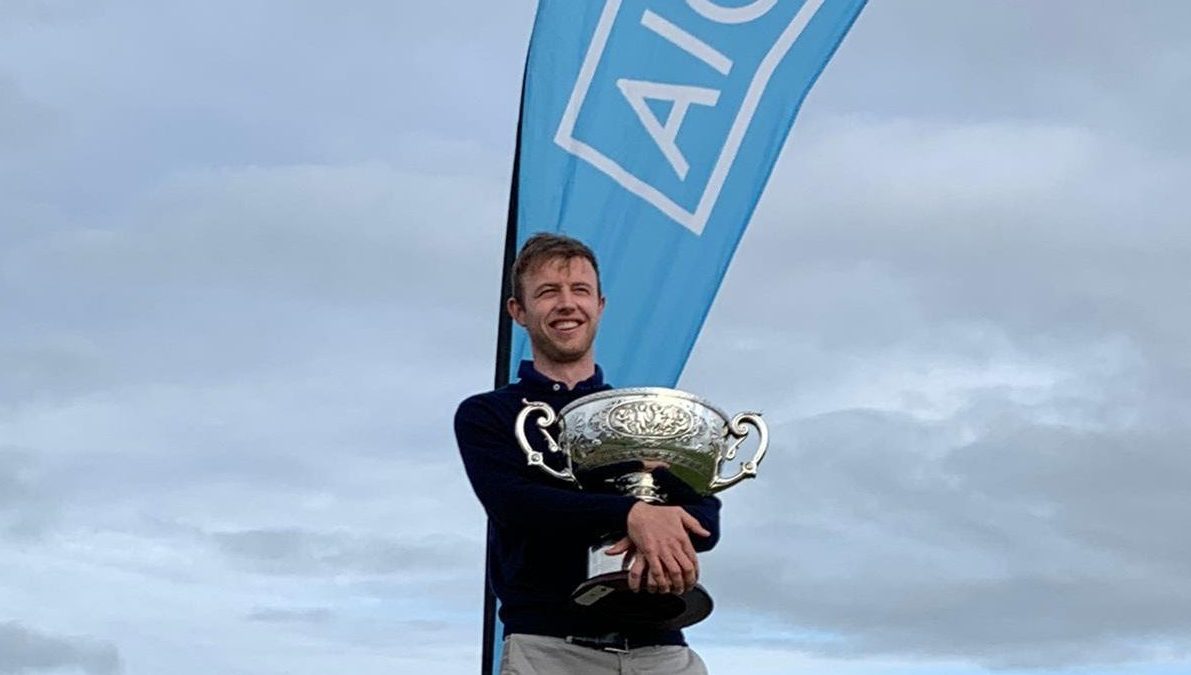
    Hugh Foley embraces his AIG 2020 Irish Amateur Close Championship Trophy which he won at Sandy Hills Links, Rosapenna GC, County Donegal. Image courtesy of Hugh Foley
    Listen to Liam Daly in conversation with Hugh Foley

    The past year has been difficult for everyone, and the world of amateur sport has unfortunately been put on hold. Many of us have felt bereft losing our favourite past times – something that is hugely important for both physical and mental health.

    For those battling tooth and nail to make their sport a source of income, the prolonged wait has been a huge blow.

    With the courses closed for a huge portion of the year, golfers like Hugh Foley of the Royal Dublin Golf Club on Dollymount Strand have had to bide their time, and try to maintain a high level of mentality and physicality for the approaching season.

  • Irish women weightlifters snatch the spotlight

    Irish women weightlifters snatch the spotlight

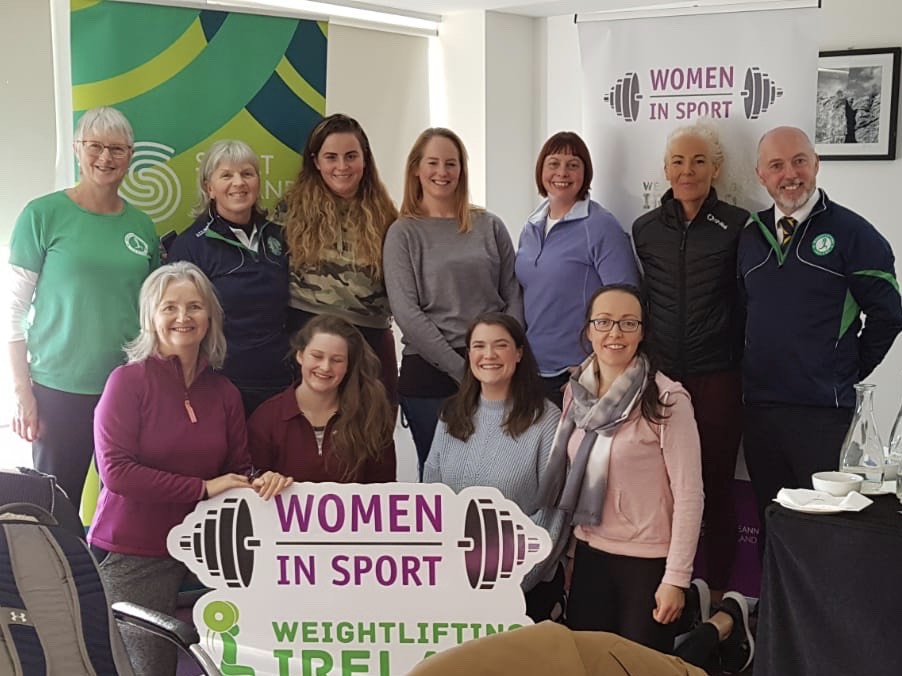
    The Women in Sport Initiative by Sport Ireland was supported by Weightlifting Ireland. Change is afoot? Front row: Ruth Deasy, Isla Hoe, Aoife Bradley, Sinead Ryan. Back row: Lucy Moore, Phil Brown, Freya Hammer, Kathy Boylan, Shauna Kane, Kate Meenan, Peter Carroll (General Secretary, Weightlifting Ireland). Photo courtesy of Harry Leech

    There’s no doubt about it – weightlifting is a traditionally male dominated sport.

    Women’s weightlifting didn’t even make it into the Olympics until 2000, while their male counterparts had been there since 1896.

    Thankfully, times are changing. 

    “We have a very high representation of women within the sport in Ireland. There are instances of people being sexist – there’s that underlying bias that exists in people, but I don’t think that’s inherent to the sport,” says Isla Hoe, an amateur weightlifter and self-described ‘casual competitor’.

    “Within weightlifting in Ireland, the issues are wider systemic issues that have to be addressed by society as a whole, rather than just the sport,” Hoe explains. “Where I would see sexism appear is in how non-weight-training people perceive females within weight training sports.”

    There are undoubtedly stereotypes held about women weightlifters – one only has to go to the more misogynistic corners of the internet to find people babbling about how weightlifting makes women ‘look like men’ – apparently a fate worse than death.

    The instagram account You Look Like A Man is a wild read – each post chronicling typical sexist comments made to women in sports, including weightlifting.

    “Certainly, for an older generation of women, there’s been a misconception that lifting weights is dangerous or it’s not feminine – all of these are very outdated ideas,” says Harry Leech, the head coach and co-founder of the Dublin-based weightlifting club, Capital Strength.

    “There’s no reason why women shouldn’t do weightlifting, so we thought: what are the potential barriers going to be to them? It’s important that you have that welcoming environment and ethos, then the only other barrier is investing in equipment that’s suitable for men and for women,” he says.  

    “Where I would see sexism appear is in how non-weight-training people perceive females within weight training sports”

    Isla Hoe

    Traditionally, 20-kilo bars were the standard in weightlifting clubs and gyms. These best suited men’s, on average, larger hands. Women are, on average, smaller, and have smaller hands than men, which required the introduction of the 15-kilo bar. It weighs less simply because it’s narrower – making it easier to grip for female weightlifters.

    From left to right: Isla Hoe, Aoife Bradley, and Sorcha Brady at Capital Strength gym. Image courtesy of Harry Leech

    Initially, these bars were very expensive and as the sport was so small in Ireland, clubs didn’t have enough money to invest in much equipment. As the sport was male dominated, it was more common for clubs to purchase 20-kilo bars than 15-kilo ones. However, now the market has opened up and the equipment is more affordable.

    Currently, Leech reckons that Capital Strength owns more 15-kilo bars than 20-kilo ones.

    “It’s always been important to have a very equal, very welcoming, very gender-neutral aspect to our club,” Leech says.

    “I think some people have an image of a weightlifting gym in their head, and it’s guys in leotards, making crude, offensive jokes, and lifting heavy weights – but that couldn’t be further from the truth,” he tells me.  

    Clubs like Capital are a fantastic addition to weightlifting in Ireland, however, there are still issues that have to be dealt with.

    “The sport needs to encourage more women’s coaches and women’s officials now. They are coming through, but it’s probably something that’s going to take time to get to the point where it should be,” Leech says.  

    “If you can’t see it, you can’t be it,” says Dr Lucy Moore, a masters athlete, and athletics and weightlifting coach who feels that positive representation for women is an important factor in creating equality.

    “There are very few women coaches at senior level, and if you want to be it, you have to see it. It’s the same issues in the professional world, why don’t women go forward for promotion? Why are women underrepresented on boards?

    “Women tend to hold themselves back – and that’s not just in weightlifting,” Dr Moore explains, suggesting that issues of imposter syndrome and a lack of confidence plague women in sport.

    “I think some people have an image of a weightlifting gym in their head, and it’s guys in leotards, making crude, offensive jokes and lifting heavy weights – but that couldn’t be further from the truth”

    Harry Leech

    “Sport also tends to operate at very un-family friendly hours,” she continues.

    “You’re expected to do things at weekends and the evenings, and to travel. That’s grand when you have a partner at home who will do anything that needs to be done, but traditionally, it’s the man who is going out while his [female] partner stays at home. You only have to look at the pressures people are under at the moment with Covid – who’s doing the lion’s share of the home schooling, trying to keep the house running, and working from home?” Dr Moore explains.

    Fortunately, things are taking a turn for the better.

    “It’s very recently in weightlifting that women came to be referees in any significant numbers, but it is improving, there has been a specific drive to get more women involved in these roles,” Dr Moore says, who has been involved in programs specifically intended to train female weightlifting referees.

    “It’s going in the right direction, but it just needs to push on.”

  • ‘Inspire the next generation’: Shining a spotlight on ladies Gaelic games

    ‘Inspire the next generation’: Shining a spotlight on ladies Gaelic games

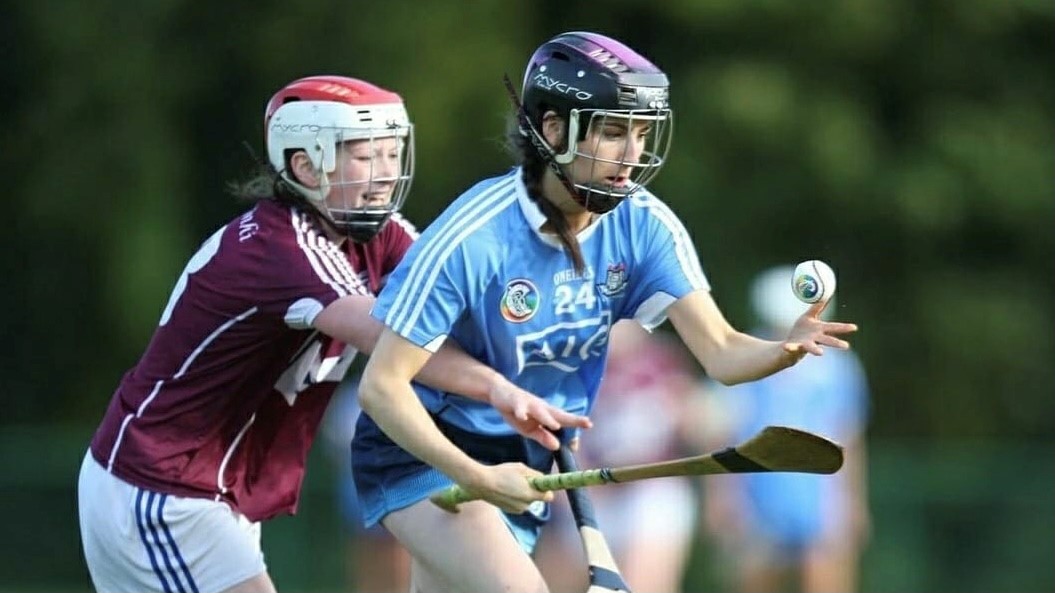
    Julia Buckley in action for the Dublin senior camogie team. Photo by iLivePhotos.com

    The sporting world is still, primarily, a man’s world.

    While huge strides have been made in recent years, there is still a long way to go before men and women have equal opportunities across all sports.

    The lack of coverage of both ladies Gaelic football and camogie is stark when compared to their male counterparts and is “completely disproportionate to the amount of women playing sport”, says Niamh Tallon, founder of HerSport.ie – a website aimed at promoting women’s participation in sport and increasing the coverage they receive.

    Despite women making up 40.8% of the people playing sport in Ireland, they receive just 6% of the total sports coverage, says Tallon.

    “You can’t say it has to be 50/50. That isn’t fair either, and you’re going to have different weeks where there’s more news in women’s sports or more news in men’s sports, but it’s not even near comparable at the moment.”

    Of course, this disparity has quite a knock-on effect for female players.

    While male Gaelic football and hurling players can enjoy the many perks that come with the high profile – it can be a lot harder for women to achieve the same status.

    “It’s about making them feel supported; making them feel that they have the opportunities and showing them what the possibilities are”

    Niamh Tallon

    “It’s important to make sure that female athletes get the recognition that they deserve because there is such a knock-on effect when it comes to sponsorship opportunities, the funding that they get, the level of support, and also trying to inspire the next generation,” says Tallon.

    This is what websites like HerSport.ie and others have been set up to do: highlight the high level of talent in women’s sports and provide role models for the next generation of All Stars.

    It is important that young girls understand that there is a space for them in the sports world.

    Other organisations are working to increase people’s awareness of ladies Gaelic games.

    20×20.ie have created a campaign, ‘If she can’t see it, she can’t be it‘, that aims to increase media coverage and participation at all levels of women’s sports.

    Campaigns such as this one are extremely important as a way of improving overall attitudes to women in sport, among both men and women.

    “It’s about making them feel supported; making them feel that they have the opportunities and showing them what the possibilities are,” says Tallon.

    The drop-out rate among young girls from their local clubs is noticeably higher than it is among boys, with many people believing that this is due to the fact that the world of sports is still primarily a male-dominated scene, with women in sport not being taken as seriously as men.’s.

    Tallon believes it is down to individual clubs to do everything they can to foster the talent in the young female athletes.

    “Sometimes it’s as simple as having someone at their level that can talk to them. You know if you have a coach who is a 40 or 50-year-old man coaching a 14-year-old Gaelic team then there’s no link. Sometimes it might just take someone who is 20 and a girl to be there and just interact and help out here and there.”

    Dublin senior camogie player, Julia Buckley, believes that many of the issues faced by women in camogie and Gaelic football are down to lack of funding, and stresses the importance of providing expenses for players that may have to travel long distances for training or games.

    “No one should be out of pocket for playing for their county,” she says.

    “Women don’t always have the same access to facilities, media exposure and funding that their male counterparts do. Fixing this would definitely bridge the gap tremendously.”

    This particular issue was recently brought to the forefront when the ladies Gaelic football semi-final switched venues twice and had the throw-in brought forward at the last minute.

    The venue was initially changed in order to accommodate a training session for the Limerick hurlers, and then again due to frost. The situation was made worse when the throw-in was brought forward to ensure the game would be finished in time for the upcoming men’s game between Tipperary and Mayo.

    “These are things that just wouldn’t happen in the men’s game. If we’re going to talk about equality, there has to be some substance to it, not just pushing things under the carpet like they’re not happening. They are happening – every year. The ladies game is probably one of the fastest growing sports in the country, but we don’t seem to have the officialdom in the association that can keep pace with it and to bring the professionalism that is required,” Galway manager Tim Rabbitt told the Irish Times.

    Instances like this where women’s sports are forced to play second fiddle to men’s sports are common. But there are also inequalities within women’s sport itself.

    With campaigns such as Lidl’s Level The Playing Field campaign promoting ladies Gaelic football, camogie is being left behind.

    Lidl ‘level the playing field’ ad campaign highlights the gender-disparity in Irish sports

    Buckley believes that camogie’s lack of profile is a major issue, and that low participation rates are “an obstacle that its counterparts don’t have to deal with”.

    While there has been a shift in attitudes in recent years, and more is being done to improve the coverage of camogie as well as ladies Gaelic football, there is still a long way to go.

    Ex GAA president Liam O’Neill recently told Off The Ball AM that bringing the GAA, LGFA, and Camogie Association under the one organisation would go a long way towards bridging the gap between men’s and women’s sports. 

    Whether this actually comes into fruition remains to be seen.

    However, the future for both ladies Gaelic football and camogie is bright:

    “It’s certainly exciting to see what’s going to happen in the next while, and it’s important to appreciate where we’ve come from. But we also need to make sure we are always pushing on for a more balanced sporting world for girls,” says Tallon.

  • Gaelic games players reflect on importance of competitions lost to level five

    Gaelic games players reflect on importance of competitions lost to level five

    Aishling Moloney and Sarah Rowe celebrate winning the 2018 O’Connor Cup. Photo courtesy of Eóin Noonan/Sportsfile

    Let’s not kid ourselves here; the cancellation of camogie, football and hurling competitions for higher education students measures fairly low on the adversity scale in the current scheme of things.

    Parking perspective for a moment though, to compete and succeed in these tournaments is often a huge honour for young players, and an important formative experience on and away from the pitch. It’s another experience the class of 2020/21 will have to do without.

    Tipperary star and Ladies Gaelic Football Association ambassador Aishling Moloney has, at 22, a mantlepiece for a veteran to envy — two intermediate football All-Ireland medals, two national league titles, and a Player of the Year award, not to speak of club honours. Representing her university, DCU, has brought more glory.

    “I was honoured to be captain of the O’Connor Cup winning team in 2018, and to live that all over again would be a dream,” she says. “It’s sad to see that it won’t be going ahead this year but, given the circumstances, it is the appropriate call.”

    “I’ve made best friends for life playing with DCU, and will always cherish the wonderful memories”

    Aisling Moloney

    Sporting accomplishment is one thing; forging friendships that can long outlast a student’s playing days is at least as valuable for many players. Moloney describes her time playing for DCU as “a very special part of my experience as a student. It’s different from any other competition; your social life mixed with playing football. It’s a roller-coaster. I’ve made best friends for life and will always cherish the wonderful memories.”

    Dozens of competitions across four codes give students of all levels the chance to compete, and the upper tiers feature much of the best young talent around. 

    “Getting the opportunity to play among and against some of the best players in the country is a real privilege,” Moloney says.

    Aishling Moloney receives the Player of the Match award for the 2018 O’Connor Cup final. Photo courtesy of Eóin Noonan/Sportsfile

    Monaghan footballer Conor Boyle agrees. Now a regular starter with his county, he was on the fringes when he won a Sigerson Cup with DCU in 2015.

    “It’s a very high standard and it’s a great opportunity to get onto your county squad. If you start on a UCD team, for example, you’re not going to be far off getting on your county panel, even for the top counties.

    “The DIT team of 2013 was ridiculous! I remember their full-forward line was Darren O’Sullivan, Aiden O’Shea and Jason Doherty. You’re looking at those three walking on and thinking, ‘What have I signed up for here?’”

    He remembers, too, the confidence he gained from excelling among such company.

    “I found after a while it made you see that you’re at a similar level to a lot of these players you’d play against on the inter-county scene. The year before we won it we were playing with the likes of Johnny Cooper, James McCarthy, Dean Rock, and when you were playing with Monaghan you’d nearly look at these boys like they’re at a different level. But playing with them on the college team can open your eyes that there’s no big gap between players in a lot of these top teams, and those from smaller counties.

    “I trained with Dean Rock for a full year and I can’t say that he’s any better than [Boyle’s club-mate] Conor McManus. It’s a good leveller because you put a lot of these boys from more successful counties on pedestals sometimes.”

    While undergrads missing out this year may at least get another bite at the cherry, there may be, in the words of Kildare hurler Martin Fitzgerald, “no tomorrow” for postgraduate students.

    “Most of what I learned in hurling, I learned playing Fitzgibbon Cup”

    Martin Fitzgerald

    Fitzgerald captained Limerick Institute of Technology in hurling’s coveted Fitzgibbon Cup while studying for a Master’s in 2013, before going on to win two Christy Ring Cups with his county.

    He sees that year in Munster — under the management of Davy Fitzgerald — as crucial to his development.

    “Most of what I learned in hurling, I learned playing Fitzgibbon Cup. That was the best year I had of my playing career, and if I hadn’t had it, I probably wouldn’t have experienced that level of hurling ever.”

    Martin Fitzgerald in action for his club Ardclough

    He notes the value of training and preparing alongside county players from the country’s top sides.

    “I found it really interesting when I went in there to see what the Laois hurlers, the Clare hurlers, the Limerick hurlers were doing. Everybody brought something different that you might not be exposed to at club and county level. So you got insights into how the rest of the country was preparing.

    “You pick up things that you can implement at home, that I could have implemented with Kildare and my own club Ardclough as well.”

    Fitzgerald says the self-discipline and focus required to lead his LIT team fed into his studies too.

    “Playing Fitzgibbon cup put a huge amount of structure on my college life,” he tells The City, “because it’s the highest level of hurling there is really at that age group.”

    Camogie player Sinead Murphy has represented Dublin at intermediate level and should have been playing in the Ashbourne Cup for UCD this year.

    “I think it’s great for player development,” she says. “Especially for players like myself that don’t play senior inter-county. It allows you to play at a higher level and train with and play against some of the best camogie players in the country.”

    Murphy is next in line to stress the value of these tournaments for their off-field perks.

    “From a social side, I think, especially in first year, it’s a great way to get to know people and to have a few more familiar faces around campus. I think what’s great about college sport is the mix of people you meet that you wouldn’t have met otherwise. You’re playing with girls doing a wide range of courses from different counties.”

    Darragh Biddlecombe, GAA Development Officer at TU Dublin, feels sorry “for this year’s freshers cohort especially, who have missed out on their camogie, ladies football and GAA experience. It can be so important for making friends and settling into university life.

    “In light of public health and the safety of everyone, [cancelling the tournaments] was the right thing to do. If it’s safe to return, hopefully a dedicated second year championship can be run next year for this group.”

  • FAI provides cover as League of Ireland enters corridor of uncertainty

    FAI provides cover as League of Ireland enters corridor of uncertainty

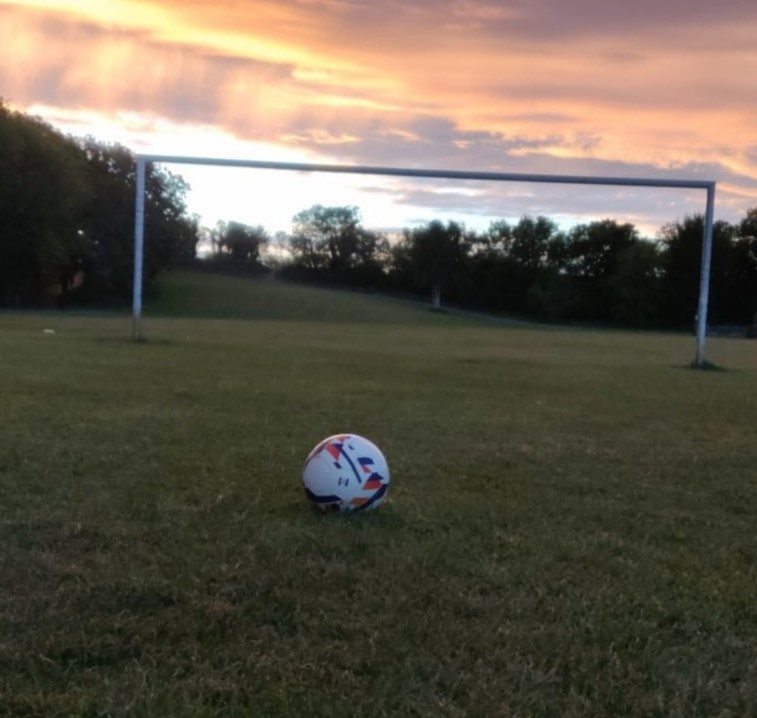
    A football taking in the sunset. Photo by David Doyle

    The Football Association of Ireland (FAI) will provide a €3.6 million funding support package for League of Ireland clubs that will be distributed to Premier and First division clubs.

    The Minister of State for Sport, the Gaeltacht & Defence, Jack Chambers, confirmed that the government will provide additional support to kickstart the SSE Airtricity Premier and First Division in the upcoming League of Ireland season. 

    The FAI have revealed a package of €3.6 million to clubs in the Premier and First Division, providing support for the clubs preparing for a season that will begin behind closed doors. The support package will be of benefit to clubs at the beginning of the season, particularly during the period of the absence of fans.

    “Work is continuing on the safe return of grassroots football when the public health situation allows”

    Jack Chambers

    Chambers took to social media on confirming the funding would be allocated to the League of Ireland. ‘’Positive engagement with the FAI today, I made clear the Government’s support for the return of the League of Ireland’’, tweeted Deputy Chambers.

    “I also provided assurances that we will provide additional supports in the period ahead. Work is continuing on the safe return of grassroots football when the public health situation allows,’’ Chambers added.

    Each Premier Division club will receive a minimum support fund of €215,000, with an additional €135,000 to be added depending on their revenue streams generated from the 2019 season. However, it is thought that more funding may be required as crowds are not expected to return to the games until at least June 2021. First Division clubs will receive a minimum amount of €50,000 for the upcoming season.

    Sponsorship

    The FAI announced a new three-year sponsorship deal with Bank of Ireland, who will be associate sponsors of the League of Ireland and the FAI Cup. Bank of Ireland will launch a range of campaigns for the FAI, as they are reintroducing the community engagement programme, More Than A Club, after it was withdrawn in 2019 due to a loss of EU funding.

    FAI Chief Executive Officer Jonathan Hill spoke at the official announcement of the deal saying: “This is another important day for the League of Ireland football and another significant boost for our domestic game”.

    ‘’The League of Ireland has captured the hearts and minds of Irish football for over 100 years and Bank of Ireland will now help us strengthen and improve the league and cup structures moving forward into the modern era,’’ Hill said.

    When speaking on the reintroduction of the community engagement programmes, Hill was ‘particularly delighted’ that Bank of Ireland will be a supporter of the More Than A Club programme, which is specifically designed to improve the relationship between clubs and local communities around the country.

    This positive sponsorship deal for Irish football follows weeks after the announcement of SSE Airtricity’s extension of its patronage to the Women’s National League. 

    Having sponsored the men’s Premier Division for over ten years, the Irish energy company will now subsidise both the men and women’s leading divisions for the first time. 

    “It is a ‘significant boost’ for the direction of the League of Ireland structure”

    Jonathan Hill

    Hill expressed his delight with the double sponsorship announcement, by saying that it is a ‘significant boost’ for the direction of the League of Ireland structure.

    Clubs have made their return to training this week, as they prepare for the season, due to kick-off on 19 March. Fixtures for the Premier Division have been released, with the First Division and Women’s National League fixtures to be announced this week. Broadcasting deals for the League of Ireland’s upcoming season are yet to be confirmed.

  • Do they Really Know? – An analysis of horse racing’s biggest gambles

    Do they Really Know? – An analysis of horse racing’s biggest gambles

    Horse Racing is a sport synonymous with betting. A lot of people who go to the day at the races like to have a small bet on a race. However, every day, big gambles of a lot of money are put on horses in both Ireland and England. Andrew Blair White analyses whether these gambles are worth following or whether the old racing cliché that ‘the connections knew’ is not quite what it lives up to be.

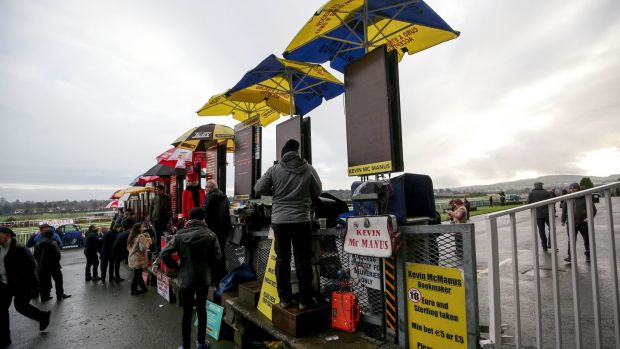
    Picture by Andrew Blair White.

    First and foremost, what is a ‘gamble’ in horse racing terms? A gamble is when a lot of money is bet on a singular horse to win a race, often making the odds with a bookmaker contract as a result. The market support is sustained and is often assumed that it will go on and win. Over the last three weeks, many different races have been analysed to conduct this study. 220 races between Ireland and England – both with flat racing and jumps racing have been examined. 

    To make it easier to look at different types of market support, they have been split into three categories based upon the money on them. The first category is for horses who have been supported by up to three points in the betting book. (For example, from the odds of 3/1 into 2/1) The second category is market support from three to six points in the book. (For example, odds of 6/1 into 2/1.) And the final category is for much larger support at bigger prices, so from over six points downwards in the betting book. (For example, odds of 10/1 into 2/1.)

    The results that were garnered show that the market support for horses did usually give a decent long term effect for how well the horse ran – although that being said, there were many gambles that did not materialise. Of the category one support – there were 1462 horses that were in this criteria. Of those horses, 387 of those horses won and 516 were placed in either second or third. Overall, that meant that 62% of those horses that were backed in this category went on to run very well as a result. 

    In the second category, only 348 runners qualified for the criteria of being within that area of market support. Of this group of horses, only 58 horses ended up winning and 60 horses placed in second or third of their races. This was a percentage overall of 34% success of running well – which is well down on the previous category and maybe shows off that the bigger the price move, the less certain they are at times.

    The final category is for horses who have been backed from a bigger price into a short price by some distance and as a result – all winners in this category would be good gambles landed. There were 650 horses who ran across the races analyzed that were in this category, of which there were 53 winners and 165 places. Overall, this was a 34% strike rate of horses running very well in this category. 

    CategoryRunnersWinnersPlacedWin %Overall %
    Category 1 146238751626.561.7
    Category 2 348586016.733.9
    Category 3650531658.1533.5

    Barry Orr, Chief of Media Relations for Betfair, told theCity.ie:  “Everyday we get a lot of activity both on the Betfair Sportsbook and the Betfair Exchange. This gives the opportunity for punters to try to find overpriced horses and back them accordingly. We get a lot of steamers (well backed horses) each day and as a bookmaker – we have to be very cautious about which prices we are willing to lay (the odds being offered).”

    The data provided over a month long period shows a particular backing of horses at shorter prices and showing an overall decent percentage of good performances from those well backed horses. Also the percentage of good runs from bigger priced horses would make one more tempted to maybe back horses at bigger prices down the line. As is always the case with betting, if you’re backing horses at bigger odds – it doesn’t take as many winners to make a profit long term. 

    Orr said: “The customers that we are most concerned with are the shrewd punters. They look at overnight markets and highlight overpriced horses – if a punter is beating the price, he is well capable of beating the bookie.”

    Therefore, the data provided would indicate that despite the cliché ‘the connections knew’ – it is not as straightforward as that. Well supported horses have a chance of winning races there is no doubt about it, but horse racing is a complex sport and it is never just as simple as following the money.