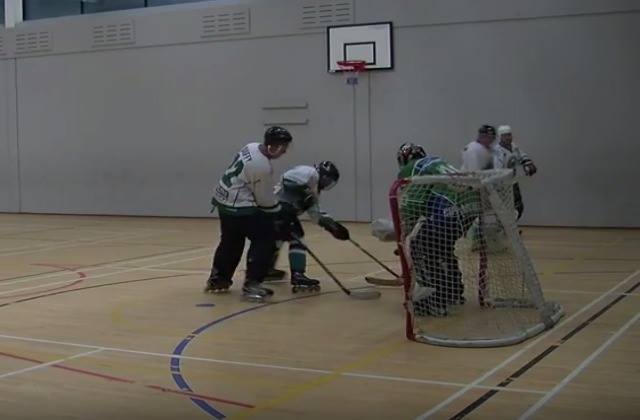
The City’s Aaron Doyle and Conor Murphy went to the Mountview Centre in Blanchardstown, Dublin to see one of the few ice hockey teams currently playing in the Republic of Ireland.
They met the players of The Celtic Clovers, spoke to those involved with the team and generally discussed the sport in Ireland.
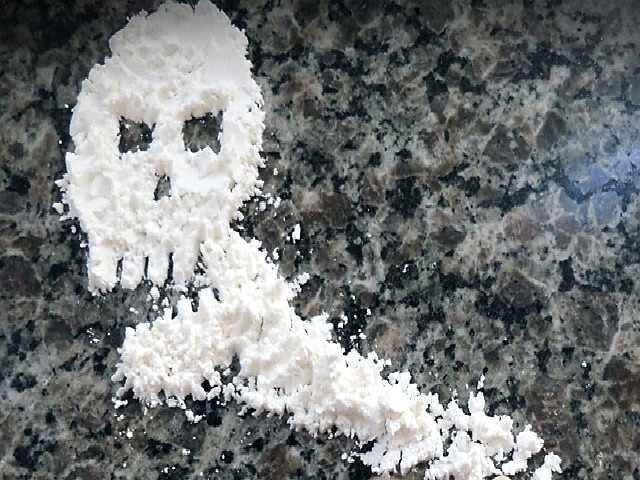
Following Hull City footballer Jake Livermore’s failing of a drug test earlier this year, the issue of recreational drug use in football has come under the microscope once again.
The one time England international tested positive for cocaine use after a random drug test which followed his side’s 2-0 victory over Crystal Palace in April.
Livermore, who was provisionally suspended by the Football Association and his club, had recently experienced the death of his newborn daughter and, on these grounds, his suspension was lifted by the FA in September.
Hull City manager, Steve Bruce, attributed Livermore’s use of the class A drug to the sadness the player felt after his daughter’s untimely passing.
Closer to home, there have been a number of instances whereby League of Ireland players have been cited by the Football Association of Ireland following positive drug tests.
Most recently, the Professional Footballers’ Association of Ireland (PFAI) announced on October 21st that a League of Ireland player had failed a drug test for a banned substance, which the Irish Independent said was ‘believed to be cocaine’.
The player, who remains unnamed, waived his right to have a B sample tested according to the PFAI who confirmed that ‘the drug in question was of a recreational nature’.
The PFAI’s statement noted that the player involved had a right to anonymity and, further, requested that those using social media and other outlets refrain from gossip or speculation until the matter had been resolved.
Positive drug tests have remained however, highly unusual in Irish soccer.
The last, and only, time that a League of Ireland player tested positive for cocaine was in 2003 when, then Shamrock Rovers goalkeeper, Barry Ryan, failed a random test and received a 15 month ban from the FAI. This ban was reduced to 9 months after an appeal and Ryan moved on to the now defunct club, Dublin City FC.
In 2012, Dundalk F.C. midfielder Shane Grimes, then of rivals Drogheda United, tested positive for the stimulant methylhexaneamine, otherwise known as MHA, and was subject to an 8 month playing ban.
Grimes’ situation was an interesting one as the panel judging the case acknowledged that the player most likely used the substance unknowingly – it is an ingredient in the widely used pre-workout supplement ‘JACK3D’ – although the player’s carelessness in this regard was also noted.
A statement by the US Anti-Doping Agency (USADA) a year before Grimes’ positive test was titled ‘Beware – Your Supplement Could Cause a Positive Test’. The statement warned athletes to exercise caution when using products like ‘JACK3D’ or other products that may have in fact been ‘designer steroids’.
For more stories from Conor Murphy, you can visit his Twitter at @conormurphylfc.
In a night that proved to be a resounding success, the UFC left Dublin’s fair city on Saturday night with big plans on coming back next year.
It was a mixed night for Irish fighters overall, with three wins from five fights. However, Paddy Holohan lost his main event fight with American Louis Smolka leaving the Dublin crowd inside the 3arena shocked.
Holohan stepped up to the main event of the night after two fights were cancelled in the weeks leading up to it. Holohan – another big Irish hope from Conor McGregor’s SBG – entered the fight in confident fashion, but was beaten convincingly by the classy Hawaiian Smolka.
After the fight, Holohan addressed the Irish crowd saying: “I never said I was born gifted. But I’ll tell you one thing. When I do come out, I give you everything. My number one love has been MMA and my son, and I just kept both of them close. No matter what happened, I kept trucking forward.”
Holohan’s SBG teammate Cathal Pendred also suffered defeat via TKO on Saturday night at the hands of Englishman Tom Breese.
Breese proved to be too strong for Pendred as he landed some heavy punches to the face of the Irishman resulting in his face being covered in blood. The referee was forced to intervene late in the first round as Pendred was no longer able to defend himself.
Ireland’s sole female UFC fighter, Aisling Daly, got the Irish off the mark on Saturday after beating Brazilian Ericka Almeida by unanimous decision.
Daly was perhaps the stand-out performer on the night as she showed relentless pace throughout the entire fight. Speaking after her victory, she said: “Somebody came into my life, a girl named Lindsey Doyle. She’s had me running like a Ferrari. You saw me out there, I didn’t take a backward step. She’s going to get me on that run for the belt.”
The other two Irish fights saw Neil Seery emerge victorious in a flyweight fight against Jon Delos Reyes, and Northern Ireland’s Norman Parke claiming victory over Reza Madadi.
Despite the criticism of the card itself, the night proved to be very successful and the atmosphere in the arena was electric.
It’s almost a guarantee that the UFC will be returning to Dublin next year, and the hope is for a Croke Park sell-out with Conor McGregor leading the card.
This week saw Show Racism the Red Card (SRTRC) launch its mobile anti-racism exhibition at the Atrium of Dublin Civic Offices.
With over 200 schools and youth services participating, the exhibition will run from the 22nd of October to the 16th of November in Dublin, before moving to other venues.
The aim of Show Racism the Red Card is to harness the high profiles of sports people to combat racism. The organisation works to produce anti-racism educational resources, and to educate young people through workshops, summer camps and coaching activities.
‘One Human One Race’ will feature work produced by children in schools and youth services throughout Ireland as part of their participation in the SRTRC Creative Competition.
The annual competition calls for young people to develop creative messages about racism and integration using written, visual and audiovisual means.
Garrett Mullan, Executive Director of Show Racism the Red Card, told The City: “The purpose of this exhibition is to recognise the work of schools, youth services and young people in their efforts to promote inclusion and oppose racism. The creative competition’s idea is that young people are able to come up with their own messages about racism. Some of the work on display is absolutely outstanding.
“One primary school child made a mosaic out of 30,000 beads. Apparently it took this child 60 hours to make, but its a really interesting piece to have at the exhibition.”
He continued: “The exhibition includes about 40 pictures and links to audio visual entries.We’ve had a huge amount of good quality work that is worthy to be shown in high profile locations. We figure it’s time to show it off and reassure others that young Irish people have a good attitude to both integration and the issue of racism.”
Further information about Show Racism the Red Card is available at: www.theredcard.ie.
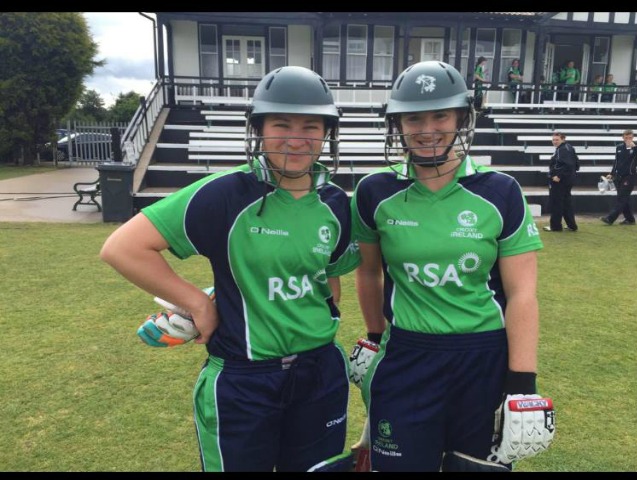
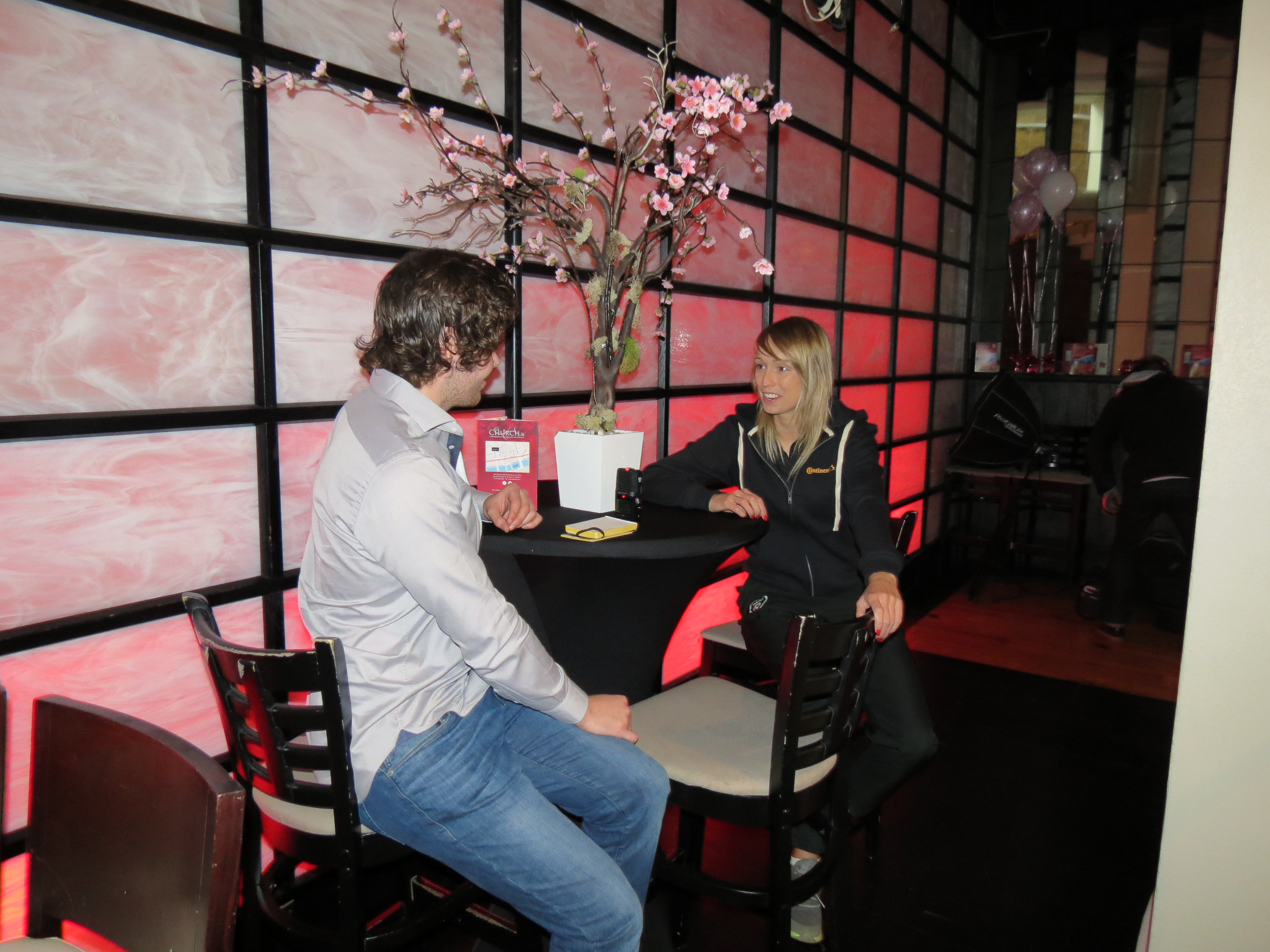
Irish international cricketer Shauna Kavanagh sat down with The City’s Niamh Haskins to discuss her views on women’s sport coverage.
When a woman steps into the ring, pitch or court representing her club or country, it is one of the most exciting yet challenging tasks she can face. In the history of sport, some of the most incredible success stories came from brave and talented women, who not only faced competition from their opponents, but also battled sexism, discrimination and the constant struggle to be treated equally.
Gender bias is an issue that occurs in many areas of life, but it is extremely prevalent in sports coverage. Internationally, only 10 per cent of all sports coverage is of women’s sports. The most recent Irish analysis by the Dublin Sport and Recreational Council revealed that only 78 out of 6,503 sports photos taken by six national newspapers over a 15 day period were of women. The same study showed that over a five year period only 3% of sports photos were of women.
While coverage is limited, Irish international cricketer Shauna Kavanagh emphasised the need to recognise the improvements that have been made.
“The lack of coverage obviously hinders the growth of women’s sport. But it’s important to recognise the strides that have been made over the years in terms of women’s sport in the media. Coverage has definitely improved. When I was younger I don’t remember many female athletes in the media, all my sporting heroes were male athletes,” she explained.
“Obviously there is still greater coverage of men’s sport in the media and I suppose the impact of that would be young girls wanting to play with boys rather than girls, because they may feel it holds a greater importance.”
Despite the same levels of skill, competition, training and dedication, Shauna argues that there is a lot more interest in male dominated sports.
“The interest in women’s sport is on an upward curve and hopefully it will just continue to grow and result in more coverage. I don’t think so much in the way it’s represented in the media, but rather just the frequency of it … it’s not that the calibre of female athletes has changed, just the publicity [for] them,” Kavanagh explained.
“Generally, I think when female athletes are represented in the media, it’s done so in a positive way. It’s just not done enough. I think Irish women’s sports can assist each other in promoting women’s sports in Ireland, which will keep encouraging the coverage of it.”
Having represented Ireland on more than one occasion, Kavanagh said, “The Irish media has covered events that we have been involved in quite well. Our most recent series against Australia in August was live streamed. This was such a boost for women’s cricket in Ireland. It was the first time Cricket Ireland had broadcast any of the women’s games and it was a great success in terms of the number of views and coverage which it secured.
“It’s Cricket Ireland’s intention to stream as much cricket as possible going forward which will increase the awareness of the game, along with the exposure of women’s cricket within the media.
“The Women’s T20 World Cup Qualifiers are being held in Thailand in November and hopefully the Irish media will get on board and ensure there is plenty of media surrounding the event,” she concluded.
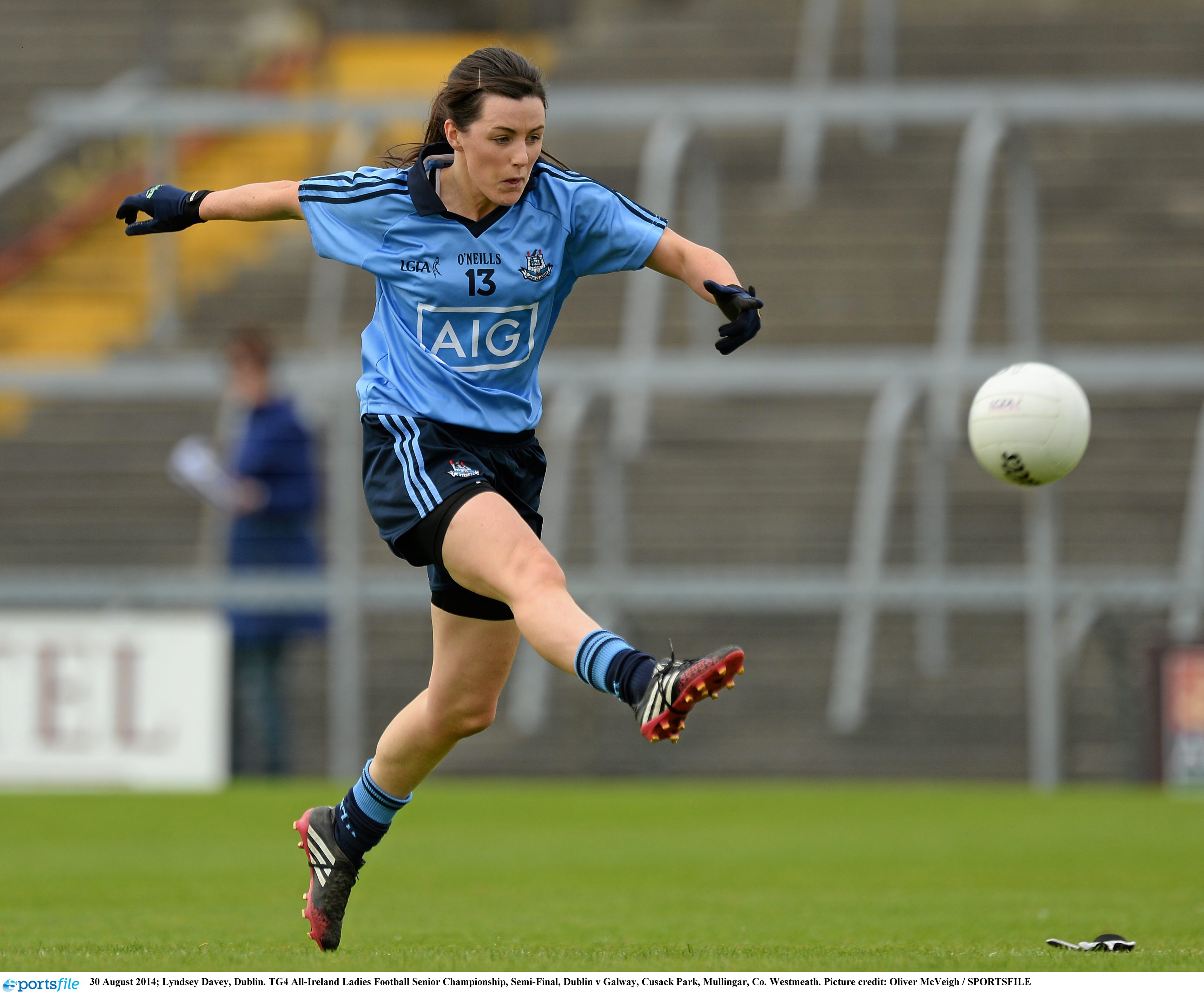
The City’s Alison O’ Hanlon talked to Dublin Ladies GAA All Star Lyndsey Davey about the commitment of playing for your county and her hopes for the future.
It’s been a year of highs and lows for Dublin vice captain Lyndsey Davey whose side were beaten by Cork in a one point defeat in this years All Ireland Final.
Davey also received an All Star award, along with three of her team-mates, for her performances throughout this year’s championship.
“It was a great honour to have been even nominated and I was very shocked to have won as I was up against some brilliant players. It was a great achievement for Dublin to get 11 nominations and I feel privileged to be one of the four Dublin players to have won an All-Star”, Davey told The City.
But success like this doesn’t come easy or without commitment. Davey started playing Gaelic at 5 years old for Skerries Harps and progressed on to play with the boys teams until under 14 when a girls team was set up in the club.
Davey spoke of how much of a commitment GAA players have to give to play county football, but insists that the success is a just reward for the sacrifices she has to make,
“Players have to give massive commitment when playing county football. The standard of Ladies Gaelic is increasing every year and girls are training like professional athletes while still holding down a full time job or education. Even in terms of nutrition players have to be very disciplined.
“At times it can be difficult as you can’t be going out at the weekends with your friends when you have training or are playing matches. However, when you get the opportunity to represent your county, especially in an All-Ireland final, it’s an easy sacrifice to make.”
Given that most GAA players train as much and as hard as many professional athletes, the 25 year old said given the opportunity she would love to play Gaelic football at a professional level, but it’s the love of the game that keeps her going, “I suppose if the option was there then I would but it’s not really something I think about. I play Gaelic because I enjoy it and I love playing for Dublin.”
“Even if there was a chance to play Gaelic for Ireland I would be interested. There was a female International Rules game a few years ago but unfortunately I was unable to play. If the opportunity was to arise again then I would love to play.”
Davey also commented on the highly topical area of media coverage that female athletes receive and the coverage gap that seems to be closing in Ireland in the last few years.
“I think over time that gap is starting to close and female sports are getting increased media coverage. This is helped by the success of Katie Taylor and the ladies Irish rugby team and I think Stephanie Roche being short listed for goal of the year is a massive boost to Irish female athletes. It was brilliant when AIG announced their sponsorship of all Dublin teams, including the ladies, as this has gone a long way in helping to close that gap and I hope other sponsors start to do the same.”
Although Davey’s September didn’t have quite the ending she hoped for she was honoured when her fellow team-mates picked her as their Player of the Year.
“I think to win any individual award is always a nice achievement but the players player is definitely a special one to me, as it was my team mates who voted for me. So many Dublin players had a great season this year and I think that was proven when we received 11 All-Star nominations so to have been picked as the players player of the year was a massive honour for me.”
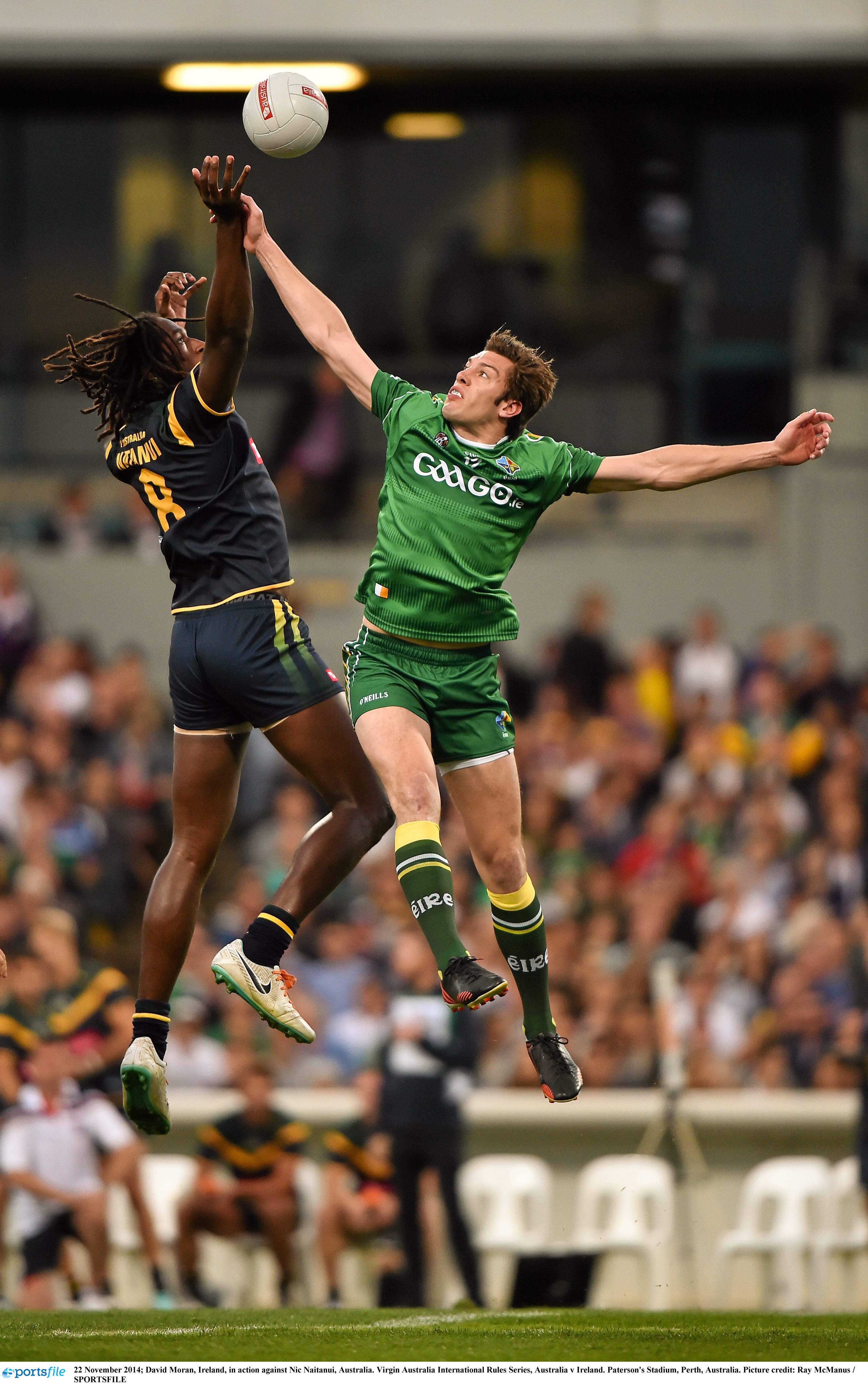
David Moran (right) in action against Nic Naitanui of Australia (left) during the game in Perth’s Patersons Stadium. Picture credit: Ray McManus / SPORTSFILE
Australia regained the International Rules Series title on Saturday November 22 after seeing off a late comeback from their Irish counterparts.
Paul Earley’s side struggled to keep up with the Aussies for the first half, scoring only one point in the first quarter, and went in trailing 35-7 at half time.
“Australia were incredibly accurate in the first quarter – I think they had nine shots at goal and hit seven overs. We were uncharacteristically wild with our kicking and we didn’t hit our targets up front which we had worked on all week,” Earley said in the post-match press conference.
“Outside of that first quarter, we actually won the game. We changed it in the second half, pushed up and went man to man, adapted our system and were much more competitive,” he added.
Ireland did indeed rally in the third quarter, putting on an exceptional performance by dominating midfield and keeping the Australian side under immense pressure. Monaghan’s Darren Hughes got Ireland’s first goal of the game in the sixth minute of the second half, which helped cut the deficit to 41-14.
By the end of the third quarter, Ireland had cut the gap to 16, with Man of the Match Conor McManus and fellow Ulster men Darren Hughes and Mattie Donnelly leading the Irish charge with some superb scores.
The luck of the Irish was with this group of players when Australia’s Nick Smith struck the ball into his own net earning Ireland six points with only four minutes left in the game.
McManus then scored his fourth over of the game to bring Ireland back to within 10 points, but it was not to be, as the die had already been cast and the home side held on to win a fiercely fought contest.
The match – and indeed the way in which the end result panned out – was just what this hybrid series needed, as Ireland had come out on top in the last four meetings. The competitive nature of the tie showed that this traditional fixture does have a future.
Following the sell-out attendance of 38,262 in Patersons Stadium, Perth, the series seems set to return to Irish soil in 2015 with a provision in place for Australia to travel to Croke Park in November of next year. There was a visibly large attendance of Irish immigrants at the match too.
“It meant so much to so many Irish people. The game was excellent – sporting, hard and fair. We needed a good game and we got that. It put International Rules back on track, which was clearly needed. It’s easier to go back to Central Council now and make a case (for the series to continue),” said Paraic Duffy, GAA Director-General.
Many of the Irish squad who travelled Down Under will be re-packing their bags for the All Star’s trip to Boston which takes place at the end of November 2014.
Republic of Ireland international Stephanie Roche is aiming to take her place among football’s elite when the three-person shortlist for the chance to win the 2014 FIFA Puskás Award in announced on December 1, 2014.
Stephanie Roche discusses her chances of landing the prestigious award. Photo: James Hopper
The 25 year-old from Shankill in Dublin would be the first woman to ever win the award should she ultimately secure a majority vote at the FIFA Ballon d’Or ceremony on January 12, 2015.
Established in 2009, the Puskás Award is given to the player – male or female – that has scored the best goal of the year in world football as voted for by the general public. Ferenc Puskás, the Hungarian legend who the award is named after, is one of the top scorers from the 20th century with 512 goals in 528 matches.
Roche’s strike for Peamount United against Wexford Youths on October 20, 2013 is the only goal scored by a female player on the list of ten candidates.
With a viral campaign on her side and the whole of the Republic of Ireland adding their support, Roche is certainly in with a chance of creating history. And with family and friends betting in her favour, Roche is trying not to get too excited.
“A few of them have placed bets yes, I haven’t done it myself so I don’t want to jinx it! A lot of people have been sending me Paddy Power screen shots and stuff like that,” said Roche.
“The support has been unbelievable to be honest with you. I would just like to say thanks to all of the Irish people, I’ve been trying to say it all week. I’ve obviously been away, but my family have been telling me there’s so much in the paper and on Twitter, so the support has been phenomenal.”
Back at the 2010 FIFA ceremony, Matty Burrows of Glentoran claimed third place in the Puskás Award after seeing off the likes of Lionel Messi, Giovanni van Bronckhorst and Neymar. With competition proving just as fierce this year, Roche is hopeful that a lesser celebrated league can gain recognition once again.
“Yeah definitely, I think someone mentioned that to me the other day,” said Roche. “It’s great to see that he got so far and hopefully I’ll be able to do that as well.”
Stars of last summer’s World Cup such as James Rodríguez, Tim Cahill and Robin van Persie will likely provide Roche’s sternest opposition. However, should the striker lose out to one of the leading names in world football, she has no doubt as to who deserves to win the award.
“I follow Manchester United, so I would probably say Robin van Persie. I like him as a player and I remember watching it at the time, thinking it was a great goal, so I’d probably say that.”
After signing for French Division 1 side ASPTT Albi in July from Peamount United, Roche is still settling in to life in the south of France. And after an encouraging start which has seen the striker score two goals in her first eight games, Roche is looking to take her form into the second half of the season.
“It’s been really good to be honest, the football has been great. Obviously, it’s a different culture and a different lifestyle, that’s the only difference,” said Roche.
“Football-wise I’ve loved it; I just want to play as much as I can. I played on Saturday and had a really good game so I just want to build on that and give them everything I can for the year.”
Voting is open on www.fifa.com until December 1 to reduce the list of candidates from ten to three, with the eventual winner being announced at the FIFA Ballon d’Or gala in Zurich, Switzerland on January 12, 2015.
With trends changing more often than the Irish weather it’s difficult to tell how long each new fad will last. However, Ultimate Frisbee is one sport trend that really does seem to have gained a strong fellowship, and with Ireland coming second in the mixed division of the sport in 2012, could Ultimate Frisbee eventually rival the GAA?
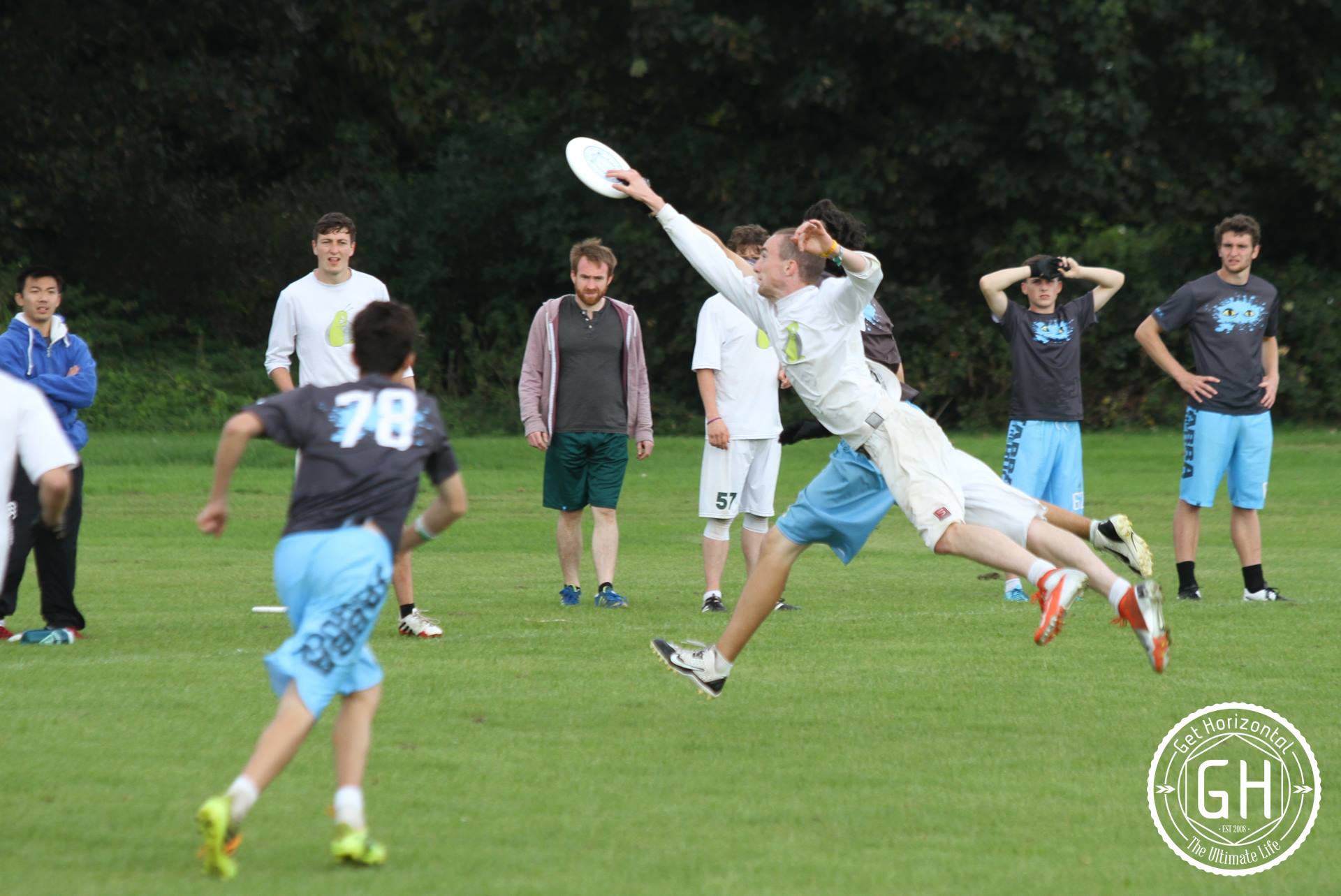
Credit: gethorizontal.com
The captain of the Dublin Institute of Technology (DIT) Ultimate Frisbee team, Aidan Kelly, spoke to The City about what Ultimate Frisbee actually is and why it is one of Ireland’s most up and coming sports.
“Ultimate Frisbee is a sport that basically combines different aspects of soccer, basketball and American Football,” Kelly explained. “Obviously, it’s biggest unique standing point is that it uses a disc instead of a ball, like most sports. It’s getting extremely popular in Ireland and globally due to the fact that it teaches great fundamentals and because it is self-refereed, it is seen as a great example for kids to understand sportsmanship.”
Aidan got involved in the sport through a friend’s brother who started a team in Meath. After being taught the basics, he carried on playing with DIT’s college team. The sport’s main aim is to pass the disc from player to player without it touching the ground from one endzone to another for a score. The player that has the disc cannot run whilst in possession and each team has seven players.
Credit: gethorizontal.com
“Ultimate Frisbee is for both genders and is split into divisions; Open, Women’s and Mixed. Open is mainly men, although girls sometimes play, while Mixed requires at least three of each gender on the pitch at a time. In Irish Ultimate Frisbee, there is a much larger percentage of guys playing than girls, but DIT has been strongly motivated into trying to strengthen it’s women’s team,” said Kelly.
Credit: gethorizontal.com
With the sport being self refereed, it gives a new angle to its players, but is it as skilled as Ireland’s beloved GAA?
“From the outside looking in, I can imagine it must seem crazy, but at a high enough level the intensity of a game can match any GAA match,” argued Kelly. “Fitness and conditioning is crucial.Training differs at different levels. There are a few schools across the country that play it, where the aims are just to get them learning how to play. At college, where the majority of people pick it up, it is a lot more competitive. DIT train three times a week, along with having fitness sessions.”
As well as being Ireland’s most up and coming sport, Ultimate Frisbee is also getting more recognition on an international level.
“Ultimate Frisbee currently has two professional leagues in America, which are both growing each year. There are also many international tournaments that Ireland participate in,” said Kelly. ”I, myself, am going to Dubai to play for Ireland in March in the World Beach Ultimate Championships, which is pretty exciting. Ireland came second in the Mixed division at Euros in 2012 so we’re hoping to come home with more medals and some big wins!”
The President of Ultimate Frisbee Ireland, Brian Boyle, also spoke to the City about what the organisation is doing to promote the sport.
“In 2015 we are hoping to spread the sport more by involving secondary schools, and also move into primary schools which are great to spread awareness of the sport,” said Boyle. “It’s the perfect sport for PE classes and teachers tend to love the whole concept of self-officiating and ‘Spirit of the Game’. We also hope to receive Sports Council Recognition and may have as many as 10 national teams competing at the World and European championships.
“I believe the sport is growing so strongly because of the friendliness of the community and the opportunities it has for meeting new people and seeing new places. I also personally believe it is the most fun team sport to play and offers the chance to get better and improve year after year. We have over 400 members nationwide, but estimate that there are well over 1,000 people actually playing disc sports in Ireland.”
Newly appointed Wicklow Senior Football Manager Johnny Magee Picture credit: Daire Brennan / SPORTSFILE
Newly appointed Wicklow football manager Johnny Magee plans to leave no stone unturned during his first season as inter-county manager.
Former Dublin GAA player, Magee was appointed as manager earlier this month after being part of the teams backroom squad last year.
“I was involved last year with the Wicklow team as a coach and selector so when the opportunity came around, and some of the players expressed that they would like me to stay on, I put my name forward for the position”, said Magee.
Magee, who has played Gaelic football with Kilmacud Crokes from the age of ten, has always loved the adrenaline of the game and wanted to still be part of it all after retiring.
“I played for Crokes and Dublin and I knew that when I retired it would leave a big void. I liked the buzz and adrenaline of being on the field and in the dressing room and I miss that”, he said.
He also added that he hopes to get the opportunity to manage Crokes and even Dublin in years to come.
The former All Ireland star’s aim for this coming season is to make sure that his players are playing consistently week in, week out.
“There is a lot of responsibility being a manager”, he said, “I have to make sure that 30 lads are fit and ready to perform at county level”.
The new manager of the garden county has brought two other former Dublin players to the management team this year, his brother Darren Magee, and former All Star winner, Ray Cosgrave, as team coach.
“Darren has been coaching for 10 years now, so he has a lot of experience with that, obviously he is my brother so I trust him as well”, Magee said.
“Darren played mid field, Ray played in the forwards and I’m a defender, so I think that with the three of us, we will be able to cover every angle to try get the best out of our players”, he added.
Wicklow’s first campaign under Magee will begin in the O’Byrne Cup next January, where he hopes to see the team promoted from Division Four.







You must be logged in to post a comment.