Tag: sports

  • 11 Top sports stories of 2013

    11 Top sports stories of 2013

    Following 2012 was always going to be tough to match with regards sporting moments, but 2013 certainly left us with some memorable sporting events. The City took a look back at some of the most unforgettable sports stories of 2013.

    Lance Armstrong admits to doping: In January 2013, Lance Armstrong shocked the world by admitting to doping during all seven of his consecutive Tour de France titles. Despite the fact that most people suspected it, it was still fascinating to hear the former record holder admit to the doping after so many years of denial.

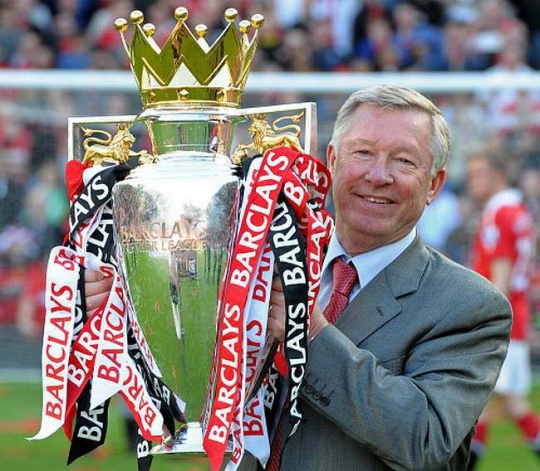
    Ferguson Retires: The premier league said goodbye to one of its longest serving and most successful managers when Sir Alex Ferguson announced his retirement as manager of Manchester United in May this year. The 26 year stint at the club saw him win 13 Premier League titles, 5 FA Cups, 4 League Cups and the Champions League twice. He ended his final season at the club in great fashion leading United to their 13th Premier League title and 20th English title overall.

    Oscar Pistorius murder charges: On February 15th,  the world was shook by the news that famous Paralympian Oscar Pistorius may have murdered his girlfriend, Reeva Steenkamp. Pistorius has yet to stand trial for the case in which his 29 year old girlfriend was shot dead at his luxury home in South Africa.

    Andy Murray wins Wimbledon: It was the moment the British public had waited so long for, and the pressure was higher than ever for the young Scottish man, but Andy Murray held his nerve to win his first Wimbledon title in July this year. The 26-year-old Scot became the first British player to win the Wimbledon men’s singles title in 77 years with his victory over Novak Djokovic.

    4000th winner for McCoy: Northern Irish jockey Tony McCoy made history in November when he won his 4000th career win over jumps. McCoy, who had made no secret about his desire for a 4000th win, reached the milestone during a second of two races at Towcester Racecourse, Northamptonshire.

    Irish Ladies bring home the grand slam: The Irish ladies Rugby team made history in March winning their first ever Grand Slam after a muddy battle against Italy in Parabiago. Irelands captain Fiona Coghlan led the side to a 6-3 win as they secured their fifth win of the 2013 six nations campaign.

    Boston Marathon bombings: On April 15, the world watched in horror as bombs went off near the finish line of the Boston Marathon. The horrendous and cowardly act killed 3 people and left 264 gruesomely injured.

    Heffernan takes gold: Irish Walker Robert Heffernan won gold  after triumphing in the 50km walk at the World Championships in Moscow earlier his year. After narrowly missing out on a medal on four occasions at the championships, the Cork native took a clear lead after 44km to secure his victory. He became only the third Irish athlete to win a Gold medal at the World athletics championships, following on from Sonia O’Sullivan and Eamonn Coughlin.

    The Lions Tour 2013: The British and Irish Lions tour took place during the summer and saw the team take a 2-1 victory over Australia in a three test series. The win was perhaps overshadowed from an Irish person’s perspective by the controversial dropping of Brian O’Driscoll by Coach Warren Gatland before the final game.

    Clare Hurlers win All-Ireland: Clare won the All-Ireland hurling title for the first time since 1997 in September. They overcame a strong Cork side to win 5-16 to 3-16 in Croke Park. Hero of the day, Clare hurler Shane O’Donnell scored three goals in the opening 19 minutes of the game to help his county to victory.

    Ireland narrowly defeated by the All Blacks: Hearts shattered throughout the country as New Zealand made a remarkable come back to bring the sides level in the last seconds of Ireland’s test match against the All-Blacks at the Aviva Stadium in November. A conversion was all the separated Ireland from the biggest win in its rugby history. As the ball soared between the posts Ireland’s almost brilliant victory turned into one of the country’s most heart-breaking defeats.
  • Are we happy to accept failure?

    Are we happy to accept failure?

    Image courtesy of Wikipedia commons
    Image courtesy of Wikipedia commons

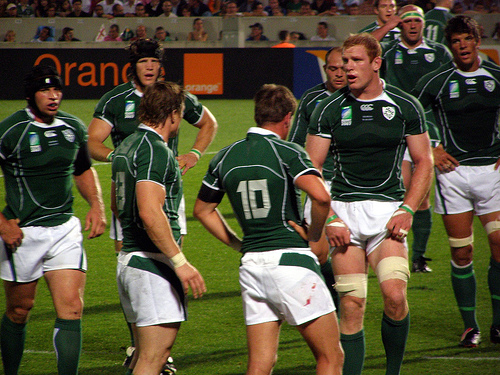
    Ireland’s agonizing defeat against New Zealand’s All Blacks in the Autumn Internationals last weekend signaled yet another disappointment for Irish sports. Having lead the game the whole way through, all it took was one try from the Blacks to crush Irish dreams in a matter of seconds.

    Within minutes of the final whistle being blown, Facebook and Twitter were awash with comments from members of the public expressing their anger and disgust. Then, just like that, the public’s words of resentment were replaced with words of consolation for a team that had “played so well.”

    In his post-match interview to BBC, Seán O’ Brien expressed his frustration at his teammates for letting such a monumental victory slip through their fingers. Despite receiving words of encouragement from the journalist, he summed it up for all of us when he said: “we lost.”

    The question that must be asked then is, are we as a country happy to accept failure?

    Ask yourselves, would New Zealand have been so quick to emphasis the positives had the roles been reversed? The answer: probably not.

    As the Irish sporting history books would suggest, we have come to be known as a nation of “second bests.” Back in 1990, Ireland suffered a harrowing loss to Italy in the world cup quarterfinals. Despite not managing to win a single game during the tournament, thousands thronged the streets to welcome home our “heroes.”

    Evidently, there are those who will argue that it was a massive achievement for a country so small, but Portugal and Switzerland who are of similar population size to us have both managed to reach the top level in various sports, so why can’t we?

    Ireland is a small nation that punches well above its weight in many aspects of life. We are home to some of the world’s greatest writers like Oscar Wilde, and great musicians like U2, so why doesn’t the same success transcend to sport?

    Of course, we have produced many champions such as Ronnie Delaney, Michael Carruth, Robert Herffernan, Eammon Coghlan, and Sonia O’ Sullivan among others, but in recent times, our results have failed to match our potential.

    Sports Psychologist Canice Kennedy believes that this is because “ we have a national inferiority complex which is typical of small, young nations previously occupied by a large foreign power.  This transfers into low levels of expectation in terms of sporting success in some sports particularly where we have not been successful in the past or where we do not have modern training facilities. In these sports we cannot compete with our neighboring countries…while we are never happy to lose, we are often happy not to lose badly.”

    The reality is that there is a very thin line between success and defeat. In his famous poem entitled If Rudyard Kipling said “If you can meet with triumph and disaster, and treat those two imposters just the same…you’ll be a man, my son!” However, Roy Keane, one of Ireland’s leading sportsmen is one who is unwilling to accept this mentality as he famously once said, “show me a good loser, and I’ll show you a loser.”

    Ultimately, if you can find happiness in defeat, then you’ll never be a winner. Keane has recently taken up post as assistant to Ireland’s new football manager Martin O’ Neill. Only time will tell if he’ll be able to communicate his winning ideology to a bunch of players who are in desperate need of some tough love. And, who knows, if he can succeed, then maybe other sports will follow suit.

  • O’Neill and Keane appointed as Irish dynamic duo

    O’Neill and Keane appointed as Irish dynamic duo

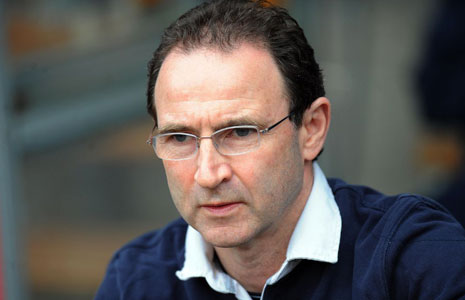
    FAI chief executive John Delaney has confirmed that Martin O’Neill will be the new Republic of Ireland manager, with Roy Keane as his number two in what the Irish support hope will signal “a new era for Irish football.”

    O’Neill is expected to appoint his own backroom staff with the combined package estimated to cost the FAI more than €2 million per annum.

    Delaney has stated that an official press conference and unveiling will take place on Saturday 9th November.

    Interestingly, it was Martin O’Neill’s decision to bring Roy Keane into the frame, with Delaney claiming that the FAI had no participation in the decision.

    The new number one and two have a lot in common despite their almost 20 year age difference. Both have played for Nottingham Forest under the great Brian Clough, and both men have held the reins at Sunderland football club.

    With Keane and O’Neill  both having taken a brief hiatus from the game since their last jobs, the Ireland vacancy seems like a fantastic opportunity for the two Irishmen to get back into the game, albeit at an international level which neither have experience in managing.

    Keane will take his first step back into the game after his spell at Ipswich Town in 2011.
    Keane will take his first step back into the game after his spell at Ipswich Town in 2011. Credit: Figo29 on WordPress

    O’Neill and Keane are a perfect balancing act – O’Neill, the affable Belfast man with his modest personality and calm temperament. Keane, with his determined and infallible attitude, renowned for his hot-headed nature and no-nonsense take on the game.

    Neil Lennon stamped his approval on the appointment stating “they’re two great characters with a vast knowledge of the game, two very proud men as well. God help the players!”

    On paper, this looks like a potentially successful appointment, although the danger is also there for all to see. It would have been a huge mistake to hire another foreign manager after Trapattoni’s spell, but Keane and O’Neill are widely respected and influential figures in the game. And more importantly, they’re Irish!

    However, can two big characters and personalities work so closely together and generate a successful partnership to take Irish football forward, or will it be a case of one step forward and two steps back for John Delaney and the FAI?

    The Irish support has already taken to social media sites such as Facebook and Twitter, in particular, to voice their opinions on the matter. The decision seems to be met with a widely mixed reaction.

    Paddy Power have tweeted: “Ireland to qualify for Euro 2016 now 5/6! 3/1 to qualify for World Cup 2018. First to leave their job, 4/6 Keane v 11/10 O’Neill.”

    Featured image credit: Wiki