Tag: sports

  • Irish ice hockey will be ‘completely transformed’ by arena development in Cherrywood, says IIHA President 

    Irish ice hockey will be ‘completely transformed’ by arena development in Cherrywood, says IIHA President 

    The ice hockey community in Ireland rejoices as Prime Arena Holdings is to submit planning permission for the country’s first ever “permanent, Olympic-standard ice facility”. 

    By Kelly Smyth 

    In a recent statement, the Irish Ice Hockey Association expressed its full support of the National Ice Arena Project in Cherrywood, highlighting the need for Irish athletes to have a domestic space: 

    “For more than a decade, the IIHA has worked to advance the case for permanent Olympic-standard ice facilities in Ireland, in order to support athlete development, grow participation and allow Irish athletes to train and compete at home.” 

    “The Association therefore welcomes this proposal as a significant and positive milestone in that journey”. 

    Speaking to TheCity, IIHA President Aaron Guli, said he’s  relieved that the proposal is progressing, having advocated for a permanent rink for over a decade. 

    “The IIHA has been trying to make it happen. We are the only country in Europe without a permanent ice facility,” he said.  

    The proposed arena is to consist of two professional standard rinks, one of which would be home to a team like the Belfast Giants, while the second would be open to IIHA teams.  

    “A professional team and arena will help boost interest in the game at a grassroots level. The second rink would give us a home,” Guli said.  

    “It’s long overdue. Our closest neighbour, the UK, has over 66 rinks across the country while we don’t have one.” 

    Currently, players in the Republic of Ireland are forced to travel to Dundonald International Ice Rink in Co Down for training sessions and competitions, making it incredibly difficult to grow the sport domestically. 

    “I mean we have to travel to what is essentially another country to play the sport,” said Guli.  

    Co-founder of Dublin Buccaneers, Derek O’Neill, said he’s frustrated with the lack of local facilities, describing the journey to Dundonald as “very time consuming”. 

    “It’s about a seven-hour round-trip when you factor in the commute, getting ready, getting showered and being on ice,” said O’Neill.  

    O’Neill also revealed many of the open slots for training at the rink are rather late in the evening, further disrupting players’ ability to train.  

    “On a Friday, we can only get a slot at 9:15pm,” he said. “Sometimes you won’t be home until well past 1am.” 

    An Irish youth team practicing in the Dundonald International Ice Rink. Photo Credits: Derek O’Neill. 

    This challenge is not unique to the Buccaneers, and Guli said that the IIHA believes it is another major part in preventing ice hockey from thriving. 

    “If people don’t see the sport, they won’t play the sport. Nobody sees it because we are forced to go so far away even though we are here,” he said. 

    Guli claimed that the lack of ice hockey facilities in Ireland can also be limiting for many immigrants living in the country, who cannot play the sport they grew up with: 

    “There’s nothing here for diaspora. You have a lot of North American and Eastern European players who move here but don’t have the infrastructure to play.” 

    “It’s not the seventies or eighties anymore, Ireland has a very diverse population and there should be something for everyone, especially in a sports heavy country,” he added. 

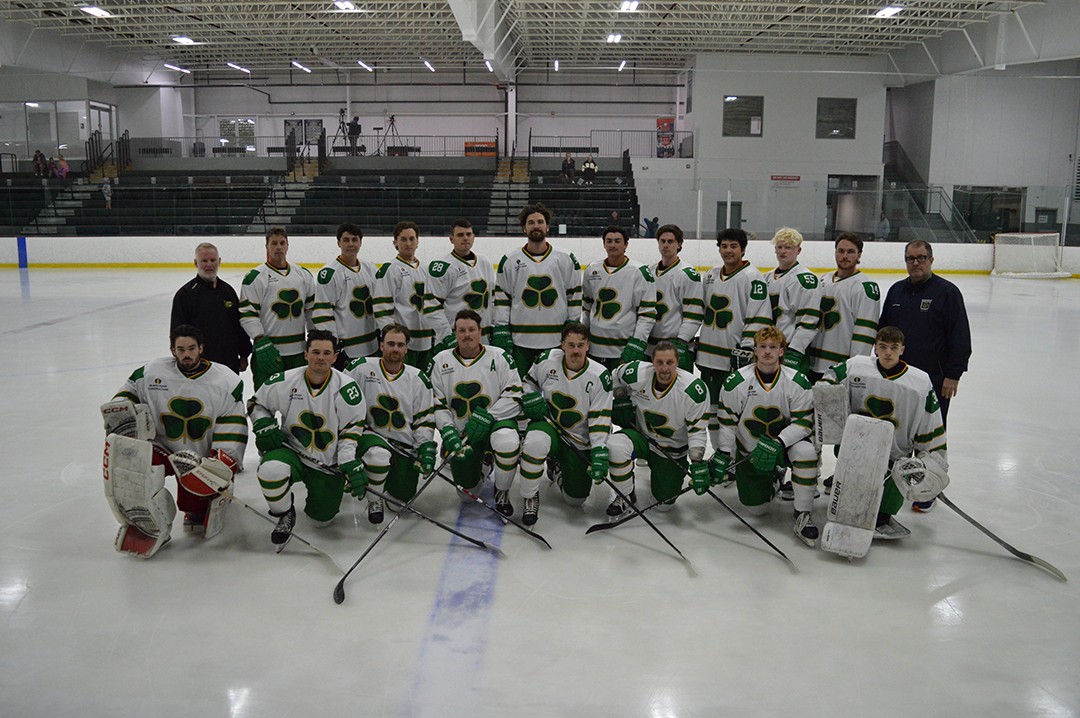
    O’Neill agreed with this statement, highlighting the diverse range of players the Dublin Buccaneers have as one of the largest senior clubs in the country. 

    “Our team has such a broad spectrum. We have Canadians, Americans, Ukrainians, Latvians, and more,” he said.  

    He also emphasised that the team was also home to a large number of “home-grown” talents on the team, showing there is enough domestic interest to justify the development in Cherrywood.  

    “We are very eager to see it being built. Every few years we’ve been hearing rumours start and then fizzle out. You get a little cynical,” said O’Neill. 

    “This development is reliable; it’s got backing from official bodies like the Olympic federation, so that’s very exciting.” 

    The development may come sooner than expected, according to Guli, who revealed that the arena may be ready by as early as 2030. 

    “If all goes well, planning is due to be submitted by this May. It’s hard to know how long that will take, but we’d like to see the facility open in the next five years,” he said.  

    The IIHA holds hope that the development in Cherrywood will support domestic growth of the sport and see it go “mainstream”. 

    “I think that ice hockey in Ireland will be completely transformed,” said Guli.  
  • The Comeback of Forgotten Irish Sports 

    The Comeback of Forgotten Irish Sports 

    Sports like hurling, football, and rugby are considered most popular in Ireland. Most athletes learn the rules and how to play at a young age. Ireland’s deep-rooted passion for sports stems from a long lineage of physical activities that date back to as early as the 19th century. While the Gaelic Athletic Association (GAA) keeps traditional sports like hurling and Gaelic football at the heart of local communities, other traditional sports have long been forgotten, while some are making a comeback in other counties or rural areas. 

    One sport that is gaining popularity in Ireland is rounders. 

    This type of sport was played long before the term rounders was coined; its origins can be traced back to medieval Europe. 

    Sport historian Professor Paul Rouse said,“Hitting a ball with a stick is going out all across the world, and there are variations of this big game that can be seen in different cultures”. 

    In Ireland the history of rounders goes all the way back to 1744, where versions of the sport had been played for generations.

    Rounders is considered a traditional Irish sport and is one of the sports included in the GAA charter since 1884. 

    Shirley Lennon, secretary for GAA rounders, told The City, “When the GAA was first set up in 1884, there were four sports: hurling, football, handball, and rounders. The organization changed greatly over the years, and rounders was revived in the 1950s.” 

    Rounders is a bat and ball game team sport where two teams alternate between batting and fielding. 

    It’s similar to baseball and softball but it’s different in terms of mechanics and equipment. 

    “We would have more space between our bases… the ball we use is different; we use the slither, which is the same ball they use for hurling,” Lennon explained. 

    Currently, there is no official team for rounders, “just like all GAA sports, it’s all part-time volunteering,” Shirley Lennon said. 

    Despite this, rounders is slowly gaining popularity, especially in Dublin. 

    “I think we definitely are gaining in popularity, especially since COVID. During 2021 to 2022, there’s been quite an explosion of rounders clubs,” said Lennon. 

    Rounders is also the only sport in the GAA that features mixed teams, with both male and female players competing on the same team. 

    Rounders is expected to be one of the games to be included in the upcoming 2026 Tailteann games, that is to be held in Kilkenny in the spring of next year. 

    Another sport that has made a comeback in Ireland in recent years is road bowling. 

    The origins of road bowling are unknown, but it is believed that stone-throwing traditions existed across Europe during the pre-1600s. 

    The earliest record of road bowling in Ireland started in the late 17th century to the early 18th century. The sport was commonly practiced in County Cork and Armagh. 

    Road bowling slowly faded during the 20th century due the fact that some impromptu gatherings with occasional betting led to the game to be banned by authorities, but the game was kept alive by small communities in rural areas.  

    The Road Bowling Association kept the sport alive throughout the years.  

    Seamus O’Tuama, public relations officer for the Road Bowling Association, told The City that “when the association was set up in 1954 it created competitions for players using the standard rules”.

    The association also included competitions for women and under 18s. “Then over time team competitions started, then in 1963 the association of Ireland got involved with two international road bowling associations, Germany and the Netherlands, which established European championships,” O’Tuama added.  

    Today, thanks to the influence of social media, road bowling is slowly making a comeback in Ireland; games are now being organized in County Cork and Armagh. 

    Paul Rouse said, “Road bowling is gaining its popularity because it offers something different and it’s incredibly compelling viewing.” This comeback is no surprise because “games go through queues of popularity and that’s normal. It’s not unusual,” Rouse added. 

    Road bowling competitions are continuously being held in Cork.

    Sports are an important aspect of Irish culture, and it’s a factor that shapes identity in Ireland. 

    “Sports are something that thrive both at the local level and at the international level. People have traditions in their lives, and one of the traditions is to play those sports; it’s about family, it’s about heritage, and it’s about locality… so the comeback of these sports would add to what’s there already,” said Rouse.

  • From Title Thrills to Relegation Spills: The League of Ireland’s Latest Chapter Concludes 

    From Title Thrills to Relegation Spills: The League of Ireland’s Latest Chapter Concludes 

    By Aidan O’Boyle

    Another year of chaos. Nothing new. The League of Ireland delivered yet again just like Shamrock Rovers, who stumbled over the line to get their 5th title in 6 years.

    The Champions season started how it ended, with a defeat. After a slow start to the season with just the one point in three games, the south Dublin side went seven games unbeaten. That run was ended by bitter rivals Bohemians in one of the games of the season in late April. 

    That sore loss clearly gave them a push as they then went 11 games without defeat with 8 of those being wins. But back came Bohs to defeat them for the third time that season and end the strong run. 

    Another eight games unbeaten in the league which included them finally getting a win over Bohs, thrown in with a few nice cup and European qualifiers wins, set up Shamrock Rovers for a straightforward stroll to the title. 

    However, they made it a little bit uncomfortable on themselves with three consecutive defeats before finally securing the title with a 1-0 win over Galway United in front of their adoring fans. 

    The Shamrock Rovers team and backroom staff celebrate. Photo: Stephen McCarthy/Sportsfile.

    Pat Shelly a lifelong Shamrock Rovers fan was delighted with his teams’ title win. “The lads made us sweat a bit, but we did it. We had some excellent unbeaten runs this season. Hopefully we do the double now.” 

    The double in question was the league and cup double. Their opponents in last weeks FAI Cup final on Sunday were Cork City. The Leesiders had a horrible league campaign ending it relegated and with an abysmal four wins in the league. They were desperate to end on a high note with a cup win and give their fans something to smile about. 

    However, it was not to be as Shamrock Rovers completed the double with two second half strikes from Rory Gaffney defeating a spirited Cork.

    Seanie Maguire celebrates scoring Cork City’s first goal in their cup semi-final win. Photo: Ryan Byrne/INPHO

    Derry City and last season’s champions Shelbourne ended their seasons on a positive note securing European football for next season. 

    Shels who finished third will be playing in the Conference League qualifiers. Losing Damien Duff halfway through the season didn’t help but Joey O’Brien steadied the ship with a great end to the league season going six unbeaten including massive wins against Shamrock Rovers and Bohemians. 

    Shelbourne fan Jack Dinan was relatively happy with the season “We’re playing in the Conference league group stages and did decent in the league. A few new signings with the prize money from Europe will set us up nicely for next season.” 

    Derry whose last league defeat was on the 3rd of August against the league champions, finished second which confirmed Conference League football for next season. However, a Shamrock Rovers cup win upgraded them to Europa League football which is a big boost to the The Candystripes.

    Bohemians’ fans were also in the unfamiliar position of supporting their arch-rivals. They were handed a Conference league qualifier spot after Rovers completed the double.

    A mixed season from Bohs seen them exit the cup in the 3rd round and hang onto 4th place in the league with a comprehensive 4-1 win over Drogheda on the final day ending their run of four league games without a win. 

    St. Patricks Athletic won’t be playing European football next season as they finished their season with three stalemates. This, coupled with a shock semi-final exit in the cup at the hands of Cork City, meant it was a dismal end to the season for The Saints, who also said goodbye to their teenage prodigy Mason Melia as he departs for Spurs in January. 

    Despite finishing sixth in the league Drogheda United had an “absolutely fantastic season” according to their manager Kevin Doherty. After finishing ninth and in the relegation playoffs last season it was a more consistent year for The Drogs this time around. A loss on the final day against Bohs ended their European dream. 

    Drogheda manager Kevin Doherty was positive about his teams season. Photo: Seb Daly/Sportsfile. 

    Sligo Rovers and Galway United both avoided the relegation playoffs at the expense of Waterford who played Bray Wanderers in the playoff last Friday. 

    Relief was the overriding emotion for Waterford fans and players as goals from Conan Noonan and Sam Glenfield broke Brays hearts again in what was their second playoff defeat in two years.

    Galway avoided the dreaded play-offs after producing a performance the late Ollie Horgan would have been proud of with a hard fought 1-1 draw on the final day of the season against Waterford.

    Sligo Rovers struggled with the loss of several key players, but a breakout season for 19-year-old Owen Elding helped soften the blow. Having occupied the bottom of the table for a period, seventh in the league isn’t a bad finish in hindsight for the West Coast team. 

    While many fans won’t be happy with their teams’ season, neutrals will all be saying one thing: More of the same next season please.

  • Demographic Divide Deepens Between Rural and Urban GAA Clubs 

    Demographic Divide Deepens Between Rural and Urban GAA Clubs 

    By Niamh Dobbs

    The GAA has been an integral part of urban and rural communities across the 32 counties. It is a huge part of Ireland’s culture, with over 1,610 clubs across the entire 32 counties on the island. However, there have been noticeable changes regarding its demographic. 

    According to an article published by the GAA, almost half of the population of Ireland lives on a thin strip along the east coast of Ireland. However, only 18.6% of GAA clubs exist in this region. 

    The article states that “Rural GAA clubs are struggling to field teams because they just don’t have the numbers, while urban GAA clubs have major issues catering for the surging populations in their catchment areas.” 

    To get a clear understanding of how GAA clubs around the country are adapting to this, TheCity.ie spoke to two clubs, one rural and one urban. 

    Seán Roche is a committee member and mentor of three teams with Wexford club Duffry Rovers.“Based on the last 4 years’ membership, player numbers are down overall but 2025 is the first year they have decreased since 2022 so difficult to say if this is a trend or a blip,” said Roche. 

    “If I look at the underage membership which is the key indicator of future club membership, I can see that overall underage membership in 2022 was 349 whereas in 2025 it has dropped by 8% to 321. This is a significant drop in 3 years which if it continues will be a challenge for the club going forward.” 

    Roche says there are a number of reasons for the fall off in membership, particularly amongst teenage girls. “Not getting game time at a younger age resulting in feeling left out. Starting college, especially if moving away from home. Excelling at other sports versus GAA – Rugby, Athletics, Soccer,” he said.    

    In comparison, Dublin’s Cabinteely GAA women’s teams are booming. “I would say that there’s an awful lot more girls participating, which as a dad of a daughter I’m delighted with,” said Barry Rojack, Chairman of Cabinteely GAA.  

    Roche goes on to highlight the importance of the GAA, especially for children and rural communities. 

    “The GAA field can be a central point for all – for kids to gain a new group of friends, a sense of belonging, a sense of what it means to represent your family, your parish, your area. What it means to be part of a team and to stand up for one another and for others to stand up for you.” 

    While rural clubs are struggling with their numbers, urban teams have different challenges to face. 

    Cabinteely GAA, located in Dublin’s south-side, now has 350 members. 

    Although they are a smaller club despite being in an urban area, they pride themselves on being an “outlier” in comparison to the rest of Dublin’s GAA clubs. 

    With Cabinteely’s location, they strive to prioritise inclusion and diversity rather than fighting to fill teams.  

    “There’s a very strange demographic,” said Rojack. “So you have incredibly wealthy people on sort of the Carrickmines and Foxrock side, and then you have people who are barely getting by now, obviously, within both areas you’ve got people who are, you know, standard sort of middle class families, and they’re ticking over and whatever. But the reality is, we have very disadvantaged people in our area, as well as very wealthy, which is a strange mix. So culturally, our number one priority has never been about winning. So, winning is not part of our focus. Our focus is on continuous improvement, individually and collectively.”  

    While there are clear differences between the two clubs, both are keen to stress the importance of GAA participation, particularly for younger generations. 

  • England and Canada advance to final stage to battle for Women’s Rugby World Cup Glory

    England and Canada advance to final stage to battle for Women’s Rugby World Cup Glory

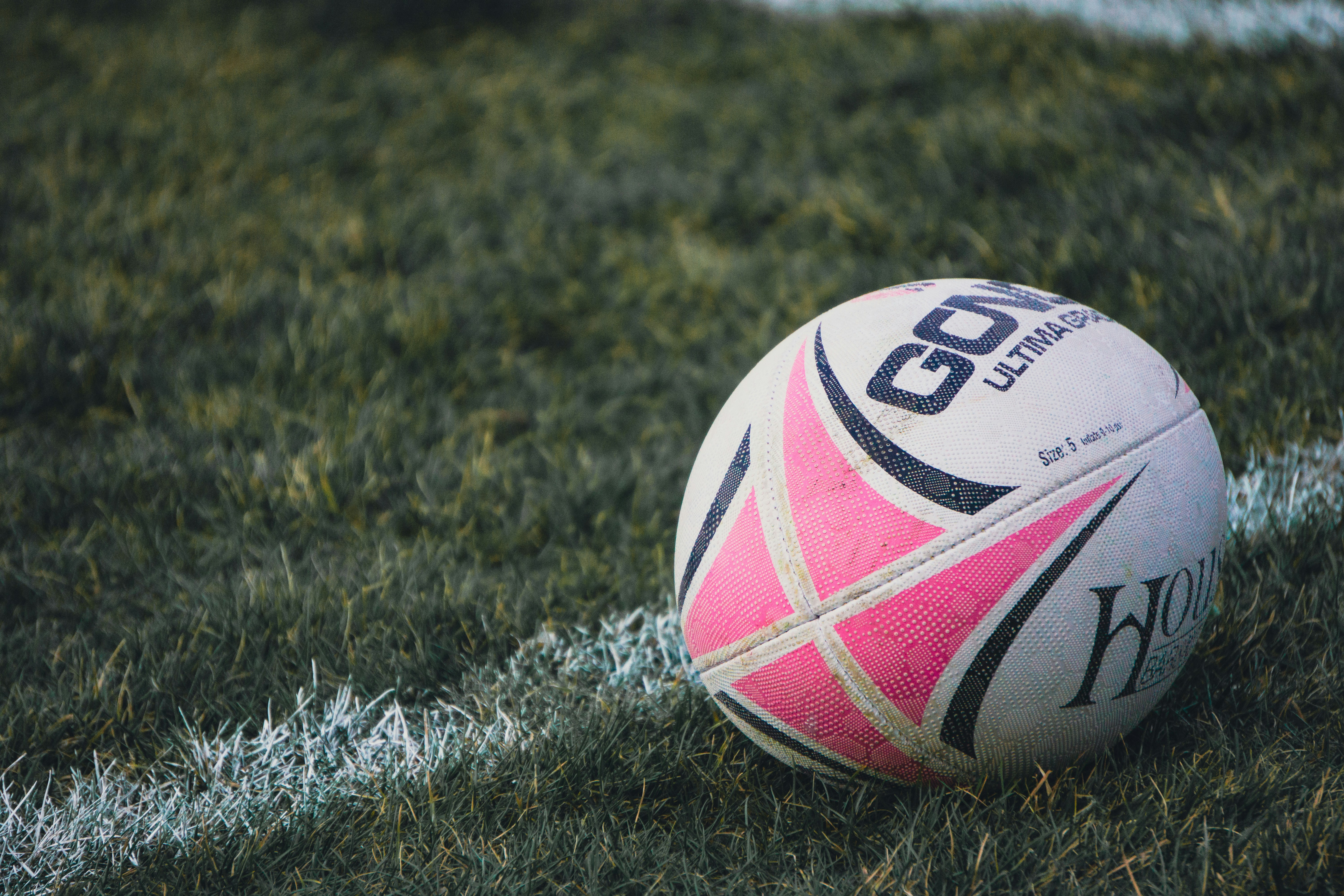
    Photo by Sergey Omelchenko on Unsplash

    It was heartbreak for France and New Zealand over the weekend as they saw their hopes of Women’s World Cup glory slip away. 

    France were without Axelle Berthoumieu following her 12 match ban for biting Ireland’s Aoife Wafer during their quarter-final clash. The flanker was a huge loss for ‘Les Bleues’ in the semi-final clash vs England. 

    England’s Ellie Kildunne was a crucial asset to her side, returning to the squad, following a quarter‑final exemption due to a concussion.

    Kildunne’s killer impact came in the form of two tries that proved vital to the shift in the game. 

    “Ellie is absolutely electric; she can make something out of nothing,” said English Captain, Zoe Aldcroft following her teams victory on Saturday 

    France ebbed and flowed throughout the game, with an inconsistency that betrayed the magnitude of the occasion. Tries from Kelly Arbey and Nassira Konde just weren’t enough to close the gap.  

    It was clear that the strength of England’s bench, fitness and overall physicality in the latter stages were paramount on their road to victory. 

    In the other semi final, Canada produced a dominant first half, scoring several tries and securing themselves a strong lead going in to the 2nd half. New Zealand fought back, but couldn’t manage to overturn the lead their opposition had built.  

    Justine Pelletier and Asia Hogan‑Rochester were just some of the power houses at Canada’s disposal on Friday, the pair could have a pivotal impact in their Final clash with England on Saturday the 27th of September at 4pm in Twickenham. 

    Photo by Billy Brodzinski on Unsplash

    This is Canada’s first-ever Women’s Rugby World Cup final, making this a historic moment for the team and for their country. They also had the honour of knocking out the reigning champions on their road to the final.  

    England return to the final following the heartbreak of 2022, where they narrowly lost to New Zealand. The Red Roses will certainly be seeking redemption and a chance at reclaiming a title that hasn’t been theirs since 2014. 

    Women’s sport has never been as important as it is right now. We live in a generation of social media, news coverage and an ‘if you can’t see it, you can’t be it’ mentality.  

    This Women’s Rugby World Cup has seen more coverage, larger attendances and greater investment than ever before. It is just a stepping stone on the long road to equality.  

    “We’ve seen more than 300,000 fans inside the stadiums, more than double the attendance we had in the last World Cup in New Zealand-” said Alan Gilpin, CEO, World Rugby, in an address to the media to discuss the four-year vision for the women’s game.  

    Those who pull on their national jersey represent their country with pride and carry their nation’s hopes on their shoulders. This is a chance for both teams to inspire a new generation of young women to play rugby.  

    So will England’s experience and depth carry them to victory on the day, or will Canada’s momentum and belief see them emerge victorious for the first time? 

    Statistically, the odds are very much in England’s favour but fans can rest assured that Canada won’t take this opportunity for granted. 

    Stats from Rugby World Cup Website https://www.rugbyworldcup.com/2025/en/match/winner-sf1-v-winner-sf2-final#info

    Either way, the 2025 final promises to be a physical, determined and down to the wire final! 

    Word Count: 581 words 

  • Richmond Park: The Home of Saint Patrick’s Athletic 

    Richmond Park: The Home of Saint Patrick’s Athletic 

    By Derek Price

    Richmond Park is the well-known venue, pitch, and home, of St Patrick’s Athletic football team in Dublin, in the heart of Inchicore in Dublin.  

    Photo: Derek Price

    According to the team’s website, the ground was originally used as a recreational area by the British Army, from Richmond Barracks. This barracks has since been demolished many years ago. 

    The pitch was then unused for 3 years.  

    Brideville Football Club, originally based in The Liberties, Dublin. then began using the ground in 1925. 

    Although St Pats were founded in May 1929, back then they played their home matches in the Phoenix Park. 

    In 1930 Brideville F.C. moved from the Richmond Park football pitch to the Harold’s Cross Greyhound Stadium, as St Patrick’s Athletic then took it over and moved in. St. Pats used the ground until 1951, and then entered the League of Ireland, but the league declared the pitch inadequate, and for the best part of 9 years, St. Pats had to play on different pitches in Dublin, while they redeveloped Richmond Park. 

    In 1960, the team returned to the Inchicore pitch. The ground then closed for a upscaling in May 1989. Due to St Pats suffering financial difficulties, the team did not return to the site until 5 December 1993. 

    The ground is situated behind a row of terraced houses in a natural valley off Emmet Road, and is regularly used for the Republic of Ireland youth teams, and women’s soccer matches.  

    Richmond Park also is usually the venue for the non-league clubs in surrounding areas if they qualify for the FAI Cup. 

    Some music acts such as the 1970s and 80s rock band Thin Lizzy, have also used the venue to stage their concerts in the past. 

    In 2020, St Patrick’s Athletic used Richmond Park as a hub for donated items, and a food bank to provide aid to the needy during the COVID 19 pandemic, which was reported on the St Pats website, and in The Irish Times. 

    There are numerous shops, restaurants, cafes, and pubs in the area, which one could imagine, must enjoy the influx of football supporters and their families, buying lots of food and items, and increasing their business and livelihood.  

    There is also a high level of security provided by An Garda Síochána, at every match, to ensure that law and order is maintained, with several Garda squad cars, vans, and motorcycles present, to keep the fans and patrons on the straight and narrow. 

    The St Patrick’s Athletics’ fans have been very enthusiastic about their team staying in Inchicore village, but how do the locals feel about the soccer fans etc., being around the surrounding area? 

    “I’m not a Pats supporter myself, but I drink in the pubs around the area, and I’m usually there on the weekends. The atmosphere is great because of the matches, and I for one am in favour of it. It wouldn’t be the same without it,” said Johnny Byrne (48) from Inchicore. 

    Susan O’Donnell from Bluebell is a fan of soccer. 

    “I drop down to some of the home games in Richmond Park. I’ve not seen much of any serious trouble at the matches, I have to say. A bit of monkeying around at times, with some young fellas messing, shouting at, and slagging the other team’s fans, but nothing that would stop me from turning up at the matches. They’re a good bunch of lads overall, as far as I’m concerned.” Susan said. 

    Patrick Evans (55) said: “I don’t live around here these days, but my parents do. I’m not a football fan myself, but I do watch the odd match when it’s on TV. I come up on the weekends when most of the matches are on. The buzz here on match nights is great and livens up the area. The supporters seem so loyal and mad into it. I’d recommend any football fans to drop up and take in the experience, and see it for themselves, whether they’re from Dublin, Ireland, or abroad,” he said. 

    Several shop workers from the Inchicore area where also asked for comment regarding this article, but unfortunately all declined to voice their opinions, and participate on the day. 

  • Ireland U21’s European Dream Ends, but Strong Foundations Are Set for the Future 

    Ireland U21’s European Dream Ends, but Strong Foundations Are Set for the Future 

    By Sandra Dudkiewicz

    Ireland’s hopes of qualifying for the UEFA U21 European Championship were dashed after a 1-1 draw against Italy in Trieste.  

    Ireland previously drew 1-1 with Norway on October 11, with Sean Roughan scoring for Ireland, only to see their lead vanish with a last-minute equaliser by Andreas Schjelderup. This result added more pressure as the Irish needed a strong finish against Italy.   

    Ireland’s Andrew Moran scored the crucial equaliser in the 66th minute, after Italy had taken an early lead through Cesare Casadei. Despite the draw, Italy booked their place in the 2025 European Championship that will take place in Slovakia. 

    Italy’s missed penalty in the first half by Gnonto, along with other squandered opportunities, gave Ireland hope, but they were unable to find that crucial second goal. 

    Ireland’s U21 team may have missed out on qualification for the 2025 UEFA European Championship, but their journey was filled with standout performances. 

    The boys in green opened the qualifiers with a 3-0 victory over San Marino in September 2023, with Sean Roughan and Sinclair Armstrong contributing key goals and a 3-2 win over Turkey in June. 

    Scoreboard: RTE

    The Republic of Ireland U21 team concluded their UEFA European Championship qualifying campaign in third place, level with Norway on 19 points, but missing out on the playoffs due to goal difference. 

    They recorded 5 wins, 4 draws, and 1 loss across 10 matches, scoring 24 goals and conceding 12, for a goal difference of +12. 

    Bristol City player and Republic of Ireland international, Sinclair Armstrong said: “The unity and mentality within the group was incredibly strong, largely due to the belief that Jim Crawford instilled in us which is that we could win every game.” 

    “We went toe-to-toe with big nations, and we didn’t shy away from any challenge, from any fight and we gave it 100 percent. For the experience to end so early is very disappointing but it has been unbelievable, we got to travel to so many different countries and experience different cultures in the process and it’s something I will never forget,” he continued. 

    Sinclair Armstrong (9)  Photo Via Instagram

    Armstrong received his first call-up to the senior Republic of Ireland squad on September 8, 2023, for their UEFA Euro 2024 qualifier against the Netherlands and made his senior debut on September 10, 2023. 

    While the Republic of Ireland team fell short of qualification for the UEFA U21 European Championship, their solid third-place finish and impressive performances throughout the qualifiers sets a promising foundation for the future. 

  • Cuala triumph in first Dublin final since 1988 

    Cuala triumph in first Dublin final since 1988 

    By Oscar Lawlor Plazas 

    A nail-biting end to a dramatic game on a windy day in Parnell Park saw Cuala overcome local rivals Kilmacud Crokes with a last gasp hand passed point by Eoin Kennedy, after Luke Keating’s freekick fell short with seconds to go on Sunday afternoon. 

    This put a stop to Kilmacud’s hopes of winning 4-in-a-row for the first time since the 1960s and gave Cuala their first ever Dublin Senior Football Championship win, in their first finals appearance since 1988. 

    Players appeared to struggle to determine which way the wind was blowing. In the first half, it appeared to benefit Crokes, but that didn’t last long. It was evidently blowing in the main from the church- end and behind Cuala’s backs but was equally indiscriminatory and unpredictable throughout the afternoon. 

    Crokes tried to smother Cuala’s strong first half and contain the damage until they could make use of the wind in their favour, but they were guilty of a few hurried attempts at goal and, predictably, bad choices considering the difficult conditions. 

    With their ace attackers Paul Mannion and Shane Walsh each scoring one point in the first half, Crokes missed six opportunities, blowing attempts at the uprights wide or short into goalkeeper Skollard’s hands. 

    During this period, Cuala’s offensive style was much more direct and focused. They made fewer poor attempts and had some well worked teamplay as they repeatedly drove up the pitch in packs to take a healthy lead going into halftime.  

    Dublin defender Michael Fitzsimons contributed to their onslaught, by fist passing a smart point and following it up by hitting another creative score after flicking the ball over Walsh’s head and collecting it on the other side.  

    Cuala’s five-point advantage at the half was only cheapened by the fact that two goal scoring opportunities had escaped them in the first six minutes of the second half. 

    Con O’Callaghan had the first but was denied by brave defending. This was followed up by Niall O’Callaghan’s excellent strike at the top corner being elegantly tipped over the bar for a point by Devon Burns. 

    Within a frenzied few minutes though, everything looked as though it might change.  

    Cuala fans rush onto pitch after final whistle 

    The Dalkey men kept Crokes at bay with the odd score and some outstanding defending but couldn’t stop a more experienced Crokes side from cutting the margin to three points between the forty- and fifty-minute marks. This was then made worse for Cuala when after just a few minutes in play as a blood substitute, Kilmacud’s Luke Ward scored the game’s first goal to tie the score for the first time since the fourth minute, when Mannion found him with a sweeping pass across Cuala’s last line of defenders. 

    Then, during the break in play, there was drama at the opposite end of the ground when Con O’Callaghan was shown a straight red card by referee Sean McCarthey at Stillorgan sides goalmouth, for an elbow on Crokes goalkeeper Devon Burns. This made for a tense end to the finals for both sets of supporters, but the purple and gold of Kilmacud Crokes didn’t have enough in the end to halt a history making day for the red and white of Cuala. 

    The team’s victory was well-earned, handling the match and Storm Ashley with skill and caution. They now progress to the quarterfinals of the Leinster Senior Football Championship and will take on whoever comes out on top between the Wicklow and Longford Championships respectively. 

    Scorers for Cuala: L Keating (0-3, 0-2 frees); C Doran (0-3); M Fitzsimons (0-2); E Kennedy, C McMorrow, P Ó Cofaigh Byrne, P Duffy N O’Callaghan and C O’Callaghan (all 0-1). 

    Scorers for Kilmacud Crokes: P Mannion (0-4, 0-1 free and 0-1 mark); S Walsh (0-3, 0-1 free); L Ward (1-0); H Kenny, C Dias, D Mullin (all 0-1). 

    CUALA: R Scollard; D Conroy, M Fitzsimons, E O’Callaghan; E Kennedy, C McMorrow, D O’Dowd; P Ó Cofaigh Byrne, P Duffy; C Dunne, C Ó Giolláin, C Doran; L Keating, N O’Callaghan, C O’Callaghan. 

    Subs: C Groarke for Ó Giolláin (43); C Mulally for Dunne (48); L Ward for O’Brien (blood, 54) and for Murphy (56). 

    KILMACUD CROKES: D Burns; M Mullin, T Clancy, D O’Brien; M O’Leary, A McGowan, J Murphy; B Shovlin, R O’Carroll; H Kenny, C Dias, D Mullin; P Mannion, P O’Connor, S Walsh. 

    Subs: C O’Connor for O’Leary (43); T Fox for Kenny (45); M Conroy for D Conroy (56); S Cunningham for O’Connor (71). 

    Referee: Sean McCarthy (St Vincent’s). 

  • Surge in Off-the-Ball Incidents in GAA Sparks Concern at Underage Level 

    Surge in Off-the-Ball Incidents in GAA Sparks Concern at Underage Level 

    By Jason Quigley

    In recent months, GAA matches across the country, particularly at juvenile level, have seen a worrying increase in off-the-ball incidents.  

    These occurrences, ranging from pushing and shoving, to more aggressive acts – have marred what should be a showcase of youthful talent and the spirit of fair play.  

    As tensions rise, so too has the involvement of parents and spectators, often leading to chaotic scenes on the sideline. 

    One individual who has witnessed this growing issue firsthand is John O’ Shea, former Public Relations Officer (PRO) for West Tipperary GAA. 

    John, a well-respected figure within the GAA community, believes that this current trend is deeply concerning and calls for immediate action, both from the GAA and the coaches overseeing these young teams. John expressed his frustration over the lack of concrete measures to curb these incidents. 

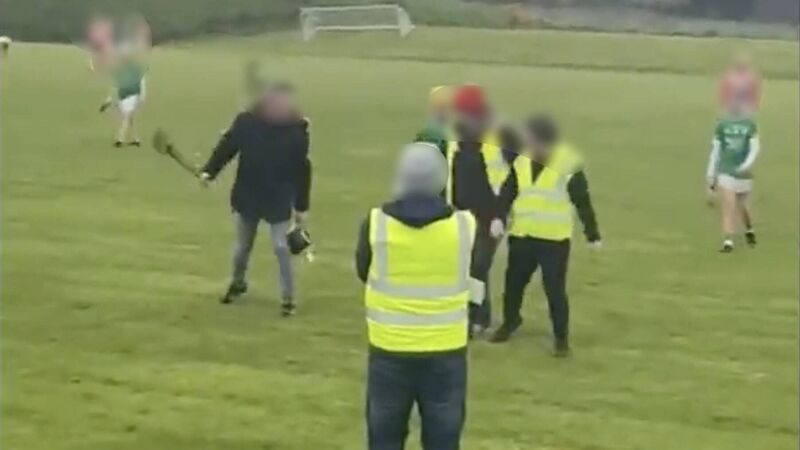
    “What we’re seeing now is not just the odd scuffle or disagreement. It’s consistent, particularly in juvenile games. I’ve seen parents running onto the pitch, furious over a referee’s decision, and that only escalates the situation. The referees are doing their best, but they are often left vulnerable.” 

    He recounted several matches where tempers flared beyond control, not just between the players but also among the supporters.

    Under 14 Hurling match fight. Mitchelstown v St Vincents. Pictures: @CraicOfTheAsh on twitter 

    “I was at a minor match a few weeks ago,” John said, “and after one controversial call by the referee, a parent stormed onto the field. It led to complete chaos—players were getting distracted, coaches were shouting, and the focus shifted from the game to the argument. This shouldn’t be happening, especially with kids on the field.” 

    John believes that a lack of discipline and respect for match officials is a core reason behind the rise in such incidents. However, he also feels that the GAA itself needs to take a firmer stance. 

    “The GAA has been slow to address this. We need more accountability from the top down. Stronger penalties for violent conduct and off-the-ball incidents need to be enforced consistently across all levels of the game. It’s not enough to just talk about it anymore. We need action.” 

    However, John is quick to point out that responsibility also lies with the coaching staff. He believes that some of the pressure to win, particularly in competitive juvenile games, is being projected onto young players in a negative way. 

    “Coaches need to remember that their role is to develop these players—not just in terms of skill but also in terms of attitude and sportsmanship. When coaches are constantly shouting and criticising officials, that behaviour gets transferred to the players, and they start seeing it as acceptable. It’s a vicious cycle, and it’s happening far too often,” John said. 

    Patrick Ryan,  who has been refereeing GAA games for over 30 years, says he’s very concerned about the rise of violence at matches. 

    Referee Patrick Ryan (middle) at a semifinal county minor game. Picture: West Tipperary GAA 

    “There’s a shortage of referees at the moment, and this kind of behaviour only discourages them further. If we lose more referees, we lose games. It’s that simple,” he says 

    While the GAA continues to promote respect, discipline, and a love of the game through its “Give Respect, Get Respect” campaign, Patrick insists that more needs to be done at the grassroots level. In particular, he suggests that educational programs for both coaches and parents should be implemented, alongside increased security measures at games to ensure safety for all involved. 

    “As the GAA community reflects on the escalating issues, the message is clear: the future of the sport at minor and juvenile levels is at stake, and immediate action is required to preserve the core values of the game.” 

  • Leinster Maintain Perfect Form with Win Against Connacht 

    Leinster Maintain Perfect Form with Win Against Connacht 

    By Jessica Lee

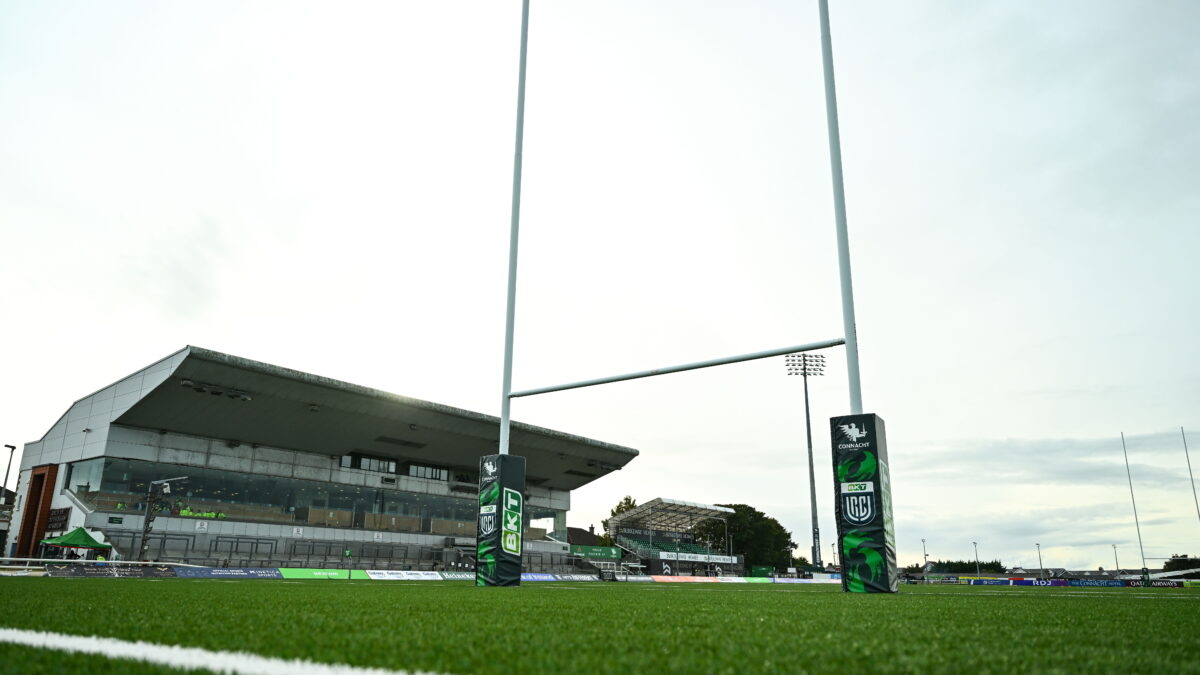
    Leinster have kept their perfect record in the United Rugby Championship (URC), with a stunning bonus-point 33-12 win over a strong Connacht side in Galway on Saturday night.  

    Coming off the back of their win against Munster in a sold-out Croke Park last weekend, the boys in blue made a fast start to the game, with Jamie Osborne scoring a try in the seventh minute and was quickly followed by Ciaran Frawley kicking the conversion. 

    Despite Connacht’s defense holding firm against Leinster’s strong efforts, Liam Turner scored a try just minutes later, and the kick was converted. 

    Ciarán Frawley suffered an ankle injury during the buildup to Turners try and was replaced by Ross Byrne.   

    An injured Frawley will be a concern for Irish Rugby manager Andy Farrell, as Leinster are set to face New Zealand in the Aviva Stadium in three weeks’ time.  

    Leinster Captain James Ryan appeared to have scored a try; however, it was later disallowed due to accidental offside when Ryan received the ball and Connacht were awarded the scrum. 

    Connacht finally got into the game at the 33rd minute, after a scrappy tackle on the try line with Sean O’Brien getting the score.  

    World Cup winner and South African native, RG Snyman, got Leinster’s third try after gathering a loose ball just before half time, with Ross Byrne adding two points to Leinster’s advantage.  

    Just five minutes into the second half, Leinster further proved their dominance over the home side as flanker Max Deegan scored their fourth try for the bonus point. 

    Connacht returned from half time hungry to get scores on the board but struggled to get through the robust Leinster defense. However, a try from Cathal Forde came in the 64th minute and the conversion was scored by Josh Ioane.  

    This small win for Connacht was short lived, as just minutes later Andrew Osborne ripped up the wing to catch Byrne’s kick from the restart and scoring the final try of the game.  

    With 10 minutes left on the clock, Connacht desperately tried to close the gap, but it was too little, too late. The score was 12-33 to Leinster when the final whistle blew.  

    This is Leinster’s second consecutive inter-provincial victory so far in this URC campaign, with RG Snyman receiving player of the match for his performance. 

    Connacht: P O’Conor; S Bolton, D Hawkshaw (C Forde 62), B Aki, S Cordero (H Gavin 59); J Ioane, B Murphy (C Blade 56); D Buckley (P Dooley 52), D Heffernan (D Tierney-Martin 56), F Bealham (J Aungier 52); J Joyce (N Murray 52), D Murray; C Prendergast (c), S O’Brien (S Jansen 56), P Boyle. 

    Leinster: H Keenan; L Turner (H Cooney 74), G Ringrose, J Osborne, A Osborne; C Frawley (R Byrne 17), J Gibson-Park (F Gunne 71); J Boyle (A Porter 44), G McCarthy (S Smith 74), R Slimani (T Clarkson 44); RG Snyman (B Deeny 70), J Ryan (c); M Deegan, W Connors (S Penny 59), J Culhane. 

    Referee: Eoghan Cross (IRFU)