
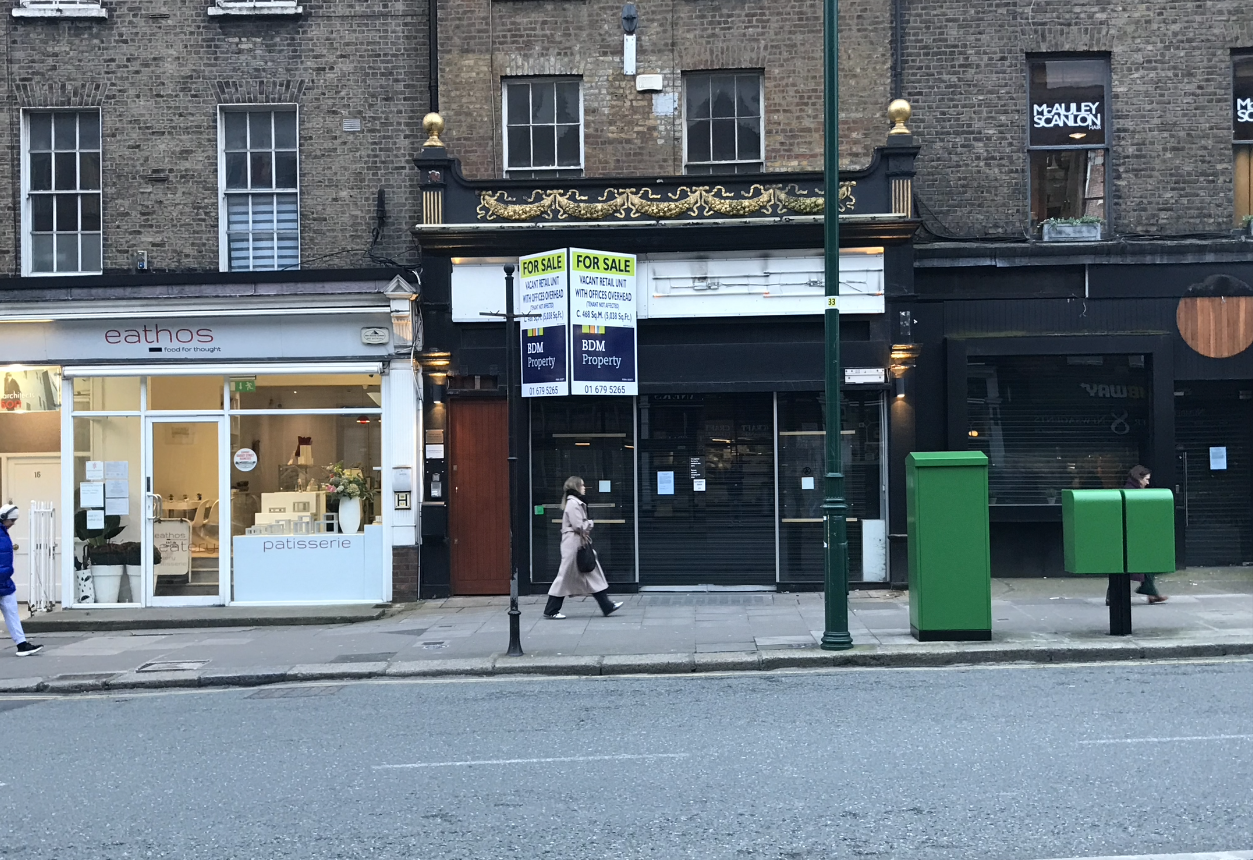
Dublin’s small shops are facing significant challenges, including escalating rents, rising energy costs, and persistent inflation. These factors are reshaping the city’s retail landscape, often at the expense of independent businesses.
Prime retail locations in Dublin, such as Grafton Street, command some of the highest rents in Europe. According to the press, of the time. it has been ranked among the world’s most expensive shopping streets, with rents reaching €3,372 per sq. m annually since 2004. More recently, retail accommodation of 4,359 sq. ft has been listed for €500,000 annually last September.
Grafton Street ranks at 17th place in Cushman & Wakefield’s Main Streets Across the World 2024 report.
A 2023 Savills Ireland report, notes Dublin 1’s retail sector is recovering, with new stores expected in the following18 months. Recent entrants include Alo Yoga (US), Kiko Milano (Italy), and Swatch (Switzerland), now open in the area.
The high rental costs in these prime areas make it challenging for independent retailers to compete with larger international brands.
Consequently, small businesses are relocating to more affordable areas like Capel Street, which was pedestrianized following a 2022 consultation, as well as both Drury Street and Camden Street. However, these areas often lack the foot traffic of central shopping districts, creating additional challenges for independent business owners.
With soaring costs and shrinking support, Dublin’s small SHOPS sector fights for survival.
Energy expenses continue to be significant burden for SMEs. The Central Statistics Office (CSO) reported that wholesale electricity prices increased by 2.1% in April 2024 compared to the previous month, although they decreased by 29.5% compared to April 2023.
Despite the annual decrease, the volatility in energy prices continues to strain business operations. Recent government subsidies have relieved small businesses with modest premises. Daniela, a holistic practitioner based in North Dublin, stated that these supports have helped, but many energy-intensive businesses still struggle with fluctuating costs.
Similarly, Carol, a jeweller with 40 years of experience, acknowledged that while government reliefs have helped keep electricity costs manageable, rent and footfall remain greater concerns. She noted that over the years, many businesses have either relocated to cheaper areas or closed down, resulting in the gradual loss of the street’s unique local identity.
Inflation, as measured by the Consumer Price Index (CPI), stood at 1.7% in August 2024, marking the lowest level in over three years. While this indicates a slowing rate of price increases, certain sectors continue to experience significant cost pressures.
For instance, the hospitality sector saw an 4.5% increase over the same period, reflecting higher prices for food and services. These rising costs erode profit margins for businesses that are unable to pass on the increases to consumers.
The cumulative effect of these financial pressures has led to a concerning rate of business closures. Over 600 eateries have shut down in the past year, according to The Irish Sun, with potential closures rising to 1,000, resulting in the loss of about 15,000 jobs.
In response to the mounting financial pressures on small and medium-sized businesses, the government introduced a series of measures last May, these are aimed at reducing operational costs and promoting long-term financial sustainability.
Key measures include:
- Reopening the Increased Cost of Business (ICOB) Scheme to provide short-term financial relief.
- A second ICOB payment for retail and hospitality businesses.
- Expansion of the Innovation Grant Scheme, increasing available funding to €10,000.
- Enhancements to the Energy Efficiency Grant Scheme, with funding now up to €10,000 and a reduced business contribution requirement.
- Widening eligibility for the Trading Online Voucher, now available to businesses with up to 50 employees and doubling the grant to €5,000.
- Increasing Microfinance Ireland lending limits from €25,000 to €50,000 to improve SME access to capital.
Additional policy considerations include increasing the employer Pay Related Social Insurance (PRSI) threshold, using surplus National Training Fund resources for SME workforce upskilling, and extending fee waivers for outdoor dining permits until the end of 2024.
Additional policy considerations include increasing the employer Pay Related Social Insurance (PRSI) threshold, using surplus National Training Fund resources for SME workforce upskilling, and extending fee waivers for outdoor dining permits until the end of 2024.
Stakeholders, united in the SME Alliance, are advocating for government intervention to alleviate these challenges. Proposed measures include reinstating the reduced VAT rate for businesses serving food providing energy subsidies and offering tax incentives to support SMEs.
Dublin’s SMEs are integral to the city’s economic vitality and cultural identity. Addressing the challenges of rising rents, energy costs, and inflation is crucial to ensure their sustainability. Without meaningful support, there is a growing risk that independent retailers, service providers, and family-run shops will disappear from Dublin’s urban landscape, replaced by multinational chains that can absorb rising costs.
The future of Dublin’s small business sector remains uncertain, but one thing is clear: urgent action is needed to preserve the independent businesses that contribute to the city’s unique character.
You must be logged in to post a comment.