
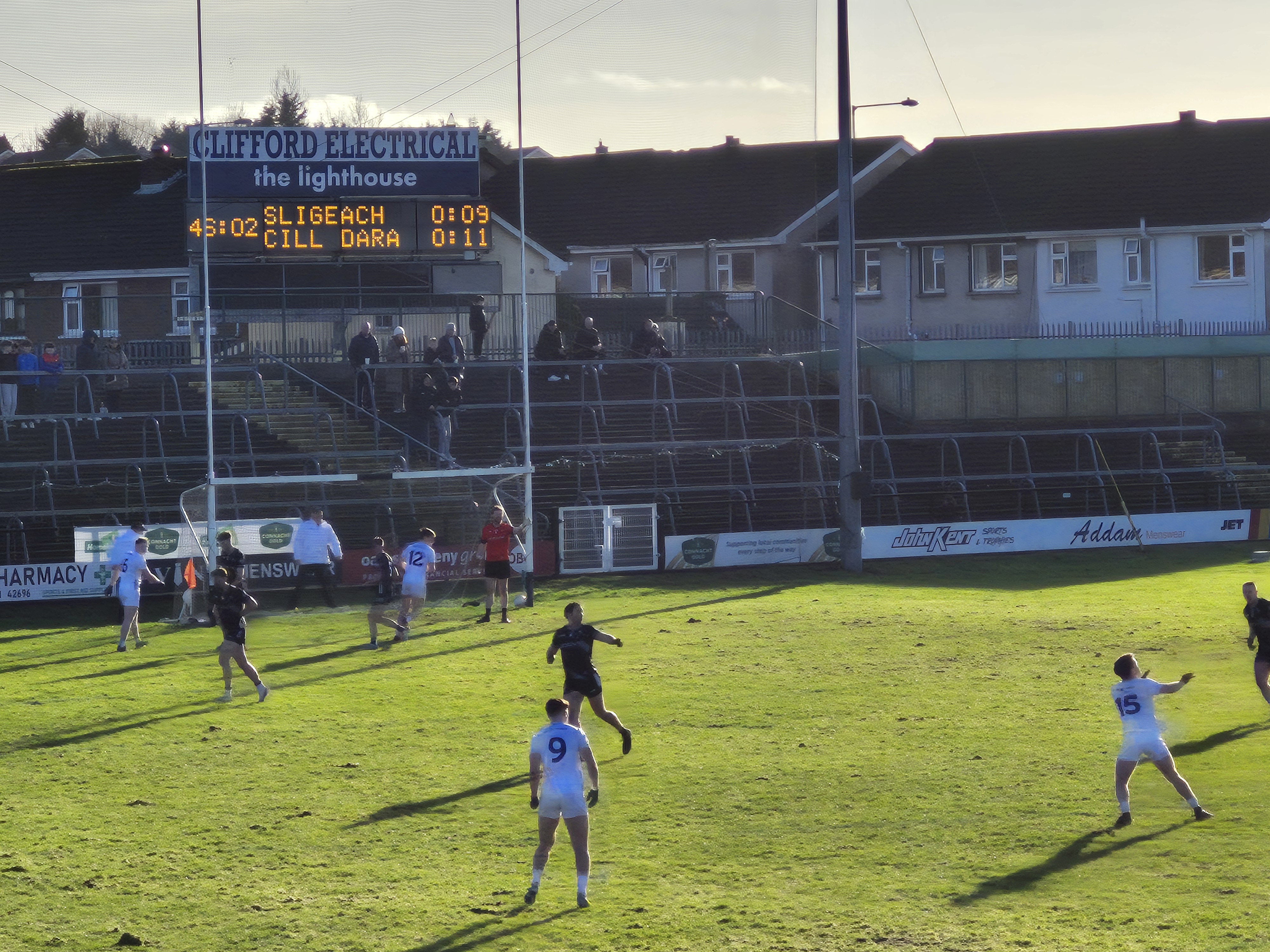
A new season and it remains to be seen if the game will be reignited for players and spectators.

The Gaelic Football National League is underway and two counties, Sligo and Longford, disagree with the universal adoption of the new rules series and see the sheer volume of changes as problematic. There are further concerns about the lack of appropriate testing in a competitive environment and the unmanageability of refereeing in light of such challenges.
A prominent Sligo official said: “Referees do not have eyes in the back of their heads and a game that is already very difficult to officiate has now become impossible.” There is also a strong opinion out there that if the existing rules were implemented properly, there wouldn’t be a need for such sweeping changes.
Under the new rules, teams must have at least three outfield players in both halves of the field at all times. Experienced Sligo referee, John Griffin, said: “Some rules will be difficult to police, especially the 3×3, for one ref in club matches, in the dead of winter or spring.”
The changes have been implemented following general consensus among participants and followers of Gaelic football that the game was in dire need of an overhaul. It has been described by commentators as boring to watch with many teams lining up defensively, sometimes 15 players behind the ball, and the emphasis on not losing instead of going out to win. This blanket defence approach resulted in many low-scoring, unexciting games which prompted prominent punters such as ex-Kerry great, Pat Spillane, to describe the fare on show as “puke football”. The poor spectacle of such matches coincided with the rise in entertainment value in the GAA’s other major sport of hurling, which was serving up high-scoring, exciting games and enthralling spectators up and down the country.

Rule changes only happen every 5 years in the GAA and 2025 is a rule change year. GAA President, Jarlath Burns, who took office last year, saw a window of opportunity to enhance the game via rule changes. The Football Review Committee (FRC), headed up by Dublin’s 6-time All-Ireland winning manager, Jim Gavin, was quickly established. The new rules were road-tested in a series of Interprovincial games last Autumn and, following a few tweaks, were presented to a Special Congress in November, where they received an overwhelming mandate.
Initial reaction from the first round league matches was broadly positive, which is good news for the Football Review Committee (FRC), set up by the GAA as part of its Strategic Plan Aontas 2026. However, the implementation of the rules across the spectrum of football competitions signals challenges and continues to generate debate in the GAA world.
The Technological University Dublin (TUD) footballer, Jordan Morris, recently played for his college in the Sigerson Cup while also lining out for the Meath county seniors in the National League. He simultaneously played under both sets of rules, as the Intervarsity Competition is not using the new rules. Morris said: “Forwards, in particular, need to adjust quickly to things like different tackle interpretations, advantage rules, or scoring incentives. It takes time, but the best players adapt fast.” He is excited about how the new rules are designed to promote a more attacking brand of football. He said: “It depends on the specific rule changes, but generally, anything that encourages more free flowing, attacking football is a positive. If the rules benefit skilful play and reduce cynical fouling, then they’re a step in the right direction. However, sometimes rule changes can overcomplicate things or slow the game down with excessive refereeing involvement.”
The GAA administration and the FRC continue to emphasise that the new rules are in an experimental phase with nothing set in stone until the end of year Special Congress. As clubs and counties compete countrywide during the season ahead, people can judge for themselves the success and sustainability of the new rules.
An encouraging development is the openness of the GAA to take on board the opinions of stakeholders through an open online survey. FRC Chairperson, Jim Gavin, said on GAA.ie: “We want your opinions, we want your thoughts, we want to see what you think is working well and what you think isn’t because Central Council who are the governing body of the Association have the power to amend or rescind any of these new rules.”
Whatever the outcome of these experimental rules, it signals an interesting year for Gaelic football ahead.
You must be logged in to post a comment.