
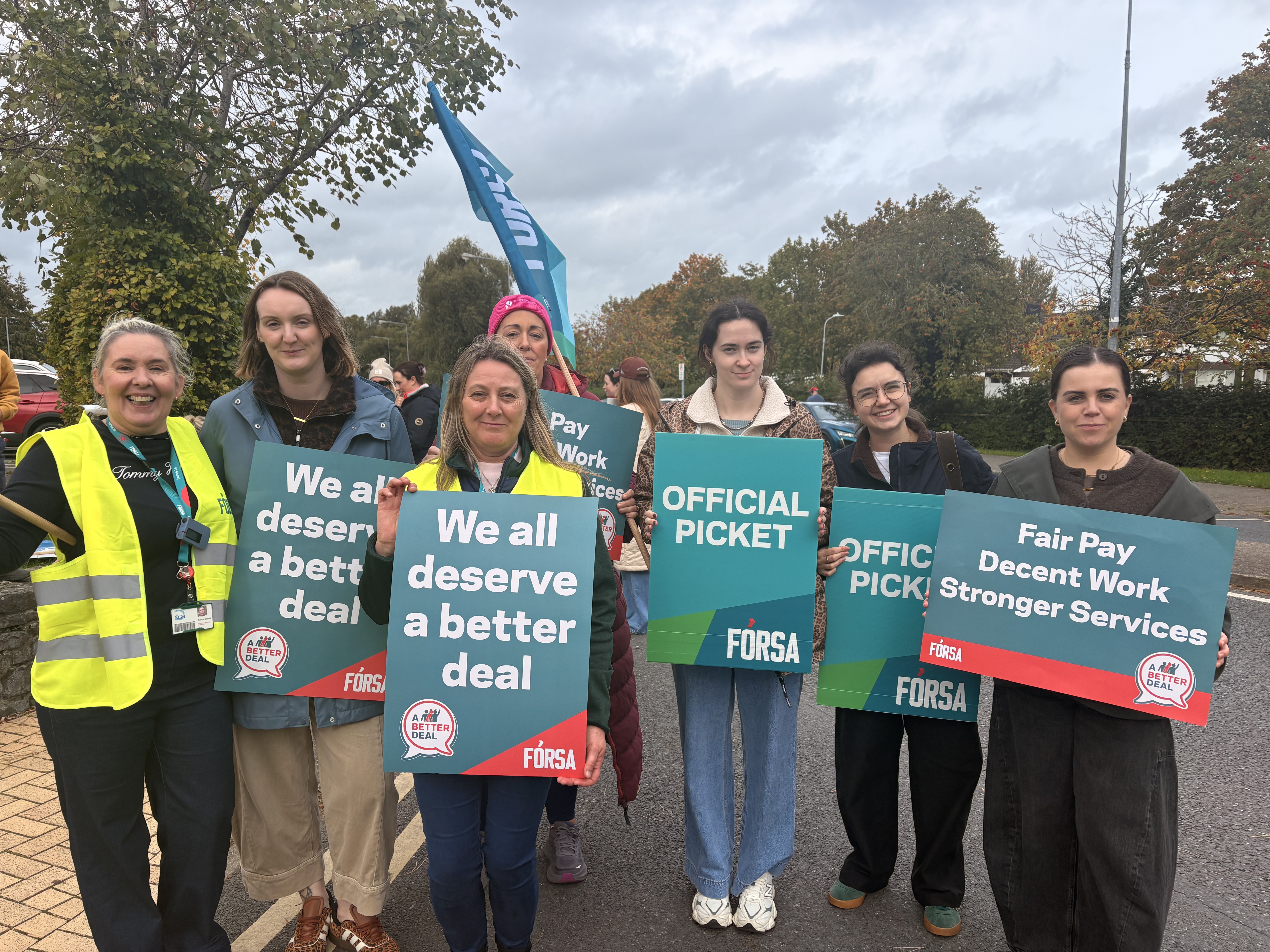
On Wednesday, Irish nurses and healthcare workers took to the picket lines over disputes about pay, staffing and rising costs.
Outside many hospitals, groups of nurses and representatives from unions such as INMO, SIPTU, Fórsa, and IMO gathered to raise awareness of the concerns regarding the current workforce issues they are facing within the healthcare sector.
Lynn O’Byrne, chairperson of the public health nursing strike committee of Naas and West Wicklow, said the decision to strike was to raise awareness for the nurses and their colleagues in the public sector surrounding fair pay. She stated, “Everyone is feeling the pinch; the cost of living has soared, and there’s no change in our, you know, monthly income to facilitate that or address that.”
When discussing the issues that nurses and healthcare workers are facing, Sharon O Brien, a worker at Naas General Hospital, highlighted how the hospitals are understaffed. “We’re all probably doing overtime to cover vacant posts and to make up our salary and our wages every fortnight to meet the cost of living.” Her comments reflect on how many hospitals are understaffed, which leads to heavier workloads for other healthcare workers.
Lynn commented on this area, “There are vacant posts everywhere, in every grade, in the acute setting and in the primary care setting…so not only are they doing the work of one person, they may be doing the work of one and a half people every day.”
Lynn also highlighted how more student nurses would be helpful for those who are continuously taking on extra workloads: “Even the issue in Cork and Galway, student nurses whom the government has paid hundreds of thousands of euros to train are not being offered contracts. You know, so we’re not getting the staff to fill these roles.” This outlines how student nurses are also struggling within this profession, not just those who are qualified.
When asked if she felt as if the government had listened to the concerns of the healthcare workers, Lynn said that everyone has to play their role, including the government and the unions for those who work in the public sector. “Semantics is always going to change between people…semantics really played a part in the role of getting people even to the table.”
While the budget was released recently and allocated a total of €29.1 billion for health services, IHCA and IMO have publicly criticised this, claiming it is inadequate help to resolve the issues. Healthcare worker Sharon O’Brien stated, “And for the budget, it didn’t benefit any of us really; they made it look like it did, but it didn’t benefit us at all. At the end of the day, we are still struggling.”
When asked about changes needed for working to become more substantial for healthcare workers, Sharon said what’s needed is for the government “to staff our hospitals, to increase our pay, to be recognised for the work that we do, to provide enough staff that we don’t have to be double jobbing, working overtime, filling vacant posts and for our wages to match the cost of living,” and Lynn expressed the same concerns regarding these issues.
Even while these healthcare workers are protesting and fighting for the issues that have been brought up, they all would rather be back at work, doing what they love. Sharon stated, “None of us wants to be out here today at this picket line. We would rather be at work providing a safe and efficient service to all the patients in the hospitals.”
You must be logged in to post a comment.