The City talked to some of the protesters in Dublin City Centre, at the second mass-organised demonstration against water charges, and one of the latest large protests seen in Ireland in recent months.
People came from around the country, with buses bringing masses of people from every county. Some marched with comical signs and outfits, and others held posters, some which expressed fear, but mainly anger at The Government.
Number estimates for the turnout vary. The City approached Gardai during the march, who placed turnout at around 70,000, but possibly up to 100,000. Throughout the day other people reinforced this estimate, but the official estimate from the Gardai is now 30,000, with organisers maintaining the original figure.
The next protest is planned for Janurary of next year.
Presenter – Louise McLoughlin Camera – Martin Phelan Editor – Ross Mc Govern
Nimhneach is a fetish or BDSM club night held in Dublin on the first Saturday of almost every month. The club boasts an age range from 18-80, and attracts men and women from all walks of life – although careers aren’t on the night’s conversation list. Instead leather, whips, dominance and submission are the focus of the evening.
The name Nimhneach comes from the Irish word for ‘painful’ or ‘sore’ and, according to some of its attendees, that sums up the experience of the night pretty well. Erotic author, Evie Hunter, states on her website that “the scene pushed both my erotic and ouchie buttons” and adds that for her first experience,
“If it wasn’t for the metal cage in the middle of the dance floor, it might have been a perfectly normal evening.”
After moving on from its run in The Academy, Nimhneach’s new venue is The Hub in the middle of Temple Bar, located right under the noses of unsuspecting Dubliners and tourists alike. The club is in the venue’s basement, but one attendee says the atmosphere doesn’t reflect the tucked away location.
“What genuinely surprised me the most my first time was how lovely everyone was…I actually get harassed in regular clubs a lot, but here it was far more open.”
Photo: Louise McLoughlin
Like many clubs, Nimhneach has a strict dresscode policy of ‘No effort, no entry’, but in the case of Nimhneach that doesn’t mean put on a nice shirt or dress. Its website sums up the dresscode pretty simply –
“Look in the mirror and ask yourself this, “Could I walk into most bars in town and get served wearing this without looking seriously out of place?”. If no, you’ll probably pass!”.
Nimhneach sends out a strong sexually charged vibe – outfits are revealing and provocative, and play between people such as spanking and rope play is encouraged. Because of this there are also strict guidelines for both physical safety and to remove anyone who is deemed to be harassing anyone else. Nimhneach’s organiser says that staff called ‘dungeon monitors’ patrol the floor constantly, overlooking play to make sure that its safe, and making sure that everyone is behaved and comfortable. Rules are strictly enforced, and include:
“Not touching people without consent or interfering in a ‘scene’ (where people are involved in BDSM play) without being invited”.
However, the organiser says that for people who don’t want to dive into the deep end of the scene events called Munches are held in Dublin every second Saturday and third Tuesday of the month. At these attendees dress in what is called Vanilla (non-fetish) clothing, and newbies can be eased into the scene in a non-fetish environment.
Bressie has launched a new website which focuses on mental and emotional health, while he continues his series of talks on mental health in Dublin and around the country.
The Dublin-based singer, best known for being the front-man for the Irish band The Blizzards and a judge on The Voice, has spoken at a number of Dublin-based colleges, including his old college UCD in October, DIT in November, and Trinity College this December.
Photo by Cormac Dunne
Just last month in November he launched a new website called my1000hours, which focuses on the importance of mental health as well as physical health, and will also act as an ‘online support blog’. The website explains,
“So many of us put so much emphasis on physical fitness but seem to ignore the importance of our mental or emotional fitness. The evidence surrounding the correlation between positive mental and physical health has never been more profound”
The concept of 1000 hours is to encourage people to improve their mental health by challenging themselves to achieve things such as learning a new skill or running a marathon. This will all be with assistance from the 1000 team “who will help with both the physical training programmes, diets etc…and also the mental processes required to achieve these challenges.“
The website is also due to add a section on musical therapy and how it could help to manage depression.
Bressie suffers from Generalized Anxiety Disorder, and since first speaking out about his struggles a year ago in 2013 he has become an advocate for mental health in Ireland. As well as speaking at schools and colleges around the country he has also spoken on a number of television and radio programmes on the issue.
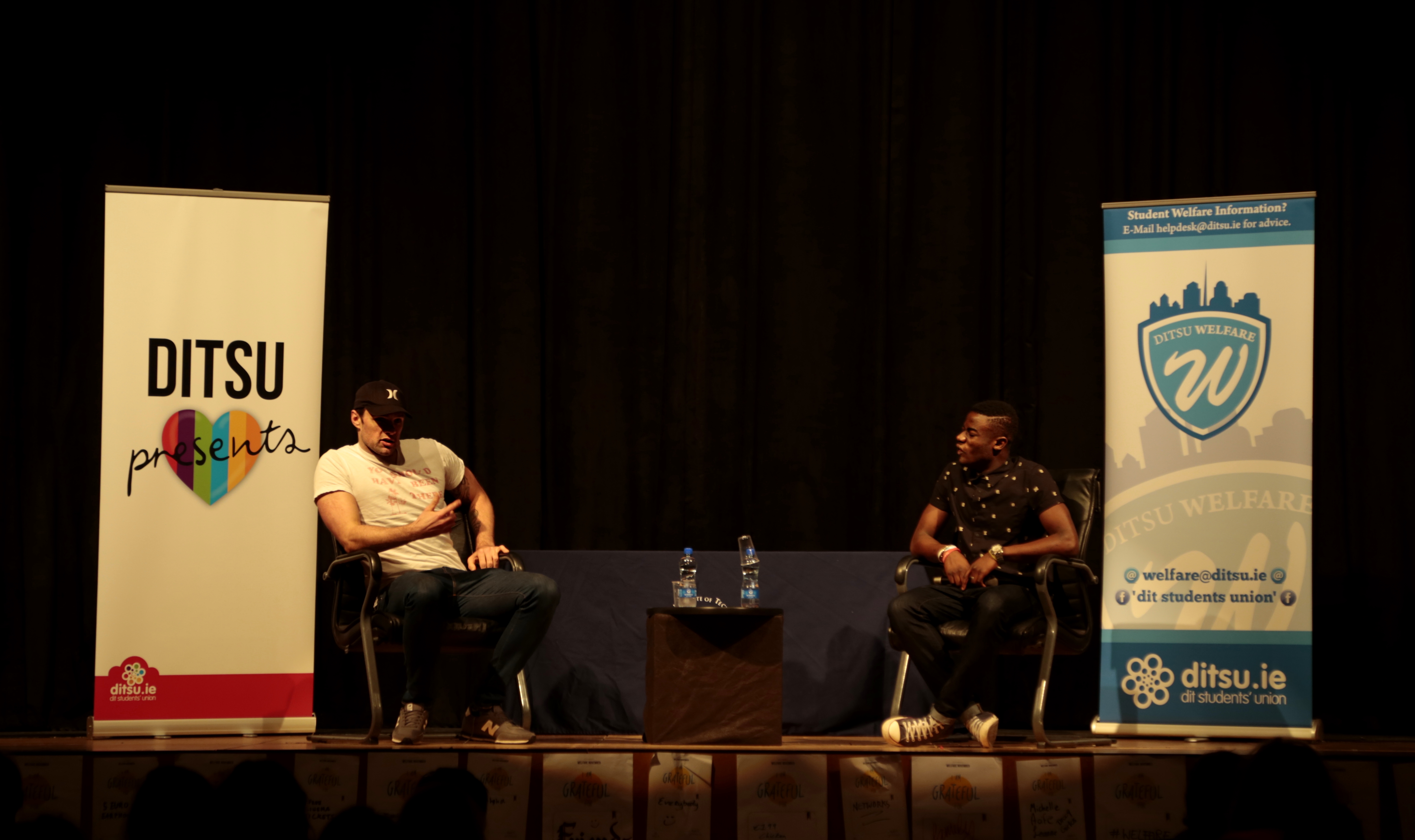
Thanks to DITSU I got to talk to Bressie last month, after his talk on mental health in DIT as part of their Welfare November campaign:
For more information on 1000Hours follow the links below.
A photography company is being criticised by students for its inclusion of certain photo editing options on graduation photographs.
Photography by Greg Synnott
Lafayette Photography, which is the official photographer for a number of colleges in Ireland, offers a selection of enhancement options to students when ordering their prints online.
The options range from €10 for teeth whitening, to €30 for edits such as removing braces, and even removing a person.
While most of the options have escaped students’ mention, the option that offers facial slimming for €30 has received some negative feedback, with students calling it ‘appalling’ and ‘a step too far’.
A spokesperson for Lafayette Photography said it does not offer the service through the college, but instead the students must request it specifically.
However, students using the service reported that this is not the case. According to the graduates, the options are offered on a webpage which has to be manually skipped before a student can make a payment for their photographs.
The spokesperson suggested that students would mostly choose the options if they are suffering from some sort of illness, such as psoriasis, on the day the photo is taken, but “it’s not a common thing that they would ask for”.
Vice President for Welfare in DIT, Femi Bankole, said that including the option where it did was “preying on the insecurities of graduates”. However, he also stated that on a personal level it was a touchy issue. “If someone wants to edit their picture to make themselves look a bit different I’m guessing that’s their decision”.
A DIT student, who requested to remain unnamed, stated that the service was not the issue so much as the way it was advertised,
“As a 22 year old female student I would hope that institutes across the country would not advertise this service to students. If people really want to get their grad photos photoshopped that’s their choice […] but advertising and normalising it is weird”
But DIT student, Gareth Walker-Ayers, commented that photo editing is just another way to make people look and feel their best,
“It is a day that you want a nice memento from, and not looking your best for any reason in a photo can be pretty awful for someone. People use all sorts of ways to alter their appearance these days, through the clothes we wear, makeup, dying hair etc. But judging people who choose to have their own photo altered for themselves is not a good thing to do”
President of the Student’s Union in DIT, Fiachra Duffy, said that the issue would be brought before the Student Council “for further discussion and debate”.
Storymap is an app unique to Dublin, which allows you to explore the city as you walk through it, or from the comfort of your own home. The app and website contain a compilation of endearing, informative and amusing stories told by Dubliners themselves. The stories are told and filmed where they took place, and you don’t have to walk far in the city centre to be at the scene of a Storymap tale. Its two creators, Tom Rowley and Andy Flaherty, are both Dubliners who studied Film Studies and English in Trinity College.
On the Storymap website Tom describes the app,
“…like one big pub where everyone shares their stories, creating a sense of what the city means to Dubliners. It’s a simple idea, but with complex possibilities, and we’re only just at the beginning of it.”
Because Dublin currently has Storymap all to itself, I caught up with it’s other creator, Andy, to find out more.
Image courtesy of Storymap
What gave you the idea of starting Storymap?
Myself and Tom were just back in the country, We returned at the height of the recession, we were unemployed, in between film projects and we were getting really annoyed with all the negative press the city was receiving. The bleak tales of recession, the gloomy accounts of unemployment and the notion that Ireland’s best and brightest had emigrated. This wasn’t the Dublin we were experiencing. We were excited to be home and even though we were broke, we were really enjoying the flourishing art scene that had been somewhat pushed aside during the boom.
We wanted to do something to get people as excited about the city as we were. While loads of great people have left the country, you only have to walk into any gallery, gig or any of the fantastic spoken word or comedy nights to see that Dublin is a ridiculously fun and vibrant city with wonderful characters and an amazing art scene. We wanted to bring that charm and character to a wider audience and figured a really nice and easy way to do it was through stories. So we came up with the idea for Storymap, and it’s been ridiculously fun ever since. I’ve heard so many stories about Dublin, learnt so much about my city and met so many wonderful people. It’s really been an amazing project to work on.
How do you source your stories and the people who tell them?
Sourcing stories is the best part about working on Storymap. It’s not as hard as people think either, we have a couple of different ways we source stories, we do a bit of research on stuff that interests the two of us, utilising blogs like Come Here to Me Now! and History Ireland. We attend loads of different cultural events and see if any of the performers interest us.
What are some of your favourite stories from around Dublin?
There’s so many amazing stories, but my favourite stories are always the personal ones, people like Maureen Grant, Gerry Cowen, Tom Matthews, The Brothers O’Neill, Filippo Fusco or Bernie O’Shea – they always make me laugh. I also really like the story Shane Langan gave us about Lawrence Downey, ‘The Holy Hijacker’, who hi-jacked an Aer Lingus flight to London to try and get the Pope to make public The Third Secret of Fatima… and Conor O’Toole’s bizarre true story of how Dublin was saved from the brink of starvation by the most unlikely of foodstuffs.
What has the reaction to Storymap been like?
People seem to really like the app, we’ve got loads of really nice emails and comments from Dubliners and tourists who’ve been using the app to explore the city. When we started Storymap we always thought it would make a good app, a really fun way to learn about the city, so it’s always really nice to hear that people are using and enjoying it.
How many people have downloaded the app?
Just under 10,000 which is really amazing when I think about it.
Are you looking to expand further?
We’ve built the Storymap platform so it can be moved to any city in the world without any hassle, so if anyone would like to set one up in their city they can have the app and website for free, they just need to contact us and then go out and find some stories.We’d love to see people set up their own Storymaps around the world, and have it as a tool to explore different cities. We also have a few more ideas we’d like to do in the future. But for now we’re focusing on a few different projects away from Storymap. So unfortunately we haven’t been able to focus as much time on Storymap as we used to but we still have loads of really good stories to release and a few nice surprises in store so watch this space.
Anything about the app or Dublin itself you’d like to add?
Yeah, go out and support local artists – Dublin is amazing at the minute. There is so many fantastic nights on in town, from spoken word to comedy to live music. Nights such as The Brown Bread Mix Tape, NightHawks, The Weekly General Meeting, The Monday Echo, The Firehouse Film contest and loads more. Go check them out and see for yourself just how good the art scene in Dublin is.
The Dublin Hangover Service popped up on my radar around a year ago, invading my Facebook newsfeed as its page gained thousands of ‘likes’, seemingly overnight.
The service was designed to bring items like McDonald’s, coke and crisps to punters who needed food the morning after a night out, but who also felt the journey to the outside world was just that little bit too much. The idea is undeniably genius, so I decided not only to track down the guys who started the idea, but also some people who had opted in for the service.
However, there were a few problems.
Problem 1: For a service that has over 33 thousand ‘likes’ on its Facebook page I couldn’t track down a single person who had used it. In fact, many people seemed to think that the idea was some kind of parody, even though many of these people had themselves ‘liked’ the Facebook page.
Problem 2: (probably more of an actual problem than problem 1) The Dublin Hangover Service isn’t even a thing anymore. It already came and went, running from August 2013 to Christmas the same year.
Image courtesy of Munch Run
But, the story doesn’t end there. The makers of DHS have started up a new service in Dublin, called Munch Run. Munch Run is effectively the same idea, but take hangovers out of the equation and replace items like burgers and nuggets with sweets and crisps.
I talked to James Bull, the brains behind both DHS and Munch Run, who explained that the swap to non-perishable food items was to “make the whole process economically viable”. James also said Munch Run currently operates in a different and smaller area than DHS did: in Knocklyon, Firhouse and Tallaght. But despite the smaller delivery area James says that Munch Run is going really well since its launch in July of this year.
Delivery hours are also a major difference between Munch Run and its predecessor – the morning hangover shift has been traded for a more sensible 8pm start. However, the social media reaction to Munch Run hasn’t spiked in the same way that it did for DHS. As many people stated on DHS’ Facebook page, the idea of hangover deliveries was extremely Irish, and perhaps that has something to do with it. Delivering sweets in the night-time just doesn’t say ‘Irish‘ like a greasy hangover-cure delivered straight into your hands.
What lies in the future for Munch Run remains to be seen, but I can’t help but think that the service could be a genius idea for people suffering with a disability, who may be unable to walk to the shop whenever they desire.
As well as hungry students, of course.
For a taste of what Much Run delivers their ‘menu’ and info is below, along with a link to their Facebook page.
“Pizza is like sex, even when it’s bad it’s still pretty good” – some genius
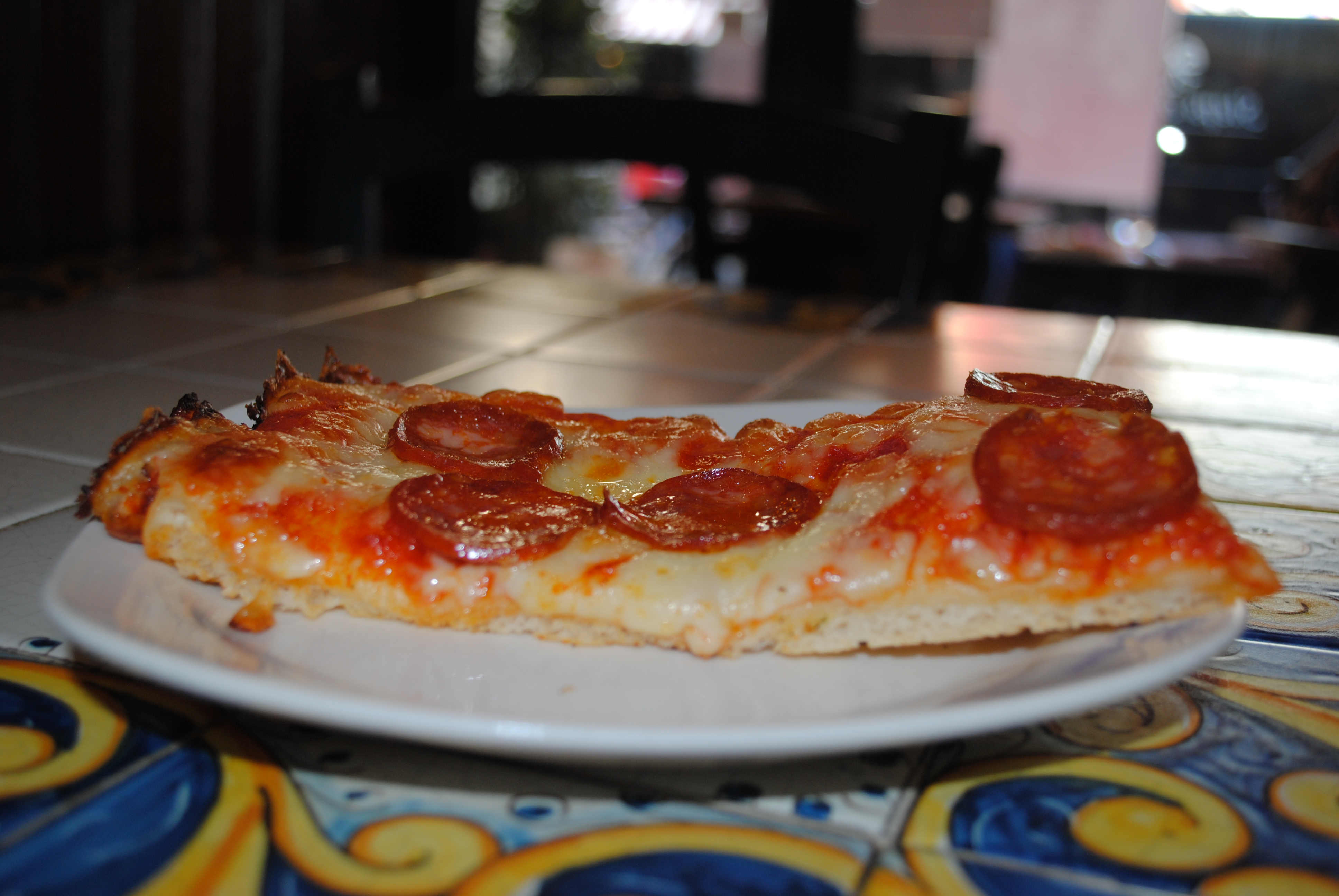
A month ago I vowed that I would embark on a mission to find the greatest slice of pizza that Dublin has to offer. I chose slices over full pizzas, not because I’ve ever doubted my ability to consume whole pizzas, but because Dubliners are definitely busy enough these days that we, like New Yorkers, should start celebrating delicious food on the go.
The contestants were as follows:
Steps of Rome – Southside
Rays – Temple Bar
Di Fontaines – Temple Bar
Sbarro – Northside
Each slice was rated 1-5 on crust, sauce, cheese, toppings (we went with the classic pepperoni), and that all-important cheese-sauce-base ratio. 1 = Speaks for itself really 2 = It’s really not great, but it’s pizza so I’m still gona finish it 3 = Average. But pizza is like sex – even when it’s bad it’s still pretty good 4 = You, Sir Pizza, have impressed me 5 = Practically pizza perfection Joining me was my pizza-partner and pizza photographer. Here’s what we discovered.
Steps of Rome – Great for a sit-down slice to take your time over
What I have to say about the Steps of Rome is that the crust was amazing. It was thin, yet fluffy and also had that perfect pizza crunch. My pizza-partner felt that the pepperoni wasn’t tender enough, but personally it was one of my favourite things about this pizza. It was thicker than normal and full of flavour. The most expensive of all the slices we tried, but definitely worth it.
Rays – Good for when the clubs close and you’re still drunk
2 Upper Fownes St, Temple Bar Slice of pepperoni: €3 Cheese: 2.5 Sauce: 1.5 Crust: 2.5 Toppings: 3.5 Ratio: 2.5
Average score: 2.5(Technically at 2.5 the score was between two ratings, but we rounded up. Just to be nice.)
Ray’s is known as the go-to pizza place in Dublin for when the party’s over and the night club is done, and I can see why. It’s central, cheap, and probably tastes hundreds of times better if you’re drunk. I was pretty thankful for the pepperoni, as other than that I couldn’t really taste much going on. I’m not one to leave pizza, but my pizza partner abandoned hers with a few bites left (naturally I swooped in and ate it.) She also broke the plastic cutlery cutting the pizza, and while no reflection on the flavour, that can’t bode well for the disorientated drunk people who frequent Ray’s at night-time.
Di Fontaines – Dublin’s hotspot for pizza to go
22 Parliament St, Temple Bar Slice of pepperoni: €4 Cheese: 4 Sauce: 3.5 Crust: 4.5 Toppings: 4.5 Ratio: 4
Average score: 4.1
When asking around to find out which places to try for the best slice in Dublin this place came up again and again, and it didn’t disappoint. Ratio of cheese-sauce-base was awesome, and my pizza-partner went so far as to exclaim that it was the pepperoni she’d always dreamt of (it’s always good to feel passionate about your pizza). She also seemed delighted over the fact that they had a stone oven. As ‘New York’ a pizza as you’ll find in Dublin.
Sbarro – Should’ve stayed in America
Jervis Shopping Center, Dublin 1 Slice of pepperoni: €3.95 Cheese: 1 Sauce: 1.5 Crust: 2 Toppings: 1 Ratio: 1.5
Average score: 1.4
Firstly, I want to say that I love Sbarro’s branches in America. I worked in Chicago for four months and I ate Sbarro at least twice a week. In that time I ripped through four pairs of jeans (not even a joke). But unfortunately it just doesn’t taste quite the same over here. I’ve been told if you’ve nothing good to say then you shouldn’t say anything at all, so I’ll have to stop here. Sborry.
For me and my pizza-partner clear winners are Steps of Rome and Di Fontaines. As for Rays, I may stumble in after a night in Workmans to re-evaluate. Disagree with our findings? Vote for your favourite here!









You must be logged in to post a comment.