Author:

  • Painting October Pink for cancer awareness

    Painting October Pink for cancer awareness

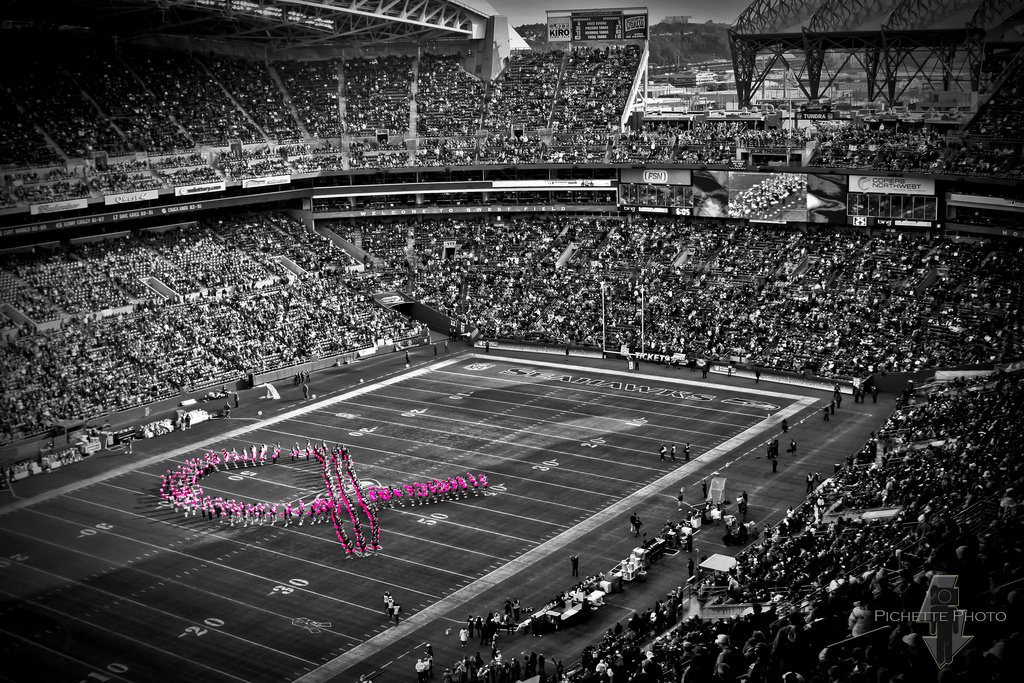
    The NFL is just one of the many major organisations involved in cancer awareness month. Image by: aliciacandraw
    The NFL is just one of the many major organisations involved in cancer awareness month. Image by: aliciacandraw

    ‘Real men wear pink’.

    This is the slogan of one of the biggest cancer awareness events in America, organised by the National Football League.

    ‘A Crucial Catch’ is the NFL’s annual event aimed to raise awareness throughout the country – and the globe- based on their campaign to increase their international audience.

    The campaign involves players, coaches and officials wearing customized pink game attire, which is then auctioned off to raise money for the American Cancer Society.

    Bids of $1,800 and $3,500 have been made for a Reggie Bush signed game-worn jersey, and a Vernon Davis signed game-worn jersey respectively. An Aaron Rodgers signed game-worn jersey recently sold for just shy of the $30,000 mark which is an example of the campaign’s potential financial reach.

    Closer to home pink is main theme of many companies who are also trying to do their own bit for cancer awareness throughout October.

    The chain store Harvey Norman have also begun their pink campaign, with staff illuminating the stores in fresh pink polo shirts.

    The company is in its third year of a partnership with the Marie Keating Foundation – which has released its new brand campaign ‘sleep pink’.

    Harvey Norman are expecting to raise €30,000 for the charity.

    “It is a great cause to get behind”, said Administration Manager Glenda Finlay, “we are expecting to raise 30 grand, but hopefully we get more than that and it gets closer to 40.

    “We are doing all the ‘sleep pink’ products and we are also encouraging the ‘add a euro’ system at the tills to encourage customers to add a euro to their sale as a form of donation.”

    The Irish Cancer Society have joined up with various Irish companies to create a group of ‘pink partners’.

    Centra have designed a ‘Pink Bag for Life‘ available for €3, with all the proceeds  going towards breast cancer research.

    The store also plans to donate proceeds generated from their own brand Pink Bouquets of Flowers and Potted Plants, Pink Milk, Pink Lady Apples and Punnets of Mushrooms.

    Some of the other companies involved in the ‘Pink Partners’ scheme include: Ballyfree Eggs, Barry’s Tea, Boots, Esso and GHD.

    The Irish Cancer Society is also hosting a Halloween masquerade ball at the Shelbourne Hotel, Stephen’s Green on November 1st.

    A single tickets is €85, but tables of 10 and 12 are available for purchase. The night includes a 3 course silver service meal and entertainment from The Nualas.

    The hope is that the event will go towards making up for the sizeable shortfall in funds raised on Daffodil Day earlier this year, which was hampered due to typical Irish weather.
  • What Peter Jackson could have bought with €415 million!

    What Peter Jackson could have bought with €415 million!

    The Hobbit trilogy have to date cost a whopping £561 million – which is approximately €415 million.

    Peter Jackson will undoubtedly see this as money well spent, but here is are a few alternative ways he could have spent that pocket change.

    This slideshow requires JavaScript.

  • Ireland’s 5 biggest drug busts

    Ireland’s 5 biggest drug busts

    Last week, Gardaí seized over €100k worth of cannabis from a house in Galway (http://www.rte.ie/news/2013/1009/479382-cannabis-seizure/).

    While drug seizures may not be as shocking to Irish society as they used to be, there have been a surprising amount of them of late. I took a look at some of the biggest hauls the country has seen in recent years.

    Number 5: €650k heroin seizure in Dublin, October 2013.

    • Three men arrested following a raid on an apartment at Crumlin Road, Dublin 12 and an apartment in West Part, Rathcoole, Co. Dublin.
    • Of the three men, two were released on bail.
    • Mr Keith O’Brien (36) and Mr Paul Gantley (30) were released on a bail of €500 and €300 respectively.
    • Both men were granted legal aid and are due to appear in court on 13 December.

    http://www.independent.ie/irish-news/courts/two-bailed-following-650k-heroin-seizure-29634297.html

    Heroin. Copyright 8weeks2thrive @wordpress.com
    Heroin. Copyright 8weeks2thrive @wordpress.com

    Number 4: Irish couple arrested in Spain over €3 million cannabis haul, September 2012.

    • The Irish couple were arrested on the Costa del Sol hours before a scheduled flight home to Co. Cork
    • The Irish 57 year old businessman was believed to have been organising boats trafficking cannabis shipments from Morocco to Ireland.
    • Spanish police intercepted a yacht with drug onboard off the Spanish coast shortly before the couple were due to depart for Cork.
    • The seizure was the result of a joint effort between Gardaí and the Spanish police codenamed ‘Ciana/Fortuna’.

    http://www.independent.ie/irish-news/irish-couple-held-in-spain-over-3m-drugs-bust-26893288.html

    A cannabis joint. Copyright 3news.co.nz
    A cannabis joint. Copyright 3news.co.nz

    Number 3: 350 ecstasy tablets and 80 kilos of cannabis seized in €5 million drug-bust, Dublin, June 2013.

    • The drugs were seized when Gardaí and Revenue’s Customs Service officials raided a building in Rosemount Business Park in Blanchardstown.
    • A 41-year old male was arrested in connection with the seizure.

    http://www.irishmirror.ie/news/irish-news/gardai-make-5-million-drug-1932855

    Number 2: Irish man arrested in €135 million cocaine drugs bust, August 2013.
     

    • The Irish male was arrested by Spanish police in Gran Canaria.
    • The man has been named as Mr Kenneth Qualtar, with an address in Co Tyrone.
    • Mr Qualtar was one of five people arrested after Spanish police intercepted a yacht with 500 kilos of cocaine onboard.
    • Two Spaniards were arrested, along with an American and an Australian women in connection with the raid.
    • Firearms, gold bars worth €135k, satellite telecommunications equipment and three boats were also confiscated relating to the smuggling operation.

    http://www.independent.ie/irish-news/irishman-in-135m-drugs-bust-is-named-29469398.html

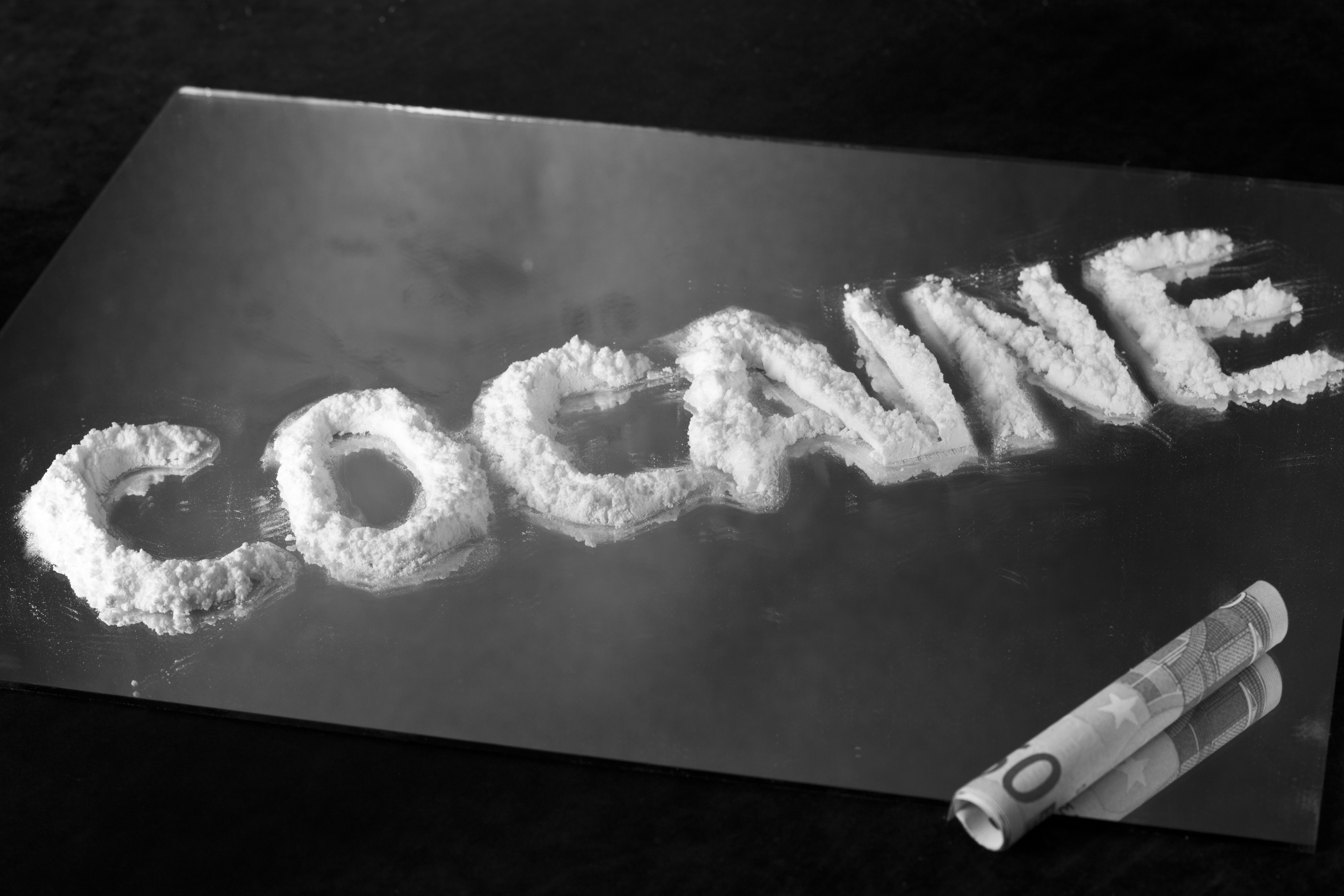
    Cocaine. Copyright londonfriend.org.uk 2013
    Cocaine. Copyright londonfriend.org.uk 2013

    Number 1: €1.2bn cocaine seizure off the coast of Co. Cork, July 2008.

    • In Ireland’s biggest drug smuggling operation three Englishmen were convicted.
    • Joe Daly (41), Martin Wanden (45) and Perry Wharrie (48) were all convicted of attempting to bring 1.5 tonnes of high-purity cocaine into the country.
    • A fourth man, Gerard Hagan (24) was also arrested in connection with the failed smuggling operation.
    • The four men were believed to be part of a joint enterprise of up to 12 individuals.
    • The drugs were being carried by an RIB (Rigid Inflatable Boat), with the three men onboard.
    • The boat stalled after one of the men mistakenly fed the boats engines with diesel instead of petrol, leading to their capture.
    • The cocaine shipment originated from Barbados.

    http://www.herald.ie/news/irelands-biggest-drugs-bust-highlights-scale-of-our-problem-27879696.html

  • Twitter to be Wall Street’s hottest tech debut since Facebook

    Twitter to be Wall Street’s hottest tech debut since Facebook

    The online social networking and microblogging site is to flood the stock market next month when its shares will be made available on Wall Street.

    The popular website, launched in 2006, has an estimated net value of between $12 billion and $15 billion.

    Twitter is set to go public in November and is proposing to list under the trading symbol TWTR.

    But what is the significance of this event?

    Well, Twitter’s imminent release of shares to the public will be celebrated as the biggest coming-out party since Facebook and Wall Street’s largest exchanges are battling it out to host it.

    The microblogging site is expected to go public on November 15
    The microblogging site is expected to go public on November 15

    The company is believed to make its shares public before the American holiday Thanksgiving, in late November.

    Overseeing Twitter’s trading and listing the firm’s shares translates to additional revenue at a time when the New York Stock Exchange and Nasdaq Stock Exchange are caught in a downward spiral and struggling to keep up with changes in trading technologies.

    Massive prestige and added investment will be undoubtedly awarded to the one who manages to host the biggest tech debut of the year, and also gives the winner an edge in reeling in other IPOs (Initial Public Offering), especially in the coveted realm of social media.

    The website’s founding investor Evan Williams is estimated to net more than $1 billion from the floatation on Wall Street.

    Williams used his profits from selling a previous business to Google to take an early and considerably risky gamble on Twitter in its early stages.

  • Anti-social behaviour still a problem on Red Line Luas

    Anti-social behaviour still a problem on Red Line Luas

    Red Line Luas users are still subjected to frequent anti-social incidents, despite additional security and Gardaí patrols.

    Though that particular Luas line has become infamous in recent years, the frequency with which incidents take place (of which only a fraction are actually reported) is startling.

    blur2

    Despite regular checks by ticket-inspectors and STT Luas Rail Security officers, the trouble-makers, all of varying ages, continue to wreak havoc upon commuters.

    In fact, Luas officials have complained of an increase in the amount of threatening behaviour they have to deal with, as well as a rise in the levels of verbal and physical abuse directed towards them.

    Worryingly, racial abuse is a becoming a common occurrence, with slurs directed at both members of the public and Luas employees.

    One Dublin-born ticket-inspector, who has worked on both the Green and Red routes and asked not to be named, stated that there was simply “no comparing” the two rail-lines as regards the behaviour of their patrons.

    “A lot of them [anti-social Luas-users] have nowhere else to go, and just ride up and down all day making a nuisance of themselves”, stated the Transdev employee, who pin-pointed the inner-city section of the Red Line between Rialto and Connolly as the source of most complaints.

    blur1

    Although an increase in security presence was made in the wake of South Dublin Central TD Catherine Bynre’s complaints of “inadequate security” early last year, there has been no noticeable improvement, with around 25 incidents being reported to Gardaí every week.

    Transdev has stated that the safety and well-being of their customers is of paramount importance as they strive to deliver “an environment for Luas customers that is as free as possible from anti -social behaviour, low-level crime and fear of crime”.

    “Anti -social behaviour is rife in society generally and unfortunately Luas is not immune to the challenge which such behaviour throws up”, stated the company.

    Combined, the Red and Green lines transported nearly 30 million people in 2012, an increase of 6% from 2011. However, public order offences on the trams also rose, this time by 11%. Nevertheless, the Luas still continues to provide a reliable, affordable and (for the most part) safe method of transport for its customers.

  • Should Ireland amalgamate in international soccer?

    Should Ireland amalgamate in international soccer?

    credit Steven Depolo on Flickr
    credit Steven Depolo on Flickr

    When you look to Irish national teams for a source of pride, rugby comes to mind first. It is a great testament to this small nation that we compete with countries that have 10 times the population to work with.

    So based on that, one would assume that any possible question regarding an amalgamation of the Republic and Northern Ireland soccer teams has to be answered with a yes. I however, disagree.

    The Republic of Ireland national team has shown before that it has the quality in its arsenal to compete with the best in the world and to make the latter stages of major tournaments.

    In the World Cup in 1990, 1994, and 2002, the Republic’s soccer team reached the quarter finals, and made it to the final 16 twice, respectively. During the same time period Northern Ireland failed to qualify on all occasions.

    For the European Championship in 1988 and 2012 the Republic reached the group stages of the tournament. The upper quadrant of the island has never reached a European Championship.

    Despite neither side succeeding in securing a trip to Brazil in 2014, the Republic still managed  to maintain a somewhat respectable record in terms of wins and draws compared to Northern Ireland’s shambolic campaign in which the green of the North recorded a draw and a loss against both Luxembourg and Azerbaijan.

    When you move the argument away from the pitch the sensible notion still points towards the Republic remaining a separate entity.

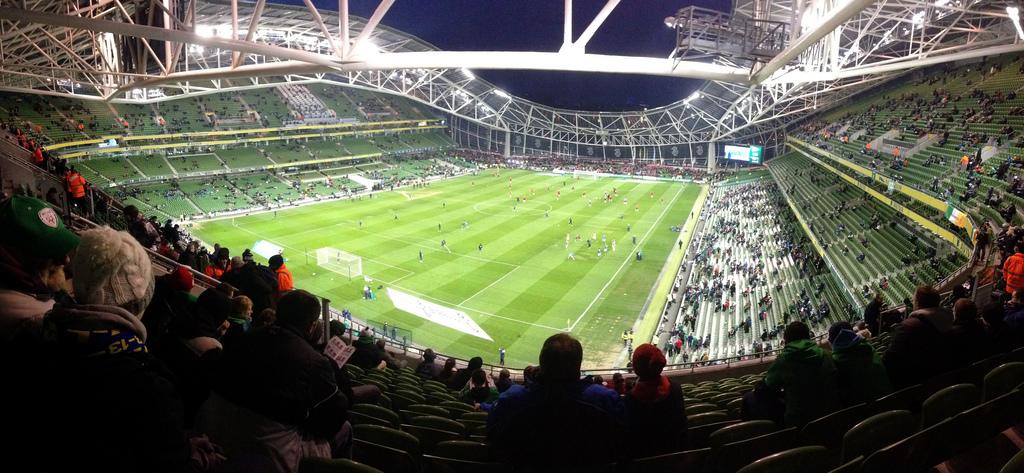
    The Football Association of Ireland (FAI) have purpose built grounds in the Aviva Stadium which is the home of Irish soccer. Northern Ireland do not have that luxury. Instead, they have leased the rights from Linfield F.C. for the use of Windsor Park. In return for this lease, 15 per cent of all revenue of gate receipts and TV rights leaves the Irish Football Association‘s (IFA) pockets and lines Linfield’s.

    The issue surrounding political and religious difference also needs to be considered. The Irish rugby team works as a combined entity because a) it has always been this way since its inception and b) the vast majority of rugby supporters would be of a higher social class and background. Not meaning to pigeonhole, but football supporters would have a greater tendency towards unruliness and hooliganism than their rugby counterparts.

    The only foreseeable benefit gained for the Republic of Ireland by amalgamation is that the Republic of Ireland would not have to press players who are born in the six counties to declare for the Republic.

    However, most Irish managers have a tendency to acquire players not only from Northern Ireland, but also Scotland, Wales, and England. Once they were born on the island or have a grandparent who was, they can declare for the Republic – therefore all of the Northern Ireland squad is fair game for the Republic of Irish team, they just need to be ahead of the curve in terms of recruiting them.

    Another issue is that the League of Ireland, which is already on the fringes of the FAI’s agenda, would become even more so, as an amalgamation of both countries national teams would result in an inevitable combination of both football associations.

    Northern Ireland’s only potential commodities are already available to the Republic and therefore the south will be offering up a much greater investment for what are limited dividends!

  • The national football question

    The national football question

    Ireland’s national football question has always been a divisive issue.

    It’s a question which has frequently evoked not just sporting rivalry, but impassioned and trenchant opinions from political and religious establishments alike since the inception of association football on this island.

    Impractical

    Many argue that merging our national teams simply isn’t a viable option. Given the difficult relationship between the north and south since partition, certain aspects either side of the border say that any potential amalgamation of the two associations would be impractical and even dangerous.

    However, a significant element would tend to disagree, and there’s plenty of evidence to back up their position.

    To say that both the Republic of Ireland and Northern Ireland national teams are underperforming at the moment would be an understatement.

    Having both endured a calamitous qualifying campaign for World Cup 2014, large elements of support are urging root-and-branch reform to ensure a swift return to our more competitive days of yore.

    But while pundits continue to carefully tiptoe around the substantial issues behind our teams’ failures, others point to the real impracticalities that exist within the current system.

    For a region with just over six million inhabitants to expect to field two top-class international sides is nothing short of ludicrous. With neither of the Irish sides now troubling the top 50 of the world rankings, surely now is the time to pool our resources and reinstate some pride in the green of Ireland.

    Of course, this difficult history to which I’ve alluded means that many are reluctant to the idea of an amalgamation. But the simple fact is that it works for virtually every other sport- rugby, GAA, cricket, hockey, golf- so why shouldn’t the leading lights in football subscribe?

    Tug of War

    For one thing, it would at least negate the diplomatic issues that have plagued north-south relations recently. No longer would we be subjected to the unedifying spectacle of an international tug of war over our alleged future stars, as in the high-profile cases of Shane Duffy and Marc Wilson.

    Instead, the new national side would be able to reap the abundance of talent that resides amongst the ranks of both the IFA and the FAI without such debacles about allegiance.

    The issue of team cohesion is also hugely overstated.

    Various members of the current Northern Ireland setup already hold a Republic passport, and given the collective home nations approach of recent years- poaching any talent with a tenuous connection to the emerald isle from English and Scottish academies- that particular argument is a real non-entity.

    One potential stumbling block is the fact that any amalgamation would essentially leave us with a new entity in world soccer, which would in turn leave the new unified Irish team with no points ranking history and in the precarious position of being lowest seed in future qualifying draws.

    A New Era

    However, a quick glance at the meteoric rise of Montenegro, a country of just over half a million people, in the world rankings since the national team’s disaffiliation with Serbia in 2007 provides ample evidence for any naysayers that a new and improved Irish team could do the same.

    Who knows, if the move to unify the two national teams were to go ahead it may even usher in a new age of acceptance and social cohesion in north-south relations.

    Just look at the case of the Setanta Cup. Far from causing the disharmony that some anticipated, Ireland’s latest cross-border domestic competition has shown how we can reap the dividends of greater cooperation between the two associations.

    In many instances the beautiful game has helped to mend fractious relationships the world over. Who knows, in this age of greater social acceptance, it may play a bigger role than ever in bringing people together rather than tearing them apart.

    (Featured image courtesy Steven Depolo on Flickr)

  • DEBATE: Redskins should change their name

    DEBATE: Redskins should change their name

    The name of the Washington football team has been an issue of contention for the past number of years. Image by: Keith Allison
    The name of the Washington football team has been an issue of contention for the past number of years. Image by: Keith Allison

    Racism is something that, as a society, we like to imagine has been eradicated, but the simple fact is that it has not. It is still rampant, and there is no clearer indication of this than the Washington Redskins.

    The most frequently used word to justify the use of the term “redskin” as the team’s moniker is ‘tradition’ – so let’s discuss the Redskin tradition.

    The Redskins were founded by George Preston Marshall – a well renowned racist, who petitioned the league to excluded black players from its ranks. After the league failed to back the proposal, he ensured that his team remained ‘white-only’ for as long as possible.

    He famously quipped that “We’ll [the Redskins] start signing Negroes when the Harlem Globetrotters start signing whites.”

    Marshall bought the football team when they were a Boston outfit called the Braves. He moved them to Washington and claimed that he didn’t want the association with the previous team so renamed his team the more highly obvious Redskins.

    Is that really a tradition that the Washington team and its current owner Dan Synder really want to preserve, or worth preserving for that matter?

    Dan Synder recently wrote in a letter defending the team’s name that a recent poll showed that 90 per cent of Native Americans claimed they were not offended by the team’s name. But the fact remains, ten per cent are.

    To paraphrase the current NFL commissioner, Rodger Goodell, if one person is offended, let alone one in every ten, then change must be seriously considered.

    Many black people, especially those in the music industry, have attempted to claim the n-word as their own. To remove it from a word of hate and instill within it a sense of respect.

    Despite the modern-day dilution of the historical racial connotations attached to the n-word, the idea of it being used as a sports name is inconceivable.

    Never will a day come that the Baltimore Blacks or the New York Negroes line out in the NFL, so why should it be deemed acceptable by the team’s owners, the league’s upper echelon, or the general public, to have a name derived from hate grace the sport.

    Dan Synder, and anyone else who who roots for the name to remain, will argue that the nickname is honorary.

    However, this could not be further from the case.

    Honorary monikers are those in which celebrate tribes names such as the Braves, the Blackhawks, the Chiefs. The Redskins does not fall into that category.

    The term Redskin evolves from the practice of scalping Native Americans to collect a bounty in precolonial America.

    The term describes a period in which Native Americans endured horrific and barbaric treatment at the hands of imperialists, in the pursuit of profit. And the exploitation of the Native Americans for profit is still ripe today.

    Forbes currently value the Washington Redskins trademark at $1.1 billion – the 8th richest sports franchise trademark in the world.

    The only colour that the owners of the Redskins are concerned about is green.

  • Out of control car kills Irish teenager in New York

    Out of control car kills Irish teenager in New York

    Last Friday evening, Kalie Gill, a 15-year old Irish teenager from Co. Leitrim was knocked down and killed by a car in Coyne Park in Yonkers.

    Kalie and her sister had been attending a church carnival, when, just after 9pm.,  a car driven by a local school teacher, appeared to career out of control, killing Kalie and critically injuring her 12-year old sister, Lindsey.

    It is believed the sixth class school teacher may have suffered a heart attack on leaving the car park. The car seemed to be travelling at around 50 mph, ramming into pedestrians and other parked cars. Two other teenagers suffered minor injuries.

    The sisters, together with 500 others, had been attending an Autumn fund-raising carnival for St. Pauls’ Church, in the Irish neighbourhood, when the car struck. Kalie had celebrated her 15th birthday only days before.

    Kalie’s parents, Damian and Karen Gill,  had spent the last eight years in Leitrim, where they had been running a shop and a pub in Leitrim town while living in Fenagh, a small town, situated between Ballinamore and Mohill.  They had recently decided to return to the US due to the continuing economic downturn.

    Only two weeks ago, Kalie’s father, Damian Gill, travelled to Leitrim to attend his mother’s funeral.

  • DEBATE: Redskins should keep their name

    DEBATE: Redskins should keep their name

    “We are Redskins Nation and we owe it to our fans and coaches and players, past and present, to preserve that heritage.” That is how Washington Redskins owner Daniel Snyder closed his recent open letter to fans of his American Football team.

    One of the most talked about stories in the United States at the moment, not just the NFL, is whether or not the Washington Redskins should change their team name.

    Many argue that the term “Redskin” is a derogatory term towards Native Americans.  However, in his letter, Mr Snyder stated that a poll which talked to nearly 1,000 Native Americans concluded that 90 per cent of them did not find the Redskins name to be offensive.

    He also added that an AP poll earlier this year, found 79 per cent of respondents said they didn’t have a problem with the name “Redskins” and that only 11 per cent believed that it should be changed.

    The Washington Redskins in training camp, lead by Quarterback Robert Griffin III (yellow). Image by Keith Allison on flickr
    The Washington Redskins in training camp, lead by Quarterback Robert Griffin III (yellow). Image by Keith Allison on flickr

    In situations like this, all evidence must be considered before forming an opinion.

    The team have been known as the Redskins since 1932, and they’ve been the Washington Redskins since 1937.  In this time, the team have won five world championships, three of which were SuperBowls, the most recent of these coming in 1991.  Changing the team’s name will mean a loss of their history, starting off on a brand new slate.

    After several years in the mire of mediocrity in the NFL, a place no team wants to find themselves, the Redskins are now a marketable franchise again.  According to Forbes, the Redskins are the fifth most valuable team worldwide, in any sport.

    The acquisition of quarterback Robert Griffin III in last year’s draft was crucially important for the revival of the Redskins brand.  Griffin lead the team to the playoffs for the first time since 2007.  His jersey is the fifth best-selling jersey throughout the entire league.  FedEx Field, the Redskins home stadium, which holds 91,704 spectators, is reaching capacity for every home game.  The Redskins currently have a marketability level that very few other NFL teams can compete with, not just in America but internationally as well.

    An American flag sprawled across the pitch at FedEx Field before a Redskins home game. Image by Jeremy Thoel on flickr
    An American flag sprawled across the pitch at FedEx Field before a Redskins home game. Image by Jeremy Thoel on flickr

    Changing the team name means an entire rebranding on all levels.  It is eliminating all possible aspects of growth in income and completely starting anew.  It means having to re-establish sponsorship deals.

    While it is not uncommon for American sports teams to change their name, it is usually only a process carried out by teams who are struggling, both in competition and financially.  While the Redskins may be struggling on the field at the moment, there is still plenty of time for them to turn their season around.  Off the field, the future is very bright for the Redskins. The Washington Redskins, not the Washington (insert possible team name here).