Author: The City’s Newshound

  • The Walworth Farce

    10926306_1542527336006615_7588000503977093739_o

    Watching Brendan, Dónal and Brian Gleeson in action in their performance of Enda Walsh’s ‘The Walworth Farce’ is a confusing, funny and disturbing experience. The play is kept alive for the duration of two hours thanks to Dónal’s noteworthy levels of energy and Brian’s thought provoking portrayal of a character living a nonsensical life out of fear, both of his father and his memories, and a deep-rooted loyalty to his brother.

    The play is set in a small flat in London that uses crude props to give a non-existent audience the impression of grandeur. Dinny, the tyrannical father ably played by Gleeson senior, is living each day desperately trying to believe his own version of the events which caused him to leave Ireland, and has swept his sons into his time warp. They begin each day dressing for the roles they will play, in Blake’s (Dónal’s) case, a collection of female relatives, in Dinny’s a younger version of himself and in Seán’s (Brian’s), a medley of all the remaining adult male roles needed to complete the story. Both boys also play the roles of two young children, likely the boisterous characters their father feels they should have been. Seán is sent to Tesco every morning at ten o clock to buy the foods the family requires for a daily funeral reception, roast chicken, sliced white pan and pink wafers. It’s the fact that Seán leaves the house every morning that causes his father to doubt his loyalty, accusing him of ‘enjoying it.’ Seán is therefore the victim of his father’s fist quite early on. Dinny has raised the two boys to have a paralysing fear of the outside, they believe non family members cannot be trusted and that leaving would cause them to be dragged down by outside forces.

    Each day ends with the awarding of a trophy to the best actor in the family. Dinny invariably wins the trophy every day despite his only having to play himself compared to the entire cast Blake and Seán play between them. The entire family hold onto the constructed narrative to guard their tenuous grip on sanity but there is a sense that Seán could move on from the life he has been psychologically trapped into. This belief is solidified by the arrival of Haley in the narrative. Seán talks about her to Blake in an effort to convince him that there could be good reason to leave the house, during a conversation in which Blake admits that it is his memories of his mother that keep him going. Haley’s arrival at the house in the second half of the play causes the story to begin to unravel because she cannot help but bring realism with her. Her predicament in arriving at a house where the same day is lived over and over again, where no one can leave causes Blake to make a devastating decision.

    Showings run until the 8th of February, when one night will be in aid of St Francis Hospice.

    Sinéad Fitzgerald

  • TheCity sleeps…

    TheCity sleeps…

    TheCity.ie was produced by 4th year journalism students from DIT during the first semester of 2012, and, as dissertations and projects beckon in semester two, theCity.ie will be going into mothballs for a few months.

    But don’t forget us! We’ll be back with a new batch of 4th years in September 2013.

    We’ve all really enjoyed working on the project – just click on the video to see what our favourite stories were:

  • Christmas this year for different cultures in the city

    Christmas this year for different cultures in the city

    Christmas is a magical time for everyone around the world and especially in Dublin since we now have such a diverse multi-cultural city. Our ‘rainbow’ city is now home to almost over 188 different nationalities according to reports.

    The report of the non-Irish population, released by the Central Statistics Office (CSO), found that the largest group was British nationals, who numbered 112,000, followed by Poles (63,200), Lithuanians (24,600), Nigerians (16,300) and Latvians (13,300).

    The top 10 countries, which also include the US, China, Germany, the Philippines  and France, account for 82% of the total non-Irish population. But there were 44 countries, including Guyana, St Vincent, Turkmenistan and Bhutan, represented by fewer than 10 people.

    These countries not only add to the Irish culture, but they also give you some insight into others cultures practices at Christmas time. The City decided to take to the streets of Dublin and ask the people of Dublin what are their Christmas practices this year?

    Poland – Traditionally, the Christmas tree is decorated on the Wigilia day – quite an event for children. The custom of having a Christmas tree was first introduced in Alsace (today a region of eastern France) at the end of the 15th century. Three centuries later, it was common around the world. Early on, the tree was decorated with apples to commemorate the forbidden fruit – the apple of paradise (the garden of Eden). Today, the Christmas tree is adorned with apples, oranges, candies and small chocolates wrapped in colorful paper, nuts wrapped in aluminum foil, hand-blown glass ornaments, candles or lights, thin strips of clear paper (angel’s hair), and home-made paper chains. The latter, however, has become rarer because commercially produced aluminum foil chains are being sold.

    Christmas and Santa Claus Day are not celebrated at the same time in Poland, but rather three weeks apart. Santa Claus (called Mikolaj) Day is celebrated on December 6th, the name day of St. Nicholas. This is when St. Nicholas visits some children in person or secretly during the night.

    Lithuania – Christmas Eve is more important than Christmas day in Lithuania. Dec. 24th is the shortest day of the year. All traditions are related to it. CHRISTMAS EVE. The house has been cleaning the whole week. Preparations for Christmas Eve take all day, food prepared not only for the special supper (Kūčios) but also for the first day of Christmas. People fast and abstain from meat. It is vitally important that the Christmas Eve supper include no meat dishes because it could then no longer be called Kûèios but an ordinary meal prepared for any other evening.

    Nigeria – Christmas in Nigeria is a family event, a time when lots of family members come together to celebrate and have fun. Most families that live in cities travel to the villages where their grandparents and older relatives live. Many families will throw Christmas parties that will last all night long on Christmas Eve! Then, on Christmas Morning, they go to church to give thanks to God. Homes and streets are often decorated. Most homes will have an artificial Christmas tree.nigerian food at Christmas

    Germany – The German Tannenbaum is usually put up and decorated on Christmas Eve, though some families opt to erect their tree during the Advent season. Traditionally, the Germans used the fir tree, but nowadays the spruce is widely used. Decorations may include tinsel, glass balls or straw ornaments and sweets. A star or an angel tops the Tannenbaum, and beneath the tree, a nativity scene might be set up and the presents next to it. Germans also usually continue to use real lit candles instead of electric lights on the tree.

    In some parts of Germany, children write to the ‘Christkind’ (‘The Christ Child’ in English) asking for presents. The letters to the Christkind are decorated with sugar glued to the envelope to make them sparkly and attractive to look at. Children leave the letters on the windowsill at the beginning of or during Advent.The-Pickle-Ornament

    Russia – In the days of the Soviet Union, Christmas was not celebrated very much. New Year was the important time. Now Christmas is celebrated normally on the January 7th (only a few Catholics might celebrate it on the 25th December). The date is different because the Russian Orthodox Church uses the old ‘Julian’ calendar for religious celebration days. The Orthodox Church also celebrates Advent. But it has fixed dates, starting on 28th November and going to the 6th January, so its 40 days long.St. Peterburg Square at Christmas

    The official Christmas and New holidays in Russia last from December 31st to January 10th. The Russian Christmas greeting is ‘S Rozhdestvom!’.

    Some people fast (don’t eat anything) on Christmas Eve, until the first star has appeared in the sky. People then eat ‘sochivo’ or ‘kutia’ a porridge made from wheat or rice served with honey, poppy seeds, fruit (especially berries and dried fruit like raisins), chopped walnuts or sometimes even fruit jellies!

    Chinese Christmas decorationsChina – In China, only about one percent of people are Christians, so most people only know a few things about Christmas. Because of this, Christmas is only often celebrated in the major cities. In these big cities there are Christmas Trees, lights and other decorations on the streets and in department stores. Santa Claus is called ‘Shen Dan Lao Ren’ and has grottos in shops like is Europe and America.

    A tradition that’s becoming popular, on Christmas Eve, is giving apples. Many stores have apples wrapped up in colored paper for sale. People give apples on Christmas Eve because in Chinese Christmas Eve is called ‘Ping An Ye’ (which means quiet or silent night) and the word for apple in Chinese is ‘Ping Guo’ which sounds similar.

    Dublin will be a pretty spectacular time this Christmas for all its different cultures!

    By Caroline Ewins

  • A day with The Lord Mayor

    A day with The Lord Mayor

    By Cormac O’Connor & Colin Higgins

    “People remember the chain and the car but they forget the Mayors,” says Lord Mayor Naoise O Muiri. Dublin’s first citizen tells us “the chain’s a gift to the city of Dublin from William of Orange in 1698” as we travel with him in the 12-D-1 car.

    Mayoral Car
    Mayoral Car

    TheCity.ie spent a morning with Lord Mayor Naoise O Muiri, in meetings, award ceremonies, walks in Crumlin and travelling in that 12-D-1 car.

    At the multicultural meeting
    At the multicultural meeting

    The Mayor’s brief attendance at the morning meeting was to welcome those attending a discussion regarding an upcoming multicultural conference in February of next year.

    Following that, he presented awards in a ceremony for CDVEC Youthreach, a program which gives early school leavers a second chance.

    Presenting an award at the CDVEC Outreach Presentation
    Presenting an award at the CDVEC Outreach Presentation

    We then headed south in the Mayoral car where The Mayor Iaunched the Crumlin “Slí na Sláinte” route, a new walk through The Stannaway Park.

    The Mayor joined the local school children on the first walk of the route, dealing well with the persistent questions about whether or not his chain was “real gold”.

    "Is that real gold?"
    “Is that real gold?”

    Exercise is something that Dublin’s first citizen has always been passionate about, having invited runners of all ages to take part in the Lord Mayor’s 5 Alive Challenge – a challenge to complete five road races in Dublin in 2013.

    It had been a busy day for the Mayor and it wasn’t even one o’ clock yet, TheCity.ie assumed it would be a nice quiet Christmas at The Mansion House for Naoise, on the contrary it will be an early start for the first citizen: “I’ll be heading to Crumlin’s Children’s hospital at 7:30am on Christmas morning.”

    Traveling with The Lord Mayor in The Mayoral Car
    Travelling with The Lord Mayor in The Mayoral Car

    Dublin’s first citizen is also a keen supporter for a directly-elected mayor, and not just for Dublin city but for the whole county: “if we want to compete with other mid-sized European capitals, this is the way to go”.

    And what about his proudest moment so far in the job? “Six months is a very short time, it’s hard to achieve anything but organising The Five Alive Road Races was very important for me,” he told us.

  • Tour of The Mansion House

    Tour of The Mansion House

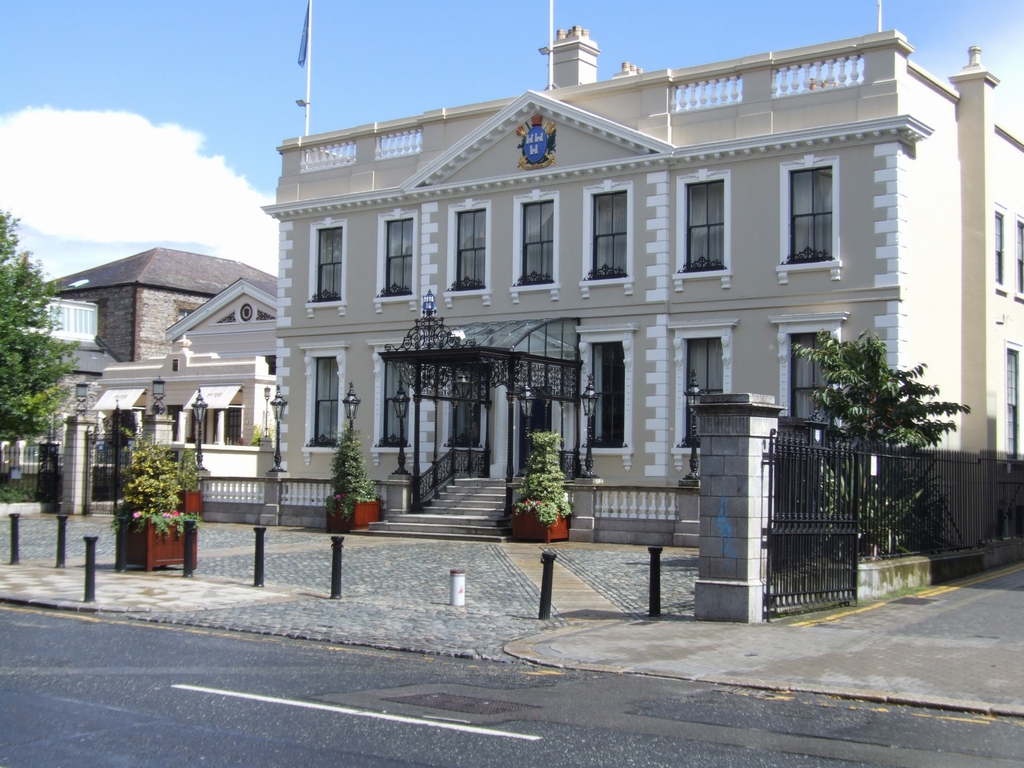
    We take you inside The Mansion House, the home of Dublin’s first citizen The Lord Mayor.  The current Lord Mayor is Cllr. Naoise O’Muiri. Take a look around the sitting room, the Meeting room and The Oak Room.

  • Dublin’s Ferocious Mingle Marcade

    Dublin’s Ferocious Mingle Marcade

    Eamonn Mooney, co-owner and manager at The Ferocious Mingle Marcade on 72 Thomas St. in Dublin city.

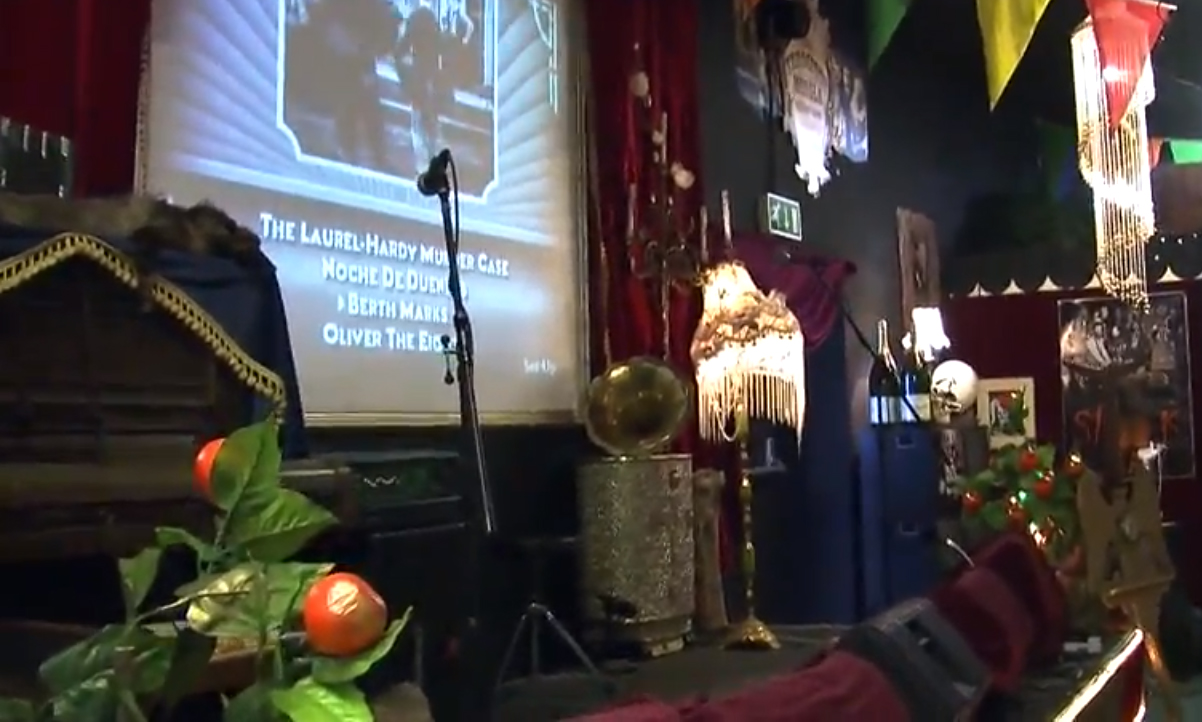
    The Ferocious Mingle Marcade is something which has to be seen to be believed.  It’s a Bohemian style permanent  indoor market which is located on Thomas Street, Dublin 8 and runs from 11.00 – 18.00 from Thursday to Sunday. It offers a wide variety of hidden gems amongst it’s many stalls and has a later closing time of 20.00 on Thursdays.  As well as offering clothing and bric-a-brac stalls, the Marcade also houses a coffee shop, a cinema screen and often has live music so you can sit and relax during your shopping trip.

    Video: David Hogan and Caroline Ewins Text: Lynne Swan

  • Dublin’s Urban Farm

    Dublin’s Urban Farm

    It used to be an actual chocolate factory a long time ago. “The Chocolate Factory”, is now the name of this tall, solid building on Kings Inn Street. and the community of businesses inside that are rejuvenating it.

    There’s a dojo, several photographers, an upcycling furniture shop, a graffiti artist and a café that is planned to open in February. Last week 2,000 people attended a vintage market there. I’m here to take a look at the “Urban Farm” developing on the roof. Paddy O’Kearney is waiting to show me and some urban planning students around on the huge ground floor, which dwarfs the café that is taking shape in the corner.

    Paddy is enthusiastic and animated when we finally get up to the fifth storey, the workstation just below Ireland’s first rooftop farm. You could call the space up here a shell, but there’s a lot happening. There are several workstations, plant nurseries, what looks like a pen for animals, bags of soil, and an aquarium with plants above nestled in old plastic bottles. Most strikingly though, is what looks like a slaughterhouse for wooden pallets.

    Image

    “It takes about 2-3 pallets, and a day’s work to make one of these”. Paddy brings us over to a “multi-tier raised bed”, which is a solid looking wooden construction, with different levels of shelves to house plants. “We coat them in yacht varnish, they’re pretty sturdy. It allows us to grow on several different levels. Blueberries, blackberries, all your granules, but you can still plant in your annuals as well and your bi-annuals.” Paddy says that when he looked online he saw these things selling for about 180euro and he’s not lying.

    Image

    This floor, which Paddy plans to make into a nursery, could be described as chaotic, but it doesn’t feel messy when you look at it in detail. It’s well organised, with safety equipment and fire extinguishers on the wall. More than that, you get the sense that everything in it, the rubble, the soil, the fish, the workstations, is being put to good use. Paddy has a plan to upcycle any material you can think of. That’s what the Urban Farm is all about.

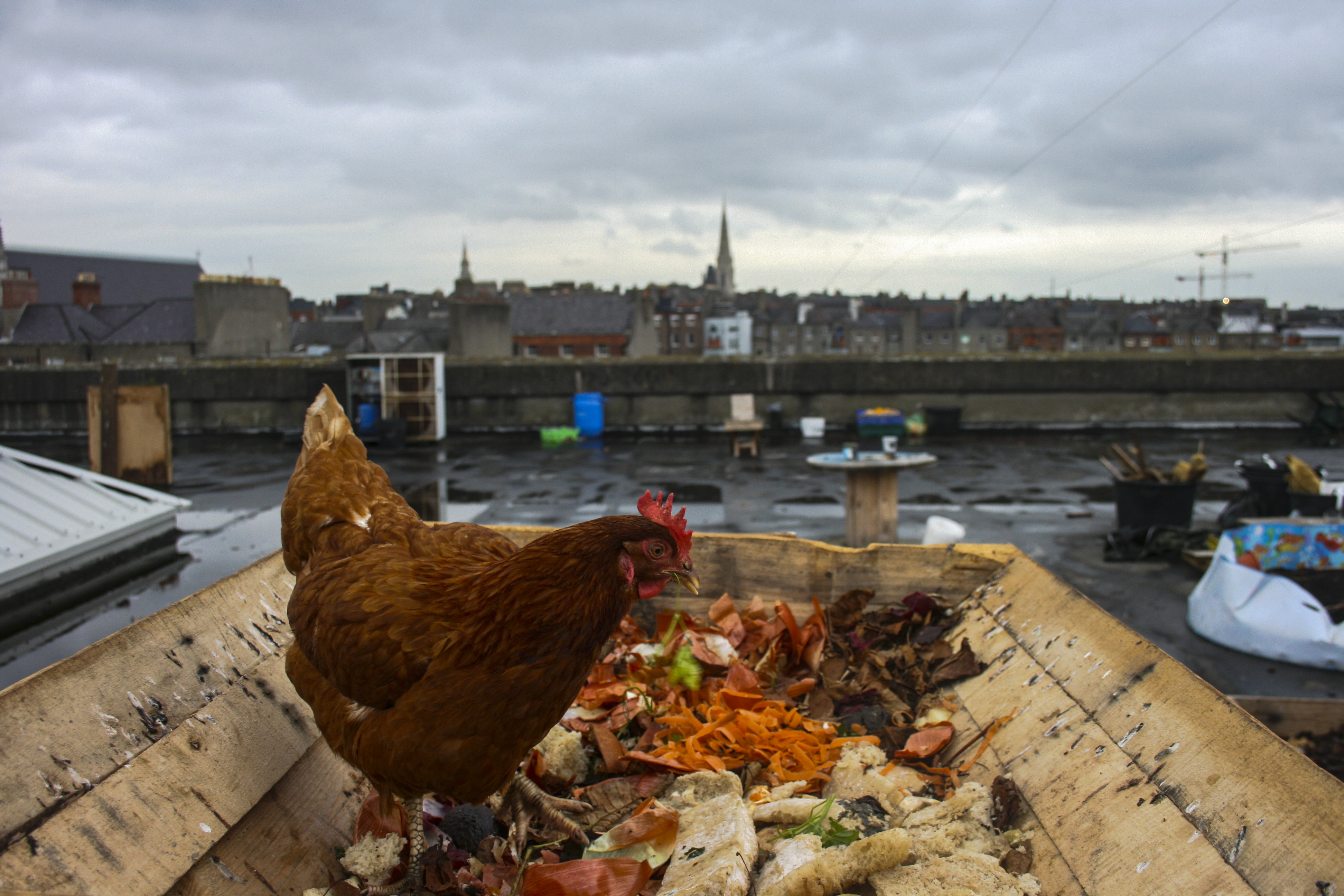
    “So we go up”.  We’re led up onto the roof, and are greeted by six friendly, well-fed chickens. Paddy asks them  not to drink his coffee as he places it on the ground. If the chickens are puzzled about being up above Dublin City on the roof of an old chocolate factory, they don’t show it, happily pecking away at the soil and compost.

    Image

    Paddy describes the roof as “stunning”, and it is and not just in its views. The work that’s taken place on it over the last four months is impressive, but only confined to one corner of the roof so far. Still, it’s exciting to look at what’s happened so far and imagine it multiplying five or six times. It’s exciting because what has happened has worked. I never thought of a roof going to waste before, but I guess they can, not this one though.

    Nothing at the Urban Farm is going unused. “It’s all about upcycling. Figuring out how we can use what we have” says Paddy. The slanted roof covering the doorway to the roof is being put to use housing plants. The chicken coop which Paddy and the rest of the urban farmers built themselves, has a plastic roof made from tiles they found. At the back of the chicken coop is a greenhouse.Image

    Now you see the end result of the pallet slaughterhouse. The multi-tier raised beds are all over the roof housing all sorts of plants and vegetables.

    “We’re trying to build a forest floor here”, Paddy takes us down a corridor, with around ten wooden boxes on either side, all filled with multi-coloured compost. Some of which the chickens, who Paddy is happy to report are producing a lot of eggs, are feeding out of. The floor is made from pallets, but between the wood is actual soil and as Paddy shows us, a lot of worms. “It’s a worm highway essentially. We’re trying to figure out how to use every space.”

    Image
    The compost comes from various café’s around Dublin, like Cornucopia and Mother Hubbard’s that mostly serve vegetarian food. “We just layer it up with some soil and the chickens get at it”

    “We’re not 100% sure yet to what our plan is, it’s a bit of a work in progress at the moment ,” Paddy admits. “What we want to do is optimise the space itself, so we can work out different things to do with the space. it needs to be in a sense a classroom, but also aesthetically pleasing so people want to hang out here.”

    Image

    The urban farming students, who are quite impressed, are keen to ask about plans “Plans, there are plans, there’s talks of building a geodesic dome for example, whether or not that’s going to happen though…There are a lot of questions”.

    The roof, we’re assured, can take a lot of weight. “It used to be a chocolate factory. They’d store huge barrels up here. The roof can take at least 200 tonnes.”

    Image

    Paddy himself has a fine art background  and five years garden experience. He described the Urban Farm as being “five minutes from the Spire, fifteen minutes from Grafton St.”, not unlike a businessman, and he is, having started City Composting Ltd. two years ago. Like the Urban Farm, City Composting is all about sustainability. The Urban Farm is a great idea, it puts a space that would otherwise be going to waste to good use, it puts a lot of waste to good use, but it’s also sustainable as a business. The Urban Farm pays a “very fair rent” to the lease-holder of the Chocolate Factory, and they’re exploring ways to generate money.

    Before finding the Chocolate Factory, Paddy tried to go through Dublin City Council to show how empty spaces can be put to good use. It was in that process that he met his fellow two fellow urban farmers, and they started the Chocolate Factory. “There a lot of supportive people in the Council. But we got a bit sick of the bureaucracy. The Chocolate Factory understands what we’re doing. Now we can go to the Council and go ‘Here, this is what can be done. This is how easy it is’.

    “In ten years or whatever, there might be offices here. Fine. We can pack up and go easily enough.” The idea being they could lease a space easily, put it to use before maybe a business wants to move in. “We approached a few letting agencies about spaces and tried to explain the idea. They said sure ‘you can buy it for 2 or 3 million euros. They didn’t really get it. Meanwhile those spaces are still empty”

    Image

    “We’re a business with an ethos.” explains Paddy after the urban planning students are gone. “It’s about sustainability. We get transition year students doing their work experience here. We get volunteers. They help us out building things, but they also learn a lot. If they want to use some of our nails and varnish and throw us so money to cover them, that’s fine”.

    On King’s Inn Street, you wouldn’t think there’s an urban farm taking place above your head, but there is. As an eco-concious business , upcycling all the materials they can get their hands on, it’s a great idea. I asked Paddy if there was a lot of old junk in the space when they moved in. “Yeah, a lot of old wood, plastic tiles. It was great”. But in Dublin especially, upcycling what would be another vacant space in the city centre into a useful, living area, is a brilliant initiative.

  • A visit to St. James Gate: the home of Guinness!

    A visit to St. James Gate: the home of Guinness!

    This slideshow requires JavaScript.

    Lynne Swan

    Guinness is one of the first things non-natives associate with Ireland. Despite this, numerous Dubliners have yet to visit the famous storehouse (it’s Ireland’s number 1 visitor attraction!) and walk through it’s historic gates. The City team were amongst those who had yet to check it out, so, we took a trip to St. James’ Gate to see what all the fuss was all about!

    The self-led tour (there is an option to have a guide talk you through the tour if you’re part of a group of people, however, we opted for the self-led tour so that we could take it all in in our own pace) is a very interactive one and visitors are shown the entire Guinness making process (minus the secret ingredient, of course!). The tour begins at the bottom of the ‘world’s largest pint glass structure’ which visitors are informed can hold a mighty 14.3 million pints of Guinness!

    Master brewer, Fergal Murray, guides you along the way via short yet very informative videos which let the viewer know just how the hops, barley, water and yeast are made into the famous ‘black stuff’. Visitors are advised that the tour can take up to an hour and a half or more depending on the pace at which you take it all in. Not long into the tour, visitors are given the opportunity to stop for a drink break and do a ‘taste-test’ of Arthur Guinness world-renowned drink.

    The ticket you’re given upon entering the storehouse can be redeemed for a pint in the Gravity bar on the 5th floor or else used to learn how to pull the ‘Perfect pint’ in the Guinness academy on the 4th floor. The ‘Perfect pint’ option is a real-treat as participants even get a certificate to show that they have ‘perfected the perfect pint of Guinness’! The views of Dublin city from the Gravity bar really are something else and there really is nothing like enjoying a cold drink whilst over-looking Dublin city.

    The store house is open 7 days a week from 9.30am-5pm and is located on Market street, Dublin 8.

  • Who will win the number one spot this Christmas?

    Who will win the number one spot this Christmas?

    Between here and the UK Christmas number one has become a huge betting tradition however the top spot in the irish charts has become a little predictable of late with the coveted award going to the X factor winner for the past six years.

    In the United Kingdom they’ve had a little more variety and opportunity to make a buck betting on the charts. In 2009 and 2011 a rival competitor took the number one title. The question is will the Irish charts remain unsurprising for the seventh year running or will the top spot go to a different kind of Christmas single.

    The contenders for the Irish number one include James Arthur the winner of this years X factor with his debut single “Impossible” and “Tiny dancer – a song for Lily Mae” by various Irish artists . Both entries have odds at 10/11 with Paddy Power, making these singles the most likely winners.

    James Arthurs winners single a cover of Shontelle’s “Impossible” is the first time 100% of the profits from the X Factor release will be in aid of charity. The money from the  single sales will go to Together For Short Lives a UK based organisation that helps children with life threatening and life shortening diseases.

    Another possible victor is Ultan Sherry with his Christmas track “Let The Snow Flakes Fall”. Ultan is a novelty entry but the NUI Maynooth student’s self-penned song has been a huge YouTube success and is a definite contender for the top spot however with his odds at 8/1 he is not the bookies’ favourite. “Let The Snow Flakes Fall” is another charity single released this year with all the proceeds going to Autism Ireland.

    Tiny Dancer – A Song for Lily Mae is yet another charity single inspired by four-year-old Lily Mae Morrison from Claregalway who is suffering from Stage 4 Neuroblastoma, a rare and extremely aggressive childhood cancer of the nervous system. This single has been in the Irish charts for just under three weeks and is currently in the number one spot according to the IRMA (Irish Recorded Music Association) and will raise money and awareness about Neuroblastoma.

    Performers in the single include a chorus of over 300 people from musical societies across the country and big Irish names such as Mundy, Mary Black, Declan O’Rourke and Paddy Casey to name but a few.

    The group behind the single hope to keep the X Factor winner from the Christmas Number One spot, the tabloids will love the story of the little, purple dinosaur loving fairy ballerina with a deadly cancer who left Simon Cowell’s plastic pop star out in the cold this winter.”

    The Irish iTunes chart shows James Arthur in top spot and Lily Mae in second with Ultan far behind in 144th place.

    Other possible contenders include One Direction and The Pogues at 20/1. Rihanna at 25/1, The Wanted and Girls Aloud at 33/1 and Cliff Richard at an unlikely 100/1

    It remains to be seen who will be the victor but who do you want to be this years official Christmas number one and whose single are you going to buy or bet on this year?

    Vote for your favourite here

    Tweet us your opinions @TheCity_Dublin

  • What’s Dublin wearing this winter?

    What’s Dublin wearing this winter?

    This slideshow requires JavaScript.

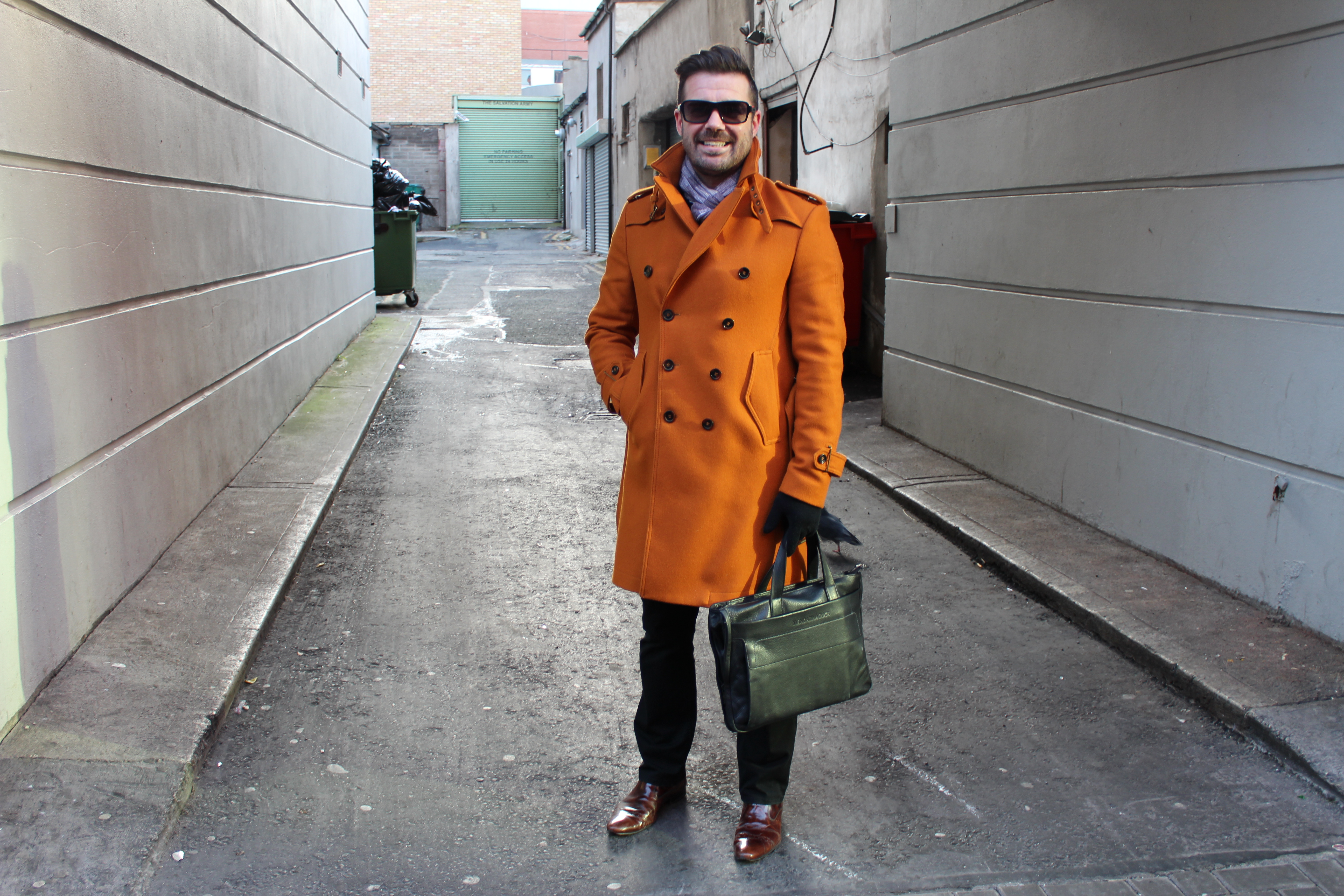
    The sky may dreary but the streets of Dublin are filled with colour this season. It looks like winter wear this year is all about flamboyance but with a hint of Parisian chic. The people of Dublin seem to be ditching the obvious all black ensembles for something with a bit more vibrance and spirit!

    One thing The City noticed was that coats are definitely the main fashion statement of the season, a great stand-out coat will win you compliments and glances as well as keeping yourself warm. So make sure you invest in a good warm winter coat, the people of Dublin favoured the duffel coat, the wool coat, the parka jacket, leather coats and of course the denim jacket if you’re willing to brace the breeze!

    Another fashion must this year is a good woolly jumper… yes your mother’s old geansaí is actually a fashion statement this season! From what The City could gather, the more crazy and wacky the better. The Christmas jumper is a season favourite but if you’re feeling a little shy this year why not try a cute fairisle jumper to ensure you look festive this season.

    So don’t let the gloom of the weather outside get your wardrobe spirits down, spice it up a little this year…  oh the weather outside is frightful but the fashion it’s so delightful!

    The City took to the streets of Dublin and asked them ‘What is your fashion must-have this season?’

    Text by Caroline Ewins

    Photos taken by Blaithin Henehan assisted by Caroline Ewins