Ireland ranks just 77th in the world when it comes to electing women to parliament. The average percentage for women in parliaments across the world is 20.75% with Ireland only marginally above that at 22.2%. Data collected by the Inter Parliamentary Union (IPU), shows the rankings of every country in the world by percentage of women elected to parliament from the most recent election figures.
Only two countries in the world have more than half of all parliamentarians as women. Rwanda is top of the world ranking with 63.8% of all parliamentarians being women. No other country came close to this figure. Bolivia came in second with 53.1%, and in third place was Cuba with 48.9%. Three of the top ten countries however, are in Europe. Iceland holds fourths place with 47.6% and Sweden is fifth with 43.6%. Finland rounds off the top ten with a percentage of 41.5%.
(Source: Emily Hull)(Source: Emily Hull)
None of the “big economies”, as classified by CNN Money and the Telegraph Business, such as France, the UK, China, Germany, Russia, the USA, Japan or Brazil have more than 37% – and together average out at just 21.49%.
Co-Founder and Chair of Women for Election, Michelle O’Donnell Keating, said that there are several barriers that prevent women from becoming politicians, and they are known as the five Cs – cash, childcare, confidence, culture and candidate selection. “Through our training, Women for Election seek to help women overcome these barriers and take their place in the decision-making process. We would believe that Irish women are interested in becoming politically involved.”
(Source: Emily Hull)
O’Donnell Keating stated that Women for Election trained over 1,000 women across Ireland to run for political office in 2012. She said: “[This] shows there is a strong appetite among women to get politically involved.” And they are not stopping there. Getting more women involved with politics is essential if we are going to see a more equal society in the future. Women for Election’s aim is “to continue our work training women from all political backgrounds to further increase that number over the years to come.”
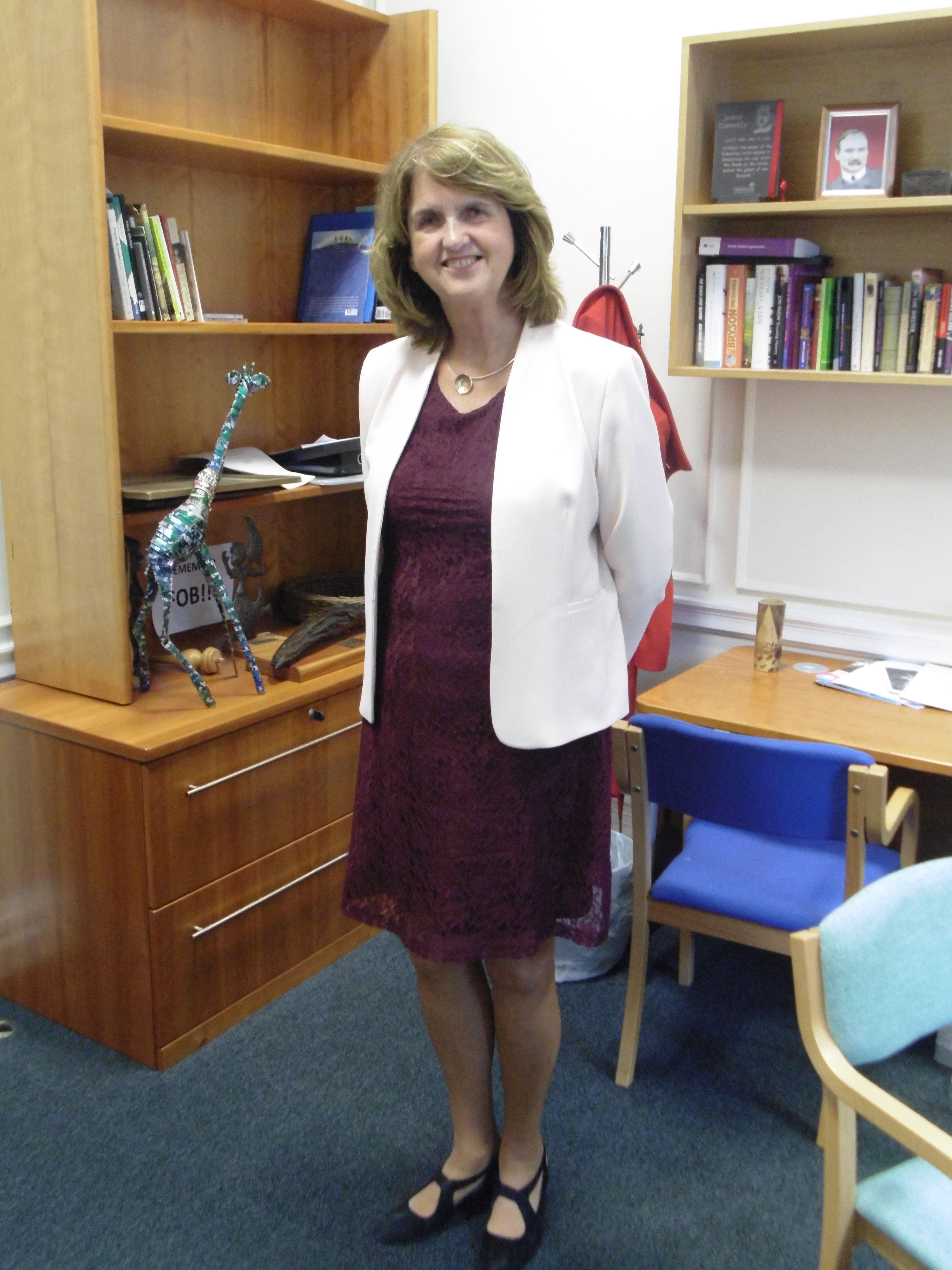
In the first of two articles speaking to former Tánaiste Joan Burton, Gemma Kavanagh speaks to the current deputy about women in politics.
This year we saw more women elected to Dáil Eireann than ever before, and more women choosing to study politics at third level. So what can this be attributed to? Are prominent women in politics inspiring a younger generation of women to take an interest or has it been the introduction of the gender quota?
In the 2011 general election, only 86 of the 566 candidates running were women and they won 25 of the 166 Dáil seats. Last May we saw this increase by 40% as 35 women were elected to Dáil Éireann. Nineteen of the women elected were entering the Dáil for the first time, and fourteen were first-time candidates.
(Source: Gemma Kavanagh)
Many observers have attributed this to the introduction of gender quotas, however the numbers suggest that despite the increase in female candidates, parties subject to gender quotas only elected four extra women.
UCD has one of the biggest politics courses in the country, and in 2014, of the 370 students that registered for Politics and International relations, 165 of them were female. In 2016, 452 students registered and 219 of them were female, showing the gap between the genders is closing.
So I asked what can we attribute this to? Did Hilary Clinton have an effect on inspiring more women to go into politics? “To all of the little girls who are watching this, never doubt that you are valuable and powerful and deserving of every chance and opportunity in the world to pursue and achieve your own dreams.”
That speech would have resonated with a lot of women, so has she been inspiring even in defeat?
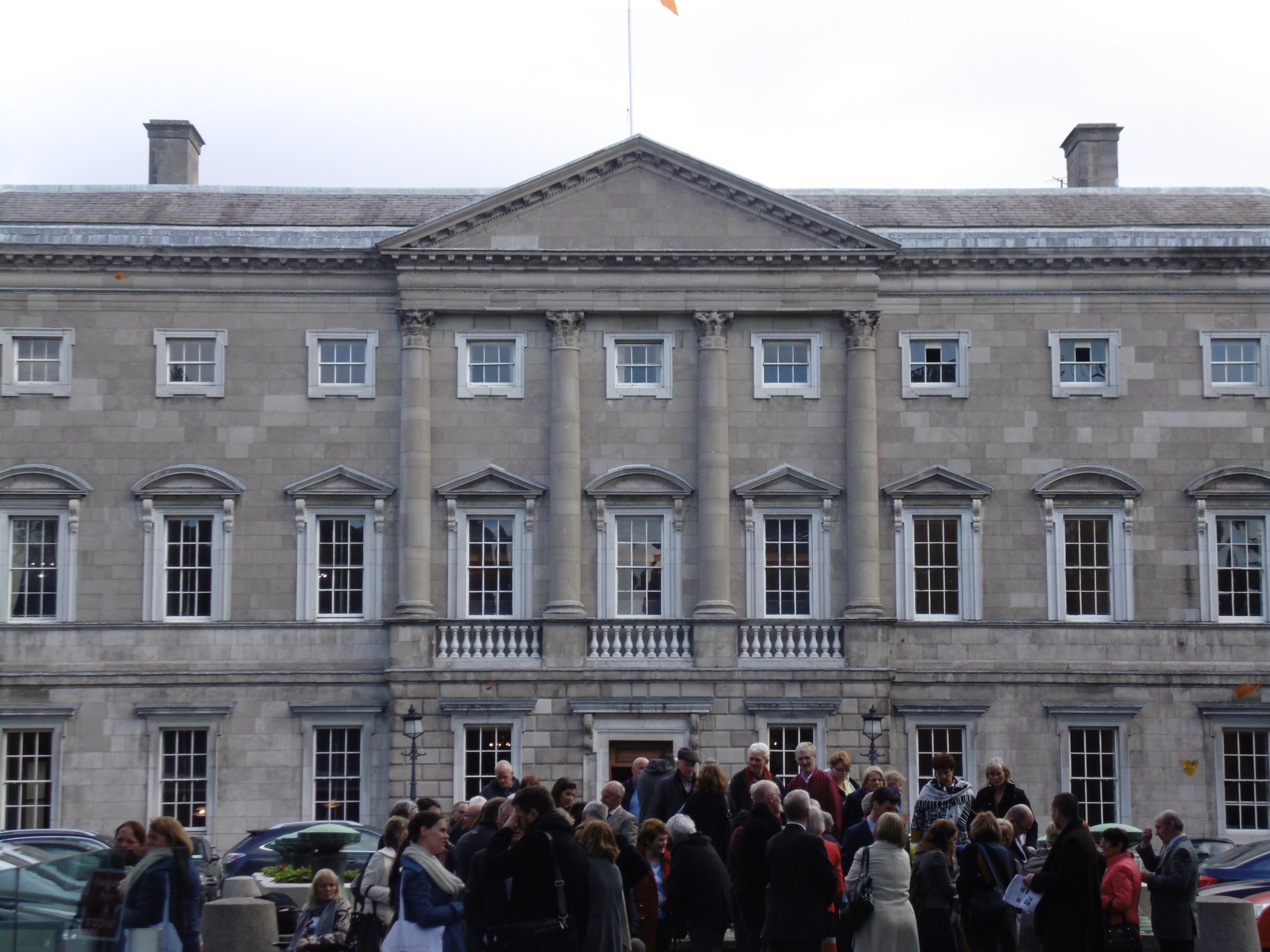
As I walked through the blue carpeted halls of Leinster House, I couldn’t help but notice it was mainly men passing me in the corridors. It was my first time in Leinster House and I was meeting Deputy Joan Burton to discuss her life in politics and the work of women in the government.
Deputy Joan Burton recalls a very proud day when she stepped into the Dáil for the first time in 1992. With Mary Robinson having taken Presidential office two years earlier it was a great time for women in politics. “Like every newbie on their first day at a new job it was
(Source: Wikimedia)
a mixture of excitement and apprehension, will I be able to do this job and will I like it?
“It’s an enormous honour to be elected as a politician by your fellow citizens to be entrusted with an involvement with the running of the country.” With a predominately male government I asked Joan Burton why more women don’t go into politics. We spoke about the 5 C’s; cash, childcare, candidate selection, culture and confidence.
“The very nature of politics is confrontational which can be off-putting for some women. Nobody in politics minds if you’re an average man, but they will get upset if you’re an average woman. Women like myself have to make a conscious decision not to feel daunted and remember that you are there to do the best you can for your area and community.”
Joan believes men and women take different approaches to politics. Women work well with the discussion aspect of politics; they like to work out solutions. Men are very confident and very leader orientated, men in politics are more debate orientated and it’s about winning or losing. “To enjoy politics, to get the most out of it and to contribute the best as you can to it, you have to be very resilient.” Describing politics as the perfect blend of vision and ideas with realism and communication, Joan emphasises the importance of having both men and women involved in discussing the topics of the country.
The world almost saw Hilary Clinton become the first female president of America. I asked Joan Burton about what she thought about her and her tough campaign for the White House. She spoke about how Hilary Clinton has been a great advocate for women in politics.
(Source: Gemma Kavanagh)
“She is someone who has grown enormously while seeking office,” Joan said. “Politics offer a lot of opportunities for growth because you can develop both your ideas and resilience. Inevitably politics it can be very aggressive and adversarial which puts a lot of women off, but if you can stick with your vision, be resilient and deal with difficulties and fight every day you will succeed.
“She says to young girls and women everywhere that you can do it too. If that’s your dream you can pursue it and that’s really important. When Mary Robinson and Mary McAleese became Presidents it was unheard of and it gave women inspiration.”
If you are a fan of the Harry Potter franchise, Fantastic Beasts and Where To Find Them is a must see. JK Rowling and David Yeats came together again for the first of five movies about Newt Scamander, played by Eddie Redmayne, and his adventures with magical beasts.
(Source: Vimeo)
While none of the main characters from Harry Potter appear in the movie, Grindelwald, a dark wizard and Dumbledore’s ex-best friend, is mentioned multiple times, with the headmaster himself even mentioned once. You do not need to have seen any of the Harry Potters to understand what is going on but if you are big fan, there’s plenty of exciting references you will recognise.
Eddie Redmayne plays the part of Newt Scamander exceptionally, and he is incredibly believable as the animal loving wizard he is portraying. Katherine Waterston, Dan Fogler and Alison Sudol star alongside him. Dan Fogler plays the loveable ‘nomaj’ (American word for muggle) Kowalski, who you will leave the cinema only hoping he will reappear in the next movies. Katherine Waterston plays Tina, Newt’s love interest, with Alison Sudol playing her beautiful sister Queenie. My only criticism with the acting is that there is no real visible spark between Newt and Tina and the love story the audience is truly rooting for is the one between Kowalski and Queenie.
(Source: Wikipedia)
The special effects and graphics are superb, but with a budget of $250 million it ought to be. All of the magical beasts and spells are done amazingly and you really believe the little furry blue sloth-like animals and tiny trees are just as much there as the actors and actresses.
There is a lot of humour throughout the film and you will be laughing throughout. There’s inside jokes for the true Harry Potter fans as well as new jokes especially for this newest magical franchise, ‘Fantastic Beasts and Where to Find Them’.
Black Friday is a day which originated in America – it’s the day after Thanksgiving, and sees retailers open their doors early and cut prices for its customers in the lead up to a busy festive season of shopping.
(Source: Flickr)
The annual “holiday” has been a huge phenomenon in the U.S. over the past few decades but it’s only been in the past number of years that Irish retailers have taken advantage of the name and used it to kick off the season of spending in the run up to Christmas. Many huge retailers in Dublin will slash their prices both in store and online on the 25th of November, with plenty of bargains available! Here are some of the biggest names that will have huge sales on come Black Friday!
Argos will be offering massive deals across a range of products ranging from technology, kitchen electricals, TVs and computing to name but a few. They are also claiming that they will cut the price of over 1,000 toys in half for all those expecting Santa to be good come Christmas morning, with 25% off homeware items when you spend €30 or more in store or online. And as if that wasn’t good enough Argos are offering a free €10 voucher when you spend €100 or more and a free €5 voucher when you spend €50 or more!
Harvey Norman kicked off their Black Friday sales early this year in a sale which runs across electronics, furniture and bedding with a huge reduction on most of their items across the store. Perhaps most eye-catching in their sale are their deals on laptops where over €400 can be expected to be cut off top name brands such as Asus and Lenova. Not only this, but there is up to 60% off sofas and a further 40% off their television range. Finally, they have promised to match their competitor’s prices including sale prices, so it may be worth a trip to Harvey Norman in the lead up to December!
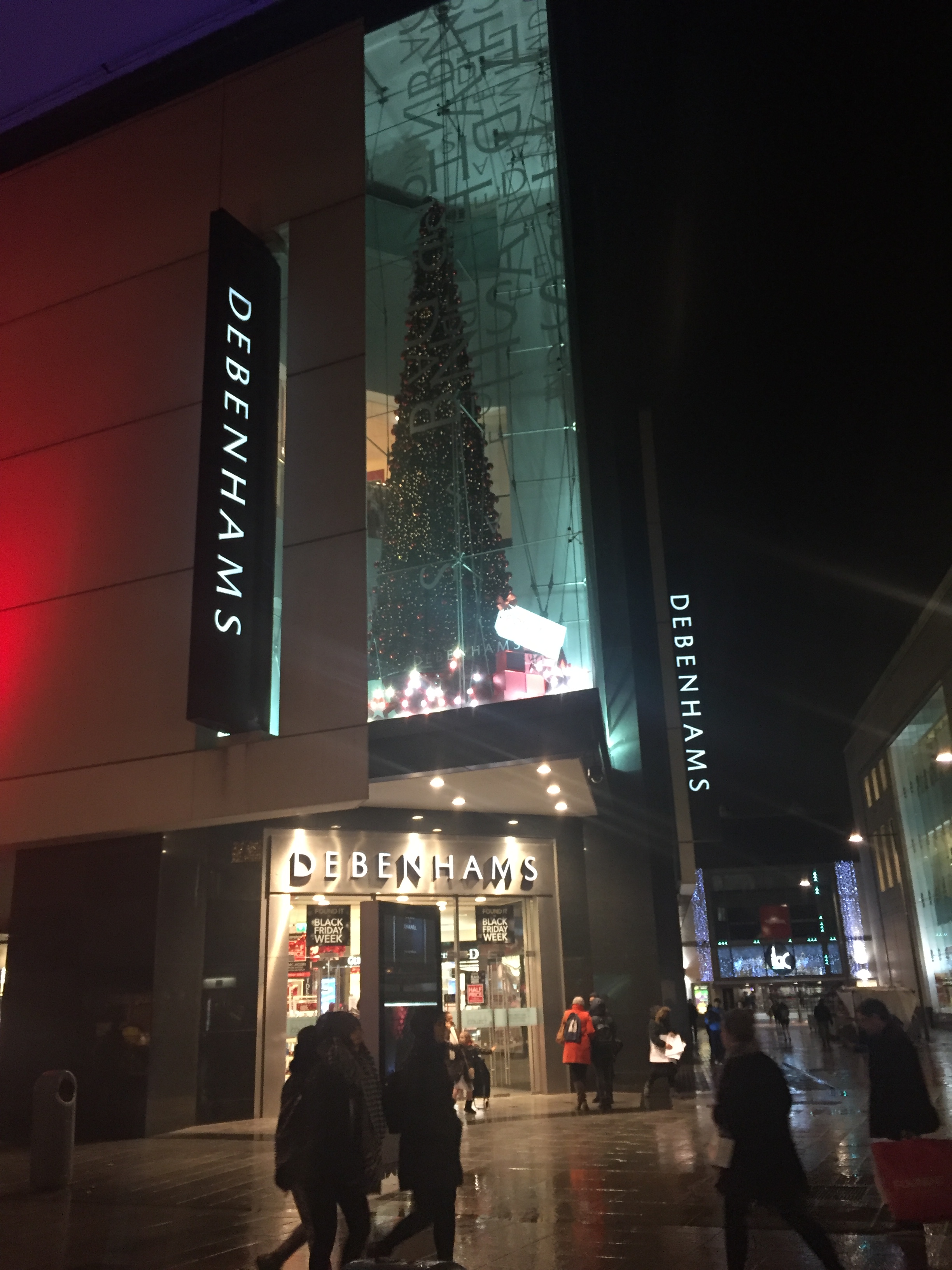
Debenhams department stores are also getting in on the Black Friday craze with great offers on beauty, menswear, womenswear and electricals. They too have started their sale early, on the 21st of November where online you can get many items on sale with some up to 50% off. Each day Debenhams are choosing a different range to put on sale, so be sure to keep an eye out on their website to find a range which suits you! They have also promised reductions in electricals up to 40%, up to 40% on gifts this Christmas, and they have promised to cut the prices of fragrances by up to 50%! All of these offers can be viewed on their website where more information is included.
(Source: Andrew Leahy)
Curry’s PC World are boasting of hundreds of reductions in store and online over their range of electrical items from entertainment systems to home appliances. Reductions will hit as high as up to 70% during Black Friday and ordering online is encouraged. If you register to Curry’s “Black Tag” online, they will email you free of charge and you will be among the first people to know what items they will be reducing, and when!
Of course it’s not only shops that are cutting prices for Black Friday, airlines are also reducing their fares over the coming weekend, with Ryanair selling 250,000 seats for just €9.99 on over 400 routes across Europe. The airline announced this latest sale in the lead up to Black Friday, and have launched their Cyber Week campaign, which is offering hundreds of reductions on Ryanair.com and their app.
Aer Lingus are offering deals which will come into effect on the 25th which include transatlantic flights to New York for €205 each way, Boston for €215 each way, or a trip to Los Angeles for just €260 each way! These bargain flights will only be available from the 1st of January 2017- May 31st 2017, and must be booked by midnight on the 28th of November!
Many of your other favourite retailers will also be boasting huge reductions come Black Friday. These include Carphone Warehouse, Amazon, Easons, Arnotts, HMV, Marks and Spencer and Hotels.com to name but a few. All of their Black Friday Deals will be online so be sure to check them out.
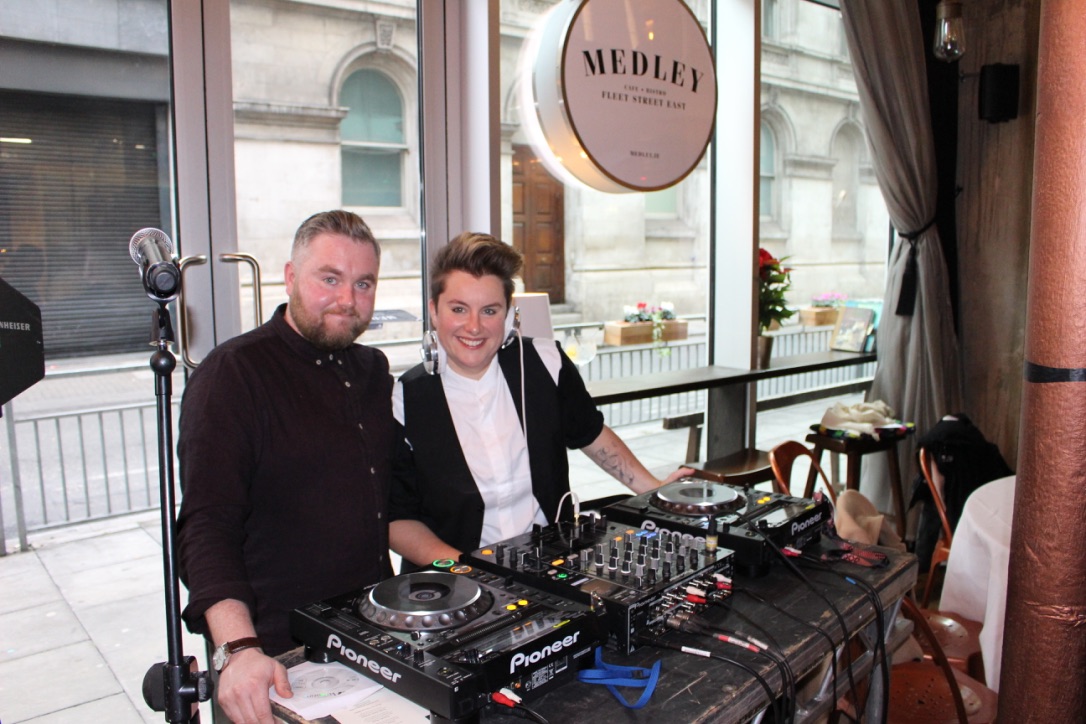
Dress for Success Dublin held a disco brunch in Medley Café Bistro on Sunday, 20th November, as part of their Equal Pay Day campaign.
The event was part of the month-long campaign that is aimed at raising awareness about the gender pay gap as well as supporting more women returning to the workforce.
Food was provided by renowned chef, and owner of Medley Café Bistro, Andrew Rudd, while DJ Nialler9 and Kate Brennan Harding provided the music.
Proceeds from the event will go directly to Dress for Success and their efforts to getting more women back to work.
(Source: John Smith)
Fundraising and Business Development Coordinator for Dress for Success, Martina Quinn, said: “Today was a sort of celebratory way of raising awareness about the campaign and raising funds for Dress for Success Dublin at the same time.
“I think a lot of women, and of course a lot of men as well, don’t realise there is a gender pay gap. There’s equality legislation in Ireland that dictates that people have to be treated equally but actually, for a whole load of reasons, women don’t get paid the same. A big part of [the campaign] was raising awareness, doing media interviews, running online campaigns and then we were also in Leinster House last week for a political briefing and we had about 30 TDs and Senators attending that and the idea behind that was to get political support for the idea of gender equality.
“This is the first year we’ve done the campaign and the support has been great, so if people can get behind us on social media we can build up the momentum for future years.”
More information about Dress for Success Dublin can be found on their website http://www.dressforsuccessdublin.org and through their Facebook and Twitter @DFSDublin.
A number of English jihadists were known to have travelled to Syria from their native land and supported the so-called Islamic State in Syria. According to the BBC news database, approximately 800 Britons have travelled to fight for the terrorist organisation, with 75 of them being convicted for offences relating to Iraq and Syria, the most notable of which was Jihadi John.
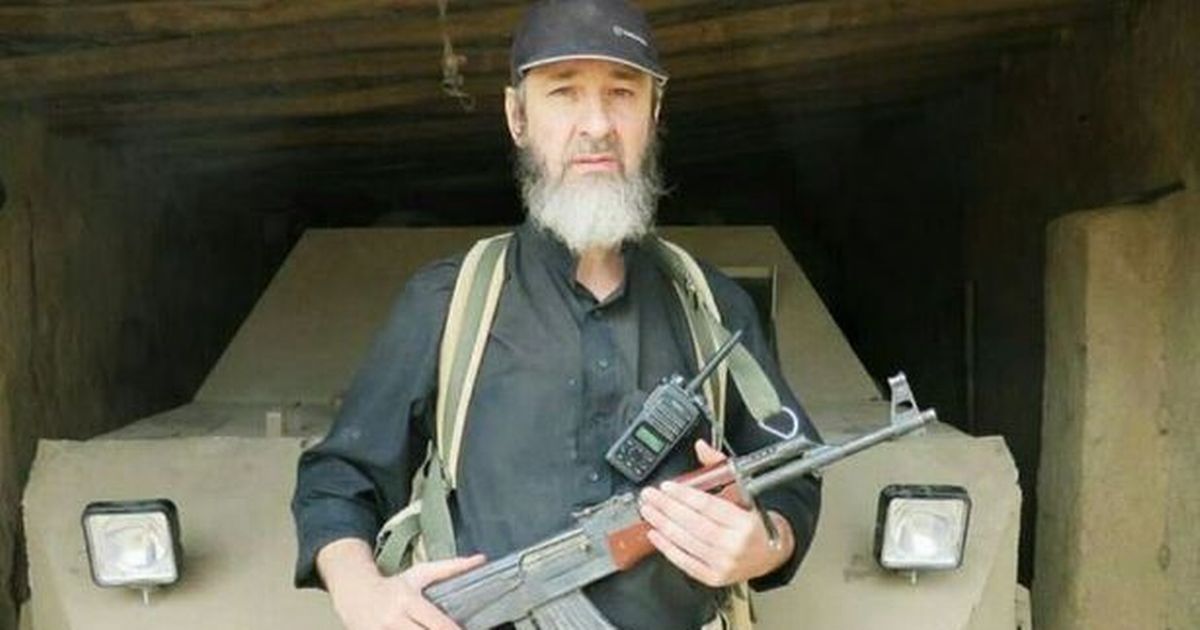
It’s well documented there are a number of Islamic extremists in Ireland, who are being monitored by the Garda’s counter-terrorism unit. However, the first record of an Irish extremist killed in the Middle East came to light when Dublin native Terence Kelly blew himself up as part of ISIS’s attempt to defend their last stronghold in Iraq – the city of Mosul.
(Source: Irish Mirror)
Kelly was born in south Dublin in 1967 and lived in the Liberties, and was once a Catholic altar-boy. However, he converted to Islam whilst in a Saudi Arabian jail, where he was convicted for brewing home-made alcohol. He appeared on the Late Late Show with controversial British cleric Anjem Choudary where both defended the actions of Al- Qaeda. Kelly was also arrested back in 2011 when he suggested that President Barack Obama should be killed on a presidential visit to the Republic.
Kelly, who was also referred to as “Khalid Kelly”, once worked as a nurse in Pakistan, but found himself on the frontline in Iraq, where he detonated a VBIED (Vehicle-Borne Improvised Explosive Device). The attack was aimed at pro-Iraqi government forces, but it is believed that his suicide mission had no victims.
Since the news broke that this Irishman carried out a suicide attack, gardaí in Ireland have been working on the personal background information on Kelly to establish if he has any remaining associates in Ireland that may be dangerous to the public. They believe that although Kelly spent the majority of his time in the UK with his wife and three children, he had planned this attack while living in Ardagh in Co. Longford, something which has shocked many residents there. The investigation will try to shed light on whether any other individuals in Ireland aided Kelly in some way to plan, or to carry out his attack in Iraq. Gardaí will also monitor Kelly’s use of social media, to see if he encouraged others at home to join ISIS or to radicalise their religious beliefs.
The gardaí estimates that there are approximately 30 to 40 people who have left Ireland to fight in the war in Syria or Iraq, with a small number being Irish-born. The others had grown up in Ireland but their families moved here from abroad. This radicalisation generally takes place online over social media, and gardaí are urging the public to contact them if they view any sinister activity online.
After the attack, ISIS published a photo of Kelly holding a weapon standing in front of a VBIED among other photos of the explosion claiming that he had killed vast numbers. However, forces in opposition to ISIS in Mosul claimed that the blast resulted in a few injuries, but no fatalities.
Gemma Kavanagh speaks to Joan Burton about life and her political views in our second piece on the former Tánaiste.
Having sadly lost her adoptive mother at a very young age, Deputy Joan Burton wished she could share her success with her mother as she entered the Dáil for the first time in 1992. “She got sick when I was 17 and she died when I was 20,” Burton explains.
“When I was two and a half she adopted me, I also thought about my birth mother and how I’d love to tell her but in those days trying to access details about your background or make contact with your birth parents was almost impossible.”
(Source: Gemma Kavanagh0
Former Tánaiste, Deputy Joan Burton went to Stanhope Street School in Stoneybatter. Coming from a working class area, she placed huge value on education. She received a scholarship to UCD and studied English and commerce, and became one of Ireland’s first female chartered accountants. Before her life in politics, Deputy Joan Burton was an accounting lecturer in Rathmines.
She loved working with students and taught some modules on the journalism course in DIT. She then lived in Africa for a period of time. “I worked in the university of Dar Es Salaam in Africa developing business education there in cooperation with the Irish Aid programme.”
On her return to Ireland in the mid 1980s, she began working with the Labour Party and was encouraged to run for election. “I got involved in running the presidential campaign in Dublin West for Mary Robinson and at the time there was growing support for women candidates in the government.”
Describing herself as a late vocation to politics, Joan Burton did not run for election until she was 40. “I am glad I had the opportunity to travel and work abroad and get life experience before starting my career in politics, when I became a minister my experience stood to me.”
Joan Burton became involved in county Dublin politics when she was on the council for Mulhuddart in 1991. “What attracted me to politics was education, housing and planning. One of my passions was developing housing and to make sure there were sports facilities, parks and trees lining the roads in neighbourhoods.”
Joan was an advocate for ‘Planning for people not for developers’, and helped to bring projects such as the Blanchardstown Shopping Centre to Dublin West. “I want to see Dublin West as a really good place to grow up in, when you see the impact good neighbourhoods and schools have on people’s lives, it’s the best return.”
Joan placed huge emphasis on education, and how important good schools are to a child’s life. “We’ve had over 20 new and refurbished schools in the Dublin 15 area. Education for me was an enormous opportunity to do the things I wanted to do so I want to do that for someone else.”
In order to encourage young girls to take an interest in politics, Joan spoke about how we need to develop the subjects like CSPE (Civil, Social & Political Education) and issues that explain community and encourage discussion. When people are involved in their community or their part of the city, it helps people to develop ideas about how they can help and improve their area. “The issues that attracted me when I was young were education and housing and planning. I was from Stoneybatter in a two room cottage, nobody had indoor toilets.”
(Source: Wikimedia)
Last May, Joan Burton lost her position as Tánaiste when Labour came out of government. I asked her what she wanted her legacy to be after she had been the Taoiseach’s right hand woman for so many years. “I was very happy that when Labour came out of government the unemployment rate had more than halved [from] what it was before, and more funding was going into areas such as arts, which is seen as a very important quality of life in our society. We had a huge school building project which we’ll only see the benefits of in 20 years but I was happy that we provided really good places for children to go to school.
“As Minister for Social Protection, I tried to turn social welfare system [from] more than [just] a support system but more of an opportunity to go back to education or training, giving people the power in their own lives to get jobs. I tried to build a system where the social welfare is more than just getting a payment but has a whole list of opportunities built into it.”
It’s one of the biggest issues in Ireland at the moment and pressure is mounting on the government to address the 8th amendment as a huge ‘Repeal the 8th’ campaign takes hold across the country. I asked Joan what were her thoughts on it and does she think Enda Kenny will ever address it.
“I campaigned against the introduction of the 8th amendment 30 years ago and I campaign against it today.” She spoke very passionately explaining that the Irish constitution was not the place to deal with such an “extraordinary, important, sensitive complicated issue”.
“It was not a good political day when that amendment was brought into the constitution,” she said.
With respect to others who are of a different opinion she acknowledges the fact they are difficult and sensitive issues and everybody’s story in relation to a pregnancy is a different story and everybody’s story is important to them. “I do think there has been a political parking of the issue. I think the timeline of it is far too slow, it could be even slower than the Taoiseach suggested. He said there were at least six ways of approaching it but never specified what they were, we need to try and bring people together on it and be respectful of people’s views. I wouldn’t preach to anybody what they should do; life is complicated enough. I don’t think it’s for me to make the decision for people and I think people should be supported in whatever decision they make.”
With the Pope planning to visit Ireland in 2018 Joan Burton remarked she assumes it will be left for longer still and be addressed after the Holy Father’s visit.
“As Tánaiste I insisted on setting a date of the marriage referendum [and] the Taoiseach. Enda Kenny had changed his views in relation to marriage equality and he came to respect the desire for change and equality. I pushed for a date and he respected that. Perhaps some of the people in government with him now need to convince him we need to address the 8th amendment as a country.”
TheCity.ie’s Gemma Kavanagh sat down with Galway fashion designer Sabrina Fallon to talk about her latest design and inspiration.
Having lost someone special to addiction, Sabrina Fallon was inspired to create a piece of work to help raise awareness of addiction. “I believe it is a disease and I felt it was very misunderstood at the time.”
(Source – Gemma Kavanagh)
Looking to break the stigma attached to the topic she wanted to create awareness for the younger generation about what is going on with addiction in our country today.
Her creation is eye catching and drew people in from all over the room. “This installation is 2,000 stitches made from hospital bedsheets and I knitted with the crutches as a metaphor that alcohol is a crutch. I wanted to make it really big so as to grab people’s attention.”
(Source – Gemma Kavanagh)
Conducting interviews with alcoholics and people in recovery, Sabina examined the most common words used by alcoholics. Many said they had no hope and felt lost, like they had a void and a hole in the soul.
“Everything I did was taken from something someone said, when I was creating this one of the addiction councillors told me that alcoholism was tearing the fabric of society apart which is family. I left a box in a social area and I asked the question what do you think an alcoholic is in your own words, and some people said it is someone who is very lonely. Some of the comments were very negative, ‘somebody who is selfish’ that stemmed from people’s own experience their own stories with people with addiction such as alcoholic parents.”
The person featured in the installation is curled up in the foetal position on the edge of the material and was made with chicken wire. The artist wanted to create a vulnerable image of a person struggling with addiction.
(Source – Gemma Kavanagh)
Sabrina also created eleven dresses made from hospital sheets to symbolise the one in eleven children who are directly affected by alcoholic related issues in the country. “At the moment I’m travelling to schools and trying to create awareness and give the children food for thought because it is pretty scary what’s going on. I’m not interested in making money off it at the moment that’s not what this is about its about creating awareness and someday it’ll find a resting place but my main priority is to spread the message.”
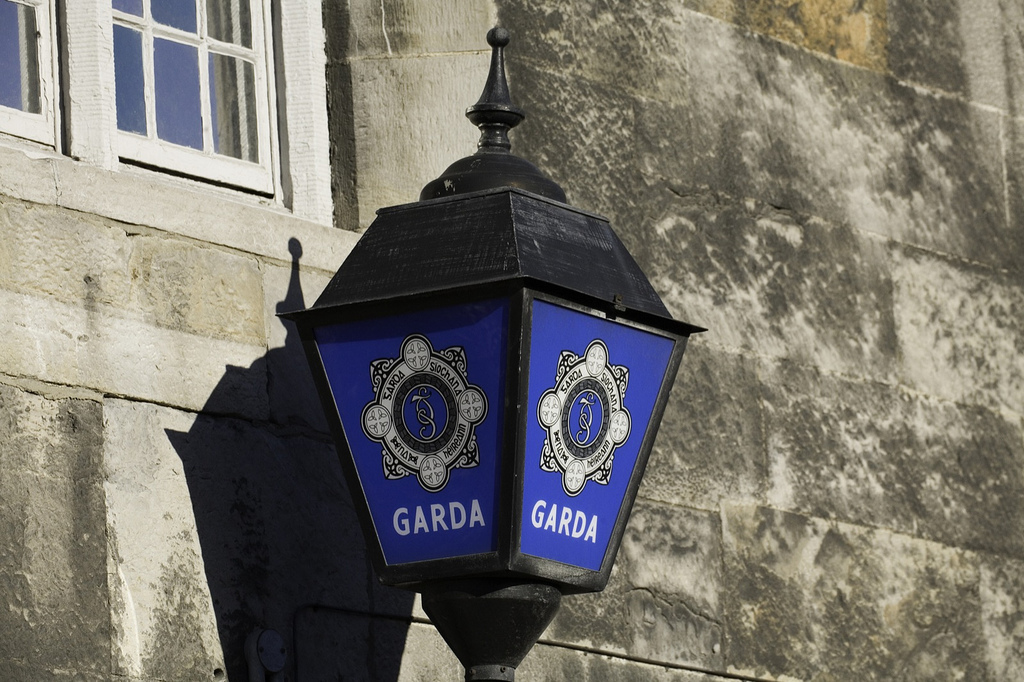
In 2014 and 2015, over €37 million was paid to the gardaí in overtime. A year on, and that figure has more than doubled to over €85 million.
(Source: Flickr)
“The increase in Garda overtime spend from 2014 to 2015 arose for a number of reasons,” said Damien Hogan of the Garda Press Office. “The roster changed that financial year, which allowed us to allocate more overtime. Also, a number of major policing operations required additional overtime such as the visit by HRH the Prince of Wales and the implementation of anti-crime and anti-burglary initiatives such as Operation Thor,” he said.
In 2015 the Garda Commissioner, Nóirín O’Sullivan, launched Operation Thor to focus on crime prevention and targeting individuals involved in burglary and related crimes. A budget of €5 million was provided by the Department of Justice and Equality for Operation Thor, to include a combination of additional high visibility patrols, checkpoints, rapid armed response and public awareness measures.
Operation Thor is just one of many new plans put into place in the last two years to prevent organised crime in Ireland. The main driver for cracking down on organised crime has been the Hutch/ Kinihan gangland feud that has been haunting the streets of Dublin since Gary Hutch was shot in Spain in September 2015.
The Hutch/ Kinihan gangland feud has been the bloodiest in Irish history with ten men being murdered within the year. The gardaí came under heavy criticism as to why they were unable to stop these murderous gangs walking the streets of Dublin.
“Given the fluid nature of such groupings it is extremely difficult to quantify the number of criminal groups operating at a particular time. Splinter groups and new gangs can form overnight. Organised crime is constantly evolving and new innovations in crime are continuously emerging,” Hogan told us.
(Source: Wikimedia Commons)
In order to keep on top of organised crime, An Garda Síochána participate in international seminars which help them to identify new trends in crime.
“In the last number of months, An Garda Síochána has made significant progress in tackling organised and serious crime gangs, which cause such harm to communities here and abroad. Between March 2015 and September 2016, we have seized €1.9 million in cash, 35 guns, 1000 rounds of ammunition, 36 million worth of drugs and we have arrested 167 people in relation to these crimes,” he said.
An extra €5 million was also allocated by the Department of Justice in February to tackle organised crime. By that stage, four men had been shot dead in reprisals from the gangland feud. The money was used for overtime to facilitate checkpoints, extra patrols and implementing measures to tackle organised crime. The remainder was used for equipment and the €5 million was spent by the end of June 2016.
On the 8th of June 2016 the Minister for Justice Francis Fitzgerald allocated an extra €55 million to the overtime budget for 2016.
The additional money was to support the policing of organised crime such as:
> Concentrated policing targeting gang related crime.
> The intensive and strategic targeting of burglaries and related crime.
> Measures against terrorism.
> Policing one off events such as the visit from the Prince of Wales and the 1916 commemorative events.
(Source: Wikimedia Commons)
“An Garda Síochána remains resolute in its determination to act against those within society who pose a significant threat to the welfare and well-being of our citizens and the communities we serve. An Garda Síochána will continue to assist Government Departments and other State agencies in this task, including the development of a new National Drug & Alcohol Strategy, to be in place from 2017 and the enactment of new legislation counteracting emerging trends in the illicit drugs market place in Ireland,” Sergeant Hogan said.
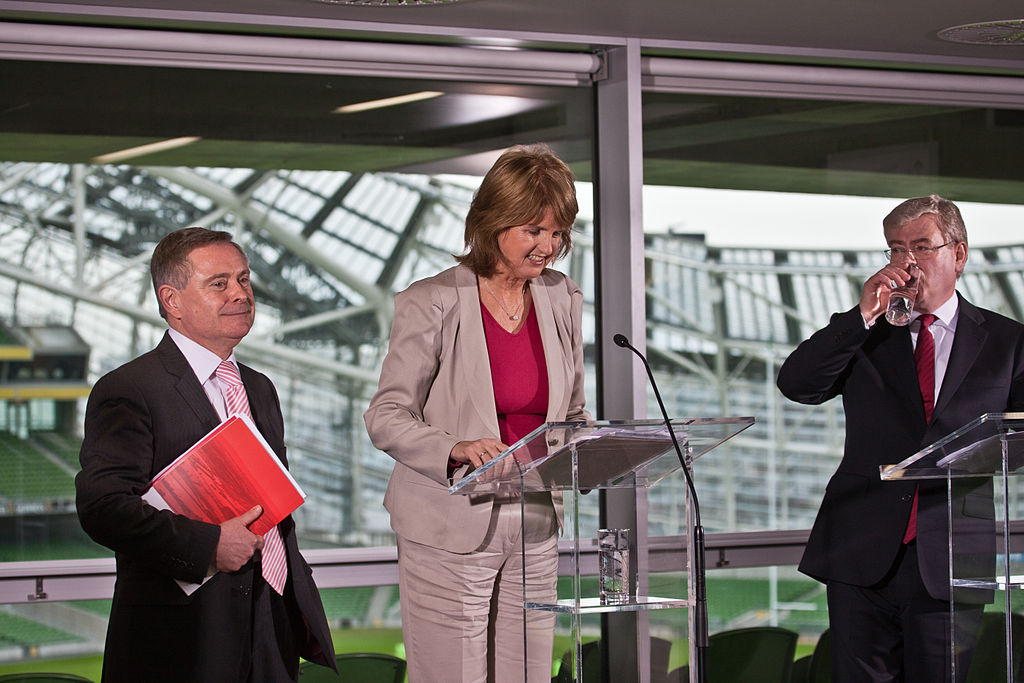
There has always been a focus on the safety of passengers in taxis, but it seems the risks have become just as high for the drivers themselves, with reports of drugs and violence becoming commonplace on the average night shift.
Two Dublin based drivers have spoken out about how they have been exposed to violence and threats while on shift and they both admit to carrying protection, even though it is illegal for them to do so.
“Most of the time you do feel safe but when you feel unsafe, you feel very unsafe. You just don’t know who is in your car or sitting behind you, some people are so weird that they creep you out just by listening to them. You really don’t know if you are safe or not until the end of the journey and they get out of the car,” said Michael (not his real name), a taxi driver from Dublin who has been working in the business for nearly two decades.
Michael noticed a shift in the job as drugs and violence are now more common than ever. He claims that a growing number of the people he picks up from clubs and nightclubs on a Saturday night have been taking drugs and a lot of them attempt to do so in his car.
“They [can] get very violent when they take drugs, I don’t think they realise how violent they actually are. I tend not to say anything if someone takes drugs in my car, if they go as far as to take drugs out on front of me, then I know they are not bothered about what I think or what I am going to say and all I will do is aggravate them,” he said.
Marcus (not his real name), who is in his thirties and also from Dublin, said he takes the same approach and would sometimes bite his tongue if he thinks acting could put him in danger. When it comes to people running without paying, he also thinks it isn’t worth chasing because the consequences may not be worth the money.
Both taxi men have had times where they were shaken up in their car which ultimately led to them thinking it was necessary to carry a form of protection even though it is prohibited. Some of Michael’s experiences have made him reconsider staying in the business but he says he has little choice .
“I had no choice but to carry on because it is the only form of work I have. I have been driving a taxi for almost twenty years, I never did a junior or leaving cert because I left school at 13 so I have no qualifications,” he explained.
Both men were asked if it is necessary to carry protection as a taxi driver and both believed it was absolutely vital and that almost every taxi man would do so.
Marcus said: “At all times it is necessary to have protection, mainly taxi drivers carry a baton but it is completely illegal. [Many taxi drivers] have some form of protection and I would say most of them have used it once or twice. It wouldn’t stand in court if it was used and you were arrested because it is illegal to carry a weapon in your car. You are better off using your fists if it comes to protecting yourself but it just gives you that reassurance knowing you have protection.”
When it comes to regulatory bodies protecting taxi men, neither driver felt like there was sufficient help. “You are self-employed so you are completely out on your own regardless, the taxi union is there for legal stuff or to help you with your insurance but with protection and safety, you are out on your own. You would just go to the guards if you are attacked or in an incident, not any taxi bodies,” said Michael.
(Source: Wikimedia)
Sara Morris from the National Transport Authority had to agree with the drivers as their authority would have no involvement in this area and neither would the union.
She said: “Taxi drivers are self employed so in any instances like that, it would be up to the drivers themselves to go to the Garda. We have put a forum up on our website to see if drivers would be interested in new safety equipment like putting up partitions or installing cameras. We are gathering all of the information from that and hopefully we will have a decision based on the drivers needs by the end of the year but it is a slow process and it will take a while to come in. Also the costs of any safety equipment would be put on to the drivers so some of them may not opt for this because it will be expensive. It is unfortunate though and you do see attacks on taxi drivers in the papers a lot but any criminal activity in a taxi would be dealt with by the Garda, not us. It is important to emphasize that the current SPSV regulatory framework does not prohibit any proportionate, lawful safety measures and many drivers have implemented such measures already,” she said.
Garda sources agreed that it is a sticky situation for drivers. One explained: “If a taxi driver is attacked or someone runs without paying, it is a criminal matter so they should come to us, not taxi organisations. We take an attack or robbery the same way as we would if it happened to anyone on the street but if the taxi driver used a weapon or assaulted someone, they would be arrested as well as the party who didn’t pay or attacked them.”
Both taxi drivers we interviewed found this supposed ‘peace of mind’ to be useless and they both claim they would not be able to afford to install these cameras, partitions or the locational alert systems that have been suggested by transport minister Paschal Donohoe.
“It is just ridiculous, the government and NTA have been saying this for so long, they will provide taxi drivers with safety if we can afford to pay for it. All of these new technologies are expensive, so what happens to the taxi drivers who can’t afford them? We just have to hope for the best? Again this is the government helping the rich and pity about the poor,” said Marcus.
We asked ten taxi drivers, both part time and full time, if they could afford to provide their own safety equipment or if they would be willing to pay for it and all ten said no. So it is clear that providing a safe working environment for taxi drivers is going to be a difficult proposition.














You must be logged in to post a comment.