Author: The City’s Newshound

  • A Break from The City: Hollywood

    A Break from The City: Hollywood

    By Rachel D’Arcy

    Situated nice and pretty on America’s sunshine filled West Coast, Hollywood is home to some of the biggest and best productions ever seen on screen.  It became home to the entertainment industry in the early 1940s with California, known for its year round sunshine, perfect for filming in. We took a break from the city to visit Hollywood, Los Angeles, picking some of our favourite spots to get the full Movie Star experience.

    Warner Brothers Studios:

    Warner Brothers Studio Tour is recognised as Hollywood’s top studio tour, bringing you onto the lots of some of your favourite television shows such as Pretty Little Liars, Friends, Big Bang Theory and more. Still an active lot, we were lucky enough to see Fuller House and Two Broke Girls both being filmed as well as the sets for Gilmore Girls and Pretty Little Liars being decorated while on our tour – a star is never too far away in Hollywood! Allowing an in-depth look into how television shows and movies are made, our guide asked our tour group about our favourite shows and movies, tailoring our experience to the favourites of the fifteen people on board our cart. We even got to set foot on the famous Big Bang Theory Set as they were on a break from filming.  Taking a look at Leonard and Sheldon’s apartment, the broken elevator, and Penny’s apartment, it brings the world of the screen to the real world.  Allow just over two and a half hours for the whole basic tour, and even longer for the VIP experience. You’re also given the opportunity to explore the ‘Set to Screen’ museum, where you can take pictures in Central Perk from Friends, take a ride on a Quiddich Broomstick from Harry Potter and design your own Batmobile. At $60, it is well worth its cost!

    The Hollywood Museum:

    img_5237
    (Source: Rachel D’Arcy)

    Set in the old Max Factor building, the Hollywood Museum combines the best of both old and modern Hollywood. The ground floor is home to outfits worn by Marilyn Monroe, images of Hollywood in the 1960s, a dedication to Lucille Ball and, of course, a look into Max Factor’s career as a famous makeup artist.  A film room plays the story of Max Factor’s past, before you make your way into the well known Redhead, Brunette and Blonde rooms to get a look into life in Hollywood in the 1940s and beyond. Heading upstairs, you’re greeted by the hallway from the Silence of the Lambs, making you feel like you were on the set as you look into jail cells straight from the film itself. The first floor is dedicated to a more ‘modern’ Hollywood, with both television and film costumes and memorabilia lining the walls. Shows like How To Get Away With Murder, Netflix’s Grace and Frankie, Ray Donovan and more all have props and costumes featured, allowing you an up close look at the clothing worn by Jane Fonda and Viola Davis as well as many others. More recent movies, such as High School Musical, Inside Out, Baywatch, Straight Outta Compton and more are all featured too, meaning there’s definitely something for everyone! The top floor is also home to exhibits starring Elvira: Mistress of the Dark, and ‘Reel to Real: Portrayals and Perceptions of LGBT in Hollywood’. At $15, it’s relatively inexpensive for just how much you’ll learn.

    Dolby Theatre:

    img_5149
    (Source: Rachel D’Arcy)

    The Dolby Theatre is best known for being the current home to The Oscars every February, but is also host to concerts, television shows and much, much more every other day of the year. The tour is short, but allows you to see an Oscar up close, and to take in the interior of the building. You can see where the VIPs are seated during the Oscars ceremony, and are told the story of how the ceremony runs – from the reception in the Grand Foyer, to the Golden Walk after a nominee wins an Oscar. It’s located next door to the world renounced Chinese Theatre, and the Walk of Fame stretches the length of the sidewalk outside, too, so it’s a definite must see for fans of film.

    Universal Studios:

    Universal Hollywood is similar, yet completely different, to its Orlando counterpart. Consisting of some of the same rides, the way they’re executed has its own unique Hollywood twists of sorts. The primary difference is that with every ticket purchased to the theme park, you also have the opportunity to explore the actual Universal Studios lot. Home to shows like The Mindy Project, The Voice and more, the lot also houses Illumination Entertainment, responsible for bringing Minions to the world! The tour is interactive, allowing you to be fully immersed in rides whilst on the tour – you can experience driving like the Fast and Furious, being stalked by Norman Bates, and even see Jaws take a diver down. As well as the studio tour, the rides and experiences at Universal are some of the most fun you’ll have in Hollywood. A tip is to go early in the morning – we were there at 8am, and there was no wait time for all of the most popular rides, such as those in Harry Potter’s Wizarding World!

    Stars’ Home Tours:

    IMG_5345.JPG
    (Source: Rachel D’Arcy)

    I know what you’re thinking – isn’t it a little sketchy to go on a tour of people’s homes? It isn’t until you set foot on the bus that you realise you see so much more than the homes of the rich and famous. Taking in Mulholland Drive, Beverly Hills, Bel Air, Rodeo Drive, West Hollywood and the Hollywood Hills, the tour brings you to places you constantly hear of in films and TV. On our particular tour, we even got to stop off and take pictures in front of the legendary Hollywood sign, just off Mulholland Drive, getting a spectacular view that you wouldn’t get otherwise. We saw houses belonging to Christina Aguilera, Bruno Mars, Britney Spears, Sacha Baron Cohen, Arnold Schwarzenegger and more before touring the rest of Hollywood. It’s a great experience to do one of these tours, especially as you need a car to get around many parts of Los Angeles, so you’ll see more on a Stars’ Home tour than any other way!

    There’s so much more to Hollywood than what is written here. It’s a great place to explore, and with direct flights now available from Dublin Airport to Los Angeles International (LAX), it’s a brilliant place to take in the sunshine and the sights over the summer.

  • 2016 on-track to have highest number of overseas trips made by Irish residents since 2008

    2016 on-track to have highest number of overseas trips made by Irish residents since 2008

    By John Smith

    The number of overseas trips made by Irish residents annually is on track to reach highs not seen since 2008.

    Figures from the Central Statistics Office show that the total number of overseas trips made by Irish residents in quarters one and two of this year is 3,453,000. This is an increase of 219,400 compared to last year’s figures.

    If this growth continues in quarters three and four of this year, which trends suggest, 2016 will have the highest number of overseas trips made by Irish residents since the recession in 2008.

    The number of people travelling to Ireland per quarter continues to increase also. The total number of people who travelled to Ireland in quarters one and two of this year was 4,383,600. This, once more, is an increase compared to last year’s numbers, which saw 507,400 less people travelling here.

    Full figures for overseas trips made by Irish residents in quarters one and two from 2008 to 2016, as well as figures for overseas travelers travelling to Ireland, can be found in figure 1.

    //e.infogr.am/ba981079-3989-4c70-8711-217d7beb5336?src=embed

    Overseas Trips in Quarter 1 and Quarter 2 from 2008 – 2016

    Source: cso.ie

    In quarters one and two of this year, more U.K. residents traveled to Ireland than residents from any other country – some 1,865,000 people in total. They were followed in numbers by residents from the USA and Canada, from where 758,300 visitors travelled to Ireland. Figures relating to the number of travelers per country travelling to Ireland can be found in figure 2.

    //e.infogr.am/ab9be4b6-b0b9-4cea-a4c7-f0d8072d3f8d?src=embed

    >Figure 2: Total number of people per country travelling to Ireland in quarters one and two of 2016
    Source: cso.ie

    Total yearly figures show that 2015 had the highest number of North American travelers coming to Ireland in the last eight years. Some 1,514,200 North American travelers came to Ireland in 2015, compared to just over one million in 2008 – an increase of 50.7%.

    U.K. residents continue to make up the largest number of visitors to Ireland, with 3,546,900 people travelling over in 2015. This number is still not as high as that from 2008 though when some 3,872,400, U.K. residents travelled over to Ireland.

    Figures for the total number of overseas trips made by Irish residents per year, as well as the total number of trips made to Ireland by overseas travelers, from 2008 – 2015 can be found in figure 3.

    Figure 3: Total number of overseas trips from 2008 – 2015
    Source: cso.ie

    //e.infogr.am/18aaed03-8810-40c7-9433-b59740418094?src=embed

  • Association of Childhood Professionals Demonstrate at Leinster House

    Association of Childhood Professionals Demonstrate at Leinster House

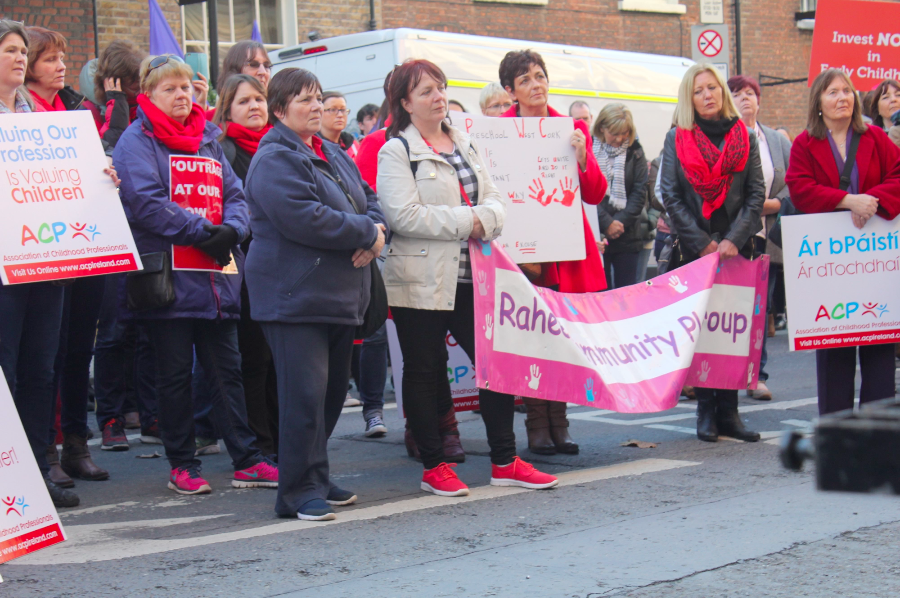
    On Tuesday 15th November, hundreds of early childcare professionals stood on Molesworth Street protesting the lack of funding provided to their sector by the government in recent years.

    The demonstration, which was organised by the Association of Childhood Professionals (ACP), is just the latest in a series of demonstrations held by the organisation so as to highlight the extremely low amounts of money in their industry.

    The Association of Childhood Professionals said there are around 25,000 people in the sector on an average pay rate of less than €11 an hour.

    Many people working as childcare providers have studied childcare in third level and hold degrees of varying levels. However, many of these graduates will remain working for the minimum wage for the majority of their career, meaning it would take them almost 19 years to earn back the cost of their education.

    Marian Quinn, chairperson of the Association of Childhood Professionals said that a lot of these recent graduates are leaving the profession after just a few years.

    “More and more we see people who stay for maybe three or four years and then they think ‘woah I can’t afford this, especially when they plan to have a family of their own and who can’t afford a mortgage and they then get a second job and then realise that second job pays more and so they leave the early years profession.”

    Many employers say that they would love to pay their staff a living wage, however, they simply cannot afford to after the costs of rent and insurance. They say that there is a huge need for more government investment in the sector so as to be able to hold onto their staff and stop them from leaving the profession.

    Many students studying early childhood education use their degree as a stepping stone into primary teaching or leave the country so as to find better employment opportunities once they graduate.

    Speaking at the demonstration, Marian Quinn said that they are being treated like “glorified babysitters”.

    “Absolutely [they are undervalued], whether you are working in childcare in the home or in the service it is more than a case of just babysitting, like we’re just a glorified babysitter, but actually, a babysitter would get paid more.

    “When we look at what is happening for those young children, and we know when talking to the primary schools that that early start, that early childhood education that the children get and the professionals who provide that to them, that makes such a huge difference.

    “There’s a lot of talk now about prevention and early intervention and to be honest what we do in those very early years is the best form of early intervention.”

  • Interview of Interest: Artist Adam McGrane

    Interview of Interest: Artist Adam McGrane

    By Chelsea Tyler McNeill 

    This summer saw the end of an era for the residents of Donore Avenue, after ten two-story premises were demolished in St.Teresa’s Gardens. Residents were heartbroken as homes and places that held so many childhood memories were destroyed, but artist Adam McGrane offered his services to the Dublin City Council and was commissioned to do a memorial mural so the place would never be forgotten.

    donore-ave-wall3
    Source: Adam McGrane

    “I have been working with Dublin City Council for the past four years as part of their student summer placement program, which is like a summer camp. For the past three years I have been placed in Donore Avenue. I have gotten to know the residents of the flats there and created bonds with all the kids we work with,” he said.

    “I’m an artist so started to incorporate art in the centre there. I took the kids out one of the days and they helped me paint minions on all the bollards in the flats, they thought this was amazing and it really brightened up the place.

    “When the flats in Donore Avenue were getting knocked down this summer, the council wanted to do something for the residents to remember what once meant so much to them so I offered to do a huge wall mural on a wall in the centre of the flats. Trevor Higgins and Stephen Shields in the Dublin City Council looked at my ideas and commissioned the piece. That was the biggest art commission I have ever gotten, I only had two weeks to do this huge mural and I was doing it completely alone so it was a lot of pressure but I knew it meant so much to the people living in Donore Avenue.

    “The government might see those flats as buildings that are in the way but they were once someone’s home, people grew up in them and all of their childhood memories are there but people didn’t think about that when they were being knocked down. This mural now symbolises that people do care and now the image will always be here. It is an amazing feeling that my art and my name will be on that wall long after I am gone, it is great to be able to kind of leave my mark on Dublin city centre and it was great for my art to be recognised on such a big scale,” he said.

    Adam, who is 22 and from Kingswood in Dublin, never imagined himself getting such a big break because even making it to art college was a struggle.

    adam-murals1
    Source: Adam McGrane

    “I didn’t really know anything about art college, even when I left school, it wasn’t something that our career guidance told us about because I don’t think she saw it as a real college choice. When I asked her about becoming an art teacher, she laughed and told me that I could never do it because I didn’t have the grades. I am dyslexic so school wasn’t easy for me, I wasn’t academic and I was told that I wouldn’t succeed because of that but it was that negativity that actually pushed me to where I am today, it motivated me to prove everyone wrong.

    “No one told me about portfolios so when it came around to the CAO, I missed the chance to send in a portfolio and apply for art colleges. I ended up doing a PLC course in Inchicore, I did a portfolio preparation course, we had to do briefs for different colleges and I ended up applying for nearly every art college in Ireland. I didn’t know about NCAD until I was in that course and our lecturer there told us that it was so difficult to get into because it was one of the best art colleges in the country. That pushed me too and made me want it even more,” he said.

    When Adam went with his portfolio to NCAD, he saw the vast amount of students who were also there to apply which made him feel like he didn’t stand a chance. “When I got the letter from NCAD I was with my mam and dad, I told them that it didn’t matter if I didn’t get in because I applied to loads more. I didn’t think I had a chance and when I saw that I was accepted, I couldn’t believe it. My mam started crying, I was the first one of my siblings to go to a university so it meant so much to her, I wanted to do it for my parents more than myself, I knew it would make them so happy.

    “I was anxious about going into NCAD because of my dyslexia, I chose to do education as well as fine art because I wanted to be a teacher but that meant that I would have to do a lot of assignments and it would be much more academic than just doing paint so I didn’t know if I would be able. Four years on, I have written a thesis, I am currently doing my teaching practice in Wesley College and I will be graduating next year with a joint honours degree.

    adam-stencil
    Source: Adam McGrane

    “I heard a saying years ago, ‘an artist is a kid who never stopped drawing’ and I think that is true. My advice to any kid reading this would be not to stop, never give up on their dreams and don’t listen to anyone who says you can’t do it, if you want something and work hard enough, you will get it, I did,” he proclaims proudly.

    Adam’s goal is to be a secondary school art teacher but he is determined to keep up his painting work on the side. “I am working in a school at the moment and I am going to be doing an end of year exhibition in NCAD next year, I am creating a lot of work for that and I can’t wait to have a big showcase of my work. I plan to be a secondary school teacher when I graduate but I will always do commissions on the side. I have done a wall mural of the Joker in a barbers in Tallaght, I have done Audrey Hepburn in a bedroom, I have done footballers in kid’s rooms, cartoon characters and anything that people want really.”

    Adam is available for commissions, you can view his work or contact him through his Facebook page ‘Adam Mc Grane Portrait Artist’ or his Instagram account is ‘Adammcgrane’.

    https://www.facebook.com/Adammcgraneartist/?fref=ts

    https://www.instagram.com/adammcgrane/

  • Interview of Interest: Trainee Pilot Alice Farrell

    Interview of Interest: Trainee Pilot Alice Farrell

    Dubliner Alice Farrell is currently based in Jerez de la Frontera where she is undertaking 14 months of training as part of the Aer Lingus Cadet Pilot Programme. She tells us about securing a place on the programme and what life is like for a trainee pilot.

    alice-pilot-1
    Source: Alice Farrell

    How did you get into the Aer Lingus Cadet Pilot Programme and what did the process involve?

    I applied for the cadetship when it opened last September (2015). I’d made an agreement with myself that I’d wait to apply for the cadetship until I’d finished my undergraduate degree. A couple of weeks after applying I was invited to submit several online essays that covered my interest in aviation, my perceived ability to be a pilot and my general teamwork and communication skills.

    After this stage, I was fortunate enough to be invited to Aer Lingus’ assessment day, which was jointly ran by my flight school FTE Jerez. The day consisted of four main segments; a group exercise, a panel interview, pilot aptitude tests and general aptitude tests. A reasonable standard of maths and basic physics is required to do well in these tests as time is limited. The group exercise was an interesting segment of the day as it’s very hard to prepare for such a scenario and a group of people that are entirely unpredictable. I had to trust my own confidence in my ability to adapt and to truly listen and communicate effectively with others.

    The final panel interview was the next stage. This was as intense as expected but the interviewers really did try their best to relax and settle you. They very much were there to give you the platform to talk and show them who you are. They supported any search for clarity or understanding throughout. At times it’s very much your interview, in terms of what to talk about. An interview with a psychologist followed this stage. It was much like the panel interview but less technical, although it still had technical elements, and a longer time was spent probing certain topics in search of more in depth answers to perhaps previously asked questions. Lastly, [there] was a medical examination in the Mater Private. I was then offered the cadetship in early December.

    Is being a pilot something you always dreamed of?

    When I was younger, I actually dreamt of being an astronaut! As years went on, I realised that this was probably a lot more difficult to achieve than my childhood self had imagined. When it came to going to college I decided that if I couldn’t be the person flying the spaceship, I would be the one who helped build it. Although I found my degree in Physics with Astrophysics interesting, it still didn’t satisfy the part of me that was interested in aviation. So, I decided to apply for an MSc in Safety and Human Factors in Aviation. In the same fortnight, the cadetship opened for Aer Lingus.

    What’s an average day like for you?

    An average day for me at the moment is not as exciting as one may believe. I’m currently in Phase Two ground-school, where I am preparing for eight of the fourteen European Aviation Safety Agency (EASA) exams. A typical ground-school day starts at 9.00am sharp where a student will do three one hour classes in the morning and another three in the evening, finishing at 5.00pm. After the school day has finished, most students will take a rest hour or two for relaxation and dinner. From 7.00pm to 10pm/11pm, I will then study the topics covered throughout the day.

    img_1858
    Source: Alice Farrell

    How intense is the programme?

    The course is a lot of tough work. Before heading down, I was told that however hard you think it will be, double it! This unfortunately proved to be very true. Most students will have to study most evenings, this includes weekends. And for those fortunate enough to be in the flying phase, [they] also have a lot of work to do with flight preparation, from checking the aircraft to route preparation to checking the weather forecast etc. The course is by far the most work I’ve ever invested into something but it’s truly enjoyable to see the rewards of your work as it’s a relatively short course, in comparison to a degree.

    What do you like the most and the least about the programme?

    As would be expected, the flying has been by far the best part. The feeling of walking out to an airplane and 15 minutes later, being at 3000 feet in control and alone, is one of the most liberating and thrilling experiences you can imagine. The least enjoyable part would probably be the ground-school, simply because you’re exactly that, grounded. Although, it must be noted that it’s a necessary evil in order to fully appreciate and understand what is required before heading into either of the flying phases.

    How many people are in the programme?

    There are around 145 of us in the training school – 15 female students and 130 male students. This hopefully reflects a slow but positive change in the industry in which currently only around 6% of pilots are female.

    When do you get your pilot’s wings?

    Wings are presented to students who have completed their CPL (Commercial Pilot’s License) and IR (Instrument Rating). On my timeline, I hope to achieve this sometime in late March/April 2017.

    So will you be flying a commercial airline by May?

    Not exactly. Myself and the remaining cadets return to Ireland late April where we will do our JOC (Jet Orientation Course) and type rating for the Airbus A320. Hopefully I’ll be flying by late summer!

    What one thing would people be interested or surprised to hear about the programme?

    People may think that because they’ve never flown a plane or because they have no background in aviation, this programme might not be for them or that their chances would be limited. I’d say to people of that mindset that the cadetship is for anyone that has ever dreamed of or has been passionate about a career in flying. The cadetship is definitely there to seek individuals that are passionate about aviation, hardworking, and an all-round team player. Regardless of experience, it really is a programme open to everyone who truly wants it.

  • Number of road deaths has increased by nearly 25% from 2015

    Number of road deaths has increased by nearly 25% from 2015

    By Kieva McLaughlin

    Some 163 people have been killed on Irish roads so far in 2016, compared to 131 people at this time last year. Specific figures will not be released until early next year, but trends that were looking optimistic after last year aren’t holding up.

    Wikipedia.jpg
    Source: Wikipedia

    Looking at the figures and statistics on road deaths last year and over the last 10 years can help discover what kind of trends are occurring and who is most at risk.

    Road deaths were the second lowest in Ireland in over half a century in 2015. Mayo had the highest number of fatalities per 100,000 people (10), while Dublin had very few, with just 1.3 per 100,000.

    Dublin (17) and Cork (16) had the highest number of road fatalities in Ireland (because of their high populations) while Roscommon and Waterford both had no road deaths. Cathal Lynch from the RSA said that even though the two counties had no road fatalities last year, “It’s impossible to infer a trend from just one year of data,” so this does not necessarily mean they will continue on this course.

    Some 29% of people who died in 2015 were not wearing seat belts, which could have been the deciding factor in their death.  Almost one in three collisions were alcohol related with even a small amount of alcohol increasing the risk of being involved in a fatal crash. A shocking one in ten drivers (284,000) admitted to drinking before driving in the 12 months prior to November 2015, with 2 out of 5 of these drinking two or more drinks.

    Garda Grace Byrne of Blackrock Garda station said, “People might see the stereotypical drink driver as a man having a few pints after work and then driving home. But I have noticed in recent times that there is an increase in young females being arrested for drink driving.” She has also noticed that there are more people being arrested the morning after, “they’ve been out drinking the night before and are still over the limit the next day, without even realising.”

    Donegal has had the highest number of fatalities for its population continuously in the past decade, with 18.3 per 100,000 in 2005, but is making improvements, going down to almost a third of that in 2015 with 6.8 deaths per 100,000. In the last five years Roscommon has gone from 14 in 2010 (per 100,000 people) to 0 in 2015. Dublin and Cork are steadily getting lower and Galway had a huge drop from 2005 (9.1) to 2010 (2.4) but rose again in 2015 (4.8).

    road-fatalities-2005-to-2015
    Created by: Kieva McLaughlin

    In 2015, the most vulnerable age group was 16- 25 year olds with 27% of all road fatalities. The elderly had the second highest number of road deaths with 19% and the 26-35 year age group closely followed with 17% of all the road fatalities.

    road-3
    Created by: Kieva McLaughlin

    The highest number of road deaths are drivers, totaling 46% of road fatalities in 2015. Vulnerable road users (pedestrian, motorcyclist and pedal cyclist) accounted for 38% of road deaths with the highest number being pedestrians. This was only down 2% in 5 years from 21% in 2010 to 19% in 2015.

    road-4
    Created by: Kieva McLaughlin

    A total of 76 drivers were killed in 2015, this is the same number as 2014 and down from 91 drivers in 2010.

    Younger drivers were most susceptible, accounting for 25% of all drivers killed (16-25 years). The majority of driver fatalities occurred on country roads, and in particular on roads with a higher speed limit (shown below). Garda Grace Byrne thinks the main reason for accidents in Ireland is speed, “Speed is a killer, the faster you are driving and collide with a vehicle the less likely your chances are [of surviving].” As shown below, males accounted for 76% of driver fatalities.

    road-pie-chart
    Created by: Kieva McLaughlin
    Speed Limit No. of Deaths
    30 km/h 1
    50 km/h 6
    60 km/h 6
    80 km/h 31
    100 km/h 29
    120 km/h 3

    Total

    76

    Table 1 (Created by Kieva McLaughlin, Figures Source: RSA)

    In 2014, almost 25,700 people died in European Union countries. Over 200,000 people suffered serious, life changing injuries. However, in 2000 very few EU member states had a fatality rate lower than 8 deaths per 100,000 inhabitants but in 2014 there were only 5 EU countries with a fatality rate higher than that. There were a total of 5,700 less deaths from 2010 – 2014.

    Malta, the Netherlands, the United Kingdom, and Sweden had the lowest number of fatalities, all below 3 deaths per 100,000. Lithuania, Bulgaria, Romania and Latvia had the highest number of road deaths all having 9 or more per 100,000. Latvia had the highest with 10.5 road fatalities per 100,000 people living there.

    The road fatality rate of nearly every country lowered from 2010 to 2014 except Latvia which rose from 10.3 to 10.5 (per 100,000).  Sweden and Lithuania both increased by 0.1 each and Estonia stayed constant at 5.9 deaths (per 100,000).

    The EU average in 2010 was 6.3 and lowered to 5.1 in 2014. Ireland was below the EU average both years going from 4.7 to 4.3. An EU road safety plan wants to reduce the road deaths by half from 2010 to 2020. Although the rate has lowered by around 19% since 2010 it has only lowered 1% from 2013 to 2014. This means the rate is slowing down rather than speeding up, which, if continued at this rate, will not reach the EU’s goal.

    Pedestrian fatalities are not decreasing as much as the overall rate, with 22% of all killed on the roads in 2013 being pedestrians. Pedestrians are at a higher risk in urban areas and the elderly are particularly vulnerable. Ireland was below the EU average at 18%. The Netherlands, Finland, Belgium and France were all below 15% and in Poland, Latvia, Lithuania and Romania over a third of people killed were pedestrians.

    The EU has the lowest fatality rate of any region in the world, with the USA having double its rate at 10.2 (per 100,000) in 2014.

    road-eu
    Created by: Kieva McLaughlin

    Footnote:

    Country Abbreviations: AT Austria, BE Belgium, BG Bulgaria, CY Cyprus, CZ Czech Republic, DE Germany, DK Denmark, EE Estonia, EL Greece, ES Spain, FI Finland, FR France, HR Croatia, HU Hungary, IE Ireland, IT Italy, LT Lithuania, LU Luxembourg, LV Latvia, MT Malta, NL Netherlands, PL Poland, PT Portugal, RO Romania, SI Slovenia, SK Slovakia, SE Sweden, UK United Kingdom.

  • Interview of Interest: Orchid Collective

    Interview of Interest: Orchid Collective

    By Chelsea Tyler McNeill & Emily Hull

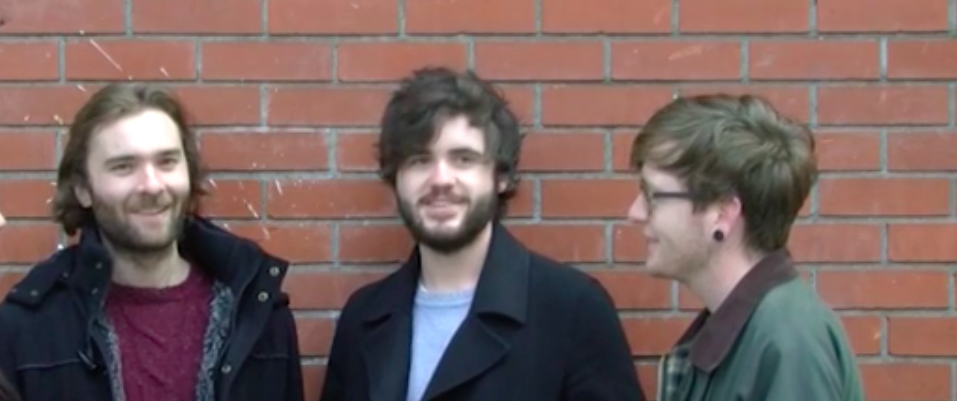
    The City met up with upcoming four piece, Orchid Collective, to chat about all things music. Take a look at the video below!

  • Java Republic: An Inside Look

    Java Republic: An Inside Look

    Java Republic CEO, David McKernan, talks about how he built up his business and running an ethical coffee company.

  • Preview: Ireland vs New Zealand

    Preview: Ireland vs New Zealand

    By Harry Hatton

    On the afternoon of November 24th, 2013, the Irish rugby team seemed for one brief moment of time as if they were on top of the world.

    At the Aviva Stadium that winter afternoon, Ireland had breezed into a 19-0 lead against New Zealand inside 20 minutes of action. It was incredible stuff, being in such a commanding position against the most feared and dominant rugby nation on the planet.

    However, New Zealand demonstrated why they are the world’s best by overhauling Ireland’s lead with a late try and conversion to snatch victory by two points.

    Hakka
    Source: Wikimedia

    The manner in which New Zealand actually came out victorious was one of the hardest things for Joe Schmidt’s weary charges to take.

    The Television Match Official (TMO) had to be called in to confirm that Dane Coles’ pass to substitute Ryan Crotty was not forward. That decision tied the teams up but there would be more drama to follow.

    Aaron Cruden’s conversion attempt went wide of the posts but Welsh referee Nigel Owens ordered it to be retaken as he deemed Ireland to have charged out from their goal too early.

    Cruden found the target at the second attempt which left the home side stunned and still without a test victory over New Zealand. At that stage three years ago, we wondered what it would take for us to ever beat the world’s best team.

    Two weeks ago, we discovered just that … the best way to beat New Zealand is to take the game to them and put them on the back foot. And that’s exactly what Schmidt’s determined band of warriors did at Soldier Field, Chicago in front of 62,300 spectators.

    They stood up to the task even before kick-off. As the All Blacks performed their customary Haka war dance, the entire Irish match-day squad stood in a figure of eight in memory of the late Anthony Foley, the Munster and Irish stalwart who passed away in October.

    Ireland were mentally and physically ready for the big occasion against a side that had eight survivors from their World Cup final triumph over Australia a year previously.

    Tries from back row forwards Jordi Murphy and CJ Stander in addition to Conor Murray crossing the line meant that Ireland held a 25-8 lead at half-time. Winger Simon Zebo stretched Ireland’s lead with another try after the break before the inevitable New Zealand onslaught began.

    The world champions displayed their strength in depth as tries from TJ Perenara, Scott Barrett and Ben Smith began to test the mental resolve of this Irish side.

    Schmidt’s men regrouped and sealed the historic triumph in the ‘Windy City’ with a late try from Henshaw and a successful conversion from Joey Carbery.

    The result ended New Zealand’s 18 game winning streak. It was also Ireland’s highest ever points total against the All Blacks. New Zealand don’t get beaten too often so when they do, it comes as a bitter pill to swallow.

    Ireland will definitely be without the services of flanker Jordi Murphy when they renew acquaintances with the All Blacks this Saturday evening. The Leinster player suffered an injury to his left knee in the first half of the historic win in Chicago and it was later confirmed that he had suffered anterior cruciate ligament (ACL) damage, which will rule him out of action for between six and nine months.

    Luckily enough, Ireland have two able replacements in Munster’s Peter O’Mahony and Leinster star Sean O’Brien, who both got game time in the facile 31 point victory over Canada last Saturday.

    New Zealand were given a boost ahead of the trip to Dublin with Brodie Retallick’s second half appearance in the 68-10 rout of Italy last weekend leaving him poised for a return to the starting line-up.

    Retallick could be joined in the second row by Sam Whitelock. The pair are well accustomed to each other as they were second row partners when New Zealand defeated Australia to reclaim the World Cup in October 2015.

    If Ireland are to come out on top again against Steve Hansen’s world champions, they’ll need to stop winger Julian Savea. Savea scored 45 tries for New Zealand in the space of four years and the winger will aim to use his powerful presence to break down the Ireland defence.

    It’s unlikely that this game will resemble the Chicago fixture in terms of such high-scoring and free-flowing rugby. New Zealand will want to reaffirm their status as the best international rugby team by whatever means necessary.

    This is bound to be another physically demanding clash and it just appears that New Zealand have the greater strength in depth to emerge on top after a gruelling 80 minutes of action.

    Guinness Series Ireland v New Zealand Aviva Stadium Saturday, 19th November

    Kick-off 5.30pm


  • Preview: UFC Fight Night: Belfast

    Preview: UFC Fight Night: Belfast

    By Alastair Magee 

    The world’s leading mixed martial arts (MMA) promotion returns to Ireland on November 19th with ‘UFC Fight Night: Belfast’ which will be headlined by a middleweight bout between Gegard Mousasi (40-6-2) and Uriah Hall (13-7-0).

    ufc-belfast1
    (Source: UFC)

    The only Irish representatives included are Artem Lobov , newcomer Charlie Ward and UFC veteran Neil “2 Tap” Seery who will face Ian ‘Uncle Creepy’ McCall in what is going to be his final fight.

    It’s a surprise that he’s not been included on the main card for his last bout and fans have been vocal about the issue in recent weeks. Fans on this side of the Atlantic have also voiced their disapproval concerning the lack of Irish fighters featured on the show.

    Despite this, UFC Belfast should draw a large crowd to the SSE Arena and TheCity.ie takes a closer look at the stand out bouts on the card.

    Middleweight – #5 Gegard Mousasi (40-6-2) v #10 Uriah “Prime Time” Hall (13-7-0)


    Number five ranked middleweight, Mousasi, will seek revenge against Hall, the last man to beat him in the UFC, in the shows main event.

    Hall shocked fans worldwide when he stopped Mousasi by second-round TKO, thanks to a sublime spinning back-kick in Saitame, Japan, in September 2015.

    The rematch pits two of the division’s best strikers against each other once more but Mousasi will be brimming with confidence as he’s been in superb form of late.

    He comes into the fight on the back off a hat-trick of wins against Thales Leites, Thiago Santos and most recently Vitor Belfort at UFC 204.

    Uriah Hall is desperate for a win and will be hoping for a repeat of his TKO victory when they meet having suffered back-to-back losses against Robert Whittaker and Derek Brunson.

    It promises to be an intriguing battle and acts as a great replacement for the original main event, a welterweight clash between Gunnar Nelson and Dong Hyun Kim, which was scrapped after Nelson suffered an injury.

    ufc_belfast_poster
    (Source: UFC)

    Lightweight – Ross “The Real Deal” Pearson (21-11-0) v Stevie “Braveheart” Ray (19-7-0)

    In the co-main event we will be treated to an England vs Scotland lightweight showdown.

    Pearson is one of the most experienced fighters in the UFC and is a popular choice among fans while Ray has gone (3-1) in the UFC since being signed.

    Both men lost their previous fights and will be anxious to win at the SSE Arena.

    Pearson lost three of his previous four, most recently, when he suffered a unanimous decision to Jorge Masvidal at UFC 201 after taking just 22 days between fights and temporarily moving up to welterweight.

    Ray suffered his first UFC loss last time out, dropping a unanimous decision to Alan Patrick at UFC Fight Night 95 although he had been on a three win streak beforehand.

    They are both well-rounded fighters who possess knock-out power but it will be interesting to see how Ray deals with the high-intensity set by the experienced Pearson.

    Featherweight – Artem “The Russian Hammer” Lobov (13-12-1) v Teruto “Yashabo” Ishihara (10-2-2)

    SBG Ireland’s Artem Lobov stopped his two fight losing streak with a unanimous decision victory over Chris Avila at UFC 202 in his last fight.

    This result likely saved his UFC career for now but he will be hoping to produce another victory when he faces KO specialist Ishihara.

    The Japanese fighter was a featherweight finalist on “Road to UFC: Japan” but lost out via split decision in the final.

    Since then he defeated Julian Erosa via second-round knockout at UFC 196 and beat Horacio Gutierrez with a bonus-winning first-round knockout at UFC Fight Night 92 to establish himself in the featherweight division.

    With eight knockouts on his CV he will be no easy opponent for Lobov but this should create an intriguing stand-up war for fans. Lobov knows that a victory here will speak volumes for his future UFC career.

    mccall_seery
    (S0urce: UFC)

    Flyweight – #5 Ian “Uncle Creey” McCall (13-5-1) v Neil “2 Tap” Seery (16-12-0)

    Team Ryano’s Neil Seery will hang up his gloves following his fight with McCall and it should be a fitting send-off for one of the pioneers of Irish MMA.

    McCall witnessed two of his opponents in a row pull-out due to injury and offered to fight Seery in Belfast to put on a show for the fans.

    Seery accepted and we are left with a very promising bout between to vastly experienced and popular flyweights.

    The Dubliner has a (3-3) record in the UFC and returns to action following a unanimous decision defeat to Kyoji Horiguchi back in May.

    This will be McCall’s first fight since his loss to John Linekar in January 2015. The American has seen his last three fights fall through and is desperate to get back in the octagon.

    It will be an emotional occasion for Seery and his fans and the fight should be explosive throughout.