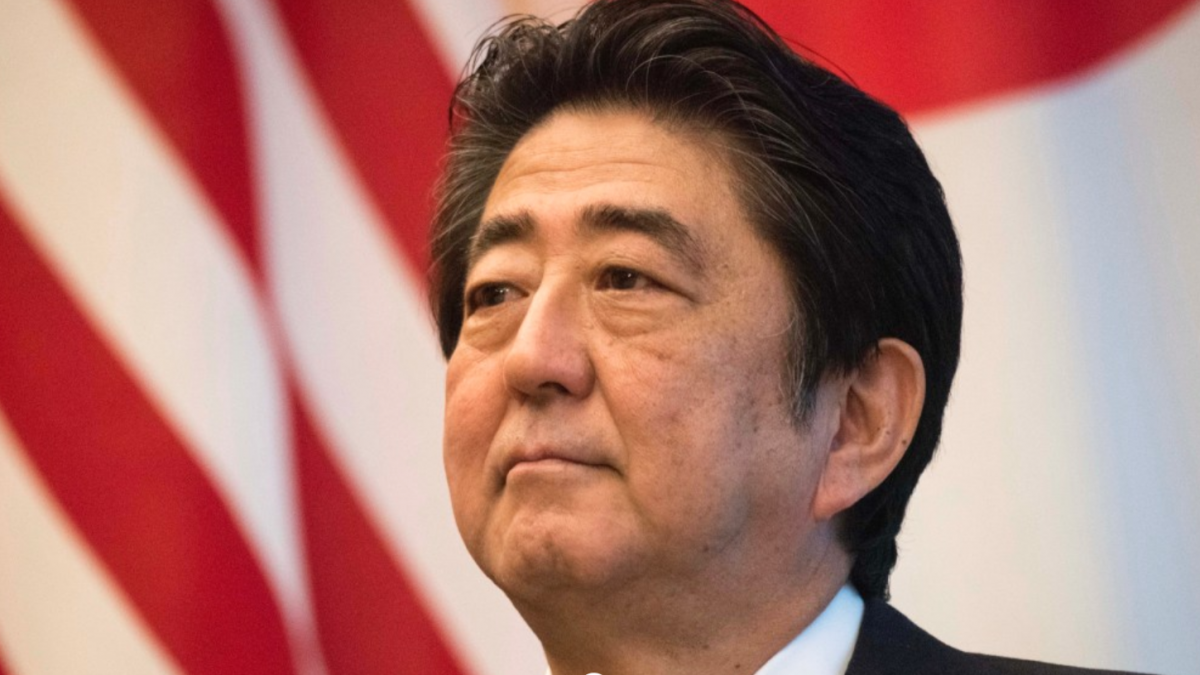

Having dug his heels in for quite some time, Prime Minister Shinzo Abe finally conceded as the IOC announced that the 2020 Olympics will be postponed. TheCity’s Japanese expert Ayumi Miyano reports.
On 24 March, Thomas Bach, President of the International Olympic Committee (IOC), and Shinzo Abe, Japan’s Prime Minister, agreed to postpone the 2020 Olympic games in Tokyo as a result of the Coronavirus pandemic.
According to the joint statement from the IOC, the decision was made at a teleconference held on the same date at 8pm Tokyo time. Their conclusion was to postpone the Olympics until “beyond 2020, but not later than summer 2021”. Both leaders “shared concern” on the global pandemic, which has had a significant impact on athletes’ preparations for the Olympics.
The controversy about whether to postpone the Olympics was quietly building, especially since last week. On March 17, Japanese Prime Minister Shinzo Abe claimed he “gained support” from the G7 leaders to go ahead with the Tokyo 2020 Olympics “perfectly” as “proof that the human race will conquer the Coronavirus” after an emergency teleconference.
No spectator games
It had been said that “no-spectator” games was a possibility. However, Yuriko Koike — governor of Tokyo — stated to NHK that both no-spectator games and the cancellation of the Olympics are “unthinkable”.
If we think about the preparation and effort which was undertaken by the Japanese government, the cancellation of the games would have been seen as the worst case scenario. After the International Olympic Committee selected Tokyo as the host of the 2020 Olympic games in September 2013, the Japanese government has been investing in various entities.
One example is The National Stadium, which was totally rebuilt for the proud occasion. The construction of the stadium was completed on 30 November 2019, costing more than 1.25 billion US dollar which was reported by Japan Sport Council.

The organising committee recently announced that the total number of applicants for the volunteers was over 200,000 people. The selected 80,000 people will support the Olympic games as volunteers. These numbers alone indicate the huge impact which cancellation would have on Japanese people.
Japanese citizen Masumi Ito — who applied for the volunteers at the Olympics — has been looking forward to the games. If the cancellation happened, “the preparation will be ruined” he said. As a hairdresser, he would be working as a volunteer for the hair salon at the athlete camp if his application passes.
“Many people are involved in the Olympics and worked hard to arrange their schedule for it. There might not be an option for a cancellation,” he said, showing concern for stakeholders.
Even though Japan could avoid the worst case scenario, the reschedule of the Olympics might shock the Japanese government and its citizens.
In the joint statement, “significant improvements” in Japan was acknowledged amid the coronavirus panic. The total number of cases is 1,128 in Japan which is significantly lower than the neighbouring country South Korea’s 9,037.
Compared to Ireland — which marked 557 in total with 191 new cases as of March 20 — the Japanese numbers per day are even smaller. Considering Japanese population is 120 million people, these low numbers might illustrate the Japanese government’s swift and intrusive approach. But in reality, are they managing the situation?
“In Japan, we can’t take a Coronavirus test easily yet, and many people who have no symptoms are walking around. I would imagine that even if people were positive for Covid-19, they would go to their work because they have zero symptoms or little symptoms. I guess there are many people like that. It is impossible to suppress the influence of coronavirus,” Ito said.
In Japan, we can’t take a Coronavirus test easily yet, and many people who have no symptoms are walking around.
The Japanese government announced some large sports and cultural events would be cancelled or postponed “voluntarily by their organisers” on February 26.
Following this; elementary schools, junior high schools, senior high schools, schools for special needs education and upper secondary specialised training schools were temporarily closed from March 2. However, they have not followed most of Europe in closing restaurants and bars.
“Our graduation day hasn’t been cancelled yet which I’m surprised to be entirely honest but so far nothing has happened,” Fiachra Jones, an English teacher at a high school in Tokyo commented.
“Restaurants for the most part are still open. There has been advice given out to avoid places like restaurants but at least are still open,” he added.
Children in Japan could “go to a childcare facility at schools because they don’t have anywhere to go. Isn’t it the same as usual? It just seems like their spring holiday simply extended. When I go to a restaurant for lunch, I can see some groups of school kids. I think ‘it doesn’t make sense’,” said Ito.


The statistics from Our World in Data show the total number of confirmed cases, tests performed, and the number of test performed per million people on a country-by-country basis.
Figure 1 shows that the smaller number of total cases in Japan in comparison with the neighbouring countries like South Korea, China and some European countries like Italy, France and Spain. The curve of Japanese number is less steep, indicating that the number has risen in a slower manner than their counterparts.
However, Figures 2 and 3 illustrate the lower numbers of tests taken in Japan in comparison with other countries. As of March 17, Japan has 130.3 people per million (ppm) who took the test which is considerably less than 5,566.5 ppm in South Korea. Japanese number is smaller than Ireland — 365 per million — where the announcement of the first case of coronavirus was relatively late — on 29 February.
These numbers might inform us that the total number of cases in Japan is not necessarily accurate. Analysis by THE CONVERSATION suggests there is suspicion that “the government had conducted only a small number of tests in Japan to hide the scope and severity of the infection, partly due to the Abe administration’s determination to hold the 2020 Olympics in Tokyo”.
Meanwhile, Japan’s “strong” support in protecting its people’s health was acknowledged by Tedros Adhanom Ghebreyesus, Director-General of the World Health Organization (WHO).
The contribution to WHO was made twice — 10 million US dollar on 6 February and 46 million US dollar on 10 March. In addition, WHO informed that Japan confirmed their additional contribution by the Japanese-written document in which they explained the confirmation of 138 million US dollar contribution — the number exceeds 37 million dollar by the United States.
Ghebreyesus later praised the Asian nation, saying “Japan is also demonstrating that a whole-of-government approach led by Prime Minister Abe himself — supported by in-depth investigation of clusters — is a critical step in reducing transmission,” at a March 13 press conference.
By March 23, Japanese Prime Minister Abe was showing signs he might concede to the growing pressure due the coronavirus. The IOC said that it would discuss the issue over the coming weeks to consider alternative scenarios.
“This decision by IOC is in line with what I have said, about holding the games in their entirety,” he told lawmakers. “In case this becomes difficult, in order to make the athletes our top priority, we may have no choice but to decide to postpone the Games.”
Then, on March 24, what PM Abe had previously refused to consider was confirmed: the 2020 Olympics would be postponed until the summer of 2021. As the pandemic continues to spread, and containing it proves difficult, Ito’s advice seems very wise.
“If suppressing Coronavirus is impossible, we have to exist with the disease,” said Ito.
No one can predict when the coronavirus crisis will end. The “perfect” Olympics on this summer will not carry out but it is also a time for Japan to give its “strong” support to its citizens and prepare for the Olympics which possibly take place — however imperfectly — in the summer of 2021.


You must be logged in to post a comment.