Tag: Covid-19

  • If you build it, they will come… Eventually

    If you build it, they will come… Eventually

    Lavanda (left) and V-Face (right) on Lower Grangegorman Road. Photo by Colm McGuirk

    “The fact that this unit was close to TU Dublin was a huge factor in the decision to go ahead with it.” Sarah Boland, owner of V-Face, is talking about her vegan fast-food restaurant’s proximity to the impressive new home of Technological University (TU) Dublin.

    The city campus of what used to be called DIT, built as the centrepiece of a major regeneration programme for Grangegorman in north Dublin city, is ready to welcome around 10,000 students plus staff – once Covid restrictions are no longer necessary. 

    Boland’s is among a number of independent businesses on the Lower Grangegorman Road that had factored those numbers into their plans. 

    “It’s going to be a huge campus, so obviously footfall will increase massively,” Boland says. 

    In the turbulent 10 months since it opened, V-Face has had to make some think-on-your-feet adjustments to compensate for lost bums on its 40 seats. Among them is the outdoor eating area installed on the opposite corner, in cooperation with Dublin City Council, and the window hatch through which Boland speaks to The City

    “Coffee and sandwiches were never in the business model,” Boland says, “but we said ‘let’s bring out a lunch offering.’ The burgers were doing really well, but were more for the evening offering. [The hatch and coffee counter] have been designed in a way that, once the pandemic is gone, you can also swing around and serve people that come in.”

    Dining tables installed by V-Face. Photo by Colm McGuirk

    While V-Face benefitted from a model partly geared towards takeaway from the off, former Mediterranean restaurant Lavanda on the opposite corner has had to reset completely in the last year. 

    “We tried to do takeaway Mediterranean food during the first wave,” says Croatian owner Robert Velic, “but it didn’t work very well.”

    Lavanda’s enforced rebirth was planned with the new TU Dublin campus in mind – it now sells toasties, slices of pizza and sweet treats.  

    “We’ll see when the students come back if we made the right choice”

    Robert Velic

    “The second wave came and then we completely changed. We were expecting those students. We adapted the prices to four or five euro,” Velic says.

    “When the lockdown ends,” he continues, “it’s going to be a proper takeaway and we can add a few more things to the menu when business picks up and the colleges are back. We’ll continue to target students and walk-ins. We’ll see when the students come back if we made the right choice.”

    A few doors up, Russia native Alexander Yegorov’s print and copy shop should be bustling. 

    His unit is next door to one of two new student apartment complexes on this stretch of road built in the controversial ‘co-living’ mould (and, in the ultimate symbol of the area’s gentrification, on the site of the former ‘Squat City’).

    “We opened our shop three months ago,” Yegorov tells us. “They move the lockdown every two months. I expected the students would be here from the new year. But now, it won’t be until summer time. 

    “But it’s OK,” Yegorov adds. “We can survive until summer.”

    “We knew it was a long game, but it’s been a lot longer than anticipated”

    Rebecca Feely

    On the next corner, Rebecca Feely of Kale+Coco tells The City that when she chose the location for her plant-based healthy food cafe in 2019, “it was under the assumption that there’d be lots of students.”

    “We knew it was a bit of a long game,” Feely says, “because they were moving students bit by bit. But it’s been a lot longer than anticipated.”

    While noting that her prices might be a little above the average student’s range, she tells us, “it’s always been in my head to focus more on marketing to students, but I haven’t had the chance yet because we haven’t had the students there yet.”

    Kale+Coco has leaned more towards retail of food products to help stay afloat in what has been a difficult year.

    Rebecca Feely in her cafe Kale+Coco. Photo by Colm McGuirk

    “We were never actually told to close, so you feel almost obligated to keep trading because you have bills to pay,” Feely says. 

    “You have rent due. If you’re not ordered by the government to close, you’re not covered by any insurance, your landlords aren’t going to give you a break,” she adds.

    While the eventual arrival of students should help jump-start these Lower Grangegorman businesses, it could well signal the end for Happy Days Coffee Van on the new campus a little further up the road. 

    The mobile cafe was set up by local resident Olivia O’Flanagan in response to the “inertia and isolation” her neighbours were faced with during the first lockdown last spring. 

    O’Flanagan, a former lecturer with no background in business, was given the green light to operate on TU Dublin’s campus for as long as its own catering services were closed. 

    “It’s a lockdown project to keep us all busy and connected and give some kind of focus for the local community,” she tells The City.

    Happy Days Coffee Van set up at the entrance of TU Dublin’s Grangegorman Campus. Photo by Colm McGuirk

    Hiring only locals helped her secure the temporary contract – staff can return to their own homes for the mandatory bathroom access.

    “For me, it’s not a business endeavour,” O’Flanagan says, “though it has made money and is paying eight people’s wages on 20 hours a week. They’re all delighted and their parents are saying they were all sitting in their bedrooms cracking up.”
  • Cosy for Covid: House-hunting in lockdown

    Cosy for Covid: House-hunting in lockdown

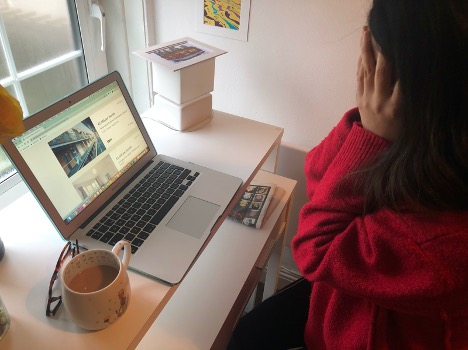
    House-hunting can be an ordeal! A disgruntled hunter clutches their face in despair. Photo by Colm McGuirk

    Regular renters in Dublin may know the feeling – you pour your heart out across dozens of viewing requests, then watch tumbleweed blow through your inbox.

    The pandemic has gone some way to reducing the numbers in this scrap for exorbitantly priced rooms. According to property site Daft.ie, there are around a thousand more homes available to rent in Dublin today than at this time last year. 

    Properties previously listed on AirBnB but now being advertised as short-term lets are the main contributor to this rise. Another is the mini-exodus to other counties and countries prompted by lost jobs and a shift online for work and study.

    Software developer Mo Fiebiger has seen this reflected in the numbers applying for rooms in the Northside house she shares with six others.

    “We’re quite close to the city centre and in the past we would get between 50 and a hundred applicants. Now we’re lucky if we even get 10 to 20. That can be quite stressful, because we have a lot of people here and we really focus on having a good dynamic for those who live here, so you want to have plenty of options to choose from.

    “But on the other hand, you obviously don’t want to invite too many strangers in at the moment.”

    For house viewings in the last year, she has asked applicants to wear a mask and sanitise their hands on entering. A fairly obvious request, it might seem, but artist Alan Hall encountered a range of Covid caution when looking for a room last autumn.

    “Now with the pandemic there’s an extra level to navigate, because everyone has their own way of living and dealing with it, so it becomes very personal”

    Alan Hall

    “It went from people who were really regimented about it – keep the distance, do Zoom calls first; to people who worked in hospitals and weren’t wearing masks; to people that were still having parties. I went to one house and they told me they had parties. I was like, ‘OK, cool, obviously not now?’ And they said, ‘Yeah, now’.

    “When you’re viewing a house,” Hall continues, “you only have 10 minutes to figure out if you like it, if you like the vibe. Now with the pandemic there’s an extra level to navigate, because everyone has their own way of living and dealing with it, so it becomes very personal – these extra indicators about whether or not you might gel with the people you’re about to live with. I’d bring my own sanitiser, for example, and for some people that seemed like overkill. I said no to a few places I thought weren’t taking it seriously enough.”

    As of January, in-person viewing is advised against until you’re ready to sign a contract, with virtual viewings recommended. Having your disembodied head guided around via smartphone doesn’t always leave you with the full picture, as audio-visual technician Jeff Doolin has learned.

    An applicant being doused in hand sanitiser at the entrance of a house viewing. Photo by Colm McGuirk

    “Virtual viewings are a bit strange,” he says, “because you just can’t get the real feel for it – someone just walking around, maybe with a dodgy connection. Some of them walk around slowly, which is good, and then some of them just run around. And you’re like, ‘Wait, what? Hold on, pause that for a second. Was that the jacks?’”

    Daithí Ó Cinnéide, who works in film, was left frustrated by a virtual viewing experience.

    “I had to do an interview on Zoom first before they decided to offer me a viewing,” he tells us. “I liked the room and they liked me. But then when I got there it was a different room from the one I’d seen, and only the box room was left for the same price. So I had to keep searching.”

    Beauty therapist Kathleen O’Reilly thinks this new means of viewing a home may have encouraged scammers to pounce. She has come across a few herself.

    “One lady I was talking to sent me a video of an apartment. I thought it looked great so she sent me a contract. I read it and she sent me her bank details. I said I’d think about it over the weekend, but she was very abrupt. She said, ‘No, this needs to be sent now, €1,400.’ She said she was Irish, but from her texts she clearly wasn’t. So, I wrote back saying I hoped she found someone for the room and reported her to Daft.”

    “For what we’re looking for, there still isn’t much out there, and there’s always a price on desperation”

    Sarah Jane Doogan

    The property site reported a 3.3% fall in rent prices in Dublin last year – a drop that was barely perceptible to Sarah Jane Doogan, a software engineer on the lookout for a place to share with her boyfriend.

    “I would have expected the prices to fall a lot more,” she says. “For what we’re looking for, there still isn’t much out there, and there’s always a price on desperation.”

    She’s noticed a surprising positive upshot of viewing a non-house share home during a pandemic.

    “The thing that stood out to me was how it’s less dehumanising now, because you get an individual slot for viewing. I’ve been renting for 15 years and back in the day you’d book a time when you’d go to a viewing. But in the last five or six years [before the pandemic], it started to change, where you’d go to a viewing and there’d be loads of people there, some of them throwing deposit money at the agent.”

    The modest fall in rent prices last year was only reported for Dublin, with the rest of the country seeing a slight increase. The landlords, it would seem, still have the upper hand.

  • Covid-19 abroad: Europe’s first recorded case – how France has handled the coronavirus pandemic

    Covid-19 abroad: Europe’s first recorded case – how France has handled the coronavirus pandemic

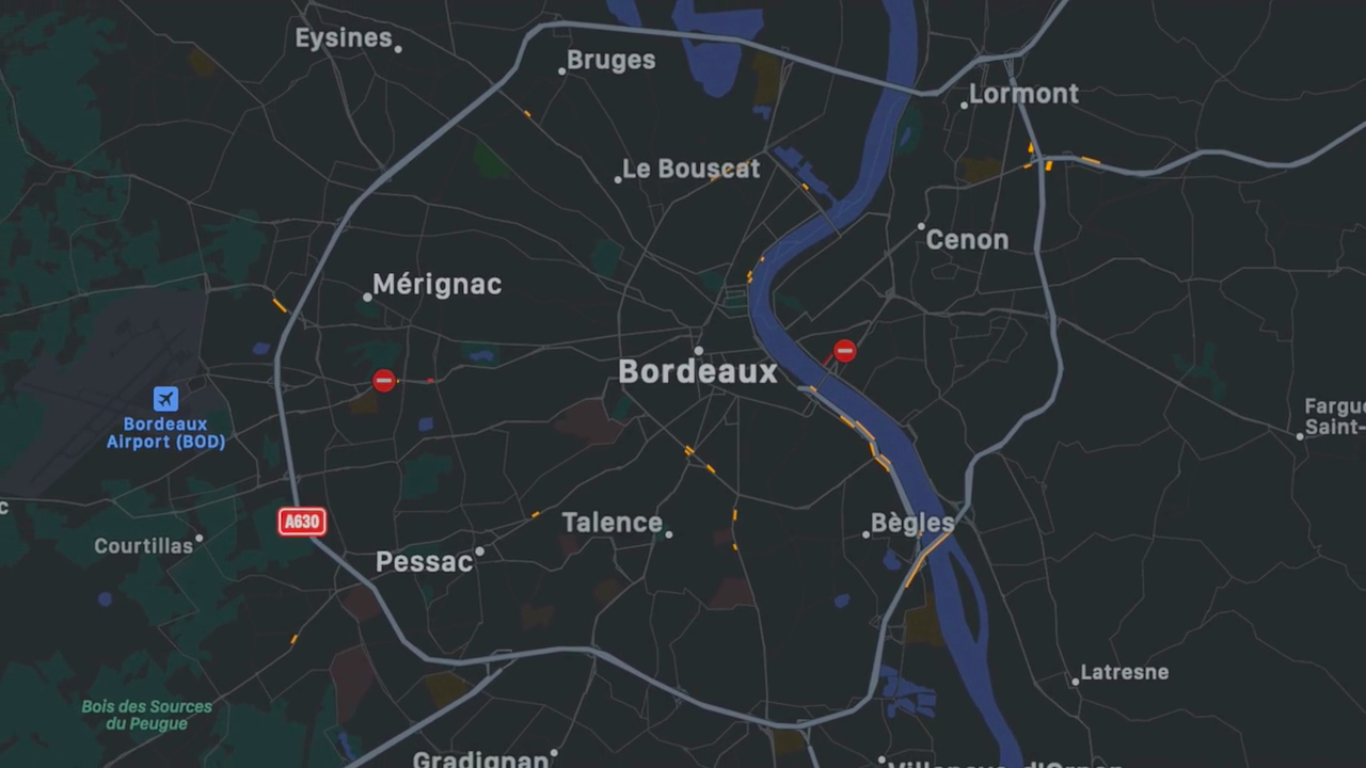
    Map of Bordeaux from Google Maps. Screenshot by David Doyle

    On 24 January 2020, the first European case of Covid-19 was confirmed in the French city of Bordeaux. This marked the starting point of an on-going pandemic, that still affects the country today. Due to a high population with leading touristic figures throughout the world, cases began to surge across France.  

    In early March, Amandine Verbiese returned to her native home of France, after living in Ireland for 5 years. Upon making her homecoming, France was on the cusp of becoming one of Europe’s worst affected countries, as there are over 3.4 million positive Covid-19 cases recorded today. 

    France officially went into a national lockdown on 16 March, as President Emmanuel Macron announced in a televised address that only essential services would remain open and a stay-at-home quarantine would be implemented. 

    “I just don’t know when this is going to end’’ 

    Amandine Verbiese

    ‘’The first [lockdown] was particularly tough. When we left our house, we had to fill out a document giving our reasons for travel, whether it was going to work or walking the dog’’, said Verbiese. 

    She tells me how important it was to provide documentation during the first lockdown, as those who didn’t may receive a large fine or potential imprisonment if breached multiple times.  

    Verbiese has turned to gaming online as a coping mechanism during the pandemic. She is involved in numerous online communities and keeps in contact with her friends and family through video calls. 

    The coming weeks will prove vital for France as the existing health minister Oliver Veran is assessing the country’s current situation, as another lockdown may potentially be on the cards – due to the daily hospital admission figures of 1,500 over the past few weeks. 

  • No ink spilled – tattoo studios struggle during Covid

    No ink spilled – tattoo studios struggle during Covid

    Pictured above: AWOL Tattoo Galway. Photo courtesy of AWOL

    With the nation currently in yet another lockdown in a bid to curb the spread of Covid, one industry that has taken a significant battering since March 2020 with the constant closing and reopening is the tattooing industry. the industry is very much at the mercy of the virus as tattoo studios remain deserted and the artists are left idle with no clear idea of when they can return to work.

    The tattoo industry in Ireland has been shrouded in uncertainty since the beginning of the pandemic last March. Tattoo shops are usually the last to open and the first to close, leaving industry professionals in the dark when it comes to the stability of their profession. 

    As a result, the artists and shops have faced many obstacles, from economic costs to rescheduling appointments and adapting to new guidelines when they are permitted to open.

    “The constant stop start of lockdowns has affected us a lot behind the scenes. Not everyone gets a rent break unfortunately”

    Shane Boulger

    “We are last to be allowed to go back to work, we are getting completely f****d over,” says Joe Murphy, an artist working in Live Fast tattoo. “As soon as we are allowed open it doesn’t necessarily mean that there is work lined up. We can’t book appointments because we have no idea of a date we can return to work.” 

    “This past year has been surreal for small businesses,” says Áine Wall, co-owner of AWOL tattoo in Galway. “It’s been very stressful. Very difficult. The constant closing and reopening has made our business life extremely challenging… We had to completely redesign the studio too, add more dividing walls etc, costing us a lot of money. 

    “Not to mention the fact that we still have overheads like rent, bills and tax bills while we are closed,” Wall continues. “Our bank account is basically haemorrhaging money. It’s such an uncertain time for small businesses and many have not or will not survive.”

    Another to voice his concerns about the current situation is Shane Boulger, a tattoo artist working out of Dublin’s Life’s Too Short tattoo studio.

    “The constant stop start of lockdowns has affected us a lot behind the scenes. It’s not as simple as just stop and start. We have individual clients to contact and reschedule, studio owners have multiple overheads to clear as not everyone gets a rent break unfortunately.”

    Boulger has clients that have been waiting almost a year to be tattooed, and he feels somewhat responsible for their plight as his clients could be waiting months for their appointment. 

    “I can’t help but feel like I’m letting these people down each time I have to contact them and let them know our situation has changed again. My inbox is full of people messaging for tattoo house calls, even going as far as inviting themselves to my house for a ‘nixer’ — something I would never do, definitely not during a pandemic.”

    “I can’t help but feel like I’m letting these people down each time I have to contact them and let them know our situation has changed again”

    Boulger

    When shops are permitted to open there are further guidelines and regulations imposed that studios must adapt to, such as reconfiguring the layout of their spaces with barriers to ensure the safety of both employees and clients. Social distancing is limiting the number of clients allowed in the shop and walk-ins are a thing of the past, as all tattoos must be booked in advance leading to the back-log mentioned by Boulger.

    He also believes that “tattooing has become a little bit less personal and the process isn’t as enjoyable for the client with masks, screens and barriers.” He adds that “social distancing and limiting bodies in the shop has affected me in a few ways. The number of days I work is down.”

    However, he does acknowledge this is necessary as a means to help stop the spread and continue to work around Covid-19.

    In addition, he mentioned that while he is currently out of work it has given him more time to work on another project, allowing him to diversify and adapt during Covid, to earn another stream of income while he waits for the studios to reopen.

    “I have been working on another project that I can run alongside my tattooing, but it’s not ready yet – similar to prints/ T-shirts/ hoodies with what I would call tattoo flash art in my style.”

    Closed tattoo studio Dublin City. Photo by James Molloy

    Many other artists and studios have also decided to diversify their businesses by means of gift cards, selling prints of artwork, merchandising and running competitions such as raffles in order to promote their brand and raise funds.

    With recent speculation suggesting that the current lockdown will last until late April or early May, presumably a gradual reopening of the economy can take place thereafter. The tattoo community wonders when studios can reopen and whether or not they will be the last industry to be allowed to rejoin the Irish economy. 

    Furthermore, with the mounting costs, owners of studios must factor in the possibility of permanent closure or cutting back on overhead costs.

    The next few months will be decisive for the survival of the tattoo industry in Ireland as we know it. The sooner things can return to a level approaching normality, the better for all those affiliated to tattooing in Ireland.

  • Eve Belle finds harmony in lockdown

    Eve Belle finds harmony in lockdown

    The virtual ‘new normal’, a screenshot of Eve Belle over Zoom. Photo by Izzy Rowley

    Although Eve Belle and I live in the same city, we do not live within the same five-kilometre distance, and lockdown restrictions have demanded a Zoom call. Thankfully, Belle’s charm easily translates through a WiFi connection.

    There’s been a tangible shift in the artist’s career – she released her debut album, In Between Moments, last October to great critical acclaim, she has been named as one of Hot Press’ Hot for 2021 artists, and has been a part of the Other Voices #Courage series.

    Releasing her debut album during a global pandemic cannot have been an easy choice – with touring off the table, it’s harder than ever to promote your music.

    “If I had waited for the right moment, four months on, I’d still be waiting, so I just decided to make the right moment,” she tells me.

    Luckily, there was an upside: “It’s an unusually good time to release music because there are people who are really reliant on having a new thing to focus on and a new thing to listen to.”

    In-lieu of the stage, Belle diligently performed over Instagram live – a platform many musicians have relied on during the pandemic. When I tell her I once heard another musician describe it as the fat-free version of gigging, she laughs and says “that sounds about right”.

    “I saw a boy I liked. He didn’t want to talk to me, so I went home and wrote a song about it as if it was the end of the world”

    Eve Belle

    Performing as part of the Other Voices #Courage series alongside Neil Hannon and Cathy Davey gave her a chance to escape the virtual world. “It was the first time I’d gotten to do anything resembling a gig since March. So, I was literally beside myself to be at anything even remotely in the shape of a gig,” she says.  

    She’s just released this performance as an EP of paired-back, acoustic versions of three songs on her album.

    Other Voices has been a constant in Belle’s career – performing on the Other Voices stage at Electric Picnic when she was 16, and then playing the musical trail in Dingle later. “It was a lovely way to continue the trajectory of that, so it was definitely close to my heart to be back,” she says. 

    How did Belle see herself as an artist when she first started out?

    “I wanted to be in emo bands in school, but my mum said no. I’m very glad she said no – I would’ve absolutely wrecked my voice, but at the time I was like ‘oh my god, why are you doing this to me?!’” She laughs.

    Belle’s lyric-driven songwriting style comes naturally to her – holding on to her emo roots by writing what she calls “sad bops”.

    “I remember, I was like 13, and went to some event where I saw a boy I liked. He didn’t want to talk to me, so I went home and wrote a song about it as if it was the end of the world.

    “I’ve changed in no way – everything that happens to me I write a song about… But it was cringier and worse back then,” she laughs.

    Coming back to the present, I ask Belle how she made the move from acoustic guitar to a fully produced, popified album.

    “I was just lucky enough to have somebody in the studio who, when I would say ‘this might sound really weird, but I want to try this’ he was saying ‘I’m already there, I’m already doing it.’”

    “It was a lovely way to continue the trajectory of that, so it was definitely close to my heart to be back”

    Belle

    This “somebody” is Fred Cox, who has also worked with Rag‘n’Bone Man and Grace Carter. Belle credits her confidence in the studio to their creative relationship – one built on trust and sonic experimentation. This, she says, was all part of the creative journey she was on at the time – and the album is a snapshot of that journey.

    “There is a distinct difference between what I’m writing now and what I was writing before, because there is such a distinct difference in how I exist now,” she says, referring to her life in lockdown.

    “It’s just had an effect on how I view the world, myself, and the things that are happening. In the same way I have grown and changed, my music has also grown and changed.

    “In the past six months I’ve started writing more with the piano, which definitely feeds into a more lyrical style.

    “With guitar, you’ve got it in your hands, which is grand, but you’re driving the process completely along on lyrics. I feel like with piano, it’s more atmospheric, which feeds back into writing.”

    Unfortunately, we’ll have to wait until the world opens back up to hear this exciting new material, and Belle can’t wait for that to happen, “I keep telling everyone, I’ll even go to the opening of an envelope.”

    Catch Eve Belle at her gig in Whelan’s in April and stream In Between Moments and Other Voices Courage (Live Acoustic Sessions) on Spotify now.

  • ID service users and workers continue to  compromise, awaiting clarity on re-opening

    ID service users and workers continue to compromise, awaiting clarity on re-opening

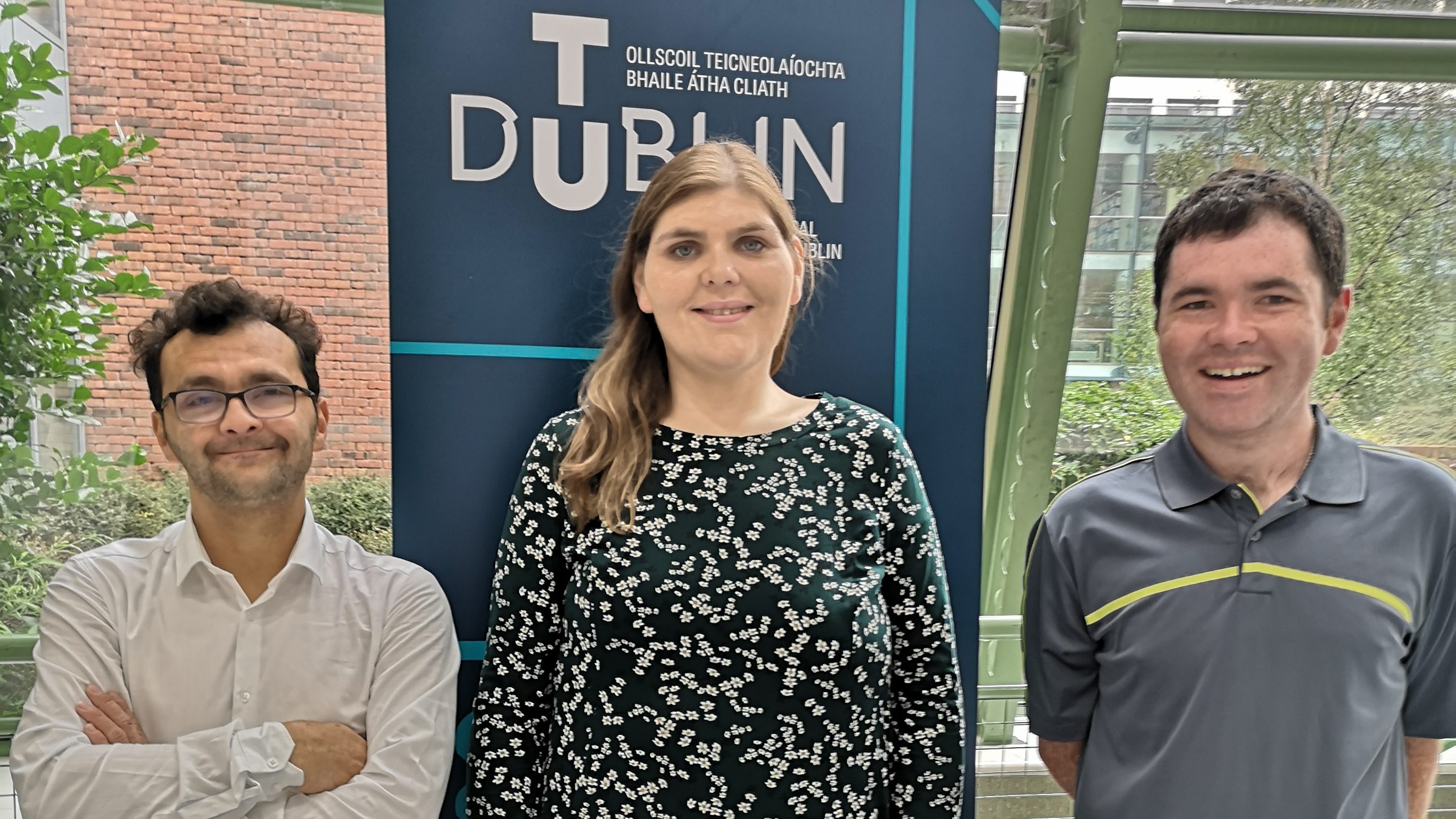
    Tomás Murphy, Margaret Turley, and Chris Byrne spoke to several adults with intellectual disabilities to research the impact of Covid-19 on their lives. Photo courtesy of Harry Browne

    As special schools across the country begin to reopen, many people are still calling for clarification on the status of respite and adult day centres. 

    This comes just a week after 18 new cases were reported in centres for people with disabilities.

    The HSE funds almost 1,000 locations across Ireland, catering to around 19,000 adults with disabilities. 

    Organisations such as CI Dawn in Co Donegal provide day services to adults with mild to moderate intellectual disabilities, and aid young adults in the transition from school to day centres. Service users can choose from up to 30 modules provided by the centre, ranging from art and music to travel training. 

    Dean Larkin from the CI Dawn says that the focus is on community inclusion:  “That’s what we’re here for. We’re out and about a lot, we’ve got work experience. A few of the service users go out on work experience so some of them are maybe in shops, or one person works in a garage. It’s really about providing opportunities for everyone.”

    After initially closing at the beginning of the pandemic, day services throughout Ireland eventually resumed in August 2020, operating at approximately 38% capacity. 

    On 11 November 2020, Minister of State at the Department of Health, Deputy Anne Rabbitte, stated that the objective was to have day services operating at a minimum of 50% capacity.

    At the CI Dawn, there are just two service users out of eight attending the centre at the moment.

    “You’re still keeping in contact with the families and the service users just so they know you’re still there if they need anything”

    Dean Larkin

    A survey conducted by Inclusion Ireland found that only 20% of adults with intellectual disabilities reported feeling happy to stay at home, and many mentioned missing the support from staff at the centres.

    One of the main difficulties, says Larkin, is the closure of many other services in the community:

    “Normally on a Tuesday we would have gone to the gym, Wednesday would have been the swimming pool, on a Thursday we’re doing Discover Donegal. So you’re out and about a lot. But obviously everywhere is closed at the minute, and you don’t want to be in contact with other people, so if service users are in, you’re just limited with what’s happening.”

    A report on the experiences of adults with intellectual disabilities during the pandemic – which was conducted and written by people with intellectual disabilities – highlighted some of the difficulties faced:

    “It was mayhem. We couldn’t get back at all with this Covid-19. I was very panicky, annoyed, upset, anxious – can’t see staff, can’t see friends. It’s lonely, and scary, and worried. I miss my friends, I miss my family, I miss my loved ones.” Said Gary McCabe, a participant in the report.

    There was a general consensus among the participants that the boredom and social isolation was one of the worst aspects of lockdown, and most were eager to return to work or day service.

    “It’s kind of sad not having a reason to get up in the morning, waiting for the bus to come and take us to day service.” Said Peggy McDonnell, another participant.

    Report on the impact of Covid-19 on people with intellectual disabilities in Ireland by TU Dublin

    For people with intellectual disabilities, the uncertainty of lockdown can be quite challenging, and the survey by Inclusion Ireland found that loneliness was a “significant issue” for 56% of respondents.

    To help combat this, many centres are reaching out to service users over the phone and online.

    “We provide an outreach programme. So for service users at home, we send out a pack every two weeks. You’re still keeping in contact with the families and the service users just so they know you’re still there if they need anything. We also call every week to chat to the service users if they want to talk,” says Larkin.

    The centre has also been utilising Facebook, going live and posting interactive videos such as quizzes, live music and even classes like yoga and gymnastics.

    “There’s been no respite at all. Day centres can do bits and pieces online but it’s still not the same”

    Paul Kelly

    Larkin says that the response to the online presence has been positive and one benefit is that the videos are saved to the page so people can watch them in their own time.

    However, for many people with intellectual disabilities, online communication and learning on its own is not a viable long-term solution, and for these people it is important that they are able to access the services they require safely and regularly. 

    Drumboe Respite House in Co Donegal allows people to stay over and go for trips to the cinema, shops, and restaurants. 

    Due to the nature of the service they provide, they are not able to work online and have been closed since the pandemic began, says Paul Kelly, a nurse at the respite house.

    “There’s been no respite at all. Day centres can do bits and pieces online but it’s still not the same. They’re just on a screen all day and when they’ve been doing it for years, they have a routine of getting the bus in. Maybe meeting the busman and going to the shops and meeting other people. Now they’re just at home on a screen and they might find it hard to understand that,” says Kelly.

    With the Covid-19 vaccine being administered to more and more people, disability workers are hopeful that this will speed up the safe reopening of disability services.

    “We’re hoping that both the staff and service users will be vaccinated soon and then it’s just totally up to the service users and their families when they want to come back in. There’s no pressure because their spot is always going to be here,” says Dean Larkin.

  • A Covid tale of two cities

    A Covid tale of two cities

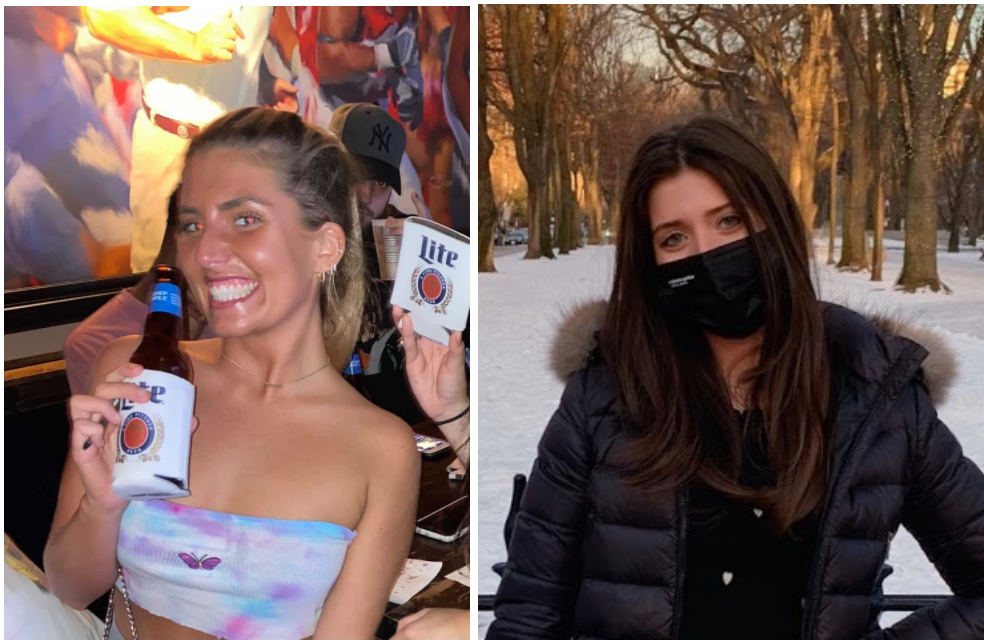
    Beaming Tara Wiekert (left) enjoys a brew indoors at a bar in Tuscaloosa, while Julia Hadley (right) is smiling through her state-mandated mask outdoors in Boston. Photos courtesy of Tara Wiekert and Julia Hadley

    In North America, each state decides on its own Covid-19 regulations. Different states can have radically different restrictions – changing the experience of the pandemic for their residents.

    A part of Biden’s 2020 presidential campaign was the requirement of masks to be worn throughout the US as he stated it could “save 100,000 lives” if masks were made mandatory to wear in every state.

    Less than a month into his inauguration, President Biden has already pushed nationwide mandates, requiring masks to be worn by all Federal employees and by those who use public travel throughout the US.

    However, social distancing regulations are very different depending on the state.

    Answering the same set of questions, two students who reside in different states share their lifestyle and opinions with Jessica Viola on the Covid-19 pandemic.

    Tara Wiekert lives in Tuscaloosa, Alabama, and studies advertising with a minor in German at the University of Alabama.

    Julia Hadley is a health science major at Boston University in Boston, Massachusetts. These responses are based on the student’s opinions as well as on their state’s individual regulations. 

    What is your opinion on Covid-19 now, in 2021? 

    Tara Wiekert: “I think it’s serious and something everyone needs to be made aware of. I know it affects older people more severely, which is why I think a lot of people at school don’t take it that seriously, since we are in a college town surrounded by people who are all mainly around the age of 20-25.”

    Julia Hadley: “My opinion on Covid-19 has remained the same over the past months. It is a very scary time for so many individuals and has affected far too many people. While the vaccination is bringing so much hope for the future, it’s still imperative people take precautions.”

    “While the vaccination is bringing so much hope for the future, it’s still imperative people take precautions”

    Julia Hadley

    What measures are being taken to prevent the spread of Covid-19 in your college?

    TW: “The school requires students to be tested for Covid-19 randomly. I try to wash my hands as often as possible, but since life here feels so normal, I do not take immense measures to prevent the spread of Covid-19. I still go out, eat out, and hang out with all my friends the same way as we did before.”

    JH: “At BU, students who attend classes on-campus or live on-campus must take a Covid-19 test every three days. When taking a class in-person, students must provide proof of their negative Covid-19 test. Throughout campus, students must wear masks at all times.”

    Are you taking college classes in person now and are other work spaces open?

    TW: “Alabama is probably one of the states with the least amount of Covid restrictions. We have some in-person classes and some online depending on what the professor prefers. Libraries and other study areas are open, however, you must wear a mask on campus at all times.”

    JH: “All students and faculty are required to get a Covid-19 test every 3 days, allowing students to take classes in person, if permitted. Libraries and study areas are open, but space is limited. Students must wear a mask at all times, while also having a negative Covid-19 test result, in order to enter the space.”

    “I still go out, eat out, and hang out with all my friends the same way as we did before”

    Tara Wiekert

    How has socialising been for you in 2021?

    TW: “In all honesty, life in Alabama has been rather normal. Bars have been open for a while now. They only shut down at the beginning of last semester for about two weeks.

    “All or most college organised events are happening here in Alabama. We just won the National Championship for (American) football.”

    JH: “Boston does have indoor dining and restaurants utilise glass shields and place diners a safe distance away from one another. The state’s mandates include setting limits on gatherings, also mask and face-coverings must be worn indoors and outdoors with a capacity limit and there’s a curfew for restaurants as well as businesses.

    “At this moment, no organized events are happening within my college campus and are highly discouraged within Massachusetts.”

    University of Alabama students celebrating their American football victory in January 2021. Video courtesy of Tara Wiekert

    What is your opinion on how your state is handling Covid-19 procedures now?

    TW: “In my hometown of New Jersey, my life has changed a lot, and I am able to do a lot less, yet both states seem to be doing ‘fine’. I do think wearing a mask in public should be required for the safety of others and the elderly. However, in Alabama, my life seems rather normal and I often forget Covid-19 is even a ‘thing’. I am doing everything that I used to do even before Covid-19 hit.” 

    JH: “Just as everyone around the world, my life has changed since COVID-19. I have limited traveling, restricted seeing people outside of my immediate circle, among many other things. While adapting to our new ‘normal’ has had its challenges, it is a sacrifice I am willing to contribute to keep myself, family, and friends safe during the pandemic and, I am extremely fortunate for their good health thus far.”

    “Adapting to the new ‘normal’ is a sacrifice I am willing to contribute to keep myself, family, and friends safe during the pandemic”

    Julia Hadley

    American universities have been a hot spot for the spread of Covid-19. Throughout the course of the pandemic, more than 85 colleges have had over 1,000 reported cases on campus. In a recent study, 70% of Covid-19 cases in the US have been spread by young aged 20-49 years old.

    Although Massachusetts has almost over 2 million more residents in it than Alabama, they comparatively have a little over 72,000 more confirmed Covid-19 cases than this southern state. As it stands now, Massachusetts has 546,800 confirmed cases and Alabama has had 474,666 coronavirus cases since the beginning of the pandemic.

    Masks, social distancing, and socialising remain hot-button issues – will Biden manage to unite his nation?

  • Covid Abroad: How Italy was woken up to the first wave of coronavirus in Europe

    Covid Abroad: How Italy was woken up to the first wave of coronavirus in Europe

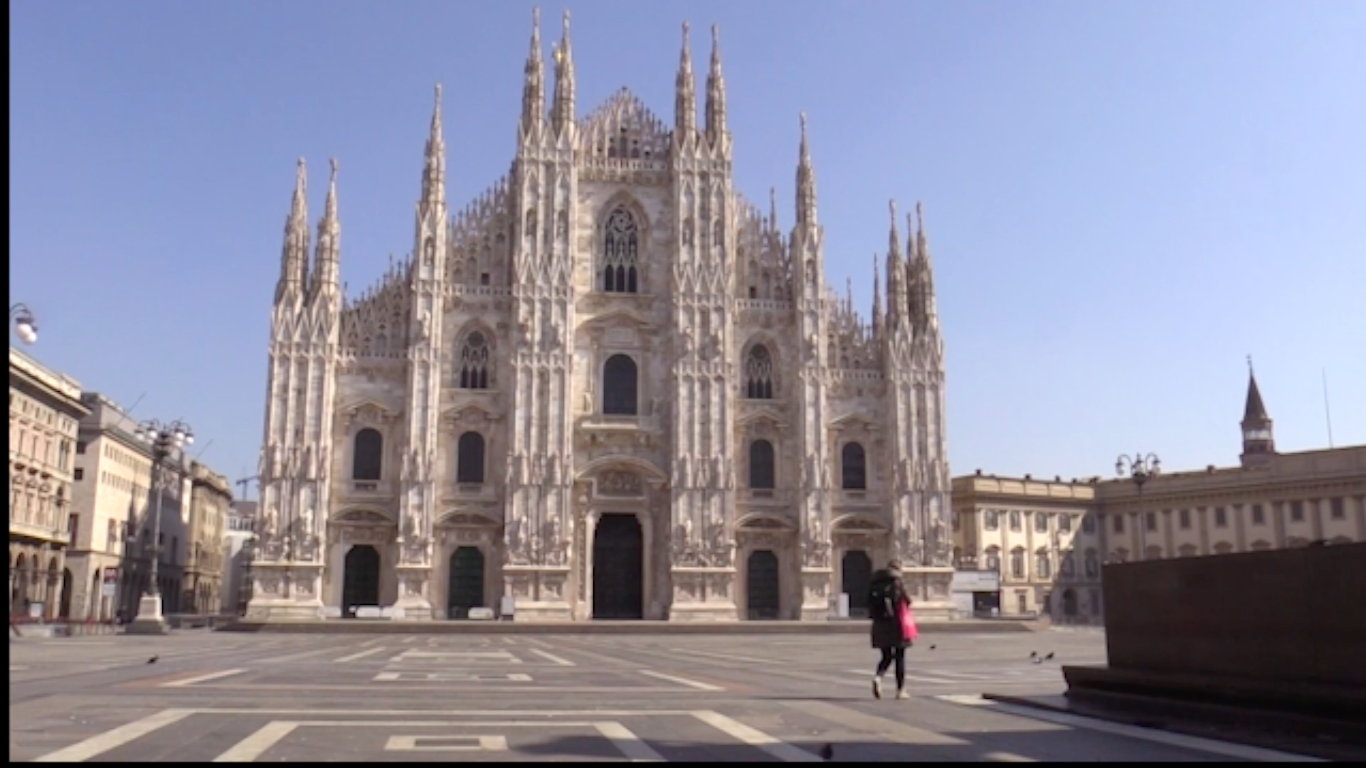
    An eerie empty duomo during the Italian Covid-19 crisis. Image by Andrea Lattanzi from Pexels.com
    Mario Bowden spoke to Maria Elena Tagliabue face-to-face over Zoom to hear about her experience as an Italian during the pandemic

    On the 23 February 2020, Maria Elena Tagliabue read the news that a town 20km from her was going into lockdown after an outbreak of a then-unknown virus imported from China. Back in her hometown of Crema for the weekend, in the north of Italy, an unusual gut feeling came over Maria Elena when her friends asked her to join them in a bar. 

    “I texted one of my friends saying ‘I don’t know if we should meet, is it safe?’ and he laughed a bit at me saying ‘Cmon! It’s just a flu. Our friend is a med student and he’s coming. C’mon see you later’. We met up beforehand and we noticed that the town was very eerie. Months later he apologised for pushing me to go out that night,” Tagliabue tells me.

    Two weeks later, coronavirus cases were spiralling out of control, and Italy’s hospitals became overwhelmed – especially in the North. The whole country was rapidly instructed to stay inside, without exception. Tourist sites were deserted.

    The coronavirus had arrived in Europe – and Italy was its first victim. 

    To this date, there have been 2.65 million cases of Covid-19 in Italy – and 92,000 deaths.

    Tagliabue calls me from her apartment in Varese, a town 50km from Milan. Varese is not far from Bergamo – a town where the virus hit its community hard and fast. Its hospital became overflowed with patients. Images emerged of mass coffin convoys – amplifying the virus’ threat on our screens.

    “I think it made it more real and [us] more anxious and cautious” says Tagliabue.

    “The stories people told from Bergamo and even my hometown Crema are heartbreaking. Especially in the first wave when things were more hectic. Hospitals were less organised and doctors had less masks,” she says.

    Despite the threat remaining high, Italy is easing its restrictions. Each region operates on a tiered coloured zone system – red being the most severe, orange slightly less restrictive and yellow the most moderate. There is also a white zone – a marker of low-danger Covid world. However, no region is currently there yet. 

    A lone seagull at the Roman Forum. Image by Stefano Barbieri via Pexels

    At the moment, regions across the country have begun transitioning to a yellow zone. Household visits are allowed, in-person teaching at schools can resume at a reduced capacity and restaurants and bars can open up until 6pm are among the most notable changes. Lombardy has entered the yellow zone.

    While it is a welcomed change, Tagliabue remains sceptical about opening up too soon. 

    “It doesn’t feel like this yellow zone can last very long.” she concedes. “Especially in Lombardy, which is the most populated region in Italy. There are things to do which leads to crowds. It feels liberating now but at the same time, I’m not confident this can last. Maybe [we can implement it in] March or April when [the] outdoors can be more useful,” she continues.

    “It doesn’t feel like this yellow zone can last very long. It feels liberating now – but I’m not confident it can last”

    Maria Elena Tagliabue

    The pandemic also spun Italy’s ever-controversial political climate into further uncertainty. While popularity was high for Giuseppe Conte after his initial dealing with the pandemic, the Prime Minister was forced to resign after Italia Viva leader Matteo Renzi, pulled his party out of an already unstable coalition – collapsing it in the process.

    Renzi’s decision was met with some scrutiny – as it embroiled the unwanted idea of fresh elections. But as a former Prime Minister himself, Renzi saw the need for change – and a pandemic was no excuse to continue on in the same vain. Italy’s economy shrunk by 8.9% in the last year and is experiencing its worst recession since the second World War. 

    On Thursday 4 February 2021, Mario Draghi was drafted in by President Sergio Mattarella to become the new Prime Minister. As the former chief of the European Central Bank, Draghi has been hailed for his role in pulling the EU out of the European debt crisis in 2012. He’s hoping that 2021 can mirror a similar, colossal turnaround. For Mario Draghi, it’s now his objective to prevent Italians going to the polls – by smoothly forming a new government and help recover Italy’s economy. 

    For Tagliabue, the virus remains an ongoing threat. Despite the lifting of restrictions, she believes sticking to her built up routine will keep herself and others safe. But she is a believer too. She looks forward to the first gig that she can go to in a post-covid world.

  • Bloody buses

    Bloody buses

    The 33A bus pulling into Lusk village. Photo by Izzy Rowley

    Public transport can change the shape of someone’s day entirely. For health care workers, it can add hours onto their already lengthy days, as they battle long wait times and social distancing issues. 

    “Transport, as stupid as it might sound to most people, makes such a difference if you can get home quicker because you are so tired,” says student nurse Sarah Reid who is currently working in St. James’s Hospital in Dublin.

    Reid lives in Swords, north county Dublin. To get to work, she has to take two buses or a bus and a Luas regularly.

    Her journey usually starts around 5:00am and ends at 6:30am, when she arrives into work an hour early for her shift. She could get a later bus, but according to Reid, it doesn’t leave her with enough time to get ready for her shift. 

    “Because of the pandemic, when we get to hospital, we have to change, and we have to PPE up before, because I’m on a Covid ward,” Reid explains.

    Getting home presents its own problems. After her 13 hour shift, she could often be waiting up to 35 minutes for a bus home.

    The 33 bus driving down Station Road in Lusk, north county Dublin. Photo by Izzy Rowley

    Dublin Bus services are currently running at a reduced capacity and regularity, operating on a Saturday schedule, leaving fewer buses with less room for passengers.

    In an email statement to The City, Dublin Bus said that the Saturday schedules are “augmented by additional services, especially in the early morning peak” and “the schedules reflect the current demand for services.”

    The reduction in both the frequency and the capacity of the buses can lead to issues with social distancing.

    “Especially in the level five situation, I know the service is reduced to a Saturday service, and that just doesn’t make sense to me. 

    “It would make more sense if the services still ran as normal – people would be given the opportunity to keep their distance more,” says a social care worker based in Fingal, who has chosen to remain anonymous to protect her privacy.

    The accessibility of transport is also an issue, this social care worker notes that recently, real time displays in train stations have often been broken: “If you’re an older person that doesn’t have a phone, or people with disabilities like the ones I work with, it makes it difficult.”

    “If the services still ran as normal, people would be given the opportunity to keep their distance more”

    Anonymous

    However, the health and safety of bus drivers can’t be ignored either.

    Dublin Bus said that these reductions are in place to protect the health and safety of passengers and staff, which is their “first priority”.

    “We’re just like everybody else, we don’t want to bring it home,” says Dublin Bus driver Joe O’Dwyer.

    O’Dwyer feels lucky to still be working during the pandemic and notes that “the company is supplying PPE stuff” including masks and hand sanitiser.

    “We’re just like everybody else, we don’t want to bring it home”

    Joe O’Dwyer

    “One of the things we’re trying to do with the Saturday timetable, it’s called an enhanced [timetable], so there’s an extra couple of buses that go out on certain routes that are busy – they’re trying to do their best with it,” O’Dwyer says.

    “It’s all about health and safety, isn’t it? Keeping the staff safe and the public safe,” O’Dwyer adds.

    Public transport has been an issue in Fingal before the pandemic, and the reduced services have worsened the situation.

    “With ongoing and increasing development in Lusk, Skerries, and Rush, it’s obviously putting more strain on the public transport system,” says Councillor Robert O’Donoghue, the Labour Party local area representative for Rush and Lusk in Fingal, who is working with a local action group to increase public transport in the area.

    The action group has asked Fingal County Council to assess public transport services in the area in relation to population and housing development. 

    “Any assessment that goes on, I can’t see the possibility of services being pulled back,” O’Donoghue says. “There’s just too much housing development going on in the north county.”

    “Fingal, I think, is being used almost as a relief valve for the housing crisis to some degree.

    “That can either be a good thing or a bad thing, depending on your way of looking at it. They’ll serve where the people are, and with more and more people moving out our way, I do believe the services will come,” he adds.

  • Green Screen: The impact of the pandemic on the Irish Film Industry

    Green Screen: The impact of the pandemic on the Irish Film Industry

    Daithi Ó’Cinnéide on camera and in his element. Image courtesy of Daithi Ó’Cinnéide

    The year 2020 has provided highs and lows for the Irish film industry, and 2021 is already calling into question the future of our domestic productions.

    This time last year it seemed Ireland was reaching new heights in the domestic film and television industries. Ridley Scott had begun shooting his next blockbuster with Matt Damon – who was spotted ‘slumming it’ in Dalkey – and Normal People was hitting screens worldwide, with Paul Mescal engrossing audiences in O’Neill’s shorts.

    Like everything else, the Irish entertainment industry came to a crashing halt in March when Covid-19 struck.

    The production hiatus, which at the time of the first lockdown was indefinite, meant that up to 12,000 jobs in Ireland were put on hold and some were gone for good.

    Grip assistant Michael Nardone was hit hard by this hiatus.

    “Everything seemed to be going great, I was hopping from project to project, then like most people I’m sitting at home wondering what to do,” said Nardone.

    “Everything seemed to be going great, I was hopping from project to project, then like most people I’m sitting at home wondering what to do”

    Micheal Nardone

    Nardone has worked as a part of the crew in television series like Vikings, Dublin Murders, and Normal People. He had just begun exploring a new avenue, working with some fellow crew members on their own short film, when suddenly everything changed.

    “It was all out the window really, and without the backing that the big productions have, it seemed like it might never happen.”

    Nardone packed his bags for New Zealand.

    “I had been thinking about going for a long time, but I always had a reason to stay [in Ireland].”

    Productions had also been halted in Auckland, which gave him the time and opportunity to apply for work on bigger projects: “All the big productions were miles behind schedule, they were ramping up everything, preparing for reopening.”

    He is currently working on a new series for Amazon and has a full schedule right up to 2022.  

    “It’s mad hearing stories from back home, it feels like the whole pandemic has come and gone here.”

    One project, Paperboy, an independent feature film set in Belfast during the Troubles, was to begin filming in September.

    The project had attracted stars Bridget Moynahan (I Robot) and Colm Meaney (Law Abiding Citizen, The Snapper), with Donald Petrie (Mystic Pizza) attached to direct.

    Producer Kevin Murphy had spent the best part of two years trying to get the film made.

    Unfortunately, the lockdown proved too strenuous an obstacle and the project has since ceased indefinitely.

    “We are not doing much at the moment,” Murphy said in relation to production.

    An uncertain future has proved detrimental to independent filmmaking in Ireland. Filmmaker’s reliance on procuring funding from multiple sources is unstable in a time when producers and companies are keen to watch their expenditure.

    This is something that organizations like Screen Ireland and Screen Producers Ireland were aware of from the beginning.

    Screen Ireland acted quickly, first in making sure professionals were still getting paid – repurposing funding to support writers, producers and directors. 

    Screen Ireland and The Department of Culture, Heritage and the Gaeltacht have implemented funding initiatives to cope with the expanding crews and assisting in the hiring of “Covid Departments” working on set.

    The Covid Department monitors the sets to make sure people comply with rules like wearing masks and social distancing.

    “It’s mad hearing stories from back home, it feels like the whole pandemic has come and gone here”

    Nardone

    This has helped to keep bigger budget films operating in the country and it was these initiatives that allowed assistant director, Daithi Ó’Cinnéide to get back to work by late august and stay there until very recently.

    “The film industry seems to follow the construction industry, if they stay open, we stay open.”

    The diligence of these newly-proposed crews working in Covid departments has proven the real trick in allowing the productions to carry on while most other professions remain at home.

    The introduction of these protocols has helped to keep the industry running as smoothly as possible. However, at the drop of a hat operations can be shut down.

    “At the moment, I had work on another TV series coming up, 12 weeks work, but that seems to be pushed back until April, just with everything going on.”

    While film crews on the other side of the world get back to full swing, the future of the Irish film industry is called into question again. It may be awhile before independent Irish films grace our screens again, but the work of the governing bodies and industry professionals may provide a light at the end of the tunnel.