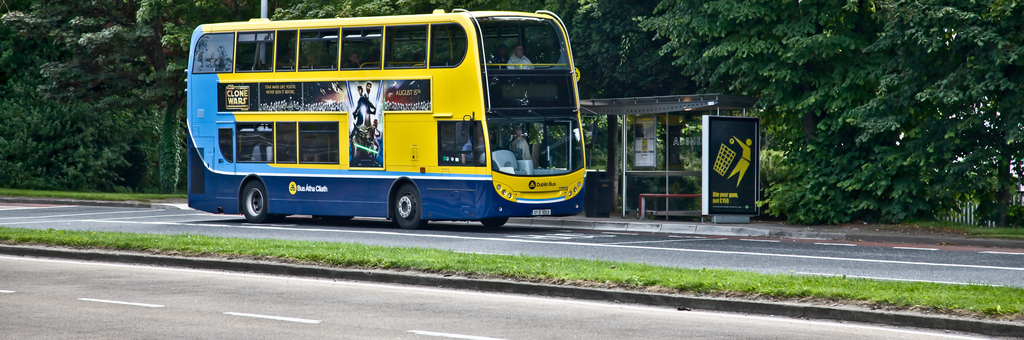
Tag: Dublin Bus

  • Cycling for a living: The untold realities 

    Cycling for a living: The untold realities 

    Delivery cycling in Dublin, and the overlooked challenges of making a living on Dublin’s busiest road.

    By Samuel Adeleke 

    I Citizens’ concerns in Dublin are usually centered on motorists and pedestrians. Still, recent statistics from the Road Safety Authority (RSA) shows that the greatest share of serious injuries was among those cycling for social trips, at 76 per cent.    

    In addition, the statistics also revealed that 187 cyclists were seriously injured while commuting to and from work, and the majority of these injuries occurred in Dublin. 

    These figures raise questions about the challenges faced by cyclists in the city center, especially for delivery cyclists whose livelihoods depend on riding these roads daily and who are exposed to different road and weather conditions without the protection of a vehicle. 

    Damilola Foluwashayo, a delivery cyclist with the delivery service Just Eat, said, “Cycling can be tedious when it rains. The roads become slippery, and there is a higher chance of getting a flat tire.”  

    This not only makes riding more difficult but also increases the risk of injury to the rider. 

    “If you ride too fast and want to apply the brakes on a slippery road, you might fall because there is no friction to hold your tires,” Foluwashayo said. 

    One of such fall led to Foluwashayo sustaining a serious injury. “I was trying to avoid two kids playing on the road. In the process, I stepped on the wrong brake, my tires got spoiled, and I broke my leg,” he said.  

    The changeable weather presents other challenges for cyclists. “In the first seconds it’s raining, the next seconds it’s not raining, just always take your safety gears with you and have your lights, lights make you safer,” said Judge Eddy, who uses his bicycle for grocery shopping for his wife. 

    In addition to challenging weather conditions, cyclists also have to deal with careless drivers.  

    “We often encounter reckless drivers on the road,” said Thomas Nve, a delivery cyclist with Deliveroo.  

    “Taxi drivers, in particular, seem determined to meet the metrics and quickly get to their next client,” he added. 

    But other road users criticise delivery riders for breaking the rules.  

    “I have a big thing against delivery riders; they have no lights, they go through red lights all the time, and they tend to just cross over all the time,” said Judge Eddy.  

    Eric Andrel, a delivery cyclist with Deliveroo, attributed an accident he had to the deplorable state of the road.  

    “There have been a lot of potholes because of the rain, I had an accident because the pothole was covered by water,” he said. 

    “The roads are also narrow and don’t give room to swerve safely,” Andrel said. To constantly keep himself safe, Andrel said, “I wear high-visibility clothes and always have my helmet on.” 

    Andrel says The Government should do more to keep all road users safe “They should create a system where, after 6pm, only public transport is allowed in the city.” 

    Mariann Finan, who is an all-year-round cyclist, said conditions have improved for Dublin cyclists, but problems remain.  “In terms of infrastructure for cyclists, it is better than it was; at least we have a lot of cycle lanes now, but they are not really finished. They stop and start, and you don’t really know where the next lane is.”  

    Photo credit: Samuel Adeleke

    Finan also noted a pandemic of wearing headphones among cyclists.  

    “I don’t even know how anybody can wear headphones while cycling, because there is so much going on around you that you need to be alert to,” she said. 

    Finan warns of dangerous overtaking by cyclists. She said: “A lot of the Brazilians and Chinese delivery riders have electric bicycles and tend to overspeed, but they should always use their bells to alert other road users.” 

    Cliff Nolan, the owner of Bike Stops on Capel Street, Dublin, which sells and repairs bicycles, said, “I service a lot of delivery riders’ bicycles. The most recurrent issue with them is a puncture in the tyres, and their brakes always need a lot of attention.” 

    “Delivery riders should always buy quality parts instead of going for cheap parts, which puts them at risk,” Nolan advised. 

    Photo credit: Samuel Adeleke

    One Chinese worker with Deliveroo, who did not wish to be named, said, “There are many dangers on the road. There are robberies by teenagers, and our bicycles are easily stolen.” 

    He also highlighted other issues with the healthcare system that discourages drivers from seeking treatment for injuries.  

    “I have fallen so many times on my bicycle and have had to treat my own wounds,” he claimed.   

    “We generally don’t go to the hospital because going to the hospital will be troublesome and takes a lot of time. We figured we could handle it ourselves, and it would be much faster.” 

    “Cyclists should ensure that both they and their bikes are visible to other road users by investing in good sets of front and rear lights, and by wearing clothing that helps them be seen,” said John Paul Guiheen, the Executive Officer of Communications at the RSA, in an email correspondence.  

    “They should also consider wearing high-visibility materials and obeying the rules of the road,” he added. 

    The RSA stated that there was a deliberate effort last year to inform major food delivery companies about changes to the law concerning electric bicycles as introduced in the Road Traffic and Roads Acts 2023.  

    “Riders must obey the same rules of the road as drivers; the roads are a shared space. Hence, drivers must follow all speed limits, traffic signals, and parking regulations,” said Guiheen.  

    On other issues bothering on weather conditions, cycle lanes, and bicycle theft, the RSA said, “That should be directed to the NTA, local authorities who maintain roads, and the Gardai respectively.” 

     But “during severe weather events, we issue advice to all road users, including cyclists,” he said.
  • A tight squeeze: Public transport in Dublin severely congested at peak times and on popular routes 

    A tight squeeze: Public transport in Dublin severely congested at peak times and on popular routes 

    By Gary Petrov

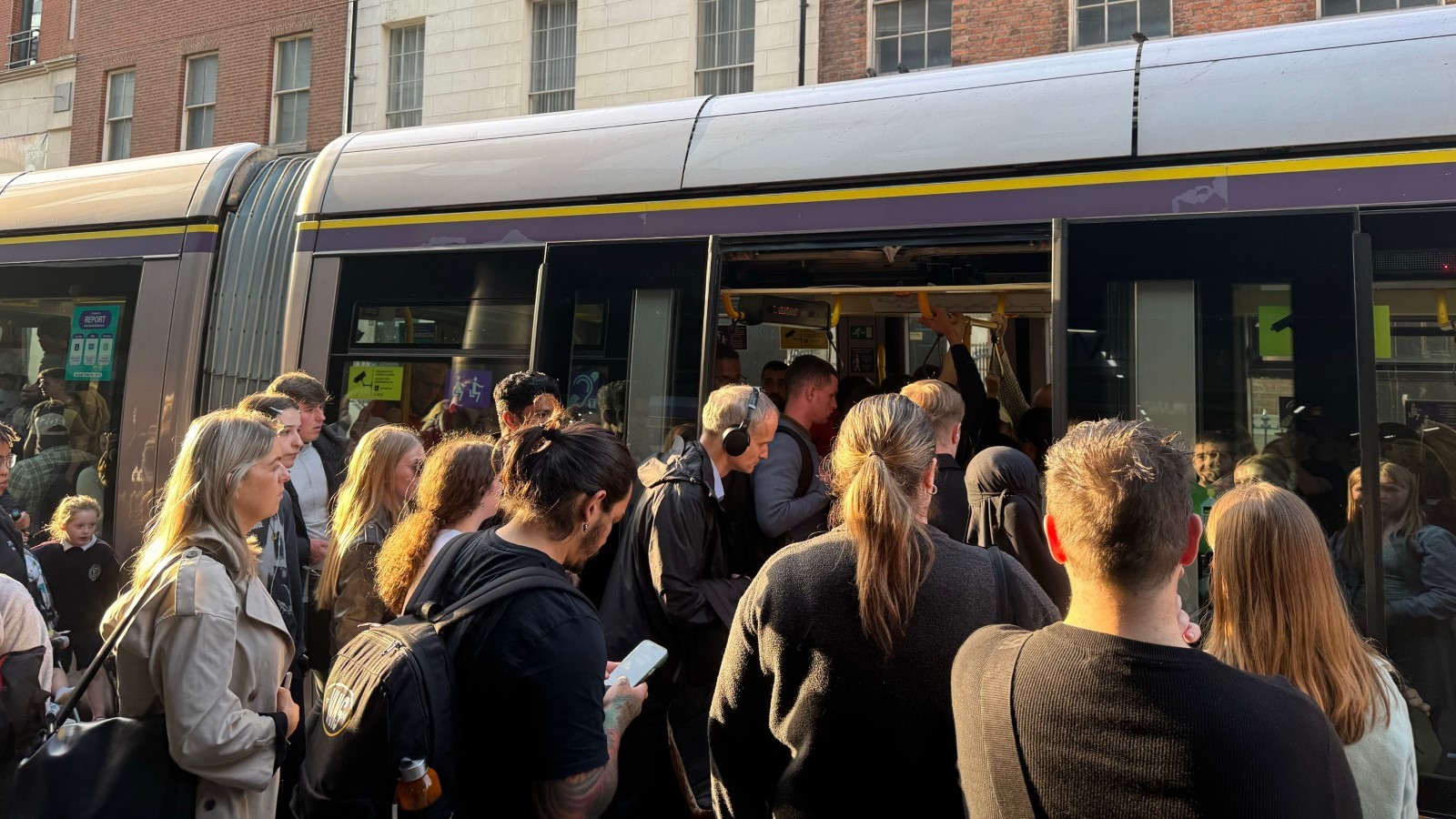
    A display of photos from the point of view of a commuter using public transport in Dublin. Examples of overcrowding can be seen here on Dublin Bus, Luas and Irish Rail services in densely populated or heavily visited areas in Ireland’s capital – in which the photos below were taken during peak times of travel, on-board and at stops and stations. 

    Nevertheless, the photos pose the question: Do Dublin commuters need more frequent services of existing public transport, or do they need more modes of public transport? Or both

    Whether the answer is a swift underground metro system, or more frequency on existing services – or both, the population is growing and commuting access in and around Dublin is becoming more of an issue and needs urgent attention. 

    All photos present the same problem – Dublin’s public transport system is overwhelmed. 

    The photos also present how this overcrowding issue can prove difficult for accessibility on public transport for wheelchair users, mobility aid users and parents with children. Even in busy times, not everyone can just squeeze on and stand. People are inevitably being left behind – hoping that the next bus, train or tram will have room. 

    Commuters joining a lengthy queue for Blanchardstown Shopping Centre’s busiest bus route to Dublin City Centre, the 39a – hoping to get on as it fills very fast. 
    The standard sight at this shopping centre bus stop at peak morning and evening times, as commuters fight for a spot on the 39a service. 
    The 39a route journeys down the Navan Road, in which sections of the journey lack bus corridors in both directions, leaving passengers stuck in traffic at peak times. 
    Meanwhile at the Jervis Luas stop in Dublin City Centre, peak times result in commuters pushing themselves on-board to very packed carriages, with just about enough room to stand, for the few at the busy stop that manage to squeeze on. 
    Finished work and want to hop on the Luas Red Line home? You’re not the only one – and that’s not even including commuters already on-board. 
    A Luas has arrived, and the carriages are evidently full. With some commuters possibly disembarking, maybe there will be room for some intending to board. 
    “Oh my God, let us get off first,” said a young woman as commuters tried to get off while commuters on the platform scurry towards the doors for a spot on the mostly full Luas carriages. 
    “Oh, there’s another one coming in three minutes, maybe we’ll get on that one,” said one woman as disgruntled commuters accepted not being able to get on-board – but hopeful they remained, as another Luas was due in a few short minutes. 
    The next Luas has arrived at the Jervis Luas stop and like the previous one, it’s almost full and the next round of commuters on the platform attempt to get a spot on-board.  
    Three Luas trams later and the platform begins to clear as the Luas carriages begin to have more space than the previous trams – but was there space for commuters who have accessibility issues? How many trams must pass for there to be room for a person in a wheelchair or with a mobility aid, or a person with a baby pram to board comfortably and safely? 

    Getting on a train at peak times is no different. Commuters at Broombridge Station queue at every door, wondering if they will fit on-board as the train arrives full from the city centre – in which it will remain like that until it reaches the outskirts of Dublin. 

    If a commuter manages to squeeze on-board, there is only room to stand, and it gets quite uncomfortable. Like the Luas, accessibility issues are present here. 
    Dublin’s only service that has flow is Irish Rail, due to no road traffic, but commuters experience peak times with traffic by foot – if you stay on-board until disembarking in a Dublin suburb. 
    Traffic standstill mayhem: The need for more efficient modes of public transport is hiding in plain sight here. Modes of transport that aren’t subjected to peak time road traffic. Commuters using an underground metro system around Dublin would go from A to B in an instant, in comparison to this.
    A bus stop and rain: Commuters already report it to be a struggle to get on-board popular routes, but adding bad weather to the equation does not make for a comfortable experience – when all a person wants to do is start their day commuting with ease or commute home swiftly, after a long day. 

    _____________________________________________________

    Everyone understands that peak times will always be busy for public transport users, that’s why it’s referred to as ‘peak times’ – but that doesn’t mean it’s acceptable for Ireland’s capital city and its surrounding areas’ public transport network to be severely overwhelmed, at a constant. 

    In a day and age where people are being encouraged to use public transport instead of private transport, as a means of reducing carbon emissions through minimising their individual carbon footprint – it’s worth noting that the correct infrastructure is vital for that to be sustainable, otherwise, people who can won’t use public transport, if it becomes more and more overcrowded, uncomfortable and unreliable. 

    A popular route having frequency in its service isn’t good enough, as it can be seen in the photos above that the demand is too high at peak times for ‘frequency’ to be enough. Ireland’s capital needs an expansion of public transport services across the board, not statements to brush the issues under the mat. 

    Dublin’s public transport congestion is clearly failing people with accessibility issues, despite the designated accessible areas on-board services – as abled people are filling up the designated areas at peak times. 

    Dublin needs more efficient public transport that facilitates everyone, and these photos are prime examples why improvement is needed – the only question now is, when will anything be done? 

  • Dublin’s bus services pay heavy fines

    Dublin’s bus services pay heavy fines

    Go-Ahead Ireland has reached their Minimum Performance Standard (MPS) regarding punctuality in just one period in the first half of this year.

    New data obtained via a Freedom of Information request shows that Go-Ahead Ireland reached their MPS of 80% in the first period of 2022, dated January 1st – January 30th

    Punctuality is a Key Performance Indicator of the performance of transport companies, as part of the terms of their Public Service Obligation (PSO) contract with the National Transport Authority. To measure punctuality and the MPS rate, Go-Ahead Ireland and Dublin Bus Routes use low-frequency routes only. 

    A low-frequency route is deemed a route “which operates less than 5 times per hour on a weekday, outside the peak periods” according to NTA reports.

    The report, made by the National Transport Authority, shows that Go-Ahead reached its target along the Outer Dublin Metropolitan Area (ODMA) corridor, while the Dublin Commuter Outer Metropolitan (DCOM) failed to reach its target once, with its highest score in the first half of this year hitting 79.5%. 

    This comes after Go-Ahead and Dublin Bus were heavily criticised by the Oireachtas Transport Committee last month. Both companies blamed staff shortages on their issues of punctuality, while the issue of ‘ghost’ buses was also discussed.

    Many bus users had reported a bus showing on Transport for Ireland’s Real-Time Passenger Information (RTPI), however, these buses never showed up. 

    The NTA, Dublin Bus and Go-Ahead chiefs blamed the ‘ghost’ buses on staffing issues, while also acknowledging technical issues as a major factor. 

    Dublin bus stated that they require an extra 150 drivers to accommodate their routes, while Go-Ahead was short by 45 drivers. 

    Speaking at the Oireachtas Transport Committee, Kildare North TD Réada Cronin said that the “job hadn’t been done” by Dublin Bus and Go-Ahead, labelling Go-Ahead’s 120 route as ‘appalling’, adding that she doesn’t think they should get the contract again.

    “It affects the economy, it affects your co-workers, it affects the service you’re delivering. It has a knock-on effect on absolutely everything, not to mention the stress it causes… You’re half an hour waiting for a bus if you’re ten minutes early. You’re standing in the rain for half an hour in Clane, or Prosperous, waiting for the bus. [If] the bus doesn’t show up, you’re another half hour waiting for the bus. You could be waiting an hour and ten minutes.”

    Go Ahead and Dublin Bus have paid heavy fines this year, with both companies paying just under €700,000 in punctuality deductions for their Dublin services. However, Dublin Bus also received over €100,000 in punctuality incentives, putting a small dent in their bill so far this year. 

    Both companies combined have paid over €2.5 million in fines, while Luas have also paid a similar amount for their cancellations and lack of punctuality. Irish Rail have paid just €15,000 in punctuality fines, while they have received €291,000 in incentive payments.

  • Bloody buses

    Bloody buses

    The 33A bus pulling into Lusk village. Photo by Izzy Rowley

    Public transport can change the shape of someone’s day entirely. For health care workers, it can add hours onto their already lengthy days, as they battle long wait times and social distancing issues. 

    “Transport, as stupid as it might sound to most people, makes such a difference if you can get home quicker because you are so tired,” says student nurse Sarah Reid who is currently working in St. James’s Hospital in Dublin.

    Reid lives in Swords, north county Dublin. To get to work, she has to take two buses or a bus and a Luas regularly.

    Her journey usually starts around 5:00am and ends at 6:30am, when she arrives into work an hour early for her shift. She could get a later bus, but according to Reid, it doesn’t leave her with enough time to get ready for her shift. 

    “Because of the pandemic, when we get to hospital, we have to change, and we have to PPE up before, because I’m on a Covid ward,” Reid explains.

    Getting home presents its own problems. After her 13 hour shift, she could often be waiting up to 35 minutes for a bus home.

    The 33 bus driving down Station Road in Lusk, north county Dublin. Photo by Izzy Rowley

    Dublin Bus services are currently running at a reduced capacity and regularity, operating on a Saturday schedule, leaving fewer buses with less room for passengers.

    In an email statement to The City, Dublin Bus said that the Saturday schedules are “augmented by additional services, especially in the early morning peak” and “the schedules reflect the current demand for services.”

    The reduction in both the frequency and the capacity of the buses can lead to issues with social distancing.

    “Especially in the level five situation, I know the service is reduced to a Saturday service, and that just doesn’t make sense to me. 

    “It would make more sense if the services still ran as normal – people would be given the opportunity to keep their distance more,” says a social care worker based in Fingal, who has chosen to remain anonymous to protect her privacy.

    The accessibility of transport is also an issue, this social care worker notes that recently, real time displays in train stations have often been broken: “If you’re an older person that doesn’t have a phone, or people with disabilities like the ones I work with, it makes it difficult.”

    “If the services still ran as normal, people would be given the opportunity to keep their distance more”

    Anonymous

    However, the health and safety of bus drivers can’t be ignored either.

    Dublin Bus said that these reductions are in place to protect the health and safety of passengers and staff, which is their “first priority”.

    “We’re just like everybody else, we don’t want to bring it home,” says Dublin Bus driver Joe O’Dwyer.

    O’Dwyer feels lucky to still be working during the pandemic and notes that “the company is supplying PPE stuff” including masks and hand sanitiser.

    “We’re just like everybody else, we don’t want to bring it home”

    Joe O’Dwyer

    “One of the things we’re trying to do with the Saturday timetable, it’s called an enhanced [timetable], so there’s an extra couple of buses that go out on certain routes that are busy – they’re trying to do their best with it,” O’Dwyer says.

    “It’s all about health and safety, isn’t it? Keeping the staff safe and the public safe,” O’Dwyer adds.

    Public transport has been an issue in Fingal before the pandemic, and the reduced services have worsened the situation.

    “With ongoing and increasing development in Lusk, Skerries, and Rush, it’s obviously putting more strain on the public transport system,” says Councillor Robert O’Donoghue, the Labour Party local area representative for Rush and Lusk in Fingal, who is working with a local action group to increase public transport in the area.

    The action group has asked Fingal County Council to assess public transport services in the area in relation to population and housing development. 

    “Any assessment that goes on, I can’t see the possibility of services being pulled back,” O’Donoghue says. “There’s just too much housing development going on in the north county.”

    “Fingal, I think, is being used almost as a relief valve for the housing crisis to some degree.

    “That can either be a good thing or a bad thing, depending on your way of looking at it. They’ll serve where the people are, and with more and more people moving out our way, I do believe the services will come,” he adds.

  • Hackers post graphic content to Dublin Bus app

    Hackers post graphic content to Dublin Bus app

    Passengers using the Dublin Bus real time app were exposed to sexually graphic images on the app after a security breach. Nathan Davies reports on the incident.

    Photo taken by Alex Noble

    The Dublin Bus real time app was compromised by unknown hackers on Thursday, displaying pornographic images on sections of the app.

    The hack took place in the early hours of Thursday morning and remained for several hours until being shut down by Dublin Bus officials.

    The hack occurred on the app’s Newsletter section and covered the page with pornographic images and videos that were accompanied by Chinese text, however Dublin Bus cannot yet confirm that the hack originated in China.

    The newsletter function on the app remains shut down as Dublin Bus continues its investigation. Dublin Bus have reassured passengers that the breach has had no impact on the personal data of passengers that have downloaded the app.

    Speaking to TheCity.ie, Dublin Bus described the incident as “an isolated issue” that only occurred in one section of the app.

    The Dublin Bus representative revealed that “an investigation has taken place and the cause has been identified and resolved.”

    “Further work has taken place to mitigate against the risk of a reoccurrence.”

    The off-peak time at which the hack took place meant that very few users were exposed to the graphic images. The app currently has over a million individual downloads on Android alone, with thousands of schoolchildren using the app to and from school.

    Reports of the hack first broke on social media, with several Twitter users calling attention to the graphic content.

    Some users were understandably surprised and disappointed by the hack.

    Meanwhile, others found humour in the hack.

    This is not the first time that a public transport service has been compromised in recent years, with the official Luas website being breached and held to ransom in 2019.

  • Bussing it to bankruptcy: is insolvency Bus Eireann’s final destination?

    Bussing it to bankruptcy: is insolvency Bus Eireann’s final destination?

    With Bus Eireann in financial meltdown, Cormac Murphy investigates the wider impact it could have on its competition and customers. 

    (more…)

  • Dublin Bus and the ‘All-Nighter’

    Dublin bus is one of the transport units who are set to increase prices

    State-owned Dublin Bus are examining and considering the possibility of introducing a 24 hour service, just weeks after increasing fare prices.

    Public transport users will benefit from services that will run throughout the night if the proposal to the Labour Relations Commission is approved.

    Dublin Bus is in talks to oversee that a service to the people of the capital is provided throughout the day and night.

    At present Dublin Bus runs until approximately 11.45 p.m. midweek, with the highly relied on NiteLink service catering for the needs of those residing in Dublin city and the suburbs by providing a transport service on Friday and Saturday that doesn’t finish until approximately 4 a.m.

    Nitelink prices recently soared to €6.50 from €5.00 under revised plans by Dublin Bus.

    The visual difference between the Nitelink service and the ordinary Dublin Bus service is that the Nitelink bus is marked with an ‘n’, for example 25n. The ‘n’ represents the during-the-night, two day service.

  • Public Transport Fare Hike

    Public Transport Fare Hike

    Irish commuters will be digging deeper into their pockets with price hikes announced for public transport fares.

    The National Transport Authority (NTA) announced at the end of October that prices will soar on Dublin Bus, Bus Éireann, Iarnród Éireann, and Dublin’s Luas service, with changes expected to be implemented as soon as December 2014.

    According to the NTA, “Leap card fares continue to offer customers best value compared to cash”, with the company aiming to “increase Leap card use to simplify fare payments.”

    According to Gerry Murphy, CEO of the NTA, the Leap card has proved popular with “over 750,000 Leap cards now in circulation and almost €2 million per week used in travel credit.”

    From December 1, 2015 changes to cash fares, Leap card fares, monthly and prepaid tickets will come into force with the most radical changes affecting the adult 30 day rambler ticket.

    Commuters and public transport users will be expected to fork out an extra €10 as the fare will alter from €137.50 to €147.50 in the lead up to the Christmas season.

    Student tickets will also be hit with a damaging leap to €107.50 from €100 for the 30 day student rambler ticket, with less of an increase on the student 5 day rambler ticket, which is more expensive by €1.50, bringing the total cost to €21.50.

    This has not been the first time public transport users have been dealt a blow leading up to the Christmas period, with the NTA previously increasing fares during the months of November and December in 2013, with the same reasoning of ‘protecting service delivery.’

    The much relied on Nitelink service by Dublin Bus will now be €6.50 as opposed to €5, with the city centre fare also increasing to €7.50

    Dublin Bus will also enhance the €1.80 trip to €1.95, €2.35 to €2.55, €2.60 to €2.80 and €3.05 to €3.30.

    Bus Éireann is raising selected fares by as much as nine per cent.

    According to the NTA, “fare increases are necessary in order that a sufficient level of service can continue to be provided.”

    The NTA also added that “public transport fare increases have been deemed to be necessary in recent years as the operators have sought to compensate for reduced PSO payments.”

    The NTA have approved the increases after they received numerous submissions by each of the publicly owned companies, with the NTA commenting that “Dublin Bus has written to the Authority requesting fares increases that will yield extra revenue of €4.9m in 2015.”

    The NTA entered into Public Service Contracts with Dublin Bus, Bus Éireann and Iarnród Éireann in December 2009.

    Weekly commuter and apprentice Michael Doyle is unimpressed with the recent changes:, “There’s no incentive to use public transport as at times it’s pretty much cheaper to drive.”

    He also added that “it’s a pretty bad service to be paying through the teeth for. It’s late, and nine out of ten times it flies by packed. We should take a leaf out of Barcelona’s book and protest.”

  • OPINION: Is Dublin Bus a reliable service?

    OPINION: Is Dublin Bus a reliable service?

    According to the National Transport Authority’s (NTA) quarterly figures, less than 5% of Dublin Bus services have been more than five minutes late for scheduled departure times between January 2012 and May 2013.

    On its website the NTA, which publishes performance reports on all public sector transport under its remit, officially states that “Dublin Bus are required to report quarterly on their performance” to the authority. When asked by TheCity.ie how exactly these figures are collated and whether or not the process is self-regulatory, as is indicated in the aforementioned statement, the NTA refused to comment.

    So, we want to know what service users from across the capital think.

    Do you believe the figures? Take part in our online interactive poll below and watch the reactions of the Dublin’s commuters as we ask them whether Dublin Bus can be relied upon to get them from A to B.

  • What not to do on Dublin Bus

    What not to do on Dublin Bus

    As someone who takes the bus into the city every day I have grown to adopt certain habits and mannerisms.  I also notice the habits of other people.  I felt it was the right time to compile a list on what not to do when travelling on Dublin Bus.

    1- Don’t play music out loud.

    If you are going to listen to music, make sure to use these. Image by Khairil Zhafri on flickr
    If you are going to listen to music, make sure to use these. Image by Khairil Zhafri on flickr

    If I wanted to listen to music on the bus, I would have brought my own earphones.  A quiet bus is not an open invitation for you to take out your phone or iPod and start playing your music for the whole bus to hear.  Also, just because you are wearing earphones, doesn’t mean you can listen to your music as loud as you want.  If I can hear your music, through your headphones, and even worse, through my headphones, it’s a sign you need to turn it down.

    2- Don’t be obnoxiously loud on the phone.  

    Is it really necessary to be that loud? Image by Martha Soukup on flickr
    Is it really necessary to be that loud? Image by Martha Soukup on flickr

    By all means, have a conversation or phone-call.  No one will have a problem with that.  The problem arises when everyone else can hear every single word you say in this conversation, no matter where they are sitting.  It’s a bus; not O’Connell Street, you don’t need to project your voice.

    3- Don’t take up a full seat during peak times.

    Image by Mark Hillary on flickr
    Image by Mark Hillary on flickr

    During peak times, passengers are usually heading to or from work or college.  Either way, they are probably tired and not looking for hassle.  The majority just want to find a seat and trudge along quietly.  Don’t be the person with your feet up or with your bag beside you on your seat.  The floor is a perfectly fine place to put them.

    4- If it’s cold out, don’t open a window.

    This is not a sign that the window needs to be opened. Image by Susan Sermoneta on flickr
    This is not a sign that the window needs to be opened. Image by Susan Sermoneta on flickr

    It’s a well-known fact that opening the window on a bus does absolutely nothing to cool you down.  However, the passengers in the rows behind you will know all about it. Sitting on a bus with Baltic winds blowing in your face can turn the most upbeat positive people into cynical grouches.  If it is cold outside, or even worse, raining, leave the windows closed.

    5- Don’t light up a smoke.  

    Everyone is trying to get somewhere. Don't be the one who delays them.  Image by DragonLord878 on flickr
    Everyone is trying to get somewhere. Don’t be the one who delays them. Image by DragonLord878 on flickr

    The other passengers don’t care how badly you need it.  Also, don’t try concealing it either.  Firstly, the smell of smoke will give you up straight away, and then, more than likely, the driver will stop the bus until you put it out.  If it’s one thing passengers hate more than sitting in traffic, it’s being delayed by someone on the bus itself.

    6- Try to avoid eating.

    Fight the temptation.   Image by _BuBBy_ on flickr
    Fight the temptation.
    Image by _BuBBy_ on flickr

    I know sometimes it can be hard, but for the sake of the other people on the bus, please don’t eat something.  Now, some foods are acceptable, like sandwiches or rolls, but try not to eat something with a strong aroma (we’re looking directly at you Subway lovers).  The smell just fills the bus and makes everyone else jealous, or angry at you.

    7. Observe personal space. 

    Observe the boundaries at all times. Image by Raúl Santos de la Cámara on flickr.
    Observe the boundaries at all times. Image by Raúl Santos de la Cámara on flickr.

    If you sit down beside someone, remember, you’re sitting beside them.  You’re not sitting on their lap. It is a shared seat, a 50:50 split, not 60:40.