Tag: dublin

  • ‘We finally have an international-level card show’: a Dublin Card Show photo essay 

    ‘We finally have an international-level card show’: a Dublin Card Show photo essay 

    The Dublin Card Show has established itself as the largest card convention held in Ireland to date with a headcount of nearly 5,000 people. 

    By Alex Cloud 

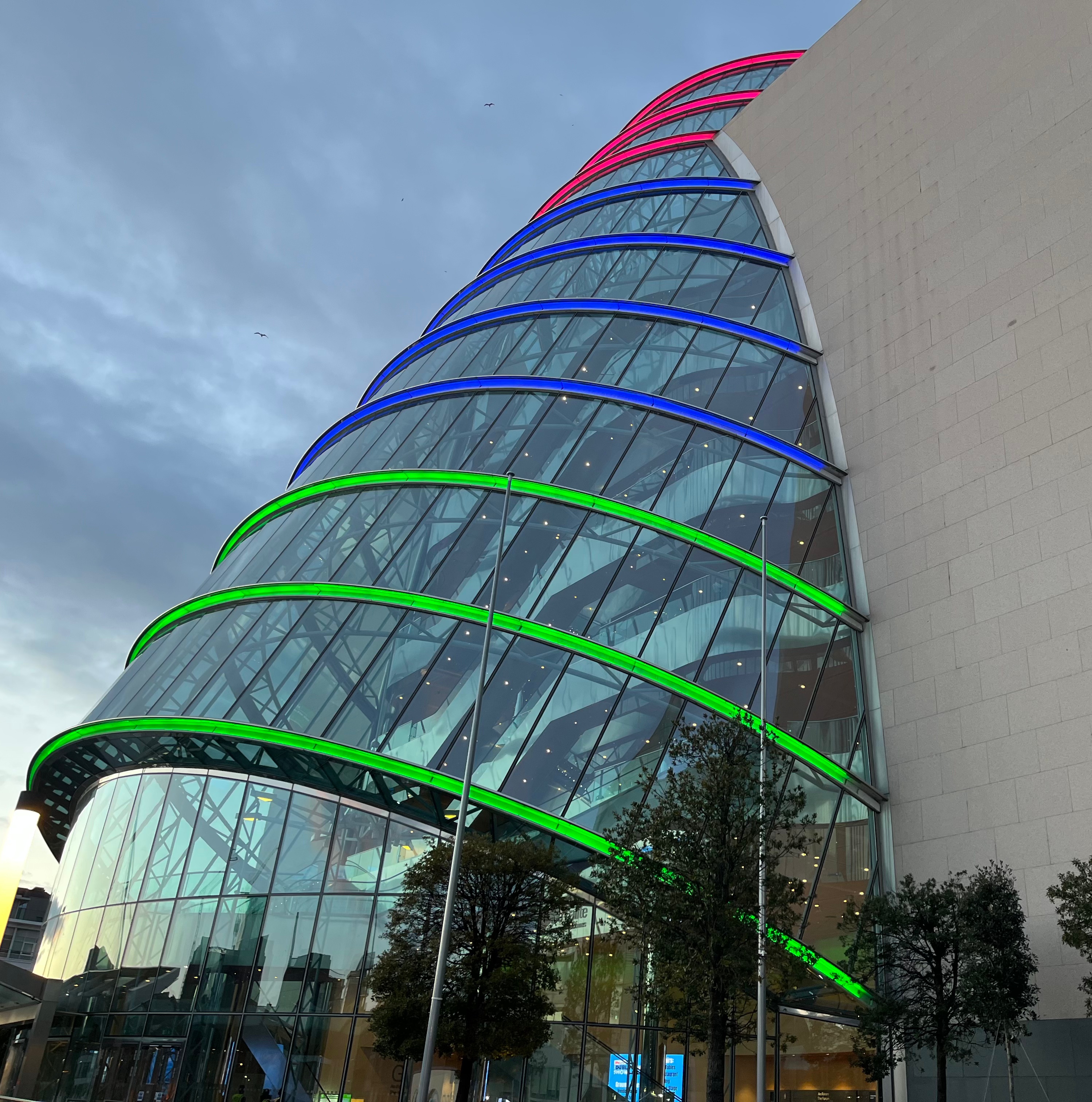
    The Dublin Card Show held on February 28th is quickly becoming a staple in the card collecting and hobbyist community. The show is amongst the first of its kind to host two floors in the Convention Centre Dublin to accommodate international sponsors and attendees.  

    “My background is in sports cards, and I would always have to tell vendors at international conventions that we didn’t believe the Irish scene was ready for a show on this large a scale. Through their support, we took a leap of faith,” said Jason Flynn, co-organiser of the Dublin Card Show. 

    The Convention Centre in Dublin has been used by the Dublin Card Show for the last two consecutive years in a row.

    Early entry attendees queued around the convention centre at 9:30am, eager to enter. 

    “Our first year, we had about 1,200 in attendance, and last year it was 2,800. This year, we had nearly 5,000. The tickets sold out, and we had to add afternoon tickets too,” said Flynn. 

    A representative of the convention centre confirmed these figures. 

    Topps, a leading trading card and collectible manufacturer, has sponsored the event and brought the genuine Premier League golden boot trophy to showcase. 

    “They have been fantastic to work with and continue to support us as we have grown,” said Flynn. 

    Richie Elliot and his daughter Lacey donating a binder of cards to Titan TCG, a vendor at the event, so he may give them to other children who come to the stall. 

    “We don’t have a lot of space for collecting in Dublin, so seeing the community come together and giving back really makes you feel good,” said Thomas Cahill, vendor and owner of Titan TCG. 

    “It’s wild to think that we finally have an international level card show after all this time.” 

    Items from various collecting hobbies such as sports, Pokémon, Yu-Gi-Oh, Magic: The Gathering and more were showcased and available for purchase. 

    “We just brought our international sports card community here and were met with this really enthusiastic and indigenous trading card community,” said Flynn. 

    “Once we pulled off the first year, and word got out. It’s just taken on a life of its own.” 

    Young Alex Larkin ecstatic to show off his Pokémon collection and share with the community of like-minded individuals.  

    “This is by far the biggest event in Ireland to date for the collectors and it’s something adult collectors can share with their kids for sure,” said Cahill. 

    Although there was a designated trading area, attendees chose to sit in the heart of the action on the first floor, where the majority of vendors were based. 

    On the second floor of the convention, another partner who flew in internationally for the event, GTS Distribution, sponsored a live selling stage. 

    “People watching on the live stream can be at the Dublin Card Show without being physically there on the day,” Flynn said. 

    There were mini-games, raffles, spin-the-wheels and more activities available on the second floor of the venue next to the live selling stage. 

    The creative scene has also been given a spotlight, as various vendors who produce their own products were in attendance.  

    “We plan on making it even bigger and better in 2027, hopefully in a way that hasn’t been done before,” said Flynn. 

  • Cycling for a living: The untold realities 

    Cycling for a living: The untold realities 

    Delivery cycling in Dublin, and the overlooked challenges of making a living on Dublin’s busiest road.

    By Samuel Adeleke 

    I Citizens’ concerns in Dublin are usually centered on motorists and pedestrians. Still, recent statistics from the Road Safety Authority (RSA) shows that the greatest share of serious injuries was among those cycling for social trips, at 76 per cent.    

    In addition, the statistics also revealed that 187 cyclists were seriously injured while commuting to and from work, and the majority of these injuries occurred in Dublin. 

    These figures raise questions about the challenges faced by cyclists in the city center, especially for delivery cyclists whose livelihoods depend on riding these roads daily and who are exposed to different road and weather conditions without the protection of a vehicle. 

    Damilola Foluwashayo, a delivery cyclist with the delivery service Just Eat, said, “Cycling can be tedious when it rains. The roads become slippery, and there is a higher chance of getting a flat tire.”  

    This not only makes riding more difficult but also increases the risk of injury to the rider. 

    “If you ride too fast and want to apply the brakes on a slippery road, you might fall because there is no friction to hold your tires,” Foluwashayo said. 

    One of such fall led to Foluwashayo sustaining a serious injury. “I was trying to avoid two kids playing on the road. In the process, I stepped on the wrong brake, my tires got spoiled, and I broke my leg,” he said.  

    The changeable weather presents other challenges for cyclists. “In the first seconds it’s raining, the next seconds it’s not raining, just always take your safety gears with you and have your lights, lights make you safer,” said Judge Eddy, who uses his bicycle for grocery shopping for his wife. 

    In addition to challenging weather conditions, cyclists also have to deal with careless drivers.  

    “We often encounter reckless drivers on the road,” said Thomas Nve, a delivery cyclist with Deliveroo.  

    “Taxi drivers, in particular, seem determined to meet the metrics and quickly get to their next client,” he added. 

    But other road users criticise delivery riders for breaking the rules.  

    “I have a big thing against delivery riders; they have no lights, they go through red lights all the time, and they tend to just cross over all the time,” said Judge Eddy.  

    Eric Andrel, a delivery cyclist with Deliveroo, attributed an accident he had to the deplorable state of the road.  

    “There have been a lot of potholes because of the rain, I had an accident because the pothole was covered by water,” he said. 

    “The roads are also narrow and don’t give room to swerve safely,” Andrel said. To constantly keep himself safe, Andrel said, “I wear high-visibility clothes and always have my helmet on.” 

    Andrel says The Government should do more to keep all road users safe “They should create a system where, after 6pm, only public transport is allowed in the city.” 

    Mariann Finan, who is an all-year-round cyclist, said conditions have improved for Dublin cyclists, but problems remain.  “In terms of infrastructure for cyclists, it is better than it was; at least we have a lot of cycle lanes now, but they are not really finished. They stop and start, and you don’t really know where the next lane is.”  

    Photo credit: Samuel Adeleke

    Finan also noted a pandemic of wearing headphones among cyclists.  

    “I don’t even know how anybody can wear headphones while cycling, because there is so much going on around you that you need to be alert to,” she said. 

    Finan warns of dangerous overtaking by cyclists. She said: “A lot of the Brazilians and Chinese delivery riders have electric bicycles and tend to overspeed, but they should always use their bells to alert other road users.” 

    Cliff Nolan, the owner of Bike Stops on Capel Street, Dublin, which sells and repairs bicycles, said, “I service a lot of delivery riders’ bicycles. The most recurrent issue with them is a puncture in the tyres, and their brakes always need a lot of attention.” 

    “Delivery riders should always buy quality parts instead of going for cheap parts, which puts them at risk,” Nolan advised. 

    Photo credit: Samuel Adeleke

    One Chinese worker with Deliveroo, who did not wish to be named, said, “There are many dangers on the road. There are robberies by teenagers, and our bicycles are easily stolen.” 

    He also highlighted other issues with the healthcare system that discourages drivers from seeking treatment for injuries.  

    “I have fallen so many times on my bicycle and have had to treat my own wounds,” he claimed.   

    “We generally don’t go to the hospital because going to the hospital will be troublesome and takes a lot of time. We figured we could handle it ourselves, and it would be much faster.” 

    “Cyclists should ensure that both they and their bikes are visible to other road users by investing in good sets of front and rear lights, and by wearing clothing that helps them be seen,” said John Paul Guiheen, the Executive Officer of Communications at the RSA, in an email correspondence.  

    “They should also consider wearing high-visibility materials and obeying the rules of the road,” he added. 

    The RSA stated that there was a deliberate effort last year to inform major food delivery companies about changes to the law concerning electric bicycles as introduced in the Road Traffic and Roads Acts 2023.  

    “Riders must obey the same rules of the road as drivers; the roads are a shared space. Hence, drivers must follow all speed limits, traffic signals, and parking regulations,” said Guiheen.  

    On other issues bothering on weather conditions, cycle lanes, and bicycle theft, the RSA said, “That should be directed to the NTA, local authorities who maintain roads, and the Gardai respectively.” 

     But “during severe weather events, we issue advice to all road users, including cyclists,” he said.

  • Legends of the Irish stage come back to life in ‘The Quiet Men’

    Legends of the Irish stage come back to life in ‘The Quiet Men’

    Image of The Quiet Men – courtesy of Bewley’s Theatre Café. Photo credit: Conrad Jones Creative

    A play depicting the lives of Irish actors Barry Fitzgerald and Arthur Shields is currently running at Bewley’s Theatre Café on Grafton Street.

    By Oscar Meagher

    Bewley’s Café Theatre is currently staging a play chronicling the lives of two Irish screen legends.  

    Titled ‘The Quiet Men,’ the show delves into the many successes and personal struggles of brothers Barry Fitzgerald and Arthur Shields.

    Both men were pillars of the Dublin theatre scene and important figures of Irish representation during Hollywood’s Golden Age.

    Despite their illustrious careers, the two are best remembered for their roles in director John Ford’s 1952 adaptation of The Quiet Man.

    The show highlights the pair’s hidden histories – from Shield’s multiple marriages to Fitzgerald’s Academy Award win, his 1945 manslaughter charge and closeted relationship with his stand-in. Further revelations include connections to James Bond, Alfred Hitchcock and James Connolly.


    Following performances at The Viking Theatre last October, the play is set to run at Bewley’s Café from February 23rd – March 14th

    The Quiet Men is directed by Conall Morrison and performed by writer and actor, Morgan C Jones, the great grandnephew of Shields and Fitzgerald.

    “It’s a story that’s very close to my heart,” said Jones. “I grew up hearing all these great stories about them and thought there was a fascinating thread to be explored.”

     “I’ve been thinking about it for around 20 years,” he added.

    Image of Morgan C Jones – courtesy of Bewley’s Theatre Café. Photo credit: Conrad Jones Creative

    The brothers’ journey to Hollywood was intertwined with a significant part of Irish history.

    “At 19 years old, Arthur Shields fought in the GPO during the Easter Rising of 1916,” said Jones. “After his internment, he left nationalism behind and properly pursued acting.

    “His older brother followed soon after.”

    Barry Fitzgerald holds the distinct honour of winning Ireland’s first Academy Award in acting for his supporting role opposite Bing Crosby in 1944’s Going My Way.

    This achievement has cemented itself in cinema history, marking the only time an actor has won after receiving a nomination for both best lead and supporting performances.  

    Rules were implemented the following year to prevent any similar occurrences. 

    Image of Morgan C Jones – courtesy of Bewley’s Theatre Café. Photo credit: Conrad Jones Creative

    Morgan C Jones takes the stage as both Shields and Fitzgerald.

    “I always wanted to be an actor, and I’ve been doing it for about 42 years now,” said Jones. “It’s tough to say whether my turn for the dramatic was directly inspired by my illustrious forbearers, but I think it certainly helped.” 

    Despite coming from a lineage of acting talent, he admitted that his own journey to the stage wasn’t always easy.

    “I became a stand-up comedian at one point because it was just so difficult to find work as an actor in Ireland,” he said. “I really broke into the stage around 1995, the same time when I came up with the idea for this play.”

    While being conceived decades ago, the story’s long journey to the stage has been fraught with numerous delays.

    “My daughter is a playwright herself, and she tried to get it up and running several times. After a few false starts and interruptions, I figured I should jump in.”  

    The Quiet Men will run at Bewley’s Theatre Café from February 23rd – March 14th

    Poster for The Quiet Men – courtesy of Bewley’s Café Theatre

  • Irish ice hockey will be ‘completely transformed’ by arena development in Cherrywood, says IIHA President 

    Irish ice hockey will be ‘completely transformed’ by arena development in Cherrywood, says IIHA President 

    The ice hockey community in Ireland rejoices as Prime Arena Holdings is to submit planning permission for the country’s first ever “permanent, Olympic-standard ice facility”. 

    By Kelly Smyth 

    In a recent statement, the Irish Ice Hockey Association expressed its full support of the National Ice Arena Project in Cherrywood, highlighting the need for Irish athletes to have a domestic space: 

    “For more than a decade, the IIHA has worked to advance the case for permanent Olympic-standard ice facilities in Ireland, in order to support athlete development, grow participation and allow Irish athletes to train and compete at home.” 

    “The Association therefore welcomes this proposal as a significant and positive milestone in that journey”. 

    Speaking to TheCity, IIHA President Aaron Guli, said he’s  relieved that the proposal is progressing, having advocated for a permanent rink for over a decade. 

    “The IIHA has been trying to make it happen. We are the only country in Europe without a permanent ice facility,” he said.  

    The proposed arena is to consist of two professional standard rinks, one of which would be home to a team like the Belfast Giants, while the second would be open to IIHA teams.  

    “A professional team and arena will help boost interest in the game at a grassroots level. The second rink would give us a home,” Guli said.  

    “It’s long overdue. Our closest neighbour, the UK, has over 66 rinks across the country while we don’t have one.” 

    Currently, players in the Republic of Ireland are forced to travel to Dundonald International Ice Rink in Co Down for training sessions and competitions, making it incredibly difficult to grow the sport domestically. 

    “I mean we have to travel to what is essentially another country to play the sport,” said Guli.  

    Co-founder of Dublin Buccaneers, Derek O’Neill, said he’s frustrated with the lack of local facilities, describing the journey to Dundonald as “very time consuming”. 

    “It’s about a seven-hour round-trip when you factor in the commute, getting ready, getting showered and being on ice,” said O’Neill.  

    O’Neill also revealed many of the open slots for training at the rink are rather late in the evening, further disrupting players’ ability to train.  

    “On a Friday, we can only get a slot at 9:15pm,” he said. “Sometimes you won’t be home until well past 1am.” 

    An Irish youth team practicing in the Dundonald International Ice Rink. Photo Credits: Derek O’Neill. 

    This challenge is not unique to the Buccaneers, and Guli said that the IIHA believes it is another major part in preventing ice hockey from thriving. 

    “If people don’t see the sport, they won’t play the sport. Nobody sees it because we are forced to go so far away even though we are here,” he said. 

    Guli claimed that the lack of ice hockey facilities in Ireland can also be limiting for many immigrants living in the country, who cannot play the sport they grew up with: 

    “There’s nothing here for diaspora. You have a lot of North American and Eastern European players who move here but don’t have the infrastructure to play.” 

    “It’s not the seventies or eighties anymore, Ireland has a very diverse population and there should be something for everyone, especially in a sports heavy country,” he added. 

    O’Neill agreed with this statement, highlighting the diverse range of players the Dublin Buccaneers have as one of the largest senior clubs in the country. 

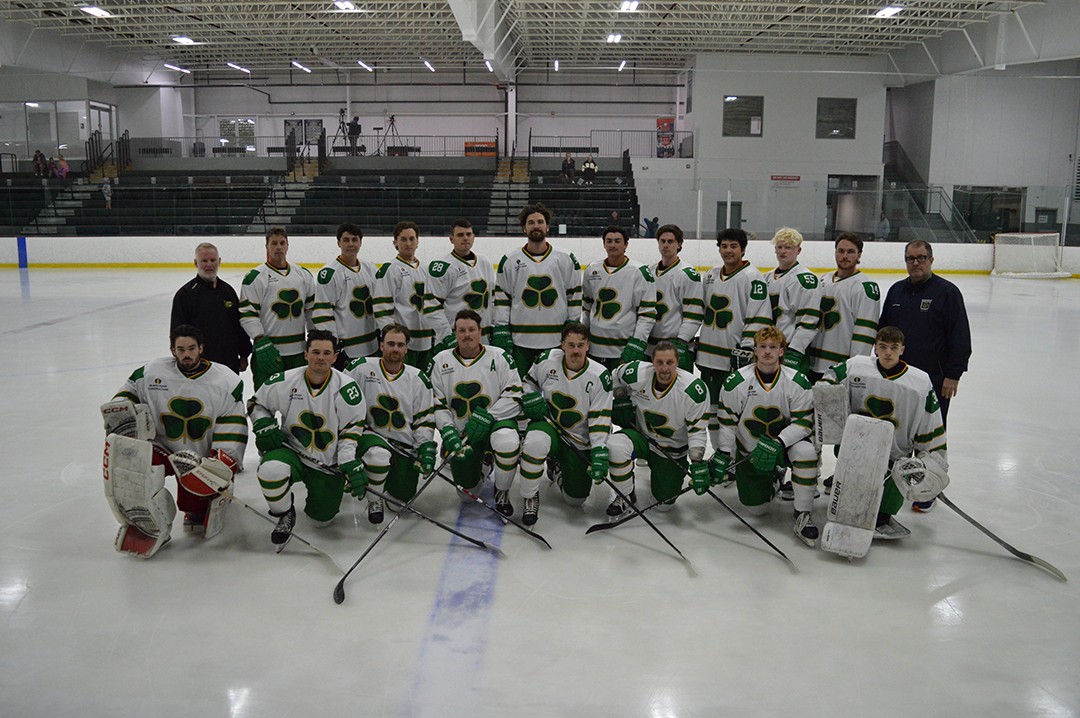
    “Our team has such a broad spectrum. We have Canadians, Americans, Ukrainians, Latvians, and more,” he said.  

    He also emphasised that the team was also home to a large number of “home-grown” talents on the team, showing there is enough domestic interest to justify the development in Cherrywood.  

    “We are very eager to see it being built. Every few years we’ve been hearing rumours start and then fizzle out. You get a little cynical,” said O’Neill. 

    “This development is reliable; it’s got backing from official bodies like the Olympic federation, so that’s very exciting.” 

    The development may come sooner than expected, according to Guli, who revealed that the arena may be ready by as early as 2030. 

    “If all goes well, planning is due to be submitted by this May. It’s hard to know how long that will take, but we’d like to see the facility open in the next five years,” he said.  

    The IIHA holds hope that the development in Cherrywood will support domestic growth of the sport and see it go “mainstream”. 

    “I think that ice hockey in Ireland will be completely transformed,” said Guli.  

  • A match made in TUD: When flowers are no longer enough

    A match made in TUD: When flowers are no longer enough

    Technological University Dublin’s African society Valentine’s event represents love beyond just romance and serves as a medium for promoting cultural integration.

    By Samuel Adeleke

    Photo credit: Samuel Adeleke

     With Valentine’s Day around the corner, a time often seen as a period to show and express love, TUD African Society brought the celebration early by organizing a Valentine’s event on 10th of February, at Bst259 Bolton Street.

    For Sharon Ojuade, President of the TUD African society, the theme of ‘A match made in TUD’ was not chosen for love and romance alone.

    “With this event, we aimed to create a relaxed and comfortable environment where people from the same background, different backgrounds, and experiences gather in one room, enjoying the atmosphere,” said Ojuade.

    In organising the event, the committee also sought the support of student entrepreneurs who offered services or provided freebies to participants in an African style.

    This included DJs, photographers, MCs, and the types of foods to be served.

    “Events like this give people a sense of belonging and serve as an avenue to promote student entrepreneurs from Africa and allow them to thrive,” said Ojuade.

    “Before the world loves you, your community must also love,” she added.

    The committee has experienced a record number of ticket sales for the event. For the president, it is inspiring to see that they live in a country with a strong sense of community.

    “Just because we live here doesn’t mean we shouldn’t have fun moments; people should still pursue what they need to pursue outside the community,” said Ojuade.

    Although it is an African society gathering, the event is open to other nationalities. “The first person to get a ticket for the event is an Asian. He reached and said he wanted to be part of it.” said Ojuade.

    According to Divine Nebo, the social director of the society, “the event is not just about finding love, it is about finding people who are like you to bond with on a different level.”

    And by extension, the theme of the event, ‘A match made in TUD’, is to show that love can be found anywhere, not just in school, but in environments like this, outside of social media.

    With students outside the African community feeling the pull of the event, Divine said, “the event is not only about Africa, but expressing the depth of African culture to non-Africans to see what African culture is about, beyond what social media portrays.”

    John Ologunlola, the event manager, also collaborated and highlighted the potential of the event to serve as a platform for non-Africans to experience African culture.

    “Even though they might not fully understand the African culture in its entirety, it is a valuable learning process,” said Ologunlola.

     Ologunlola mentioned that, as a Nigerian, he is learning more about the African culture and finding expression in the community alongside other African nationals, including Ghanaians and Congolese.

    With students like River Rogers, who is half Irish and half Polish, the intentions of the TU African society executive came to light.

    “It is my first time being in an African event,” Rogers said. “I am not African, but I can still attend and make some new friends,” he added.

    Not only did Rivers find the Afrobeat songs being played amusing, but he also left with the intention of trying an African dish. “I definitely need to try the African jollof rice,” he said.

    Mark Ologunlola, a former executive of the society, commended the event as a brilliant way of promoting cultural pride.

     “Events like this help people develop real relationships, and give people a picture of what love is,” he said.

     Ologunlola expressed excitement at seeing other people at the event, “no matter what part of Africa or the world you come from, we are all one body.”

    While the event promotes communal love, in a friendly society that helps people socialise, Nicole Okerikre, an African national from Nigeria, who participated in the event as a contestant, said, “This is a period of love, but people should find love in themselves first.”

    Denoting that self-love is non-negotiable.

    For Jaeson Jang, an Asian, ‘A match made in TUD was not just a Valentine’s event, but an opportunity to find expression among people of other cultures.

    “The African culture is amazing, I feel like family, I feel welcome. Everyone is enjoying themselves; no one feels lonely,” Jang said.

    Jang’s experience underscored the aims of the TU African Society to promote an atmosphere where joy, laughter, and love are shared without identity being a barrier.

    “Everyone can integrate into every culture; you only have to do it respectfully,” said Jang.

    By the end of the night, a match was indeed made in TUD as the event ended with Jaeson Jang from Asia and Nicole Odunsin from Africa emerging as winners.

    It was a reminder that love in its most powerful form goes beyond just being African or giving flowers; it is in identifying with people from other nationalities and embracing a sense of community.


  • Dublin swimmers at risk of sewage exposure from heavy rainfall

    Dublin swimmers at risk of sewage exposure from heavy rainfall

    Image of Forty Foot – Photo credit: Oscar Meagher

    Dublin swimmers are advised to take caution after periods of heavy rainfall as there is an increased risk of contaminated seawater.

    By Oscar Meagher 

    As Dublin continues to face poor weather conditions, swimmers have been warned to take precautions before returning to the sea.

    Ireland’s bathing season runs from June 1st to September 15th. During this period, local authorities monitor swimming areas for the presence of harmful bacteria.

    These conditions are largely unsupervised during the remaining months. 

    “Heavy rainfall is one of the key factors in water quality contamination,” said Wim Meijer, Professor of Microbiology in UCD School of Biomolecular and Biomedical Science.

    “Treatment plants and sewers can’t contain the increased volume of wastewater during periods of extreme weather. That excess ends up bypassing the complete treatment process,” he said.

    “When sewers overflow, that water will need somewhere to go. It may flow back through the toilet, or it will wash onto our beaches.”

    Swimming in this contaminated water can lead to infection, skin rashes, dysentery and may even result in diarrhoea and vomiting in extreme cases.

    “I would advise swimmers to wait at least 48 hours to swim after periods of heavy rainfall – particularly in areas where sewage may pose a risk,” added Professor Meijer. 

    Image of Blackrock Baths – Photo credit: Oscar Meagher

    Bathing areas are tested for the presence of two bacterial markers, E. coli and Intestinal Enterococci. They are often resident within the intestines of humans and animals.

    Waste from dogs and sea birds is one of the key factors in water pollution.

    “Dogs account for 30% of water contamination,” said Professor Meijer.

    “Even a small amount is enough to contaminate water in an area the size of a tennis court. This can result in temporary bathing prohibition notices being issued by local authorities.”

    Image of Sandycove beach – Photo credit: Oscar Meagher

    Frank Kelly is a member of The Gollymocky Whalers, a local swimming group that began as a result of the Covid pandemic.

    “I’ve been swimming at Sandycove ever since the plague started six years ago. I go swimming three or four times a week,” he said. 

    Kelly is one of many taking part in the ‘Freezbrury’ challenge – which involves submerging yourself in the icy cold water for one minute every day throughout February. Every day, another minute is added.

    “It was 17 minutes today, and we’re hoping to get up to almost half an hour by the end of the month,” he added. 

    “I know to steer clear of the sea after lots of heavy rain. Thankfully, Sandycove is well protected, but I’m worried about some of the other beaches,” said Kelly. 

    One young swimmer at Seapoint Beach, who did not wish to be named, also expressed uncertainty regarding water quality.

    “I only started swimming recently as a sort of New Year’s resolution. There’s still a lot of things I’m unfamiliar with,” she said.

    “I was advised not to swim after it’s been raining. I haven’t really gone much because of the terrible weather we’ve been having for the last month.”

    Image of Seapoint Beach – Photo Credit: Oscar Meagher

    While water quality is generally monitored exclusively from June to September, out-of-season sampling is voluntarily reported by local authorities.

    “I would advise swimmers to regularly check sites like Beaches.ie for information regarding water quality,” said Professor Meijer.

    Dublin City Council monitors bathing water quality at three designated locations: Dollymount Strand, Half Moon and Sandymount Strand. 

    The DLR website regularly publishes findings from water quality samples.

    Recent findings from February 4th in areas like Dún Laoghaire Baths and the Forty Foot were categorized as “excellent”, while labelling others like Blackrock Baths as “poor”. 

    The Bathing Season will continue on June 1st

  • ‘We really want to give back to our community’: Notions restaurant taking care of those in the hospitality industry 

    ‘We really want to give back to our community’: Notions restaurant taking care of those in the hospitality industry 

    Photo Credit: Mayara Suzart

    The newly established Notions restaurant, based in Two Pups Café, Dublin 8, is offering 20% off on Tuesday evenings for anyone working in the hospitality industry – from bartenders, waitresses, nurses and more. 

    By Alex Cloud 

    Anyone who has worked in the hospitality industry can relate to the feeling of not having time on weekends to socialise or to go out and enjoy nice food that isn’t the standard pub grub or takeaways we’re all too familiar with. It is for this reason that the team at Notions has decided to offer a discount for anyone in the industry. 

    James Walsh, the head chef at Notions, explained: “My vision of hospitality is very much this collaborative community of passionate people coming together and enjoying what we all have to offer.” 

    “We’re a new restaurant, so engaging with each other is important and not to mention, powerful.” 

    Notions located in Two Pups Café on Francis Street, Dublin 8. Photo credit: Alex Cloud

    The team has used social media and word of mouth to try and advertise the discount. Walsh said: “Obviously, we hope people come and enjoy the food, but we want them to come back, and of course, tell their friends. Come and try! You know?” 

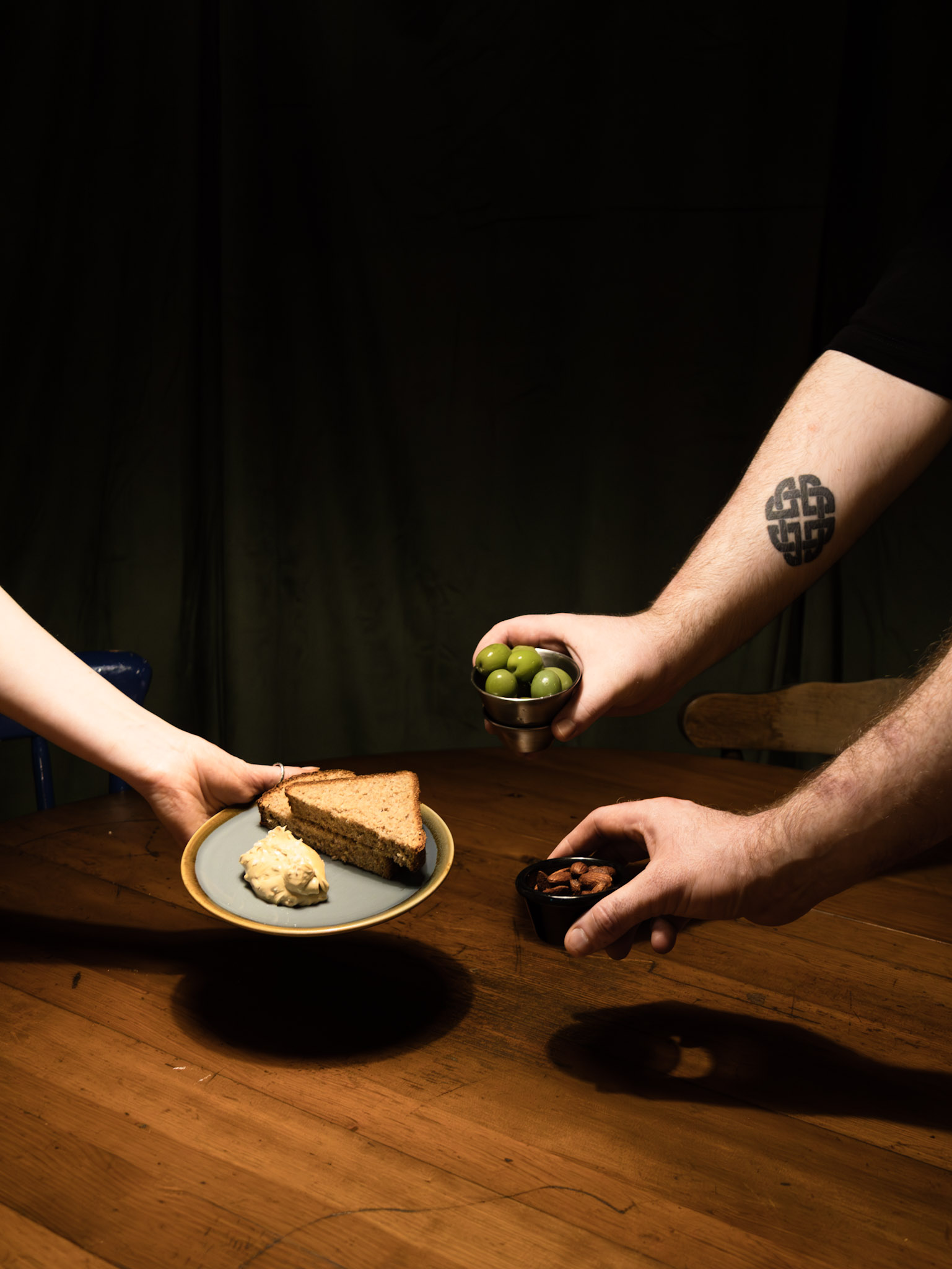
    The restaurant sources all its ingredients from local farms and Irish producers encapsulating the love they share for food and supporting local. Dishes including steak and pepper sauce, fresh gnocchi pasta and a special where customers can try one of every dish available on the menu. 

    Walsh recently travelled abroad, which he said inspired some of the items on the menu, and of course, the NO FOMO (Fear of Missing Out) special. “I was recently in Lisbon, and there was so much going on that we decided, let’s find a way to have people try it all,” said Walsh.  

    “My training has been quite formal as I’ve worked in Michelin-level restaurants – so this is kind of like having fun with it, while still having the techniques behind the dishes and the complexity. It’s food I like to eat!” 

    Walsh explained that Dublin 8 is a blooming area and that they hope the discount brings everyone in and together, even just to network with one another. “I like to think it’ll be a way for people to get to know each other and maybe meet people in other areas of the industry as well,” he said.  

    “Obviously, I work in hospitality, and I love going out to eat, so I just feel like it’s so important to support each other.”  

    The general manager of the establishment, Moses Rurwendwa, said: “I started off in Greystones and have since moved all the way up to Dublin. Since then, I’ve made so many connections – there is so much community here.” 

    “I love building on to this community for the future generations, the way it was given to me when I was coming up.” 

    Moses Rurwendwa behind the counter, setting up for the evening ahead. Photo credit: Alex Cloud 

    “It’s an amazing industry, but it’s hard, it’s not glamorous, there can sometimes be no thanks,” Walsh said. 

    The discount is available every Tuesday after 5pm, and anyone who works in hospitality can avail of it. The team even encourages anyone who comes in to try the NO FOMO menu. Rurwendwa explained that patrons can avail of the discount if they can prove they work in hospitality.  

    “Just come in and see what you miss out on while working weekends,” said Rurwenda. “Come enjoy yourself, with some good food, just the way everyone else does when we’re looking after them.” 

  • 2026’s Dublin Bowie Festival kicks off a decade on from his death 

    2026’s Dublin Bowie Festival kicks off a decade on from his death 

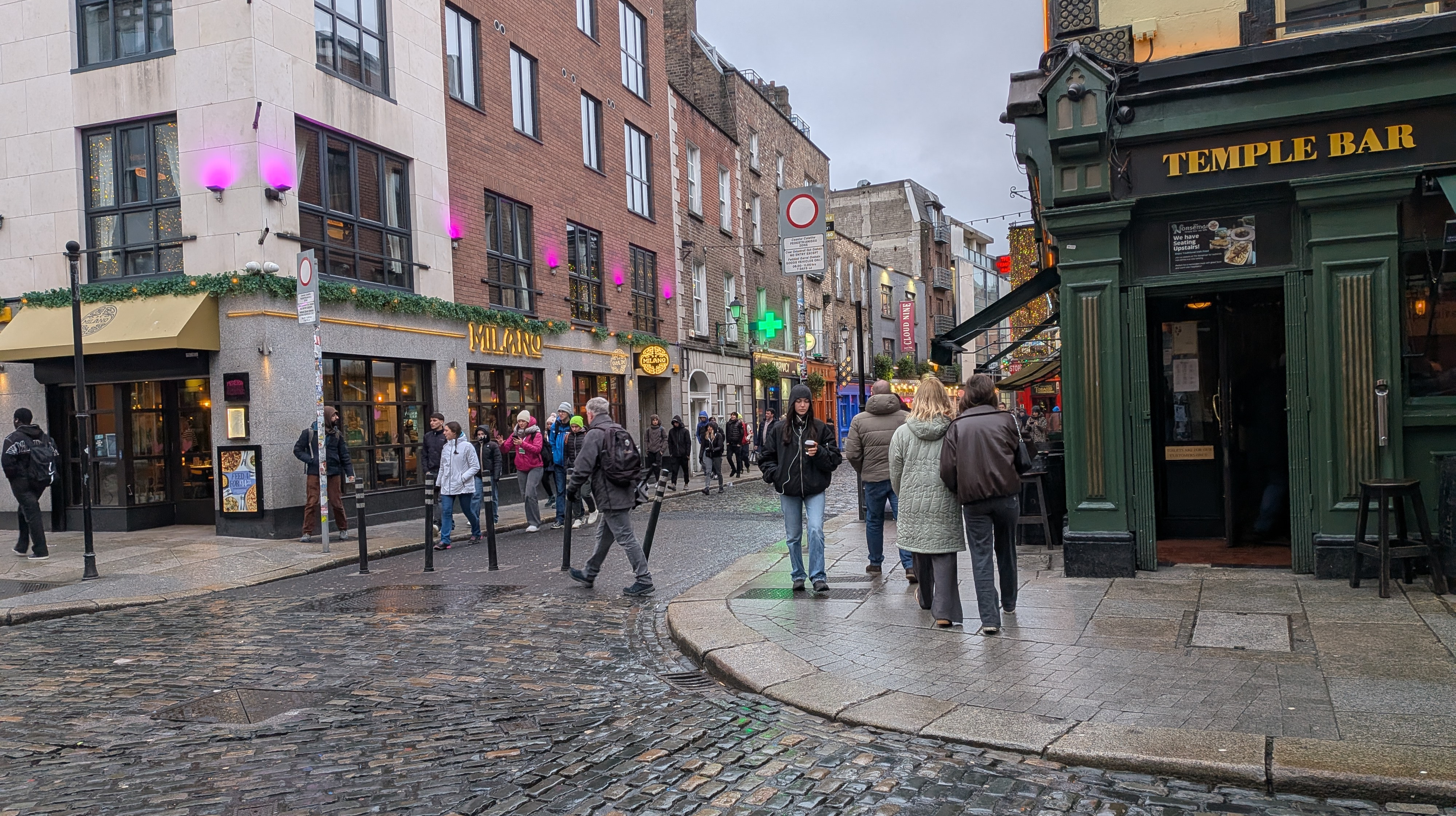
    Temple Bar, Dublin. Photo credit: Adam Jackson.

    Events include live podcasts, Bowie tribute bands, and former Bowie band members. 

    by Adam Jackson 

    David Bowie’s presence looms large in Dublin this week in the form of the yearly Dublin Bowie Festival. 

    The festival, founded by John Brereton in 2016, includes many events across Dublin, celebrating the life and work of David Bowie.   

    Brereton, who is the festival’s director, has been hosting Bowie-related events since 2009. 

    “I was manager of the Grand Social, and in 2009, I started doing Bowie birthday bashes in January,” Brereton said.  

    “Then in 2016, Peter Quinn, the singer in a trivia band called Rebel Rebel, and I said, ‘why don’t we expand it into sort of a mini festival?’”  

    The festival had an immediate draw as it featured musicians who had previously worked with Bowie.  

    “By magic luck, Bowie’s guitarist, who’s a Dubliner, Jerry Leonard, was in town, and we got him involved and had a great weekend,” Brereton said. 

    “People from the UK and Europe came over, then we woke up on Monday and found out Bowie had died, so it was all kind of mad.” 

    Ten years on, the festival still has a big appeal, attracting a large number of both Irish and international attendees.  

    “Most of the gigs are sold out already. We get a lot of people from abroad, from all over the world, from as far as Australia, Mexico, Iceland, America, all over Europe, and the UK is an especially big contingent. Lots of Irish people as well, of course,” Brereton said. 

    Although it is such a big tourism draw, the festival has not received much funding, relying mostly on ticket and merchandise sales. 

    “We’re getting a tiny bit of funding this year from the Dublin City Council, which helps greatly, but it’s our eleventh festival, and we don’t get any support from Fáilte Ireland, or Tourism Ireland, and we bring a lot of people over in an especially quiet time of year,” said Brereton. 

    “It’s the biggest Bowie event in the world, and not getting any support on that level is a bit disappointing.” 

    2026 marks the tenth anniversary of David Bowie’s death, as well as his final album, Blackstar

     Although it has been so long since Bowie’s death, the singer’s popularity and by extension that of the festival remains as high as ever.  

    Brereton expressed his thoughts on why Bowie has been such an enduring figure. 

    “I think he was the first and probably the only rock star who embraced and excelled at so many artistic disciplines. Obviously, he was a brilliant singer, songwriter and musician, but he was also an actor, and he painted as well.” 

    “Through his music and his life, he opened a lot of cultural doors for people; I got into a lot of movie directors and books, because Bowie loved them, so it wasn’t just about his music.” 

    Brereton also mentioned Bowie’s connection to the LGBT community as an important factor for the singer’s continued cultural significance. 

    “He was one of the first rock stars who was openly bisexual, and made people in the LGBT community feel that they weren’t alone. He opened a lot of doors and made people feel like there was a community there, and that it was okay to come out.” 

    “That was a huge thing in the seventies and eighties, when it was hard for people with different sexualities.” 

    The festival’s first event, taking place tonight, is a live podcast discussing the time when David Bowie lived in Dublin.  

    Different events are set to take place throughout the week, culminating in a live performance of Bowie’s 1976 album Station to Station, celebrating the album’s 50th anniversary. 

  • ‘Food is a uniting force’ – how the Dublin Sourdough Rotation became more than bread 

    ‘Food is a uniting force’ – how the Dublin Sourdough Rotation became more than bread 

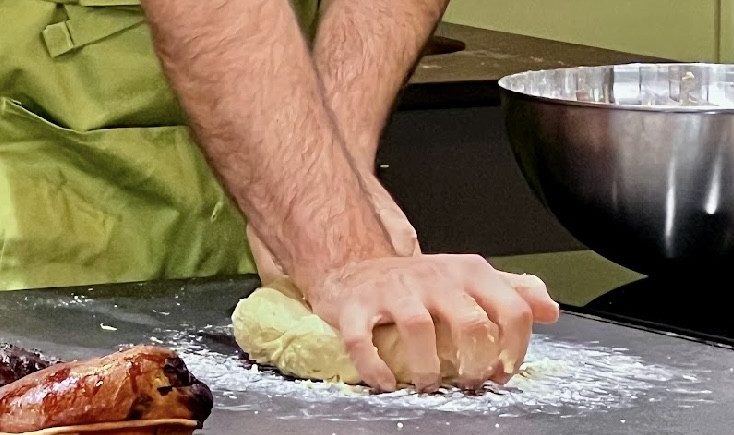
    In a city becoming ever more individualistic, the Dublin Sourdough Rotation is a breath of fresh  bread scented  air for many of its members.  

    Founder Niamh Lacy started the group in 2023, inspired by traditional community values and post-Covid disillusionment.  

    “I was really curious to find out if people would be willing to share food with strangers, and bread was the vehicle for that,” Lacy said.  

    Despite choosing sourdough as the centre of the effort, Niamh admitted she had never baked it before launching the group: 

    “I actually got the initial idea for a community like this about a year or so before I  turned it into something, and sourdough happened to have been pretty trendy during the pandemic. 

    I can admit I didn’t make sourdough before starting the project. I just thought it would be a strong but narrow enough group to start with.” 

    Luckily, she was right, as the community now boasts over 100 members based across Dublin City, with many members saying the project has become a big part of their lives. 

    Derek Kenny, a pharmaceutical quality director based in Dublin 7, joined in the early stages after seeing a flyer in his local café. As an experienced sourdough baker, he was drawn to the idea of finding like-minded people. 

    “I grew up with no real sense of community in Tallaght, so when I moved to Cabra, I found myself getting to know the local butchers, grocers, coffee places,” Kenny said. 

    “So, it was really nice to join an unpretentious, open and friendly community. It is low-stakes. You can challenge your baking, bring something new, and talk about food. What Niamh has built is really great,” he added. 

    A loaf baked by long-time member Derek, who is a member of the Dublin 7 rotation. Photo credit: Derek Kenny. 

    Another experienced baker, Pierce Lowe, found himself immersed in the group after leaving his job in Bread 41 to pursue a postgraduate degree. 

    “I really enjoyed getting to meet other people. Even the small exchanges like handing your loaf over to another person, the feeling of anticipation and getting ready,” Lowe said.  

    When asked about the power of food to unite people, he highlighted the world-wide significance of food. 

    “It’s one of the reasons I’m studying for my masters in sustainable development, food and co-ops. We need food to survive. It’s a whole integrated system. It’s a way to show you care about someone internationally. It gets people to socialise, it bridges gaps,” he said. 

    For new member, Mairi Kachur, this couldn’t be a truer statement. As a Scottish American woman who has lived in Germany, France, and Belgium, moving to Dublin was yet another daunting restart. 

    “I moved to Dublin to be with my fiancé and start my PhD in Trinity. Most of my friends were all made through him, so I really wanted to find my own people,” Kachur said. 

    “I had been living in Dublin for just 2 months when my neighbour told me about the group. So, I reached out to Niamh and went to my first group gathering in someone’s house.”  

    “I met my first friend in Dublin, who is now my best friend. It was really nice to make a friend outside of institutions like work or college.” 

    As an immigrant, she highlighted that she has had a very positive experience of meeting people in Ireland, with the group being a key component of it: “It really gave me something to hold onto when I moved to Ireland”. 

    The community has many other members who have come to Ireland over the years, with Kachur’s best friend Isabella also having previously lived in Belgium.  

    Brazilian member Pedro Ragonezi is also a notable figure, with the former baker being renowned for his “iconic” skills.  

    “I raised some money on Spacehive to run some workshops for members, which Pedro led demonstrations to help teach members some more skills,” Lacy said.  

    “He’s passionate about all sorts of dough and I’ve learned a lot while doing the workshops.” 

    Apart from sourdough, the group has also started sharing recipes for kombucha, kefir and many other fermented foods.  

    Lacy hopes to develop more shared ownership of the community in the future. 

    “I’d love each postcode to organise their meetups and schedules as the group grows,” she said. 

    She added that she would love to see people set up similar groups across Dublin, encouraging the return to traditional neighbourly values with a modern twist. 

    “I really hope people can trust each other more in the future,” she said.  

  • Fears for jobs in Tallaght as retail sales decline 

    Fears for jobs in Tallaght as retail sales decline 

    Cuts to staff hours and lower sales reflect the reality of the retail market in the Square Tallaght, Dublin, post-festive season. 

    By Samuel Adeleke 

    image emphasises the quietness of shops
    As the shops become quieter, the staff find ways to stay busy. Photo credit: Samuel Adeleke

    Business owners in the retail sector in Dublin are experiencing a decline in sales after the holiday season during the January and February slump, when trading activity slows to its lowest. 

    While statistics often focus on the economic impact of this period on business owners and the economy at large, TheCity spoke to retail staff, who are often the first to feel the effects. 

    Tasha Villisca, a full-time staff member at the Vero Moda clothing brand in the Square, Tallaght, who loves working in retail, described the period as being extremely quiet and slow.  

    “When I am here now, I feel like my day gets dragged, unlike during the peak period, where there is always something to do and people to help,” she said. 

    This situation has hit Tasha’s finances, despite putting in the work. “I got my pay-slip last week, and it is literally not making up for the work I put in here,” she said.   

    “I blame it on not getting enough work hours and people shopping online,” she said.  

    Keris Fonory works as a retail staff member with Naming it (a children’s clothing brand).  “Due to the slump in business, the management had to cut down people’s hours; you can only work contracted hours,” said Fonory.  

    “I work with other girls who are in college, and they are struggling financially because they have fewer hours,” she said.  

    One worker from India, who did not wish to be named, said they were let go from their job in Pandora due to the slowdown in business. He has since managed to pick up with A&B Gadgets, “It is not only a bad time for retail businesses but also a bad time for part-time workers,” he said. “This affects me personally, as the hours I can work are reduced,” he said. From his experience, the retail market has become a “click and collect” model, where people just come in to pick up orders, thereby making the retail staff’s role obsolete. 

    Libby Deleon, a manager at Jack & Jones said, “In the next 5 years, I doubt if there will be any more jobs in retail shops because businesses have fallen into a full decline and people are buying stuff more online.” 

    Deleon also mentioned that with the slowdown in the retail business, a lot of small shops in this period lay off their staff, but at Jack and Jones, she said, “We try to make a system where we still try to make things work. Some are great, some are not.” 

    As a way to drive sales during the slowdown, some businesses resort to running sales. “We have reduction sales going on because we are looking to clear the whole winter stocks and build up for the summer stocks,” Steven Abergele, manager of Best at the Square Tallaght, said. 

    Speaking on the impact of this season on other staff, Steven said, “We only employ part-time staff, so it doesn’t affect us really much; but it does affect bigger brands.” 

    January and February mark the transition into the spring and summer season, and this can impact sales in outdoor gear. Gerald, manager at Trespass, a performance outdoor clothing brand, said that they are a weather-dependent shop. 

    Gerald mentioned that in the post-festive season, there is a slowdown in businesses because people are more careful with their money, and it affects everything, including staffing. “It’s like Irish people forget it’s going to rain and it’s going to be cold, so they come in and buy stuff,” he said. 

    There is hope that businesses will pick up in the summer period leading to the Easter season, and there will be more opportunities for staff to work more hours and earn more in the retail sector.